Description
What happens when wild nature perfectly adapts to our industrial architecture?
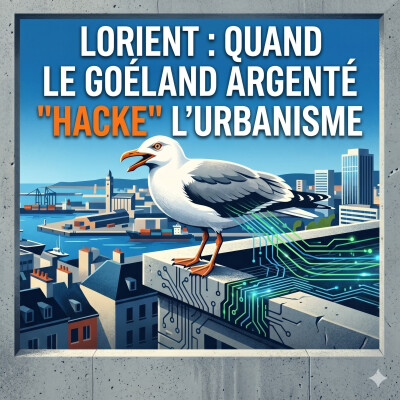
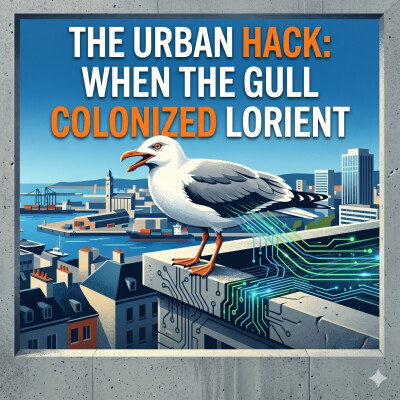
In this episode of the podcast, we dive into a fascinating biological and sociological phenomenon: the population explosion of Herring Gulls in Lorient, France. Starting from just one pair in 1982, the species has systematically colonized the city’s ports and rooftops, turning a natural occurrence into a complex urban and sanitary management challenge.
In this episode, we explore:
Behavioral Plasticity: How the Herring Gull traded sea cliffs for concrete and asphalt, utilizing urban heat islands as giant incubators.
The Protection Paradox: Why a nationally protected species can become a major local nuisance, from noise pollution to physical aggression during breeding seasons.
Science in the Field: An analysis of modern tracking methods—including drones, GPS tags, and statistical correction factors—required to gather reliable data in complex urban environments.
The Future of Coexistence: Why urban wildlife management now depends as much on human sociology as it does on biology.
This rigorous analysis is based on the 2020 report by the Bretagne Vivante association, providing deep insights into how our architectural choices are irremediably altering animal survival strategies.
Hébergé par Ausha. Visitez ausha.co/politique-de-confidentialite pour plus d'informations.