undefined cover
undefined cover
Saving coral reefs with AI & Sound : The Reef Pulse revolution cover
BlueTech around the world

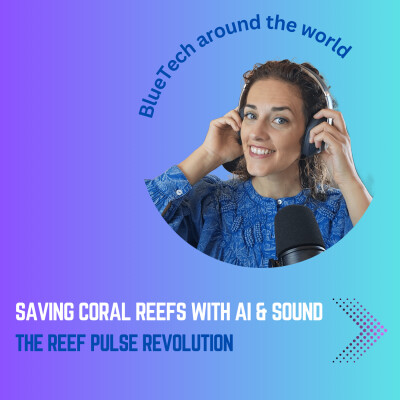
Saving coral reefs with AI & Sound : The Reef Pulse revolution

Saving coral reefs with AI & Sound : The Reef Pulse revolution

1h02 |08/12/2025|

13

Play
undefined cover
undefined cover
Saving coral reefs with AI & Sound : The Reef Pulse revolution cover
BlueTech around the world

Saving coral reefs with AI & Sound : The Reef Pulse revolution

Saving coral reefs with AI & Sound : The Reef Pulse revolution

1h02 |08/12/2025|

13

Play

Description

Coral reefs are the rainforests of the sea.
They cover less than 0.1% of the ocean surface, yet support up to 30% of all marine life, protect coasts, feed millions of people, and fuel tourism and local economies.

Now imagine this: under the pressure of climate change, pollution and human activity, up to 90% of coral reefs could disappear by 2050.

In this episode, we explore a different kind of ocean innovation: listening to the reef.
My guest, Yann Bayle, PhD in Artificial Intelligence applied to sound analysis and co-founder & CTO of Reef Pulse, is turning coral reefs into data using AI-powered passive acoustic monitoring to understand, protect, and even restore these critical ecosystems.

From decoding the “orchestra” of reef life to using underwater speakers to guide coral larvae back to degraded reefs, this conversation is about how sound + science + entrepreneurship can become a powerful tool for regeneration.


Here’s what you’ll learn in this episode:

  • The origin story of Reef Pulse: from Reunion Island to AI for the ocean

  • Why coral is an animal, how bleaching works, and what threatens reefs today

  • The key ecosystem services coral reefs provide to people and coastal communities

  • The limits of traditional monitoring (divers, satellites, eDNA) and how ecoacoustics changes the game

  • How Reef Pulse uses AI to record, clean and analyze underwater soundscapes

  • The difference between healthy vs degraded reef soundscapes

  • What acoustic restoration is and how underwater speakers can help larvae settle faster

  • How Reef Pulse balances impact, business models (B2G/B2B) and low-footprint technology

  • Yann’s advice for young innovators building marine projects with new technologies


Key question:

How can we use AI and sound to listen to coral reefs, protect them in real time, and even help bring them back to life—without adding new pressure on the ocean?


Connect with our guest:
🔗 Reef Pulse : https://reef-pulse.com/en/index.php
🔗 Yann Bayle : https://www.linkedin.com/in/yannbayle/


Resources and Links:


Don’t forget to subscribe, leave a review, and share your favorite episodes to help us spotlight the incredible innovations shaping our oceans. 🌊


Stay tuned for more inspiring stories and cutting-edge blue technologies!


Hosted on Ausha. See ausha.co/privacy-policy for more information.
Description

Coral reefs are the rainforests of the sea.
They cover less than 0.1% of the ocean surface, yet support up to 30% of all marine life, protect coasts, feed millions of people, and fuel tourism and local economies.

Now imagine this: under the pressure of climate change, pollution and human activity, up to 90% of coral reefs could disappear by 2050.

In this episode, we explore a different kind of ocean innovation: listening to the reef.
My guest, Yann Bayle, PhD in Artificial Intelligence applied to sound analysis and co-founder & CTO of Reef Pulse, is turning coral reefs into data using AI-powered passive acoustic monitoring to understand, protect, and even restore these critical ecosystems.

From decoding the “orchestra” of reef life to using underwater speakers to guide coral larvae back to degraded reefs, this conversation is about how sound + science + entrepreneurship can become a powerful tool for regeneration.


Here’s what you’ll learn in this episode:

  • The origin story of Reef Pulse: from Reunion Island to AI for the ocean

  • Why coral is an animal, how bleaching works, and what threatens reefs today

  • The key ecosystem services coral reefs provide to people and coastal communities

  • The limits of traditional monitoring (divers, satellites, eDNA) and how ecoacoustics changes the game

  • How Reef Pulse uses AI to record, clean and analyze underwater soundscapes

  • The difference between healthy vs degraded reef soundscapes

  • What acoustic restoration is and how underwater speakers can help larvae settle faster

  • How Reef Pulse balances impact, business models (B2G/B2B) and low-footprint technology

  • Yann’s advice for young innovators building marine projects with new technologies


Key question:

How can we use AI and sound to listen to coral reefs, protect them in real time, and even help bring them back to life—without adding new pressure on the ocean?


Connect with our guest:
🔗 Reef Pulse : https://reef-pulse.com/en/index.php
🔗 Yann Bayle : https://www.linkedin.com/in/yannbayle/


Resources and Links:


Don’t forget to subscribe, leave a review, and share your favorite episodes to help us spotlight the incredible innovations shaping our oceans. 🌊


Stay tuned for more inspiring stories and cutting-edge blue technologies!


Hosted on Ausha. See ausha.co/privacy-policy for more information.
Share

Embed

You may also like

Description

Coral reefs are the rainforests of the sea.
They cover less than 0.1% of the ocean surface, yet support up to 30% of all marine life, protect coasts, feed millions of people, and fuel tourism and local economies.

Now imagine this: under the pressure of climate change, pollution and human activity, up to 90% of coral reefs could disappear by 2050.

In this episode, we explore a different kind of ocean innovation: listening to the reef.
My guest, Yann Bayle, PhD in Artificial Intelligence applied to sound analysis and co-founder & CTO of Reef Pulse, is turning coral reefs into data using AI-powered passive acoustic monitoring to understand, protect, and even restore these critical ecosystems.

From decoding the “orchestra” of reef life to using underwater speakers to guide coral larvae back to degraded reefs, this conversation is about how sound + science + entrepreneurship can become a powerful tool for regeneration.


Here’s what you’ll learn in this episode:

  • The origin story of Reef Pulse: from Reunion Island to AI for the ocean

  • Why coral is an animal, how bleaching works, and what threatens reefs today

  • The key ecosystem services coral reefs provide to people and coastal communities

  • The limits of traditional monitoring (divers, satellites, eDNA) and how ecoacoustics changes the game

  • How Reef Pulse uses AI to record, clean and analyze underwater soundscapes

  • The difference between healthy vs degraded reef soundscapes

  • What acoustic restoration is and how underwater speakers can help larvae settle faster

  • How Reef Pulse balances impact, business models (B2G/B2B) and low-footprint technology

  • Yann’s advice for young innovators building marine projects with new technologies


Key question:

How can we use AI and sound to listen to coral reefs, protect them in real time, and even help bring them back to life—without adding new pressure on the ocean?


Connect with our guest:
🔗 Reef Pulse : https://reef-pulse.com/en/index.php
🔗 Yann Bayle : https://www.linkedin.com/in/yannbayle/


Resources and Links:


Don’t forget to subscribe, leave a review, and share your favorite episodes to help us spotlight the incredible innovations shaping our oceans. 🌊


Stay tuned for more inspiring stories and cutting-edge blue technologies!


Hosted on Ausha. See ausha.co/privacy-policy for more information.
Description

Coral reefs are the rainforests of the sea.
They cover less than 0.1% of the ocean surface, yet support up to 30% of all marine life, protect coasts, feed millions of people, and fuel tourism and local economies.

Now imagine this: under the pressure of climate change, pollution and human activity, up to 90% of coral reefs could disappear by 2050.

In this episode, we explore a different kind of ocean innovation: listening to the reef.
My guest, Yann Bayle, PhD in Artificial Intelligence applied to sound analysis and co-founder & CTO of Reef Pulse, is turning coral reefs into data using AI-powered passive acoustic monitoring to understand, protect, and even restore these critical ecosystems.

From decoding the “orchestra” of reef life to using underwater speakers to guide coral larvae back to degraded reefs, this conversation is about how sound + science + entrepreneurship can become a powerful tool for regeneration.


Here’s what you’ll learn in this episode:

  • The origin story of Reef Pulse: from Reunion Island to AI for the ocean

  • Why coral is an animal, how bleaching works, and what threatens reefs today

  • The key ecosystem services coral reefs provide to people and coastal communities

  • The limits of traditional monitoring (divers, satellites, eDNA) and how ecoacoustics changes the game

  • How Reef Pulse uses AI to record, clean and analyze underwater soundscapes

  • The difference between healthy vs degraded reef soundscapes

  • What acoustic restoration is and how underwater speakers can help larvae settle faster

  • How Reef Pulse balances impact, business models (B2G/B2B) and low-footprint technology

  • Yann’s advice for young innovators building marine projects with new technologies


Key question:

How can we use AI and sound to listen to coral reefs, protect them in real time, and even help bring them back to life—without adding new pressure on the ocean?


Connect with our guest:
🔗 Reef Pulse : https://reef-pulse.com/en/index.php
🔗 Yann Bayle : https://www.linkedin.com/in/yannbayle/


Resources and Links:


Don’t forget to subscribe, leave a review, and share your favorite episodes to help us spotlight the incredible innovations shaping our oceans. 🌊


Stay tuned for more inspiring stories and cutting-edge blue technologies!


Hosted on Ausha. See ausha.co/privacy-policy for more information.
Share

Embed

You may also like