- Speaker #0
We think that answer engines like ChatGPT, Cloud, will be the primary distribution mechanism in which that people actually gather information. So this is going to change the face of commerce, change the face of marketing, even the face of the internet itself.
- Speaker #1
You know, like AEO, GEO is killing SEO. I think your take on this topic is different than what people say on LinkedIn, like SEO is dead.
- Speaker #0
Agents and LLMs are often pulling from content that is less than 13 weeks old, whereas SEO used to be, well, we have this one pillar page that's performing. incredibly well and it's just going to stay ranked stay number one for months if not years unfortunately the job as a marketer just got a lot harder because you have to cover all of these different channels and be there be relevant be fresh and consistent it's directly linked to a question i wanted to ask as you've said attention is the new mode i think maybe we're in a little bit of a tiktok brain culture unfortunately and that's that's how you have to capture some of attention. And I think for marketing, you just get more and more powerful. Like Don't tell this to my friends in product, but as product gets easier to build, it means it's a little bit harder to make sure that your brand is staying top of mind.
- Speaker #1
Hey, Trevor. Welcome to the show.
- Speaker #0
Hey, thanks for having me, Jordan.
- Speaker #1
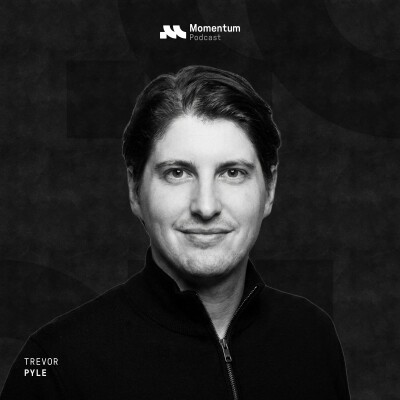
So, Trevor, you work for AdProfound. I'm sure a lot of people in my audience don't really know what... Profound does or is. Can you just explain the company in the context?
- Speaker #0
Yeah, yeah. Happy to. So we're about a two-year-old series C company. So I haven't been around that long. I've gone through a few rounds of fundraising and team growth since then. I started when we're around 25, 30 employees. We're around 280 right now. Have offices in New York, Buenos Aires, London, and San Francisco. The core of what we do really... kind of boils down into two beliefs. One, we think that answer engines like ChatGPT, Claude, will be the primary distribution mechanism in which that people actually gather information. They consider products, whether that's B2C, B2C, or B2B. They make purchases, they make decisions. We think that they're going to be heavily influenced by these channels. And we think that this is, and we're seeing, this is only growing significantly. So this is going to change the face of commerce, change the face of marketing, even the face of the internet itself. So that's kind of our one core belief. The second that we have is that marketers will use agents to do their work better, faster, and at higher quality. So we kind of supply solutions for both of those different routes, right? How do you understand how you show up as a brand in things like ChatGPT versus your competitor? What's the sentiment? What's the accuracy? What are the questions or prompts that you care about that you'd want to make sure that you're showing up in and then showing up in favorably. And then holistically as a marketing team, how can you use agents to produce the right types of content, the right types of campaigns to make sure you show up in answer engines, as well as other marketing channels. And we're kind of expanding there right now. So that's pretty much what we do.
- Speaker #1
Okay, cool. So, yeah, AEO, GEO, this is like the new big topic for a lot of companies. And you see a lot of things like on Twitter, on LinkedIn, you know, like AEO, GEO is killing SEO. I think your take... on this topic is different than what people say on LinkedIn, like SEO is dead. And I'm interested to know a little bit more about what you think about this.
- Speaker #0
Yeah, yeah. I think like SEO is maybe more of like a function or a way of working or even more tactically, the people within that group have received a big opportunity for empowerment here. I think SEO used to be seen as kind of this like dark art, like... how does it work? It's one thing to make sure you're ranking in the top 10 blue links, right? And I think the problem set is fundamentally different. It used to just be about visibility, ranking high, oftentimes, like, not a time, sorry about that, the amount of time that you've had a page available, the domain authority, the backlinks that you have kind of dictate that placement. AO is quite different, but it's fundamentally similar in a lot of ways. The prompts and the questions are more long tail. And it's not just giving you say, you know, like, here's where you'd rank on a page and your specific visibility. It's giving you actually like influence and guidance and structure to an answer and being prescriptive about what it suggests pulling from its corpus, which is much larger than what Google pulled from. It's looking at own content, third party media, all these things. So I think that this means that SEO is now can get outside of just kind of their own media and own website and work into PR, work into comms, even work into like content operations and more technical teams, making sure everything is agent crawlable, getting closer with the product team to make sure that like releases and deliveries are showing up on the site faster. So I just think it actually gives them a lot more latitude. And I'm going to turn off my calendar now, which is quite exciting.
- Speaker #1
Okay, cool. And I feel then we can maybe open also the topic of the brand, brand building, working in your brand, etc. Because as you mentioned, like historically, when you wanted to invest in SEO, you actually invested in your own domain. And now you need to think about how to expand things to other domains. And so you worked on, like you mentioned, PRs, for example. I really feel like PR is going to have its... own second moment you know yeah and and so now i i you know like 10 years ago people were like yeah pr is dead and in fact it was mostly dead and now it's like oh i really want to invest in in pr and so i think we need to think about brand as like a topic a different way than five years ago, how would you advise a company on... you know, thinking about their brand?
- Speaker #0
Yeah, yeah. I think it's a good question. I think it's a big question. In terms of like PR and what I would even maybe broaden to what I would call like offsite, things being like, yeah, your traditional PR channels, but then also some more of your influence networks like LinkedIn, G2, things of that nature, Reddit, Substack. It kind of depends on who your audience is, what types of prompts you're tracking, where it pulls that data from. But anywhere, any medium that has those like real conversations and authentic conversations and perspectives about a brand, what you all do is really important. And I think what's interesting is LLMs and agents are always looking to validate kind of the answers that they're building based on the prompt set that they're answering. And they go to third party and like trusted authoritative sources to do that. And often that's coming from human discussion. So that's why LinkedIn, Reddit, all of those folks. are going to be really popular and very important for you to invest in as a marketer. So I think like, unfortunately, the job as a marketer just got a lot harder because you have to cover all of these different channels and be there, be relevant, be fresh and consistent, primarily too, because agents and LLMs are often pulling from content that is less than 13 weeks old. Whereas SEO used to be, well, we have this one pillar page that's performing incredibly well. and it's just going to stay ranked, stay number one for months, if not years, it's constantly cycling in and out throughout agent responses based on different prompts. It's something that's a lot less deterministic and just a little bit more challenging. So I think for modern brand building, you just have to think about like coverage and reach in which everything you're doing. So you have one product launch. How do you get that into as many channels as possible, as quickly as possible with authentic, authoritative. validated and detailed content. I think in terms of like building brand too, that's, it's a little bit outside of the, the AO context, but anything that you could do to create more humans talking about what you do in a positive way is going to support AO. It's always supported like typical B2B buying, but it's important, especially important with AO too.
- Speaker #1
Okay. It's directly linked to a question I wanted to ask is you've said something that is attention is the new mode. And I think this is directly linked, you know, to what you just mentioned. And I think you would, yeah. Can you please elaborate on this attention is the new mode? I think it's an interesting take.
- Speaker #0
Yeah, yeah. And I will 100% admit that I have stolen this from George Bernanke at Ramp, who's their VP of growth. And I think that they've just done, they've been a long time user profile and talked to him a few times. He's spoken at our conference, Zero Click. And I always just think his perspective is really interesting because he came from being like an analytical chemist to being a very performance channel driven marketer to being somebody who's like, yeah, we should probably do some like stunt marketing and brand things because that's just what work is working. I think that traditional performance channels just got pretty like watered down and just like very, very crowded. And it came very hard. CPCs were rising like all of us saw this. And then I think especially with the advent of AI, new competitors are in the field left and right, right? Like YC is shooting out companies every single day. And I think it's hard to like just maintain that category dominance, just from pure performance. I think that you have to stay top of mind for people. And I think the B2C and B2B are blending. So getting into the channels that people just people not like enterprises or you know, companies are in is really, really important. and staying on top of it. I think that most good B2B teams will kind of start to treat an arm of their marketing department like a... production house, like a media group that is creating generally like valuable, beautiful, aesthetically pleasing content that is related to the value prop, but is more related to connecting with the audience in a more detailed way. So I think that you can create attention with kind of that quality of content. And then I think you can also create and maintain attention with pace and velocity, making sure that your engineering team, your product team, your marketing team is making launch moments for everything that you're doing and just trying to stay kind of like above the bubble as much as possible. So kind of quality and pace are really important for us here at Profound. And I think that's the way you kind of capture some of that attention.
- Speaker #1
Is that what you call aura?
- Speaker #0
I think so. I think aura is maybe like, it kind of started when I was talking with our CEO and co-founder. And, you know, I thought it was very fun that he thought that that was one of marketing's most important metrics to track. And I agree with him. And we do believe that it's just downstream or if you just kind of create like a coolness around what you're doing, the people at your company and what they're doing, investing more in employee brand and things like that. I think it creates more trust with your buyer and it creates more believability. If you're saying, you know, hey, this the face of marketing is changing. New roles are emerging. Here's how you approach. You know, these things never existed. They're nascent. So I do think that you have to have a little bit of like aura to create some belief and believability. And I think that's why you're seeing like a lot more marketing teams, like making the people in their company a lot more apparent and making them those people like influencers of themselves and micro channels and moving away from like building on the actual, like how many followers does the brand page for LinkedIn have? Maybe that matters less than how many followers like James or our CTO or head of research or myself. have and how that matters to the respective audience. So I think that like by investing in the people, you just create some more interest around the brand. So yeah, I would probably define that as aura. And then just doing things that are just genuinely not boring and interesting. That means taking swings and like missing sometimes. But I think maybe we're in a little bit of a TikTok brand culture, unfortunately. And that's how you have to capture some of the attention.
- Speaker #1
So yeah, if you've got like the trick not to be boring, I'll take it.
- Speaker #0
Yeah, yeah. I think it's, I think you should always follow what great leaders are doing. And I think you should look into B2C more, like as a B2B marketer. Yeah,
- Speaker #1
I agree. I agree.
- Speaker #0
Go follow what Liquid Death is doing. That's a, they're a water company. They're like, but they are a marketing machine. Like, I mean, even like how Taco Bell is consistently launching products and refactoring things and doing interesting collabs and things like that. Like, I just think there's a lot we can learn from what those boys. very creative and consumer brand marketers are doing, as well as following some of the B2B greats too. And like starting at the top, George is great at this. The Ramp team is very good at this too.
- Speaker #1
And so, yeah, I was about to say, disclaimer, I haven't posted the episode yet, but I just recorded with George an episode. And so, yeah, we can send the listeners to this episode because we discuss about the stunts that he does at Ramp, et cetera, et cetera. So yeah, it's directly linked to this.
- Speaker #0
He's awesome.
- Speaker #1
Yeah, he's great. It's great. All right. So great. Getting back to Aura brand, et cetera. How do you measure this? Because you mentioned different metrics like, hey, my follower counts on LinkedIn, like the personal follower counts, et cetera, et cetera. And your CEO admits that for him as well, like Aura is a thing. But how do you measure this? Like what metrics should you follow?
- Speaker #0
Yeah, yeah, no, it's a really, it's a really good question. And I don't think I have a super like, here's exactly what you measure and put in front of finance. But I have a perspective and what what works for us as well. I think one, which is you should look at performance lift across all of your channels, right? I think that that makes sense. It's it's traditional brand marketing, right? Like, are you seeing in the direct response digital channels, the performance is approving alongside a brand campaign? And maybe that's geo fenced into this. specific like geos and areas that you're targeting. Maybe it's not. You just want to see if that's like working and improving. I also think that like in-person events are very important for us. So I think seeing the type of pull and demand that you get whenever you launch an event means that you've built aura properly. Like if you create an event and you have a wait list for it immediately, you've done something right. If you have people like just clamoring to get in the room because they think that they're going to learn a lot, they think there's going to be other cool people there who are kind of pushing the boundaries. They want to meet members of the profound team. You've done a good job. I think like a third underrated category that you should look at as well is employer brand. So we track source for a lot of our people who are coming in and joining the team. And I know it sounds a little bit silly, but like when we see consistently, it's like, oh, I saw this video on LinkedIn or I saw you're out of home in the Union Square subway station, or I saw the truck that you all bought and drove around Union Square during the Knicks finals game, right? Which are very much like aura activities. I think that that's like very cool to see. And then you kind of create this like confidence within the internal team that they feel like we're constantly externalizing the work that we're doing that creates like this kind of flywheel momentum internally. So it's not always something you can measure, but it's something that you can feel. And I think just having consistent check-ins, like literally like, you know, every couple of weeks, like what's our aura meter at? How are we feeling? What else are other people doing that's cool? And how do we loop that into our brand? just like quickly moving on that is something that we do. So it starts with the traditional performance channels and then it works all the way down to employer brand and confidence your internal team has.
- Speaker #1
The number of candidates that you have is actually a really good KPI. I feel to have a fill of your aura on the market. I think it's interesting.
- Speaker #0
Yeah, it's kind of a good proxy for us, actually. They just mentioned, yeah. you all are doing cool work. I see it. It seems like a company that cares about you.
- Speaker #1
I want to be part of the story. It's the right message.
- Speaker #0
Yeah, yeah. I think for us, it makes a lot of sense. And I think another one you could look at is how often do other brands, and I think we're in a fortunate place where we market to marketers. So we kind of have to up-level and take swings consistently. If we do run-of-the-mill stuff, marketers are just going to kind of roll their eyes and keep scrolling, right? But if we're able to measure like for our customers that we bring on, one, we make them successful. Two, how likely are they to co-market with us to record a customer story together? How much do they want to attach their brand to our brand in a way that they think actually benefits them and benefits us? So I think you could just kind of look for that like attractiveness your team has to from other marketing teams. And that's a that's a good measure, too. But it's it's. It's definitely something you can feel and not always measure, but you should see in performance channels.
- Speaker #1
Do you feel what are some good levers that you can play with that have a really big impact on this topic? Because on my side, I feel that, for example, raising a lot of money is actually something that attracts a lot of ground to co-market with you, etc. You know what I mean?
- Speaker #0
Sure. Yeah, yeah. I mean, that helps. I think making every single thing possible, a marketing moment. Like, think if there's a story to tell on anything that we're doing. I think that, you know, I come from a product marketing background. So, you know, maybe a few years ago, I might have thought, okay, well, this is a tier one launch, a tier two launch, a tier three launch, like whatever. And here's the bill of materials associated with each one of those like launch kits. But I think that that's kind of the wrong way to look at it. Maintaining a constant product velocity and launching every single thing that you do, whether it's like an integration or a smaller update, like it's the coolest thing in the world and putting a ton of production quality and value behind it and just making sure you're architecting your team to move fast on that stuff, I think helps to build this. I think the more that you can make your product feel just alive and visceral and kind of from a competitive set, like the customers looking at you versus a competitor being like, how would anybody compete? With them, I see a new product launch like three times a week. And obviously you have to have like a good engineering team to do this, but I think you have to have a marketing team that's really attached to any of the output that engineering is doing and making sure to make a story of it and have the system set up to like do release marketing really fast. So I think that that's one mechanism you can pull to kind of just make your product feel very alive that bleeds into Aura pretty quickly.
- Speaker #1
I think the best example of this is Anthropic.
- Speaker #0
It's unrelenting, their pace, right?
- Speaker #1
It's like every two days there is like a product launch.
- Speaker #0
Yeah, No, I think that they do an exceptional job at it. And it's always pretty, pretty impactful. And I'd say that's definitely something that we're trying to follow that playbook as well.
- Speaker #1
Yeah, it's really inspiring because like even the smallest feature, the smallest thing, you know, it's is a marketing moment for them.
- Speaker #0
Yeah.
- Speaker #1
There is the video and then there is like on YouTube and on Twitter and on LinkedIn. And then there is people sharing and there is some employees discussing about how they use this feature every day. And, you know, like everything is so well engineered. It's great.
- Speaker #0
Yeah. And there's a lot of just like manual kind of like legwork that you do internally. Like maybe it starts from the top, right? If you give people who are excited about working here because they know that we work in public and we're very marketing forward, they probably like to do that as well. They probably have friends and networks that like to do that. So like you have a big launch, you do have one of those tier ones, you like activate the group chats, right? And you talk to the folks that are excited about what you're doing and just use your employees as channels to just create like a lot more groundswell underneath it. So I think that that's like, that's one lever and systematizing that can be quite powerful. And then I think also like looking at creators and influencers, and I don't think that you need to like look at them as a channel that just helps you, you know, like programmatically increase reach. If you insert, you know, X amount of money, it's more so like find the creators and influencers in your space that are like philosophically aligned to what you were doing so much so that they would come and give your product team feedback. and be very valuable because then they'll write kind of more some of those like depth perspectives on what you're doing if you're forming relationships with them. So then I think you get the reach and the depth if you are actually doing like quite a big launch.
- Speaker #1
You know, most CMOs and marketing teams, they think about a launch as, you know, this kind of big bang moment, the one big thing. And you mentioned that you've got like a tier one launch tier 2, tier 3 and
- Speaker #0
you work in kind of a you're trying to create a system around these launches how do you think about that how are you organized internally to manage this yeah i mean i think maybe this is more of a cultural thing but we are very very in person day and night uh new york based company and marketing sits actually with our engineering team um so we just stay super super close to the engineering team and can just peep over and be like, hey, Raheem, what are you working on over there? We also have like quite a strong culture of engineers being very empowered to share what they're working on. Like not every information bit flows through product management. Sometimes engineers will just be like, hey, I talked to this customer. They said that this would be valuable. I built it. What do we think? Can somebody merge my PR? And then we demo that at the end of the day, right? So like just kind of like from a physical perspective, we stay really close with engineering and product in that regard. And I would then say from like more of like an alignment perspective, we kind of work like a product team. So we do like weekly Monday morning standups, sprint planning, like what is our social distribution strategy look like this week? Because everything ends up on social. So everything else is downstream from that, whether it's like emails, webinars, whatever. So we know that that can kind of be our North Star. And I think that just allows us to stay, stay really close. So you have to have a product marketing team and a product. a marketing team that's like hunting for things that are valuable, hunting for stories that we could talk about and an engineering team that's like revealing those consistently. So it's a good, it's a good feedback loop and cycle.
- Speaker #1
What did you have to unlearn working this way?
- Speaker #0
That's a, that's a really good question. I think I had to learn how to like parallel path a lot of things that I would have typically liked to have buttoned up, meaning like maybe we have the customer story prior to the launch because we have this extended beta period, things like that. We know exactly how we monetize it. And you can see I'm coming from a PMM-minded lens here. I think some of the things that we've stayed in place, if it is a big tier one launch, we still want to go through our media outlets, kind of talk about the importance of that. But I just think there's a lot more pre-work that you can do. And there's, more importantly, a lot more post-work you can do. The launch is just the start. Then you relaunch it. Then you relaunch it again. Then you have social proof layered on top of that. Then you have somebody, you know, an adoption story layered on top of that. So I think what I unlearned is like having to have everything perfectly buttoned up and that with AI and the way we've kind of like architected our company, enablement is a lot more fluid. We can get people up to speed a lot quicker on what we're delivering, what we're watching. And I think if you just like we have a core value here of fractal speed. And if you just like. to maintain dedication towards making sure everything can go as fast as possible. It's a little bit painful at times, but you kind of just have to force yourself to build systems that work in that type of environment. And that's what we've done. So I think that we can just like have a moment in a story and then kind of layer everything else on top of that. And, you know, all that's to say is like, we're still building it. You know, we've grown in headcount, however many X over the last year. So we're definitely still learning and growing.
- Speaker #1
Cool. One topic also you mentioned is events. I'd like to ask questions around events because you've got like a big event strategy. And so even before I started the recording, we were discussing about events. Like you do a lot of events internationally. Now you've got your series, Zero Click. Is that the name of the series? Correct. Zero Click. And so, yeah, walk me through how you think about events, because I think you mentioned while we were preparing this episode that you'd... don't think about events as a way to, or you think about it as a way to generate pipeline, but you don't have like an objective of a pipeline number with the event. Yeah. Just walk me through how you think about events, the way you work on this.
- Speaker #0
Yeah. Yeah. I mean, in a quickly evolving competitive market, I think that events done really well, and I could kind of get into that, are the quickest way to create like sustainable brand attachment with the people. who use your software and are buying your software or buying into your brand, right? Like this, this category, the face of marketing, the structure of marketing teams is changing all the time. And I think for some people, it's like, frankly, like scary, like, hey, this thing that I used to do, does that exist anymore? There's this new technology. Where does that sit? Like, what's a marketing engineer? How does that work into the team? You know, are they building systems that replace me or augment me? So I think there's like a bunch of, and the answer is augment. And I think that there's a bunch of like questions around there that like if you just bring people together, there's a lot of value that they have in speaking with one another, building trust with one another. And I think if, you know, you do look at it where it's like, OK, here's the budget. We're going to set up the channel strategy and you're looking at events as a pure play like money and pipeline out. I think you need to broaden it to that. I think that you can do a lot of incredible social distribution with events if you do it well. and you capture good content at the day of the event and you have very, very good design that you can ensure it looks very good so that the event itself looks good. I think you can focus more on customers and make it more of a retention and activation play, especially if you have a usage-based model. And yeah, we're going to get, you know, Greenfield accounts and folks who haven't heard of us in the room. But I just think it's a very powerful brand moment that you could distribute on social and then have that content live on. So yeah, we had our first zero-click event in New York. I guess, you know, a little over a year ago at this point, there was around 300 people there. A couple of weeks ago, we wrapped up our most recent zero click and we had about a thousand folks there. Some amazing speakers at big enterprises and then a few thousand on the wait list. So I think that we've done the brand work and kind of the aura work to draw people into those events. And then we're all like very much, I mean, one book I put on every desk for every marketing team member that joins this book called Unreasonable Hospitality. which is by the owner of 11 Madison Park, Michelin starred restaurant. And it talks about how you can just bring excellent, unreasonably good experiences to every single customer interaction that you have. And we practice and preach that at the events and make sure that everybody has the best possible time, words as much as possible, take every detail into account. And I think you can create those very good brand experiences. So yeah, we've created good demand for the events and now we're going to go global and have. Big versions of Zero Click, smaller regional versions of it, and just really kind of create some community around this new way of marketing.
- Speaker #1
You know, you just made me think about something I read, and I was like, yeah, this is so spot on, which is the difference between a four-star hotel and a five-star hotel is not like the five-star hotel is not twice as good as the four-star. It's maybe 20% better, but these 20%, it's like... all the difference it makes all the difference and so you know it's like the mattress is a little bit better and then you've got someone the way you get welcomed into the building is a little bit better and then you know there is all these little things that the people uh were did on the way to your room and blah blah blah and you know when you think about that it's like yeah you're ride. It's like, it's not twice as better as the four-star, but Because they thought about all the opportunities they had to have a great experience, then it became a five-star hotel. And so it relates a lot on what you just mentioned. You should take all the different opportunities to create a great experience for the person, especially when you think about events. And this is what makes the difference between four-star and five-stars. Yeah,
- Speaker #0
yeah. And it is genuinely the tiniest details. I mean... Another one of our core values, which we're, you know, pretty, pretty passionate about is obsessive craftsmanship. And that means that, like, you know, I won't even say what time in the morning before the event we're checking every single little pixel on everything and probably invest unreasonable amounts of design resources into the look and the feel of aesthetic of everything that somebody would see. We try every single piece of food that will be served at the conference, try every single drink. We go and listen to any bands or musicians that we bring on. We will like do site tours of the actual venue. And this is my head of events and experience, Kate. She's phenomenal. She'll walk into a place and just envision the soup to nuts, like customer experience you have. What's the first thing you see? What's the last thing you see? And she will then like bend the laws of physics to force these venues to get into the exact experience that we want. And I think you just have to build a coalition of people who. think like that because that's how you create customer experience, which is how you create brand differentiation, which is how you create revenue.
- Speaker #1
Yeah. How do you think, so how did you build your team? Because now, especially, you know, there is, so you do a lot of things offline, like you create relationships, et cetera, but your business is around AI. Yeah. And so thinking about how to embody the vision of the company. plus having this relationship kind of things. How do you think about your marketing team?
- Speaker #0
Yeah, it's a really, really good question. I'd say the kind of like the core and foundation of the team is in product marketing. We definitely have a, you know, a good size like product marketing group, I guess like comparatively from a ratio to other functions. And they kind of act as like full funnel, full funnel PMMs, like looking at campaigns and all of that stuff. And that... is because they stay very close to the product. And I think that, like I said, that's like phase zero of it is to make the product feel alive and to create that pace and velocity, mainly within product launches. I think it like kind of like bifurcates into two areas where we have people that are ultra technical, marketing engineers is what we call them on the team, who are thinking about the workflows that every other team is doing and trying to systemize it, systematize it, to improve it, to optimize it, to help it scale. So they're kind of looking at it from that perspective. And then we do have that brand, Heavy, who is just thinking about the in-person experience. They're bridging into like ABM and digital and things like that. But I think having like the core group of PMM and comms and content, then kind of very technical, like looking at how to like up-level the rest of the team. And then very in-person, hospitality, field-driven over here creates like a very, very good dynamic. of course. I'm leaving people out, but it's like, that's, um, that's kind of the structure that we're, we're building into.
- Speaker #1
Great. Um, one hard question is how do you think about attribution? Cause the reason why I'm asking is cause you know, you, you said you don't really tie the, even to a pipeline number you the full event. Yeah. At the beginning of the recording, you mentioned the fact that now with AEO, GEO, you need to think about Aura and the way your brand appears on other websites, etc. And so how do you think about all these attribution topics?
- Speaker #0
Yeah. So I think what we do is we, one, we have a very good data science team. So we build telemetry to understand what campaigns are attached to what contacts and things of that nature. So we can start to look at like, what's the what's the mix of a deal. So we can just see deal from start to finish, what were all the touch points. And then we create some models and kind of intelligence around that. I'd say like more structurally, we don't look at well, this is coming from this channel, and this is coming from that channel or this exact source, because that just kind of like breaks down if you really dive into it. And that's why I think you need more of like a mixed model data science approach. I think in general, though, when it comes to like attribution, and maybe what like what a lot of marketing leaders, you know, hate having to deal with is like, what is sales providing, you know, outbound versus what is inbound? What does that ratio look like versus partnership? Like, are we keeping it all even? My head of sales and I, a guy named Mark Ebert, who used to run sales at Sixth Sense, he's phenomenal. He and I are kind of just like revenue. Revenue at the end of the day is what matters. We're going to hold each other accountable for like what we feel like is working, what we're hearing is working. But if a rep goes and outbounds, And it's because somebody saw a billboard or they attended one of our events or whatever. That's the ideal scenario. I don't want everybody coming through perfectly attributable inbound channels like the website or something like that. My goal is just to create as much pipeline as possible, regardless of where it comes from. And that philosophical alignment with sales leadership and with the leadership team. even up to our board is like, is quite important. So I think about attribution more from a like, what can I optimize perspective? Less so from like, what's the efficacy and output of my team, if that makes sense.
- Speaker #1
Yes, but at the end of the day, you have to manage a budget. You have to negotiate a budget with your CFO, et cetera. And you still have to take the decisions on where you'll put the money on, you know? And so-
- Speaker #0
I think that's the first part. So I think that's the optimization lens. where I can see,
- Speaker #1
okay,
- Speaker #0
from like a mixed perspective, this thing seems to be, or like this channel or campaign seems to be showing up a lot more across our deals than X, Y, and Z, right? So I think that we still take that approach and can kind of see a stack ranked, but it's just less so like fighting over attribution. It's just getting more of a detailed look into attribution and then understanding like where we should be putting more resources versus less resources. And then I think a lot of it is just like, passive listening and asking questions too. We have a significant amount of gong measurement that we do listening to all calls. We have win-loss analysis that we do to understand like, okay, what actually drove the deal forward. And then I think if you're not doing this as a marketer, you should be. Simple. How did you hear about us? How did you hear about us on a forum? Oftentimes you will hear, well, through AI search or an event, or I saw a billboard tracking that. And then also train your sales team. Like these are marketers. So they We'll talk about this, at least that we sell to. First call, question on call. Thanks for taking the time. Like, how did you hear about us? Right. And then track that. So I think we mix the qualitative and quantitative and can get a good feel and then just have a discussion with the revenue team of like, what do we feel like is working? And then just staying very closely aligned with sales so you can keep a pulse.
- Speaker #1
Nice. What's your next steps with the...
- Speaker #0
profound like what's the ambition in the coming years because you mentioned like you've got new products etc like i'm uh i want to know everything yeah yeah yeah i'll i'll tell you what i can um so we've we've definitely started with this like let's give you the best possible analytics and insights into this new very important channel in answer engines right and and we've done that and we'll continue to do that um i think where we're going next is you know we believe that like Effectively, like, you know, developers have something like Cursor, lawyers have something like Legora or Harvey. We don't think that marketers have their agentic building platform quite yet. And that's where we see the white space and the opportunity. So we recently released agents that will, yes, help you optimize, create content, help you create campaigns to show up within answer engines, but are also bridging into other things like PR mentions, social monitoring, competitive monitoring, even getting into like paid ads and things like that. So we're going to start to get across all different departments of marketing, whereas we've started with SEO, AEO, content PR, and PMM. We're now going to move into paid and demand channels. So we're actually releasing something we announced at Zero Click called Ad Studio, in which we will be able to design and deliver ads to go into ChatGPT from Profound using the organic visibility data that we have and some of the agents that we've built. So we have a lot of customers that are very excited about that. So we're going to start.
- Speaker #1
seeing ourselves going closer to the paid teams and then just continue to build on this agentic platform so that kind of like all content web and lifecycle workflows really go through our agentic platform nice i wanted to ask it makes me realize i forgot one question before but i just remembered how do you manage the tension between uh marketing for FOMO and marketing for excitement. Because you're in between, I think, the space you're in. Like you address a lot of fear, but you also address a lot of excitement.
- Speaker #0
Yeah.
- Speaker #1
How do you balance this in your marketing?
- Speaker #0
It's a really good question. For better or for worse, I think we try to bridge way more towards excitement, at least on the marketing side. Maybe when it comes into the sales funnel and discussion, we're getting closer into ROI, you start looking at more of like... the opportunity costs from not being present or utilizing this channel. But from our marketing perspective, it's very much about empowerment. We focused heavily in community. That's these zero-click events. We focus in profound university, which is, yeah, how to use profound. That's a small segment of it. Most of it is how to build agents and whatever platform that is for marketing use cases. Understanding AEO fundamentally, regardless of what you're using, and helping to support there, and making sure that the teams that are adopting AEO feel very empowered and feel like they're kind of going to be the orchestrators of the future of marketing. I even think investing in like... this new role and this new concept of a marketing engineer and saying that that should be a head count that reports into the head of marketing and building agentic systems across the team is really trying to say that there's a lot of opportunity here for people to grow from all different backgrounds. And I think for marketing, you just get more and more powerful. Like, you know, don't tell this to my friends in product, but as product gets easier to build, I won't say the word taste, but I think that it means it's a little bit harder to make sure that your brand is staying. top of mind. So I think that you actually have the liberty to do a lot more creative and traditionally like fun marketing things, as opposed to maybe some of your more standard, like performance marketing that you've done in the past. I think that's that, like, you know, the creative and brand side of the house has always existed. I just think there's more latitude to go and do that because it's kind of a requirement due to the, you know, concentration or competitiveness of the market.
- Speaker #1
Interesting. All right. Well, Trevor, thank you for people who want to follow. profound, tried a product, et cetera, where do we send them?
- Speaker #0
Yeah, I would just, LinkedIn's a big distribution channel for us. So follow myself, follow James Cadwalader, our CEO, Dylan Babs, our CTO, as well as our branded account. And then on the website, I'd say one thing that we have is like, we try to build, again, sitting with engineering, a lot of really valuable utilities. So if you wanted like an AEO report of your website, of your app, we've got something that you just plug in your email and it's really easy to get like a full readout of like sentiment at sense. prompts for you and does kind of a brand analysis. It's quite cool. And you can try out some of our agents. So a few ways to go there. And then my DMs are always open as well.
- Speaker #1
Thanks, Trevor.
- Speaker #0
Cool. Thanks so much, Jordan.