- Speaker #0
So we have farmers who say, well, it's ridiculous, we use diesel tractors. Diesel is very inefficient, so we should be able to have electric tractors. But everyone told him it's not possible, and he said, well, I think it is possible, I'm going to do it. So as Violant, we were able to support this farmer with some funding to just put his ideas into practice. And he has now developed a tractor that allows him to mow at the same speed and at the same width as you would do with a big diesel tractor. but completely electric. We have a whole group now working on the quality of manure. How can you get better quality manure with lower emissions that feed your soil better so you can get better grass growth without artificial fertilizer, healthier cows, and then look at the whole cycle. And there's a lot of potential in those kind of improvements. And there's a huge amount of creativity and innovation among the farming community. And... Tapping into that opens up a whole new world of possibilities and that's really what Binot has done.
- Speaker #1
Hi Toast Hello How are you feeling today?
- Speaker #0
Very good, yes, it's lovely to be here. It's nice and sunny.
- Speaker #1
Yeah, where are we actually?
- Speaker #0
We're in the middle of the Western Peat District, as we call it in the Netherlands. So we're close to Amsterdam. It's the Green Heart area. It's the Green Heart of the Netherlands, a lowland peatland landscape, but surrounded by the biggest cities in the Netherlands.
- Speaker #1
Great. And maybe you could start by introducing yourself for the listeners.
- Speaker #0
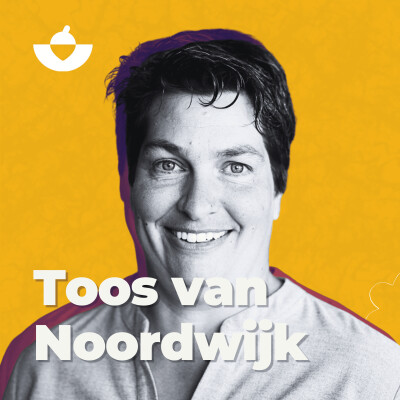
I'm Toos van Oordwijk. I'm director of Weiland. And Weiland is a charity that works. with farmers on creating a healthy and resilient landscape here in the Western Peatland District in the Netherlands.
- Speaker #1
I really want to try and bring our viewers and listeners today like visually into this story. So maybe you could start by telling us more about this region, where we are, what it looks like, what the ecosystem is like here.
- Speaker #0
Yeah, so if you look around, if you could see outside our window here, you see a typical Dutch landscape with Grassland, meadows, cows, it's an important area for dairy farming. Originally, it used to be a big swamp. So it's a peat area, lowland peat, which has been exploited for many centuries and drained for farming and the land improved for farming. So now you see a lot of, there are a lot of dairy farmers who... And it's an important area for meadow birds, for example. And it's an area where a lot of challenges come together. So there are a lot of ecological challenges. The biggest challenge almost is soil subsidence. So because to use it for dairy farming, you need that the soil needs to be steady enough for cows to walk on it, to get on it with your tractor. So we lower the water table and pump the water out. So quite a big part of this area is below sea level. Some areas are four, five, six metres below sea level. And by pumping that water out, you get a more solid soil to work on, but also you get carbon emissions from the peat that is degraded within the soil. And that creates soil subsidence, so the soil is lowered further, which means that you need to pump more water out. So it's a And we're now at a point where you can't do that any further because the water table is so low, the land is so low that you get saltwater infiltration from the ocean. So you get saltwater come in, which your plants, your grass doesn't like very much. So that is a big challenge. There's huge emissions, carbon emissions from the degrading peat, which is a challenge. And then there are all the other challenges that are everywhere in the Netherlands around nitrogen deposition, around biodiversity loss. water quality, etc. So there's a lot of challenges coming together. But there's also another type of challenge here, and that's the challenge that farmers face. They have an ever longer list of demands from the government of what they can and especially what they can't do and what they need to do. They need to produce food, and they're under more and more pressure to keep producing. The bank tells them, well, you need your margins, so you need to scale up all the economic. incentives to farm bigger. But at the same time, there's all these restrictions. So they are really feeling the squeeze. They really care about the land they farm on. But they're really stuck in how they can farm. And that has huge social implications for the... Villages and the communities living in this area. So there's ecological challenges, but equally there's social challenges. And because they're ever told more things they can't do, that isn't inspiring either. So that's a lot of challenges together that we need to get ahead of. And the challenges will only get bigger with climate change. So that's another level added to it.
- Speaker #1
It's tough, right? Because this is an ecosystem that's very, very important. Ecologically, it's peat ecosystem. Like you said, it's a lot of biodiversity, a lot of carbon, lots of water and all of that. And so we've decided over centuries to drain that, to adapt the landscape to be more productive for farmers, right? So now we have people living here, farming here. It's their livelihoods, right? And you have a system that is pushing them to be more and more productive. And at the same time, you have... citizens and the government saying well we need to protect those ecosystems so you need to be to follow more rules in order not to destroy this ecosystem so in the middle of all that you have farmers kind of squeezed from both sides that's absolutely yes that's that's very well put and those farmers feel the
- Speaker #0
pressure themselves as well because poor water quality affects the cows that drink from the water um the drought uh this summer we had a really really dry summer that affects the grass growth, which... directly affects the income but they're already in this squeeze um and they know they don't know what other uh restrictions will come their way what climate change will bring so so yeah this the farmers are the ones feeling the squeeze the most i see i see that that explains a few things already because i remember was it a couple of years ago i
- Speaker #1
live in belgium and i saw a lot in the media uh stories coming from the netherlands where the farmers were protesting against um Regulations, but against ecological regulations, right? And me being, you know, an environmentalist at heart, but also understanding the struggles of the farmers, I was kind of confused because I feel like we need environmental regulations to improve our ecosystems and to fight climate change and to survive on this planet, right? At the same time, if the farmers are so unhappy, they must have a reason. So I didn't really quite know what to make of that situation.
- Speaker #0
Yeah, I feel very much the same. I'm an ecologist by background, so I really understand the ecological challenges and there's a restriction to what you can do ecologically in an area. But I also really understand the struggle of the farmers who really, really care about their land. And one of the things I've been really impressed with that farmers are actually one of the only groups that think long term. They always think about the next thing they can do with the farm. how they can pass it on to the next generation. So they think much more long-term than almost anyone else, and certainly than their neighbours who protest about the thing that is happening right now, and also much more long-term than policy usually does that, well, at best works in four-year cycles of elections. So it's an amazing group to work with, but you have to dig a little bit deeper. And if you start to understand that they're actually in the middle of this squeeze, And They're ever more told what they can't do, but they're never told what they can do and where they can, where there is space and how they can develop into a future where they can, well, that's inspiring and where they can create food because they all, they're really passionate about making good quality food. And that's what they want to do. And therefore, and that's not really recognized. And at the same time, they're They're almost being scapegoated for all the challenges, even though they've also always only done what policy and society asked from them, producing cheap food at an ever bigger scale. So it was more economically viable.
- Speaker #1
Yeah, yeah. It honestly, it feels crazy to me the way we treat farmers today. When we understand their importance to society, to feed us, first of all, that's what people know about, right? But this is already huge, like feeding us. But also they're the steward of the land. So we need healthy ecosystems to live, to thrive. And they're the ones taking care of that land. So if we want the farmers to produce food, feed us, and take care of our lands, take care of climate change, of biodiversity, of water, of all of that, how crazy is it that we treat some of the most important, crucial members of society this bad? I mean...
- Speaker #0
Yeah, no, I totally agree with you. It's very strange. it is It partly comes from that we look at farming as an economic sector, just like any other economic sector. Yet we also expect them to look after the land, but they don't really get a reward for that. So we do have some microenvironment schemes, but they at best cover. over the costs of doing the maintenance but it's not part of your income you're you're not allowed to earn an income from it yet we uh expect you to do all of that work but you only get an income if you produce as much food as possible and that's that contradicts that's impossible um and then we threaten with more and more rules with more and more restrictions um so it's no wonder they are angry i totally totally understand that um No one likes to be told what they can't do. People get inspired by what they can do. So that's where we need to get to. What landscape do we want? What landscape is possible in this area? And what is coming at us with climate change? And what's possible then? And then look at how we can get there. And there's a huge amount of creativity and innovation among the farming community. And tapping into that opens up a whole new world of possibilities. And that's really what Bioneth has done. um and it's amazing to see um so we have farmers who say well it's ridiculous we use diesel tractors um these are diesel is very inefficient so we should be able to have electric tractors um but well there's a whole lot of technical detail why that is very difficult and everyone told him it's not possible and he said well i i think it is possible i'm going to do it so as violent we were able to support this farmer with some funding to just put his ideas into practice. And he has now developed a But basically a tractor that allows him to mow at the same speed and at the same width as you would do with a big diesel tractor, but completely electric. And it's up and working and he's very happy with it. And he now said, well, that's only the first mowing the grass, only the first stage. The next stage is to then shake the grass so it can dry. So he's now working on an electric shaker. We're really looking forward to what his next plan will be. That's just one example of. the innovation there is but we see that all over the place and once you bring that inspiration back once you look at okay but what could we do you see that the pride they farmers really take pride in in what they can create in the landscape the
- Speaker #1
creative power and the innovation and the the knowledge the science all of the all of it is there we just need to create the conditions for for people then to to create these new things with them Yeah,
- Speaker #0
and the collaborations to learn and explore together. So, farmers in the Netherlands are hugely well-educated, usually. A lot of them have gone to university, and they've learned a lot about chemistry and fertilizer and all of that. But they haven't necessarily learned a lot about the natural process and soil health and how they can work with them. But they're curious, anything that can improve their... their business and their way of farming they're really curious to learn about so that's one thing we do as Violent is offer courses but it's not a course where you're just being taught by your lecturer but where you actually work on a topic and learn about soil health but then also explore what the soil health is like on your farm and get specific advice on what you could do there and help with setting up experiments so you can actually start to see on your own land how it improves and what you can... do next and that often inspires farmers to then look at the next topic we have a whole group now working on the quality of manure how can you get better quality manure with lower emissions that feed your soil better so you can get better grass growth without artificial fertilizer healthier cows and then look at the whole whole cycle that's awesome there's a lot of potential in those kind of improvement
- Speaker #1
So what I picture right now is, okay, there are lots of farmers in the area. And some of them were kind of interested in soil health and different methods of farming. And they started experiments. But a lot of the farmers I've met so far doing this, they're very isolated. They're doing everything in their own corner. And it's very difficult. They have to learn everything. They have to find the tools. They're doing things different than all of their neighbors. So it's really lonely and difficult. So what I picture here is that actually a lot of different farmers in the area now are kind of gotten together. They've said, let's try this together, not individually. And let's experiment each in our own ways and share those experiments with each other and sometimes join up and partner up on certain projects and so on. Is that more or less the reality?
- Speaker #0
Yeah, absolutely. And certainly at the beginning, the farmers who started working with Violent were usually the farmers that were a little bit ahead of the game already. We're passionately farming in a nature-inclusive way and felt really isolated and alone. And I've had a lot of farmers tell us that actually it's so nice to join Vailon because finally they met. Other crazy people like themselves, and they were no longer the, as we say in Dutch, the gekke henkie, so the crazy one in the corner, but they actually started to see that there was a whole network of people thinking similarly and having similar interests. So we've played a role in connecting those people and bringing them together in projects and actually actively doing things together. But the network has grown a lot since then. We're reaching a much wider group of farmers who are just... curious and we've had farmers who are passionate about getting as much milk as higher production as they can with all the technical innovations they can get but they heard about a soil health course and thought it's probably not going to make me any dumber so I'll join anyway I might not be able to use anything but maybe maybe there is something I can integrate and and those farms just as welcome it's great that it's a wider group starting to just Bye. show an interest and curious what they can do. And from there, we really start this bigger movement of there's something for everyone. And we really believe that every farm should choose the solutions that work for them, that are right for the place where they farm, that are right for the business that they have. But be serious about the challenges we have and the challenges that are ahead of us. and then look at solutions from there. So let's just share our knowledge so you can make the best decisions for your farm.
- Speaker #1
Yeah. How big is the movement? Do you call it a movement and an organization, a network?
- Speaker #0
We call it a learning network. That's mostly what it is. We have over 500 farmers who have been on the journey with us. And some we work with really intensively and have been for years. Others have just done a course once. And, um, Yeah, look on our website every once in a Wij.Land that's it. Some farmers have, yeah, they felt the squeeze so hard that they decided to move abroad or move somewhere else and left the network. And those are some of the most inspiring farmers who've just felt they've worked so hard to get somewhere and felt the squeeze so hard that they, in the end, yeah, gave up. which I also, from a human perspective, really, really understand. But it's very sad to see. And so we really fight for a healthier landscape with better water quality, healthier soils, more biodiversity. But we also fight for a landscape where families have a future and where this social cohesion is there and is thriving and where people feel inspired and have a future to work towards. and Yeah, those two really go hand in hand. And therefore, I'm just so surprised at how almost nature conservationists and farmers are opposed in the Netherlands. I think, actually, together, you can create such a healthy landscape together if you look at that bigger picture and not stay in your...
- Speaker #1
Yeah,
- Speaker #0
battle pits.
- Speaker #1
You mentioned it earlier, farmers are not being rewarded for the ecosystem services that they provide. And so I guess that's a big part of the issue. You know, it's like if you want a nature conservationist and ecologist to work hand in hand with farmers, that maybe that would be a good idea would be to start rewarding them for the good things that they do, because otherwise it's just a cost and it's something they have to learn and invest in and risk that they have to take. So, I mean, you understand why they would be reluctant.
- Speaker #0
No, absolutely. And we did quite a lot of work on payment for ecosystem services. And so several projects where we really did a pilot with farmers and looked at what could they provide, what payment would they need for it, what would motivate them. And the outcome of those pilots was that farmers would be really, really happy to do this. They would actually go above and beyond. And usually they would undersell. what they provide in terms of services, yet it's really hard to make it work in the market. And that's partly because those paying for services one-on-one want lots of monitoring to know exactly what they're getting. And then the cost of monitoring makes the whole kind of economic sum not work. But also... Yeah. So it's if you put it just in the current economic system, then there's hardly anyone who wants to pay enough for it themselves. And yeah, it's you need either a lot of monitoring or you need to do it trust based. There is a lot you could do trust-based and actually give farmers space to do it. And obviously you need clarity on what you'd expect. But if you... um in a current system there's there's a real focus on the monitoring so you can prove exactly what you've done and then that costs so much that the whole system doesn't work i i fully understand that dilemma right between i mean if you just go trust-based it's it's the open door for some
- Speaker #1
people uh benefiting from the system and not doing really what they're saying they are and for some others to then you know uh not get their fair share i mean and i fully understand why then you would want... as much monitoring as possible so that you can tell the different stakeholders, whether it's the food businesses, whether it's the government or whoever's invested in that, here is exactly what we did and the outcome of it. Like how much regeneration happened on that land, how much carbon we sequestered, how much biodiversity came back, how healthy the water is, like all of these wonderful things. What frustrates me is this feeling that we're not really moving forward because everyone's like, what do we do? And I kind of feel like we need to move forward with what we have right now. And I'd be curious to know what you think, like what would be sort of the simple metrics that we could already work with in terms of monitoring that would work both for the farmers and for other stakeholders?
- Speaker #0
So I'm a scientist at heart. So monitoring is important. It's important to measure what you do. But there's something really key in that, whether you start with trust. And do a bit of kind of light monitoring to check that or whether you want everything to be very prescriptive of exactly what you need to do. And we need to monitor exactly every little bit of it. And I think we need to move much more into the let's first look at what we need to do and then look at, OK, what's the basic monitoring we could put in place? There is a lot being done in terms of creating a. a shared monitoring framework and a shared set of KPIs, for example. And we're very involved in that work together with Wageningen University and many others and the whole REGNL big partnership, for example. So that work is ongoing, but underlying is the thing we need to solve first is that we need to have a bigger goal we can work towards together and we need to have a shared understanding of what kind of landscape we want. And then... That's also much more inspirational if you have a goal that is set that you can work towards and look at how you can develop and grow your farm. And not necessarily grow in, I mean, growth in Edmonds often has been growing from 100 milk cows to 150 or something. But we have farmers who say, I've grown from 60 to 40 cows, but I've grown because it's now, I've integrated, for example, a childcare facility on my farm. and I've I've I've grown because it now is much more of a system that works together. And the cows I have really work with the amount of land I have. So you can grow in many ways, but if you have a goal that you can grow towards, then that's much more inspiring. And if you look at that and not just look at farming as an economic sector that needs to create economic production and food, And then... with lots of restrictions for the environment, that doesn't create growth space. But if you start with a landscape scale and look at what is it we want to create in this landscape together with farmers and what do we want in terms of water quality, in terms of carbon, in terms of food production, etc., and then look at how could we do that and then what would be almost the environmental restrictions we would need to be within. and come up with your creative ideas of how we can get there. And then you can put monitoring in place to measure whether you're actually getting there. But you need the vision and the inspiration to get to that vision first.
- Speaker #1
Yeah. Do you think we're close to getting there?
- Speaker #0
I think we could really get there. So we have one area where we work with farmers at the Cajaplasa, where we have a group of farmers where we're trying to do exactly this. So this is a group of farmers who saw all of these protests, You're so old at... nitrogen deposition legislation coming their way and they said actually we were afraid that at some point we're going to be hit with this restriction and that um yeah cuts in emissions and cut in cattle we can keep we want to be on the front foot so we want to understand what is it we need to do in this area for not just for nitrogen deposition but also for carbon for methane emissions for water quality for biodiversity can we get get an overview of all of those goals? Can we get clarity on where we are at the moment? So what's our current zero kind of situation? And then we can come up with a plan to get there. So we work with that group of farmers. So in this whole area, everyone was invited to be part of it. Some farmers chose to be part of the group, some did not. But we're working really with this group on what are those goals. And it's been incredibly difficult to get clarity from regional and national governments on this. what the goals are for this area. What do they need to reach? When is it good enough? But we've got something together that is as far as we can get. But that's, for me, it's a real wake-up call for policy. If you expect farmers to work towards a certain goal, but you can't give clarity on what that goal is, how do you expect farmers to then meet that? I I think that's insane, really. But well, with the best of efforts, we got something together. And then we did research on those farms to really understand where are they now and how big is the gap. And we worked together on a plan of, OK, what are your motivations? What would you like to develop your farm into? And how is it for this farmer and that farmer? And then put that together and look at what could that look like? And actually, we came up with something that would at least be a large step into that direction. And really work together and collaborate as farmers. And one farm really wants maximum food production, but has certain lands that could be used. It's already been used for meadow bird production, but really that works together with more extensive used fields from the farmer next door. And because of that combination, it works really well for the life cycle of the meadow birds. And another farmer who might want to do more recreation and actually cut back their farming operation. But at the moment, they're not allowed to do that because then farming is smaller than the other economic gain on their land, on their business. And then you no longer fall under farming. rules but all the different rules and that kind of messes things up completely so you could get actually if you look at it from at a at a in the Netherlands we have these boulders so that's the area with uh kind of where the water management uh unit basically uh so it's usually a couple of farmers or a handful of farmers that is the level at which you could create a solution where you do a little bit more of one thing in one end and a little bit more something else in the other end But together, you can actually stay within the environmental limits. So there's huge potential there.
- Speaker #1
So an approach where you have more farmers working together, instead of saying this is exactly what each farmer should do, well, maybe farmer A, B, C, D, E in that zone will have different approaches, different things they prefer doing. One wants to keep being quite intensive in terms of preaching food, but someone else wants to go really hard on biodiversity, and someone else wants to... do hosting and courses and whatever. And so by putting farmers together, you could have that blend of different things, different goals achieved together as a group that would be really difficult to do just as one farmers.
- Speaker #0
Yeah. So at the moment, we're putting all the farmers through the same kind of squeeze. Every farmer has to tick every box. But if you work together at a bigger scale and say, this farmer can tick those boxes and that farmer can tick those boxes. And together, we make sure that at the landscape level, at this area level, We stay below. limits. And you will still need extra, for example, payment for ecosystem services or other help to get to that stage. But some farmers will actually stop. So the farming population in all of Europe is quite old. So some farmers don't have the next generation who wants to take over. So if you use that land. within that community to create space for those plants. You can actually get quite far, but you will have to look at your environmental use limits at this area scale and not at the single farm scale. Because, yeah, one farm will hit the water quality targets and actually create extra space for water quality, whereas others will do a little bit less on water quality, but will do much better on something else. And by putting that together, you can meet the goals collectively and actually create more diversity. So from an, I mean, I am an ecologist from an ecology background, you create more diversity. So at the moment we're trying to create... Monocultures of farmers. Yeah. Pretty much. So at the moment, yeah, we're creating, every farm needs to be almost the same. It needs to be a very productive farm with lots of almost extras, which makes it an impossible combination. But by spreading that... you get diversity within your landscape, which will ultimately create space for different species in different areas and actually create space for some species to complete their life cycle who needs different habitats within their life cycle. So it makes a lot of sense. It does, yeah. But it requires a big shift in thinking within government. So that's what we're working on at the moment. Yeah,
- Speaker #1
people, policymakers and people in governments who are listening to this conversation right now, you know, the ball's in your camp. You know, we need to make that happen. It makes so much sense, bringing diversity to different farming operations within a region, a landscape, an area. And you talked about the issues of young people not wanting to get into farming, not wanting to take over their parents' farm. I think if you are a young person that operates within that kind of ecosystem of different farming operations and you're being told what do you want to do like what what role do you want to play in this what do you love the most it's so much more exciting a proposal than this is what you'll do this is exactly what you'll do and and if you don't like it you
- Speaker #0
have two choices either you do it or you quit yeah i never thought about it but it makes it makes a lot of sense right no absolutely but it's really it requires the shift from thinking of farming as a uh a sector Okay. where every farm is a business that competes with the other farms, because that's what's happening at the moment. They compete with each other and some win the battle and can grow and others lose the battle and have to go. Yeah, it's still the get big or get out mentality. Yeah, but also it's still looking at it purely as a business that needs to work financially and then with more and more restrictions. And that's just not an inspiring... thing to get into or it's it's it's just hugely frustrating because you're only told what you're not allowed to do but if you turn it around and look at the landscape and and have a really honest and frank conversation because there are a number of farmers who because very understandably because all of this that's happening and all the restrictions they get they kind of shut down and and and uh start to ignore problems or don't believe that there is a real challenge around nitrogen deposition, for example. which I totally understand, but it's not necessarily helpful. So I think if you start to work at a landscape level and are really frank about what are the challenges that we're facing now, but also what are the challenges that are coming our way, because that is huge. So we had this really dry weather this summer, but there have been predictions for many years that in 20, 30 years' time, The rind will dry up every... five years or so. And that means that this area, which is lowland peat, it is a very water-rich area. It's fed through the Rhine. So if the Rhine dries up, your water table will be lower. But also we're not getting less rainfall in total. We're just getting it all in the winter and very little in the summer because we used to have this massive water battery up in the Alps called gletschers, but if they melt and the snow melts... Then we get all the water in the winter, so floods in the winter, drought in the summer. So you need to take those things into account and look at, OK, but how do we manage a landscape with that? It means that we need to hold on to the water that we catch in the winter. So that needs to be part of the landscape as well. So you have a frank conversation about what. You need in this landscape what you want and then look at, and how can we get there? And how can we help each other to get there? Because it will be impossible to do it as single farms. And what do we want as a society and how can we as a society also? pay for that and reward that properly and then reward farmers for being not just food producers but also stewards of the land that protects us in the end from droughts and floods and everything as well
- Speaker #1
Just a quick word about the official partner of today's episode, Commonland. So Commonland are contributing to large-scale ecosystem restoration projects in over 20 different countries around the world and they typically do that by bringing people together. So bringing farmers, community leaders, local organizations and a lot of different people within the landscape and they bring them together and they sort of give them the tools. and the support that they need to make sure that these projects are successful and that these projects last for a very, very long time. They are an amazing organization. I am really, really happy and proud to be partnering with them for this mini-series. I'll, of course, leave a link in the description if you'd like to learn more about them. In the meantime, let's get back to our conversation. That is so important. I mean, it feels like it should be by now a necessity to have organizations like Wij.Land. in every landscape, in every bioregion. That brings together every stakeholder in the landscape. Obviously, the farmers are the biggest ones. Because of the reasons you just mentioned, because facing the challenges of climate change and everything that's going to come our way is going to take a collective approach. No one's going to manage to solve their issues individually on their individual land or farm, right? So we need to see more and more of that happening. And maybe towards the end of the conversation, and I'm going to bring... back to this and sort of try and understand with you how we can create more examples like this, right? But right now, what I'd love to discuss is exactly that, like what becomes possible when you bring hundreds of farmers together that is not possible as in individual farms, right? And I'd love to, for you maybe to use some specific examples from the Veiland community to illustrate that.
- Speaker #0
Yeah, absolutely. Lots of them. So it's things like agroforestry. So how can we bring trees back into farming? And it's actually with any innovation, if you just do it on your own, and you only have one example, then first of all, you often get stuck, because you run into all sorts of challenges. If you do something new, everyone will know that. But you need different minds to solve them. So just working together on a challenge means that you... much better equipped to come up with solutions. But then also you're able to spread it and any change will meet resistance. So a good example of that is agricycling. It was actually started not by Weiland, but by a group of farmers in Friesland. And they said, actually, it's ridiculous that all the grass cuttings from road verges, for example, and from nature reserves goes to big composting plants. companies and they compost it and then sell the compost but actually on our farms we could really do that much more locally and use it to then improve our soil health so they set up a system that they call agrocycling where municipalities for example and water boards bring their grass fudge cuttings to the farm. There's a whole process of composting it on the farm. and then spreading it on the land to improve soil health. So you get a much more local nutrient cycle that really benefits the local farming community. They get a bit of income from it by taking care of these grass cuttings for the council and turning it into something useful for the landscape.
- Speaker #1
So they get paid by the council for taking those cuttings?
- Speaker #0
Yeah, because before the council was paying the composting factories to do it. Oh, they were paying them? They were paying the composting factories and then the composting factories would sell it in plastic bags or in whatever shape or form to go anywhere. And there's a lot of transport movement happening. So now the municipalities... And this is something, changing this system is not, you can't do that as a single farmer. So it was a cooperative for farmers who set this up. And there are more and more farmers now taking part. We've brought it to our landscape and we're working with municipalities, water boards and others. and with groups of farmers in our landscape to use this to improve soil health with local cuttings and really making it into this nutrient cycle, making it work locally.
- Speaker #1
So the farmers are composting that material directly onto the farms individually. Why not create a composting facility like that?
- Speaker #0
cooperative between all of the farms for example um well two reasons one you want it to be used locally so if you can get the cuttings brought to a local farm usually there uh then and that's the the environment from an environmental perspective that makes the most sense to do it small scale um but also um and and this is where uh we've painted ourselves in a corner in this country with a lot of legislation so grass cuttings are classed as waste it's a waste material and there's a lot of legislation around handling waste for farmers there is an exception they can use a limited amount of cuttings on their own farm if they then just use the compost on their own farm but if they would set up a company a shared company And... they were to meet all of the waste handling legislation that is there for every kind of waste. And actually, grass cuttings are not the same as household waste or anything like that. They're actually, it is part of the carbon cycle to bring it back into the soil, into the land to feed that again. But the big composting companies are now, they started the lawsuit against this group of farmers in Friesland. because, well, it's taking business away from them. So this is why you need to be a collective and work together as a group of farmers because on your own you can't resist that pressure of, well, the system that wants to keep things as they are because some people benefit from it. But together they can actually get through that and they've been doing amazing work in terms of having a really strict protocol that makes sure it's absolutely safe and it meets all the standards. So it works really Wij.Land they can now share that protocol with farmers everywhere who can do the same.
- Speaker #1
Okay, so it becomes easier for a new farmer in the group to say, how do I do this? And then they get given the contacts, the methods, the whatever, and they can start doing that on their own farms really easy.
- Speaker #0
Yeah, they have set up a cooperative that helps them do the work. So the composting has a specific process and specific machinery. So there's a farmer cooperative who owns the machine. and comes to the different farmers to help make it happen on the farm.
- Speaker #1
I love that. Okay, it makes things easier for the farmer. I mean, I'm trying to put myself in the shoes of a farmer who's trying to transition to an agroecological system. There's so much to learn. There's so many new things to figure out. In this case, you need to figure out, okay, where do I get these cuttings from? How do I get them on the farm? How do I treat them? How do I use them on my farm after? It's so many new elements to use.
- Speaker #0
just for that one thing but there's almost so in this example the cooperative does a lot so so they have set up a cooperative who helps with all of those steps so as a farmer you just need some space uh and obviously you can you will learn as you as you work with it um and then you can really use it to improve your soil health um but if you put um just like one of those pharmacy hedges for example on your farm then you have to figure out okay which which trees do i plant um And Do I have permission to plant them? A lot of this landscape is really open and partly has to stay open for the meadow birds. But that means that a lot of municipalities have almost put blanket legislation in place that you can't put a tree anywhere, even though the landscape used to be full of trees only 50, 60, 70 years ago. So if farmers want to plant a hedge like that. because it has all of these benefits also from a water retention point of view, etc., etc., they often don't get a permit for it from the council. So this is where it really helps to be part of this bigger group and where we work with groups of farmers so they can learn from each other and can learn from experts both on how do I practically do it, which trees are right for which farm, where do I put it, How can I do it in a way that it It's not in the way of my farming machinery that I need, etc. But also, how do I make it happen? How do I jump through all the hoops that the council might put in place? So we're also preparing, well, we're organising events for council employees so they can understand what the benefits are of this way of agroforestry, actually. And hopefully change legislation. And so they can make the rules easier for the ones who actually want to take steps forward that are beneficial in so many ways. But it means that you have all these hurdles and on your own you will get tired really really soon. And I'm actually so impressed with all the farmers that still keep going because there would be there's so many reasons why you would just give up and stop yeah um big up to them but luckily there's so much energy in that group um and yeah working together you can really keep each other going and support each other awesome just just on this this point you mentioned the pharmacy hedge yeah right i'd never heard that term before can you explain what that is so pharmacy hedge is a hedge where uh with uh native um plant species so it could be willow hawthorn blackthorn all sorts of other local species and really adapt the species to whatever works on that soil type and and location and then cows will get shade from it but also they can they can pick from it whatever they need so different plant species have different micronutrients in them willow was at the the base of our aspirin as well it's a painkiller and cows know that um so they can just really pick from the hedge whatever they need so if they have a shortage of certain micronutrients they will actively graze certain species of plants um to to get that actually as a as a medicine and we've had reports from um from farmers that have seen their um fed bills go down quite a bit because the cows can keep themselves healthy rather than thing.
- Speaker #1
the vet to interfere so even makes sense it makes sense economically on the balance sheet eventually they could hope for a reduced cost somewhere else if they make that investment yeah we haven't really calculated it through it might actually um but we see that farmers really care about their their
- Speaker #0
cattle um so it just makes them happy to see their their their cattle happy and healthy um so it's really from an animal welfare point of view that they they put these into place and then there's all these
- Speaker #1
biodiversity benefits as well how amazing that cows are capable of knowing what they need yeah to eat to be healthy yeah and it makes you wonder like we put them sometimes in these industrial systems where we just feed them one thing almost or one type of grass and then just one type of grain and they just eat that their whole lives how unhealthy that must be for them it's like i don't know if we ate pasta every day all day just blank pasta and then sometimes you can just have one type of plant although my kids would sign up for just blank blank pasta yeah but they would get in trouble probably in terms of health after two years right true yeah um yeah that's that's that kind of uh it's amazing i mean that you can you the idea of doing that planting these hedges is agroforestry is great like you said for water biodiversity and then it's better for the cows well-being health
- Speaker #0
Well, it's a really lovely example of how working with nature can bring so many benefits. And it's looking at what would be the natural process and how can we implement as much as possible. And that's exactly what is violent. We feel when the future lies, where all the opportunity is. And it shouldn't be going back to how farming was. We have to go forward to what farming can be. and there's amazing technology that you can integrate and it makes it easier to work with nature um um but that's that's a different path to the future than than the path that at the moment uh is is also really still promoted by the government of solving everything with technical solutions so put um um yeah the filters that filter right out the nitrogen deposition um at the farm level but that means that only works if you keep the cows indoors and that only works if you bring food from elsewhere and that actually keeps a system in place where we bring in feed from South America soy feed it to a cattle here and then have all this manure here so it's it's starting with what would the natural process be and how can we work as much with nature as possible because that in the end will also save you time and and we've also found that the more you have to invest in all these big technical... systems the more production you Wij.Land to be able to earn that back and that really traps farmers in a in an uh yeah an economic system that is really hard to get out to and where you have to have this maximum production and have to use every square
- Speaker #1
meter of land you have as productively as possible to even make a living do you have any other examples of initiatives and and things that were made possible by the group of farmers together
- Speaker #0
So I think on that last topic of the economic side of it, we have a group of farmers where we really go through their books in detail and really look at what's the funding model behind the farm. So what are all of the things that you need to pay for and what are all of the things? that you get an income from um and and how does that relate and how does that differ between very nature inclusive farms and uh kind of more um uh standard farms to put it like that um and that's really interesting to see is uh that actually you might get more production with uh an extra cow or 10 extra cows but it doesn't necessarily earn you more money because that extra cow will cost you a lot more in, well. all sorts of extra bills and systems that you need to have in place. So really understanding what's the mechanism behind the funding model has been really important. We've been doing that now for a couple of years with 80 farmers from across the Netherlands. So we have groups in our landscape, but we also work with partners elsewhere in the country to really get a sense of what is an economically viable... farm and and and what how could policy support farmers to work more nature inclusively in a way that works economically as well um and it's interesting to see that partly farmers are now where they are because of certain decisions that were made in the past and sometimes those decisions were made because of really sad circumstances because of a parent parent just dying and therefore they weren't able to make a big step in the growth of their farm at that point in time and they were stuck in this kind of smaller system. But that's now allowed them to actually not be so heavily weighed down by all the investments they had to make to grow in size, for example. So it's really digging down into that and understanding what the economic side of it is because in the end, farmers need to earn a living. And yeah, with the squeeze from all the sides, that's really hard. And we need a solution that works in that sense as well.
- Speaker #1
I'd like to understand how from here we could move forward faster. Are there any specific policy changes that you would love to see happening that would really help your work and the work of the farmers that you work with?
- Speaker #0
Yes and no. So yes, absolutely, policy change is needed because we see so much inspiration and so much energy among farmers to do the right thing. They just... love to look after the land, they love to produce good food, and they love to do the right thing. So we need policy that supports that. And then I think we can really have amazingly healthy landscapes. The challenge is that it's not just single policies that need changing, it is sort of the whole outlook and the whole way we approach this. So at the moment, we have separate policy for nature reserves and separate policy for... Farming and farming policy is aimed at just as an economic system and economic sector, maximum production with more and more restrictions. But actually, to have healthy nature reserves, farming has an influence on that, but also nature has an influence on farming. So one thing that has been really, really helpful for Weiland in the Common Land framework has been the three zones approach. So the three zones is you have a natural zone. an economic zone and a combined zone where you have both nature and looking after nature, but also some economic production. And in the Netherlands, that combined zone actually in policy, at least, just didn't exist whatsoever. But in that combined zone, that's where the biggest potential is of solving all of those big challenges we have. because nature can really support farming and farming can really support nature. Many of the most biodiverse ecosystems we have in the Netherlands were created through farming. And yet we're always blaming farming for destroying biodiversity. So it can go together. It has to go together. And that actually benefits both nature and farming. But then you need to make policy for the combined zone. And that means that you need to make policy that isn't looking at farming as a sector but that is looking at the landscape and looking at how can we create a healthy landscape what are the prerequisites what what what are the the goals we need to put in place for this area and it will be different for different areas so a lot of the policy at the moment is very generic it's the same rules for peat districts here as it is for the sand district in Brabant and clay areas elsewhere. But actually, as a landscape, they function quite differently. So they need something different. So we need policy to create opportunity for a lot of different approaches to farming. So have a toolbox of farming opportunities as full as possible. And then per landscape with the people living in that landscape and being rooted in that landscape and the farmers in that landscape really looking together. OK, how do we how do we create that puzzle here? And how do we create? businesses that can produce healthy food as well as those other ecosystem services. And we really need to actually have quite a shared view of what we would like the landscape to look like in the long term. But at the moment, we're looking at every challenge separate. And with nitrogen deposition, we're just looking at how can we solve the nitrogen deposition challenge. But at the moment, we're just putting more restrictions in place. And therefore, we're having fewer tools in our toolbox for the next challenge. But we know that next year, we need to meet certain water quality standards for the EU water directives. But then we'll have fewer tools in our toolbox left. So we need this much bigger change in policy where we go, right, what do we really want in the long term? How can we have our toolbox as full as possible? And how can we give enough time and space? I mean, there is huge urgency, but we have to slow down a little bit and give those areas, those boulders, enough time and space to put that puzzle in place locally and look at, okay, this is how we could work. This is the bit that I'm... I'm willing to do that's the bit that I'm willing to do. And together we have a solution that also then has to have long term perspective. And then you can really put the inspiration back into the landscape and really unleash the farmers with all of the power they have to work towards that common goal and that future that they really love to see. So, yes, it is policy change and we need policy to change that way. It's quite a big policy change. And at the same time, It's not that big, actually. We could do it. And we're really trying, as I want to, start doing it in one area and a few areas and really share that inspiration. So hopefully it can be done in more places. But what it requires the most is... for policymakers to it's really easy to say what you don't want it's much harder to say what you do want and that's the change we need to see is that policymakers really have to be explicit about and politicians particularly have to be explicit about what future do we want and put that in the future in a place and then say right and together, we will collaborate to get there. But that's also a deviation from the whole economic model we have, which is all about competition. So it's a big challenge. But actually, I think we're getting quite close. We could just be doing that. And it would solve so many problems at once that the opportunity is huge.
- Speaker #1
It is. And we've achieved much more difficult things as humanity. We can do this. It's there. I go back to the frustration I shared earlier about sometimes when we don't have all of the data and all of the perfect information and the exact business model yet. We say we're not sure, so we're not going to go there. I feel like the urgency is too big. And we're getting to the point now where we have to go with what we have. Like, let's try something. It's not going to be perfect, but then we can improve, change, fix over time. But we need policymakers listening to us right now to have the balls to just go for it. Let's try something for the sake of humanity, for the sake of the farmers, the landscapes and biodiversity.
- Speaker #0
Absolutely. And we shouldn't try and create a perfect plan that has all the solutions, because we won't have all the solutions. But we do have to have a clear future we want to go to and then create space for people to start doing it and learn from it and try it and do better next time. And we won't get there in one step, but we'll get there in lots of steps. Actually, farmers are... always working on the next step they can take with their farms so they are very well equipped to work in that way and and work towards that goal but you have to give them space and a future to to work towards it yes um so yeah we really need policymakers and politicians to be brave and say what we really want is this kind of landscape um and uh we're going to give landscapes areas within that landscape uh specific goals we will make specific of what do they need to meet to have that landscape and then give them enough space to come up with creative ideas to get there um and that space and time and this is where the urgency is really tricky because on the one hand both the nature conservationists and the farmers at the moment feel the urgency is so high they're almost losing their business as a farm they feel you They just don't see a future anymore. And the nature conservationists go, but climate change, look at the drought and biodiversity loss. So the urgency is huge. But within that frustration, you're not going to be creative and you're not going to come up with solutions. So you need to channel the urgency into being really clear on the goals we need to have, and then create a bit of space and time to meet each other as people, to understand each other's worries. and unleash the creativity.
- Speaker #1
A clear vision, clear goals is like a North Star to aim for in space and time. And I would add money because obviously it takes a lot of space and time if you don't have the means, but if you could have more financial power behind those projects, they can go faster, right? Absolutely, yes. And since we're talking about a massive urgency and something hugely important for...
- Speaker #0
the survival of our species on this planet maybe we could find a bit more money for it yeah absolutely so at the moment the dutch government has made quite a bit of money available to solve just this one problem after nitrogen deposition but a lot of that money goes towards buying out farmers who quit and that land then there's no steer on what that land is used for so partly it's used for things that cause the next problem yeah um so i feel it's not we don't even necessarily need that much new money. We just need the money that is there to be spent in the right way. And just from our perspective, it helps if there are organizations like Violent who can just be the catalyst. We want to be superfluous in a couple of years. I hope I can at some point switch off the Violent light because we no longer need it because the landscape is healthy and resilient and there's a structure of collaboration of farmers and all of these other stakeholders. to solve it themselves within these areas. And then we can be gone. We don't need long-term funding, but we do need funding to be this catalyst, to show examples of how it can be done. and to inspire others and share that knowledge then with landscapes elsewhere in the Netherlands and in Europe and it's amazing to have the Commonland Network which we can use to share our information but also learn from other landscapes so we're also implementing things now that are already being done in the landscape in Scotland for example. So yeah it's great to have that network and we need a bit of funding for that kind of catalyst work. But that Wij.Land at some point. And I'll be very, very happy when it does, because we'll have solved the challenge.
- Speaker #1
There'll be plenty more challenges to solve. Maybe just before we close the conversation, anyone listening who wants to start their own sort of bioregional hub or initiative similar to Veiland in their own corner of the world, what are your key recommendations, advice, things to avoid, things like that?
- Speaker #0
I think the most important thing is to start you with listening, to start talking to the people who are rooted in the landscape, who manage the land, and start to understand their view, their worries, what they take pride in. And then from that, look at where could we go? And how can we take the next step? And let's just start moving. The first thing is just to get to do something. Because if you're in... kind of psychology from a psychology point of view if you're just stuck in everything is a problem and i'm really stuck and i don't know what to do then then it's really hard to then take big steps so just start moving and do something small and even though it's very insignificant in the bigger scheme you're moving uh and you're you're you're training to brain to be a bit more flexible and to look at what can be done rather than what can't be done um so listen start moving and then slowly Look at the bigger picture and look at how you could bring different stakeholders and partners and layers and all of the complexity together. But just start moving and listening.
- Speaker #1
Awesome. Thank you so much, Toast, for this amazing conversation. I really loved it. Thank you.
- Speaker #0
Great. It was a pleasure. Thank you.