(don't) Waste Water! | Water Tech to Solve the World cover

(don't) Waste Water! | Water Tech to Solve the World

(don't) Waste Water! | Water Tech to Solve the World

dww.show/
Subscribe
(don't) Waste Water! | Water Tech to Solve the World cover

(don't) Waste Water! | Water Tech to Solve the World

(don't) Waste Water! | Water Tech to Solve the World

dww.show/
Subscribe

Description

❓ Ever wondered how the #WaterIndustry was reacting to our World's Water Challenges? Water Scarcity? #SDG6? PFAS? Climate Change? Circular Economy? Digitization and Smart Water?

💪 Get the Water Market pulse for free. In one hour per week, while you do the dishes!

📈 We talk water investment, water tech, water entrepreneurship and water market with entrepreneurs, thought leaders, book authors, scientists, investment funds, VCs, and C-Level experts from water majors.

➡️ Leverage their insights, advice & experience and ensure to stay on top of best practices

🗓️ Tune in every Wednesday (don't miss out! 😅)

🌐 Find all the detailed episode notes, interviews, infographics, and more at http://dww.show


Currently in its 10th Season, the "(don't) Waste Water" podcast has already welcomed around 250 guests from Water Majors (SUEZ, Veolia, Jacobs, Xylem, Kemira, Evoqua, Aquatech, SKion Water...), Scale-Ups (Cambrian Innovation, Epic Cleantec, Gradiant, Liqtech, 374Water, Gingko Bioworks...), Start-Ups (Puraffinity, KETOS, 120Water, ZwitterCo, Membrion, Source...), Universities (Berkeley, the Columbia Water Center), Investment Funds (Sciens Water, Mazarine, Burnt Island Ventures...), Business Accelerators (Imagine H2O, Elemental...), Book Authors (Seth Siegel, David Sedlak, David Lloyd Owen...) or Market Intelligence Companies (BlueTech Research, Global Water Intelligence, World Bank, OECD, Isle Utilities...). Or simply water legends like Gary White, Mina Guli or Andrew Benedek!


On the "(don't) Waste Water" podcast, I strive to make the Water Industry easy to understand for everyone, starting with water professionals, executives, and investors. Hence, he opens the microphone to seasoned, inspirational water experts to discuss their field of excellence.


No one can claim an all-around in-depth understanding of a matter as complex as Water. But piece by piece, you can rebuild the puzzle. With curiosity, patience, and passion, Antoine Walter explores topics such as Advanced Treatment Technologies, Water-Energy Nexus (Hydrogen, Lithium...), PFAS removal, Nature-Based Solutions, Wastewater Reuse, Distributed Water Treatments, Water Finance, and Water Entrepreneurship.


I actually firmly believe that regular listeners of the "(don't) Waste Water" podcast may, in the end, claim a "Water MBA!"


A particular field of interest is how innovation forms, grows and gets widely adopted in a complex and conservative field like the Water Industry. This may be one of the keys to achieving the United Nations Sustainable Development Goal n°6 - #SDG6.


Oh, and in short, about me: I'm a water engineer turned avid student of the water business, market, finance, and tech. I'm married, a happy father of three, and I'm French (nobody's perfect 😅).


Hosted on Ausha. See ausha.co/privacy-policy for more information.

Description

❓ Ever wondered how the #WaterIndustry was reacting to our World's Water Challenges? Water Scarcity? #SDG6? PFAS? Climate Change? Circular Economy? Digitization and Smart Water?

💪 Get the Water Market pulse for free. In one hour per week, while you do the dishes!

📈 We talk water investment, water tech, water entrepreneurship and water market with entrepreneurs, thought leaders, book authors, scientists, investment funds, VCs, and C-Level experts from water majors.

➡️ Leverage their insights, advice & experience and ensure to stay on top of best practices

🗓️ Tune in every Wednesday (don't miss out! 😅)

🌐 Find all the detailed episode notes, interviews, infographics, and more at http://dww.show


Currently in its 10th Season, the "(don't) Waste Water" podcast has already welcomed around 250 guests from Water Majors (SUEZ, Veolia, Jacobs, Xylem, Kemira, Evoqua, Aquatech, SKion Water...), Scale-Ups (Cambrian Innovation, Epic Cleantec, Gradiant, Liqtech, 374Water, Gingko Bioworks...), Start-Ups (Puraffinity, KETOS, 120Water, ZwitterCo, Membrion, Source...), Universities (Berkeley, the Columbia Water Center), Investment Funds (Sciens Water, Mazarine, Burnt Island Ventures...), Business Accelerators (Imagine H2O, Elemental...), Book Authors (Seth Siegel, David Sedlak, David Lloyd Owen...) or Market Intelligence Companies (BlueTech Research, Global Water Intelligence, World Bank, OECD, Isle Utilities...). Or simply water legends like Gary White, Mina Guli or Andrew Benedek!


On the "(don't) Waste Water" podcast, I strive to make the Water Industry easy to understand for everyone, starting with water professionals, executives, and investors. Hence, he opens the microphone to seasoned, inspirational water experts to discuss their field of excellence.


No one can claim an all-around in-depth understanding of a matter as complex as Water. But piece by piece, you can rebuild the puzzle. With curiosity, patience, and passion, Antoine Walter explores topics such as Advanced Treatment Technologies, Water-Energy Nexus (Hydrogen, Lithium...), PFAS removal, Nature-Based Solutions, Wastewater Reuse, Distributed Water Treatments, Water Finance, and Water Entrepreneurship.


I actually firmly believe that regular listeners of the "(don't) Waste Water" podcast may, in the end, claim a "Water MBA!"


A particular field of interest is how innovation forms, grows and gets widely adopted in a complex and conservative field like the Water Industry. This may be one of the keys to achieving the United Nations Sustainable Development Goal n°6 - #SDG6.


Oh, and in short, about me: I'm a water engineer turned avid student of the water business, market, finance, and tech. I'm married, a happy father of three, and I'm French (nobody's perfect 😅).


Hosted on Ausha. See ausha.co/privacy-policy for more information.
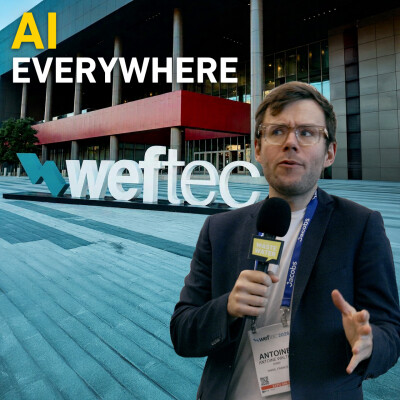
488 episodes

3 playlists

    Season 13

  • The Future of Water Tech VC: Why Specialists Are Finally Emerging. cover
    The Future of Water Tech VC: Why Specialists Are Finally Emerging. cover
    The Future of Water Tech VC: Why Specialists Are Finally Emerging.

    How is Cycle H2O (a new Water VC) De-Risking Early Stage Water Tech Investment? More #water insights? Get my free mapping of 267 water investors here: https://investors.dww.show 🙌 Supporters 🙌 A big thank you to my partner SimpleLab: https://link.dww.show/simplelab Cycle H2O is a Canadian water-focused venture capital fund investing $500K-$2M checks in early-stage water technology companies. The fund targets 12 portfolio companies across industrial, municipal, and agricultural water sectors with $30 million ready to deploy. Simon Olivier is a senior partner at Cycle Capital and head of the Cycle H2O Water Fund, bringing 30 years of corporate experience, including building GE's renewable energy business from the ground up, acquiring Enron's wind assets in 2001, and now applying energy sector investment lessons to water tech & the water VC field. 🌶️ KEY SPICES 🌶️ 🔬 Three-headed de-risking structure: Cycle Capital brings VC management expertise, H2O Innovation provides market intelligence across 75 countries, and the fund team delivers strategic guidance as a "copilot investor" ⚡ Energy-to-water playbook: 30 years of renewable energy experience reveals water tech is following the same arc—but with higher stakes since water has no substitute 💼 Business continuity focus: Invests in B2B solutions where industrial users pay for water efficiency because it directly impacts their bottom line, not just compliance 🎯 Exit-first valuation: Maps potential exits before cutting checks to avoid down rounds—seeking the "Goldilocks valuation" where both founder and investor stretch 🌍 Impact without compromise: Treats environmental and financial returns as inseparable, positioning water as a strategic business asset rather than a feel-good cause 🥜 IN A NUTSHELL 🥜 Why focus on early-stage water tech? The greatest impact and value creation happens early, but the risk is high—hence the unique fund structure with strategic partners who provide due diligence support and accelerate time-to-market for portfolio companies. How do you compress the industry's notorious 12-16 year adoption cycle? By investing in companies addressing urgent market fundamentals like the Legionella detection company Bio Alert, and leveraging H2O Innovation's global network to fast-track pilots and distribution partnerships. What makes a quick "no" for investment? Missing barriers to entry like IP, undifferentiated "me-too" products, no clear roadmap to monetization, or incomplete founding teams—though exceptional strength in one area can offset weakness in another. Why avoid policy-dependent business models? Regulations change overnight; instead, the water VC targets industrial users where water efficiency drives business survival, making adoption a financial imperative rather than a compliance checkbox. What returns can water tech deliver? The fund targets 10x returns as achievable across the portfolio, expects two to three zeros from twelve investments, and bets that rising water scarcity will drive up valuations as water becomes properly priced as a finite resource. #️⃣ All the Links Mentioned in this Video #️⃣ https://cyclecapital.com/en/cycleh2o/ https://www.linkedin.com/in/simon-olivier-p-eng-mba-3560b04/ Hosted on Ausha. See ausha.co/privacy-policy for more information.

    59min | Published on December 17, 2025

  • Would You Gift Sewage for Christmas? cover
    Would You Gift Sewage for Christmas? cover
    Would You Gift Sewage for Christmas?

    What Wastewater Products Can You Actually Buy for Christmas? 🙌 Supporters 🙌 A big thank you to my partner SimpleLab: https://link.dww.show/simplelab My best water tech analysis straight to your inbox: https://www.linkedin.com/build-relation/newsletter-follow?entityUrn=6884833968848474112 ⬇️ IN THIS VIDEO ⬇️ This special episode showcases 17 commercially available products made from recycled wastewater, desalination brine, and industrial water byproducts. From ski resort snow to table salt, beer to bourbon, cosmetics to clothing, these items prove that circular water economy isn't just theory—it's hitting store shelves as legitimate luxury goods and everyday essentials. 🌶️ KEY SPICES 🌶️ 🎿 Big Sky Resort now makes artificial snow from recycled village wastewater using Montana's largest zero liquid discharge system 🧂 Desalination brine transforms into gourmet table salts and superfood ingredients instead of marine discharge 🍺 Reused wastewater beer, rainwater whisky, and coffee-waste vodka prove beverage innovation is real 👖 Jeans from Everlane and Triarchy achieve 95-98% water recycling through closed-loop finishing 🧴 L'Oreal's Burgos "waterloop factory" reuses 100% of process water for Kerastase production 🧪 Hungarian startup Cycle ferments sewage sludge into bio-acid cleaners shipped worldwide 🥜 IN A NUTSHELL 🥜 Can you really eat products from desalination waste? Aqualia's Alma de Mar table salts and UAE-grown Salicornia demonstrate that brine valorization creates food-safe, even gourmet products through controlled crystallization and aquaponic farming. How are beverage companies using wastewater? H2O Innovation, Epic Cleantec, and Singapore's NEWBrew produce beers from purified wastewater, while Good Vodka upcycles 15 million tons of annual coffee cherry waste and Old Humble proofs whisky with collected Texas rainwater. What makes water-smart clothing different? Everlane's Saitex partnership recycles 98% of process water, Triarchy replaces chemical bleaching with ozone, and Girlfriend Collective turns plastic bottles into sportswear while capturing microplastics. Which home products close the water loop? Porcelanosa ceramics operates zero liquid discharge, EnviroCopy paper circulates water 30 times per production cycle, and Vuna's Aurin turns urine into nitrogen fertilizer now scaling across Europe. ⏰ TIME STAMPS ⏰ 00:00 17 Wastewater Products 00:17 Big Sky Montana 04:31 Alma de Mar 06:12 Salicornia 07:49 Tasting 09:34 They almost made it... 10:31 H2O Innovation Pale Ale 12:43 Good Vodka 14:24 Old Humble Special Reserve 16:16 Naif Face Scrub 18:27 Kerastase by l'Oreal 20:09 Everlane Jeans 22:29 Triarchy Jeans 23:38 Girlfriend Collective Tank Top 25:07 Himba Fish Cuff 25:32 Innorecycling Water Can 25:59 Aurin by Vuna 27:31 Porcelanosa Tiles 28:56 Sustana Enviro Copy 30:15 Cycle Biocleaners 32:02 Test Results 33:03 An Epic Surprise... Hosted on Ausha. See ausha.co/privacy-policy for more information.

    33min | Published on December 3, 2025

  • Ovivo's Bold Vision: Back to Full Size in One Decade! cover
    Ovivo's Bold Vision: Back to Full Size in One Decade! cover
    Ovivo's Bold Vision: Back to Full Size in One Decade!

    How Will Ovivo Rebuild to Full Size in 10 Years After the Ecolab Deal? 🙌 Supporters 🙌 A big thank you to my partner SimpleLab: https://link.dww.show/simplelab ⬇️ IN THIS EPISODE ⬇️ Ovivo is a global water treatment technology provider entering a transformative new chapter after spinning off its electronics division to Ecolab for $1.8 billion. Under Ski on Water's ownership, Ovivo is now positioning itself for aggressive growth through industrial expansion, silicon carbide membrane innovation, and PFAS destruction capabilities across North America and Europe. This episode features Reinhard Hubner, CEO of SKion Water with years of water industry M&A experience; Elena Bailey, Director at Ovivo North America with decades of experience in water technology who joined through an acquisition in 2006; Mike Snodgrass, membrane technology specialist with 25+ years experience including hands-on polymeric membrane development; and Sebastian Andreassen, co-founder and leader of Ovivo's Cembrane silicon carbide membrane manufacturing operations with facilities in Denmark and Texas. 🌶️ KEY SPICES 🌶️ 🔬 Silicon carbide membranes deliver breakthrough flux rates at low pressure with hydrophilic, chemically inert properties that outperform polymeric alternatives 💧 Double-digit percentage R&D investment funds innovation without a centralized research department—product managers drive patented solutions 🏭 European industrial expertise from a decade of experience in operations transfers directly to North American expansion through people-first integration ⚗️ PFAS destruction technology from E2Metrix leverages existing municipal customer relationships for rapid market entry 🤝 Long-term ownership culture keeps acquired company founders engaged for 7-9+ years post-acquisition 🥜 IN A NUTSHELL 🥜 What is the 10-year vision for Ovivo? SKion Water plans to rebuild Ovivo to its pre-transaction size through industrial platform acquisitions in North America, silicon carbide membrane scaling, and PFAS treatment commercialization. Why focus on industrial water treatment? Municipal operations run independently with proven teams, while industrial requires European expertise transfer and platform acquisitions to replicate the 350 million euro success achieved through EnviroChemie. How does Cembrane's silicon carbide differentiate? Unlike polymeric membranes, silicon carbide is hydrophilic, extremely porous, and chemically inert—enabling applications in drinking water, sand filter replacement, and backwash recovery that competitors cannot match. What are the capacity expansion plans? Cembrane's manufacturing will increase 50% in 2026 and double by 2027, with Texas production providing tariff protection and BABA compliance for North American municipal projects. Where does PFAS fit the strategy? E2Metrix destruction technology pairs with existing SSE membrane installations at water plants, creating bundled solutions that leverage Ovivo's installed base relationships with municipal customers. #️⃣ Mentioned Links #️⃣ Ovivo's website: https://www.ovivowater.com/en/ My WEFTEC coverage: https://www.youtube.com/watch?v=ZAb9bDjpOsE Hosted on Ausha. See ausha.co/privacy-policy for more information.

    1h03 | Published on November 26, 2025

  • What Happens When You Build a Water Membranes Factory Just to Prove a Point? cover
    What Happens When You Build a Water Membranes Factory Just to Prove a Point? cover
    What Happens When You Build a Water Membranes Factory Just to Prove a Point?

    How Is Aqua Membranes Scaling 3D-Printed Water Membranes Spacers from Garage Startup to 200,000 Square Foot Manufacturing Facility? Let's find out! More #water insights? Connect with me on Linkedin: https://www.linkedin.com/in/antoinewalter1/ 🙌 Supporters 🙌 A big thank you to my partner SimpleLab: https://link.dww.show/simplelab ⬇️ IN THIS VIDEO ⬇️ Aqua Membranes manufactures reverse osmosis membrane elements with 3D-printed spacers that reduce energy consumption and pressure drops in industrial water treatment across mining, semiconductor, and beverage sectors. Founded 15 years ago by Rodney Herrington in his garage, the water membranes company now operates from Albuquerque and a new 200,000-square-foot Knoxville facility led by CEO Craig Beckman and CTO CJ Kurth. 🌶️ KEY SPICES 🌶️ 🖨️ Proprietary 3D printing technology creates Fibonacci spiral-patterned spacers that optimize fluid flow and reduce fouling compared to traditional mesh spacers found in water membranes ⚡ Energy efficiency gains through reduced pressure drops enable customers to lower operating costs and extend cleaning cycles in reverse osmosis systems 🏭 Vertical integration strategy from material science through full element manufacturing de-risks technology adoption for major water membranes manufacturers 🎯 Strategic customer validation from Fortune 500 companies including Coca-Cola, Micron Technology, and exclusive distribution partnership with Osmo Flow in Australia 📈 Scalable manufacturing platform with capacity for 25,000 elements annually in current configuration and 9x expansion potential in the Knoxville facility 🥜 IN A NUTSHELL 🥜 Why can't Aqua Membranes just license their spacer technology to major water tech manufacturers? The membrane industry requires extensive real-world validation before adopting new materials, forcing innovators to manufacture complete elements at a commercial scale before established players will consider licensing. What makes 3D-printed spacers superior to traditional mesh? The Fibonacci spiral pattern eliminates straight-line flow channels that cause fouling, while UV-cured polyacrylate provides precise control over channel geometry for customized applications. How did Aqua Membranes choose Knoxville for manufacturing expansion? After evaluating 20 U.S. and Mexican locations, they selected Knoxville for its business environment, educational resources, and capacity to support 95 jobs with multi-shift expansion potential. What role does Albuquerque play now that Knoxville is operational? Albuquerque transitions to R&D, focusing on co-creation with customers, testing new patterns and applications, including gas separation, while maintaining identical equipment to troubleshoot production issues. When will the new printing technology become available? The second-generation process moves to Knoxville in March 2025, with commercial launch targeted for late 2026, offering faster speeds, improved tolerance, and lower costs. #️⃣ Mentioned Links #️⃣ Aqua Membranes (https://aquamembranes.com/) Osmoflo (https://osmoflo.com/) Hosted on Ausha. See ausha.co/privacy-policy for more information.

    28min | Published on November 20, 2025

  • The Most Ridiculous Water Technology I've Ever Analyzed (it was worth it!) cover
    The Most Ridiculous Water Technology I've Ever Analyzed (it was worth it!) cover
    The Most Ridiculous Water Technology I've Ever Analyzed (it was worth it!)

    Can Cloud Harvesting Revolutionize Water Production? A Deep Dive into AirHES Technology 🙌 Supporters 🙌 A big thank you to my partner SimpleLab: https://link.dww.show/simplelab ⬇️ IN THIS EPISODE ⬇️ AirHES is a proposed atmospheric water harvesting technology that uses aerial collection systems (kites or balloons) with specialized mesh to capture cloud droplets. The collected water flows down through hoses, generating both pressurized freshwater and hydropower from the natural pressure head, claiming to potentially deliver the cheapest water and electricity on Earth. This episode features my rigorous "10th man doctrine" analysis—applying contrarian due diligence to unconventional water technologies—drawing from my 15 years in the water and wastewater industry, including experience evaluating emerging technologies from desalination to atmospheric water generation. 🌶️ KEY SPICES 🌶️ ☁️ Cloud-level water capture using proven fog collection mesh technology with documented efficiencies from existing literature 💧 Dual revenue streams from both freshwater production (modeled at $0.10-0.21/m³) and hydropower generation from vertical pressure head 🎯 Potential niche applications for remote, cloudy, inland communities needing 10-200 m³/day where traditional desalination faces infrastructure challenges 🔬 Rigorous physics-based analysis revealing realistic costs of $0.30-0.60/m³ after accounting for downtime, maintenance, and operational constraints ⚖️ Technology requires overcoming complex engineering trade-offs between pipe weight, friction losses, buoyancy, wind loading, and airspace regulatory hurdles 🥜 IN A NUTSHELL 🥜 Does the technology actually work? The mesh physics and fog collection principles are sound and well-documented, but cloud-level capture efficiency, uptime, and real-world performance remain unproven until multi-month instrumented pilots are conducted. What are the biggest technical challenges? Running kilometers of pressure hoses vertically requires solving complex trade-offs between pipe weight, friction losses, buoyancy, wind loading, and material costs—issues that significantly impact economic viability. Where could AirHES actually succeed? The technology shows promise for remote, persistently cloudy inland communities far from coastlines, mining camps at elevation, and island interiors where traditional reverse osmosis faces permitting barriers or extreme infrastructure costs. Is the electricity generation worthwhile? Power output represents only ~8% of revenue in AirHES's own models, with typical systems generating just 2-3 kW—barely enough to power a hair dryer—making it more of a distraction than a selling point. Why pursue weird ideas like this? Taking unconventional technologies seriously, even when flawed, expands the "adjacent possible" in water innovation, generates valuable insights, and prevents the sector from getting trapped optimizing only conventional solutions like reverse osmosis. #️⃣ Mentioned Links #️⃣ AirHES (https://airhes.com/) Technology Packy McCormick's "Not Boring" newsletter (https://www.notboring.co/) Send me your ideas: antoine@dww.show (mailto:antoine@dww.show) Hosted on Ausha. See ausha.co/privacy-policy for more information.

    36min | Published on November 12, 2025

  • What Does a Billion-Dollar Company Exit Really Look Like? cover
    What Does a Billion-Dollar Company Exit Really Look Like? cover
    What Does a Billion-Dollar Company Exit Really Look Like?

    How Does Water-as-a-Service Drive Billion-Dollar Exits in Infrastructure Investment? 🙌 Supporters 🙌 A big thank you to my partner SimpleLab: https://link.dww.show/simplelab ⬇️ IN THIS VIDEO ⬇️ Seven Seas Water Group is a vertically integrated water infrastructure platform that designs, builds, finances, operates, and maintains water and wastewater treatment facilities under long-term service agreements. The company recently completed a successful company exit from Morgan Stanley Infrastructure Partners to EQT Infrastructure, operating over 210 water-as-a-service contracts across the Caribbean and United States with particular expertise in brackish water desalination and decentralized treatment systems. Henry Charrabe is the CEO of Seven Seas Water Group, who led the company through a successful four-year transformation and company exit, previously serving in executive roles at Fluence Corporation, and is recognized for pioneering the application of water-as-a-service business models in US municipal and industrial markets. 🌶️ KEY SPICES 🌶️ 💰 Vertically integrated platform - Seven Seas handles design, engineering, financing, construction, and operations in-house, eliminating margin stacking for lower costs and faster execution than multi-partner water tech competitors ⚡ Proven track record at scale - 210+ active water purchase agreements with 15-30 year terms demonstrate repeatable success new entrants cannot easily replicate 🔄 Patient capital meets expertise - The company exit proves infrastructure investors holding 4+ years combined with deep water knowledge generate exceptional returns in underinvested US infrastructure 📊 Public vs private dynamics - Public water equities offer lower risk and liquidity; private funds deliver superior returns for patient capital—both forming a necessary growth ecosystem 🥜 IN A NUTSHELL 🥜 Why is water-as-a-service winning? Performance-based contracts align incentives—investors only get paid when delivering contracted water quality and quantity. What makes the US market attractive? Massive infrastructure underinvestment, creditworthy municipal off-takers, and decentralized systems create exceptional deployment opportunities. How do private and public returns differ? Private water investments achieve 10x returns with patient capital, while public equities deliver 14-15% annually with lower risk and immediate liquidity. Why fewer IPOs today? Cyclical markets favor private-to-private exits when strategic buyers offer better valuations than public market multiples. What's the biggest opportunity? Reducing waste beats new supply—California loses 32% to inefficiencies, making conservation more economically attractive than desalination. #️⃣ Mentioned Links #️⃣ Seven Seas' website (https://sevenseaswater.com/) Loughlin Water Partners (https://www.linkedin.com/company/loughlin-water-partners-lp/about/) Orange Ridge Capital (https://orangeridgecapital.com/) Robin Castelli's book (https://www.wiley.com/en-us/Principles+of+Transition+Finance+Investing%3A+Finding+Alpha+in+a+World+Adapting+to+Climate+Change-p-9781394351749) ⏰ TIME CODES ⏰ 00:00 Live from NYC's Climate Week 04:00 Henry Charrabé (Seven Seas Water) 25:49 John Rosenberg (Loughlin Water Partners) 40:08 Robin Castelli (Orange Ridge Capital) 50:01 Closing Hosted on Ausha. See ausha.co/privacy-policy for more information.

    51min | Published on October 29, 2025

  • Company Failure: How SOURCE Lost Everything in Just 12 Months cover
    Company Failure: How SOURCE Lost Everything in Just 12 Months cover
    Company Failure: How SOURCE Lost Everything in Just 12 Months

    🤔 What Happened to Source Global's Water-from-Air Technology? 🙌 Supporters 🙌 A big thank you to my partner SimpleLab: https://link.dww.show/simplelab My best water tech analysis straight to your inbox (https://www.linkedin.com/build-relation/newsletter-follow?entityUrn=6884833968848474112) SOURCE (formerly Zero Mass Water) produced drinking water from air using solar-powered Hydropanels. Founded in 2015 by Cody Friesen, it raised $270 million, becoming one of water tech's most-funded companies - before turning into a Company Failure 🥜 IN A NUTSHELL 🥜 What was Source Global's core technology? Solar-powered Hydropanels that extract drinking water from atmospheric humidity, requiring no electrical or water infrastructure. Why did the company fail despite massive funding? Ran out of cash after failing to raise funds, faced major quality issues from Malaysian manufacturing, and had unsustainable costs versus traditional water delivery, leading to company failure What were the main product problems? High failure rates within 2-3 years, frequent fan and battery breakages, and warranty quietly reduced from 10 to 5 years. Did Source attempt a business pivot? Acquired Proud Source Water and launched Sky Water, building Hydropanel farms to produce canned atmospheric water at scale. What remains of Source Global today? The founder and executives left in early 2025. Hydropanels and Sky Water are out of stock, but the acquired Proud Source Water business continues operating despite the mother company failure #️⃣ Mentioned Links #️⃣ SOURCE's SEC filings (https://www.sec.gov/cgi-bin/browse-edgar?action=getcompany&CIK=0001644099&type=&dateb=&owner=exclude&count=100**%5B4) (over the years): Source on Glassdoor (https://www.glassdoor.ca/Reviews/SOURCE-Global-Reviews-E5644207.htm?filter.iso3Language=eng) Source's troubles in Allensworth (https://sjvwater.org/allensworth-residents-feel-abandoned-by-company-that-makes-water-out-of-thin-air/) My own interview with Source, four years ago (https://dww.show/expensive-heavy-but-desperately-needed-is-source-the-future-of-drinking-water/) Source's website (https://source.co/) (still active) Cody Friesen's LinkedIn (https://www.linkedin.com/in/codyfriesen/) profile Proud Source Water's website (https://proudsourcewater.com/) Thunderf00t's original video (https://www.youtube.com/watch?v=vc7WqVMCABg) Hosted on Ausha. See ausha.co/privacy-policy for more information.

    25min | Published on October 22, 2025

  • Why 32 Companies Fight Over 24 Electrochemical Oxidation PFAS Destruction Deals cover
    Why 32 Companies Fight Over 24 Electrochemical Oxidation PFAS Destruction Deals cover
    Why 32 Companies Fight Over 24 Electrochemical Oxidation PFAS Destruction Deals

    How Do 32+ Electrochemical Water Oxidation Technologies Compete for PFAS Destruction Market Share? Listen to this! More #water insights? Connect with me on Linkedin: https://www.linkedin.com/in/antoinewalter1/ 🙌 Supporters 🙌 A big thank you to my partner, Georg Fischer: https://www.gfps.com/com/en/products-solutions/solutions/design-prefabrication.html#! How Do 32+ Electrochemical Water Oxidation Technologies Compete for PFAS Destruction Market Share? Electrochemical Water Oxidation is an emerging treatment technology that uses electrical current to break down persistent contaminants like PFAS in industrial wastewater. With 32 identified companies developing proprietary systems—17 specifically targeting PFAS destruction—this crowded market represents both intense competition and strong validation of a rapidly growing industrial need. Antoine Walter is a water technology analyst and podcast host who has interviewed nine electrochemical oxidation companies, conducted comprehensive market research across 32 players in the space, and provides strategic insights for entrepreneurs, investors, and water industry executives navigating this competitive landscape. 🌶️ KEY SPICES 🌶️ ⚡ Power Density Range: Technologies span three orders of magnitude (100-10,000+ A/m²), with higher densities potentially enabling more compact treatment systems 💎 Electrode Materials: Boron-Doped Diamond (33%) and Titanium suboxide (28%) lead among PFAS-focused companies, with Mixed Metal Oxide dominant overall 🎯 Market Maturity: 53% of PFAS-targeting companies operate at TRL 8 with only two at full commercial deployment (TRL 9) 🧪 Defluorination Proof: Four companies have achieved third-party verified >90% defluorination, with half reporting complete PFAS destruction capabilities 🏭 Minimal Chemistry: 58% operate with minimal chemical addition, and 83% self-clean through electrical reversal or direct capacity 🥜 IN A NUTSHELL 🥜 What's the actual market size? Only an estimated 250 of 10 million global industrial facilities have addressed PFAS in wastewater, with perhaps 24 choosing electrochemical oxidation—creating fierce competition for limited installations. How do electrode materials differ? Boron-Doped Diamond offers superior performance but higher costs, while Mixed Metal Oxide and Titanium suboxide provide alternatives, with some companies opting for sacrificial anodes to reduce expenses. What determines system performance? Power density, pH tolerance (46% work at neutral pH), electrode lifetime, and reactor design collectively influence treatment efficiency and operational costs more than any single factor. Are these technologies deployment-ready? Most companies (TRL 7-9) have moved beyond lab-scale, though only Axine and AECOM have reached full commercial deployment with multiple installations. What's the investment opportunity? The collective $120M raised across startups represents capital-efficient validation, with regulatory pressure intensifying and the addressable market potentially growing 10x within three years. Hosted on Ausha. See ausha.co/privacy-policy for more information.

    23min | Published on October 15, 2025

  • Can We Actually Afford to Clean Up Forever Chemicals? cover
    Can We Actually Afford to Clean Up Forever Chemicals? cover
    Can We Actually Afford to Clean Up Forever Chemicals?

    How Can We Afford to Remove PFAS from Our Environment When Treatment Costs Exceed Global GDP? 🙌 Supporters 🙌 A big thank you to my partner SimpleLab: https://link.dww.show/simplelab ⬇️ IN THIS EPISODE ⬇️ PFAS (per- and polyfluoroalkyl substances) are persistent synthetic chemicals (forever chemicals) used in countless everyday products that contaminate drinking water, wastewater, and the environment. These "forever chemicals" accumulate irreversibly in our bodies and ecosystems, creating mounting health risks for current and future generations while presenting unprecedented economic and regulatory challenges. Dr. Ali Ling is a professor at the University of St. Thomas, specializing in PFAS management and wastewater treatment, with a decade of consulting experience helping industrial and municipal facilities address emerging contaminants, and expertise in big-picture systems thinking for environmental risk assessment. 🌶️ KEY SPICES 🌶️ 💰 Cost-Effective Approach - Source reduction is 1,000 times cheaper than environmental cleanup, with upstream industrial controls costing hundreds versus millions of dollars per kilogram of PFAS removed 🔬 Technology Expertise - Comprehensive knowledge of GAC, ion exchange, destruction technologies, and emerging treatment solutions across drinking water, wastewater, and industrial applications 📊 Data-Driven Strategy - Evidence-based analysis showing that removing PFAS at current production rates would exceed global GDP, making source control the only viable path forward 🎯 Risk Prioritization - Understanding that drinking water represents less than 20% of human PFAS exposure, with diet and indoor dust contributing significantly more to health risks 🌍 Future-Focused Thinking - Emphasis on persistence as a critical factor, recognizing that today's PFAS releases create irreversible accumulation threatening future generations (forever chemicals) 🥜 IN A NUTSHELL 🥜 Why is cleaning up PFAS from the environment economically impossible? Removing PFAS from the environment at the rate we produce it costs millions of dollars per kilogram and would exceed global GDP, while upstream source control costs only hundreds to thousands of dollars per kilogram. What's the biggest misconception about PFAS treatment? Most people focus on drinking water cleanup as a past problem, but we're still actively producing massive amounts of PFAS today, and drinking water represents less than 20% of human exposure to these persistent chemicals. Should utilities treat PFAS in wastewater effluent? Treating municipal wastewater effluent is extremely expensive and environmentally impactful, whereas addressing industrial discharges and landfill leachate at their concentrated source points is far more cost-effective and logical. How do we prevent regrettable substitution when phasing out PFAS? The European Union is implementing better frameworks that assess both persistence and toxicity before approving chemicals, while companies like IKEA and H&M have successfully phased out PFAS entirely from their supply chains. #️⃣ Mentioned Links #️⃣ Ali Ling's LinkedIn profile (https://www.linkedin.com/in/lingali/) Ali's paper on the costs to remove PFAS from the environment (https://papers.ssrn.com/sol3/papers.cfm?abstract_id=4718530) Hosted on Ausha. See ausha.co/privacy-policy for more information.

    57min | Published on October 15, 2025

  • 3 Days at WEFTEC 2025: My Complete Water Tech Breakdown cover
    3 Days at WEFTEC 2025: My Complete Water Tech Breakdown cover
    3 Days at WEFTEC 2025: My Complete Water Tech Breakdown

    What's to remember from WEFTEC 2025? Here are my 5 Water Tech picks, 3 Marketing Tips, the State of the Union on the Water/AI Nexus, and much more. Wanna get 3 Days at WEFTEC summarized in 70 Minutes? Listen to this! More #water insights? Connect with me on Linkedin: https://www.linkedin.com/in/antoinewalter1/ 🙌 Supporters 🙌 A big thank you to my partner SimpleLab: https://link.dww.show/simplelab #️⃣ All the Links Mentioned in this Video #️⃣ BDP EnviroTech's website: https://bdpenvirotech.com/ Lummus Technology's website: https://www.lummustechnology.com/ Weaver Labs' website: https://www.weaver-labs.com/ Algafilm's website: https://algafilm.com/ CREW Carbon's website: https://crewcarbon.com/ GWI's new Water Investment Navigator: https://www.winwaterprojects.io/ 🎙️ Subscribe and Listen to the Don't Waste Water Podcast HERE 🎙️ Podcast Channel: @dwwpodcast Main Channel: @AntoineWalterDWW Smartlink: https://smartlink.ausha.co/dont-waste-water Website: https://dww.show/podcast/ 🙋 QUESTION: What would you like me to cover next? ⏰ TIME CODES ⏰ 00:00 Introduction 01:22 XPRIZE Water Scarcity 02:56 3 Shortlisted for XPRIZE 07:05 #5 Water Tech Pick - BDP EnviroTech 16:03 #4 Water Tech Pick - Lummus Technology 23:59 My Rules & Thank You SimpleLab 25:01 WEF Board Member Interview 28:21 #3 Water Tech Pick - Weaver Labs 35:56 #2 Water Tech Pick - Algafilm Technologies 45:13 3 Tips to Power Up your Tradeshow Marketing 48:27 #1 Water Tech Pick - CREW Carbon 59:45 The Water AI Nexus 1:01:36 GWI's take at AI (with WEF) 1:08:28 Best WEFTEC Ever About this Podcast: Welcome to the (don't) Waste Water podcast, the leading podcast for water industry professionals, investors, and entrepreneurs seeking deep insights into water tech innovation, investment trends, and strategic moves in the sector. Host Antoine Walter blends his technical expertise with sharp business acumen to deliver weekly episodes featuring candid conversations with C-suite executives, detailed analysis of major water industry developments, and practical insights for water tech startups and seasoned players alike. Hosted on Ausha. See ausha.co/privacy-policy for more information.

    1h09 | Published on October 6, 2025

  • 1
    2

    ...

    49

Description

❓ Ever wondered how the #WaterIndustry was reacting to our World's Water Challenges? Water Scarcity? #SDG6? PFAS? Climate Change? Circular Economy? Digitization and Smart Water?

💪 Get the Water Market pulse for free. In one hour per week, while you do the dishes!

📈 We talk water investment, water tech, water entrepreneurship and water market with entrepreneurs, thought leaders, book authors, scientists, investment funds, VCs, and C-Level experts from water majors.

➡️ Leverage their insights, advice & experience and ensure to stay on top of best practices

🗓️ Tune in every Wednesday (don't miss out! 😅)

🌐 Find all the detailed episode notes, interviews, infographics, and more at http://dww.show


Currently in its 10th Season, the "(don't) Waste Water" podcast has already welcomed around 250 guests from Water Majors (SUEZ, Veolia, Jacobs, Xylem, Kemira, Evoqua, Aquatech, SKion Water...), Scale-Ups (Cambrian Innovation, Epic Cleantec, Gradiant, Liqtech, 374Water, Gingko Bioworks...), Start-Ups (Puraffinity, KETOS, 120Water, ZwitterCo, Membrion, Source...), Universities (Berkeley, the Columbia Water Center), Investment Funds (Sciens Water, Mazarine, Burnt Island Ventures...), Business Accelerators (Imagine H2O, Elemental...), Book Authors (Seth Siegel, David Sedlak, David Lloyd Owen...) or Market Intelligence Companies (BlueTech Research, Global Water Intelligence, World Bank, OECD, Isle Utilities...). Or simply water legends like Gary White, Mina Guli or Andrew Benedek!


On the "(don't) Waste Water" podcast, I strive to make the Water Industry easy to understand for everyone, starting with water professionals, executives, and investors. Hence, he opens the microphone to seasoned, inspirational water experts to discuss their field of excellence.


No one can claim an all-around in-depth understanding of a matter as complex as Water. But piece by piece, you can rebuild the puzzle. With curiosity, patience, and passion, Antoine Walter explores topics such as Advanced Treatment Technologies, Water-Energy Nexus (Hydrogen, Lithium...), PFAS removal, Nature-Based Solutions, Wastewater Reuse, Distributed Water Treatments, Water Finance, and Water Entrepreneurship.


I actually firmly believe that regular listeners of the "(don't) Waste Water" podcast may, in the end, claim a "Water MBA!"


A particular field of interest is how innovation forms, grows and gets widely adopted in a complex and conservative field like the Water Industry. This may be one of the keys to achieving the United Nations Sustainable Development Goal n°6 - #SDG6.


Oh, and in short, about me: I'm a water engineer turned avid student of the water business, market, finance, and tech. I'm married, a happy father of three, and I'm French (nobody's perfect 😅).


Hosted on Ausha. See ausha.co/privacy-policy for more information.

Description

❓ Ever wondered how the #WaterIndustry was reacting to our World's Water Challenges? Water Scarcity? #SDG6? PFAS? Climate Change? Circular Economy? Digitization and Smart Water?

💪 Get the Water Market pulse for free. In one hour per week, while you do the dishes!

📈 We talk water investment, water tech, water entrepreneurship and water market with entrepreneurs, thought leaders, book authors, scientists, investment funds, VCs, and C-Level experts from water majors.

➡️ Leverage their insights, advice & experience and ensure to stay on top of best practices

🗓️ Tune in every Wednesday (don't miss out! 😅)

🌐 Find all the detailed episode notes, interviews, infographics, and more at http://dww.show


Currently in its 10th Season, the "(don't) Waste Water" podcast has already welcomed around 250 guests from Water Majors (SUEZ, Veolia, Jacobs, Xylem, Kemira, Evoqua, Aquatech, SKion Water...), Scale-Ups (Cambrian Innovation, Epic Cleantec, Gradiant, Liqtech, 374Water, Gingko Bioworks...), Start-Ups (Puraffinity, KETOS, 120Water, ZwitterCo, Membrion, Source...), Universities (Berkeley, the Columbia Water Center), Investment Funds (Sciens Water, Mazarine, Burnt Island Ventures...), Business Accelerators (Imagine H2O, Elemental...), Book Authors (Seth Siegel, David Sedlak, David Lloyd Owen...) or Market Intelligence Companies (BlueTech Research, Global Water Intelligence, World Bank, OECD, Isle Utilities...). Or simply water legends like Gary White, Mina Guli or Andrew Benedek!


On the "(don't) Waste Water" podcast, I strive to make the Water Industry easy to understand for everyone, starting with water professionals, executives, and investors. Hence, he opens the microphone to seasoned, inspirational water experts to discuss their field of excellence.


No one can claim an all-around in-depth understanding of a matter as complex as Water. But piece by piece, you can rebuild the puzzle. With curiosity, patience, and passion, Antoine Walter explores topics such as Advanced Treatment Technologies, Water-Energy Nexus (Hydrogen, Lithium...), PFAS removal, Nature-Based Solutions, Wastewater Reuse, Distributed Water Treatments, Water Finance, and Water Entrepreneurship.


I actually firmly believe that regular listeners of the "(don't) Waste Water" podcast may, in the end, claim a "Water MBA!"


A particular field of interest is how innovation forms, grows and gets widely adopted in a complex and conservative field like the Water Industry. This may be one of the keys to achieving the United Nations Sustainable Development Goal n°6 - #SDG6.


Oh, and in short, about me: I'm a water engineer turned avid student of the water business, market, finance, and tech. I'm married, a happy father of three, and I'm French (nobody's perfect 😅).


Hosted on Ausha. See ausha.co/privacy-policy for more information.
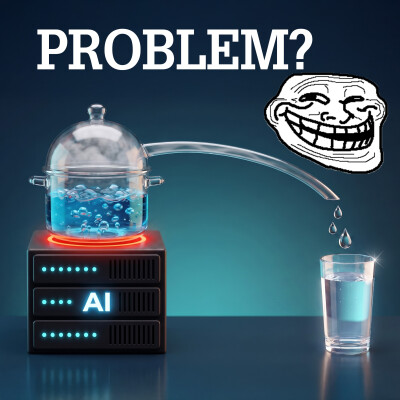
488 episodes

3 playlists

    Season 13

  • The Future of Water Tech VC: Why Specialists Are Finally Emerging. cover
    The Future of Water Tech VC: Why Specialists Are Finally Emerging. cover
    The Future of Water Tech VC: Why Specialists Are Finally Emerging.

    How is Cycle H2O (a new Water VC) De-Risking Early Stage Water Tech Investment? More #water insights? Get my free mapping of 267 water investors here: https://investors.dww.show 🙌 Supporters 🙌 A big thank you to my partner SimpleLab: https://link.dww.show/simplelab Cycle H2O is a Canadian water-focused venture capital fund investing $500K-$2M checks in early-stage water technology companies. The fund targets 12 portfolio companies across industrial, municipal, and agricultural water sectors with $30 million ready to deploy. Simon Olivier is a senior partner at Cycle Capital and head of the Cycle H2O Water Fund, bringing 30 years of corporate experience, including building GE's renewable energy business from the ground up, acquiring Enron's wind assets in 2001, and now applying energy sector investment lessons to water tech & the water VC field. 🌶️ KEY SPICES 🌶️ 🔬 Three-headed de-risking structure: Cycle Capital brings VC management expertise, H2O Innovation provides market intelligence across 75 countries, and the fund team delivers strategic guidance as a "copilot investor" ⚡ Energy-to-water playbook: 30 years of renewable energy experience reveals water tech is following the same arc—but with higher stakes since water has no substitute 💼 Business continuity focus: Invests in B2B solutions where industrial users pay for water efficiency because it directly impacts their bottom line, not just compliance 🎯 Exit-first valuation: Maps potential exits before cutting checks to avoid down rounds—seeking the "Goldilocks valuation" where both founder and investor stretch 🌍 Impact without compromise: Treats environmental and financial returns as inseparable, positioning water as a strategic business asset rather than a feel-good cause 🥜 IN A NUTSHELL 🥜 Why focus on early-stage water tech? The greatest impact and value creation happens early, but the risk is high—hence the unique fund structure with strategic partners who provide due diligence support and accelerate time-to-market for portfolio companies. How do you compress the industry's notorious 12-16 year adoption cycle? By investing in companies addressing urgent market fundamentals like the Legionella detection company Bio Alert, and leveraging H2O Innovation's global network to fast-track pilots and distribution partnerships. What makes a quick "no" for investment? Missing barriers to entry like IP, undifferentiated "me-too" products, no clear roadmap to monetization, or incomplete founding teams—though exceptional strength in one area can offset weakness in another. Why avoid policy-dependent business models? Regulations change overnight; instead, the water VC targets industrial users where water efficiency drives business survival, making adoption a financial imperative rather than a compliance checkbox. What returns can water tech deliver? The fund targets 10x returns as achievable across the portfolio, expects two to three zeros from twelve investments, and bets that rising water scarcity will drive up valuations as water becomes properly priced as a finite resource. #️⃣ All the Links Mentioned in this Video #️⃣ https://cyclecapital.com/en/cycleh2o/ https://www.linkedin.com/in/simon-olivier-p-eng-mba-3560b04/ Hosted on Ausha. See ausha.co/privacy-policy for more information.

    59min | Published on December 17, 2025

  • Would You Gift Sewage for Christmas? cover
    Would You Gift Sewage for Christmas? cover
    Would You Gift Sewage for Christmas?

    What Wastewater Products Can You Actually Buy for Christmas? 🙌 Supporters 🙌 A big thank you to my partner SimpleLab: https://link.dww.show/simplelab My best water tech analysis straight to your inbox: https://www.linkedin.com/build-relation/newsletter-follow?entityUrn=6884833968848474112 ⬇️ IN THIS VIDEO ⬇️ This special episode showcases 17 commercially available products made from recycled wastewater, desalination brine, and industrial water byproducts. From ski resort snow to table salt, beer to bourbon, cosmetics to clothing, these items prove that circular water economy isn't just theory—it's hitting store shelves as legitimate luxury goods and everyday essentials. 🌶️ KEY SPICES 🌶️ 🎿 Big Sky Resort now makes artificial snow from recycled village wastewater using Montana's largest zero liquid discharge system 🧂 Desalination brine transforms into gourmet table salts and superfood ingredients instead of marine discharge 🍺 Reused wastewater beer, rainwater whisky, and coffee-waste vodka prove beverage innovation is real 👖 Jeans from Everlane and Triarchy achieve 95-98% water recycling through closed-loop finishing 🧴 L'Oreal's Burgos "waterloop factory" reuses 100% of process water for Kerastase production 🧪 Hungarian startup Cycle ferments sewage sludge into bio-acid cleaners shipped worldwide 🥜 IN A NUTSHELL 🥜 Can you really eat products from desalination waste? Aqualia's Alma de Mar table salts and UAE-grown Salicornia demonstrate that brine valorization creates food-safe, even gourmet products through controlled crystallization and aquaponic farming. How are beverage companies using wastewater? H2O Innovation, Epic Cleantec, and Singapore's NEWBrew produce beers from purified wastewater, while Good Vodka upcycles 15 million tons of annual coffee cherry waste and Old Humble proofs whisky with collected Texas rainwater. What makes water-smart clothing different? Everlane's Saitex partnership recycles 98% of process water, Triarchy replaces chemical bleaching with ozone, and Girlfriend Collective turns plastic bottles into sportswear while capturing microplastics. Which home products close the water loop? Porcelanosa ceramics operates zero liquid discharge, EnviroCopy paper circulates water 30 times per production cycle, and Vuna's Aurin turns urine into nitrogen fertilizer now scaling across Europe. ⏰ TIME STAMPS ⏰ 00:00 17 Wastewater Products 00:17 Big Sky Montana 04:31 Alma de Mar 06:12 Salicornia 07:49 Tasting 09:34 They almost made it... 10:31 H2O Innovation Pale Ale 12:43 Good Vodka 14:24 Old Humble Special Reserve 16:16 Naif Face Scrub 18:27 Kerastase by l'Oreal 20:09 Everlane Jeans 22:29 Triarchy Jeans 23:38 Girlfriend Collective Tank Top 25:07 Himba Fish Cuff 25:32 Innorecycling Water Can 25:59 Aurin by Vuna 27:31 Porcelanosa Tiles 28:56 Sustana Enviro Copy 30:15 Cycle Biocleaners 32:02 Test Results 33:03 An Epic Surprise... Hosted on Ausha. See ausha.co/privacy-policy for more information.
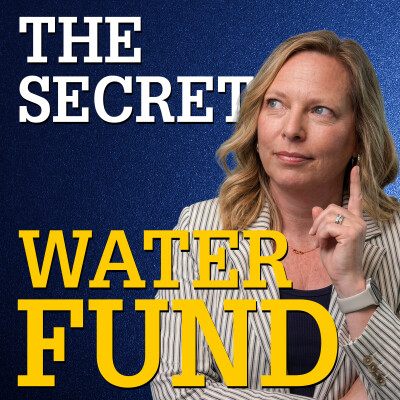
    33min | Published on December 3, 2025

  • Ovivo's Bold Vision: Back to Full Size in One Decade! cover
    Ovivo's Bold Vision: Back to Full Size in One Decade! cover
    Ovivo's Bold Vision: Back to Full Size in One Decade!

    How Will Ovivo Rebuild to Full Size in 10 Years After the Ecolab Deal? 🙌 Supporters 🙌 A big thank you to my partner SimpleLab: https://link.dww.show/simplelab ⬇️ IN THIS EPISODE ⬇️ Ovivo is a global water treatment technology provider entering a transformative new chapter after spinning off its electronics division to Ecolab for $1.8 billion. Under Ski on Water's ownership, Ovivo is now positioning itself for aggressive growth through industrial expansion, silicon carbide membrane innovation, and PFAS destruction capabilities across North America and Europe. This episode features Reinhard Hubner, CEO of SKion Water with years of water industry M&A experience; Elena Bailey, Director at Ovivo North America with decades of experience in water technology who joined through an acquisition in 2006; Mike Snodgrass, membrane technology specialist with 25+ years experience including hands-on polymeric membrane development; and Sebastian Andreassen, co-founder and leader of Ovivo's Cembrane silicon carbide membrane manufacturing operations with facilities in Denmark and Texas. 🌶️ KEY SPICES 🌶️ 🔬 Silicon carbide membranes deliver breakthrough flux rates at low pressure with hydrophilic, chemically inert properties that outperform polymeric alternatives 💧 Double-digit percentage R&D investment funds innovation without a centralized research department—product managers drive patented solutions 🏭 European industrial expertise from a decade of experience in operations transfers directly to North American expansion through people-first integration ⚗️ PFAS destruction technology from E2Metrix leverages existing municipal customer relationships for rapid market entry 🤝 Long-term ownership culture keeps acquired company founders engaged for 7-9+ years post-acquisition 🥜 IN A NUTSHELL 🥜 What is the 10-year vision for Ovivo? SKion Water plans to rebuild Ovivo to its pre-transaction size through industrial platform acquisitions in North America, silicon carbide membrane scaling, and PFAS treatment commercialization. Why focus on industrial water treatment? Municipal operations run independently with proven teams, while industrial requires European expertise transfer and platform acquisitions to replicate the 350 million euro success achieved through EnviroChemie. How does Cembrane's silicon carbide differentiate? Unlike polymeric membranes, silicon carbide is hydrophilic, extremely porous, and chemically inert—enabling applications in drinking water, sand filter replacement, and backwash recovery that competitors cannot match. What are the capacity expansion plans? Cembrane's manufacturing will increase 50% in 2026 and double by 2027, with Texas production providing tariff protection and BABA compliance for North American municipal projects. Where does PFAS fit the strategy? E2Metrix destruction technology pairs with existing SSE membrane installations at water plants, creating bundled solutions that leverage Ovivo's installed base relationships with municipal customers. #️⃣ Mentioned Links #️⃣ Ovivo's website: https://www.ovivowater.com/en/ My WEFTEC coverage: https://www.youtube.com/watch?v=ZAb9bDjpOsE Hosted on Ausha. See ausha.co/privacy-policy for more information.
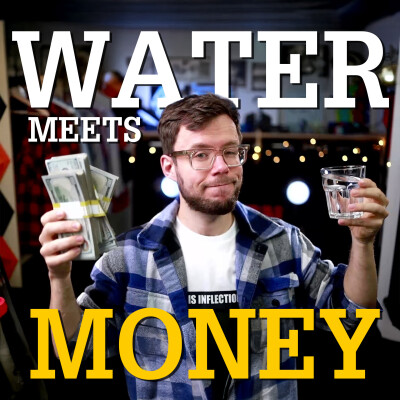
    1h03 | Published on November 26, 2025

  • What Happens When You Build a Water Membranes Factory Just to Prove a Point? cover
    What Happens When You Build a Water Membranes Factory Just to Prove a Point? cover
    What Happens When You Build a Water Membranes Factory Just to Prove a Point?

    How Is Aqua Membranes Scaling 3D-Printed Water Membranes Spacers from Garage Startup to 200,000 Square Foot Manufacturing Facility? Let's find out! More #water insights? Connect with me on Linkedin: https://www.linkedin.com/in/antoinewalter1/ 🙌 Supporters 🙌 A big thank you to my partner SimpleLab: https://link.dww.show/simplelab ⬇️ IN THIS VIDEO ⬇️ Aqua Membranes manufactures reverse osmosis membrane elements with 3D-printed spacers that reduce energy consumption and pressure drops in industrial water treatment across mining, semiconductor, and beverage sectors. Founded 15 years ago by Rodney Herrington in his garage, the water membranes company now operates from Albuquerque and a new 200,000-square-foot Knoxville facility led by CEO Craig Beckman and CTO CJ Kurth. 🌶️ KEY SPICES 🌶️ 🖨️ Proprietary 3D printing technology creates Fibonacci spiral-patterned spacers that optimize fluid flow and reduce fouling compared to traditional mesh spacers found in water membranes ⚡ Energy efficiency gains through reduced pressure drops enable customers to lower operating costs and extend cleaning cycles in reverse osmosis systems 🏭 Vertical integration strategy from material science through full element manufacturing de-risks technology adoption for major water membranes manufacturers 🎯 Strategic customer validation from Fortune 500 companies including Coca-Cola, Micron Technology, and exclusive distribution partnership with Osmo Flow in Australia 📈 Scalable manufacturing platform with capacity for 25,000 elements annually in current configuration and 9x expansion potential in the Knoxville facility 🥜 IN A NUTSHELL 🥜 Why can't Aqua Membranes just license their spacer technology to major water tech manufacturers? The membrane industry requires extensive real-world validation before adopting new materials, forcing innovators to manufacture complete elements at a commercial scale before established players will consider licensing. What makes 3D-printed spacers superior to traditional mesh? The Fibonacci spiral pattern eliminates straight-line flow channels that cause fouling, while UV-cured polyacrylate provides precise control over channel geometry for customized applications. How did Aqua Membranes choose Knoxville for manufacturing expansion? After evaluating 20 U.S. and Mexican locations, they selected Knoxville for its business environment, educational resources, and capacity to support 95 jobs with multi-shift expansion potential. What role does Albuquerque play now that Knoxville is operational? Albuquerque transitions to R&D, focusing on co-creation with customers, testing new patterns and applications, including gas separation, while maintaining identical equipment to troubleshoot production issues. When will the new printing technology become available? The second-generation process moves to Knoxville in March 2025, with commercial launch targeted for late 2026, offering faster speeds, improved tolerance, and lower costs. #️⃣ Mentioned Links #️⃣ Aqua Membranes (https://aquamembranes.com/) Osmoflo (https://osmoflo.com/) Hosted on Ausha. See ausha.co/privacy-policy for more information.
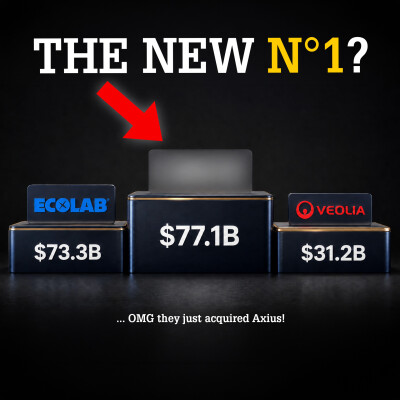
    28min | Published on November 20, 2025

  • The Most Ridiculous Water Technology I've Ever Analyzed (it was worth it!) cover
    The Most Ridiculous Water Technology I've Ever Analyzed (it was worth it!) cover
    The Most Ridiculous Water Technology I've Ever Analyzed (it was worth it!)

    Can Cloud Harvesting Revolutionize Water Production? A Deep Dive into AirHES Technology 🙌 Supporters 🙌 A big thank you to my partner SimpleLab: https://link.dww.show/simplelab ⬇️ IN THIS EPISODE ⬇️ AirHES is a proposed atmospheric water harvesting technology that uses aerial collection systems (kites or balloons) with specialized mesh to capture cloud droplets. The collected water flows down through hoses, generating both pressurized freshwater and hydropower from the natural pressure head, claiming to potentially deliver the cheapest water and electricity on Earth. This episode features my rigorous "10th man doctrine" analysis—applying contrarian due diligence to unconventional water technologies—drawing from my 15 years in the water and wastewater industry, including experience evaluating emerging technologies from desalination to atmospheric water generation. 🌶️ KEY SPICES 🌶️ ☁️ Cloud-level water capture using proven fog collection mesh technology with documented efficiencies from existing literature 💧 Dual revenue streams from both freshwater production (modeled at $0.10-0.21/m³) and hydropower generation from vertical pressure head 🎯 Potential niche applications for remote, cloudy, inland communities needing 10-200 m³/day where traditional desalination faces infrastructure challenges 🔬 Rigorous physics-based analysis revealing realistic costs of $0.30-0.60/m³ after accounting for downtime, maintenance, and operational constraints ⚖️ Technology requires overcoming complex engineering trade-offs between pipe weight, friction losses, buoyancy, wind loading, and airspace regulatory hurdles 🥜 IN A NUTSHELL 🥜 Does the technology actually work? The mesh physics and fog collection principles are sound and well-documented, but cloud-level capture efficiency, uptime, and real-world performance remain unproven until multi-month instrumented pilots are conducted. What are the biggest technical challenges? Running kilometers of pressure hoses vertically requires solving complex trade-offs between pipe weight, friction losses, buoyancy, wind loading, and material costs—issues that significantly impact economic viability. Where could AirHES actually succeed? The technology shows promise for remote, persistently cloudy inland communities far from coastlines, mining camps at elevation, and island interiors where traditional reverse osmosis faces permitting barriers or extreme infrastructure costs. Is the electricity generation worthwhile? Power output represents only ~8% of revenue in AirHES's own models, with typical systems generating just 2-3 kW—barely enough to power a hair dryer—making it more of a distraction than a selling point. Why pursue weird ideas like this? Taking unconventional technologies seriously, even when flawed, expands the "adjacent possible" in water innovation, generates valuable insights, and prevents the sector from getting trapped optimizing only conventional solutions like reverse osmosis. #️⃣ Mentioned Links #️⃣ AirHES (https://airhes.com/) Technology Packy McCormick's "Not Boring" newsletter (https://www.notboring.co/) Send me your ideas: antoine@dww.show (mailto:antoine@dww.show) Hosted on Ausha. See ausha.co/privacy-policy for more information.

    36min | Published on November 12, 2025

  • What Does a Billion-Dollar Company Exit Really Look Like? cover
    What Does a Billion-Dollar Company Exit Really Look Like? cover
    What Does a Billion-Dollar Company Exit Really Look Like?

    How Does Water-as-a-Service Drive Billion-Dollar Exits in Infrastructure Investment? 🙌 Supporters 🙌 A big thank you to my partner SimpleLab: https://link.dww.show/simplelab ⬇️ IN THIS VIDEO ⬇️ Seven Seas Water Group is a vertically integrated water infrastructure platform that designs, builds, finances, operates, and maintains water and wastewater treatment facilities under long-term service agreements. The company recently completed a successful company exit from Morgan Stanley Infrastructure Partners to EQT Infrastructure, operating over 210 water-as-a-service contracts across the Caribbean and United States with particular expertise in brackish water desalination and decentralized treatment systems. Henry Charrabe is the CEO of Seven Seas Water Group, who led the company through a successful four-year transformation and company exit, previously serving in executive roles at Fluence Corporation, and is recognized for pioneering the application of water-as-a-service business models in US municipal and industrial markets. 🌶️ KEY SPICES 🌶️ 💰 Vertically integrated platform - Seven Seas handles design, engineering, financing, construction, and operations in-house, eliminating margin stacking for lower costs and faster execution than multi-partner water tech competitors ⚡ Proven track record at scale - 210+ active water purchase agreements with 15-30 year terms demonstrate repeatable success new entrants cannot easily replicate 🔄 Patient capital meets expertise - The company exit proves infrastructure investors holding 4+ years combined with deep water knowledge generate exceptional returns in underinvested US infrastructure 📊 Public vs private dynamics - Public water equities offer lower risk and liquidity; private funds deliver superior returns for patient capital—both forming a necessary growth ecosystem 🥜 IN A NUTSHELL 🥜 Why is water-as-a-service winning? Performance-based contracts align incentives—investors only get paid when delivering contracted water quality and quantity. What makes the US market attractive? Massive infrastructure underinvestment, creditworthy municipal off-takers, and decentralized systems create exceptional deployment opportunities. How do private and public returns differ? Private water investments achieve 10x returns with patient capital, while public equities deliver 14-15% annually with lower risk and immediate liquidity. Why fewer IPOs today? Cyclical markets favor private-to-private exits when strategic buyers offer better valuations than public market multiples. What's the biggest opportunity? Reducing waste beats new supply—California loses 32% to inefficiencies, making conservation more economically attractive than desalination. #️⃣ Mentioned Links #️⃣ Seven Seas' website (https://sevenseaswater.com/) Loughlin Water Partners (https://www.linkedin.com/company/loughlin-water-partners-lp/about/) Orange Ridge Capital (https://orangeridgecapital.com/) Robin Castelli's book (https://www.wiley.com/en-us/Principles+of+Transition+Finance+Investing%3A+Finding+Alpha+in+a+World+Adapting+to+Climate+Change-p-9781394351749) ⏰ TIME CODES ⏰ 00:00 Live from NYC's Climate Week 04:00 Henry Charrabé (Seven Seas Water) 25:49 John Rosenberg (Loughlin Water Partners) 40:08 Robin Castelli (Orange Ridge Capital) 50:01 Closing Hosted on Ausha. See ausha.co/privacy-policy for more information.

    51min | Published on October 29, 2025

  • Company Failure: How SOURCE Lost Everything in Just 12 Months cover
    Company Failure: How SOURCE Lost Everything in Just 12 Months cover
    Company Failure: How SOURCE Lost Everything in Just 12 Months

    🤔 What Happened to Source Global's Water-from-Air Technology? 🙌 Supporters 🙌 A big thank you to my partner SimpleLab: https://link.dww.show/simplelab My best water tech analysis straight to your inbox (https://www.linkedin.com/build-relation/newsletter-follow?entityUrn=6884833968848474112) SOURCE (formerly Zero Mass Water) produced drinking water from air using solar-powered Hydropanels. Founded in 2015 by Cody Friesen, it raised $270 million, becoming one of water tech's most-funded companies - before turning into a Company Failure 🥜 IN A NUTSHELL 🥜 What was Source Global's core technology? Solar-powered Hydropanels that extract drinking water from atmospheric humidity, requiring no electrical or water infrastructure. Why did the company fail despite massive funding? Ran out of cash after failing to raise funds, faced major quality issues from Malaysian manufacturing, and had unsustainable costs versus traditional water delivery, leading to company failure What were the main product problems? High failure rates within 2-3 years, frequent fan and battery breakages, and warranty quietly reduced from 10 to 5 years. Did Source attempt a business pivot? Acquired Proud Source Water and launched Sky Water, building Hydropanel farms to produce canned atmospheric water at scale. What remains of Source Global today? The founder and executives left in early 2025. Hydropanels and Sky Water are out of stock, but the acquired Proud Source Water business continues operating despite the mother company failure #️⃣ Mentioned Links #️⃣ SOURCE's SEC filings (https://www.sec.gov/cgi-bin/browse-edgar?action=getcompany&CIK=0001644099&type=&dateb=&owner=exclude&count=100**%5B4) (over the years): Source on Glassdoor (https://www.glassdoor.ca/Reviews/SOURCE-Global-Reviews-E5644207.htm?filter.iso3Language=eng) Source's troubles in Allensworth (https://sjvwater.org/allensworth-residents-feel-abandoned-by-company-that-makes-water-out-of-thin-air/) My own interview with Source, four years ago (https://dww.show/expensive-heavy-but-desperately-needed-is-source-the-future-of-drinking-water/) Source's website (https://source.co/) (still active) Cody Friesen's LinkedIn (https://www.linkedin.com/in/codyfriesen/) profile Proud Source Water's website (https://proudsourcewater.com/) Thunderf00t's original video (https://www.youtube.com/watch?v=vc7WqVMCABg) Hosted on Ausha. See ausha.co/privacy-policy for more information.

    25min | Published on October 22, 2025

  • Why 32 Companies Fight Over 24 Electrochemical Oxidation PFAS Destruction Deals cover
    Why 32 Companies Fight Over 24 Electrochemical Oxidation PFAS Destruction Deals cover
    Why 32 Companies Fight Over 24 Electrochemical Oxidation PFAS Destruction Deals

    How Do 32+ Electrochemical Water Oxidation Technologies Compete for PFAS Destruction Market Share? Listen to this! More #water insights? Connect with me on Linkedin: https://www.linkedin.com/in/antoinewalter1/ 🙌 Supporters 🙌 A big thank you to my partner, Georg Fischer: https://www.gfps.com/com/en/products-solutions/solutions/design-prefabrication.html#! How Do 32+ Electrochemical Water Oxidation Technologies Compete for PFAS Destruction Market Share? Electrochemical Water Oxidation is an emerging treatment technology that uses electrical current to break down persistent contaminants like PFAS in industrial wastewater. With 32 identified companies developing proprietary systems—17 specifically targeting PFAS destruction—this crowded market represents both intense competition and strong validation of a rapidly growing industrial need. Antoine Walter is a water technology analyst and podcast host who has interviewed nine electrochemical oxidation companies, conducted comprehensive market research across 32 players in the space, and provides strategic insights for entrepreneurs, investors, and water industry executives navigating this competitive landscape. 🌶️ KEY SPICES 🌶️ ⚡ Power Density Range: Technologies span three orders of magnitude (100-10,000+ A/m²), with higher densities potentially enabling more compact treatment systems 💎 Electrode Materials: Boron-Doped Diamond (33%) and Titanium suboxide (28%) lead among PFAS-focused companies, with Mixed Metal Oxide dominant overall 🎯 Market Maturity: 53% of PFAS-targeting companies operate at TRL 8 with only two at full commercial deployment (TRL 9) 🧪 Defluorination Proof: Four companies have achieved third-party verified >90% defluorination, with half reporting complete PFAS destruction capabilities 🏭 Minimal Chemistry: 58% operate with minimal chemical addition, and 83% self-clean through electrical reversal or direct capacity 🥜 IN A NUTSHELL 🥜 What's the actual market size? Only an estimated 250 of 10 million global industrial facilities have addressed PFAS in wastewater, with perhaps 24 choosing electrochemical oxidation—creating fierce competition for limited installations. How do electrode materials differ? Boron-Doped Diamond offers superior performance but higher costs, while Mixed Metal Oxide and Titanium suboxide provide alternatives, with some companies opting for sacrificial anodes to reduce expenses. What determines system performance? Power density, pH tolerance (46% work at neutral pH), electrode lifetime, and reactor design collectively influence treatment efficiency and operational costs more than any single factor. Are these technologies deployment-ready? Most companies (TRL 7-9) have moved beyond lab-scale, though only Axine and AECOM have reached full commercial deployment with multiple installations. What's the investment opportunity? The collective $120M raised across startups represents capital-efficient validation, with regulatory pressure intensifying and the addressable market potentially growing 10x within three years. Hosted on Ausha. See ausha.co/privacy-policy for more information.

    23min | Published on October 15, 2025

  • Can We Actually Afford to Clean Up Forever Chemicals? cover
    Can We Actually Afford to Clean Up Forever Chemicals? cover
    Can We Actually Afford to Clean Up Forever Chemicals?

    How Can We Afford to Remove PFAS from Our Environment When Treatment Costs Exceed Global GDP? 🙌 Supporters 🙌 A big thank you to my partner SimpleLab: https://link.dww.show/simplelab ⬇️ IN THIS EPISODE ⬇️ PFAS (per- and polyfluoroalkyl substances) are persistent synthetic chemicals (forever chemicals) used in countless everyday products that contaminate drinking water, wastewater, and the environment. These "forever chemicals" accumulate irreversibly in our bodies and ecosystems, creating mounting health risks for current and future generations while presenting unprecedented economic and regulatory challenges. Dr. Ali Ling is a professor at the University of St. Thomas, specializing in PFAS management and wastewater treatment, with a decade of consulting experience helping industrial and municipal facilities address emerging contaminants, and expertise in big-picture systems thinking for environmental risk assessment. 🌶️ KEY SPICES 🌶️ 💰 Cost-Effective Approach - Source reduction is 1,000 times cheaper than environmental cleanup, with upstream industrial controls costing hundreds versus millions of dollars per kilogram of PFAS removed 🔬 Technology Expertise - Comprehensive knowledge of GAC, ion exchange, destruction technologies, and emerging treatment solutions across drinking water, wastewater, and industrial applications 📊 Data-Driven Strategy - Evidence-based analysis showing that removing PFAS at current production rates would exceed global GDP, making source control the only viable path forward 🎯 Risk Prioritization - Understanding that drinking water represents less than 20% of human PFAS exposure, with diet and indoor dust contributing significantly more to health risks 🌍 Future-Focused Thinking - Emphasis on persistence as a critical factor, recognizing that today's PFAS releases create irreversible accumulation threatening future generations (forever chemicals) 🥜 IN A NUTSHELL 🥜 Why is cleaning up PFAS from the environment economically impossible? Removing PFAS from the environment at the rate we produce it costs millions of dollars per kilogram and would exceed global GDP, while upstream source control costs only hundreds to thousands of dollars per kilogram. What's the biggest misconception about PFAS treatment? Most people focus on drinking water cleanup as a past problem, but we're still actively producing massive amounts of PFAS today, and drinking water represents less than 20% of human exposure to these persistent chemicals. Should utilities treat PFAS in wastewater effluent? Treating municipal wastewater effluent is extremely expensive and environmentally impactful, whereas addressing industrial discharges and landfill leachate at their concentrated source points is far more cost-effective and logical. How do we prevent regrettable substitution when phasing out PFAS? The European Union is implementing better frameworks that assess both persistence and toxicity before approving chemicals, while companies like IKEA and H&M have successfully phased out PFAS entirely from their supply chains. #️⃣ Mentioned Links #️⃣ Ali Ling's LinkedIn profile (https://www.linkedin.com/in/lingali/) Ali's paper on the costs to remove PFAS from the environment (https://papers.ssrn.com/sol3/papers.cfm?abstract_id=4718530) Hosted on Ausha. See ausha.co/privacy-policy for more information.

    57min | Published on October 15, 2025

  • 3 Days at WEFTEC 2025: My Complete Water Tech Breakdown cover
    3 Days at WEFTEC 2025: My Complete Water Tech Breakdown cover
    3 Days at WEFTEC 2025: My Complete Water Tech Breakdown

    What's to remember from WEFTEC 2025? Here are my 5 Water Tech picks, 3 Marketing Tips, the State of the Union on the Water/AI Nexus, and much more. Wanna get 3 Days at WEFTEC summarized in 70 Minutes? Listen to this! More #water insights? Connect with me on Linkedin: https://www.linkedin.com/in/antoinewalter1/ 🙌 Supporters 🙌 A big thank you to my partner SimpleLab: https://link.dww.show/simplelab #️⃣ All the Links Mentioned in this Video #️⃣ BDP EnviroTech's website: https://bdpenvirotech.com/ Lummus Technology's website: https://www.lummustechnology.com/ Weaver Labs' website: https://www.weaver-labs.com/ Algafilm's website: https://algafilm.com/ CREW Carbon's website: https://crewcarbon.com/ GWI's new Water Investment Navigator: https://www.winwaterprojects.io/ 🎙️ Subscribe and Listen to the Don't Waste Water Podcast HERE 🎙️ Podcast Channel: @dwwpodcast Main Channel: @AntoineWalterDWW Smartlink: https://smartlink.ausha.co/dont-waste-water Website: https://dww.show/podcast/ 🙋 QUESTION: What would you like me to cover next? ⏰ TIME CODES ⏰ 00:00 Introduction 01:22 XPRIZE Water Scarcity 02:56 3 Shortlisted for XPRIZE 07:05 #5 Water Tech Pick - BDP EnviroTech 16:03 #4 Water Tech Pick - Lummus Technology 23:59 My Rules & Thank You SimpleLab 25:01 WEF Board Member Interview 28:21 #3 Water Tech Pick - Weaver Labs 35:56 #2 Water Tech Pick - Algafilm Technologies 45:13 3 Tips to Power Up your Tradeshow Marketing 48:27 #1 Water Tech Pick - CREW Carbon 59:45 The Water AI Nexus 1:01:36 GWI's take at AI (with WEF) 1:08:28 Best WEFTEC Ever About this Podcast: Welcome to the (don't) Waste Water podcast, the leading podcast for water industry professionals, investors, and entrepreneurs seeking deep insights into water tech innovation, investment trends, and strategic moves in the sector. Host Antoine Walter blends his technical expertise with sharp business acumen to deliver weekly episodes featuring candid conversations with C-suite executives, detailed analysis of major water industry developments, and practical insights for water tech startups and seasoned players alike. Hosted on Ausha. See ausha.co/privacy-policy for more information.

    1h09 | Published on October 6, 2025

  • 1
    2

    ...

    49