- Speaker #0
I pay very well. And this is the reason that my bags are expensive. Because I pay well. I do my very best.
- Speaker #1
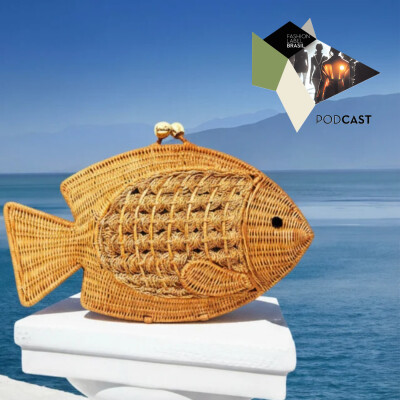
If a Serpui bag cannot fit a big iPhone, it doesn't go into production. Sounds like a small detail? It isn't. For Serpui, 40 years producing the most celebrated Brazilian handbags, even... the most beautiful handbag must work as a bag. That practical approach has been part of the brand since the beginning, when she left a master in biomedicine and gave space to her creative side. A pioneer in the use of Brazilian natural materials, such as straw, wicker and rattan, Serpoe quickly won over major retailers like Barnes. Patricia Field used many of the brand's bags in Sex in the City, and the fourth season of Emily Pettis opened with a Serpui clutch. Among the celebrities who also love Serpui's creations are Jennifer Aniston and Madonna. Serpui Marie, raised in the Armenian academic family, has four stores in Brazil and sells through 200 you multi-brands around the world. More than 3,000 bags a year are still made by hand. The atelier has 14 employees. They develop the prototypes, and from there, each handbag is made entirely by one artisan. She works with suppliers and groups of families across Brazil. Her collections follow the International Retail Calendar, resort spring, summer, high summer, but the product retains a Brazilian tropical style. And then there are the animals. Toucans, elephants, horses, flamingos have been Serpui's signature for years, alongside Brazilian stones. Her bags make people happy, and so does Serpui. She makes sure the artisans who produce the bags find joy doing their work. If there is no pleasure, there is no point. Today, I talk to Serpui to learn more about her business. I'm Ale Farah, and this is Fashion Label Brazil, presented to you by ABEST, the Brazilian Association of Fashion Designers, and Apex Brazil, Brazilian Trade and Investment Promotion Agency. Serpui, welcome.
- Speaker #0
Ale. Thank you so much. Lovely to talk to you. My pleasure.
- Speaker #1
I want to start asking you about your study. You trained in biomedicine and you started CIRPUI in 1984. What did you learn from science that you applied to design a handbag?
- Speaker #0
Okay. I did biomedicine. And after that, I started master. I did a master in the University of Sao Paulo. And then I finished and then I started the doctorate, the PhD. When I started, I was very much involved in my very sad with everything that was happening inside of me. And then I decided to start researching another way. What the university gave me, what the university make me very, in a way, very. interesting was the research, researching in the library, especially. So I used to be researching every day, working for my work in the university. And then when I started and I decided to move totally because I was born, I don't know if you know this, but I was born in an Armenian family and with a lot of Brazilian product in my house. My house, when I grew up, was a very ugly house, but very beautiful garden, very beautiful, full of birds, full of animals, and full of beautiful fruits, vegetables, and rich of straw bags, and rich of beads. So this is what gave me the opportunity to think. Why I don't work with the fashion? Why instead of working in the university or in the biochemistry or biomedicine, why I don't go to another way? This makes me think very well and then I started in this way.
- Speaker #1
And today you keep researching a lot, right? A lot.
- Speaker #0
Every day, every place. My eyes, they are very important. This is what makes me build. every day for 40 years, right?
- Speaker #1
40 years is too much. No, not too much, but it's very much.
- Speaker #0
It's too much.
- Speaker #1
But I think you're going to know 40 years plus.
- Speaker #0
I'm not sure.
- Speaker #1
Because Serpo is such a young, I mean, you are 40 years in the market, it has the appeal for the young generation, I think. Don't you feel? Yes,
- Speaker #0
very much. Now, a couple of days ago, someone, one foreign lady, she asked me, How did you, I am very much interested in build something and make something for me. And then I asked her, what do you want to do? What do you like? Oh, I'm not sure. I'm a little bit confused. I said, well, it's not easy, but you have to think and make some meditation and find a solution for your, you have to be happy. Even if it's difficult. And she said, how much money I need. I said, you don't need money. You need to be happy. This is the most important. This makes me build for 40 years something, right? This is very important.
- Speaker #1
And I think your bags, when we see them, they are happy bags.
- Speaker #0
They are very happy, very happy.
- Speaker #1
Yeah.
- Speaker #0
Because since the beginning, I started with the straw bags, the baskets. The baskets are something that make you happy because you're sinking in the sun. You're thinking of going to the beach, going to enjoy your life always,
- Speaker #1
right? Yeah, it's a very sunny bag.
- Speaker #0
Very, very sunny.
- Speaker #1
And then you start to do the animals. So before talking about the animals, let's talk about when you arrived in the international market in the 90s. Yeah. How did you get the attention from the buyers? What appealed to them?
- Speaker #0
What happened was, in that time... was in 1999, the first time, first year. I had a friend very close to me, and she said, you know, you can go and start showing your bags in the international, in U.S. Why you don't go? I said, yeah, I have to go. Okay, let's start research how to go there and blah, And then I made the inscription for Coterie in New York, Accessory Circuit in New York. and the premier class in Paris. So three shows. And I went to Coterie and was amazing because I didn't know anybody. I didn't know anything. I didn't know nothing, zero. And when I started, I've got all the important buyers from US like Barney's, Bergdorf, Saks, Neiman's, Anthropologie. And then Takashi Maya was a... very huge store in Madison. And I've got so many orders, so many. It was fantastic. And then someone came to talk to me. Your bags are very interesting. I saw so many buyers come in. I would like to talk to you. He was my first showroom, Moody Outer in New York. Then I came back and I sat with my father and I said, so I sold so many bags. I don't know the way. that I'm going to produce the bags. And he said, don't worry, let's go to Chin Chin. And then one glass of whiskey for me, another shot of whiskey for him, and then we drink. And then I started.
- Speaker #1
And now you're here today.
- Speaker #0
Yeah, and I am here today. Same happened in Paris. Then I started selling for the first time for all Japanese buyers. All printers, they bought. It was so nice, so good. And everything happened again, the same. Then I continued doing the same shows for 28 years.
- Speaker #1
At that time, what they said about your bags? So different, no one is doing this? So different.
- Speaker #0
Yes, so different. And the bags were big. I used to make big baskets, very big, in straw from the corn. corn straw this is very much minas gerais corn super super and then they love And then I used to have something, the handles, very beautiful, but big.
- Speaker #1
When the clothes enter your life?
- Speaker #0
Slowly, I was changing very slowly and making something like to be more fashion. Because it's too big, especially for the export, which is exactly very expensive. Because when you have a big, you don't have a big space, especially when the bag is big and soft, light. Like straw, it's light, not strong, right? It's not heavy. Yeah,
- Speaker #1
you cannot fold.
- Speaker #0
You cannot fold. And then you have to add the stuff inside. But you cannot add that much because they are natural. And then if you put a lot of things, they can be damaged. So it's a little bit complicated. Then I started thinking, why I cannot keep changing a little bit? And I started making crutches when nobody did. For the first time, I think I was the first one in the world. But, you know, nobody knew me and it started slowly. This happened in 2007, the clutch. I started making the small clutches, different kind of straw.
- Speaker #1
And then it fits more, the international market loves it.
- Speaker #0
Loves it, loves it, because more commercial than the big ones.
- Speaker #1
Today, when a buyer... covers Serpui for the first time, what do you want them to understand about the brand?
- Speaker #0
First of all, the quality of the straw is very, very delicate. And this is what I do. And the most important is that what I show is my Brazil, everything from Brazil, everything is happy. The collection is happy and they understand this is Brazilian product. It's very interesting. They love the product as Brazilian. This is what I show and what they understand.
- Speaker #1
But you're not like a cliche Brazilian, right?
- Speaker #0
No, no, no.
- Speaker #1
How do you balance your Brazil with the Brazil that everyone knows? Are you designing? Do you make choices? I mean, for example, you never had a flare of Brazil in your head back, do you?
- Speaker #0
No. I always have my eyes and my team eyes in the Brazil product for the foreign people. I think the most important is the way that we show and we make the bags. They are not like any bags. They are special bags. Even in wicker, even in water straw or in the corn straw and any different kind of straw.
- Speaker #1
But do you have a rule inside the atelier that some reference of Brazil you always reject? You're never going to put in the bag.
- Speaker #0
I don't like, for example, when the straw is dark, I don't put the dark one. Only the light one. I think the light means more happiness and the dark doesn't mean happiness. For me and for my team, we always look for something very nice, very happy. This is our First imagination. First thing we can, we imagine.
- Speaker #1
Typically, all your bags are made by handwork.
- Speaker #0
Oh, one by one.
- Speaker #1
So it takes like two or three days, each clutch, each handbag.
- Speaker #0
Three to four days, one bag. They are very, very well done.
- Speaker #1
Yeah, I know. The quality is amazing. Where do you refuse to cut costs?
- Speaker #0
I pay very well. And this is the reason that my bags are expensive. called I pay well. I, you know, I do my very best. Today I'm leaving now. It's three o'clock. But you know what, ma'am? I don't want to work today anymore. And I say, okay, you can go. It's no problem. See you tomorrow, okay? Okay, see you tomorrow. I will be here. So this is the way. So you cannot leave the person and push the person. If you do this, he works or she works with her hands or his hands. It's totally different than that. cutting the leather or cutting the fabric. This is not. This is woven one by one. I love the fingers of them because they are the best.
- Speaker #1
Yeah, it's not automatic. So if you cut and if you are not nice with them, you're going to lose them.
- Speaker #0
Of course. Of course. They don't want to stay with me. They love me or they don't love. That's it.
- Speaker #1
Which material has been more successful commercially for you? In which material are you working more now and in the next season?
- Speaker #0
So in general, weaker from the palm trees, they work much better for us. They are more... convenient and everybody loves more like the weaker bags than the soft bags this is what i have been watching especially weaker mixing with the leather and especially the handles with the agatas beads they love in general i add the agatas handles the small agatas handles the leather is the strap very long and with some beads to embroider it to be different than the others. This makes a difference in the bag.
- Speaker #1
To embroider it.
- Speaker #0
Like, for example, tassels. Tassels, they love tassels. You know, tassels are made by small beads. I don't know the name, but it's very small, very small, small beads. The tassels, they love, the clients love the tassels.
- Speaker #1
Ah, the tassels is like a franja.
- Speaker #0
Tassels, cachucho, cachucho in Portuguese. Cachucho. I have one client in France. He's very interested. He likes the collection. And every season he buys. But for him, I have to one tassel in one bag. One tassel, one beaded handle, one leather handle, one other. So I need to add four pieces extra for his client. You know, Madame, I love you. I love you, Madame. I love you. I love you.
- Speaker #1
So you have the possibility of customization for the clients, for the buyers, right? Yes,
- Speaker #0
I do. Good. I do for the buyers because I think buyers are, as the supplier or, I mean, the employee is very important. Buyers, they are as important as the employee, right?
- Speaker #1
Yeah, of course. So I have many bags of you. So you have like one clutch, can be used as a clutch in the hand. can be used with the stones in the short strap handle handle yeah a handle yeah a short one and we still have the third one that's very long you can put crossbody crossbody exactly this is what they love that yeah they love yeah so now you have 200 moot brand stores around the world what is their most strong markets and where are you growing i think the states right well i have different countries but
- Speaker #0
Nowadays, the big one is in the US. Then we have in Europe, we have in China, Hong Kong, we have in Japan. Let's see how will be the answer of the show. But in general, we have in a part of European community. Yes, we have in Switzerland, in other countries.
- Speaker #1
Middle East, more or less.
- Speaker #0
Yes, now we have in Dubai. We have in Qatar and let's see Beirut if the clients will come back. Because, you know, it depends on the normal issues. They have so many problems. But normally we have.
- Speaker #1
So natural materials, when you began, like in the beginning of the new century, right? Natural materials was not so much luxury. They prefer like leather. Now I just come back from a trip in Europe and I mean, it's a fever. Everywhere you have natural materials. And some of the bags I remember so much yours, but I mean, different because your quality, it's very different, right?
- Speaker #0
It depends on the price. My prices are more expensive than the regular ones, right? Unfortunately, because really I pay more. But yes, change very much the behavior of the world, especially after the big brands. They started showing also the straw or the wicker. So since they start showing, change everybody, everything. All the stores, you know, they look for to have the same or similar. This is very normal. Very normal.
- Speaker #1
Yeah, it's very nice because even if the bag is very beautiful and expensive, it's not a show-off, right?
- Speaker #0
Yeah.
- Speaker #1
I love yours because it starts a conversation. When you are wearing a surpui bag, the people come to you, especially when you have one with the animals. Let's talk about the animals, because everyone copies you.
- Speaker #0
Yes.
- Speaker #1
When do you start doing animals?
- Speaker #0
Since the beginning. They love the animals and they copy. Exactly the same. The candy must change a little bit, but they don't. They want the same. For example, crab. Crab is something like, you know, people... We have different kinds of people, we have a different kind of sea bags, right? Preb, fish, or crocodile. But even the difficulty to make the crocodile, they copy. It's amazing how they copy. Then I say, okay, what I can do? I cannot do anything. So people continue buying our bags and for sure they will buy the others. But you can see the quality is different. When you put in your hand, you can see the quality. But they love, they love, especially the tea bags. They love.
- Speaker #1
I know you are very sustainable. You use all the substance, the materials, like very natural. But how is the life of...
- Speaker #0
one sirpui bag because i have some bags that like more than 10 years yeah in general when is the light honey that my color that i love because it's the normal it's just a regular beige color a little bit beige color this is forever until the end you can use forever in your life when you have colors for example because i use natural products for coloring the bags for example orange from the juice of orange, the juice of pineapple. I use the natural color to mix with the... Then you cannot put the bag in the sun, for example. Too much sun makes...
- Speaker #1
Damage.
- Speaker #0
Damage. Desbotado. Yeah,
- Speaker #1
lose the color.
- Speaker #0
Lose the color, lose the color. So I do my very best to explain this to the clients and keep, in general, all bags in the natural color. like the light honey.
- Speaker #1
So before finishing, we must talk about the celebrities and the series and the movies because Serpui bag is a Hollywood bag.
- Speaker #0
It was very nice. The first one before Emily in Paris was just like that with Sarah Jessica Parker. Everybody loved, was fantastic, especially the client. And then the team of Emily in Paris saw the bags during one... fashion week in our showroom in New York and they became crazy and they started shooting the bags for the series we have already four times I think three or four times with them oh yeah very nice and all the celebrities where the celebrities find you in the stores or the stylists come to you the stylists come and take the bags and we say yes of course in our showroom in New York or even during the show, for example. in the premier class or Coterie or Cabana in Miami, they come and take the bag.
- Speaker #1
Good. Serpui, tell me three styles, three bags that a very interested buyer must know from Serpui. Three models.
- Speaker #0
First, the animals. Second, the fruit. And third, the day-by-day bag. So we have three different ways. Day-by-day, the animals and the fruit, they love. And some buyers, they send emails and ask, do you have the fruit again or you don't have? What fruit do you have for this season?
- Speaker #1
What fruit do you have for this season, the next season?
- Speaker #0
We have another kind of orange. Orange. And we have banana. Banana is fantastic. Banana is fantastic.
- Speaker #1
Banana is very nice. So, I love so much talking to you. Thank you. It's always a pleasure.
- Speaker #0
You are the best.
- Speaker #1
You are such a Brazilian ambassador.
- Speaker #0
Thank you, darling.
- Speaker #1
You take the best of Brazil and get it abroad for everyone. Thank you for your work.
- Speaker #0
Dear darling, listen, let me tell you something important. As I told you, my parents, they came from another country, from Armenia, from Beirut. And they used to say, we cannot compare Brazil with another country. This is the best country in the world. This is fantastic. We have everything here. Everything is the best. So I grew up listening to this, right? So I love Brazil.
- Speaker #1
Yeah. Thank you. Thank you for the interview.
- Speaker #0
Thank you so much. Lovely talking to you.
- Speaker #1
And that's a wrap for this episode of Fashion Label Brazil. If you enjoyed it, please give us a like and share it with a buyer or a store owner who will be happy to get to know Serpo's beautiful bag. Thank you so much for listening. I'll see you in the next Fashion Label Brazil podcast.