- Speaker #0
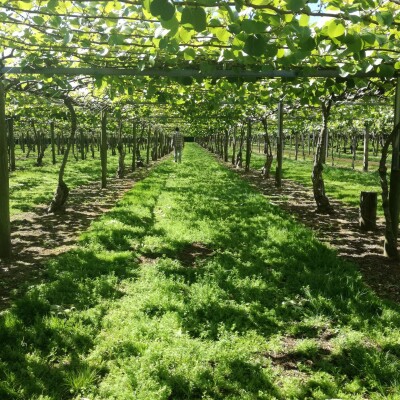
50 hours a week plucking buds under the Oakland sun. That's the price of my freedom. But before joining Tapish in the orchard, I had to say goodbye to Mala. She just said no to a path laid out for her, breaking away from an arranged marriage and the cultural codes I thought I understood.
- Speaker #1
Chapter 4.
- Speaker #0
Love isn't made to hoarder. After quitting the strawberry farm, I decided to score Facebook for a new gig. I'm surprised to see so many people posting their specific wish list. Looking for a well-paid job, max hours possible, Oakland area, weekends off. And the crazy thing is, it actually works. I see plenty of replies from potential employers, so why not give it a shot, I thought. I post looking for a job in the Oakland region, where I can grind out as many hours as possible. Before long, I get a reply from Tapish. He works for a recruitment agency that supplies labor to Indian-owned company specializing in kiwi orchard. It's currently tenant season. The process of removing bad butts to let the good kiwis grow. Tapish guarantees up to 50 hours a week. It's exactly what I need. I accept immediately. I'm supposed to meet him in two days in Pukekohe, about 50 kilometers away from central Oakland. I need the cash and I'm ready to put in the work for the great logo, traveling for as long as possible. Before my fourth departure, I decide to visit Mala one last time. I want to say goodbye and see all she's doing before I disappear into a long stretch of labor.
- Speaker #2
I'm not getting married anymore.
- Speaker #0
She says as she opened the door. Oh, and what made you change your mind?
- Speaker #2
I don't feel ready. I don't want the life my family chose for me.
- Speaker #0
She says firmly. How did your fiancé take it?
- Speaker #2
He doesn't understand. He wants us to talk about it when I'm supposed to go back to India.
- Speaker #0
And your family?
- Speaker #2
Then it's a catastrophe. But I will have to get used to it eventually and forgive me. I know they love me and even if they don't understand, I hope they would support my choice.
- Speaker #0
Was it a forced marriage? I ask, not pulling any punches.
- Speaker #2
Yes.
- Speaker #0
How is that still so common in India?
- Speaker #2
We have a different vision of marriage than Westerners do.
- Speaker #0
But was it something you ever wanted?
- Speaker #2
No, that in New Zealand has shown me all their possibilities. But I know people who are perfectly happy with orange marriage.
- Speaker #0
But how?
- Speaker #2
It's hard to explain. In our culture, marriage is a massive milestone, a sacred institution. We even have dating apps like Kindle, but they are specifically for marriage.
- Speaker #0
I'm sorry, what?
- Speaker #2
Yes, it's quite common. Sometimes our parents are even the ones running yakons. They look for the perfect profile, the right candidate. Often, it's about business. If a profile looks profitable for the parent's company, they look to collaborate and seal a deal through marriage.
- Speaker #0
Holy shit, I replied stunned. I had no idea that it went that deep. After our conversation, I did some research on arranged marriage in India and was surprised to find that it isn't always seen as a negative. I found a very interesting article discussing the difference between feelings and commitment. An Indian woman explained the concept compared to the US model. Here, we marry without having feelings for a person. We base our marriage on commitment, not emotion. As the marriage progresses, the feeling develops. In the States, you base your marriage on feelings. But what happens when those feelings fade? You have nothing to hold the marriage together if emotion were your only foundation. The article made another interesting point, stability. Many young Indians prefer arranged marriage because it gives them the chance to enjoy their youth without the constant anxiety and drama of maintaining a relationship, which is so common in Western culture. Soon, it's time to head to Pukekohe and find tapish in a kiwi orchard with endless rows of trees.
- Speaker #3
You will be working for a different employer each time, but the job will be exactly the same. You have to thin the branches where the kiwi grow. Ut will show you how.
- Speaker #0
He explains. Okay, no problem. When do I start?
- Speaker #3
Right now.
- Speaker #0
The introductions are brief, the job is explained in seconds. It's simple but incredibly boring. For 10 hours a day, I have to plug the bad buds while looking up non-stop. Which wreaks havoc on my neck and back. Since I didn't download any music on my phone, the time drags. Fortunately, my colleagues, all Indian, are real chatterboxes. I rarely understand what they're saying though. Between the thick accent and limited vocabulary, communication is a struggle. However, we manage to have some real discussion, especially when the boss is around to translate. He started asking me questions.
- Speaker #4
What is your religion?
- Speaker #0
Um, I think everyone is free to choose what works for them, but personally I don't believe.
- Speaker #4
Why?
- Speaker #0
I believe that if something good happens to me, it's because of my own actions, not because of an outside force or divine power.
- Speaker #4
Don't you feel that if you have the strength to think that way, it's because God told it to you?
- Speaker #0
Well, no, not really.
- Speaker #5
But it is so.
- Speaker #0
One of my colleagues chimes in.
- Speaker #5
Every time you resist temptation, every time you do something good for your neighbor, You are simply carrying out the will of God.
- Speaker #0
But what about free will? Is everything I choose just the result of God's plan?
- Speaker #1
Exactly.
- Speaker #0
The discussion was interesting, but it certainly didn't convert me. But religion wasn't the only topic. Marriage was always on the table too. Oh, great Here we go, aside internally.
- Speaker #1
Are you married?
- Speaker #0
One of them asks.
- Speaker #4
Of course he's married, he's 30.
- Speaker #0
Another laughs. No, I'm not married. I smile, waiting for the inevitable awkward silence.
- Speaker #4
But, but why?
- Speaker #0
The one who was laughing asks, suddenly confused. Simply because I don't believe in marriage and I have no desire to get married, at least right now?
- Speaker #4
You just haven't met the right one yet.
- Speaker #0
He insists.
- Speaker #4
But you shouldn't wait too long.
- Speaker #0
I don't see marriage as an achievement. I clarify. But I understand it's important to some people, to each their own. Unfortunately, the conversation reopened some wounds from my colleagues. One of them tells me a heartbreaking story. He dated a girl from his village for 9 years. They were madly in love, but when he has to marry her, she turned him down.
- Speaker #1
She told me she couldn't be my wife because we live in the same village.
- Speaker #0
I don't understand.
- Speaker #1
To her, it was as if we were brother and sister.
- Speaker #0
But why would she think that?
- Speaker #1
Everyone knows everyone in Indian villages. We call our elders auntie, or uncle, even if they aren't family. The bond we had was too much, like family from the start.
- Speaker #0
What do you even say to a guy like that? I gave him a sympathetic look, but I had no real answer. After 10 hours of hearing stories about marriage and religion, I was reaching my limit. I changed orchards several times, meeting new Indian colleagues at each one. My fingers were raw, probably from touching the buds all day, and my skin was starting to peel. I worked a week with them before Tapish told me he was out of work for the moment.
- Speaker #3
But I know a place where you can go and work for months. No limit on hours, max 70 hours a week, every day.
- Speaker #0
Okay, I'm sold. Where is it?
- Speaker #3
Teppuchi, 200 kilometers from here.
- Speaker #0
Whoa, that's a trek.
- Speaker #3
You'll make good money. Rent is only $50 per person. All inclusive.
- Speaker #0
Okay, that's reasonable. When do I start?
- Speaker #3
It's Sunday. You can head down tomorrow night and start Tuesday morning.
- Speaker #0
Deal.