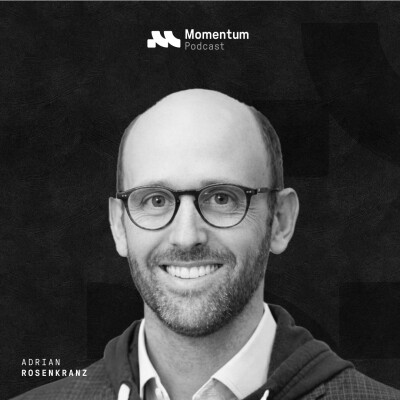
- Speaker #0
91% of marketers said that the most valuable marketing asset was their website. We could see more success by bringing our teams to where our customers are. Being where your customer is, how you learn the fastest, how we work together and make magic happen. And I think what became the biggest surprise to me was how quickly the world is changing how they consume information on the web. Right now, there's no better place to figure out what's happening than with... bringing the leaders together who are all seeing these changes and figure out how to adapt.
- Speaker #1
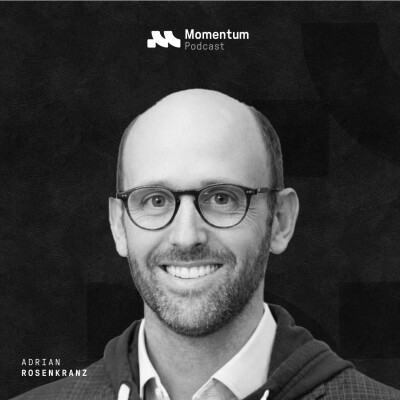
Welcome, Adrian.
- Speaker #0
Merci. Thank you.
- Speaker #1
So you're here for the Momentum Tour?
- Speaker #0
Yes.
- Speaker #1
Can you just speak about that tour? What is it?
- Speaker #0
Absolutely. So at Webflow, we really... saw an amazing opportunity across the world with amazing customers. And we've seen so much growth across the European business. And we have customers like Spotify, like monday.com, and Anytime Fitness. And we really wanted to take a moment and go on the road with our customers, with our partners. and just talk about how the world's changing and what we're seeing in the web. And it was an opportunity to learn from them, but then also kind of share what we're seeing across all our 300,000 customers so that we can meet the moment together because so much is changing so fast.
- Speaker #1
Yeah, great. Well, as an intro, maybe I would like to say, so for my audience, this is the first time they... listen to me speak English. So it's, I'm sorry if I make a mistake in English and everything. It's a quick disclaimer. I told you this is my first time recording a podcast in English. So that's very good to do this with you. And so today, Adrienne, you're the CRO of Webflow. You've been at Webflow for nine months now. I'd like you to take me through your onboarding, your first 90 days, you know, because when you're... At this type of position, usually you have 90 days to start making a difference and have an impact. How did you approach these first 90 days?
- Speaker #0
It's a great question. When I joined Webflow, the world was changing really quickly in the web, but it was never what I thought it would become now and the speed at which AI is changing the way discovery happens on the web. But when I started, it became very clear that we had an incredible... community, which is one of the reasons why I wanted to join. And so my first 90 days was focused on understanding what do our customers say about us? What do our partners say about us? And what do our employees say about us? And how do I get an understanding of where we are in the world and the impact we have? And what does the future look like? And I'd also say, since I'm responsible for sales and marketing and support and success. The other piece that becomes very important is where does revenue come from? How is that evolving? And so I spend a lot of specific time to understand that and really build a vision for what could be the future with our customers and our partners and agencies.
- Speaker #1
Okay. And what surprised you the most when you arrived at this company?
- Speaker #0
Oh, great question. I think what surprised me the most is at the time. I mean, if... If you think back to February of 2025, we started to see how AI was changing the way you might search for things. But it wasn't materially different for most of us. You know, I'm from San Francisco and it still hadn't really changed. Web search with AI hadn't become available to everyone. Yeah. If they wanted it, depending on where you are in the world. And I think what became the biggest surprise to me was how quickly. the world is changing how they consume information on the web. That's been the biggest surprise to me. And I think there's been a lot of really interesting debates that you hear now about what's the role of the website now that you have AI that's answering questions. What does that look like in two years, in 12 months, or maybe even six months? I think that has been the biggest surprise. And then on a very positive note, one of my favorite surprises is it's amazing talking to our agencies and our partners and our customers about what they build. That is always amazing because it is visually stunning, immersive. And I think one of the special things when I get to talk to a customer that always surprises me is when you see. a team's creativity coming to life. And that to me is always an amazing surprise.
- Speaker #1
Yeah. And so you come from a background at Salesforce and Tableau, which is not a creative company, let's say, because as a user, I'm not creating and designing anything. You know, it's more like a sales-driven, more pure B2B approach. Now, yeah, at Webflow, there is like this big design and creative approach. And what's the big difference in your role? between working in this kind of pure B2B sales approach and now the more creative approach?
- Speaker #0
That's a great question. What is the biggest difference? I think in this role, I know that our mission is to bring developer superpowers to everyone. And I think the way we make that come to life is we help customers make creativity their competitive edge. So knowing that's the case, it's just a different prioritization. How do we make our customers and our agencies, how do we make everyone that's part of the Webflow ecosystem really bring their creativity to life? And I think it also is how I when I run the teams internally, we have a higher bar and expectations that we need to deliver amazing experiences. And I think it's an amazing challenge to have because we are such a design first company. So we need to deliver amazing design first experiences. So. It was really fun to relaunch webflow.com as an example a month ago. Yeah. And I love the pressure of having to meet that.
- Speaker #1
Yeah. And do you have in your team, do you have more creative people than in your previous jobs?
- Speaker #0
I don't know that I would say there's more creative people, but I think the question is more so how do we make sure that it's always a priority to bring that creativity to life? And I think you can see creativity and design. You can see creativity and problem solving. I think it comes up in different ways. I think today it's much more in the top of my mind, though, than maybe in the past.
- Speaker #1
OK, and how do you push that in your team?
- Speaker #0
How do I push in the team? Well, I think part of it is to if my team was here, they'd probably laugh when I said this. The amount of times I've said to them, I want you to be bold. I want you to make me uncomfortable with this idea. Because once I'm uncomfortable, that means we're getting to the edge. And I want to be on the edge of what's possible. And we need to come up with and push what the future can look like and show people the way. And so they laugh because I often said, I want bolder. I want bolder. And to the point where I think they know that maybe it's. too extreme. But I think it's the idea that we're in such a fast moving world that we need to evolve quickly. And I think when I think about design and I think about what we're bringing to the world, it's not for humans alone anymore. So we need to design for humans, but we also need to design for AI as well to consume websites. And so that's a different philosophy. But I think the human side is going to become even more human and more creative.
- Speaker #1
Interesting. So as the CRO, you were mentioning you have marketing, sales, support and success.
- Speaker #0
Yes.
- Speaker #1
Correct. So how do you think in terms of building your team? Because there is on one side having the thought of building the revenue engine in general. but you also have to work on optimizing every function. And so how do you make the switch or how can you find the right balance between having this team all work together plus optimizing each function as a whole?
- Speaker #0
It's a really interesting management question. How do you optimize everything, but then also the individual teams? One of the things that I actually talked to everyone when I started was... how do you create the right accountability across teams? And the way I like to think about it is, imagine you have a spreadsheet. You have rows and you have columns. And so imagine you have on a row a product you're selling. And on the column, it's the sales teams that sell it, as an example, or the marketing teams that market it. And the question I always said was, if you have a row, how do you map it to the column? and each one has an owner. So if you have a sales team that has a sales number, how do you map that to the products they sell and the marketing that responsible for that and to the product team that's responsible to that? So I always called it the rows and columns of the business. which is how do you think about making sure that we've mapped them so that no one is alone? I have a saying with the team. I will say we win together and we never lose alone. And what I mean by that is I do not want to be in a position where there's someone that's trying to drive an initiative forward and they don't have anyone else in the business that cares. And if you think about it across these functions, they all should map. But it's very easy to... get to a place where someone owns something and no one else also has that same alignment, maybe it's a different flavor. And so I always say like, can we, how we win together by mapping the rows and columns of the business and making sure that we can continue to have teams working within teams. And so it could be, there's going to be one person in sales, maybe with one person in marketing. And then that person in marketing is going to be with other people in marketing on other projects. And so how do we make sure that is aligned along the way?
- Speaker #1
Okay. Interesting. I have a question about, you know, because you manage so many people and everything is interconnected, as you mentioned, where do you see most revenue engines break inside the teams? You know, is it in terms of handoffs, documentations? I don't know, data incentives? How do you so what breaks most of the time and how do you solve this type of issue?
- Speaker #0
What breaks most of the time? I think in most businesses I've been in, there's always some kind of retrospective or a business review from the last month. How did we do last month or maybe the last quarter? And I actually run a very different process that's inspired by that, but different. I call it plan to make plan. So instead of having a meeting to talk about what happened, I talk, I have a meeting that says, okay, this is about your plan to make the plan for next month. So tell me what happened and what you learned from it, but then tell me what you're going to do differently and who's going to work with you on it. And so oftentimes what I see that breaks is that you are diagnosing the past while the future is happening and you wait and you lose the time to make an adjustment. And sometimes with revenue engines, as they get more complicated, when you have more than one lead source or you have more than one pipeline generation approach. or if you have a combination of a B2C business or B2B, or in our case, a product-led growth and a sales-led growth, you start to add this complexity, it becomes harder to spot issues fast enough. But if you have everyone who owns the right parts of the business tell you what the plan is to go make it to their plan and their targets with everyone in the room, then we can align on the initiatives to move forward. And so that's how I try to combat it. But I do see that oftentimes being an issue is we spend a lot of time trying to figure out what's happening and we end up losing time influencing what's happening.
- Speaker #1
And what type of routines do you have with your team to manage this?
- Speaker #0
At the beginning of every month, every single person on my team does a plan to make plan. It includes the people that they work with closely. So if it's the VP of sales, you know, our CMO is on that call as well. We go through it every single month. We have a specific. format it's 20 minutes it's meant to be lightweight but it's consistent and that rhythm forces us to have these conversations and that is in addition to a weekly forecast call and which is a t across the revenue functions we have everyone on that call so that way we can have a monthly adjustment and then every week everyone knows where the business is okay what type of data do you
- Speaker #1
look at like, I don't know, every day, every week? What is like, what's your dashboard?
- Speaker #0
Great question. Well, when I started, I built myself a dashboard because, you know, having come from Tableau, I had some experience in it. So I have, I have two places that I look. One is I actually look in Webflow to understand the trends of how our traffic is trending. Is there changes in the way people are engaging? So I have, I log into Webflow every day, and check in Webflow what's happening. And I normally spend most of my time focused on the key pages, the homepage, the product page, the pricing page, to see if there's anything that's changing and where people are coming from. The second place I look is the dashboard that I built was a, I call it the state of the union. And it basically lets me understand revenue by anything I could think of. And whether it's by, is it coming from outbound or inbound? Is it coming from partner? Is it coming from EMEA or Asia Pacific or the US? Is it coming from deals that were created? Today that we're set to close this month or is it deals that were created last quarter? And so I have a lot of different ways to look at it to diagnose our our sales motions and understanding what's working, what's not. Be it a product led motion or a sales led motion.
- Speaker #1
OK, how micro do you go as micro as it takes? Oh, yeah.
- Speaker #0
Oh, yeah. I'll go one inch off the ground if I need to. So I have a very firm belief that. You don't actually know until you talk to a customer. So say I come up with a point of view of what's happening. You know, the pitch needs to evolve. The way that we're talking to customers needs to change because the world's changing. I will then write it with the right people, make it as best as I can. And then within 24 hours of writing it, I will be on the phone with a customer walking them through it and getting qualitative feedback. And I firmly believe that you have to do that. so that you can understand it, the feedback, because otherwise it becomes too academic. It sounds good. And so I try to go as fast as I can. In fact, that's one of what I'm doing here with this momentum tour. The conversations I'm having are mostly around this AI era of the web and how people are searching and finding information differently. And a lot of that discussion, we had thoughts of how it should go. And as I've talked and had conversations across Dubai and London and Paris, I've started to change the content based off of what I'm hearing and what's changing and making it more relevant.
- Speaker #1
Yeah, you know, I was quite surprised to know that you were coming to Paris for this event, to be honest. Because, you know, when you see the size of Webflow and your role and responsibilities, and then you see the size of the event, it's not like there is 10,000 people in a room, you know. And so I was like, oh, yeah, it's so you're coming to small events to talk to customers, et cetera. And I think this is really interesting to see. It's really inspiring, actually.
- Speaker #0
I think it's really important because I think whether it might be a smaller event, I think on Thursday, I'm at a bigger conference. And then we had our Webflow conference, which was even larger just a couple of weeks ago. And but I think it's really important because it's about the quality of the conversations. And right now, there's no better place.
- Speaker #1
to figure out what's happening than with bringing the leaders together who are all seeing these changes and figure out how to adapt to them. pool of more than 200 experts who compose the collective and who allow us to address topics as diverse as the demand gen, the outbound, the SEO, the RevOps, etc. As well as a scientific, data-driven work method that exploits what is done best in terms of tools and technology. We have accompanied more than 200 clients since our creation in 2022 and among our references,
- Speaker #0
we find great companies like Aircall, Salesforce, Payfit or Mooncard, to name a few. If you too want to make your marketing not a simple lead generator or notoriety, but a revenue generator. I'll put a link to our website in the description. Write to us,
- Speaker #1
I think we can do some great things together.
- Speaker #0
Let's go again. a reality of specific needs. And I think you hear it often with data privacy and, you know, when you want to do personalization, how do you think about cookies? And there's questions like this. It's much more specific. And so I think one of the areas that we saw as a big opportunity was we, while we're seeing a lot of success, we could see more success by bringing our teams to our customers are. And the secret I always believed, and maybe this came from my days at Salesforce or Tableau, but being where your customer is, it's how you learn the fastest, how we work together and make magic happen. And I think ultimately, I believe that we can help bring that creativity that our agencies and our customers are working together on to life and being there with them lets us do things we can't otherwise. And so I thought it was very, very important. which is why we have now teams in London and we have people that are French on our team and we have people that are representing Germany and the different Nordic countries. And we've expanded the team specifically because we want to be able to be partners. Really, when you think about the website, the website is the, and we just did research on this, 91% of marketers that in our, we did, it was about 500 person study said that the most valuable marketing asset was their website, which is not really a surprise, but because it drives most revenue. And so I take our relationships as something that's really critical for us to hold trust. And also because. It's the number one asset that a team has is their website. So it's really important to me that not only are we there with them from a point of view of a technology, but also from a people perspective. And we've always had our support teams are global. So we've had support globally and we have support all around EMEA. But I wanted to bring more strategic advisors into the market.
- Speaker #1
Okay. I have two questions regarding this international topic. One is. How do you draw the line inside your team between global and local?
- Speaker #0
It's a great question. I think right now there is no line. We're working through it. You know, there was someone I used to work with that I loved how he framed it. You want global standards, but local innovation. And so how do you create global standards that create the right framework that allow? And I'll give you an example. Very simple one in sales. How do you make the right common comp plans? And how do you in marketing, how do you make it so that your budget process is in something special in different places? It's hard. So how do you create global standards, but then allow the local teams the flexibility to go innovate, to meet what's happening in their market and to be relevant? And so a great example of that is we, you know, when I put together the talk for the event today and I put together this talk like a couple of weeks ago, I walked it through with team in. EMEA and they all helped me reshape the talk based on what they're hearing in the market. And that's the type of when I say like maybe the global standard is this is the data we see in terms of how AI is changing the web because it's just data and it's like here's the structure. But then they started to help me tweak it based on what the conversations they're having. And so I think how do we use that local innovation and then create the right structure so that they don't have to they can focus more on that creativity.
- Speaker #1
You know, on that topic of AI and the use of AI, earlier I wanted to mention, you explained the fact that right now, like in February, the way people were using AI is different from today. And one big thing for us in France, for example, is AI overview on Google. It's not available.
- Speaker #0
Yeah.
- Speaker #1
And so you see, like, if you talk about this topic in France, well, nobody's going to understand this topic because we can't use it.
- Speaker #0
Right.
- Speaker #1
So... you see it's it's really interesting also to see like the difference between different markets and and you know what on my side what's funny is we work with international companies and so i see like for example in italy which is really close from france they are they have ai overview and we don't and same in germany for example and so it's really interesting just to see in terms of marketing the way it impacts the strategy in one country and it's completely different in another country you know
- Speaker #0
And then you have some countries, for example, in India, where it's not even an AI overview. It's just AI mode that they're testing. So there's even the other extreme where you're not even in a search bar anymore. You type in what you thought is a search bar. It's just an AI mode. So to your point, it's so different. So that's why it's really important to understand what's happening in the market and then how we think. Maybe that's how it is today. But then what do we think it's going to be three, six months? And what do we think it's going to be 12 months? and how do we... map a strategy together. Sure. And so getting back to the global versus local team,
- Speaker #1
do you have exactly the same thoughts around for marketing, sales, support and success? Or is it different? Maybe my thought behind my question is I would think in terms of marketing, it's way easier to have like a big global team where in terms of support, it's pretty complicated and it should be local. But walk me through.
- Speaker #0
So on a support side, we follow a pretty consistent thing that I've seen across the business, which is we have 24-7 support. So we have support all over the world for those that are on our premium SLAs. We also have found an amazing use of AI specifically because we have a lot of customers that sign up for free, that are just testing and more freelancers than businesses. And we can answer their questions now because AI helps us do that. So from a support perspective, we have them all over the world. And I think also with AI, especially with cases, it's actually easier to translate into different languages really quickly. From a marketing perspective, the team is mostly in the United States. But this is back to what I was talking about. How do you have if I have a sales leader that has the revenue for Europe, I have to have a marketer that's responsible for that, too. So we will have a person dedicated to that. Same with customer success. When I think about our solutions architects, we actually will have, we were going to, we just were moving someone actually who we, who's on the team already, who already has a place in London. And so they're, they're going to be fully focused on the region because there's different problems that you have. I think you said it so well. And I was talking the other day just about cookie compliance and the future of how do you think about the future of personalized experiences in a world with cookie? compliance? And I think there's a lot of ways to answer that because there's different approaches. But I think the most important one is you want to talk to someone who deals with it every day. You don't want to talk to someone who doesn't. And so I think that's what I that's when I think about global versus local and also international expansion. How do I make sure that topics like that we have the natural expertise just because we talk to all the customers about them and it's not someone who happens to have that lead from a new country like France doesn't know.
- Speaker #1
I read an article about that topic. Exactly. Sure. Okay. One other topic you mentioned is partnerships. And so I know partnership is a big lever of growth at Webflow. And just so to contextualize, we can meet today because the event organized in Paris was from Digidop, which is a big partner of yourself in France. And thank you to Digidop. And so I'd like to understand how... do you approach the partnership lever? Because I haven't seen that many companies make partnership work as well as you do at Webflow.
- Speaker #0
Well, first of all, thank you. It starts, I think, with an understanding of the space. So I was in marketing at Salesforce. I worked with a lot of agencies. I think I always describe it as you have agencies and then you have... agencies that are partners that you have a more strategic relationship with. And I think both are important. And then sometimes you'll have freelancers to help out with something specifically. One of the things that became really clear is that agencies to me in this space, in the world we're in, with the speed at which everything's moving, are not only a strategic lever for us in terms of selling Webflow, but actually for our customers to be able to create. the experiences and that they wanted to. And I think you are required to have so much skill right now. And it's really hard, you know, to have all this skill. I think in that research study that we did, 42% of marketers said that they feel like AEO and answer engine optimization is a moving target because it is. And so, and by country, like we just talked about, but also just because it's... You know, GPT-4 changes to GPT-5, Google Gemini changes and it changes in a second. So you have all these moving pieces. It's so difficult to stay on all these skills. And so when I look at the landscape and how fast it's moving, I believe that agencies and our partners who we work really closely with are a strategic lever for our customers and for us. You know, when we did Webflow, we hired agencies as well. Like, and we have people who are the best in the world at Webflow. Interesting. But I think it's really important because it brings something to the table that you don't already have. And so I think part of it, it starts with a philosophical belief that in the marketing world, agencies serve a really unique purpose. They're not, I don't view, yes, they are implementers of software, but that's not where the value is. And in most cases, I actually think that the cost of the migration itself or the implementation is going to go down faster. and faster because of AI making it easier for agencies to build faster. As it gets easier to build, the more valuable part of the relationship is actually in the discovery and the creativity and the reimagination in the pushing the thinking or in the technical setup. And if it's something like, how do we meet this AEO moment as it evolves? And so I think we believe that. And then it comes into, well, if you believe it, are you funding it? So that's why we hired Lisa Box, who came to us. She was a long time at. WP Engine is an example. I've been hiring the team. They all are aligned to making our partners successful. Their incentives are set up that way. So as our partners are successful, they are successful individually. And it becomes something that it's elevated. It's not something that's buried in the organization. And so we really believe that that's a strategic imperative for our customers. And I think what's also interesting is there's this other thing that's happening, which is I'm seeing more and more businesses with smaller marketing teams. And I think with the pressure of what can AI do for us in the future, I think there's questions about what the size will look like. But I think there's going to be these augmentations that you're going to need. I mean, I was talking to a customer here in France this morning who they told me that they have a very small marketing team and they do a lot of work together and then they work with Digidopa as well. And so they augment them and that's actually more cost effective and you get great output. So that's that's I think part of the secret is making sure the one philosophy of the business agrees that this is an important investment. The second is making sure the compensation of the teams aligns to it. And then the third is that I have to show everyone that I care and that's why I'm here and that's why I go and meet with them and why I prioritize. partner-specific events that are just with partners.
- Speaker #1
Yeah. What I think is interesting, because you worked at Salesforce, Salesforce has a lot of partners, but these partners, they help customers really use as best as they can the product. For Webflow, there is this side, but there is also one side where you don't have any lever is the fact that Webflow is used to... create my website and so to create my brand you know like my brand is like the big thing and so you have the lever on the technical aspects of the product um but then you also have to find partners that are going beyond this technical aspect that can help also challenge branding and i don't know ux ui and this type of thing and so i think it's it's a pretty good challenge for your partnership team to find people that can go beyond. where you can have an impact. I don't know if that makes sense what I say.
- Speaker #0
It's a really important point. I think this is why we have partners that have so many different expertise. We have some that are really focused on technical SEO and now AEO as well. We have partners who are really focused on the brand and how you build a brand. We have some that are incredible. and making immersive experiences on websites that are three-dimensional. And it feels almost like you're in a video game. And it's like you see these beautiful visuals. We have a whole host of different expertise, which I think is part of our secret sauce. It's not secret. It's having amazing agencies that work with us to bring the customer project to life.
- Speaker #1
Yeah, interesting. Well, we already talked about AI, but I would like to open like an official chapter around AI. So right now you're sitting on a lot of data. And so you see how your customers are using the website, etc. How do you see the AI impacting the market in general based on like the trends you see? based on the data that you have at hand?
- Speaker #0
The number one thing that has become very clear is that the website's not for humans alone. And we see that in the data. So we've seen a 125% increase in AI bot crawlers. So these are, for those of you who may not understand exactly, it is when an AI, like you go and search in ChatGPT and it is going through your page, seeing what is on your page. And so we saw 125% increase, which is unbelievable. And the thing that's interesting is that all of those are bringing back information. to an experience in a chat where a human is talking to it and getting an opinion or a question answered with a lot of judgment in there. In the past, you'd compete for clicks. So we would compete. We try to get a click. The click would show, you know, in Google, you'd see a little information, but you chose what that was. You land on your page. You chose what that was. But now it's this huge surge in crawling. And you go back to the, you don't know what the AI is saying about you. So I think it's super interesting to see that big of a surge. We also saw a 6x increase in conversion for people who came from LLMs, which I think is something that surprised me. But what it's telling me is that people are coming when they do come to you from an LLM. They have so much more information. Yeah, it's the convert. It's more bottom of funnel. And so I think it's going to really demand us to rethink how we create dynamic experiences for where someone is. Because I think there's still going to be people that are still going to go to your website directly. And there's some who are going to find you through a question with AI maybe, but how they find you and how do you create a different experience based on that? I think that's not new, but I think it's going to be a higher bar of what you create.
- Speaker #1
Interesting. In your team? What do you see as the threat or the opportunity of AI?
- Speaker #0
I think AI, from a web perspective and how it's evolving it, it's wedging itself in all our funnels. I think depending on where your business is, how mature, how sophisticated of an SEO strategy you have, I think we're seeing customers seeing it at different stages. I've had some customers who said, who are very, very sophisticated. in how they've set up their SEO for the last 10, 15 years. And they are really focused on how do we figure out how to convert the traffic. We also have other customers who are really, really focused on this is our chance to own the answer. And so I think what it comes down to is we have two principles on the team. Principle one, how do we own the answer? And what that means is it's a question of how do we make sure people find us? And so we break that down into four categories. Authority, which is pretty common with SEO. Measurement, which is critical to understanding how often are we showing up, but also how much referral traffic is coming to us. The next one is content. So how are we making sure that our content is designed and set up in a way so that we can better be visible? And then also, how do we make sure that content is? as relevant as possible to use the conversation we had a second ago, that I think the expectations are growing and growing, growing, and you need to have very clear content. And the last one is, are you set up technically so that the AI can understand you easily and understand what your brand is, what you solve, so it can answer. And so that's the owning the answer. And then there's the converting the traffic. And so we split into those two things. And the converting the traffic is about how do we create the next generation of of customized experiences since everyone is getting accustomed to this world where I can ask anything and it's going to give me something specific to me. If I go to a website and it's not going to do something like that, like, how are we going to compete? You're not. So we need to be able to show them something that's relevant and show them something that's not just data. It needs to be visual. It needs to be immersive. It needs to be valuable. The best example, and I don't know, when's the last time you went to Wikipedia?
- Speaker #1
Honestly, I don't know.
- Speaker #0
Exactly. Because Wikipedia's value is not, this is, I had this moment like three or four months ago. It's like, I haven't gone to Wikipedia in a long time. And I like information. But the truth is, it's not the best way to get that information anymore. It's all there. But the experience isn't special. It's just data on a page. I can get that in many other. Yeah,
- Speaker #1
you need to find the information inside the page. When you want to find like a really specific information, it's like. Oh, but then I have to open this toggle and maybe it's there. And yeah,
- Speaker #0
exactly. And that doesn't make sense anymore. And so if Wikipedia maybe came up with is a really immersive experience that like what the value was, the experience, not just the like the one data point, I think maybe I'd go back. But as of now, there's better ways to get that information. I don't have to look for it.
- Speaker #1
Yeah, you're right. It's a really interesting point. I didn't realize the fact that I didn't go to Wikipedia for a long time. Yeah.
- Speaker #0
Yeah, I know. I had this moment a couple of months ago and I was like, wow, I have it not. I used to go all the time.
- Speaker #1
Yeah, I agree. Same. And so. You know, there is a big debate around, like I saw maybe it was last week, an article saying like, you know, website is dead because of course SEO is dead and blah, blah, blah is dead, you know. And so now...
- Speaker #0
Sensational headlines. Yeah.
- Speaker #1
And so now you've got the website is dead because zero click content and because, you know, ABC. How do you see the future of the website with... zero-click content and people searching first on LLMs? Yeah,
- Speaker #0
it's a great question. I've heard this, as you can imagine, quite often. Sure. And I like to first go through the exercise of what would need to be true for that to be the case. I think the first piece is that you have to assume not only that there's zero-click content, but also that LLMs no longer need websites to get smarter. And you'd have to assume that we'd be in a world where everything's synthetic. where they're creating synthetic data to get like AI to get smarter. And there is no reason to ever go to a website ever again. Now, what's really interesting is I think I could I think that's a pretty far distance from what we're seeing. We're seeing that AI is actually using websites to be able to answer questions. And and the other part of it is I think that and Chachi just announced this last week as an example. They're bringing... external experiences into lms which is not replacing them it's bringing them in uh so for example they announced an integration uh you know with stripe and you know shopify and so like the there's all those announcements where so you can imagine that the the challenges that uh brands are going to need to have is how do you make sure that you build an on-brand experience which already is hard how do you create an on-brand experience how do you that exists on all your digital experiences, including when I get that digital experience gets brought into an LLM. And the truth is today, if you went into agent mode or operator mode, you know, and you watch it, it's actually spins up a virtual machine. It goes to the website. You can watch it, look at a website. So it's it may not be you that's doing it, but then the AI is doing it. So I think it's interesting because I think it's actually going to put more pressure on websites to be able to give AI the answer faster. and structure it technically and the content so it can be faster at it. But it also, I think, is going to be amazing for us. So I think what's going to happen, and I think we've all been there. I don't know if you've seen a website that has been clearly optimized for SEO, but not a human. You sit there and you're like, it's like, wow, that footer is hard to look at. It's like it's just and I think that's because it was a world where there was a trade off and the showing up in Google is more important. I think in this world we're entering, it's going to allow the creativity to come to life because when you do come to that site, you're going to say, hey, this site is for a bot or a human. If it's for a human, it has to be better and different than an LM. It has to be experienced. It has to be visual. It has to have motion. It has to have value in what I'm doing in addition to the information on it. But I think the information might be brought over. I think we're in an interesting place. I love to think about what would need to be true for websites to die. But I think at the moment, brands, companies, businesses are all representing themselves on their website. And AI is using that to be able to represent them in AI. And imagine how you'd represent if you didn't have a website. How would AI know that you repositioned or launched a new product? They wouldn't know.
- Speaker #1
Yeah, I agree. You know what you said about SEO and the footer, etc. I feel sometimes that people try to be clever, but it's at the detriment of the experience of the user. And here, in this case, it's like, in terms of design, you really want to bring a real experience to the user. And in terms of copywriting, you want to be pragmatic because it's not only the user reading it. It's now also the LLMs. And you know, one thing I see sometimes companies do is trying to be too inspiring, but then you read the thing and you didn't get it, you know? And so now you have to be pragmatic because if you don't say exactly what you do, then the LLM will not understand what you do. And so then, you know, it goes back to like the first principles of marketing, you know, how do I... make the user have a good experience and how do i explain clearly what i do and i think it's a pretty interesting you know it really goes back to the first principles of marketing where for the past years people were trying to be you know hacky and clever and blah blah and so i think it's a pretty interesting
- Speaker #0
trend i agree i think it's going to make uh make the digital experiences we all experience much better. I think it's going to put a lot of pressure on businesses, though, to meet that expectation. But I think it's going to be, in the end, good for us. And I don't know, maybe we'll have a more immersive Wikipedia soon.
- Speaker #1
Yeah, I agree. All right. What is your next biggest challenge for you as the CEO of Webflow?
- Speaker #0
The next biggest challenge is helping our customers meet this moment and adapt as fast as the world is adapting. I know that we joked around about how quickly everything's changing, but the rules are changing so fast.
- Speaker #1
Yeah.
- Speaker #0
And it's not really a choice that we get to make. Oftentimes, if you look at the last 10 years, really the only big major change happened maybe when mobile came out. But then after that, there's a lot of changes. don't get me wrong, but this is some the. this wave is not something that we have a choice in. And I think helping our customers navigate it, answer the hard questions, work through where there is no answer yet and what that looks like, that's the biggest challenge that we are focused on and that I'm focused on is helping them meet that and adjust to the ever-changing rules and making sure they're aware. So when a large language model changes from ChatGPT 4 to 5, People need to understand like how that impacts their website and how that impacts how they find you and how that impacts how you might change how you structure your content as an example. And so that's really top of mind for me. And then the second piece is to make sure that we are really focused on bringing and we've talked about it a lot, but that visually stunning, immersive experience that I describe is how do we make every company we work with competitive edge.
- Speaker #1
their creativity nice thank you adrian thank you very much uh i'm really thankful to have you on the podcast today so really thank you uh for being here for people who want to follow your uh news etc we bring them to your uh linkedin yes come to my linkedin and for anyone who wants to just just send me a note.
- Speaker #0
We have a, an AEO maturity model that if you I can send you a link. Yeah,
- Speaker #1
I'll put it in the description.
- Speaker #0
We'll put it in the description and you can just get a quick assessment of your site of we benchmark it against what we're seeing across all our customers. And so you can get some practical tips as well. It's free. So if that's useful, I think it might give you a good way to think about some of these challenges.
- Speaker #1
Thank you, Adrian.
- Speaker #0
Thank you.
- Speaker #2
Do it Just do it Don't let your dreams be dreams. Yesterday, you said tomorrow. So just do it Make your dreams come true Just do it