- Speaker #0
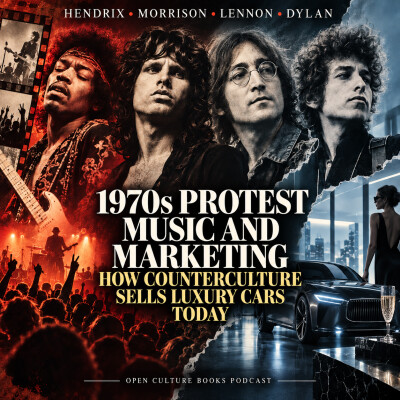
Imagine you are standing in a muddy field in upstate New York. It is August 1969.
- Speaker #1
Oh, yeah.
- Speaker #0
You are at Woodstock. Your boots are just sinking into the earth. You're surrounded by half a million people. And the air, it's just thick with this absolute raw anti-establishment fervor of the
- Speaker #1
1960s. A completely electric atmosphere.
- Speaker #0
Exactly. And up on stage, Jimi Hendrix is physically wrestling with his white fender Stratocaster. He is tearing the American National Anthem apart. He's coaxing these violent, napalm-inspired, screaming distortions out of the amplifier. Right. And to be in that crowd, to feel that bass in your chest, is to experience this visceral, deafening, pure rejection of bourgeois consumerism. I mean, it's a sonic weapon aimed directly at the military-industrial complex, the Gracelandal suits, the sprawling suburbs, and everything the establishment stands for.
- Speaker #1
The ultimate countercultural moment.
- Speaker #0
Right. Now, I want you to fast-forward 30 years. Mud is gone. You are sitting on a plush couch. in a climate-controlled living room the television is on, and that exact same Jimi Hendrix guitar riff, those exact same screaming anti-establishment notes, are playing through high-definition surround sound speakers.
- Speaker #1
But the context is, well, it's a bit different.
- Speaker #0
It's completely different. Because this time, it is not soundtracking a cultural revolution. It's soundtracking a meticulously color-graded commercial, highlighting the quiet, insulated acoustic comfort of a Mercedes-Benz C-Class.
- Speaker #1
Yeah, it's wild.
- Speaker #0
It is. How in the world does that happen? I mean, how does the soundtrack of youth rebellion, anti-capitalism, and countercultural fury become the ultimate sales pitch for luxury cars, heavy SUVs, and family minivans?
- Speaker #1
It really is a profound cultural whiplash. We are looking at what might be, honestly, the ultimate paradox of modern media and advertising. On one hand, you have an entire genre of music folk, rock, punk, that was specifically designed to critique. or dismantle or at least escape the capitalist system. And on the other hand, you have that exact same system absorbing the music, utilizing its rebellious energy to fuel the mass consumption of heavy industrial products.
- Speaker #0
And untangling that paradox is the mission of our Deep Drive today. We are unpacking a massive stack of fascinating sources, all anchored by a brilliant piece of research from cultural and media sociologist Frederick Camillo Mesplom.
- Speaker #1
Right.
- Speaker #0
The paper is titled, From Woodstock to the Soundtracks of... automotive television advertising, the strange journey of folk rock counterculture. We're going to explore the mechanics of how protest music was just completely co-opted by the global auto industry.
- Speaker #1
And what really rounds this exploration is the sheer scale of the data set that Gamela Mesplom assembled. I mean, he didn't just write a theoretical essay about selling out.
- Speaker #0
No, he really brought the receipts.
- Speaker #1
He absolutely did. He built an exhaustive corpus of 62 distinct television advertising campaigns spanning all the way from 1991 to 2026. Yeah. And he compiled all of this into a highly detailed spreadsheet, which, by the way, is public. So you can actually pull it up and explore it yourself later. It tracks the musical artist, the specific song, the car brand, the advertising agency, the year the song was released and the year the ad aired.
- Speaker #0
That's a massive amount of data.
- Speaker #1
It is. But our goal here goes far beyond just, you know, reading a list of what songs were used in what commercials. We're going to integrate the work of prominent cultural theorists. people like Thomas Frank, Fred Turner, Theodore Rozak, and Remy Durand, to understand the underlying architecture of this phenomenon. We want to look at why this isn't just some cynical, opportunistic corporate accident, but rather the logical, perhaps inevitable, end point of the counterculture itself.
- Speaker #0
Okay, let's unpack this. Because when you actually sit down and look at Gamela Mesplum's spreadsheet, the sheer scale of what we might call the great rock and roll car lot is staggering.
- Speaker #1
It really is.
- Speaker #0
Since the early 1990s. Automotive advertising hasn't just casually used old songs. They have aggressively and systematically strip-mined the 1960s and 70s folk rock and punk catalogs.
- Speaker #1
The raw data is genuinely striking. Reading through the list feels like looking at a greatest hits compilation of historical, cultural subversion. But every single track is neatly paired with an internal combustion engine or a lithium-ion battery.
- Speaker #0
Yeah. Let's give you some specific memorable examples from the corpus, because hearing these pairings out loud really emphasizes the whiplash we're talking about. Oh,
- Speaker #1
absolutely.
- Speaker #0
Let's start with Bob Dylan. We are talking about the voice of a generation, the man who wrote Masters of War, the artist who provided the acoustic soundtrack to the civil rights movement.
- Speaker #1
A true icon of protest.
- Speaker #0
Right. But then in 2014, Bob Dylan physically stars in a two-minute Super Bowl commercial for Chrysler. He is literally strolling through the gritty post-industrial streets of Detroit, looking directly into the camera to the tune of his song, Things Have Changed.
- Speaker #1
Yeah.
- Speaker #0
He is effectively acting as the ultimate pitchman for American corporate resilience and heavy manufacturing.
- Speaker #1
It's jarring to watch. And another fascinating and perhaps more melancholic example from the data is the posthumous resurrection of the British folk singer Nick Drake.
- Speaker #0
Oh, this one is so interesting.
- Speaker #1
Right. Here was an artist with profound, fragile talent. who struggled deeply with severe depression. He was completely obscure during his lifetime. He sold fewer than 5,000 records before he tragically passed away in 1974.
- Speaker #0
Almost totally unknown.
- Speaker #1
Exactly. Yet in 1999, 25 years after his death, he is suddenly propelled to massive global fame. His records are just flying off the shelves. And why? Because the advertising agency Arnold Worldwide decided to use his sparse, haunting acoustic track Pink Moon to sell the Volkswagen Cabriolet.
- Speaker #0
And if you remember that commercial, it's just four cool, attractive young people driving under a starry sky. They arrive at this loud, obnoxious party, look at each other, and decide to just keep driving in their VW. Yeah. It completely reframes Nick Drake's profound personal isolation into a trendy, exclusive lifestyle choice. And for a purist fan, Seeing these pairings feels like a gut punch.
- Speaker #1
Oh, totally.
- Speaker #0
It feels like the ultimate betrayal of the music's original intent. I mean, consider the pure, sneering, chaotic nihilism of the Sex Pistols. Their track, Pretty Vacant, was utilized to sell a Fiat Panda 4x4.
- Speaker #1
A Fiat Panda. You can't make this up.
- Speaker #0
Right. Or take The Clash, a band that literally pioneered fiercely political, anti-fascist, anti-capitalist punk rock. Their iconic anthem, London Calling, was licensed to sell the Renault ZOE electric car.
- Speaker #1
Unbelievable.
- Speaker #0
We have a blog source in our materials today called A Trumpet of Sedition, and the author of that blog is absolutely scathing about this trend. They argue that this is, quote, the systematic plundering of every genuinely rebellious cultural moment.
- Speaker #1
Yeah, that's a strong phrase.
- Speaker #0
The argument is that advertising takes something that was original and an act of pure artistic self-emancipation, hollows it out, and turns it into nothing more than a luxury lifestyle accessory for the wealthy.
- Speaker #1
It's an entirely understandable reaction. When you witness something that historically represented genuine, dangerous dissent transformed into a sterilized 30-second jingle for a two-ton hybrid vehicle, it feels like a theft of history. To many cultural critics, it feels as though late-stage capitalism is fundamentally sterile. It's incapable of producing its own authentic, compelling culture, so it acts as a cultural vampire.
- Speaker #0
Wow, a cultural vampire.
- Speaker #1
Yeah. It feeds on the authentic grassroots movements of the past to give life, edge, and personality to commodities that otherwise have absolutely no social significance. A car is just a machine made of steel, plastic, and rubber. The music is what gives it a soul.
- Speaker #0
But I have to push back here, or at least play devil's advocate for a second. The blog, A Trumpet of Sedition, is incredibly dramatic about this plundering of history. But isn't this just a very simple, very classic case of selling out?
- Speaker #1
What do you mean?
- Speaker #0
I mean the artists or their estates or the massive corporate holding companies that bought their publishing catalogs in the 90s. They just wanted a massive paycheck and the car companies. They just wanted a catchy tune that a specific demographic recognized. Are we overthinking this? Isn't this just like putting a studded punk rock leather jacket on a golden retriever? It looks edgy. It might make you smile. But at the end of the day, it's just a dog playing dress up for a treat. It's shallow, transactional, and ultimately meaningless.
- Speaker #1
That is a... very common way to look at it. And the leather jacket on a golden retriever is a vivid way to describe the surface aesthetics. Yes, massive amounts of money are changing hands to license these tracks. The transactions are real. But if we dig into the history of the advertising industry, as our sociological sources encourage us to do, the reality of this dynamic is much more insidious. Advertising didn't just casually stumble upon the counterculture in the 1990s and decide to start buying its wardrobe.
- Speaker #0
Right.
- Speaker #1
If we look at the historical timeline, the advertising industry didn't just buy the leather jacket. They actually helped design it.
- Speaker #0
Wait, I really need you to clarify that. Are you saying that old men in suits on Madison Avenue invented the hippie counterculture? Because that sounds like a massive conspiracy theory.
- Speaker #1
I know it does.
- Speaker #0
I find it very hard to believe that the executives from Mad Men were sitting in smoke-filled boardrooms scripting the youth rebellion rather than just frantically trying to copy what the kids were doing out in the streets.
- Speaker #1
It's not a conspiracy. It's a documented shift in marketing philosophy, which brings us to the cultural historian Thomas Frank. In his book, The Conquest of Cool, and further expanded upon by Joseph Heath and Andrew Potter in their book, The Rebel Cell, we get a theoretical framework that completely upends the traditional narrative of the 1960s. Okay,
- Speaker #0
listening.
- Speaker #1
To understand Frank's argument, we first have to look at the myth. The common, widely accepted narrative, the binary story we all kind of grew up with is that the 1960s counterculture arose organically, entirely from the grassroots. It started in the streets, in the coffee houses of Greenwich Village, on college campuses like Berkeley. In this myth, the youth were rebelling against a rigid, conservative, stifling corporate establishment.
- Speaker #0
Right. The 1950s organization, man. The era of Levittown suburbs, where every house looked the same, every dad wore a gray flannel suit to the office. and the ultimate goal in life was to conform. You wanted to keep up with the Joneses.
- Speaker #1
Exactly.
- Speaker #0
And the youth of the 60s looked at that soul-crushing conformity and said, no thanks, I'm going to grow my hair out, play the guitar, and be an individual.
- Speaker #1
Precisely the myth. And the second half of that myth is that this beautiful, authentic, grassroots youth movement was eventually and tragically infiltrated, diluted, and co-opted by that same establishment. The man stole the revolution.
- Speaker #0
Yeah. That's the standard story.
- Speaker #1
But Thomas Frank argues something entirely different. He argues that the advertising industry, specifically a movement within it known as the creative revolution of the late 1950s and 1960s, actually predated and co-created this ethos of rebellion. Madison Avenue was already critiquing mass conformity before the hippies were.
- Speaker #0
OK, you're going to have to prove that to me. Give me the mechanics of how an ad agency predated the counterculture.
- Speaker #1
To see the mechanics, we have to look at the prime example cited in our sources. The legendary advertising agency Doyle Dane Bernbach, or DDB, and the campaign they created for the Volkswagen Beetle starting in 1959. Oh,
- Speaker #0
OK. The Think Small and Lemon ads.
- Speaker #1
Yeah.
- Speaker #0
Anyone who has ever taken a Marketing 101 class knows these ads. But let's paint the picture for you listening, because the context of 1959 is crucial here.
- Speaker #1
It really is.
- Speaker #0
Up until DDB took the Volkswagen account, American car advertising was exclusively about boastful, massive, unapologetic excess. The cars themselves were land yachts, massive Cadillacs and Chevrolets with giant razor sharp tail fins, pounds of gleaming chrome, two-tone paint jobs.
- Speaker #1
And the advertising copy for those cars was entirely earnest and aspirational. The ads promised that if you bought this enormous, powerful vehicle, you would achieve the ultimate American dream. You would become the envy of your suburban neighbors.
- Speaker #0
Right.
- Speaker #1
It was about signaling your arrival in the upper middle class. It was the absolute peak of conformity-driven consumerism.
- Speaker #0
And then into this sea of chrome and boasting drops the DDB Volkswagen Beetle campaign. The Beetle was a tiny, funny-looking, low-powered, incredibly bare-bones German car. It was the antithesis of the Cadillac. So DDB didn't even try to compete on luxury or status.
- Speaker #1
No, they went the opposite direction.
- Speaker #0
Instead, they ran a full-page magazine ad. Most of the page is just stark, empty white space. Way up in the corner is a tiny black-and-white photo of the Beetle. And the headline just says, think small.
- Speaker #1
Brilliant. And another famous ad in the campaign featured a large picture of the Beetle with the single word lemon underneath it. The copy went on to explain that this specific car had been rejected by VW inspectors because of a microscopic, almost invisible scratch on the glove box chrome.
- Speaker #0
Which was revolutionary. They were using self-deprecation. They were using minimalism. They were using irony. No car company had ever called their own product a lemon before.
- Speaker #1
Never.
- Speaker #0
They were openly mocking the traditional, boastful. Keep up with the Joneses' consumerism of the
- Speaker #1
1950s. And here's the mechanical shift that Thomas Frank highlights. By using irony and mocking mass consumerism, DDB positioned the buyer of the VW Beetle not as someone trying to conform to suburban standards, but as an outsider.
- Speaker #0
Oh, I see.
- Speaker #1
The ad flattered the intelligence of the reader. It essentially said, you and I both know that the giant cars with the tail fins are ridiculous. You are too smart to be manipulated by mass society. You are a rebel who sees through the empty promises of the establishment.
- Speaker #0
So if I'm understanding Frank correctly, you weren't just buying a cheap German car. You were buying a critique of American consumer culture. You were buying an identity as a nonconformist.
- Speaker #1
Exactly. This is the birth of what Thomas Frank coined as hip consumerism. The creative class within capitalism, the art directors, the copywriters, the strategists realized before anyone else that people were becoming deeply dissatisfied with mass conformity. The gray flannel suit was becoming a straitjacket. So rather than fighting that dissatisfaction, advertising agencies turned that very disgust into a sales tactic. They realized that rebellion against the establishment could serve as the perfect vocabulary to convince you to discard last year's model and buy this year's alternative. Consumerism solved its own crisis of conformity by selling you the antidote to conformity.
- Speaker #0
That completely flips the script.
- Speaker #1
Yeah.
- Speaker #0
Let's bring in Heath and Potter's book, The Rebel Cell, because they illustrate this dynamic with an analogy that. makes the mechanics of this incredibly clear.
- Speaker #1
Yeah, the Matrix analogy.
- Speaker #0
Yes. If you've seen the movie The Matrix, you know the basic setup. You have the Matrix itself, which is the mainstream, conformist, oppressive, artificial system where everyone is asleep. And then you have Zion, the underground city of the counterculture, the awakened rebels who have unplugged from the machine and wear cool, torn clothes and listen to rave music. The traditional 1960s myth tells us that the counterculture is Zion. They believe they're escaping the matrix by adopting these rebellious styles, growing their hair, listening to underground folk rock and rejecting mainstream corporate brands.
- Speaker #1
But what Heath and Potter argues that rebel consumerism, buying the VW Beetle, buying the punk rock album, buying the torn jeans, it isn't Zion. It's actually just another software program running within the matrix.
- Speaker #0
Oh, that is so good.
- Speaker #1
It's a subroutine designed specifically to drive competitive consumption among adults. different demographic.
- Speaker #0
Let's make sure that's crystal clear for you listening. You aren't escaping the capitalist system by buying a vintage punk shirt from a boutique or buying a craft indie branded beer instead of a Budweiser. You are just participating in a different, highly lucrative segment of the exact same system.
- Speaker #1
Yes.
- Speaker #0
You are still competing for social status, but instead of competing through conformity, who has the shiniest Cadillac, you are competing through edge, authenticity, and rebellion.
- Speaker #1
And from a purely economic standpoint, this hip consumerism actually accelerates the cycle of planned obsolescence. Well, traditional 1950s capitalism relied on telling you that your neighbor has a slightly better car, so you need a new one to keep up. That works, but it has limits.
- Speaker #0
Right.
- Speaker #1
Hip consumerism tells you that the mainstream itself is inherently lame, inauthentic, and conformist. Therefore, you need to constantly seek out the new, the alternative, the underground product to prove that you aren't a sheep.
- Speaker #0
Oh, wow.
- Speaker #1
It creates a perpetual motion machine fueled by an endless dissatisfaction with whatever becomes popular. As soon as the rebellion becomes mainstream, you have to buy a new rebellion.
- Speaker #0
Which means, and this is the part that really hurts if you romanticize the 60s by this logic, the counterculture wasn't defeated by capitalism. It was capitalism's most successful research and development department.
- Speaker #1
That is the precise argument Frank is making. The advertising executives in the late 1960s looked out their windows at the youth protests, at the hippies. at the anti-war rallies, and they didn't see an enemy that needed to be crushed. They saw a massive real-world focus group validating their new approach. They saw that HIP was the ultimate tool to accelerate consumption.
- Speaker #0
Now, I want to pause here for a second because we are throwing around some heavy critiques of rebellion. It's important to note here, Heath, Potter, and Frank aren't writing off all activism as pointless. No,
- Speaker #1
not at all.
- Speaker #0
We are providing an impartial analysis of a sociological theory. These authors are specifically targeting stylistic rebellion. So whether you fall on the left or the right of the political spectrum, their critique is about how the free market commodifies your style, your clothes, the music you listen to.
- Speaker #1
Exactly.
- Speaker #0
They aren't saying that fighting for civil rights or protesting a war is a marketing gimmick. They are saying that changing your brand preferences to appear subversive is exactly what the free market wants you to do because it's highly profitable.
- Speaker #1
That distinction is vital. The critique focuses on rebellion as a lifestyle commodity, not on the pursuit of structural political change. But understanding that the advertising industry was literally built from the ground up to absorb and monetize this kind of stylistic rebellion brings us to the next more granular question.
- Speaker #0
Right. How do they actually do it?
- Speaker #1
Yeah. How exactly do they execute this today? When an ad agency acquires the rights to a genuinely angry, politically charged protest song. How do they chemically extract the anger, neutralize the politics, and leave behind only the pleasant, nostalgic vibes required to sell a car?
- Speaker #0
It's like a surgical procedure. They have to anesthetize the song. And Frederick Camilla Mesplom actually identified the specific formulas they used to do this. He draws on the framework of the French anthropologist Gilbert Durand to map out the semiotics of this process.
- Speaker #1
It's fascinating.
- Speaker #0
And once we explore these mechanisms, I guarantee you we'll never watch a television commercial the same way again. Let's look at the mechanics. Gimelem Esplom outlines four distinct strategies. The first is allegory. This is essentially about transforming a specific historical meaning into a broad mythology. How does this work in practice?
- Speaker #1
Allegory occurs when advertising strips a song of its original, often highly literal political context and turns it into an abstract symbol that serves the brand's narrative. Let's return to the Bob Dylan example from the sources. Masters of War used in the Chrysler campaign.
- Speaker #0
Right. Masters of War was released in 1963. It is a brutally direct, unforgiving folk anthem. Dylan is explicitly cursing the military-industrial complex. He's singing about the people who build bombs and weapons, the politicians who hide behind desks while young people die in wars. It is a literal protest against the machinery of war.
- Speaker #1
But watch the Chrysler commercial. That literal anti-war meaning is entirely excised.
- Speaker #0
Oof. Gone.
- Speaker #1
Instead, the song is synchronized with sweeping cinematic images of American automotive manufacturing. You see sparks flying in factories. You see the gritty streets of Detroit. You see hardworking Americans. Through allegory, the song is transformed. The grittiness of Dylan's voice no longer represents a protest against the industrial machine. It is flipped to represent the toughness and resilience of the industrial machine itself.
- Speaker #0
That is so clever.
- Speaker #1
The brand isn't selling you a Chrysler. They are selling you a collective mythic narrative of national determination and economic comeback. They use Dylan's song as an empty vessel to carry that new meaning.
- Speaker #0
It's incredibly slick. They use the sound of the protest to validate the target of the protest. But what if the brand isn't just buying the song? But the cool factor of the artists themselves. That leads us to the second mechanism Camilla Mesplom identifies. Aura.
- Speaker #1
Right, Aura.
- Speaker #0
This is about purchasing generational authenticity. The prime example here is the Beatles track Come Together being used in a global campaign for BMW.
- Speaker #1
With Aura, the brand's objective shifts. BMW isn't just looking for a catchy melody or a lyrical allegory. They're actively trying to purchase the cultural capital of the artist. Right. When BMW licenses come together, they want to take the unparalleled authenticity, the historical weight, and the almost untouchable cool factor of the Fab Four and transfer it directly onto their German engineering. They want the consumer to subconsciously feel that by driving a BMW, they are participating in the legendary avant-garde aura of the 1960s. The song acts as an emotional bridge, transferring cultural legitimacy from John Lennon directly to a luxury sedan.
- Speaker #0
It's almost like a modern corporation buying a knighthood. You can't invent a royal bloodline, but if you have enough money, you can buy the association with royalty to elevate your status.
- Speaker #1
That's a perfect analogy.
- Speaker #0
There's another trick in the advertising playbook, which is the third mechanism, Arcadia. This taps into pastoral nostalgia, the desire for a return to nature or a simpler time. And this is where Gamaliel Mesplon's semiotic analysis gets incredibly deep. The source material highlights the use of Simon and Garfunkel's The Sound of Silence. in a commercial for the Renault ZOE, which is a modern electric car.
- Speaker #1
This specific ad is a fascinating example of what researchers call a multimodal metaphor.
- Speaker #0
Hold on. Multimodal metaphor is a bit of a mouthful for those of us who haven't been to grad school for linguistics.
- Speaker #1
Rare enough.
- Speaker #0
Are we basically saying that they are hacking our senses, that they are using the visual elements of the commercial to completely rewrite how our brains interpret the audio of the song?
- Speaker #1
That is an excellent translation. Yes, they are creating a deliberate collision between what you see and what you hear to forge a brand new meaning.
- Speaker #0
Okay, lay it out for us.
- Speaker #1
Let's break it down. The Sound of Silence was written by Paul Simon in 1964. If you look at the lyrics, it is a bleak, haunting critique of modern urban alienation. The silence that Simon is singing about is profoundly negative.
- Speaker #0
Right, it's not a peaceful silence.
- Speaker #1
Exactly. It represents the inability of people to communicate with one another in a neon-lit, consumerist, mass media society. People are talking without speaking, they are hearing without listening. The silence is the terrifying isolation of the modern city.
- Speaker #0
But Renault takes that exact song and flips the meaning 180 degrees.
- Speaker #1
Yes, through the visuals. In the commercial, you don't see alienated people in a grim city. You see the sleek, high-tech, electric Renault driving fluidly through beautiful, serene pastoral landscapes and gliding quietly through pristine, sanitized city streets.
- Speaker #0
Ah, I see.
- Speaker #1
Through this multimodal metaphor, the negative silence of alienation from the original song is transformed into a highly desirable positive silence. It becomes a literal representation of the acoustic comfort inside the car's well-insulated cabin.
- Speaker #0
So, the original song is essentially warning us, the modern world is isolating, cold, and people are cut off from each other. And the commercial co-ops that anxiety and says, you're absolutely right, the modern world is chaotic and overwhelming. Which is exactly why you need to purchase the pastoral... insulated sanctuary of our electric vehicle to protect yourself from it.
- Speaker #1
Precisely.
- Speaker #0
They took a critique of alienation and used it to sell a product that physically and socially isolates you in a bubble of luxury.
- Speaker #1
That is the absolute essence of Arcadia in retro marketing. It's selling the idea of a lost harmony, a serene space away from the noise and pollution of modernity, but suggesting that this piece can only be achieved through the purchase of a high-tech machine.
- Speaker #0
Which brings us to the final and perhaps most cynical mechanism on Gamilla Mesplom's list. Antinomy. This is the literal commodification of transgression. It is controlled rebellion.
- Speaker #1
Oh, this one is wild.
- Speaker #0
And the prime example from our sources brings us back to Bob Dylan. Specifically, his legendary history-making set at the Newport Folk Festival in 1965, which was recently used in a campaign by Audi to sell their RS5 hybrid model.
- Speaker #1
To truly grasp the antinomy here, we have to vividly remember what Newport 1965 actually represented. When Bob Dylan walked onto that stage carrying a solid body Fender Scratocaster electric guitar backed by a loud rock and roll band, it was a cultural earthquake.
- Speaker #0
It really was.
- Speaker #1
Up until that moment, the folk music establishment was incredibly rigid and purist. They viewed acoustic folk music as the only authentic vehicle for political truth. And they viewed electric rock and roll as cheap, capitalist. teeny bopper trash. They expected Dylan to be their acoustic political prophet.
- Speaker #0
There are legendary stories about that night. Pete Seeger was supposedly so furious about the volume and the electric instruments that he wanted to take an ax and literally cut the sound cables. Yeah. By going electric, Dylan was committing a genuine act of artistic defiance. He was breaking with the suffocating constraints of his own movement, his own fans. He was booed loudly by the crowd for asserting his absolute artistic autonomy. It was dangerous. It alienated his core demographic.
- Speaker #1
Now contrast that rich, volatile history with the Audi commercial. As the blog's source, A Trumpet of Sedition, rightly points out, Audi takes this deeply defiant, risky historical moment and uses it to send a message. Look, we're breaking tradition, too. Why? Because they're introducing a hybrid engine instead of a standard combustion engine.
- Speaker #0
The irony is so thick you could cut it with a knife. Audi is using Dylan's rebellion against a rigid institution to market themselves as rebels, while they are, in reality, a massive conservative global institution.
- Speaker #1
It's even more layered than that. Audi is a subsidiary of the Volkswagen Group. At the exact same time, they were running ads positioning themselves as rule-breaking rebels. The parent company was embroiled in the Dieselgate emissions cheating scandal, a massive coordinated corporate fraud to evade environmental regulations.
- Speaker #0
Wow, yeah.
- Speaker #1
And simultaneously, they were laying off thousands of workers to maintain corporate profitability.
- Speaker #0
So they take a historical moment of genuine, dangerous artistic risk, and they use it to provide a rebel flavor to a luxury corporate product. They are selling the consumer the thrill of breaking the rules, the feeling of sticking it to the man, but with... Absolutely zero social or political consequences.
- Speaker #1
Not at all.
- Speaker #0
You get to feel like Bob Dylan at Newport just by signing the financing paperwork for a luxury German hybrid.
- Speaker #1
This leads to how Gemella Mesplum describes this overarching societal process. He uses the term patrimonialization.
- Speaker #0
Let's translate that for the listener.
- Speaker #1
Simply put, it is the process of taking active, living political subversiveness, stripping it of its teeth, its context, and its danger, and transforming it into a neutralized, easily consumable myth. It turns history into heritage.
- Speaker #0
Right.
- Speaker #1
And what you end up with is what philosophers call a simulacrum, a copy of a copy, where the original meaning is completely lost. The rebellion is no longer an action. It is just a flavor, a spice added to the product to make it more palatable to a certain demographic.
- Speaker #0
Rebellion is a condiment. I like that. But this raises a massive practical question. Who is this highly specific flavor for? The advertising industry doesn't do anything by accident. Licensing a track by Jimi Hendrix? or The Beatles, costs millions upon millions of dollars?
- Speaker #1
Tens of millions sometimes.
- Speaker #0
They aren't spending that kind of money on a whim. Who is the target audience for these deeply nostalgic musical choices?
- Speaker #1
The data in the spreadsheet provides a very clear, mathematically undeniable demographic answer, and it has to do with a metric that Gamello-Messplom identifies as the nostalgia gap.
- Speaker #0
This might be the most mind-blowing statistical trend in the entire deep dive. Gamal Mespam actually tracked the time gap between the year a song was originally released and the year it was finally licensed and used in a car commercial. And what he found is that the gap is widening at an incredible exponential rate.
- Speaker #1
Let's trace the numbers. In the 1990s, when this trend of using classic rock and car ads really started taking off, the average gap between a song's release and its use in an auto ad was 22.1 years. So you had hits from the 1970s being used to sell cars in the late
- Speaker #0
90s. Which makes sense. A 20-year nostalgia cycle is pretty standard in pop culture. People get misty-eyed for the music of their high school years when they reach their late 30s.
- Speaker #1
Right. But then look at the 2000s. The average gap widens to 25.7 years. In the 2010s, it stretches further to 33.9 years. And in the 2020s, the current decade we are analyzing, that gap has exploded to an average of 53.9 years.
- Speaker #0
That is insane.
- Speaker #1
The extreme example in the data is Bob Dylan's Maggie's Farm, which was released in 1965. being used for an Audi RS5 commercial in 2026. That is a 61-year gap between the creation of the art and its use in advertising.
- Speaker #0
And looking at the artists who dominate this widened gap, Jimi Hendrix is the absolute undisputed king of this corpus. His music is utilized in seven different major campaigns across luxury brands like Mercedes, BMW, and VW. We're talking about explosive psychedelic tracks like Purple Haze, Voodoo Child, and Foxy Lady.
- Speaker #1
Yep, the heavy hitters.
- Speaker #0
So here's the multi-million dollar question, why? Why are cutting-edge, high-tech car companies in 2026 reaching back over half a century to use music from the late
- Speaker #1
1960s? It comes down to cold, hard demographics and the concentration of wealth. The music dictates the target audience, and the target audience dictates the music. Think about the generation that was in their teens and early 20s and the 1960s and 70s. The people who sang those anti-materialist anthems in the mud at Woodstock?
- Speaker #0
Baby boomers.
- Speaker #1
They are the baby boomers. And today, they are the demographic cohort with the highest concentration of disposable wealth in the history of the world. They are the ones who can actually afford an $80,000 luxury SUV.
- Speaker #0
It's almost like a cultural mutual fund for these brands. If a car company invests in a new underground Indy track today, it's high risk, high reward. It might give them a momentary boost of cool, but it burns out fast. Oh,
- Speaker #1
absolutely.
- Speaker #0
The data actually shows this. Camilla Mesplom noted what he calls the rapid exhaustion of the indie folk wave of the 2010s. Modern alternative music is consumed, licensed for a commercial, and culturally discarded incredibly fast. It doesn't have decades-long staying power. But buying a Jimi Hendrix track is like buying a government-backed cultural bond. The interest, the cultural capital, and the nostalgia has been compounding for 60 years, and it is guaranteed to pay out with the exact demographic that holds all the wealth.
- Speaker #1
Exactly. The risk is zero. And it creates a fascinating closed loop of commercial irony. When a boomer who maybe marched against the Vietnam War in 1969 hears Jimi Hendrix in a Mercedes ad in 2026, it psychologically validates their youth.
- Speaker #0
Oh, that's dark.
- Speaker #1
It whispers to them, you were right to be a rebel back then. And look at you now. You were successful enough to afford this premium luxury vehicle. But because you listen to Hendrix, you haven't lost your cool outsider edge. The heavy industry that the folk movement explicitly condemned is now using folk music to sell itself right back to the very people who originally sang it.
- Speaker #0
It's brilliant. It confers status and distinction on wealthy buyers by reminding them of a time when they felt culturally avant-garde. And the sources note that there are actually fascinating geographic differences in how this strategy is applied.
- Speaker #1
Oh, yeah. The regional differences are super interesting.
- Speaker #0
French brands like Renault or Peugeot sometimes look for proximate cultural avant-garde to sell their cars. They want to appear intellectual and quirky. For instance, Renault used Pierre Henry's incredibly weird experimental electronic track Psyche Rock from 1967. Or they will lean on British punk like The Clash.
- Speaker #1
Yes, the French brands often use the music to signal a sort of intellectual marginality. But. The German luxury brands, the Audis, BMWs, and Mercedes-Benzes, they don't want quirky. They lean heavily on the absolute monolithic titans of classic rock. Hendrix, Dylan, Queen, David Bowie.
- Speaker #0
Right.
- Speaker #1
They use these massive cultural icons to establish dominance, prestige, and a sort of monumental, undeniable cultural authority.
- Speaker #0
If modern indie music burns out in a few years, but Hendrix lasts 60 years, this isn't just about selling expensive cars to aging boomers, is it? This feels like a foundational shift in how our entire consumer culture, especially our tech culture, was built.
- Speaker #1
It absolutely is. And this brings us to the expanded conclusion of Damela Mesclam's paper, which elevates this entire discussion. To understand the ultimate loop here, he brings in three crucial texts. Fred Turner's historical book from counterculture to cyberculture, Theodore Rossack's From Satori to Silicon Valley, and Remy Duran's work on technological evangelism.
- Speaker #0
OK, let's unpack these.
- Speaker #1
If we step back, using 60s folk rock to sell modern EVs reveals exactly how the counterculture actually gave birth to our modern high-tech capitalist world.
- Speaker #0
Let's dive into Fred Turner first because he makes a historical distinction about the 1960s that I think most people, myself included, completely miss. We tend to view the 60s counterculture as one big monolithic movement, just a giant crowd of hippies, protesters, and musicians all wanting the exact same thing.
- Speaker #1
Right, but that's not true.
- Speaker #0
Turner points out there were actually two distinct and eventually contradictory wings of the movement.
- Speaker #1
This is a vital distinction. First, you had what was called the New Left. These were the political activists. These were the people organizing protests, marching on Washington, fighting for civil rights, and actively trying to dismantle and restructure political institutions and government systems.
- Speaker #0
They wanted to change the rules of the game.
- Speaker #1
Yes, they wanted a traditional structural political revolution. but then you had the other wing, which Turner calls the new communalists. This was the wing led by figures like Stuart Brand, who famously created the Whole Earth Catalog. The new communalists essentially looked at the new left and gave up on traditional politics entirely. They believed that trying to change massive government institutions was a trap, a waste of energy.
- Speaker #0
So what was their solution?
- Speaker #1
Their solution was to drop out. They wanted a revolution of personal consciousness. They went off to build communes in the woods of California. They dropped acid. And they focused intensely on individual self-actualization.
- Speaker #0
And this is where Theodore Rozak's work, from Satori to Silicon Valley, picks up the thread. He explains how this specific hippie spiritual quest, this search for Satori, which is the Zen Buddhist term for sudden enlightenment for psychedelic mind expansion, morphed seamlessly in the 1970s into a technophile obsession.
- Speaker #1
Yes.
- Speaker #0
And this is the pivot that blows my mind, because the new communalists realize that if you are abandoning politics, you still need a way to achieve that revolution of personal consciousness. And the way to do that is through tools. The subtitle of the whole earth catalog was literally access to tools.
- Speaker #1
Exactly. Access to tools.
- Speaker #0
And here is the genius of capitalism. You cannot easily package and sell a political strike. The free market entirely rejected the new left. but tools. Tools can be manufactured, marketed and sold at a premium. Capitalism enthusiastically embraced the new communalists because their philosophy was perfectly aligned with consumerism.
- Speaker #1
To illustrate how deeply the counterculture embraced these tools, we have to look at a specific incredible historical example from our sources, the Community Memory Project from 1973.
- Speaker #0
Oh, this story is amazing.
- Speaker #1
It really is. This was essentially the very first public computerized bulletin board system or BBS. It It was set up in Berkeley, California, the absolute epicenter. of the counterculture.
- Speaker #0
I really want to explain how this worked because it paints such a vivid picture. In 1973, computers were massive room-sized mainframes owned by the military, the Pentagon, and megacorporations like IBM. They were the ultimate symbols of cold, bureaucratic, centralized control.
- Speaker #1
The ultimate big brother machines.
- Speaker #0
Exactly. But a group of counterculture hackers set up this community memory terminal. Where did they put it? They put it at the top of the stairs in Leopold's records. A grungy, popular local record store.
- Speaker #1
Perfect place in it.
- Speaker #0
Right. The terminal itself was a noisy, clunky teletype machine physically encased in a cardboard box to dampen the sound. It was hooked up to a mainframe computer in San Francisco over a super slow 110 baud telephone line using an acoustic coupler, meaning they literally shoved a telephone handset into a rubber modem.
- Speaker #1
It is an incredible image.
- Speaker #0
And while the Allman Brothers and the Grateful Dead were blasting on the record store speakers, local musicians, hippies, and students were typing on this cardboard box computer to leave messages, finding bass players for their fusion rock bands, selling used guitars, and debating poetry.
- Speaker #1
This is the exact literal inflection point where the counterculture embraced high-tech computers as an instrument of personal liberation. The new communalists looked at the emerging concept of the personal computer and didn't see an instrument of government control.
- Speaker #0
They saw freedom.
- Speaker #1
They saw a tool that could bypass the establishment. Connect individuals directly on a peer-to-peer level and expand human consciousness.
- Speaker #0
So to make sure this connection is crystal clear, the modern hacker, the tech entrepreneur, the Silicon Valley founder in a hoodie, they are the direct historical heirs of the 1960s hippie.
- Speaker #1
Yep.
- Speaker #0
The rebellion against Big Brother, against the rigid gray flannel establishment, didn't disappear. It became the ultimate management philosophy and sales pitch for Silicon Valley.
- Speaker #1
And we see this perfectly highlighted in Remy Duran's analysis of technological evangelism. He points directly to Steve Jobs and Apple. In 1984, Apple launched the Macintosh computer with a legendary Super Bowl commercial. And how did they frame it?
- Speaker #0
They framed themselves, the corporation, as the colorful athletic rebel smashing the gray conformist authoritarian screen of Big Brother.
- Speaker #1
Disruption wasn't a political act anymore. It became a corporate business strategy.
- Speaker #0
And if we tie this historical evolution directly back to Gemello-Mesplom's spreadsheet of car commercials, the puzzle pieces snap together with perfect logic. Why is there such an incredibly natural, effective link between 1960s folk rock and modern, high-tech hybrid or electric vehicles?
- Speaker #1
Because when you buy an Audi hybrid or Renault EV and the television ad is set to a classic 60s folk rock song, the car company isn't just selling you a mode of transportation to get to the grocery store.
- Speaker #0
They're promising you a technological tool for individual liberation.
- Speaker #1
Precisely. They are selling you the ideological legacy of the new communalists. The heavy industrial product is being marketed with the promise of attaining Satori. They are telling you that through this high-tech purchase, you can achieve personal enlightenment and freedom from the messy, polluted, chaotic, mainstream system.
- Speaker #0
Camilla Mesplom argues that this ultimate cooptation isn't actually a betrayal of the counterculture. Which is a hard pill to swallow for some.
- Speaker #1
It is.
- Speaker #0
But he argues that the counterculture contained this ambivalence, this latent seed of consumerism from the very beginning. The deeply individualistic nature of the new communalists, the intense focus on my personal consciousness, my access to tools, my individual escape from society, was perfectly prying to become the bedrock of digital era high tech consumerism.
- Speaker #1
It is arguably the ultimate success story of capitalism. The system took the immense disruptive energy of its greatest critics, it surgically stripped away the new left's demands for collective structural change, and it amplified the new communalists' desire for individual, tool-based liberation. And then it simply manufactured those tools and sold them at a premium.
- Speaker #0
If you were listening to this right now, think about the brand identity of the products around you. Think about the laptop, or the phone you were using, or the car sitting in your driveway. Are you driving a specific brand because it feels a bit outdoorsy and alternative? Are you buying a specific phone because the company presents itself as an innovative rebel?
- Speaker #1
You probably are.
- Speaker #0
That is exactly the hip consumerism loop Thomas Frank described, playing out in your own life. If we trace this entire journey from a muddy, chaotic field at Woodstock to the pristine boardroom of a global advertising agency, we see a profound transformation. A collective generational message, let's join together and change the system, was surgically altered by advertising into a purely individualistic message. Change yourself, express your unique identity and protect yourself from the system, preferably from the heated leather seats of your new hybrid SUV.
- Speaker #1
It is a remarkable cultural alchemy. And again, as impartial observers of this sociological data, we aren't passing moral judgment on the consumers who buy the cars or the aging artists who license their music. The value of this research is in observing the incredible adaptive mechanics of a cultural and economic engine that can digest literally anything, even pure anti-capitalist rebellion, and process it into a highly targeted lifestyle product.
- Speaker #0
It really is a fascinating lens through which to view modern media. You genuinely can't unsee the matrix once you realize how the code is written. The rebel cell and the philosophy of the new communalists inadvertently paved the way for Bob Dylan to sell Chrysler's.
- Speaker #1
If you want to dig into the raw data, look at the specific car campaigns, and explore the full sociological framework we've been discussing today, I highly recommend checking out the main source article. The full title is From Woodstock to the Soundtracks of Automotive Television Advertising. The Strange Journey of Folk Rock Counterculture by Frederick Gamillo-Mesplum.
- Speaker #0
Yes, you can dive much deeper into the original text, which is available on the SSRN network. Just go to their site and search for the abstract ID, which is 7462579. It is a... dense, fantastic read that will completely rewire how you watch television commercials.
- Speaker #1
It fundamentally forces you to question the authenticity of the media landscape around you and helps you realize how deeply our genuine human desires for freedom and individuality are intertwined with our consumption habits.
- Speaker #0
Absolutely. So we'll leave you with this final lingering thought to mull over on your commute or wherever you are right now. The next time you're listening to Spotify and you hear a cutting edge, underground, deeply subversive track, by a fiery new indie artist, Ask Yourself. What high-tech luxury product of the year 2060 is that song destined to sell? Because if this deep dive tells us anything, it's that the revolution won't be televised, but it will absolutely be used to sell the television. Thanks for joining us, and we'll catch you next time.