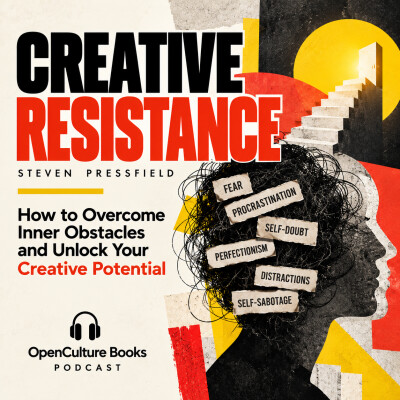
- Speaker #0
You know, usually when we talk about a medical diagnosis, there's this expectation of, like, absolute engineered precision.
- Speaker #1
Right, like an x-ray or something.
- Speaker #0
Exactly. You break your arm, the x-ray shows this jagged white line on a black background, and the doctor just points at it. The bone is broken. The reality is totally undeniable.
- Speaker #1
Yeah, it's very black and white.
- Speaker #0
Right. But when you step into the landscape of human potential, into the architecture of our own minds and our unfulfilled ambitions, that x-ray machine just, like, shatters.
- Speaker #1
It completely falls apart.
- Speaker #0
It does. Suddenly you're staring at an adult who desperately wants to write a novel or start a business or get healthy, but instead they spend six hours scrolling through short form videos. And if you try to diagnose why, the image is incredibly murky.
- Speaker #1
Yeah, the diagnostic waters of self-sabotage are about as muddy as human psychology gets. I mean, we are constantly searching for external reasons for our internal paralysis.
- Speaker #0
Which brings us to this really shocking historical anecdote from our source material today. that completely strips away that muddy water.
- Speaker #1
Oh, the story is intense.
- Speaker #0
It really is. So it's about a young man, 18 years old, who receives a substantial inheritance. He moves to Vienna, and his stated burning ambition is to study fine art and architecture.
- Speaker #1
Right, he has the resources.
- Speaker #0
Exactly. He applies to the Academy of Fine Arts. He has the money, he has the time, the location, and yet he never paints a single thing. Facing a blank canvas, actually... executing the terrifying, soul-exposing work of creating art, it just completely paralyzed him.
- Speaker #1
He couldn't do it.
- Speaker #0
No. Instead of doing the work, he retreated into these dark, grandiose political fantasies. And that young man was Adolf Hitler.
- Speaker #1
Yeah. The author we're analyzing today, Steven Pressfield, uses this chilling example in his book, The War of Art, which is translated beautifully in our sources as the enemy of a lifetime.
- Speaker #0
Such a powerful title.
- Speaker #1
It is. And he uses it to make a singular, terrifying point. For Hitler, starting World War II was actually psychologically easier than facing a blank canvas.
- Speaker #0
Oh, wow.
- Speaker #1
Yeah. The force that stopped him from painting is the exact same psychological force that stops a writer from writing or an entrepreneur from building.
- Speaker #0
And our mission for this deep dive today is to basically tear the mask off that exact force. We are dissecting Pressfield's philosophy. along with an explosive, highly analytical forward by the legendary story consultant Robert McKee.
- Speaker #1
Right, it's a really dense, fascinating combination of perspectives.
- Speaker #0
Totally. And we are going to extract the analyse psychologique, so the deep psychological wiring of why we destroy our own dreams. And then we want to arm you with the conseil pratique, you know, the heavy duty blue collar practical tools to actually fight back.
- Speaker #1
Because the text argues that most of us are walking around with two lives.
- Speaker #0
Right.
- Speaker #1
There is the life we are currently living, the daily commute, the compromises, the routine, and hovering right above it is the unlived life, the life we know deep in our gut we are actually capable of.
- Speaker #0
And the friction between those two lives, I mean, that generates a massive amount of modern psychological suffering. The person you are right now versus the person you know you have the potential to become.
- Speaker #1
Yeah, that gap is where all the pain lives. And Pressfield gives a name to the invisible barrier standing between those two lives. He calls it resistance. Capital R.
- Speaker #0
Capital R resistance.
- Speaker #1
Right.
- Speaker #0
Which I love because naming the phenomenon is like the first necessary step in any clinical or psychological framework, right?
- Speaker #1
Exactly. By capitalizing resistance, the text elevates it from just this vague mood to a distinct hostile entity.
- Speaker #0
Like a real enemy.
- Speaker #1
Right. It is an active repelling energy field. You cannot see it or touch it, but you can measure its effects perfectly. its sole function in the human psyche. is to push us away from our highest callings.
- Speaker #0
Let's define the boundaries of this, though, because it's not just about painting or writing a symphony. The sources specify that resistance is triggered by literally any act that rejects instant gratification in favor of long-term growth or health or integrity.
- Speaker #1
Yeah, the scope is incredibly vast. I mean, it covers launching a new business. It covers committing to a rigorous diet or a physical training program.
- Speaker #0
Or even just spiritual growth, right? Like. Deciding to meditate.
- Speaker #1
Exactly. It even awakens when you decide to take a moral stand that might cost you socially. Anytime the human soul attempts to elevate itself from a lower frequency to a higher frequency, resistance violently pushes back.
- Speaker #0
Okay, I actually need to stop and push back on this framing for a second. Because I'm listening to words like violently pushes back and hostile entity and a very skeptical part of my brain is throwing a flag on the play.
- Speaker #1
Fair enough.
- Speaker #0
Aren't we just taking a deeply mundane universal human flaw like good old-fashioned laziness and dressing it up in a cape like a Marvel supervillain?
- Speaker #1
I hear that a lot.
- Speaker #0
Right. Like, why use this grandiose language for the fact that I just prefer taking a nap over doing my taxes?
- Speaker #1
Because reducing this to laziness strips the phenomenon of its actual psychological mechanics. Laziness implies a passive absence of energy, a void.
- Speaker #0
Okay.
- Speaker #1
But resistance is not a void. It is a highly active, directed force. Consider the biological markers of your own experience, right?
- Speaker #0
Sure.
- Speaker #1
When you think about taking a nap instead of doing the dishes, you feel relaxed. That is laziness. But when you sit down at your laptop to write the business plan that could genuinely change your life, you don't feel relaxed.
- Speaker #0
Oh no, I feel terrified.
- Speaker #1
Right. Your heart rate elevates, you feel active dread, tight-chested anxiety, or this sudden manic urge to completely reorganize your digital file system.
- Speaker #0
Yes, the sudden realization that my baseboards desperately need scrubbing right this exact second.
- Speaker #1
Exactly. That is not a passive lack of energy. That is your brain actively deploying high-energy distraction maneuvers to pull you away from a specific task. Resistance is targeted.
- Speaker #0
Okay, that distinction between a passive void and active targeting makes total sense. And the text actually lays out a strict psychological profile for this opponent.
- Speaker #1
Yes, it defines resistance with four specific traits.
- Speaker #0
The first is that it is internal. And this is tricky because it feels external, right? We blame the economy. We blame our noisy kids. We blame our horrible boss for why we can't focus.
- Speaker #1
But resistance is entirely self-generated. It is an inside job.
- Speaker #0
We just project it outward because facing the fact that we are the architects of our own paralysis is deeply shameful.
- Speaker #1
Yeah, it's much easier to blame the dog barking outside.
- Speaker #0
So true. The second trait is that it is insidious. It is a total shapeshifter. If it needs to sound like a calm, rational lawyer presenting a flawless argument for why you should delay your project, it will.
- Speaker #1
Oh, it will give you a PowerPoint presentation on why you should quit.
- Speaker #0
Exactly. But if it needs to act like an armed robber holding a gun of pure panic to your head, it will do that too.
- Speaker #1
It has absolutely no moral compass. Which leads directly to the third trait, it is implacable. The text compares it to the shark in the movie Jaws. Or the machine and the Terminator.
- Speaker #0
Oh, I love that comparison.
- Speaker #1
Right. It cannot be reasoned with, it cannot be bargained with, and it does not feel pity. It is a psychological engine programmed with one singular objective, which is to prevent you from doing your work.
- Speaker #0
And the fourth trait, which I actually found strangely comforting, is that it is impersonal. Resistance doesn't target you because you're a bad person.
- Speaker #1
Not at all.
- Speaker #0
It operates like the laws of physics. Gravity pulls things down. resistance pushes you away from your calling. It's an objective force of nature.
- Speaker #1
Robert Rakey's forward dives really deeply into the psychologic of this impersonal force, and he connects it directly to psychoanalytic theory. He aligns resistance with Sigmund Freud's concept of the death drive or thanatos.
- Speaker #0
Okay, let's break that down because Freud is heavy. What does the death drive actually mean in the context of, you know, me trying to finish a screenplay.
- Speaker #1
Well, in Freudian theory, the human psyche is caught in a tug of war between two fundamental drives. You have eros, which is a drive for life, creation, sexuality, building things.
- Speaker #0
The life force.
- Speaker #1
Exactly. And then you have thanatos, which is the drive toward death, entropy, destruction, and basically returning to a state of absolute zero.
- Speaker #0
Wow.
- Speaker #1
McKee argues that resistance is the direct manifestation of thanatos. When you sit down to write that screenplay, You are channeling arrows. You are creating order out of nothing. And the moment you do that, the death drive awakens to pull you back into the dark, back into silence, back into inertia.
- Speaker #0
It literally wants to maintain the void.
- Speaker #1
It wants to extinguish the spark. The text uses a really fascinating historical lens here. The Romans didn't use the word genius to describe someone with a high IQ. They believed a genius was a guiding spirit, like a sacred, singular gift bestowed upon a person at birth.
- Speaker #0
Like a companion.
- Speaker #1
Right. And resistance doesn't just want to delay your work. Its goal is to assassinate your genius. It wants to ensure that the unique gift you were put on this planet to deliver dies inside of you.
- Speaker #0
That is so intense. So if the stakes are literally the life or death of my soul's purpose, how do I know if I'm fighting resistance or if I just have a genuinely bad idea?
- Speaker #1
That's the crucial question.
- Speaker #0
And the text provides a diagnostic tool here that absolutely blew my mind. It's the concept of resistance as a magnetic compass.
- Speaker #1
The compass analogy is central to the entire philosophy. Walk us through how Pressfield frames it.
- Speaker #0
Yeah, so he argues that resistance is infallible. It always points true north. But true north, in this case, is the exact thing you are most terrified of doing.
- Speaker #1
It points straight at the fear.
- Speaker #0
Exactly. So if I am looking at my to-do list, and I am mildly annoyed by the idea of cleaning the gutters, But I am absolutely f***ed. paralyzed with this profound soul-crushing dread at the thought of writing the first chapter of my book, the fear is pointing to true north.
- Speaker #1
Yeah.
- Speaker #0
The magnitude of the resistance is a precise one-to-one indicator of how important that task is to my personal evolution.
- Speaker #1
That completely flips our standard psychological response to fear on its head.
- Speaker #0
It totally does. You know, we are taught that fear is a warning sign, like danger, turn back. But Pressfield says, No. The intense fear isn't a sign that you shouldn't do the work. The fear is the exact compass heading telling you that you must do the work.
- Speaker #1
It's the roadmap.
- Speaker #0
Right. The more important a call to action is to our soul's evolution, the more resistance we will feel toward pursuing it.
- Speaker #1
But the architecture of human avoidance is brilliant. Because resistance is an internal force, it has full access to your psychological blueprint. It knows exactly what terrifies you. And more importantly, it knows exactly what comforts you.
- Speaker #0
It knows all your weak spots.
- Speaker #1
Exactly. If it can't stop you with pure paralyzing dread, it will put on a mask and seduce you.
- Speaker #0
Which moves us into the daily reality of this war, the masks of sabotage. How does resistance actually manifest in our behavior on a random Tuesday morning? What does the enemy look like when it's wearing camouflage?
- Speaker #1
The most common universally recognized mask is procrastination. But we have to analyze why it works so well. Procrastination is the easiest form of self-sabotage to rationalize because it never requires a total surrender.
- Speaker #0
Right. Nobody wakes up and says, I am officially abandoning my dream of becoming a musician forever. The ego just couldn't handle that level of defeat.
- Speaker #1
It would be too painful.
- Speaker #0
Yeah. Instead we say, I am absolutely going to write that song. Tomorrow.
- Speaker #1
Procrastination is a deferral, not a cancellation. That's its insidious genius. It bypasses our psychological alarm system. But the danger, as the text explicitly warns, is that this deferral compounds. We don't just put off our work for a single day. The habit of deferral calcifies, and we end up putting off our lives until the day we die.
- Speaker #0
It's the slow drip of failure. But let's say we catch ourselves procrastinating, and we try to force ourselves to sit at the desk. Resistance has a backup plan. It offers alternative activities.
- Speaker #1
Yes.
- Speaker #0
This is where the text delves into sex, addictions, and cheap dopamine.
- Speaker #1
The psychological mechanism here is the pursuit of immediate, unearned gratification to mask the pain of the unlived life. Facing the blank page is agonizing. It requires immense cognitive load and emotional vulnerability.
- Speaker #0
It's draining.
- Speaker #1
It really is. So resistance steps in and offers a shortcut to feeling alive.
- Speaker #0
The source makes a really fascinating distinction regarding sex here, actually. It argues that sex can actually be a manifestation of resistance if the primary motivation isn't love or even genuine physical lust, but just a desperate need for external validation.
- Speaker #1
Because it provides a momentary, intense feeling of being wanted, being affirmed, existing in the world. But it's empty caloric intake for the soul. The text suggests a brutally honest diagnostic test.
- Speaker #0
Oh, the emptiness test.
- Speaker #1
Right. Gauge the level of emptiness you feel an hour afterward. The more hollow and depleted you feel, the more likely the act was driven by resistance rather than genuine human connection. And this diagnostic applies to all behavioral sinks.
- Speaker #0
Overeating, pouring that third glass of wine, endlessly scrolling through social media, engaging in toxic gossip. I mean, the text literally says eating anything with fat, sugar, salt or chocolate is a way to get a biochemical dopamine hit without having to do the hard work of creating something meaningful.
- Speaker #1
It- It anesthetizes the low-grade chronic pain of knowing you aren't doing what you are supposed to be doing.
- Speaker #0
Yeah.
- Speaker #1
But there is an even more complex destructive mask that resistance wears, which requires serious analysis psychologique to unpack. And that is the active creation of trouble.
- Speaker #0
Creating trouble. Living a soap opera life. The text makes the wild claim that choosing to endure a chaotic, toxic relationship you Or constantly getting into financial trouble is actually psychologically easier than designing a new software interface or painting a portrait.
- Speaker #1
On the surface, that sounds absurd. Why would he actively choose misery and chaos over sitting quietly in a room?
- Speaker #0
Okay, please explain the mechanism because this feels like a massive paradox.
- Speaker #1
We choose the chaos because trouble is a false form of fame. It draws attention. When your life is a constant state of emergency, you become the central character in a highly dramatic narrative. You are the victim battling overwhelming odds.
- Speaker #0
I couldn't possibly study for my medical boards today. My partner just threw all my clothes on the lawn again.
- Speaker #1
Precisely. It provides a highly compelling, socially bulletproof excuse for failing to execute your true calling. If you are constantly putting out intense personal fires, society lets you off the hook.
- Speaker #0
Right. No one expects you to build a cathedral when your house is burning down.
- Speaker #1
So, resistance sets your house on fire.
- Speaker #0
The author talks about how entire family systems can unconsciously normalize this drama. The kids act out, the parents have explosive arguments, a sibling is constantly needing to be bailed out of jail.
- Speaker #1
It's a systemic issue.
- Speaker #0
Yeah. It functions as a collective unconscious agreement. As long as the family is locked in a state of perpetual crisis, the drama level stays high and no one has to face the terrifying silence of their actual life's work.
- Speaker #1
It is a systemic avoidance strategy. The family unit basically becomes a fortress built to keep the muse out. And this dynamic leads directly into one of the most painful interpersonal manifestations of resistance mentioned in the text.
- Speaker #0
The crabs in a bucket.
- Speaker #1
The crabs in a bucket phenomenon.
- Speaker #0
This part of the book is brutal, but I think everyone listening will recognize it immediately.
- Speaker #1
It explores what happens when you actually start winning. You finally sit down, you ignore the distractions, and you start doing the work. You start transforming your body or your mind or your career. How do the people closest to you react?
- Speaker #0
You would assume the people who love you would throw a parade. But the text warns that they often get incredibly weird. They might become moody or passive-aggressive or suddenly very needy.
- Speaker #1
Or develop strange ailments.
- Speaker #0
Right. They might even develop psychosomatic illnesses to draw your attention away from your work.
- Speaker #1
Because we have to look at the psychology of the people around you. They are fighting their own internal resistance. They have their own unlived lives. When you begin to succeed, your forward momentum acts as a silent psychological reproach to them.
- Speaker #0
It's a mirror.
- Speaker #1
It is a mirror reflecting their own paralysis. If you could beat your demons and write your book. They are violently stripped of their favorite excuse, the excuse that it's impossible.
- Speaker #0
So subconsciously, without even realizing they are doing it, they try to pull you back down into the bucket, just like crabs, because it is warm and comfortable in the bucket as long as everyone is failing together.
- Speaker #1
Exactly.
- Speaker #0
The moment one crab reaches the rim and tries to pull itself over, the others instinctively grab its legs and pull it back into the pile.
- Speaker #1
The conseil pratique, the practical advice given here, is harsh. but non-negotiable. The awakening artist must become momentarily ruthless. You cannot let your friends, your spouse, or your family pull you back into the bucket.
- Speaker #0
It sounds cold, but...
- Speaker #1
The text argues that the most loving thing you can do for them is to scale the wall, escape, and become living proof that it can be done.
- Speaker #0
You have to secure your own oxygen mask before assisting others.
- Speaker #1
Exactly.
- Speaker #0
Speaking of the absurd lengths we will go to in order to avoid the work... Robert McKee shares a story in his foreword that is both hilarious and deeply tragic.
- Speaker #1
Oh, the wardrobe sorting incident.
- Speaker #0
A masterclass in sophisticated avoidance. Listener, I want you to think about your own life right now. Think about the project you are avoiding. And listen to what one of the most successful story consultants in Hollywood did. McKee was so blocked, so paralyzed by the resistance of writing a new book, that he decided the most urgent, critical thing he needed to do in his life. was to try on his entire wardrobe.
- Speaker #1
Every single piece of clothing he owned.
- Speaker #0
He spent two full days sorting his clothes. He made piles for spring, summer, fall, winter, and charity. But that wasn't enough.
- Speaker #1
It never is.
- Speaker #0
He then subdivided the piles. Spring casual, spring formal, winter athletic. He drove himself into a manic frenzy for 48 hours, standing in his bedroom just to avoid sitting at his typewriter.
- Speaker #1
It's incredible.
- Speaker #0
Think about your own wardrobe sorting. Is it reorganizing your Notion workspace for the 15th time? Is it doing five hours of research on YouTube instead of writing the first paragraph?
- Speaker #1
What McKee's anecdote illustrates perfectly is that resistance doesn't always look like sitting on the couch eating chips. Often, resistance looks like furious, exhausting, meticulous activity.
- Speaker #0
Busy work.
- Speaker #1
Right. It will convince a brilliant mind that color-coordinating socks is a matter of life and death, so long as it keeps the fingers. off the keyboard.
- Speaker #0
It is exhausting just thinking about it, but here is the terrifying pivot in the text. We've mapped the messy masks. The procrastination, the drama, the closet sorting. What happens when we wise up? What happens when we catch ourselves sorting the socks? And we say, ah, nice try, resistance. I see you.
- Speaker #1
Well, resistance adapts. It abandons the messy emotional tactics and shifts to intellectual warfare. It puts on a tailored suit, carries a briefcase, and begins to sound incredibly reasonable. This brings us to the phenomenon of rationalization.
- Speaker #0
Rationalization is resistance's chief spokesperson. It doesn't use raw fear or chaos, it uses logic.
- Speaker #1
If resistance showed us its true face, which is pure, unadulterated fear, we might feel ashamed of our cowardice, and that shame might ultimately drive us to take action. So instead, resistance hides the fear behind a fortified wall of seemingly valid, bulletproof excuses.
- Speaker #0
It says things like I can't possibly focus on my novel right now because my department is undergoing a massive corporate restructuring, and I need to demonstrate that I am a dedicated team player to secure my promotion. Or, I shouldn't launch this startup in Q3 because the macroeconomic indicators for the sector are trending slightly downward.
- Speaker #1
The psychological trap here, and the reason rationalization is arguably the most lethal weapon in the enemy's arsenal, is that the excuses are almost always factually true.
- Speaker #0
Right. Your department... might actually be restructuring. The macroeconomic indicators might really be trending downward. Your spouse might genuinely be going through a tough time and need extra support.
- Speaker #1
So how do you defeat an enemy who is using facts against you?
- Speaker #0
How do you argue with reality?
- Speaker #1
By recognizing a crucial philosophical distinction. The facts may be true, but the conclusion that resistance draws from those facts, that you must therefore abandon your calling, is a lie. Resistance uses true facts to construct a false outcome.
- Speaker #0
This leads us directly into a very specific, modern manifestation of rationalization that the text tackles head-on. And I'll warn you, it is a highly provocative analyse psychologique. It's what the author calls the healing trap.
- Speaker #1
Yes. The author critiques a very specific subculture. He uses places like Santa Fe or Santa Barbara as cultural touchstones, where the prevailing dogma is that a person must fully heal their psychological wounds. process all their childhood trauma, and complete their therapeutic journey before they are ready to step into the arena and create their life's work.
- Speaker #0
Let's interrogate this because modern culture heavily emphasizes healing and therapy. Why does the text argue that waiting to heal is a trap?
- Speaker #1
The flaw in the healing mindset, according to Pressfield, is a fundamental misunderstanding of human psychology and the source of creativity. The text argues that the part of you that creates art, The part that harbors your unique genius is absolutely distinct from the part of you that was traumatized by your parents or damaged by a cruel society.
- Speaker #0
He separates the ego from the self?
- Speaker #1
Precisely. The ego is the part of us that gets bruised, that feels insecurity, that carries the baggage of our past. But the creative core, the inner genius, is pristine. It is bulletproof. It is waterproof. The traumas of life cannot fundamentally alter or degrade your creative center.
- Speaker #0
I want to make sure I understand the mechanism here. The argument is that if I'm waiting for my anxiety or my past trauma to be completely resolved before I write my book, I'm going to be waiting forever because humans are perpetually flawed.
- Speaker #1
Yes. The analogy used in the text is that of a professional athlete. A pro athlete knows there will never be a day for the rest of their career where they wake up entirely pain-free.
- Speaker #0
They just accept it.
- Speaker #1
If a football player waited until his knees didn't ache and his shoulders were perfectly lined to step onto the field, He would never play a single down. An athlete has to learn to play hurt.
- Speaker #0
Playing hurt. That is a powerful concept.
- Speaker #1
Waiting to be completely healed is just resistance wrapping itself in the noble, culturally applauded language of self-care. It provides a perpetual, socially sanctioned excuse to delay the terrifying work of creation.
- Speaker #0
And the author takes this argument even further, moving from the therapeutic realm into the clinical realm. Now, we need to pause here and apply our impartiality rule.
- Speaker #1
Definitely.
- Speaker #0
The author makes some highly controversial claims regarding clinical diagnoses like depression, anxiety, and attention deficit disorder.
- Speaker #1
Yes. For the listener, it is crucial to state that we are strictly examining the author's philosophical argument here. We are not taking sides. We're not endorsing or validating medical claims regarding clinical psychiatry.
- Speaker #0
We are just analyzing how Pressfield views these conditions strictly through the lens of his thesis on resistance.
- Speaker #1
Exactly.
- Speaker #0
With that context set, the text posits that some modern clinical ailments might actually be massive manifestations of resistance in disguise. The author shares a wild anecdote from his time working in a massive advertising agency in New York City. He claims a senior executive explicitly told the copywriters, invent a disease. If we can invent a disease, we can sell the cure.
- Speaker #1
Yeah. The author suggests that conditions like attention deficit disorder or seasonal affective disorder were heavily popularized, if not entirely conceptualized, as marketing ploys by pharmaceutical companies to sell medication to a population that was deeply unhappy.
- Speaker #0
Again, staying totally neutral on the medical science, what is the philosophical point he's trying to make about our unlived lives?
- Speaker #1
The underlying argument is about the danger of medicalizing existential dread. He argues that what society often labels as clinical depression or chronic anxiety might, in many cases, simply be the agonizing, soul-crushing weight of the unlived life pressing down on the psyche.
- Speaker #0
It is the pain of ignoring the compass for too long. If True North is pulling you toward your art, When you spend 10 years walking south into a corporate job you hate, that internal friction is going to generate massive psychological pain.
- Speaker #1
Yes. He asserts that while depression is a real experience, framing it purely as a biological inevitability that requires medication can be a fatal concession to resistance. If you believe your inability to work is a medical condition beyond your control, resistance has won the war without firing a single shot.
- Speaker #0
You essentially have a doctor's note excusing you from your life's purpose.
- Speaker #1
Right.
- Speaker #0
It's a heavy, challenging concept to wrestle with. But the text doesn't just leave us with theory. It provides the ultimate, undeniable counterexamples to destroy any form of rationalization, whether it's medical, circumstantial, or emotional.
- Speaker #1
The examples of Leo Tolstoy and Lance Armstrong.
- Speaker #0
Yes. Whenever resistance whispers in our ear, the conditions aren't perfect, you have too many responsibilities, you're too tired. The text brings up Tolstoy. Leo Tolstoy had 13 children.
- Speaker #1
Thirteen?
- Speaker #0
Think about the noise, the chaos, the financial pressure, the sheer logistical nightmare of a household with 13 children in that era. And amidst all of that, he still found the focus to sit down and write War and Peace.
- Speaker #1
And Lance Armstrong. He contracted testicular cancer that metastasized to his brain and his lungs. He endured grueling body-destroying medical treatments. And he still returned to win the Tour de France, the most grueling athletic event on Earth, multiple times.
- Speaker #0
So, if Tolstoy can write a historical masterpiece with 13 kids running through his house, and Armstrong can win the Tour de France after battling brain cancer, our rationalization that we are too drained after our 9-to-5 job to paint for an hour suddenly looks incredibly flimsy.
- Speaker #1
It ruthlessly strips away the illusion. It forces the individual to confront the terrifying reality. You are not a victim of circumstance. You are actively choosing to yield to resistance.
- Speaker #0
Okay. We have mapped the minefield. We have seen the raw terror, the messy emotional drama, and the sophisticated intellectual traps of resistance. If the enemy is this deeply embedded in our cellular psychology, if it is this smart and this relentless, how do we possibly break out?
- Speaker #1
This is the critical pivot point of the entire book. To defeat an enemy that has full access to your psychological blueprint, you cannot just try a little bit harder. You cannot just download a new productivity app.
- Speaker #0
That's not going to cut it.
- Speaker #1
No. You have to execute a fundamental structural shift in your identity. You must alter how you view yourself and your relationship to your work.
- Speaker #0
You must cross the line from amateur to professional. This is the core conseil pratique section of our deep dive, the practical toolkit. But when Pressfield says turning pro, he isn't talking about getting a degree or signing a contract, is he?
- Speaker #1
No, he's talking entirely about an internal mindset. The brilliant, deeply practical observation the text makes is that almost every single person listening to this right now is already a highly functioning professional in at least one area of their life, their day job.
- Speaker #0
That is such a fascinating realization. I don't wait for a mystical wave of inspiration to wash over me before I show up to the recording studio. I just set my alarm and show up.
- Speaker #1
Let's break down the mechanics of how you treat your day job. You show up every day, regardless of the weather. You show up no matter how tired or uninspired you feel. You stay on the job all day. You are committed over the long haul.
- Speaker #0
Right.
- Speaker #1
You accept remuneration for your labor. And crucially, you don't over-identify with your failures at work. If a presentation goes poorly, you don't fall to the floor weeping and believe your soul is cursed by the gods. You just figure out what went wrong and fix the PowerPoint for the next day.
- Speaker #0
We take it seriously, but we don't treat it as a reflection of our inherent human worth.
- Speaker #1
The grand tragedy of the human condition.
- Speaker #0
according to the text, is that we apply this ironclad, resilient, professional discipline to the job that pays our rent, but we apply a fragile, precious, amateur mindset to the art or the calling that constitutes our unlived life.
- Speaker #1
So the practical solution is to take the exact same blue-collar, lunch-pail mindset we use at our nine-to-five and forcefully transplant it directly onto our soul's work.
- Speaker #0
Let's contrast the psychology of the amateur versus the pro to see how this plays out. The amateur is driven by grand, exaggerated fantasies. They are intoxicated by the idea of the final product.
- Speaker #1
They want the applause.
- Speaker #0
They want the glory, the stardom, the finished novel on the bestseller list. But they are utterly unwilling to endure the agonizing, unglamorous process required to get there.
- Speaker #1
They believe the cultural myths. The text exp... explicitly calls out the famous Hollywood legend about Sylvester Stallone writing the entire script for Rocky in a three-day, caffeine-fueled, sleepless sprint of pure inspiration.
- Speaker #0
Pressfield points out that whether that specific story is historically accurate or not is irrelevant. What matters is that it is highly toxic for an aspiring creator to believe it. It fosters the illusion that success comes from sudden, magical bursts of effortless divine intervention, rather than from grueling, sustained monotonous effort.
- Speaker #1
The pro, on the other hand, understands the mechanics of delayed gratification. The pro knows it is going to be a slog.
- Speaker #0
The pro operates with what the author calls the Marine Corps mindset.
- Speaker #1
Let's explore this, because Pressfield was Marine, and this concept sounds intense. What does the military have to do with painting watercolors?
- Speaker #0
Well, Pressfield states that the most valuable lesson the Marines teach a recruit isn't how to fire a rifle or navigate a jungle. It is how to be miserable.
- Speaker #1
How to be miserable.
- Speaker #0
That is quite the life skill. It is the ultimate life skill for a creator. The military teaches you to embrace and even take a perverse pride in suffering. An artist or an entrepreneur or anyone pursuing a higher calling has fundamentally volunteered for a type of psychological hell. You have volunteered for isolation, repeated rejection, crippling self-doubt, financial insecurity, and public ridicule.
- Speaker #1
You are literally signing up for pain.
- Speaker #0
The amateur expects the journey to be a joyous, self-actualizing romp through a meadow. When the pain hits, the amateur shatters and quits. The pro accepts from day one that they are entering a war zone. And just like a marine in the freezing mud, they take deep pride in their ability to endure the misery of the trenches longer than anyone else.
- Speaker #1
I love that. It's like shifting from being a romantic poet sitting on a hillside waiting for a lightning bolt of divine inspiration to strike your pen to being a blue-collar plumber picking up a heavy iron wrench exactly the pipes in the basement don't care if you feel inspired the pipes don't care if you had a fight with your spouse last night they are broken and they just need fixing you
- Speaker #0
turn the wrench the plumber doesn't have plumbers block they just work the pro is also infinitely patient they are the turtle Not the hair. The text uses the profound analogy of the Iditarod dog sled race in Alaska versus a 60-yard dash.
- Speaker #1
How does the amateur run the race?
- Speaker #0
The amateur treats their novel like a 60-yard dash. They sprint out of the gate, write 20 pages on the first day, expend all their emotional and creative energy in a blaze of glory, and burn out completely by week two. The pro treats the work like the Iditarod. They know the journey to Nome is going to take a brutally long time. They know it will cost twice as much money and emotional capital as they originally budgeted.
- Speaker #1
So they pace themselves.
- Speaker #0
Exactly. They conserve their energy for a multi-year expedition.
- Speaker #1
Okay, so we have adopted the mindset of the plumber, the marine, the Iditarod musher. We have crossed the psychological line and turned pro in our minds. What does the day-to-day practical reality of this pro look like when they actually sit down in the room to do the work? What are the daily mechanics?
- Speaker #0
The first, most foundational mechanic is that the pro seeks order.
- Speaker #1
Right, the author shares a very vulnerable detail about his past. He talks about how, during his amateur days, he used to live in the back of a Chevy van. He would have to dig his typewriter out from under spare tires, tools, and dirty laundry just to write a single sentence.
- Speaker #0
Physical chaos is a physical manifestation of internal resistance. Chaos in the physical environment reflects, encourages, and sustains chaos in the mind. The pro cannot tolerate chaos in their workspace. The text poetically states that the pro vacuums the rug and sweeps the threshold so that the muse doesn't dirty her gown when she arrives.
- Speaker #1
It's a sign of respect.
- Speaker #0
Exactly. Creating an orderly environment is a physical demonstration of respect for the work.
- Speaker #1
The next mechanic is about demystifying the work itself. The pro focuses entirely on the craft, the tangible how-to, and leaves the mystical why to the gods.
- Speaker #0
The amateur loves to talk endlessly about the mystical nature of their art. They sit in coffee shops, getting tangled up in deep existential debates about meaning, purpose, and the cultural impact of their unwritten masterpiece.
- Speaker #1
We've all seen that person.
- Speaker #0
Right. But the pro shuts up and works. They treat their art like a carpentry project. They focus on technique. How do I make this dialogue sound natural? How do I structure this financial model?
- Speaker #1
By focusing on the tangible, earthly mechanics of the work, they inadvertently create the silent space required for the mystical elements to enter. But here is my question. What about the fear? We spent the first half of this deep dive establishing that resistance uses terror as its primary weapon. If I am sitting in my perfectly vacuumed room, focusing on my craft, am I suddenly fearless? Does turning pro make the fear go away?
- Speaker #0
No. And this is perhaps the most crucial analyse psychologique of the entire framework. Turning pro does not eliminate fear. The text brings up the legendary actor Henry Fonda to prove this.
- Speaker #1
Henry Fonda. A titan of the stage and screen.
- Speaker #0
Even at 75 years old, after a lifetime of performing, after mastering his craft entirely, he still threw up in his dressing room before going on stage. The physical terror never left him.
- Speaker #1
That is almost discouraging, honestly. If the fear never goes away, even when you are a master at 75 years old, how do we stop it from paralyzing us?
- Speaker #0
The pro understands a fundamental truth about human courage. Courage is not the absence of fear. Courage is taking action while you are terrified.
- Speaker #1
Let me make sure I am grasping this. The amateur is waiting for a day when they don't feel afraid anymore to start their business.
- Speaker #0
And that day will never come. The amateur waits for the fear to subside before starting. The pro knows the fear will never subside until the action begins. Henry Fonda threw up into a toilet. wiped his mouth, and walked out under the blazing stage lights. He knew that the physical act of doing the work is the only mechanism that forces the fear to recede. You must act in the face of the terror.
- Speaker #1
And what happens when the work is actually done? Because sitting alone in a room battling your own fear is one thing, but eventually the work has to meet the real world. The fear of failure is internal, but the reality of rejection is external and brutal. The author shares a story about a pitch meeting in Hollywood that sounds like an absolute waking nightmare.
- Speaker #0
Oh, it perfectly illustrates the brutality of the arena. Pressfield pitched a script he had poured his soul into to a major Hollywood producer. Right in the middle of his impassioned pitch, the producer took a personal phone call on a headset. He stood up and left the room.
- Speaker #1
Oh my God.
- Speaker #0
Pressfield was left sitting there, pitching his heart out to an empty office for 10 minutes.
- Speaker #1
That is deeply humiliating.
- Speaker #0
The producer eventually came back, sat down, said, I'm not interested, and the meeting was over. Months, perhaps years, of agonizing work dismissed in a careless instant.
- Speaker #1
How does a pro survive a moment like that without completely shattering and quitting forever?
- Speaker #0
By understanding the deep evolutionary psychology of rejection. Evolution hardwired the human animal to fear rejection above almost everything else. Think about our Paleolithic ancestors. in a tribal environment. If the tribe rejected you and exiled you from the fire, you died. You could not survive the winter or the predators alone.
- Speaker #1
So social rejection literally equated to a death sentence.
- Speaker #0
Yes. Our modern bodies still carry that Paleolithic wiring. When a producer rejects your script or a venture capitalist rejects your pitch, your cellular biology reacts as if you have just been exiled to the tundra to die. It triggers a profound cellular terror.
- Speaker #1
And resistance exploits that biological fear perfectly. It whispers in your ear, if you don't mail the manuscript, if you don't launch the product, no one can reject you. You will stay safe by the fire. You won't die.
- Speaker #0
Exactly. The pro recognizes this biological trick and overrides it. Furthermore, the text introduces a vital concept here called the fifth column.
- Speaker #1
The internal spy.
- Speaker #0
Break this down for us.
- Speaker #1
In military terms, a fifth column is a group of secret sympathizers within a besieged city who actively work to sabotage the city's defenses from the inside. The pro realizes that the external critic, the producer taking the phone call, is not the actual enemy. The real enemy is the fifth column inside your own head.
- Speaker #0
The producer just said no. It's just a word. But the fifth column takes that no and weaponizes it. It says, see, I told you so. You are worthless. You have no talent. Everyone is laughing at you, and you should never touch a keyboard again. The external rejection is just a spark. The fifth column is the gasoline that turns it into a psychological inferno. To combat this internal sabotage, the probe relies on ancient spiritual wisdom. The text explicitly references the Bhagavad Gita.
- Speaker #1
The ancient Hindi text?
- Speaker #0
What does it say about Hollywood pitch meetings? The central lesson of the Bhagavad Gita regarding action is this. We have a right to our labor, but we have no right to the fruits of our labor.
- Speaker #1
That is a beautiful sentence. But I want to really dig into it because detaching from the results sounds incredibly enlightened on a mountaintop in a monastery. But how does a person actually do that? in the hyper-competitive modern world where we need to pay rent.
- Speaker #0
It requires a massive surgical separation of ego from action. It means you pour your entire soul, your absolute best effort, into the creation of the work. You give it everything. But the exact microsecond the work is finished and released into the world, your psychological attachment to it must be severed entirely.
- Speaker #1
Whether the world applauds it, ignores it, or tears it to shreds is none of your business.
- Speaker #0
Your only business was the labor. If you are creating the work because you need the world to applaud you, you are acting like an amateur. Your self-worth is tied to an uncontrollable external variable. And when you are dependent on applause, you are infinitely vulnerable to the paralyzing power of resistance.
- Speaker #1
Which perfectly transitions us into the final major psychological framework of our deep dive. When we put on the hard hat, ignore the fear, do the grunt work, and detach from the outcome, what is the psychological posture we assume in the world. The text defines this as the profound difference between a hierarchical orientation and a territorial orientation.
- Speaker #0
I would argue this is the most powerful diagnostic tool in the entire book.
- Speaker #1
Explain the difference. What does it mean to be hierarchical?
- Speaker #0
An amateur operates hierarchically. They define their entire identity and self-worth by their position within a social pecking order. They are constantly scanning the environment. Looking up at the people who have more status than them with envy and looking down to the people below them with contempt.
- Speaker #1
High school cafeteria dynamics applied to adult life.
- Speaker #0
Yes. They seek validation exclusively from the hierarchy. The text gives a brilliant diagnostic test for this. If you are feeling anxious and your immediate instinct is to call six different friends to complain, to get validation, to ensure you are still accepted by the pack, you are acting hierarchically. You are looking to the tribe to define your worth.
- Speaker #1
Social media is the ultimate manifestation of hierarchical orientation. You post something and you stare at the screen, letting the hierarchy tell you, via likes and retweets, whether you are valuable today or not.
- Speaker #0
A catastrophic vulnerability. The pro, however, operates territorially. They claim a specific territory, which can be a physical space or a psychological domain. And their worth is derived entirely from their relationship to that territory, not to other people.
- Speaker #1
The author uses Arnold Schwarzenegger to illustrate this, which is fantastic.
- Speaker #0
It perfectly captures the concept. If Arnold Schwarzenegger is feeling depressed or lost, he doesn't call a publicist for validation. He doesn't check his ranking in a magazine. He goes to the gym. The gym is his territory. It doesn't matter who else is in the gym. It doesn't matter if anyone is watching him. The sheer physical act of lifting the weights inside his territory centers his soul. The territory sustains him.
- Speaker #1
For a writer, the territory is the blank page. For a musician, it is the piano bench. When you operate territorially, you become immune to the hierarchy.
- Speaker #0
Because you are not asking anyone for permission or approval to be there. You own the space through the sheer volume of your labor. And when you occupy your territory consistently, Day after day, regardless of how you feel, something truly magical happens. This brings us to the final payoff of turning pro.
- Speaker #1
The arrival of the muse.
- Speaker #0
Yes.
- Speaker #1
The magic of showing up. Pressfield details his highly specific daily ritual. He puts on his lucky boots. He places his lucky charm on the desk. He aims a literal toy cannon at his chair so it can fire inspiration into him. And he recites Homer's ancient invocation of the muse out loud. Then he sits there for four hours. He doesn't care if what he writes that day is brilliant or absolute garbage. He only cares about one metric. Did he beat resistance today?
- Speaker #0
It is a profound, almost religious ritual of submission to the work. And here's where we find a beautiful, deeply fascinating philosophical contradiction between our two sources. Steven Pressfield, the author, and Robert McKee, who wrote the foreword.
- Speaker #1
They fundamentally disagree on the origin of art, don't they?
- Speaker #0
They possess entirely different worldviews. McKee is a grounded pragmatist. He believes inspiration comes purely from genetic talent, unlocking the vast reservoirs of the subconscious mind. He views it as a biological evolutionary phenomena. Pressfield. on the other hand, is an unapologetic mystic. He believes inspiration comes from higher realms, from angels, from a divine muse that exists on a completely different plane of reality.
- Speaker #1
So who is right? The pragmatist pointing to the brain or the mystic pointing to the sky?
- Speaker #0
The absolute brilliance of the book is that it doesn't matter. Because even though they possess diametrically opposed views on where inspiration comes from, they are in perfect lockstep agreement on the mechanics of how to get it.
- Speaker #1
How do you get it?
- Speaker #0
by doing the work. The subconscious mind, or the divine muse, will only speak to you when you are already sitting at your desk, tools in your hand, sweating through the agonizing labor of the craft.
- Speaker #1
You cannot just sit on the couch watching TV and wait for the muse to bless you with a finished screenplay.
- Speaker #0
As Pressfield puts it, when you sit down and work every single day, you become a magnet for iron filings. The unseen forces of inspiration recognize your dedication, they see your professionalism, and they come to your aid. McKee agrees completely. The subconscious mind only rewards the conscious mind with brilliant ideas when the conscious mind has exhausted itself in the effort of trying to solve the problem.
- Speaker #1
I love the analogy the text uses to describe the artist in this state. It compares the creator to a mother delivering a baby.
- Speaker #0
It is the ultimate expression of the territorial mindset and the total detachment from ego. Think about the biology of birth. A mother doesn't create the life inside her in the sense of you consciously constructing it piece by piece. She isn't thinking about how to build a heart or a lung. Nature does that. Her job is to be the vessel. She endures the pain to transport the life from the void into the world. When the baby is born, she doesn't hold it up and claim it as a boost to her ego. She is simply in awe of the miracle she delivered.
- Speaker #1
The artist is just a delivery system for the universe. We don't invent the ideas. We just do the brutal, necessary grunt work required to pull them from the... ether into reality.
- Speaker #0
It is a profoundly humbling and deeply liberating perspective. You are not responsible for the inherent brilliance of the idea. You are only responsible for the labor of the delivery. If the idea fails, it is not a reflection of your soul. You are just the delivery mechanism.
- Speaker #1
It reminds me of trying to pet a stray cat. The muse is exactly like a stray cat. If you run around the neighborhood frantically chasing it, desperately needing it to come to you, screaming its name. It will run away in terror and hide under a car. It wants absolutely nothing to do with that desperate, needy, amateur energy.
- Speaker #0
The desperation repels the inspiration.
- Speaker #1
But if you just sit down quietly on your back porch, day after day, minding your own business, doing your crossword puzzle, ignoring the cat, eventually that cat is going to wander over. It's going to sniff your shoe. And eventually it will jump right into your lap.
- Speaker #0
You do not summon the muse with emotional desperation. You summon her with cold, hard, professional consistency.
- Speaker #1
Okay, we have covered an immense, challenging psychological landscape today. Let's summarize the journey we've taken. We started by unmasking resistance, this invisible, implacable, internal enemy that actively tries to assassinate our unlived lives and keep us separated from our highest potential.
- Speaker #0
We analyzed its deeply deceptive psychological tricks. We saw how it utilizes mundane procrastination, cheap... dopamine gratification, manufactured personal drama, and the false endless promises of the healing trap to keep us paralyzed. We explored the devastating reality of how it even weaponizes our friends and family against us through the crabs in a bucket dynamic.
- Speaker #1
And we discovered the ultimate practical antidote. The only way to defeat resistance is to permanently abandon the grand, romantic, fragile fantasies of the amateur. We must adopt the blue collar, patient, and fearless mindset of a true professional. We have to learn to embrace the misery of the trenches, work through the physical terror of rejection, sever our reliance on the social hierarchy, and aggressively claim our territory.
- Speaker #0
Because when we execute that shift, when we sit down and do the unglamorous work, day in and day out, totally detached from the external results, we invite the muse into our lives. We become the reliable vessel for our own unique genius to enter the world.
- Speaker #1
It is a complete paradigm shift in how to view your daily struggles. As we wrap up this intense deep dive, we want to leave you with a final thought to mull over. Something to carry with you as you look at your own to-do list today. We've talked at length about what resistance does to you. How it steals your joy, your potential, your peace. But think about this. What happens to the world when resistance wins?
- Speaker #0
That is a profound angle. We tend to view our unlived lives as a private tragedy.
- Speaker #1
Exactly. But what if your unlived life isn't just your tragedy? What if the book you don't write, the business you don't build, or the healed version of yourself you fail to become creates a vacuum? A vacuum that the next generation has to inherit. If you let resistance beat you, you are passing down the quiet bitterness of unfulfilled potential to your children, to your community. By stepping into the arena and defeating resistance today, you aren't just saving yourself. You might be breaking a generational cycle of paralysis.
- Speaker #0
You are proving to the people around you that the invisible enemy can be beaten.
- Speaker #1
Thank you for joining us on this deep dive. Now go face your blank canvas today. The world desperately needs your unlived life.