- Speaker #0
So if you're a performing arts student sitting in a university lecture hall today, chances are you've been taught a lie.
- Speaker #1
A pretty massive lie, actually.
- Speaker #0
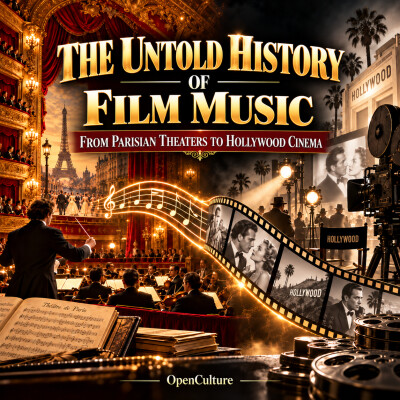
Right. A total cover-up. Because textbooks have been telling students for decades that film music, you know, those sweeping soundtracks we all love, that it was officially born in 1908.
- Speaker #1
Yeah. In some high-class Parisian theatre.
- Speaker #0
Exactly. Penned by a brilliant classical composer for polite society. But the truth we're uncovering today is so much messier. The real soundtrack of cinema. wasn't born in polite society at all.
- Speaker #1
No, not even close.
- Speaker #0
It was forged in the dirt, the blood, the mechanical trapdoors, and like the literal fireworks of 19th century working class street theatre.
- Speaker #1
The boulevard of crime, basically.
- Speaker #0
Yes. So welcome to the steep dive. If you're a performing arts student tuning in right now, consider this your initiation into a historical investigation. We are going to deconstruct the mechanics of performance, the history of the stage, and how the screen evolved.
- Speaker #1
We've got an incredible stack of historical research, archival discoveries, and musicology to get through.
- Speaker #0
We really do. So, setting the scene here, the documents you brought us for this deep dive paint a wild picture of historical erasure.
- Speaker #1
They really do. I mean, we're looking at a century-old mystery regarding the actual true origins of film music.
- Speaker #0
And to solve it, we basically have to look past the velvet ropes of the classical concert halls, right?
- Speaker #1
Right. We have to dig through the dust of the Parisian stage. Because we are tracking a direct aesthetic bloodline.
- Speaker #0
From the spectacular, over-the-top 19th century stage melodramas.
- Speaker #1
Straight to music codes of the modern cinema multiplex.
- Speaker #0
I love a good historical forensic examination. But, you know, if the official textbooks are pushing a false narrative, I feel like we need to start by examining the lie itself.
- Speaker #1
The alibi, so to speak.
- Speaker #0
Yeah, the alibi. Where do we start? Like... Every art form seems to crave a definitive birth certificate. Architecture has cornerstones. Painting has dated canvases.
- Speaker #1
And film historians desperately wanted a clean, binary starting line for film music.
- Speaker #0
And they picked the year 1908.
- Speaker #1
They did. 1908 is what modern researchers call a fetish date.
- Speaker #0
A fetish date. Okay, what does that mean exactly?
- Speaker #1
It means it's a historiographical anchor point. Early film historians basically just... agreed upon it by mutual consent rather than, you know, rigorous truth.
- Speaker #0
So traditional film history claims that film music officially transitioned from this chaotic, primitive state into a legitimate art form at a very specific moment.
- Speaker #1
Right. The moment the highly respected classical composer Camille Saint-Saëns wrote an original, synchronized score for the French film La Sassanat du Duc de Guise.
- Speaker #0
OK, let's unpack this, because on a surface level, I can kind of see why historians would want to plant their flag there.
- Speaker #1
Sure. It's a neat and tidy narrative.
- Speaker #0
You have a famous composer.
- Speaker #1
You have a prestige historical epic on the screen.
- Speaker #0
It looks and feels like art, you know, with a capital A.
- Speaker #1
Oh, absolutely.
- Speaker #0
But what's the fundamental flaw in declaring this the birth of film music? Like, if people were playing music alongside movies before 1908, why did historians collectively decide to just ignore them?
- Speaker #1
Well, the flaw really lies in the social dynamics and, frankly, the biases of the historians themselves.
- Speaker #0
Class biases.
- Speaker #1
Heavily. To really dismantle this, we have to rely on the foundational research of Frederick Jimilow-Mesplum.
- Speaker #0
Oh, right. His pivotal 1999 article.
- Speaker #1
Exactly. In that 1999 article, which, by the way, he later expanded into this massive study of parallel histiography, he systematically exposed 1908 as a highly convenient class-based myth.
- Speaker #0
He really went after the establishment, didn't he?
- Speaker #1
He did. Jimilow-Mesplum pointed out something that went largely unquestioned. by early, highly influential French historians of cinema music. Guys like Henri Colpix, Alain Lacombe, and Francois Porcelet.
- Speaker #0
So in the mid-20th century, those early historians essentially codified 1908 as year zero.
- Speaker #1
They did.
- Speaker #0
I'm trying to put myself in the shoes of a film historian in, say, the 1960s or 70s. You have access to all this data about fairgrounds, solo pianists, and early silent film exhibitors from the late 1890s onward.
- Speaker #1
Tons of data, yeah.
- Speaker #0
Why? actively erase those decades of actual musical practice. It seems like an incredible case of academic tunnel vision.
- Speaker #1
It was driven by a deep-seated inferiority complex regarding the medium of film itself.
- Speaker #0
Ah, because it wasn't respected yet.
- Speaker #1
Exactly. We have to view this through the lens of early 20th century class structures. In its absolute infancy, cinema was a plebeian entertainment.
- Speaker #0
It was a cheap thrill.
- Speaker #1
Completely. You went to a noisy, crowded fairground, you sat in a dark tent or a converted storefront, and you watched a train pull into a station.
- Speaker #0
Right. And the cultural elites viewed the cinematograph as a lowbrow, mechanical novelty, completely devoid of artistic merit.
- Speaker #1
So the early film industry and subsequently the early academics trying to legitimize the study of film were... desperate for validation from the high culture gatekeepers.
- Speaker #0
That is the core of the issue, isn't it?
- Speaker #1
It is. By claiming a renowned serious classical symphonist like Camille Saint-Saëns as the founding father of film music, these early French historians were executing a brilliant piece of retroactive public relations.
- Speaker #0
Wow. Retroactive public relations. That's exactly what it was.
- Speaker #1
They were trying to elevate cinema to the realm of high art. The logic was simple. If a titan of the concert hall composed for the screen, then the screen must be academically legitimate.
- Speaker #0
It was a mechanism to make film music worthy subject for university curriculums and conservative musicology departments.
- Speaker #1
Precisely.
- Speaker #0
It's basically intellectual gentrification.
- Speaker #1
That's a great way to put it.
- Speaker #0
They moved into the neighborhood of early cinema, bulldozed all the messy, working-class history of the fairground pianists, and built a pristine classical monument in 1908.
- Speaker #1
Yep, they paved right over it.
- Speaker #0
It's like asserting that modern music simply didn't exist until, I don't know, the London Symphony Orchestra decided to play a Beatles cover.
- Speaker #1
Right. It completely ignores the organic, grassroots evolution of the art form just because the early practitioners weren't wearing tuxedos.
- Speaker #0
The retroactive intellectual cleansing was profound. By pointing to L'Assassinat du Duda Guise as the starting line, the academic establishment implicitly declared that all the popular, functional music accompanied films before 1908 was aesthetically worthless.
- Speaker #1
The lone piano players, the crank-operated fairground organs, the folk tunes cobbled together by local exhibitors, all of it was deemed primitive.
- Speaker #0
Did anyone in the academic community raise a red flag about this? Like, if Gemello Mispalm is pointing this out in 1999, were there other historians who refused to drink the 1908 Kool-Aid?
- Speaker #1
Yes, but the resistance largely came from outside of France, which creates a fascinating fracture in the historiography.
- Speaker #0
Really? So the— French historians were holding the line, but others weren't.
- Speaker #1
Exactly. If we look at foreign scholars, they approached the timeline with far less elitist baggage. In Italy, for example, the musicologist Emilio Sala strongly rejected this high culture narrative.
- Speaker #0
OK, what was Sala's argument?
- Speaker #1
Well, Sala argued that by dismissing pre-1908 primitive music, historians were blinding themselves to the actual organic roots of cinematic sound.
- Speaker #0
That makes total sense.
- Speaker #1
And similarly in Switzerland, Mathias Spohr dismantled the logic of the French historians.
- Speaker #0
What did Spohr point out?
- Speaker #1
Spohr pointed out a critical fallacy. He said just because functional film music isn't a standalone classical masterpiece meant for a quiet concert hall doesn't mean it is aesthetically bankrupt.
- Speaker #0
Right.
- Speaker #1
It simply serves a completely different psychological function.
- Speaker #0
So because the French academic establishment was so desperate to tie film music the elite concert hall, they delayed the actual. accurate study of early film music decades.
- Speaker #1
They created what Jamel Omesplom calls a parallel historiography.
- Speaker #0
A parallel historiography.
- Speaker #1
Yes, where the history of stage music and the history of screen music artificially separated in the textbooks.
- Speaker #0
And that separation is the exact crime we're investigating today.
- Speaker #1
Because the historians were looking upward at the opera houses and the symphonies, they completely missed what was happening down on the street.
- Speaker #0
So if we dismiss 1908 and Camille Sanson's as the origin point, the timeline shatters. The investigation forces us to look backward.
- Speaker #1
Exactly. If elite classical composers didn't invent music language of cinema, we have to find out who did.
- Speaker #0
Which means we are leaving the polite society of the Paris opera behind.
- Speaker #1
Way behind.
- Speaker #0
Because if we follow the actual musical evidence, the trail leads straight to the 19th century Parisian popular theatre. It leads to a place. Famously known as the Boulevard of Crime.
- Speaker #1
And for a performing arts student, the Boulevard of Crime is sacred ground. It was the absolute epicenter of popular entertainment in Paris.
- Speaker #0
And to find the true aesthetic ancestor of film music, we have to look at the dominant theatrical genre of that space, which is the romantic melodrama.
- Speaker #1
Right.
- Speaker #0
So let's trace the chronology of this. The sources point to the late 18th century as a sort of incubation period for this genre.
- Speaker #1
Yeah, there's a mention of Jean-Jacques Rousseau's piece Pygmalion from 1770.
- Speaker #0
Wait, Rousseau, how does a philosophical writer like Rousseau factor into the creation of melodrama?
- Speaker #1
Well, Rousseau's Pygmalion is often cited as a crucial early prototype because he experimented with mixing spoken word and instrumental music a totally new way.
- Speaker #0
Oh, like not just having the actors sing their lines like in an opera?
- Speaker #1
Exactly. Instead, he used orchestral bursts to punctuate the spoken dialogue. He was using music amplify the emotional subtext of the words.
- Speaker #0
Like an early version of underscoring.
- Speaker #1
Yes. It was an aesthetic experiment. But the genre of melodrama didn't truly explode into a massive cultural phenomenon until the turn of the 19th century.
- Speaker #0
And that explosion was largely engineered by incredibly prolific playwrights like Gilbert de Pixaracourt, right?
- Speaker #1
Oh, Pixaracourt was a machine.
- Speaker #0
The numbers surrounding him are absolutely staggering. The documents highlight his play Coelina, written in 1800, which was apparently performed over a thousand times.
- Speaker #1
Over a thousand times?
- Speaker #0
A thousand performances of a single play in the... early 1800s. That isn't just a successful theatre run, that is a total cultural saturation.
- Speaker #1
He was effectively the Michael Bay or James Cameron of the 19th century.
- Speaker #0
I love that comparison. He churned out massive hits that the critics probably hated, but the public absolutely adored.
- Speaker #1
Exactly. Pixary Corps understood his audience on a visceral level. However, we need to clearly define what a melodrama actually was in this specific historical era.
- Speaker #0
Because the word has... definitely morphed over time.
- Speaker #1
Totally. Today, we might use melodramatic to describe like a friend overreacting to a minor inconvenience.
- Speaker #0
Right. Like, oh, you're being so melodramatic about your coffee order.
- Speaker #1
Yeah. But in the 1800s, melodrama was a highly codified, rigidly structured theatrical genre. It relied on massive, exaggerated emotions and extreme, visually spectacular situations.
- Speaker #0
We are talking about brutal murders, daring kidnappings, erupting volcanoes.
- Speaker #1
Massive thunderstorms generated by complex stage machinery.
- Speaker #0
And the characters themselves were essentially human archetypes, right? You didn't go to a melodrama for deep, nuanced character studies.
- Speaker #1
Not at all. The genre relied entirely on stock characters that the audience could identify the second they walked on stage.
- Speaker #0
You always had the cruel, unyielding tyrant.
- Speaker #1
You had the virtuous, suffering, and highly unfortunate heroine.
- Speaker #0
The brave, handsome lover attempting to save her.
- Speaker #1
And you almost always had a foolish or cowardly valet inserted to provide comedic relief amid all the tension.
- Speaker #0
I mean, you just described the exact plot structure of almost every major summer blockbuster of the last 40 years.
- Speaker #1
Pretty much.
- Speaker #0
You have the clear villain, the hero, the damsel, and the comic relief sidekick. But let's dig into the why. Why did the Parisian public in the early 1800s crave this specific type of highly polarized explosive entertainment?
- Speaker #1
That's the real question.
- Speaker #0
Why weren't they flocking to the subtle, refined, classical tragedies of the high theatre?
- Speaker #1
To understand the demand, we have to analyze the popular reception based on the social classes of the audience. The historical context is everything here.
- Speaker #0
Right.
- Speaker #1
The audiences filling the theatre on the boulevard of crime were the people of post-French Revolution Paris.
- Speaker #0
Oh, wow. Okay. So these were citizens who had literally lived through unimaginable blood, terror, and chaos in their own streets.
- Speaker #1
Exactly. They had witnessed the guillotine falling in the public squares. Their daily reality had been one of extreme upheaval.
- Speaker #0
Consequently, they had absolutely zero interest in the polite, restrained, subtle verse of elite classical tragedy.
- Speaker #1
None. They required an entertainment medium that matched the intensity of their real lives.
- Speaker #0
That makes total psychological sense. If your real life is characterized by massive, terrifying shifts in power and violence, you want your entertainment to reflect those high stakes.
- Speaker #1
But... in an environment where, you know, the good guy is ultimately going to win.
- Speaker #0
Right. They wanted moral clarity on stage because they didn't have it in the real world.
- Speaker #1
And they wanted it delivered loudly. As one commentator noted in 1809, the melodrama had effectively become the opera of the people.
- Speaker #0
The opera of the people. I like that.
- Speaker #1
This working class audience was not paying their hard-earned money to sit in silence and analyze complex literary dialogue. They demanded a visual spectacle.
- Speaker #0
And the theatre managers delivered.
- Speaker #1
Big time. They invested heavily in stage machinery, fireworks, trap doors, and rapid-fire physical action. The visual element was paramount.
- Speaker #0
But here is the major narrative problem with relying entirely on visual spectacle. If your play is driven by explosions, sword fights, and pantomime, rather than deep poetic soliloquies, how do you make the audience actually care?
- Speaker #1
Exactly. You need a tool. to dictate the emotional stakes.
- Speaker #0
Like, if the heroine is just standing there while a volcano erupts behind her, how do you communicate her internal terror to a guy sitting in the back row of a massive, noisy theatre?
- Speaker #1
That is the pivotal question. And it is the exact problem the creators of melodrama solved using the orchestra pit. Because they couldn't rely on long, delicate speeches to explain the emotional stakes, they built an entirely new emotional language out music. This is the moment music grammar of the melodrama was forged.
- Speaker #0
And I want to emphasize this for our listener. Music codes developed in these theatre are the exact same codes that early cinema would soon appropriate completely.
- Speaker #1
Stole them outright, really.
- Speaker #0
So let's get into the mechanics of this musical grammar. Because they weren't just hiring a string quartet to play pleasant background music the actors yelled at each other. No,
- Speaker #1
no.
- Speaker #0
The sources described this as a highly systematic, almost industrial approach music accompaniment. How did they actually structure these scores?
- Speaker #1
Oh. Well, the architects of melodrama established a strict set of repetitive musical cliches.
- Speaker #0
Cliches.
- Speaker #1
Right. And these weren't artistic flourishes. They were utility tools designed to instantly announce a character's alignment or an emotional shift to the audience.
- Speaker #0
The historical examples listed in the sources are fascinating because they are still instantly recognizable to us today.
- Speaker #1
Oh, completely. For instance, if the unfortunate princess or the virtuous heroine was about to make her entrance. The orchestra would immediately play a cantabile.
- Speaker #0
A cantabile, so like a sweet, flowing, singing melody.
- Speaker #1
Exactly.
- Speaker #0
So if I'm sitting in the theatre, the second I hear those sweet strings, I don't even need to look at the stage. My brain is already primed for the good girl.
- Speaker #1
You know exactly who is walking out.
- Speaker #0
It's exactly how John Williams uses Princess Leia's theme.
- Speaker #1
It is the exact same mechanism. Now, if the desperate lover was on stage facing a crisis, music shifted into an agitato, a fast, restless, turbulent rhythm. And when the cruel tyrant was approaching from the wings, before he even stepped into the light, the audience would hear the heavy, dark, lumbering sounds of the bass and contrabass.
- Speaker #0
Here's where it gets really interesting, because that is Darth Vader's Imperial March, or the shark theme in Jaws.
- Speaker #1
Yes. The low brass and strings are universally understood as an approaching threat.
- Speaker #0
They also utilized specific instruments as emotional shortcuts, right? Like flutes were deployed to... instantly signal melancholy sadness or a peaceful pastoral scene.
- Speaker #1
And when the stagehands were spinning the wind machines and flashing the theatrical lightning, the orchestra deployed a very famous combination.
- Speaker #0
What was it?
- Speaker #1
The simultaneous use of trombones, a piccolo, and the timpani, playing a flurry of 16th notes to simulate the chaos of a terrifying storm.
- Speaker #0
A codified, universally understood auditory language. That's brilliant. And of course, we have to discuss the birth of the ultimate theatrical and cinematic cliche, the tremolo.
- Speaker #1
Ah, the tremolo.
- Speaker #0
Let's unpack the actual mechanics of what a tremolo is and why it is so incredibly effective.
- Speaker #1
Sure.
- Speaker #0
Physically, it's just a string player moving their bow back and forth across a single string as rapidly as possible.
- Speaker #1
Right. Creating a shivering, stuttering sound.
- Speaker #0
Why did the melodrama rely on this so heavily?
- Speaker #1
In the 19th century melodrama, the tremolo was... practically mandatory. It was utilized to mark every significant character's entry, every dramatic exit, and absolutely every bloody catastrophe, murder, or shocking reveal on stage.
- Speaker #0
But why does it work so well on human beings? If you think about the neurology of sound, a sustained, clear, held note feels stable. It feels secure.
- Speaker #1
But a tremolo introduces micro fluctuations in pitch and volume.
- Speaker #0
Right. It physically mimics the sound of a human voice shivering in terror. or the rapid heartbeat of a nervous system in a state of panic.
- Speaker #1
It literally induces physiological anxiety in the listener.
- Speaker #0
It's an auditory hack for the human nervous system.
- Speaker #1
And that biological hack is precisely what they were relying on, which brings us to a crucial debate about the cognitive function of these musical cliches.
- Speaker #0
Were these scores actually considered music? Or was it just functional noise to keep the audience awake?
- Speaker #1
The answer is no. They were not considered aesthetically g***. music. They were not designed to be standalone concert pieces admired for their complex counterpoint.
- Speaker #0
They were a picturesque language, right?
- Speaker #1
Exactly. They acted as a rapid psychological shortcut. The sources point to a brilliant observation by a critic writing in the Parisian newspaper Le Menestrel in 1834.
- Speaker #0
What did he say?
- Speaker #1
He beautifully articulated this phenomenon. He wrote that music of the melodrama had been heard every day in Paris for 30 years, but it was rarely. If ever listened to.
- Speaker #0
Heard but not listened to. Wow, that is the most perfect, concise definition of a modern film score I have ever heard.
- Speaker #1
Isn't it?
- Speaker #0
When you are sitting in a dark cinema watching a thriller, you aren't critically analyzing the bowing technique of the cello section. Music is bypassing your critical brain entirely.
- Speaker #1
That is exactly what the 1834 critic was observing. He noted that music was purely functional. It bypassed intellectual analysis. and acted directly on the nervous system of the spectator.
- Speaker #0
And he argued that one single musical chord played by the orchestra could replace an entire page of heavy dialogue, didn't he?
- Speaker #1
Yes. A sudden roll of the timpani painted the entire emotional reality of a situation in a fraction of a second. It was a sophisticated mechanism of psychological conditioning applied to a mass audience.
- Speaker #0
So we have established the theoretical link. The 19th century melodrama sounded exactly like early film music. It utilized functional themes, light motifs, the tremolo, and direct emotional manipulation.
- Speaker #1
Logically, the lineage is crystal clear.
- Speaker #0
But in a historical investigation, looking at parallel behaviors isn't enough. We need physical evidence. We need to prove that music from the wooden stages of Paris actually physically migrated to the silver screen.
- Speaker #1
We need the documentary proof.
- Speaker #0
Where is the archival smoking gun?
- Speaker #1
Well... The definitive proof was discovered in the early 1980s by the archivist Nicole Wild.
- Speaker #0
Nicole Wild. What did she find?
- Speaker #1
While digging through historical archives, she unearthed a massive document called the Inventaire des Music de Scène des Theatre Parisiennes, the inventory of stage music of the Parisian theatre.
- Speaker #0
OK, an inventory list sounds mundane, but in historical research, ledgers and inventories are usually where the deepest secrets are buried.
- Speaker #1
Oh, absolutely. This document cataloged the functional music used in the popular melodramas.
- Speaker #0
Where exactly did she find this inventory of lowbrow, working-class theatre music?
- Speaker #1
That is the great irony of the discovery. She found it housed deep within the library of the Paris Opera.
- Speaker #0
Wait, the Paris Opera? Yes. The absolute bastion of high culture. The institution that looked down on the dirty, noisy boulevard of crime as a cultural wasteland.
- Speaker #1
The very same.
- Speaker #0
Why on earth did the elite opera administration possess music inventory of the cheap, popular melodramas?
- Speaker #1
Because the elites were absolutely terrified of them. The archival evidence supports that the Paris Opera, despite its prestigious reputation, was closely and anxiously monitoring the incredibly lucrative popular melodramas.
- Speaker #0
They saw a massive, paying audience flocking to the boulevard theatre night after night, while the opera struggled to maintain its relevance with the broader public.
- Speaker #1
Exactly. The opera administration viewed the melodrama not just as a lesser art form, but as a highly dangerous economic rival.
- Speaker #0
It always, always comes down to the money.
- Speaker #1
It really does. In fact, the administration of the Royal Academy music went so far as to actively petition the Parisian authorities, attempting to legally suppress the performances of the melodramas.
- Speaker #0
The elites weren't just protecting art, they were protecting their box office receipts.
- Speaker #1
Precisely. But from a musicological standpoint, Nicole Weil's discovery of this inventory within the opera's archives proved something revolutionary.
- Speaker #0
What was that?
- Speaker #1
There was very little formal structural difference between the noble scores of the high opera and the lowbrow stage music of the melodrama. Yes. The highly effective, manipulative musical motifs that were pioneered and abused in the melodrama were actually being quietly transposed and adapted by composers. writing for the opera.
- Speaker #0
You're joking. The elites were stealing the working class playbook in a desperate bid to win back the paying audience.
- Speaker #1
They absolutely were. This proves that music techniques of the stage were fluid. So the boundary between high art and low art was a complete fiction.
- Speaker #0
It was completely porous.
- Speaker #1
Yes. And this archival reality is where the theoretical approaches of historians like Emilio Sala and Frederic de Guimel and Miss plump brilliantly intersect.
- Speaker #0
How so?
- Speaker #1
Well, Sala looks at music and argues for a direct European aesthetic lineage. He posits that the romantic melodrama is the literal, undeniable aesthetic father of the modern cinematic soundtrack.
- Speaker #0
And what about Jamelo Mesplomp?
- Speaker #1
Jamelo Mesplomp's thesis accepts this, but goes further to focus on the historiographical blind spots. He analyzes how and why later historians actively ignored this obvious link.
- Speaker #0
Right.
- Speaker #1
And he meticulously documents the actual physical mechanics of how these musical forms transition from the stage to the screen.
- Speaker #0
OK, let's talk about those physical mechanics. Because the theatrical music centralized in Paris and maybe a few other major European capitals.
- Speaker #1
Sure.
- Speaker #0
But the invention of the cinematograph created a decentralized global phenomenon. Thousands of local, often rural cinemas were popping up in small towns across the world.
- Speaker #1
Overnight, basically.
- Speaker #0
So how did the highly specific musical grammar of the Parisian stage physically travel into the orchestra pits of small town cinemas?
- Speaker #1
To understand that massive geographical leap, we have to introduce the concept of the incidental, or as they are known in English, incidental music.
- Speaker #0
Incidental music, okay.
- Speaker #1
This is the crucial missing link in the physical evolution of the soundtrack. When early cinemas first began exhibiting silent films to large crowds, they quickly realized that a silent room full of hundreds of people is an incredibly uncomfortable environment.
- Speaker #0
Oh, human beings hate a vacuum.
- Speaker #1
We really do.
- Speaker #0
If you put 200 people in a dark room with just the loud, rhythmic clacking of a massive film projector, the atmosphere is going to be incredibly awkward and distracting.
- Speaker #1
Exactly. To solve this, theatre owners began hiring stage music. Crucially, they were hiring the exact same working class musicians who made their living playing in the pits for theatre and melodrama.
- Speaker #0
And their initial job wasn't necessarily you To create art, it was functional.
- Speaker #1
Highly functional. The French phrase used at the time was faire la chasse au silence.
- Speaker #0
Faire la chasse au silence.
- Speaker #1
To hunt the silence.
- Speaker #0
To hunt the silence. I absolutely love that phrase. It paints the cinema pianist not as an artist, but as a sort of auditory exterminator, hunting down awkward pauses and killing them with a piano chord.
- Speaker #1
That's a very accurate description of their job.
- Speaker #0
But here's the logistical nightmare. Imagine you are a lone pianist in a drafty theatre in a provincial town in 1912. The train arrives and the theatre owner hands you a tin can containing a brand new reel of film.
- Speaker #1
A film you've never seen.
- Speaker #0
Right. You have never seen the film. You don't know the plot. The audience is taking their seats. How on earth do you play a cohesive emotional score for a movie you've never seen?
- Speaker #1
You rely on a cheat sheet.
- Speaker #0
Ah.
- Speaker #1
A massive, highly organized cheat sheet.
- Speaker #0
Ah.
- Speaker #1
When film distributors realized the struggle of the local exhibitors, they began shipping catalogs of incidental music alongside the film reels.
- Speaker #0
Oh, that makes sense.
- Speaker #1
These were enormous libraries of music pre-categorized by emotional affect rather than by composer. The sources detail several famous foundational catalogs that standardized film music globally.
- Speaker #0
Give me some examples of these catalogs. Who was publishing them?
- Speaker #1
Well, Thomas Edison, always eager to dominate a new market. published a highly influential guide called Suggestions music in 1909.
- Speaker #0
Classic Edison.
- Speaker #1
Right. A few years later, in 1913, an American composer named J.S. Zemechnik published the Sam Fox Picture Music Volumes.
- Speaker #0
The Sam Fox Picture Music Volumes. Okay, what made that one special?
- Speaker #1
This was a game changer because it provided pianists with 23 distinct, highly specific mood tracks.
- Speaker #0
Like off-the-shelf emotions.
- Speaker #1
Exactly. And perhaps the most comprehensive was published in Berlin in 1919 by Giuseppe Becchi, known as the Kynothek.
- Speaker #0
The Kynothek?
- Speaker #1
Yes. Becchi's massive volume categorized over a thousand individual pieces of functional music.
- Speaker #0
How did Becchi actually categorize a thousand pieces music? Did he group them by key signature or tempo?
- Speaker #1
He categorized them using the exact same dramatic language forged in the Parisian melodramas.
- Speaker #0
No way.
- Speaker #1
If a pianist opened the Kinethhek, they wouldn't search for C minor. They would search through dramatic tabs labeled catastrophe, solemn atmosphere, sinister night.
- Speaker #0
Wow.
- Speaker #1
Pursuit or flight. The feeling that something is going to happen. Battle. Or the hero's victory.
- Speaker #0
This is staggering because it is exactly how modern digital music consumption works.
- Speaker #1
It really is.
- Speaker #0
This is essentially a 1919 version of a DJ's electronic soundboard. Or even better. It's like opening Spotify today and ignoring the artist's names entirely to just click on a playlist titled Sad Moody Vibes or Epic Workout Mix.
- Speaker #1
That is an incredibly accurate comparison. The cinema pianist sees the heroine crying on the silent screen. They don't think about musical theory. They just flip to the tab for Dramatic Sadness, track four, and start playing.
- Speaker #0
The functional utility completely superseded the artistic intent of the original composer.
- Speaker #1
Absolutely. And. If we look at music actually populated these incidental catalogs, it reveals a fascinating and somewhat brutal reality of early film scoring.
- Speaker #0
Brutal how?
- Speaker #1
Well, they rarely composed entirely new, original music these massive catalogs. Instead, they took the sacred, classical masterpieces of the European tradition, chopped them up, and forced them into these functional boxes.
- Speaker #0
Oh no. Tell me they didn't.
- Speaker #1
They did. Music director of the massive Gaumont Palais Theatre in Paris, a man named Paul Fossey, kept meticulously detailed logs of exactly how this was done.
- Speaker #0
You're telling me they just... took the greatest achievements in Western musical history and slapped cheap emotional labels on them?
- Speaker #1
They absolutely did. And they did it shamelessly. The Galmont Palace catalogs provide brilliant examples of this artistic mutilation.
- Speaker #0
Give me the worst offender.
- Speaker #1
Take Beethoven's Fifth Symphony, one of the most profound, complex explorations of fate and struggle in human history.
- Speaker #0
And in the cinema catalog,
- Speaker #1
it was stripped of its context and simply labeled Grand Pathétique, Great Pathos.
- Speaker #0
Beethoven would have been spinning in his grave to have his masterpiece reduced to a generic sad button for a silent movie.
- Speaker #1
It gets much worse. Claude Debussy's Prelude à la Prémédie d'Affon, a delicate, groundbreaking piece of impressionistic art, was violently simplified and labeled merely for outdoor scenes.
- Speaker #0
Outdoor scenes. That's it.
- Speaker #1
That's it. Joachini Rossini's soaring William Tell overture was strictly designated for pursuits and storms. The original artistic intent was entirely irrelevant.
- Speaker #0
If the tempo and the brass section sounded like a storm, it became a storm track.
- Speaker #1
Exactly.
- Speaker #0
It is the ultimate triumph of pragmatism over prestige. The pianist in that provincial theatre doesn't care that he is butchering Debussy. He just needs music play while a silent cowboy rides a horse across the screen.
- Speaker #1
But. there was also an entire industry of composers who specialized exclusively in writing these incidentals. We are talking about highly prolific, incredibly practical musicians like Volpati, Andreu, and Puget.
- Speaker #0
Okay, so they were writing original filler music.
- Speaker #1
Yes. The sources specifically highlight a very famous composer of the era named Poré, who composed a legendary incidental track titled simply, Orage, the French word for storm.
- Speaker #0
And let me guess. Poré's Orage was basically the cinematic duct tape of the era.
- Speaker #1
Exactly. This single piece of music was utilized interchangeably by cinema conductors across the globe for a wildly diverse array of visual scenes.
- Speaker #0
Like what?
- Speaker #1
Well, if the film showed a literal weather storm with rain and lightning, play Poré's Orage. A raging forest fire, play Orage.
- Speaker #0
What about, like, emotional turmoil?
- Speaker #1
The the internal, invisible, emotional turmoil of a heroine suffering from a broken heart. Play orage.
- Speaker #0
Because music hit the exact right neurological trigger. It didn't matter what physical event was happening on screen. Music simply conveyed the universal concept of tumult or chaos.
- Speaker #1
Exactly.
- Speaker #0
For the performing arts student listening to this, you really have to grasp the sheer unapologetic utility of this process. It wasn't about elevating the soul. It was about getting the job done.
- Speaker #1
It was about manipulating the audience into Thank you. feeling the right thing at the exact right time using the most efficient auditory tool available.
- Speaker #0
Right.
- Speaker #1
The philosopher and sociologist Edgar Moran summarized this entire phenomenon beautifully. He argued that this brutal, efficient categorization of incidentals serves as a masterclass in the sociology music affectivity.
- Speaker #0
The sociology music affectivity. What does that mean in practice?
- Speaker #1
Early cinema essentially took the vast nuanced, incredibly complex spectrum of human emotion, and reduced it into easily categorized, mass-reproducible musical prototypes.
- Speaker #0
They literally mapped the human heart onto a filing cabinet of music.
- Speaker #1
That's exactly what they did.
- Speaker #0
Okay, we've thoroughly established the physical migration of music. The emotional grammar moved from the melodramatic stage to the cinematic screen via the incidental catalogs. But what about the actual storytelling?
- Speaker #1
Ah. The visual narrative.
- Speaker #0
Yeah. Did the narrative structure, the way stories were visually told, evolve immediately when the medium changed to film? Or was early cinema basically just pointing a camera at a stage play?
- Speaker #1
The visual language of early cinema was deeply, inextricably bound to the theatre. If we compare the narrative techniques between 19th century theatre and early silent film, the parallels are undeniable.
- Speaker #0
How so?
- Speaker #1
Well, melodrama relied heavily on a visual technique known as the tableau.
- Speaker #0
A tableau, break that down for us, like a frozen living picture?
- Speaker #1
Precisely. In a melodrama, at a moment of peak dramatic tension, say, the moment the villain is revealed or the hero discovers the murdered body, the physical action on stage would completely freeze.
- Speaker #0
Oh, like hitting the pause button.
- Speaker #1
Exactly. The actors would strike highly exaggerated, rigid poses that perfectly encapsulated the emotional climax of the scene. The stage lights would shift. The orchestra would swell with a massive chord, and the audience would absorb the emotional weight of the image.
- Speaker #0
It was a visual summary of the drama?
- Speaker #1
Yes. When early filmmakers started composing shots, they didn't invent cinematic framing out of thin air. They intuitively copied this tableau aesthetic.
- Speaker #0
Oh, I see.
- Speaker #1
They framed the action within the camera lens exactly as it would have been framed by the physical proscenium arch of a theatre stage.
- Speaker #0
That makes total sense, because that was the visual language the mass audience already understood. If you are trying to sell tickets to a new technological invention, you have to package the storytelling in a format the audience recognizes.
- Speaker #1
And there is another fascinating theatrical concept that cinema adapted and weaponized music, Tychoscopia.
- Speaker #0
Tychoscopia. Okay, I'm going to need you to unpack the mechanics of that one. It sounds incredibly academic.
- Speaker #1
It is a vital concept in classical and romantic theatre. Tychoscopia literally translates to viewing from the walls.
- Speaker #0
Viewing from the walls.
- Speaker #1
Right. It is a narrative technique where a character stands at a window or on a balcony, looks outside the physical boundaries of the stage set, and vividly describes an action happening offstage to the audience.
- Speaker #0
Oh. Like describing a battle or something.
- Speaker #1
Yes. They might be describing a massive cavalry battle, a violent riot in the streets, or an approaching army.
- Speaker #0
So it is a clever theatrical hack. It allows the playwright to expand the spatial boundaries of the story and include massive events without having to actually build a battlefield on a wooden stage or hire 200 extras.
- Speaker #1
Exactly. It creates a vast world beyond what the audience can physically see. Now, when we transition to cinema... The frame of the camera acts as that window.
- Speaker #0
Right. The camera dictates exactly what we can and cannot see.
- Speaker #1
But cinema found a new, even more powerful tool to provide the depth of field for the off-screen space. Music replaced the actor's description, telling the audience exactly what was happening just outside the edges of the screen.
- Speaker #0
So if a character on screen is simply sitting in a chair looking terrified. And we, the audience, start hearing that heavy descending bass line of the tyrant motif getting louder and louder.
- Speaker #1
We instantly know the bad guy is approaching down the hallway.
- Speaker #0
Even if the camera never leaves the terrified character's face, music expands the physical geography of the film beyond the literal borders of the screen.
- Speaker #1
That is a perfect example. The musician, composer, and theorist Jean-Francois Zegel identified four primary functions of silent film music. me. perfectly aligned with this theatrical heritage.
- Speaker #0
What were Siegel's four functions?
- Speaker #1
He theorized that film music acts first as a sonic decor, providing a subtle, continuous emotional lighting for the scene.
- Speaker #0
Okay, sonic decor.
- Speaker #1
Second, it provides psychological interpretation. It bypasses the face and tells us the internal hidden state of the character.
- Speaker #0
Love that.
- Speaker #1
Third, it serves as a rhythmic motor, physically driving the pace and momentum of the visual action.
- Speaker #0
The engine of the scene.
- Speaker #1
And fourth, it acts as a counterpoint to the image, telling us something the image itself is intentionally hiding or failing to show.
- Speaker #0
So what does this all mean for the early filmmakers themselves? Were pioneers like Georges Méliès aware that they were essentially just adapting 19th century stagecraft for a new machine?
- Speaker #1
Many of the earliest pioneers were doing it intentionally and explicitly. Filmmakers like Georges Méliès and Alaski didn't just borrow the techniques. They literally adapted famous stage operas and Faustian melodramas directly for the camera.
- Speaker #0
Really?
- Speaker #1
Oh, yeah.
- Speaker #0
Directly?
- Speaker #1
Melies produced wildly successful cinematic adaptations of Faust, The Barber of Seville, and various other stage hits.
- Speaker #0
Wow.
- Speaker #1
In its infancy, cinema was not instantly inventing a brand new, unique artistic language. It was acting as the direct technological continuation of the melodrama.
- Speaker #0
It was a brand new modern machine, but it was playing a very old, very familiar tune.
- Speaker #1
Exactly.
- Speaker #0
Okay, we've traced the timeline from the Boulevard of Crime through the incidental catalog straight into the silent film era. The connection is undeniable. But as a forensic investigator, I have to ask the next logical question.
- Speaker #1
Go for it.
- Speaker #0
If early cinema was essentially just recorded theatre, heavily reliant music crutches like the tremolo to tell the audience what to feel, when did that stop? Because silent film didn't last forever, we eventually get to the late 1920s and 1930s and the advent of synchronized sound. The talkies arrive.
- Speaker #1
The transition to synchronized sound is arguably the most massive technological earthquake in the history of the medium.
- Speaker #0
Right. So logically, I have to assume that the invention of synchronized sound immediately killed the old exaggerated melodrama aesthetic.
- Speaker #1
You'd think so.
- Speaker #0
I mean, once actors could speak complex, nuanced dialogue and sound designers could sync realistic sound effects like footsteps and slamming doors, you wouldn't need a frantic string tremolo to tell the audience a murderer just entered the room.
- Speaker #1
No, the murderer could just kick the door open and speak.
- Speaker #0
Exactly. Music crutch should have become instantly obsolete.
- Speaker #1
Logically, your assumption is completely sound. The technology rendered the old melodramatic musical codes functionally unnecessary. But historically?
- Speaker #0
Historically, what happened?
- Speaker #1
Historically, the exact opposite happened. The invention of synchronized sound did not kill the 19th century melodrama aesthetic, it immortalized it.
- Speaker #0
Wait, explain how that is possible.
- Speaker #1
If they didn't need music crutch anymore, why didn't they throw it away and invent a new, purely cinematic way of using sound? To understand why the aesthetic survived, we have to zoom out and look at the massive global and geopolitical shifts occurring in the
- Speaker #0
1930s. Okay, what was happening?
- Speaker #1
At the exact moment Hollywood was rapidly consolidating its power and building the monolithic studio system, the golden era of MGM, Warner Brothers, and Paramount, Europe was plunging into geopolitical darkness.
- Speaker #0
With the terrifying rise of Nazism and fascism?
- Speaker #1
Exactly. The mass exodus of European intellectuals and artists.
- Speaker #0
Ah, I see where this is going.
- Speaker #1
Dozens of the most brilliant, highly educated, classically trained European composers were forced to flee their homelands to escape persecution. And where did they go?
- Speaker #0
They almost all ended up in Southern California.
- Speaker #1
Seeking employment in the rapidly expanding music departments of the major Hollywood studios.
- Speaker #0
We are talking about the absolute titans of the golden age of Hollywood, right? The names that essentially define what a movie score sounds like.
- Speaker #1
Yes. We are talking about giants like Max Steiner.
- Speaker #0
Max Steiner.
- Speaker #1
Steiner was a prodigy from Vienna, the godson of Richard Strauss. And he went on to compose the monumental scores for Gone with the Wind and King Kong.
- Speaker #0
Incredible.
- Speaker #1
We are talking about Eric Wolfgang Korngold, an absolute musical genius who was championed by Gustav Mahler in his youth and who practically invented the sound of the swashbuckling action movie with his scores for Errol Flynn.
- Speaker #0
Oh, I love those scores.
- Speaker #1
We are talking about Dmitry Tyomkin, who was trained in the St. Petersburg Conservatory by Alexander Glazunov. We are talking about Franz Waxman, who began his career in Europe under the legendary conductor Bruno Walter.
- Speaker #0
So as Hollywood was figuring out how to use synchronized sound, they essentially imported the greatest, most highly trained musical minds of the European continent to run music departments.
- Speaker #1
But look closely at music pedigree of the men you just listed. These composers were not blank slates.
- Speaker #0
Right.
- Speaker #1
They were deeply, inextricably steeped in the aesthetic of late 19th century German and Viennese romanticism. They were the direct, proud inheritors of the Wagnerian post-romantic tradition.
- Speaker #0
They believed in lush orchestrations, massive emotional swells, and strict, identifiable leitmotifs for characters.
- Speaker #1
Yes. When they arrived in Los Angeles and were handed the keys to the Hollywood studio orchestras, they brought that exact sweeping 19th century melodramatic aesthetic directly into the sound era of film.
- Speaker #0
Because that was their native musical language. That was the only way they had been trained to convey massive emotion to an audience.
- Speaker #1
Exactly. They weren't going to invent a new, sparse, modern sound for cinema when they had the full power of a Wagnerian orchestra at their fingertips.
- Speaker #0
And here we arrive at the grand historical irony that perfectly synthesizes our entire investigation today. As we move through the 20th century, The serious classical music being played in the elite concert halls underwent a massive, radical transformation.
- Speaker #1
It moved aggressively toward modernism. Composers embraced atonalism, serialism, and the avant-garde.
- Speaker #0
Right. If you look at the Second Viennese School with Arnold Schoenberg or the later Darmstadt School in Germany, classical music became highly intellectual.
- Speaker #1
Mathematically complex and intentionally stripped of the lush, accessible emotional romanticism of the past.
- Speaker #0
Classical music essentially got incredibly weird, experimental, and, frankly, inaccessible to the average listener. The concert halls abandoned the sweeping emotional melodies.
- Speaker #1
But film music? Film music stubbornly entirely refused to evolve in that modernist direction.
- Speaker #0
Why?
- Speaker #1
Because of the sheer commercial contingencies of the cinema.
- Speaker #0
Ah, the ticket sales again.
- Speaker #1
The absolute. Non-negotiable requirement that a movie score must immediately and clearly communicate recognizable emotions to a massive global audience.
- Speaker #0
So film music remained deeply, permanently rooted in the 19th century neo-romantic tonal structure.
- Speaker #1
The massive symphony orchestra, the sweeping string sections, the clear melodic leitmotifs for heroes and villains, it all stayed exactly where it was.
- Speaker #0
Let me just take a second to absorb the sheer scale of this revelation. This changes how I will listen to literally every movie I watch from now on.
- Speaker #1
It's pretty profound.
- Speaker #0
The sweeping orchestral scores of today's massive superhero movies, the billion-dollar blockbusters, the iconic John Williams themes for Star Wars or Jurassic Park, they are not modern inventions.
- Speaker #1
No, they're not.
- Speaker #0
They are literally the surviving, fossilized DNA of 19th century Parisian street theatre.
- Speaker #1
When the concert halls and the elites abandoned that accessible, emotional music pursue modernism, the local cinemas picked it up. and kept it alive in a technological time capsule for over a century.
- Speaker #0
The historical evidence is irrefutable.
- Speaker #1
As the research of Gamal Omasplam and Sala clearly synthesizes, music of the modern film industry today remains inextricably linked to the dated aesthetic paradigms of the 19th century stage.
- Speaker #0
The boulevard of crime, with all its exaggerated emotions, its tremolos, and its manipulative grammar, never actually died. It simply packed its bags, moved across the Atlantic to Hollywood, and got a billion-dollar budget.
- Speaker #1
That is absolutely correct.
- Speaker #0
That is absolutely incredible. For the performing arts student who has been on this journey with us, let me try to wrap up the massive amount of ground we've covered in this deep dive.
- Speaker #1
We covered a lot today.
- Speaker #0
We really did. We started by completely busting the academic myth of 1908. We proved that the birth of film music not a polite, Classical affair pioneered by Camille Saint-Saëns to appease the cultural elites.
- Speaker #1
We uncovered the visceral, bloody, working-class roots of the romantic melodrama, exploring how the post-revolution Parisian audiences demanded an intense, visually spectacular theatre.
- Speaker #0
A theatre that relied on a highly specific, manipulative musical grammar to dictate emotion.
- Speaker #1
We looked at the archival smoke and gun, the Paris opera inventories, proving the porous borders between high art and lowbrow theatre.
- Speaker #0
We tracked the physical transition of that theatrical music into the global cinemas via the highly pragmatic, emotion-by-numbers catalogs of the incidental.
- Speaker #1
We saw how early filmmakers seamlessly copied the visual and narrative tricks of the stage, from frozen tableaus to the spatial expansion of Ticoscopia.
- Speaker #0
And finally, we traced that aesthetic lineage all the way to the 1930s, proving that the European exodus to the golden age of Hollywood essentially froze the 19th century musical aesthetic in amber.
- Speaker #1
protecting it from the rise of modernism, and preserving it for the modern multiplex.
- Speaker #0
It is a remarkable, unbroken journey from the muddy fairgrounds to the IMAX theatre. But before we sign off, I want to leave you with a final, lingering, and highly provocative thought to explore as you continue your studies.
- Speaker #1
I think I know what you're going to ask.
- Speaker #0
We have spent this entire deep dive proving that the multi-billion dollar, hyper-advanced film industry of the 21st century is still music communicating with us using the exact same psychological shortcuts, the same biological hacks developed for 19th century Parisian commoners.
- Speaker #1
The anxious tremolos, the soaring romantic strings, the heavy, threatening brass. We are still reacting to the exact same stimuli.
- Speaker #0
Right. So the massive unanswered question is, what will it finally take to invent a truly music language for the screen?
- Speaker #1
That's the million dollar question.
- Speaker #0
We are currently standing on the precipice of an era where artificial intelligence can analyze and generate endless, hyper-complex musical permutations in seconds. Will AI eventually break the century-old mold and create an entirely new, unrecognizable emotional grammar for the cinema?
- Speaker #1
Or are human emotions simply permanently biologically hardwired to the tremolos of the boulevard of crime?
- Speaker #0
Maybe we don't actually want a new language. Maybe, deep down, we just want to sit in the dark, surrender to music, and wait for the heavy bass to tell us the bad guy has arrived. Keep studying the stage, keep listening to the screen, and we will see you on the next Deep Dive.