
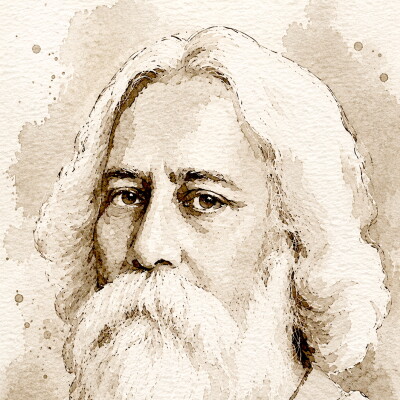
Description
If Tagore’s song is capable of great reverence for his beloved country, whose skies and people are the music of his soul, and of the surrender shown in the Gitanjali, his critical lens is much more grounded in the protest politics of his time. As a social reformer, Tagore held a clear vision for his rapidly changing colonial India, and it was modern, open towards the world—yet rooted in the humanistic values of his spiritual background. It is his focused lens—when turned on our Western culture—that illuminates its ability to organize and order the world while revealing the ways in which its materialism has made so desolate the life upon it.
Hosted on Ausha. See ausha.co/privacy-policy for more information.


