- Speaker #0
Welcome back to the Deep Dive. You know, we spend a lot of time on this show looking at the shiny stuff.
- Speaker #1
The flashy tech.
- Speaker #0
Right. We look at AI, we look at market trends, the future of work. But today, I want to pull the camera back. Or maybe zoom it in on something way less sexy, but honestly, probably more important for your daily sanity. We're looking at the machinery inside your office.
- Speaker #1
The plumbing, basically.
- Speaker #0
Yeah, the plumbing, the wiring, the walls. We are trying to answer a question that I think haunts pretty much every ambitious professional I know. It goes kind of like this. Why is it that you can take all the leadership courses? You know, you can read the Brene Brown. You do the atomic habits. You get your mindset perfectly calibrated.
- Speaker #1
You are totally optimized.
- Speaker #0
Exactly. And then you walk into work on Monday morning. You open your laptop and you instantly feel like you're wading through concrete.
- Speaker #1
It is the universal corporate experience. You feel that viscosity. You're ready to sprint, but the air is just too thick.
- Speaker #0
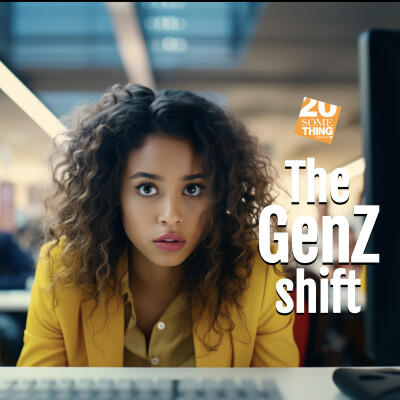
Yes, that Monday morning reality check. And usually we blame ourselves or, you know, we blame a toxic boss. But our source today argues that this isn't a people problem. It's not that your boss is mean or that you aren't motivated enough. It's a physics problem. We're diving into an excerpt titled The Invisible Boss from the book The Gen Z Shift by Benoit van Kouwenberg.
- Speaker #1
And this is a really compelling piece of writing because it stops blaming the software, like the culture, the people, the vibes. And it starts blaming the hardware.
- Speaker #0
The actual structure.
- Speaker #1
Right. The core thesis is that the modern organization is actually designed, architecturally designed, to stop you from working.
- Speaker #0
That is a heavy accusation. Designed to stop you from working.
- Speaker #1
Designed to prioritize permission over action. Van Calenberg completely dismantles the old idea that culture eats strategy for breakfast. His argument is that structure eats everything. Yeah, you can have the best culture in the world, the most talented people. But if the hardware of your company, the literal organizational design, is obsolete, all those software upgrades don't matter. It's like trying to run the latest video game on a computer from 1995. It's just going to crash.
- Speaker #0
I love that distinction. Hardware versus software. Because we spend so much money on the software. We send managers to empathy training or we do these agile workshops. But the hardware, the org chart itself, it hasn't really changed since. Well,
- Speaker #1
since the steam engine, basically. But we'll get to the history in a second. I want to stick with that feeling you mentioned in the intro because the source opens with this and it's so relatable it actually hurts.
- Speaker #0
It does. So let's paint the picture for the listener. It's you. You've just come back from a seminar or maybe a really inspiring weekend where you mapped out your goals. You were transformed. You have clarity. You are ready to be decisive, autonomous, fast. Mentally, you are driving a Ferrari.
- Speaker #1
You are pumped. You walk into the office, coffee in hand. You sit down. You're ready to execute. And then you hit the wall.
- Speaker #0
The invisible boss.
- Speaker #1
Exactly. You want to launch a small test for a client. Okay, well, first you need to put it into the project management tool. Then you realize you don't have the right permission, so you ticket IT.
- Speaker #0
Oh, the IT ticket.
- Speaker #1
Right. Then you have to wait for the weekly validation meeting on Thursday because decisions only happen on Thursdays. Then the finance director needs to sign off on the budget, but she's on leave until Tuesday.
- Speaker #0
And suddenly your Ferrari is sitting in bumper to bumper traffic and you're just idling.
- Speaker #1
It's worse than traffic. The author uses this brutal analogy here that really frames the whole discussion. He says you are trying to drive a Formula One car on a track designed for tractors.
- Speaker #0
A track designed for tractors. That really lands because it shifts the blame completely. If I'm in an F1 car and I can't go over 20 miles per hour because the road is full of mud and ruts. That's not a driver error. That is an infrastructure failure.
- Speaker #1
Precisely. And this is the invisible boss. It's not a person telling you no. It's the validation layers, the permission loose, the silo data. It's the architecture itself acting as a governor on your speed. And the scary part is we just accept it as normal. We think, well, that's work. That's just how good companies operate.
- Speaker #0
But the source argues it shouldn't be normal. It's actually a fossil. So let's put on our archaeologist hats here. If we are driving on a tractor track, who built this track? And why are we still using it?
- Speaker #1
This brings us to the history of hierarchies. To understand why we work the way we do, we really have to go back to Frederick Taylor in the 1920s and the rise of the assembly line.
- Speaker #0
Taylorism. Scientific management. The guys with stopwatches measuring how fast you can shovel coal.
- Speaker #1
Exactly. Now, we have to give Taylor credit. We shouldn't dunk on him too hard because in 1920, his system was genius for its time. You had a workforce that was largely illiterate, doing physical repetitive labor. You didn't want them improvising. You wanted them to replicate a specific motion perfectly thousands of times a day.
- Speaker #0
Right. If you're building Model T Fords, you don't want the guy putting on the wheels to suddenly get creative and try a new way of tightening the bolts. You want absolute consistency.
- Speaker #1
Correct. So they built the pyramid, the fuel system. And in this structure, gravity works one way, information flows up. That's the tribute. And decisions flow down. Those are the orders.
- Speaker #0
So the underlying logic is the higher you are in the pyramid, the smarter you are.
- Speaker #1
Exactly. The brain is at the top and the hands are at the bottom.
- Speaker #0
Which makes total sense for 1920. I mean, the manager probably did know more than the worker. He had the blueprints. He understood the whole machine. The guy twisting the bolt just knew the bolt.
- Speaker #1
But fast forward to today. This logic is completely inverted. We aren't doing repetition anymore. We are doing adaptation. And the workers aren't illiterate hands. They're highly specialized knowledge workers.
- Speaker #0
That is the massive disconnect. Because if I hire a data scientist or a UX designer or a cybersecurity expert by definition, they know more about their specific domain than I do as the CEO. I hired them because they know more than me.
- Speaker #1
Exactly. The hands are now smarter than the brain, at least in their specific niche. But the operating system, the pyramid, it still acts like the boss has all the answers. It forces these brilliant specialists to stop working and explain themselves to a generalist manager just to get permission to proceed.
- Speaker #0
It's like hiring a master chef to run your kitchen, but then forcing them to ask a toddler for permission to use the salt because the toddler owns the house.
- Speaker #1
That is a harsh analogy, but structurally, it's not far off. You have high resolution intelligence at the bottom. asking low resolution authority at the top for permission. And that leads us to what I think is the most technical and terrifying concept in the source. Glossy compression.
- Speaker #0
I love this term. It's straight out of digital engineering. Like when you save a JPEG image over and over again and it gets totally pixelated and blurry.
- Speaker #1
Exactly. The author applies this to organizational intelligence. Think about how information moves up a hierarchy. Let's trace a piece of data. You have an engineer at the edge of the company. They're talking to the customer or they're fixing the code. They see the problem in high definition, 1080p, full context.
- Speaker #0
They see the nuance, the emotion, the specific technical glitch. They have the raw reality.
- Speaker #1
Right. Now, they have to report this to their manager. They can't dump all that raw data. It's too much. So they summarize. The resolution drops to
- Speaker #0
720p. Okay. Still watchable, but we lost some detail. We lost the texture of the problem.
- Speaker #1
Then the manager reports to the director, summarized again, 480p. Then the director reports to the VP. Now we are looking at a single slide in a deck of 50. We aren't seeing the customer anymore. We are seeing a bullet point.
- Speaker #0
And by the time it hits the CEO's desk.
- Speaker #1
It's a traffic light. Red or green. One pixel of information.
- Speaker #0
One pixel. So the CEO is making a billion dollar decision based on a red or green dot.
- Speaker #1
And here is the kicker. The author states that any decision made based on that one pixel is mathematically guaranteed to be wrong.
- Speaker #0
Guaranteed to be wrong. That is a bold claim. Why guaranteed?
- Speaker #1
Because in a complex adaptive system, which is what the modern market is, the nuance is the signal. That noise that got stripped out at every level, that was the reality. The CEO isn't stupid, but they are legally blind. The architecture stripped the signal of all its vital information before it ever reached the decision-making center.
- Speaker #0
This explains so many corporate disasters. You look at companies like Kodak or Blockbuster and you wonder, how did leadership not see this coming? And the answer is... They physically couldn't. The system was designed to filter out the reality.
- Speaker #1
Exactly. The source calls it an obsolescence engine. We have built a machine that takes high-resolution intelligence from the edge and compresses it into low-resolution authority at the center. And then we act surprised when the strategy fails.
- Speaker #0
Low-resolution authority. I am definitely stealing that. It really highlights the frustration of the employee who has to dumb down their reality so it fits onto a slide for someone who doesn't even understand the tools.
- Speaker #1
And this dynamic plays out in a very specific theater. The meeting room. The source describes a phenomenon that Silicon Valley has a catchy name for, and it helps explain why this happens. The hippio effect.
- Speaker #0
I've heard of this. H-I-P-P-O. The highest paid person's opinion.
- Speaker #1
That's the one. And the source breaks down the geometry of this room perfectly. Picture the meeting. You have the engineer who has the data, you have the manager who has intuition, and you have the director who has the authority and the biggest salary.
- Speaker #0
And in a feudal system, salary beats data.
- Speaker #1
Every single time. Because the hierarchy is a truth system, it assumes that because the directors paid more, their intuition is inherently more valuable than the engineer's spreadsheet.
- Speaker #0
We have all been in that meeting. You have the charts, you have the user feedback, you have the A-B test results. But the VP just leans back, crosses their arms and says, I don't know, I just don't feel like that's the right direction for the brand. And that's it. Discussion over. The data loses to the gut feeling of the highest paid person.
- Speaker #1
And this is where the generational friction, specifically with Gen Z, really explodes. The source argues that Gen Z employees find this absolutely unbearable. And it's not because they are entitled or difficult. It's because they are data native.
- Speaker #0
That's an interesting distinction. What does data native actually mean in this context?
- Speaker #1
It means they view truth as something you log, not something you decree. They trust the log file more than the job title. They look at that director and think, You haven't logged into the admin tool in three years. You don't know how the algorithm works. Your opinion is a hallucination.
- Speaker #0
A hallucination. That is cutting.
- Speaker #1
But from their perspective, it's true. To a data native worker, the hippie isn't just an annoying boss. It's a bug in the algorithm. It's a glitch. Why are we listening to the person with the least recent data just because they sit in the big chair? It defies logic.
- Speaker #0
It creates this profound isolation. The leadership team ends up just talking to itself, validating its own hallucinations, while the market is moving in a completely different direction. The center talks to the center, and nobody listens to the edge.
- Speaker #1
Exactly. And you would think, okay, if this system destroys information, alienates the smartest workers, and leads to bad decisions, we would get rid of it. But we don't because of the great architectural lie.
- Speaker #0
The lie being that hierarchy gives us control.
- Speaker #1
Right. We tell ourselves that all these validation steps, all these permissions, they are there to prevent mistakes. We call it governance. But the author argues that validation doesn't just prevent mistakes. It adds a massive hidden tax to everything the company does, the latency tax.
- Speaker #0
I want to spend a minute on this because the source actually does the math here and it is staggering. We usually think of bureaucracy as just annoying, but he puts a literal price tag on it.
- Speaker #1
He does. And this math is what every manager needs to hear. Let's walk through the example from the book. Imagine a team wants to spend 5,000 euros on a marketing test. It's a small bet, not a company killer.
- Speaker #0
OK, five grand. In scenario A, the old world or the permission model, what happens?
- Speaker #1
Well, first, the team stops doing their actual work to build a slide deck. to convince the boss. That's maybe day of work for two people.
- Speaker #0
Right, making the font look nice, finding the right stock photos.
- Speaker #1
Then they send the request, but the boss is busy, so it sits in the inbox for three days.
- Speaker #0
Then they finally get the meeting. The boss looks at it and says, can we change the logo size? Or let's check with legal just to be safe.
- Speaker #1
So they go back, redo the deck, another day.
- Speaker #0
So we are at five, maybe six days of delay.
- Speaker #1
Now, let's calculate the cost. You have the salaries of the people waiting. You have the salary the boss reviewing, you have the meeting time, and crucially, you have the opportunity cost, the value you lost by not being in the market for that week. The author estimates the internal cost of this process is about 1,500 euros.
- Speaker #0
Wait, so to get permission to spend 5,000 euros, we spent 1,500 euros in internal friction.
- Speaker #1
That is a 30% insurance premium on the asset value.
- Speaker #0
That is insane. If a bank charged you a 30% transaction fee every time you swiped your card, you'd burn down the branch.
- Speaker #1
You absolutely would. But in corporate management, we just call it good governance. We are lighting money on fire to buy the illusion of safety. We're paying 1,500 euros to ensure the 5,000 euro decision isn't wrong, but the delay itself makes the decision less valuable.
- Speaker #0
So what is Scenario B? What does the new world look like?
- Speaker #1
Scenario B is the audit model. The team has the idea. They launch the test immediately. Total time, zero days. Cost of permission, zero euros.
- Speaker #0
Okay, I have to play devil's advocate here. Because I can hear the managers listening to this sweating. That sounds like chaos. If everyone just spends five grand whenever they want, won't the company go bankrupt? Isn't that just anarchy?
- Speaker #1
That is the fear. And that is the crucial pivot point of the deep dive. The author isn't suggesting anarchy. He's suggesting shifting the protocol of action. The shift is from permission to audit.
- Speaker #0
Break that down for us. What is the actual difference between permission and audit in practice?
- Speaker #1
The permission model rule is you must ask before you act. The gate is closed by default. You need a key. This kills speed, but it also kills ownership. Because if it fails, I can just say, well, the boss approved it.
- Speaker #0
Oh, learned helplessness. I was just following orders. Don't look at me. The VP signed the deck.
- Speaker #1
Exactly. It creates a culture of covering your back. Now, the automodel rule is you have the right to act. The gate is open by default. But, and this is a big but, there is a camera recording who goes through, and we will check the tape.
- Speaker #0
Trust but verify.
- Speaker #1
It's actually more aggressive than that. It's freedom with consequences. The author clarifies this perfectly in the book. The audit model isn't soft or nice. It's actually much harder for the employee. In the permission model, you are safe. In the audit model, you are exposed.
- Speaker #0
Because if you make a bad call, there's no boss to hide behind. You own the result.
- Speaker #1
You are alone with the data. If you spend that 5,000 euros and it returns nothing, you have to explain why in the quarterly review. That creates a very different kind of responsibility. It moves the culture from, am I approvable? to am I right?
- Speaker #0
That is a subtle but massive psychological shift. Am I approvable is about politics. It's about guessing what the boss wants to hear. Am I right is about value. It's about what the market actually wants.
- Speaker #1
And this brings us back to Gen Z. When they ask for autonomy, older leaders often misinterpret it. They think, oh, they just don't want to be managed. They want to slack off. But the source argues they're actually asking to remove the latency tax. They want the right to act. And they are willing to take the heat for the results if you just let them drive the car.
- Speaker #0
They want to drive the Ferrari on a track, not a mud pit. They're saying, give me the wheel, and if I crash, that's on me, but let me drive.
- Speaker #1
Exactly. And that is a tradeoff most competent people are dying to make.
- Speaker #0
So we've diagnosed the pathology here. It's a pretty grim diagnosis. We have the feudal pyramid designed for 1920. We have lossy compression making leaders blind. We have the hippio stifling truth. And we have the latency tax bleeding money. So what is the cure? How do we actually move from permission to audit without the whole building collapsing?
- Speaker #1
The verdict from the source is pretty stark. Demolition required. You cannot solve this by being a better listener or having more town halls or doing a values workshop. You have to change the physics of how work gets done.
- Speaker #0
So practically speaking, for the manager listening to this who wants to stop being an invisible boss, what do they do tomorrow?
- Speaker #1
The author suggests a binary question. You need to audit your own processes. Look at expense reports, hiring approvals, code deployments, social media posts, everything. And for each one, ask, is this a permission step or an audit step?
- Speaker #0
That's a powerful filter.
- Speaker #1
If it's permission, you are saying, I don't trust you, and I am willing to pay a 30% tax to slow you down. If it's audit, you are saying, I trust you to act, but I will verify the results.
- Speaker #0
And I imagine for a lot of leaders, that is terrifying. Giving up the permission step feels like losing control. It feels like letting go of the steering wheel.
- Speaker #1
It feels like losing control, but it's actually gaining speed. And in the modern economy, speed is control. If you are slow, you are dead. If you are waiting five days to make a 5,000 euro decision, a competitor who takes five minutes is going to eat your lunch. The invisible boss, those walls we talked about, they don't move just because you ask them nicely. You have to take a sledgehammer to the validation layer.
- Speaker #0
And the goal here isn't just to make employees happier, right? This isn't just a wellness initiative.
- Speaker #1
No, and that's the key takeaway. The goal isn't just to liberate the people. It's to liberate the value. All that innovation, all that market responsiveness, all those great ideas, they are currently trapped behind a jade waiting for a signature from a guy who hasn't even read the file.
- Speaker #0
That is a huge reframing. We aren't destroying hierarchy to be nice. We're doing it to stop. burning money. We were doing it to stop the obsolescence engine.
- Speaker #1
Precisely.
- Speaker #0
This has been a heavy one, but a necessary one. It really makes you look at your calendar differently.
- Speaker #1
It does. It changes how you view a simple meeting invite.
- Speaker #0
So here is the challenge for the listener. Look at your agenda for the rest of the week. Scan through those blocks of time. Identify the meetings that are purely validation meetings. The ones where no work is being done, no product is being built, just permission being sought.
- Speaker #1
The value destruction meetings, as the author calls label them.
- Speaker #0
And ask yourself, could this be an email? Or better yet, could this be nothing? Could this just be a dashboard I'd check next month to see how they did?
- Speaker #1
That's how you start to demolition. Brick by brick.
- Speaker #0
I want to leave you with one final thought from the source that really stuck with me. We talked about how hierarchy destroys information. That's the lossy compression. But the author poses a heavier question to end on. Once you realize that hierarchy destroys information, you have to ask yourself, Why are we letting it destroy time?
- Speaker #1
That is the question.
- Speaker #0
Time is the one asset you can't buy back with a budget increase. You can always make more money, but you can't make more Monday mornings. Something to think about before you send that next approval request. Thanks for diving in with us.
- Speaker #1
See you next time.