- Speaker #0
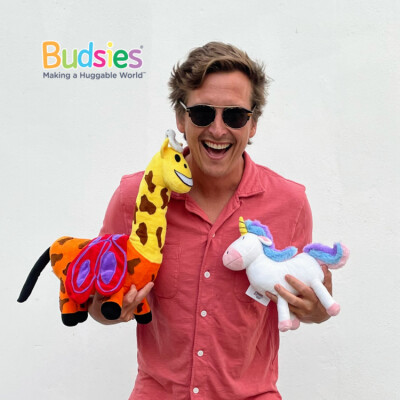
Do you have a favorite stuffed animal or plushie, one that you've had for years and still treasure? Ever wonder why we're so attached to our cuddly companions? Today's guest knows all about that special connection. Scott Meyer is the CEO of Budsies, where imagination comes to life as a one-of-a-kind plushie. And today we'll explore the magic behind these special companions and how they bring comfort. creativity and connection, whether they're created at home, in a classroom, during a difficult time, or as a gift for someone special. Welcome to the Little Eaters podcast, where we inspire confidence, connection, and change through conversations with kids, just like you and me. Grab your favorite snack, find a comfy spot, and enjoy today's guest. It's great to have you here today, Scott. Thanks for joining us on the Little Leaders Podcast and our Big Leader feature. We're so excited to have you here and look forward to hearing more about your journey, your work with Budsies, and what you've learned along the way. So welcome.
- Speaker #1
Tina, thank you. It's so awesome to be here. And I was actually just looking, I was like, oh, I have this fake background on. I need to, like, turn that off to get to. Let's see. This will be fun. There you go. Oh, we've got stuffed animals in the background.
- Speaker #0
I love it. Yes. And I have my, I have several of mine with me also.
- Speaker #1
Oh, nice. I love it.
- Speaker #0
That I take with me on author visits.
- Speaker #1
And my fiancee, Nicole, is giving me the business because she's like, you got to put shelves back there. Come on, you better presentation. But I like a big jumble just like it is, you know.
- Speaker #0
And that's how they always look too. They're fun that way.
- Speaker #1
Yeah.
- Speaker #0
I've got, you know, other ones too. I love how they did her hair. It's all about the hair.
- Speaker #1
I love it. Yeah, I love coming to my office and there's a lot of eyeballs staring at me. Yeah, well,
- Speaker #0
it's just so happy. What a way to not just start your day, but have your whole day run that way on happiness.
- Speaker #1
Yeah, absolutely.
- Speaker #0
I asked Scott how a child seeing their very own Budsy come to life can help them believe in themselves and their own ideas.
- Speaker #1
I think every kid's journey is unique. so I always go back since I'm Peter Panning in life, adult with a lot of stuffed animals. I think of it, you know, I'm always trying to think through my perspective as a kid because I refused to grow up. But I think that what's so cool is if you've ever had an idea, if you've ever, you know, been a creative person or something wakes you up in the middle of the night, you're like, oh my gosh, I have to do that. I wish I could do that. And I remember as a kid, I wanted to make like a board game. And I came up with this board game because I thought medicine and everything was so cool, like skeletons. And I tried to make this and I just didn't have the resources and it didn't feel like I had the permission to do it. And it didn't feel like it was ever going to be realized in a way that was going to look perfect. It just seemed like the road was so steep and so long and so improbable that there was no proof otherwise in my life to show me that I could do it. And I think that, you know, my parents didn't know how to make board games. They're like, yeah, it seems like a thing, you know. And I grew up, I was, you know, I grew up in the 80s. I just didn't have that model, that thing that told me that, oh, you don't need permission. If you have the idea, you can make it. Listen to yourself and just make it. And I think that Budsy is in no small way for kids that we've seen, that I've seen personally. shows you like wow you can take an idea build a character and then we do like a lot of the hard stuff but you're still doing the imagination and then all of a sudden it becomes real so it's like this is in my mind it's like the closest you could get to talking to like a mattel that i've needed to make my board game you know or parker brothers or whoever was doing it and and so now like even Even before I was a part of Budsies, kids that were like in high school or whatever, were like cousins because of a huge family, would be going to college and they're like, oh, yeah, what do you think about, you know, this degree or that? And I was like, I mean, it seems logical. I was like, but is there something that you want to do? And they'd be like, yeah, I really want to do X, Y, Z. I was like, well, then don't wait for the permission of the degree to do the thing, to start the thing over here when really what you want to do is this over here. And as humans. Especially creative humans and really good procrastinating humans like me, or professional procrastinator. We love to put 10 barriers between the thing that we want to do and where we are. And there are these artificial barriers where it's like, oh, I need these 10 things. I have to have a degree. I have to build a giant structure. I have to get agreement from all my friends and family that this is the right thing to do. I have to figure out, retrain my entire life in order to do this. I need to, no, just start the thing. And so I think that Budsies is proof that magic is possible.
- Speaker #0
Oh, it definitely is. Looking at the Budsies storybook curriculum that teachers are using in their classrooms, Scott, students have an amazing opportunity to really express their thoughts and feelings by creating their own characters, story ideas, and illustrations. What impact do you think this creative process has on kids participating in this curriculum? It sounds so cool.
- Speaker #1
Yeah, I mean... It's huge. So right now there, and this was news to me not too long ago, which is right now there is a literacy crisis in the U.S. And people are like, oh yeah, they're always saying that, you know. And then I confirmed the statistics, which are over two thirds of kids in the third grade read below grade level, which is the critical time where we go from learning to read. to reading to learn. And if you get stuck there, the statistics are dire. It's like 70, 80% of prisoners read at a third, fourth grade level. Oh, okay. There's a direct correlation. And we see like so many adults reading at like a level that is, you know, barely comprehending, which is such a tragic loss because we're losing. All of the brain power of all those minds. Now, especially in the age of AI, my belief more firmly than ever is that creation and creativity is the thing that makes humans human. Jumping off from that is our ability to understand each other, our ability to understand emotions, our ability to see ourselves and ourself. I can't... overemphasize how huge it is. And so because so we're looking at both sides, those that are, you know, in this curriculum, we want kids that are getting left behind. You when you short circuit that wire that says, Oh, my idea become can become a real thing. The kid that wasn't keeping up because learning to read is boring. Sorry.
- Speaker #0
We don't love everything. Yeah.
- Speaker #1
And learning is learning is not comfortable.
- Speaker #0
Right?
- Speaker #1
Our egos, even as little kids, are tough to get around and to get through. And so when we have this moment where it's like, oh, if I am creative in front of people, I could get criticized. If I read and it doesn't come out just right, I can get criticized.
- Speaker #0
Right.
- Speaker #1
And so our egos start protecting ourselves so early on and it makes everything harder. But all of a sudden, if you can see the results. of your creativity, even if you were just, you know, half-efforting it, then you, all of a sudden, you're like, whoa, I got that out of this? If I really put an effort in, I get so much more. And so kids, all of a sudden, see the light bulb turn on.
- Speaker #0
And start to see that there's a potential within themselves that they can achieve by continuing to go through that process.
- Speaker #1
Totally. And like, for me, I learned so much about this in a really interesting and introspective way, which was I stopped speaking English when I was 20. I moved to Spain. At first, I was there with like a study abroad program my last semester of college. And there was a specific moment where I was like, I'm going to stop speaking English as much as possible, as frustrating as this is going to be. Until I can speak Spanish. And then it becomes fun when you can embrace that. And now I ended up, you know, that culminated in being on the phone in customer service a few years later. And somebody was saying, wow, your English is so good. How did you learn how to speak English so well? And I was like, I made it.
- Speaker #0
It's amazing.
- Speaker #1
Yeah.
- Speaker #0
And learning another language is a scary experience. experience having two parents from Europe. And the way you're describing it, they did too. Just day by day, word by word, and really reading other people.
- Speaker #1
Yeah. And I discovered so many, I could talk about that time forever. I mean, it's such an interesting thing. Like, you know, I would watch the people I could communicate with on their level was went from like, second, third grader, you know, they slowly got taller every few weeks. Like I was. progressing a little faster because I have the analog of English to fall back on and I learned how that chip that translates and then I got to the point where I wasn't translating I was just speaking and all of a sudden you know I'm finding mistakes in the national newspaper you know And I was like, oh, they said this wrong.
- Speaker #0
That's amazing. Why do you think we hold on to our stuffed animals and pet keepsakes and the connections they represent even as we grow older?
- Speaker #1
You know, this is something I'm still trying to answer myself. And one of the dreams that I have, and I haven't been able to do this yet. And if you know anybody within FMRI machine, I would love. to put Petsy's stuffed animals in the arms of people while we're scanning their brains. Because the first time that I held a Petsy, it was weighted and had a heartbeat, and I was holding this, and I was like, I mean, here's a little cat that's so cute. I could feel my brain lighting up, and I'm an animal person, and a stuffed animal, of course, is no substitute for a real scratching, pooping. Yeah, but I was like, there's something here. There is this connection that is very real. And so I would love to do that and then take the cat away and put a real cat in and see, you know, what part of the brain lights up.
- Speaker #0
Oh, I find that really interesting, Scott. It's funny. My daughter has been out of college for two years. But when she was in, she and her friends all had a favorite stuffed animal on the bed. And you just knew that it brought them comfort from home, their childhood, specific memories. And to this day, when she visits, she brings home Lulu.
- Speaker #1
Yeah. I mean, I, so I remember my parents moved out of our childhood home. And man, what do you do with all this stuff? First, you're like, oh, is this Smurfs book worth any money? Like, no. Okay. Right, right. Then how come I can't get rid of it? How come I, like, I take it over to the pile to give away and my hand doesn't let me let go of it? And I'm accessing memories of being in bed as a kid with my dad doing voices reading to me. And I'm accessing what my childhood blankie felt like. And so I firmly believe that, you know, a physical object, yeah, it's just a thing, it's just a physical object. But when it means something to you and was... witness to part of your life that we store our memories everywhere around us and that when you pick that thing up it becomes an access point to memory and comfort and nostalgia and you know all the things that we've imbued into this symbol and i think that just like language over time develop that we develop our own language of symbols and meaning through the objects around us. And then we access sometimes really deep things in, oh, it's just a plush. It's just a plush that represents, you know, relationship with my dad and like love and my, you know what I mean? Like it's, it is a live wire directed connectively to who we are.
- Speaker #0
With AI becoming such a big part of our lives, creativity is truly more important than ever. How can we help kids understand and value their own creativity and encourage them to keep using it?
- Speaker #1
Yeah, it's such an interesting time and it's such like a... Fast. It's so fast. And, you know, while they're... If you look at the curve for how many cures for diseases they've found in the last five years, it's like, I mean, we're entering the hockey stick zone. So... While so much of this technology is doing so much good, it's so concerning where we have environmental concerns and we have, you know, the the commerce at all costs kind of mentality at times, which has both helped and burned this country in different ways. To be honest, like the way I see and like the way that we talk about AI in our company and with Budsies especially. is We only want to use AI when it helps us be more human.
- Speaker #0
Right.
- Speaker #1
And so we do everything we can to like, oh, do you need to like fill out this entire spreadsheet that's mind-numbing, boring work that like nobody on our team really likes doing? And, you know, like, oh, let's see if an AI will do that. Like, and then it's like, okay, do you want to think through the creativity of someone and how we're going to realize it and whether or not this, you know, you Like sometimes we have difficult designs that come in because everything that we do is one of a kind. And then it's interpreted by our designers who is, you know, they're one of a kind each. And then it goes to an artist who cuts and sews and they're one of a kind. And sometimes something that seems like it should be so easy and straightforward doesn't come out just right.
- Speaker #0
Right.
- Speaker #1
And. So then we have to go back to the drawing board. That's why we have remakes and redraws. And we have all these different things that we've built into the system to try and help people realize and help us understand what they're trying to realize. So we have sneak peeks because, you know, that way people can see exactly how their idea was interpreted and then make a tweak or two. But that also costs. man hours and fabrics and sometimes it's actually in the background a full remake because of the way that it was made the first time so it's quite a complex process and what's so cool about it though is it is uniquely human frustratingly messy imperfectly human and that's okay and we are striving to get better at it every single day and i think we do And I think we are better. Like if you, when we look back at some of the stuff we did, even just a few years ago, we're getting better every day. And it's really great. Like we get so many positive reviews. And then as soon as we get a frustrated person, we all just die. And we're like, no, how do we, and we do our best to fix that and to make it right. And, and try and realize what, what they're looking for. And so that's an exciting process.
- Speaker #0
It is.
- Speaker #1
But I think you'd have to be crazy to do it.
- Speaker #0
And that is such a great segue into the next question, because when you have a frustrated client, right away, communication is just critical. How has listening to your customers and genuinely caring about people helped Budsies grow into the successful business it continues growing into?
- Speaker #1
All I can say is the more we listen, the more we learn. So true. And that's... where we want to live. People, myself included, and a lot of us, we all sometimes get stuck in rigorous definitions of ourselves and stuck in rigorous definitions of our art or our creations. And that's fair. That's okay. Like, yeah, we should be able to make something and deliver on it. And we do every day. And the, you know, I mentioned that there might be some people who are there their ride through the creative is is bumpy but that is such a low percentage that but we still learn from each one one of the really cool things about doing this and i you know i'm thinking back to this question kind of began with like human versus ai and in this you know nobody knows exactly what the future is going to look like but i think you Everybody agrees that it's going to be different than now. The hope is that we can be a tool for people to use their creativity in a human way. When we get it right, which is a lot of times, most times, 98.5% of the time, according to our stats, that... It allows people to get more reinforcement about the importance of creativity for themselves and for the world. Whether it's something that, you know, what we hear from teachers is that kids as they're finishing their school career and journey, what they have are their trophies and their Budsie. And like you talked about where your daughter's bringing a stuffed animal home in college. And we get a lot of adults that talk about, oh, this is my favorite blush that goes everywhere I go. And that's awesome because now we've linked not only this physical entry point to our own memories and our own stuff, but also it's a reinforcement of we are a creative person. I'm a creative person. I'm a part of a creative species. And we are different than robots. And this thing in this small way with its unique characteristics is like, hey, I'm human. I think there's a reason why all the gods throughout history, including all of them, are creators. And I firmly ascribe to like, hey, we speak different languages. We call a chair a siya. You know, in Spanish. And I think that, I don't know if it was the Dalai Lama who said it, but all those are different journeys of the same mountain of existence. And I think that creativity is a way in which we understand our own unique journey up that mountain.
- Speaker #0
For every child that is listening, what is one leadership skill that they could practice just this week if you could pick any one and why?
- Speaker #1
A true leader is able to listen and able to change course while also maintaining. that balance where it's I can listen and change but I also have the confidence to know to believe in what I'm talking about a lot of that comes from alignment where we treat everyone around us with respect like we would want and then when we're out of alignment we address it and we say hey what's up how do we fix this and like our goal, our mutual goal is to get to here. For me, that's something that, you know, every day we're working together and we're learning from each other and getting all the information. And if you can't control your temper, I think then you're kind of in trouble on day one.
- Speaker #0
Yeah.
- Speaker #1
And so many people let their ego get in the way of listening and being able to. Say, OK, maybe I don't have all the information. Like, let's let's fully shape this. And then you have to show up every day and act on it and keep moving forward no matter what. And that's a lot easier said than done.
- Speaker #0
I love it. It's excellent advice for kids. Scott, you've seen such a wide range of the ideas and experiences that kids bring to life through Budsies. While you don't pick favorites. Are there a few stories or situations that have stayed with you?
- Speaker #1
Oh, my gosh. Yeah. I mean, we have if you go to our YouTube or Instagram. I have. Check out the stories like we had like whenever I'm in doubt or having a tough day, sometimes I'll go watch one of our own videos. And without fail, I end up tearing up and crying. I'm like, it's worth it. We're doing this. It's worth it. And, you know, we've worked with kids going through medical journeys. We've worked with, you know, there's a video that breaks my heart every single time, which is a young girl who lost her father to, you know, mental health difficulties and pulls the Budsy, the selfie doll out of the box and immediately goes, Daddy, Daddy, now you're with me. And I'm like, boop, crying.
- Speaker #0
Right.
- Speaker #1
That video, like, I think about that every day.
- Speaker #0
It puts our lives into perspective.
- Speaker #1
Yeah, a kid with a limb difference who sees, it's me, oh look, it's me, oh my gosh. You know, or a port that they're, you know, because they're going through something that we take for granted how difficult it is. You know, there's this, the idea that time goes by faster as you get older. In part because you're just used to what more time looks like. And this one breaks my heart, is thinking of kids going through a medical journey where it can be years going through something and they're not even 10 years old. So every year is 10% of 20%. So for a third of their lives, and they weren't even conscious until, you know.
- Speaker #0
Right, right.
- Speaker #1
a couple years in and so now they're so much of what they know comes through hospitals and gurneys and things and that stuff to me is so powerful when we when i see the power of a budsy or a selfie helping a kid go through that um that changed my day and that's why we have but the budsy's pals program because people started when i came into this company i was like hey what's this where people just send us money. And they're like, yeah, you can sponsor Budsy.
- Speaker #0
Oh, I'm so glad you shared that. I did not know that.
- Speaker #1
Yeah, it's our Budsy's Pals program where you can go on and sponsor like Budsy's Pals kit. And we give it to kids. We've partnered with everybody from Ronald McDonald House. We partnered with the Children's Hospital of Atlanta. I mean, the list is very, very long.
- Speaker #0
That's beautiful.
- Speaker #1
That's why we. We're on the Today Show because we were partnering with a local school for under-resourced kids or families that need extra care so that the parents can work fully nine to five. And then the kids went through that and they were younger and a lot of them did selfies and they're like wearing alligator masks. I mean, it was the cutest freaking thing.
- Speaker #0
Oh, gosh.
- Speaker #1
And then on the flip side, we have kids who are in the National Association of Gifted Children, the NAGC. And we hear a lot of stories from teachers. If you've ever dealt with a kid that is just kind of over it because school is moving too slow for them and they just want to leave. And they're like, yeah, I got this. Why are we reviewing? We went over this. Giving those kids the ability to be creative in a way that is totally beyond their years is, they're like, this is gold. And they get excited. And then they actually are like, oh, now I can start doing cool and fun stuff already. I'm not being held back. We see these kids lighting up.
- Speaker #0
So much of your journey, Scott, seems to really be about keeping an open mind and finding a path. that meets the needs of everyone involved.
- Speaker #1
Thank you. Yeah, I mean, I'm working on it every day. And I think the path to growth is not the comfortable one always. And so I don't know if I've hypnotized myself or what, but I like it. I like learning new things. I like being challenged and not good at something. And I think it's... It's so fun.
- Speaker #0
We speak the same language. My dad, who was from Germany, always used to say, anything worth having will always be more work than you ever imagined. Just keep moving forward.
- Speaker #1
Yeah, yeah. It is so amazing. And, you know, one of the things that one of my favorite sentiments is magic is consistent, sustained effort over time when nobody's looking. And then when it pops up on the other side, people think, oh, wow, magic. It's like, no. And that's why Budsies is magic, because you upload a photograph, and then behind the scenes, our team of elves are working, and designers and artists, and waking up and going to sleep, and we have families. And then along the way, just a few weeks later, there's a Budsie. And your idea has turned into something. And together, we've all put that together. And it's exciting.
- Speaker #0
What a journey. It's been such a privilege to speak with you today, Scott. Thanks for being such an inspiration and the genuine care you have for kids and families. You have shown so much heart and magic today through what you do, reminding us of the little things that help us be better humans. Whether we're creating our own Budsie or giving one to someone else.
- Speaker #1
Awesome. Thank you so much, Tina. This has been awesome talking. And the one thing I don't like about these is I don't get to ask more about you.
- Speaker #0
Thank you so much for joining us today on the Little Leaders podcast. If you found this conversation helpful, I'd love to invite you to visit the Little Leaders Club using the link in the story notes. You'll find free resources, printable activities, conversation starters, and our picture book recommendations, along with other helpful tools to help support your child's confidence, communication, and leadership skills. And if you enjoyed the podcast, subscribing, leaving a review, or sharing an episode with another parent is a wonderful way to help us reach more families. Thanks for being here, and until next time, keep leading the way. The Little Leaders Podcast is written, Edited and produced by me, Tina Shepardson. Follow us wherever podcasts are found and leave us a rating or review. Your time and effort helps others discover us and attract new listeners. Our podcast artwork was created by Tara Hannon. Music is from Pond5. And podcast hosting is by Libsyn. Take care, everyone. Keep reading and keep... leading.