- Jackie
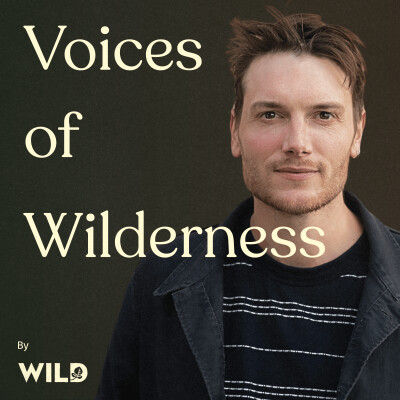
How many people have felt stuck, even afraid, after hearing apocalyptic climate stories and messages over and over again? I mean, I know I personally have, and it's hard when so much of the media focuses on the doom and gloom. Because what happens when there's so much good work being done for the planet, work that really deserves to be seen, work that could bring people together and inspire action, but we don't know how to make those stories cut through, especially in a world where our attention spans seem to be getting shorter and the noise just keeps getting louder. Hey, wild ones. Recently, I set off on a quest to find out how we can tell stories about the planet that actually reach people. There's so much real work happening out there right now. And somehow, so much of it still gets swallowed up by the noise. As a communicator, I've spent a long time asking myself, how do you tell a story so it actually lands? So people don't just scroll past it like it's one more headline in the pile. So I started knocking on people's doors. Communicators, conservationists, storytellers, and experts in the field to ask them how they do it. One of the first people who opened the door to this conversation was Tom Lovett. Tom is a communications professional with a background in cultural anthropology and the exploration of human nature relations. He's a firm believer in the power of positive storytelling. He doesn't look away from the weight of today's interconnected crises, but he's convinced that real change is already happening. It just needs the right storytellers to find it and share it together. In this episode, we dive into how to cut through the noise, how to create hopeful communications, the power of slow storytelling, how to bring people together, and how to tell stories that inspire action. And it helped. Tom gave me hope. He also gave me some answers to the first question on my quest. How do we move beyond apocalyptic climate stories? New episodes drop every other Tuesday, so subscribe wherever you're listening to make sure you don't miss anything. If you like Voices of Wilderness and want to support us, consider giving to the Wild Foundation. It's through your support that we can continue to improve and grow the podcast. And if you're listening on Spotify or Apple Podcasts, we'd really appreciate it if you could leave us a rating. You can also leave a comment. We'd love to hear from you, and it really helps grow. our audience. And if you want to stay up to date, follow us on Instagram and Substack at Voices of Wilderness. All right, let's dive in. Tom, it is such a pleasure to have you here. Thank you for joining us today. What an honor.
- Tom
Well, thank you for having me.
- Jackie
So as you know, the, you know, the series that we're focusing on is really about science communication, conservation communication in this world of, I'm going to say chaos and noise and overwhelming information, distraction, and also information, but also misinformation, right? You're a communication professional. You're a storytelling professional. I'm going to jump right into it and say, with all of the information out there and with what you know about, you know, change and how much change needs to happen. What is holding people back from that change?
- Tom
Thanks, Jackie. I mean, I think it's a really important question. Because as you say, there are many of us who are working in this field, where it just feels so natural to be working on topics related to biodiversity loss, conservation, climate change, adaptation, and so on. And sometimes it feels a bit frustrating when you're looking. outside of that bubble at the rest of the populace and wondering when everyone else is going to cotton on to this as well. And I think a big part of it is to do with crisis framing. So even the word crisis, right, we talk about the climate crisis, the biodiversity crisis, they are these enormous challenges which are happening on a global scale, which therefore make it very difficult for people to connect with and... makes it feel very difficult as an individual to know what to actually do when the scale of the problem seems so big. And I think that that can create something in people, which is called learned helplessness, when the problem is just too vast, that it's easier to do nothing. And next to that, of course, like people have their own struggles and worries. So people are also preoccupied with their own daily lives. And if they don't have space to think about these challenges as we are, then that's also a reason why they're not getting involved. But I think that a lot of it is to do with this learned helplessness and a kind of a collective disassociation from these challenges. And I feel it myself sometimes as well, like with this past summer that we've had in Europe, where opening the news, it's just like, this is the hottest June that we've had. This is the hottest July that we've had. This is the hottest August that we've had. And you're looking outside in this beautiful, sunny... weather but then at the same time it's connected to this to uh the issue of climate change that is this kind of overshadowing thing hanging above us all and it's i think only natural to create an emotional distance towards that and as i said it's it's a it's a global phenomena so then as a phenomenon so as one individual how can you do something against that and i think that that is um that can really lead to inaction.
- Jackie
What is so intriguing to us is how to cut through the noise, right? And I think the difficult part though, right, is when you frame these issues and these crises, because there is a lot of negative association to it because it's inherently something that is, you know, it's not a positive, right? So that's attention grabbing. It's attention grabbing to... spin these stories even more doom and gloom, even heavier. And I'm finding that that's how people are cutting through the noise that, you know, the flood of information that we have online. But to your point, that's paralyzing to people. So I guess as, you know, as, as a communication professional, as a storytelling professional, what do you have to say about that? About the fact that yes, these... These attention grabbing posts, headlines, they might stop the scrolling and they might have somebody, you know, capture their attention for two, three minutes, read the article. But then what? Like nobody does anything or not. Nobody does anything. I don't want to over claim. But again, it kind of it's paralyzing.
- Tom
Yeah. I mean, I think that you're right, Jackie. And I think it's a really good point in that when we have the new cycles that we're in our world of... information sharing today and the news cycles that we're operating these stories go so quickly and it does really feel like we're just kind of jumping from one crisis to the next and the media outlets content creators people that are you know making a living off digital communications they're relying on folks clicking on their content and unfortunately it seems like the more outrageous the more extreme thing that you're reporting, the more people are going to click on it. And yeah, I think that it does not create a very healthy environment of engaging with content. And I mean, in terms of like, what can you do about that? I think, for sure, there's that, I mean, there's surely a responsibility of the media outlets that are pushing such messaging or the content creators or so on. But then on a personal level, I think you have to try and set your own boundaries. And decide how you're going to be impacted by something, which is a really difficult thing to do. I try to do it by focusing more on my local environment and the things around me rather than something that is grabbing my attention in the news. But it's not easy.
- Jackie
Well, and that's a great approach, I think, because something local is something that's tangible, right? Like it's something that you can actually. say, okay, I'm feeling the negative impacts of that, but what is something that I can actually, what's an action that I can take on a day-to-day in my community or in my area that changes that versus this is an entire world problem and I'm just one person. And I firmly believe, you know, Tom, I really believe in the power of one individual. And I think the ripple effect of that is monumental. But it is difficult when you get to a place of despair and you're speaking in the echo chamber and everything is really negative and heavy. It becomes taxing and one individual can sometimes lose faith in the power that they have. So I love that. I also want to ask you, instead of focusing on that negative communication and this fear aspect to kind of manipulate people into grabbing their attention or just living with this anxiety of the climate crisis. What does hopeful communication look like in practice and when it's working effectively?
- Tom
Well, I think just kind of like tail ending from... What we were talking about, I think that what also demotivates people is that their actions have a lack of visible impact. And so I think that hopeful communication can try to make impact visible. I think that hopeful communication is something which is meaningful, relatable, accessible, and actionable. And to me, a really nice example of this is a campaign. which was started by Plantlife in 2018 called No Mow May. And it's basically this campaign in the UK to try to encourage people to not mow their lawns during the month of May and to let the wildflowers and the grasses grow in order to support pollinator populations in this important period of spring. And I think it's a really nice example of hopeful communication because It's something that's so easy to do, right? Like anyone who has a lawn can let the grass grow wild. They can directly see the impact of those beetles and bees and butterflies that are coming to that small meadow that they've created that the previous year they weren't there because they were mowing. And then the more people that do it, the more you feel like you're part of a growing movement. And I think that it's a good example in the fact that it really has worked. Not only are people now doing that in the UK, but they are doing that across Europe and even in the US. I've seen people taking that on and not only individuals, but also local councils and governments have started adopting that policy of not mowing during the month of May. And it goes beyond just changing how people think about May, but then also changes how people think about pollinators and their connection with nature. And it also challenges this idea of how a clean, ordinary looking lawn is what society demands as compared to, you know, like maybe a bit more messy, allowing the dandelions to be there and the daisies and so on. And so also it really changes how people perceive nature and where nature should be existing. And so I think for me, that's a really nice example of like hopeful communications. done well, having a really nice positive impact.
- Jackie
You mentioned the lack of visibility or, and that people want to take action with something that has visibility. Do you think that's possible on all scales? Like, and if somebody is living in a city, if somebody, because I think people get a little bit hindered of the thought of taking action when they live somewhat removed from nature. And so what do you... How do you craft a message to those individuals who might feel a little bit more isolated from being able to do the no, mo, may or something along the lines of that?
- Tom
That's a good point on the visible impact. And it brings me back to what we started the conversation with about crisis framing and about these issues being really global. I think it's important for people to also be contributing. to things that are having an impact outside of areas that they live. So, for example, if someone is contributing to a foundation that is supporting the reforestation of areas of the Amazon or more importantly, preventing deforestation in the Amazon. But I just think that for me as individuals, finding ways locally to have an impact is much, it creates much more tangibility and much more visible impact. and even if people are living in cities. And nowadays, there are lots of ways to find avenues for that. So when I lived in the Netherlands, there was a really cool campaign called Teichelwippe. And a teichel is a tile. So in Dutch streets, the streets are all paved with these tiles. And in front of people's houses on the streets, you're allowed to have a small front facade garden. And this campaign started basically to like. So Tejelwippe is like ripping up tiles. And the idea is that you take up tiles from in front of your house to create a small garden. And it led to this competition between cities. So it started between Amsterdam and Rotterdam, but I think that more Dutch cities got involved. you It really became like these kind of these cool events where hundreds of people would be coming together to create like the longest facade garden or people in front of their own homes would just be doing it. And not only does it create like small little biodiversity islands in the city, but it also improves absorbing water because rather than the water being on the pavements, it's then running into the soil. Like just for me personally, when I lived in the city, I also felt like the need to connect with nature and I like volunteered in a food forest and community garden. So I think that there are avenues for people out there, even if they live in seemingly like a very urban environment. And there are avenues to connect with nature and also to connect with people while doing that. And I think that gardening is such a fantastic way. to connect with nature and people because you're using all your senses, you're growing food, you're tasting it, you're seeing things grow, you're feeling it grow. And for me, it just like creates this real visible impact that we've been talking about on a real local level.
- Jackie
And I just want to ask you one follow up question to that you said, connecting with people through this process, why do you feel that that's important for the movement overall, and conservation?
- Tom
Well, I think that through connecting with people, you can deepen your experiences in the way that it becomes much more of a shared experience. And you can also end up having groups of people that are from quite separate walks of life, but that are somehow coming together over a certain topic and through a shared love and passion. and I think it can be really powerful. During the COVID pandemic in 2020, I was working at this food forest in Rotterdam. And I was managing the food forest. And then we had a small team of volunteers that were coming together. And this is a time where obviously everything was in lockdown. And a lot of people were kind of going through this process of re-evaluating their lives and the work that they wanted to do because suddenly you know we just like this massive pause button was hit and then like we had this this year or two where um myself and a small group of group of people were coming together once a week in this food forest of about a hectare in the middle of the city we were coming together to manage the forest to like look at the frogs that were in the pond that harvest the and cook the things together and have lunch together like under the ease of the tree and it was just so it just felt very natural and it just felt like a really like honest humble experience to share with all those people and it was just this kind of this period where we all aligned um in this group of like eight or ten even though we were all coming from slightly different places and that was just that was a really impactful period for me and also just like demonstrated the importance of trying to overcome these challenges that we're talking about with other people.
- Jackie
I want to talk more about the idea of building that real shared understanding. But first, to backtrack a little to why that shared understanding is so important, you know, especially for people from different walks of life, as you said, because we've chatted about the point of extremism in conservation messaging, and that it doesn't work. And we've discussed the idea for this middle space. And instead of demanding this perfection, and instead of saying it's all or nothing sort of thing. In the storytelling space, in this media landscape, we're finding, right, that these extreme voices often are what we're seeing the most, what we're hearing the most. They're the loudest, right, in the space. But as... We've said it drowns out the nuance here. And how do we make room for a message that's honest about being imperfect? And that actually takes into account an individual human experience, right? And a different walk of life from yours or mine or things like that.
- Tom
I think it's really hard to do in the current setup that we have. We're a lot of the time consuming content in. headlines, soundbites, video snippets and so on and that creates a difficult format to create. that space for nuance. So I mean, I think as communication professionals, you have to be using that in order to motivate people to dive further. And so sometimes you have to use those same tools of clickbaity, the clickbaitiness, I will time and so on to get someone into a longer form video or a podcast or a feature article to then dive into that and take the time to understand. a more nuanced story. That's how I would kind of recommend to do it from a more practical communications perspective.
- Jackie
Well, it's so interesting to me because I find that that nuanced middle ground can be scary for some communicators to venture into because the backlash or the comments, the opinions that come with that middle ground, you know, online in the online space where you can keep a screen and more distance between getting to know the individual. It's just a scary space for some creators. What would you say to those individuals? And what has been your experience with, or maybe no experience, maybe in those middle ground stories that you've told, you've had really, the reception to them has been really good. But I'm curious what your experience has been there.
- Tom
Well, I think often... in the world of communications that we live in. And we'll get into this a bit more, I think, when we talk about shared understanding. But people are consuming to respond, not consuming to understand, or reading to respond, not reading to understand. And I think that is not necessarily the fault of the communications person that is a storyteller that is creating that middle ground story. That's just how people that's how people are reacting to it. And I think, again, from like a practical perspective, if that is something that people are worried about, then it's good to be prepared. And when you're, say, responding in the comment section, recognize that you understand where that person is coming from and where they may be correct in your assessment. But then also address where you think that they've maybe not understood completely what you're trying to say with. whatever piece it might be to create more of a conversation rather than just this back and forth because you go to any comment thread on LinkedIn, Instagram, X, what have you, it's just people saying a statement but not actually having.
- Jackie
It's a scary place. It's a scary place.
- Tom
It is a scary place and it's hard to, it's the thing is whenever you put your head above the parapet there are often going to be people. that are judging you for that from like a creative perspective i think that when you put your heart out there and you create something that you then share so be it a middle ground story that we're talking about or a podcast about science communication or whatever i think it's also important to somehow separate yourself from the final product and not hold too much of yourself in it. Because if you do that, when someone criticizes that, then it feels very much like they're criticizing you instead of the work of art that you've created. And so just as advice to creators and storytellers, that's something that I always try and do is really to try and separate myself from the final product.
- Jackie
And so what does building shared understanding take and where have you seen that breakdown?
- Tom
I think building shared understanding takes a lot of time and more time than people are often willing to give when they are reading an article or so on. And I think that, yeah, shared understanding is really about trying to build common ground. And I mean, in essence, that is that is the core of communications, right? Communications comes from the Latin comunicare, which is which means building shared. ground building common ground so as communication professionals we're trying to unite two different groups they're like under people that understand the topic and people that don't understand the topic or scientists and more lay people and we're trying to unite those groups through a story through building this shared understanding and i think it just breaks down when people aren't willing to put in the work to really to understand or to listen And when they come in too strongly with their own opinion or statement before. having put in that work to understand what you're really trying to say and i mean you probably you might have had it in your work i've definitely had it in mind when again like going back to sometimes you need to use the tools of the trade which is that you have a a flashy headline or a clickbaity headline which grabs someone attention and i often people are only reacting on that headline and they haven't actually taken the time themselves to go into the content to understand what it's actually about that is then where patience is required both from hopefully the the person who uh the would-be reader or the would-be consumer but then also from you i mean you can engage with that person and you can kind of like i was saying earlier you can kind of explain whether where where you agree with them but then also be like hey if you were to dive into this topic a bit more you would understand that this would be you know that this is much more nuanced than you're first thinking i think it's difficult though because we live in quite a divisive world especially online and people are really stuck in their particular tribes somewhere where i think that there's a very divisive conversation is between holistic raising and veganism so holistic raising is this ancient technique of grazing animals in an area in a way that regenerates an ecosystem through controlling the herd numbers. And it's been done for hundreds of thousands of years in particular places. And many ecosystems like grasslands have evolved with the herbivores that are either part of a managed system or that live there in the wild. And at the same time, as we know, there's been a rise of veganism because what we have been told and rightly so, is that the rise of industrial agriculture is leading to an increase in biodiversity loss, and also having negative consequences on our atmosphere due to the enormous amount of emissions that it pumps out through factory farming and so on. And so those two topics, holistic grazing and veganism, find it very difficult to exist. side by side, even though they're sort of trying to tackle the same problem, which is industrial agriculture. But what you see when people are speaking very divisively is that they don't want to listen to each other. And so I've seen in my work that when I was posting about regenerative grazing practices, holistic grazing practices, people be coming in from the vegan side saying all animal agriculture is bad agriculture. And then if I was posting about you a regenerative farming company that was producing regenerative oat milk, then dairy farmers would be coming in and saying that oat milk is vegan sludge. And like not recognizing that there's actually space for both of those things to coexist. And so trying to create that common understanding between them is, yeah, is our challenge, really. And as I said, it requires patience from both sides.
- Jackie
Do you have hope? in the patience and attention span of humanity for this. And I say attention span, because as we mentioned, it takes more than a headline to know the full story, right? And to actually build a shared understanding. How do you feel about it?
- Tom
No, I have hope. And also because what I've seen is like a rise in alternative news outlets. So there's one magazine that I subscribe to. called Positive News. And they basically report about different people that are working on solutions. The organization I currently work for is called Revolve, and we focus on solution oriented journalism. So really trying to promote the stories of people working across conservation, ecosystem restoration, sustainable energy, circularity, mobility, and platforming the people that are actually getting things done and trying to find a place for more of a slow storytelling within this fast-paced news cycle that is our communications world. And I mean, I have hope that those stories definitely filter through and they get to the right people. But it is challenging when the main media outlets are just so focused on the doom and gloom and the apocalyptic climate stories that people seem to be addicted to. But I am hopeful that those positive stories are getting out there to the people that need to listen to them. And then it's also to do with scale, right? You don't necessarily need thousands of people reading your story. Maybe you only need 100 of them. But if those people, if they read it and they really feel like it has had a positive impact on them and that they take something away from it and then they do something, then Perhaps those, that set of hundred people, you know, they have a bunch of friends, they will talk about it with them. And then you see this ripple effect going on. So it's also not that we need to necessarily have these positive stories of hope at the highest level, but that we just keep on working on them and platforming the people that are making change happen.
- Jackie
I appreciate that answer a lot. I think it's, it's also really on. on us as storytellers, as individual storytellers, if we want to see that positive change, it's our responsibility to enact that change, right? And to find ways to still get people to be interested in reading and clicking on things without fear baiting them into it and feeding into that addiction.
- Tom
Yeah. And yeah, believing as well that change is possible. And I think that change is possible. And it on a day to day basis, it goes slowly, but in you the longer scheme of things, I think we're seeing amazing changes already. And I mean, even the fact that we're having this conversation now and that things like ecosystem restoration are top of mind for more people than 10 years ago, or, you know, more people are connecting with soil, more people are looking for local farmers to purchase from, you know, change is happening. And it can only go as fast as it goes.
- Jackie
Absolutely. Before we go. I do want to ask you one last question because the topic of this series is so central to so much of your work, right? I mean, how to deliver information that genuinely moves people, connects with them, gets them to act, et cetera, cuts through the noise. That's what you do on a day-to-day basis. And so I just want to ask, what's the single biggest thing that you've learned that makes a story land?
- Tom
I think that the single biggest thing, I'm going to split it into a couple of things, actually, that a communications professional can be doing when it comes to storytelling. And I think that one of the two things is that it's about connecting someone with the protagonist in the story. So human-centered storytelling is really important. And connecting the reader with the people in that story through their shared humanity, through their shared struggles. and their shared hopes and dreams for the future. And then the second thing that I think is important to weave into that is inspiring that particular reader to take action. And that can either be something that they can immediately do or something that just really like plants that seed, which hopefully grows into action in the future.
- Jackie
Tom, thank you. I appreciate it. I loved this conversation and just your nuggets of knowledge. I think you bring such a great perspective to this conversation. And I hope to see more communicators following in your footsteps or following kind of your advice, because that's truly my hope for the future as well. So thank you for today. Thank you for joining us. It was a true pleasure.
- Tom
Thanks for having me.