- Speaker #0
Un, deux, un, deux, est-ce qu'on m'entend?
- Speaker #1
C'est bon, on vous entend? Am I working? C'est parfait.
- Speaker #0
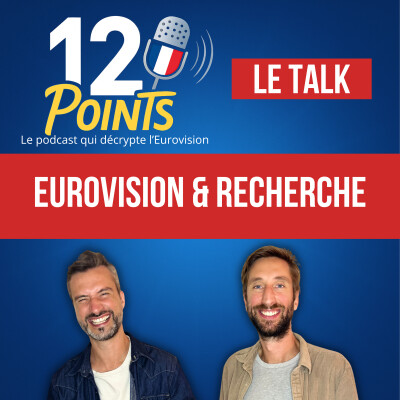
Hearing me well, even at the back? Okay. Okay, I will talk like I'm in the theater right now. So good evening, everyone, and welcome to 12.5, the podcast who decodes Eurovision. We are live tonight from the Bertoms, and we want to thank this... place to having us tonight. So thanks, Leberthome. Please have a drink, have full of drink, any drink you want tonight. This night is yours. Welcome, Quentin. I'm very pleased to have you tonight.
- Speaker #1
Welcome, Thomas.
- Speaker #0
And welcome everyone to be here with us tonight for this special episode about research and Eurovision Song Contest.
- Speaker #1
Yes, because tonight we are mixing brain and fun, Eurovision and... And flags And fags. Right,
- Speaker #0
right, right.
- Speaker #1
Eurovision and science, and we are going to talk about Eurovision studies.
- Speaker #0
Yes, but before talking about Eurovision studies, because we know that a lot of people are here in the place tonight, can we just make like a flag parade? Yes, we can do that So tonight we have people from obviously France
- Speaker #1
But also
- Speaker #0
Poland Yeah See, there is also Germany with us
- Speaker #1
And Australia
- Speaker #0
Denmark
- Speaker #1
España
- Speaker #0
Take a video, watch slow mo. Turkey.
- Speaker #1
Sweden, I guess.
- Speaker #0
Canada.
- Speaker #1
Israel.
- Speaker #0
And Ukraine.
- Speaker #1
And, and, and United States of America.
- Speaker #0
So, a big night to start tonight with everyone. Thank you very much for being here tonight with us. And thanks for the organizing committee of the Eurovision conference for their support tonight.
- Speaker #1
Thank you to them.
- Speaker #0
Thank you to them. Okay, we are ready to start. Are you all ready about that tonight?
- Speaker #1
So, Thomas, serious question. Are you good to go?
- Speaker #0
I'm good to go, Quentin.
- Speaker #1
Let's go. So, please welcome on stage Sébastien Apiotti. Sébastien Apiotti is a member of the organizing committee of the International Conference about... Eurovision Song Contest, Social Humanities Science. Oh, Humanities Social Science. I don't remember in what order. So thank you, Sébastien. First question, it's a more personal one. What is your link with Eurovision? I mean, not like a researcher, but as just a citizen.
- Speaker #2
Okay, so hello everyone. And thanks to Luspoin for having us. So obviously I'm a huge fan of fun with flags, capitals and flags. Okay, next. Second, and I think maybe I already told this last year, I'm also a fan of, you know, kitschy, bitchy, glittery, slutty. is your pop good quality music. So, yeah. That's why I'm here.
- Speaker #0
What a tour de force to succeed, to have it as a research program about Eurovision. Well done, well done, guys. We are so proud of you.
- Speaker #1
That's why now it's your personal link to Eurovision, but more on the research side. How do you, how is it possible to launch this kind of International conference in France because we know it's not it's a niche it's a niche project of research so how is it possible?
- Speaker #2
Oh okay so first especially for the audience here I hope you will appreciate our friendlish and first we organized this conference and it was born about a simple idea so basically we're academics for French university and we looked one day at each other and said okay well why not work or why work in Eurovision and I mean why not after all and get paid by your taxes so thank you and what's fun about it is people sometimes assume Hmm. Eurovision Song Contest is not a serious passion or a serious research topic. But maybe that was true 10 years ago for research, but not anymore. And fun fact, actually, Eurovision as a research topic in a university is no kind of cool and trendy and not niche anymore. So yeah, it's happening. It's not a niche anymore. And so, yes, I can say it out loud. Yes, Eurovision is a valid research subject, mostly because we decided it is. So, yeah, thank you to ourselves.
- Speaker #1
These international conferences don't come alone. I mean, last year you organized a French conference only from French researchers. So, what is next? Next year, what are you going to do?
- Speaker #2
So, for this year we organized... This is this part of the room. We organized like this... Eurovision for academics.
- Speaker #0
Ladies and gentlemen, brains are there
- Speaker #2
And sorry for this part of the room. And yeah, I can announce we had some more funds. So one or more of your taxes, thanks to European Commission, European Union. So yeah. And we had with five universities and colleagues from Germany, Denmark, Czech Republic and Poland, finance European project this year about Eurovision Song Contest called Escape. Yes. It sucks, but it was finance. So, yeah. And what's also important is, I think you might have noticed that Eurovision is a young lady, man, or in between. We don't care about gender tonight. And that's both a celebratory moment and a moment of doubt and crisis. Yeah, spoiler alert. And for me and for the academics, and I think even for you as a fan patronite, I think it's, I have this feeling that more than ever, it's worth talking about it without total freedom of speech. Hello, EBU. And no topics off limits. So let's talk about it.
- Speaker #1
Do you want to add something about the research or the link between last year and this year, between the French academic, the French conference and this year the international conference? So maybe the partners, if you want to name them and to thank them financially, except EU and European Commission.
- Speaker #2
Basically, we had a lot of institutional and... financial support and uh why because we sell it's international it's it's interdisciplinary and we sold as well the idea of being united by music science glitter flags facts food alcohol and i mean it works so yeah thank you europe um And yeah. Just have to look what I want. Yeah, I can add one more thing. I mean about public research, because I made a lot of jokes about you being taxpayers and actually funding us. And I think for us, it matters. And it matters, you know, to question some. objects, your reasons and context that matters, that important on a daily basis for you. We do it all. We do geopolitical analysis, solar analysis, disco ball analysis, glitter analysis, wind machine analysis, choreo analysis, slow-mo analysis.
- Speaker #0
This is for Thomas. I have a question, Sebastian, for you or even for you guys. You're searching, you're searching, you're searching. But what did you find?
- Speaker #2
Yeah, actually, we found one thing that you can watch Eurovision and call it work. And that's research, so thank you.
- Speaker #0
That's a good thing, that's a good thing. Thank you, Sebastian.
- Speaker #1
Merci, Sébastien.
- Speaker #0
So please all, you're passionate about Eurovision.
- Speaker #1
Merci.
- Speaker #0
Keep in mind that at some point and one day in your life, you can be paid. You can be paid working about Eurovision. Keep that in mind.
- Speaker #1
And...
- Speaker #0
Thank you. Thank you,
- Speaker #1
Sébastien. Sébastien. Sébastien. Sébastien. Behind this short time or short term... of the conference it's only three days in paris the organizing committee wanted to develop a long-term structure we can be called encore so we will talk about in a few minutes
- Speaker #0
encore okay we are now welcoming joanne boaccio and marie caroline neville
- Speaker #1
Welcome and thank you to be with us tonight. Just maybe a quick question about the meaning of ENCORE, because we love acronyms. So what is the meaning of ENCORE? Yes,
- Speaker #0
and just please, once again, for those who didn't understand well, ENCORE is a new network about research about Eurovision. And this is what we are talking right now. This new p***y. research network about the Eurovision. In the name. In the name. Okay, let's see.
- Speaker #3
So good night, everyone. And thank you, Douce Point, for receiving us. So encore, as you know, is a French word, which means, which could be translated in two ways in English, still and again. So still, why? Because the Eurovision Song Contest is still operating 70 years after its creation. And again, why Marie-Caroline?
- Speaker #4
Encore, meaning again, which expresses our objective to go beyond the surface of the ESC and as well to create a network as a nest for discussion.
- Speaker #3
And of course, everything is false in what we said. It was just a chat GPT research.
- Speaker #4
We have absolutely no competence.
- Speaker #1
So the exact meaning of ANCHOR is Eurovision Network for Collaborative Research and Exploration.
- Speaker #3
Exactly. So we explore.
- Speaker #1
Then the ANCHOR network is divided in two parts. Just explain to us. What is the main objective of the first part about researchers and the second part about social society or civil society? What is the main goal objective of this kind of network?
- Speaker #3
Well, the first objective of the network, Encore, indeed, is to bring together researchers from all over the world and from far, far, far away space as well. There were other initiatives in the past, so we are just in the continuity of these networks. The aim is to organize collaboration through borders and disciplines without any obstacles actually. So the hardest part was this afternoon because we spent four hours thinking about how we could organize and the main results we had is to find a strategy. to communicate more about what we do and which leads to the second part about the society.
- Speaker #4
Well, the second part is to engage dialogue with society and also to be able to reciprocate. So there's a lot of research with the fan, fan communities, fan media, but not only fan media. and people working around the Eurovision in this ecosystem. And they actually bring a lot to our research. So we really want to exchange with them what can we bring to them and what can they bring to us too. So, well, there's a lot of objectives, but one of them is to make our research more visible. to be able to circulate it. It's not very English at this time of the day, sorry. But no, yeah, we want to establish partnerships and there's a wide range of stakeholders who play an integral part in the ESC.
- Speaker #3
So just in the room, any fans want... Wanting to join us and to participate in our projects, welcome. So just a call for contributions, you would be welcome.
- Speaker #0
Okay, so my understanding is that this network encore is open to everyone who is involved in Eurovision Song Contest. Even the fans, starting from the fans, but also people working in the contest. And also people from the public network and public broadcaster. I'm I've heard that you had some contact and some reflection even with a head of delegations already. So can you talk to us about that? And I heard that you already have some touch points with Deutschland, right?
- Speaker #3
You want to talk about it?
- Speaker #4
Maybe it's too late to talk about it. Thank you. That's actually for Lisa and Sebastien who have the contact.
- Speaker #3
The situation is very unequal depending on the countries when we want to have contacts with the heads of delegations. The World Council...
- Speaker #1
They're probably in France.
- Speaker #3
Exactly. It's a no-go. Yeah.
- Speaker #0
Tell us. Okay, France. It's a no-go.
- Speaker #3
It's a response. So. In research, it's a fundamental... It's very important to have no expense at all. It's a sort of yes. Wow. Sorry. Just cut it to the high drop. But yes, Sébastien and Lisa and other team members, and I thank you again, the colleague who could keep us in touch with the German head of delegation. which is an opportunity to start to understand what is at stake with Eurovision for national broadcasters. What is at stake? Is it a way to spread over some imaginaries? Is the main question economic or political? So this is the main objectives of these contacts with the head of delegations.
- Speaker #1
Even with the music industry in Germany or in other countries, maybe like Universal or Warner or some big tech industries, big music industries, it's going to be a partnership with them to know better the stakes in the research.
- Speaker #0
We welcome someone who was present at the conference this afternoon. In the radio again. his opinion on the network. You can present yourself. Yes, yes. You can present yourself.
- Speaker #5
So, I'm Mathias, I'm a choreographer at Poitiers, I'm also a drag artist, and I create a show around the Eurovision. So, when I saw that there was a... I was forced to go to the Eurovision block, so I'm not a university student, I'm just a passionate Eurovision fan. And what was the question at the beginning?
- Speaker #0
What did you think of what you listened to this afternoon? It's very,
- Speaker #5
very sharp. The subjects are very sharp, so very interesting. If we really want to... Well, thinking about Eurovision, understanding Eurovision, beyond what we can already know from mainstream, we will say. But there are things like the tele-realization of Eurovision, things also a little more external, well, external, no, very correlated. The Intervision.
- Speaker #1
No,
- Speaker #5
let's not talk. But there you go. How, how, how? All that, organizing, articulating.
- Speaker #0
In any case, you found it exciting and you encourage everyone to sign up to this network again. Obviously. Thank you very much,
- Speaker #1
Mathias. Mathias, I had a question. As a choreographer or stage director, did you have any analysis perspectives this afternoon or participation perspectives potentially at workshops or future research projects, but from a point of view, in your skills, in your expertise, in choreography? Have you seen things that could potentially interest you?
- Speaker #5
It inevitably feeds my artist's reflection. I'm not a university student, so I'm not going to... What I do is more of a gateway, it's also to popularize Eurovision. I can't do what university students do in one hour. In two and a half days and well beyond. I forgot the question.
- Speaker #1
It was for you as a choreographer, in your expertise, just this afternoon, did it already show you perspectives of reflection, of analysis, necessarily choreographically, in your skills? Yes. Well, thank you very much. Ok,
- Speaker #0
so what's next, Quentin? What's next?
- Speaker #1
Next, we have with us Karen Flicker. Thank you so much to be with us tonight.
- Speaker #5
Thank you for inviting me.
- Speaker #1
It is with us Madame Revision in the research area.
- Speaker #6
Oh, I can't claim that title, but thank you.
- Speaker #1
Or Miss Revision, if you prefer. Or doctor, if you will. Or professor. So, Karen, thank you to be with us tonight. First, what is your personal link to Eurovision? And I mean, like an American, like you are, how did you discover Eurovision?
- Speaker #6
I am American, so I really didn't know what it was. But I was living in Ireland because that's where I did my PhD. And I went to a party. Some friends of mine had a Eurovision party. And I was, I mean, like in Ireland, you'd heard of it. But I was, and I knew it was something about songs. But then I was just amazed by how... how much people knew about it and how competitive it was to try and figure out who was going to win and everybody was joking with each other and like being bitchy and competing but as like as somebody who i'm a theater scholar usually so it's a bunch of performances and then i was like what do you mean there's a song a pop song contest of nations why did nobody tell me yet like it was like such an amazing idea and that was 2003 so that was when i first discovered it okay
- Speaker #1
And after 2003, how do you decide to do some research about Eurovision? I mean, in the academic way, in performative arts, in your research area?
- Speaker #6
It was just a series of like really good timing and good luck that I was finishing my PhD. I didn't have an academic job yet and I wasn't really quite ready. And I wanted to stay in Ireland. And so there was a lot of money in Ireland at the time, you might recall. Not anymore. And so there was a globalization study center was starting up at Trinity College Dublin, which is where I was studying. And some senior prof said to me, like, do you have an idea for a postdoc? And I said, do you think somebody could study Eurovision? And they said, actually, yes. And so I got into it. And then I've since discovered that there were other people. I mean, this was in the early days of the studies, but I've. colleagues here who have been in it that long. And so it was me kind of entering a field that was just forming and discovering a community, a growing community, now a generational community of scholars who look at the contest from all different kinds of dimensions.
- Speaker #1
So maybe you used to work with the Eurovision Research Network and at the beginning of this network, which will be a...
- Speaker #6
We kind of started a network in about 2010 because we had this idea that, you know, we're such an international bunch of people. Like, I moved from Ireland to Canada, which is where I'm now based. We have a colleague here who's the leading Eurovision academic from Australia. We have colleagues from all over the world who study it. So we need. some glue to bring us together. Of course, we publish together. A lot of us speak to the media, but we need a way for us to come together as scholars. So the idea of a network, I and a couple of friends tried to start it in 2010 and 2011, but it just didn't stick. But now I think the time is ripe because Eurovision is now kind of mainstream cool. And Eurovision studies is that even as the contest is at a point of crisis, as we know, the studies are like, nothing I've seen in my 20 years of being in the studies. Like it's really happening on so many levels. So it's really exciting. And I have so much gratitude for our French colleagues in picking up the idea of a network and running with it.
- Speaker #1
And it's working because Eurovision are going to Asia in November. So the brand is becoming worldwide and not just
- Speaker #6
European. This has been so long discussed, this idea of that. It was Martin Osterdahl's leadership. He really wanted to globalize the brand. I don't know if you all watched the one year of the American Song Contest.
- Speaker #0
We haven't watched it, but we have heard about it.
- Speaker #6
It was a disaster.
- Speaker #3
Awful.
- Speaker #6
They didn't get it. It didn't work.
- Speaker #0
Do you know why? Because we have a lot of hope about it, about the American Song Contest, to bring this game in a new way of a worldwide once. Maybe at some point he could offer a World Vision Song Contest with the winner of the American one, with the winner with the Asian one. This was the Vision. Even the Canada one was... Maybe next year.
- Speaker #6
Because the Prime Minister of Canada is very pro-Eurovision, we have discovered. The American one, I mean, we could all spend a lot of time talking about why it didn't work. But speaking as an American, like Kentucky versus Iowa? does not resonate in a way that France versus Spain does. There's 50 states, and the notion of there being song traditions, and of course there are rivalries, but it just was too big. It was a complete misfire. So all the best wishes to Eurovision Asia. Let's see if this one flies.
- Speaker #1
Yeah, maybe because, for example, in America, the identity of states is no... bigger than France, Spain or Italy. So it's not the same scale.
- Speaker #6
There was nothing at stake, in my view.
- Speaker #1
So you work actually in Canada. You talk about the prime minister, who is very willing to participate through revision. What is your analysis about this will from the prime minister of Canada?
- Speaker #6
Well, I did a deep dive into Mark Carney's tweets. When it was announced in the federal budget last November that the national broadcaster, the CBC, needed to look into joining the Eurovision contest, I can tell you that no one was more surprised than me as somebody in Canada who thinks about Eurovision. But it turns out, because Mark Carney was the governor of the Bank of England, the best we can figure out is he got into the contest there. And then we dug into his tweets, and he had an exchange with the prime minister of Australia. sending his condolences that gojo didn't qualify last year which i would call fan discourse yes like of course and so what we have to figure because the cbc was surprised like the national broadcaster was saying okay and then they're like google and we have the budget for it now i mean well because it was there was some money a lot it was a budget announcement but the question of what What would it? What would it mean to join? I mean, of course, this is my favorite question of the year because somebody now a Canadian resident, there's only 13 provinces and territories and some of them have very distinct musical identities. So I kind of get Newfoundland versus Quebec. Like I get that. Sorry, very insider discourse. But the point is, is that I think it might work in Canada, but what does it mean for a country to act from the other side of the world to join? What would that look like? There's so many conversations that need to happen. And we haven't heard a thing of it since, because I think you might have noticed that there are some things going on in the world. So I think it's fallen down the agenda.
- Speaker #1
We have seen it. You have a question? Go on. I have maybe a last question about the... The role, the play that you are doing right now in the Circus and the Other. It's a network about studies about circus and all over the world. So in your experience in this kind of network research, what can you bring in the Encore network from this afternoon?
- Speaker #6
First of all, thank you for doing research about my other research. In addition to being a theatre critic, I also work on contemporary circus. So I work on performance forms of many kinds. And like Eurovision studies, circus studies is a global and very dispersed field. And so a network, again, is a way to bring people together. It's a lot of work. Dear Sébastien, you know, it's a lot of work. But it's about finding a way to apply for funds. to have conferences, to do publications, to maybe have more frequent communications, like things like newsletters and a socials campaign. But for those people who work in a field who are isolated, for people who work in a field who are isolated to discover that there are other people who are as passionate about it, who, and we, we are a community. And so now I am so lucky to be part of a global circus community. And we're having a conference next January in India, which is super exciting. But to now be part of a Eurovision Studies community, I mean, we can do stuff by Zoom, but the capacity for us to come together in person and to get stuff done, like we got a lot of stuff done today, thinking about what the Encore Network was going to be. And so I know the work involved, but I also know the power of community and of... some form of organization.
- Speaker #0
Thank you, Karen.
- Speaker #1
Thank you, Karen. Thank you so much.
- Speaker #0
I would like to add something. For you to know that Quentin, just over there, just taught everything on his own research, thanks to your own work. So you were the first person to give him the trust that this subject in his life... Could be something.
- Speaker #6
How is that so?
- Speaker #0
I have to say that it's very proud to have you tonight. And we just want to thank you. Thank you so much.
- Speaker #1
Thank you so much.
- Speaker #0
Well, well, well, thank you, everyone. We could not talk about Eurovision and research all night long, but unfortunately, the time flies. So first, we have to thank the Bertrand for having us. We have to thank everyone who came on stage for this interview. Thank you, Sébastien. Thank you, Johan. Thank you, Marie-Caroline. Thank you, Karen. Thank you for all the partners. tonight we can't tell every name but thank you all the academic acronyms a lot of them and what about before leaving the news about our podcast content tonight yes
- Speaker #1
because the 26th of April for the French part of the EOD you can come to see us in the wait wait with Le Marcounet. Le Marcounet. Sorry. In a boat about the same, we will do a special episode about books and Eurovision.
- Speaker #0
Books and Eurovision. We will talk about the creative process of books around Eurovision. Fabien will be there talking about Queer... And his books. Queervision. Yes, LGBT story about the Eurovision Song Contest. We'll have also Florent Parmentier, which is a well-known teacher in Sciences Po, talking about geopolitics around Eurovision as well.
- Speaker #1
And Sébastien.
- Speaker #0
Sébastien, and you start to understand Eurovision. And of course, Eurovision, the little story of the Grand Concours of Yannick Bouffe. hours. We'll talk everything about that. Please take date in your agenda 26th of April. Well, I think that's all, Quentin. That's all. It's done?
- Speaker #1
It's a wrap.
- Speaker #0
We'll see you in a few days, everyone. Please follow us on Instagram. Follow us on all the social networks. give us five stars on 12.1 the podcast it will help us uh for sure for sure and uh the start just begin right now the the the night is just beginning right now with us please enjoy your night enjoy your drinks enjoy your stay in paris and see you soon in 10 minutes on 12.1 the podcast qui décrypte l'Eurovision