
Description
Livres audio - Du mythe Lovecraftien à l'univers de Poe
Hébergé par Ausha. Visitez ausha.co/politique-de-confidentialite pour plus d'informations.
Description
Livres audio - Du mythe Lovecraftien à l'univers de Poe
Hébergé par Ausha. Visitez ausha.co/politique-de-confidentialite pour plus d'informations.
212 episodes
Season 1
Courte histoire dans la veine de Lovecraft. Voici un lien vers un recueil de l’auteur : https://amzn.to/2RI4wHR Hébergé par Acast. Visitez acast.com/privacy (https://acast.com/privacy) pour plus d'informations. Hébergé par Ausha. Visitez ausha.co/fr/politique-de-confidentialite pour plus d'informations.
9min | Published on May 13, 2021

La Cité sans nom (The Nameless City) est une nouvelle de Howard Phillips Lovecraft, rédigée probablement de la mi-janvier 1921 à la fin du mois, puis publiée en novembre 1921 dans le fanzine The Wolverine Hébergé par Acast. Visitez acast.com/privacy (https://acast.com/privacy) pour plus d'informations. Hébergé par Ausha. Visitez ausha.co/fr/politique-de-confidentialite pour plus d'informations.
33min | Published on May 11, 2021
Le Monstre sur le seuil (The Thing on the Doorstep) est une nouvelle d'horreur fantastique de l'écrivain américain H. P. Lovecraft publiée pour la première fois en janvier 1937 dans Weird Tales. Hébergé par Acast. Visitez acast.com/privacy (https://acast.com/privacy) pour plus d'informations. Hébergé par Ausha. Visitez ausha.co/fr/politique-de-confidentialite pour plus d'informations.
1h13 | Published on May 11, 2021
Other episodes
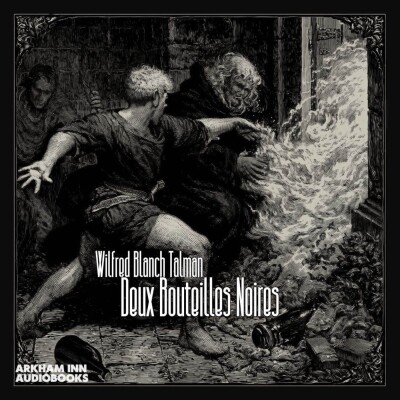
Wilfred Blanch Talman is an American Horror fiction writer best known for his collaboration with Howard Phillips Lovecraft (https://lovecraft.fandom.com/wiki/H._P._Lovecraft) on the short story, "Two Black Bottles (https://lovecraft.fandom.com/wiki/Two_Black_Bottles)", which was published in Weird Tales (https://lovecraft.fandom.com/wiki/Weird_Tales) in August 1927 and credited solely to Talman. He was a correspondent with Lovecraft and a late member of the Kalem Club (https://lovecraft.fandom.com/wiki/Kalem_Club). Late in life, he wrote the memoir The Normal Lovecraft (1973). Hébergé par Acast. Visitez acast.com/privacy (https://acast.com/privacy) pour plus d'informations. Hébergé par Ausha. Visitez ausha.co/fr/politique-de-confidentialite pour plus d'informations.
32min | Published on May 3, 2025
Hébergé par Acast. Visitez acast.com/privacy (https://acast.com/privacy) pour plus d'informations. Hébergé par Ausha. Visitez ausha.co/fr/politique-de-confidentialite pour plus d'informations.
35min | Published on April 26, 2025
Hébergé par Acast. Visitez acast.com/privacy (https://acast.com/privacy) pour plus d'informations. Hébergé par Ausha. Visitez ausha.co/fr/politique-de-confidentialite pour plus d'informations.
1h30 | Published on April 24, 2025
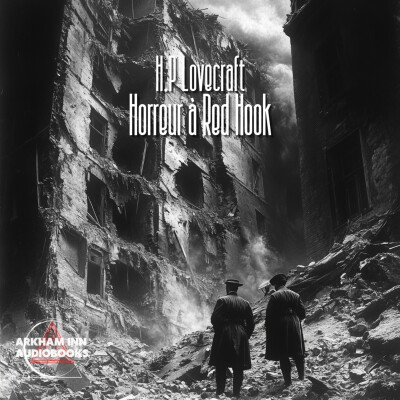
L'horreur de Red Hook est une nouvelle de l'écrivain américain H. P. Lovecraft (https://fr.wikipedia.org/wiki/H._P._Lovecraft), écrite du 1er au 2 août 1925. L'horreur de Red Hook est un texte de transition, situé entre le travail antérieur de l'auteur et le Mythe de Cthulhu. Bien que l'histoire dépeigne un culte sinistre, ce culte offre une menace "conventionnelle" liée à adoration de divinités occultes, plutôt qu'une menace cosmique comme dans ses travaux ultérieurs. Vivant dans la pauvreté dans le bidonville de Red Hook au moment de la rédaction de cette nouvelle, Lovecraft tentait à ce moment-là d'élargir ses horizons dans les magazines pulps (https://fr.wikipedia.org/wiki/Pulp_(magazine)). En ayant comme protagoniste un détective d'origine irlandaise de la police de New York inhabituellement proactif par rapport aux autres personnages de Lovecraft, il espérait une vente rapide à un magazine pulp spécialisé dans les histoires de détectives, ce qui aurait ouvert un nouveau marché autre que son magazine habituel Weird Tales (https://fr.wikipedia.org/wiki/Weird_Tales). Il n'a pas obtenu une telle vente et a dû se rabattre sur Weird Tales. L'horreur de Red Hook a donc été publié pour la première fois dans le numéro de janvier 1927 de Weird Tales. Hébergé par Acast. Visitez acast.com/privacy (https://acast.com/privacy) pour plus d'informations. Hébergé par Ausha. Visitez ausha.co/fr/politique-de-confidentialite pour plus d'informations.
53min | Published on April 12, 2025
Henry S. Whitehead was born in Elizabeth, New Jersey (https://en.wikipedia.org/wiki/Elizabeth,_New_Jersey), on March 5, 1882, and graduated from Harvard University (https://en.wikipedia.org/wiki/Harvard_University) in 1904 (in the same class as Franklin D. Roosevelt (https://en.wikipedia.org/wiki/Franklin_D._Roosevelt)).[3] (https://en.wikipedia.org/wiki/Henry_S._Whitehead#cite_note-sd-3) As a young man he led an active and worldly life in the first decade of the 20th century, playing football at Harvard University, editing a Reform democratic newspaper in Port Chester, New York (https://en.wikipedia.org/wiki/Port_Chester,_New_York), and serving as commissioner of athletics for the AAU (https://en.wikipedia.org/wiki/Amateur_Athletic_Union). He later attended Berkeley Divinity School (https://en.wikipedia.org/wiki/Berkeley_Divinity_School) in Middletown (https://en.wikipedia.org/wiki/Middletown,_Connecticut), Connecticut (https://en.wikipedia.org/wiki/Connecticut), and in 1912 he was ordained a deacon in the Episcopal Church (https://en.wikipedia.org/wiki/Episcopal_Church_in_the_United_States_of_America). During 1912-1913 he worked as a clergyman in Torrington, Connecticut (https://en.wikipedia.org/wiki/Torrington,_Connecticut). From 1913 to 1917 he served as rector in Christ's Church, Middletown, Connecticut (https://en.wikipedia.org/wiki/Middletown,_Connecticut).[2] (https://en.wikipedia.org/wiki/Henry_S._Whitehead#cite_note-tr-2) From 1918 to 1919 he was Pastor of the Children, Church of St. Mary the Virgin, New York City.[2] (https://en.wikipedia.org/wiki/Henry_S._Whitehead#cite_note-tr-2) He served as Archdeacon (https://en.wikipedia.org/wiki/Archdeacon) of the Virgin Islands (https://en.wikipedia.org/wiki/Virgin_Islands) from 1921 to 1929.[1] (https://en.wikipedia.org/wiki/Henry_S._Whitehead#cite_note-rw-1) While there, living on the island of St. Croix (https://en.wikipedia.org/wiki/Saint_Croix,_U.S._Virgin_Islands), Whitehead gathered the material he was to use in his tales of the supernatural.[2] (https://en.wikipedia.org/wiki/Henry_S._Whitehead#cite_note-tr-2) A correspondent and friend of H. P. Lovecraft (https://en.wikipedia.org/wiki/H._P._Lovecraft), Whitehead published stories from 1924 onward in Adventure (https://en.wikipedia.org/wiki/Adventure_(magazine)), Black Mask (https://en.wikipedia.org/wiki/Black_Mask_(magazine)), Strange Tales (https://en.wikipedia.org/wiki/Strange_Tales),[3] (https://en.wikipedia.org/wiki/Henry_S._Whitehead#cite_note-sd-3) and especially Weird Tales (https://en.wikipedia.org/wiki/Weird_Tales). In his introduction to the collection Jumbee, R. H. Barlow (https://en.wikipedia.org/wiki/R._H._Barlow) would later describe Whitehead as a member of "the serious Weird Tales school".[3] (https://en.wikipedia.org/wiki/Henry_S._Whitehead#cite_note-sd-3) Many of Whitehead's stories are set on the Virgin Islands and draw on the history and folklore of the region. Several of these stories are narrated by Gerald Canevin, a New Englander living on the islands and a fictional stand-in for Whitehead.[2] (https://en.wikipedia.org/wiki/Henry_S._Whitehead#cite_note-tr-2) Whitehead's supernatural fiction was partially modelled on the work of Edward Lucas White (https://en.wikipedia.org/wiki/Edward_Lucas_White) and William Hope Hodgson (https://en.wikipedia.org/wiki/William_Hope_Hodgson).[3] (https://en.wikipedia.org/wiki/Henry_S._Whitehead#cite_note-sd-3) Whitehead's "The Great Circle" (1932) is a lost-race tale with sword and sorcery (https://en.wikipedia.org/wiki/Sword_and_sorcery) elements.[3] (https://en.wikipedia.org/wiki/Henry_S._Whitehead#cite_note-sd-3) In later life, Whitehead lived in Dunedin, Florida, as rector of the Church of the Good Shepherd and a leader of a boys' group there. H. P. Lovecraft was a particular friend as well as a correspondent of Whitehead's, visiting him at his Dunedin home...
51min | Published on March 29, 2025

Le Cauchemar d'Innsmouth (titre original : The Shadow over Innsmouth) est un roman court (https://fr.wikipedia.org/wiki/Roman_court) d'horreur (https://fr.wikipedia.org/wiki/Horreur_(litt%C3%A9rature)) fantastique (https://fr.wikipedia.org/wiki/Fantastique)de l'écrivain (https://fr.wikipedia.org/wiki/%C3%89crivain) américain (https://fr.wikipedia.org/wiki/%C3%89tats-Unis) Howard Phillips Lovecraft (https://fr.wikipedia.org/wiki/Howard_Phillips_Lovecraft) publié en 1936 (https://fr.wikipedia.org/wiki/1936_en_litt%C3%A9rature). Le Cauchemar d'Innsmouth est achevée par Lovecraft en 1931 (https://fr.wikipedia.org/wiki/1931_en_litt%C3%A9rature). Son récit relate la volonté d'un jeune homme à percer à jour les mystères d'Innsmouth (https://fr.wikipedia.org/wiki/Innsmouth), un village côtier fictif du Massachusetts (https://fr.wikipedia.org/wiki/Massachusetts), qui abriterait des êtres hybrides — quelque chose entre le poisson et la grenouille — vouant un culte à Cthulhu (https://fr.wikipedia.org/wiki/Cthulhu) et à Dagon (https://fr.wikipedia.org/wiki/Dagon_(Mythe_de_Cthulhu)), un dieu philistin (https://fr.wikipedia.org/wiki/Philistins) intégré au Mythe de Cthulhu (https://fr.wikipedia.org/wiki/Mythe_de_Cthulhu). Dagon était déjà évoqué dans une courte nouvelle du même nom (https://fr.wikipedia.org/wiki/Dagon_(nouvelle)) parue en 1919 (https://fr.wikipedia.org/wiki/1919). Hébergé par Acast. Visitez acast.com/privacy (https://acast.com/privacy) pour plus d'informations. Hébergé par Ausha. Visitez ausha.co/fr/politique-de-confidentialite pour plus d'informations.
2h43 | Published on March 17, 2025
Reupload depuis Youtube Hébergé par Acast. Visitez acast.com/privacy (https://acast.com/privacy) pour plus d'informations. Hébergé par Ausha. Visitez ausha.co/fr/politique-de-confidentialite pour plus d'informations.
1h44 | Published on March 12, 2025
Description
Livres audio - Du mythe Lovecraftien à l'univers de Poe
Hébergé par Ausha. Visitez ausha.co/politique-de-confidentialite pour plus d'informations.
212 episodes
Season 1
Courte histoire dans la veine de Lovecraft. Voici un lien vers un recueil de l’auteur : https://amzn.to/2RI4wHR Hébergé par Acast. Visitez acast.com/privacy (https://acast.com/privacy) pour plus d'informations. Hébergé par Ausha. Visitez ausha.co/fr/politique-de-confidentialite pour plus d'informations.
9min | Published on May 13, 2021
La Cité sans nom (The Nameless City) est une nouvelle de Howard Phillips Lovecraft, rédigée probablement de la mi-janvier 1921 à la fin du mois, puis publiée en novembre 1921 dans le fanzine The Wolverine Hébergé par Acast. Visitez acast.com/privacy (https://acast.com/privacy) pour plus d'informations. Hébergé par Ausha. Visitez ausha.co/fr/politique-de-confidentialite pour plus d'informations.
33min | Published on May 11, 2021
Le Monstre sur le seuil (The Thing on the Doorstep) est une nouvelle d'horreur fantastique de l'écrivain américain H. P. Lovecraft publiée pour la première fois en janvier 1937 dans Weird Tales. Hébergé par Acast. Visitez acast.com/privacy (https://acast.com/privacy) pour plus d'informations. Hébergé par Ausha. Visitez ausha.co/fr/politique-de-confidentialite pour plus d'informations.
1h13 | Published on May 11, 2021
Other episodes
Wilfred Blanch Talman is an American Horror fiction writer best known for his collaboration with Howard Phillips Lovecraft (https://lovecraft.fandom.com/wiki/H._P._Lovecraft) on the short story, "Two Black Bottles (https://lovecraft.fandom.com/wiki/Two_Black_Bottles)", which was published in Weird Tales (https://lovecraft.fandom.com/wiki/Weird_Tales) in August 1927 and credited solely to Talman. He was a correspondent with Lovecraft and a late member of the Kalem Club (https://lovecraft.fandom.com/wiki/Kalem_Club). Late in life, he wrote the memoir The Normal Lovecraft (1973). Hébergé par Acast. Visitez acast.com/privacy (https://acast.com/privacy) pour plus d'informations. Hébergé par Ausha. Visitez ausha.co/fr/politique-de-confidentialite pour plus d'informations.
32min | Published on May 3, 2025
Hébergé par Acast. Visitez acast.com/privacy (https://acast.com/privacy) pour plus d'informations. Hébergé par Ausha. Visitez ausha.co/fr/politique-de-confidentialite pour plus d'informations.
35min | Published on April 26, 2025
Hébergé par Acast. Visitez acast.com/privacy (https://acast.com/privacy) pour plus d'informations. Hébergé par Ausha. Visitez ausha.co/fr/politique-de-confidentialite pour plus d'informations.
1h30 | Published on April 24, 2025
L'horreur de Red Hook est une nouvelle de l'écrivain américain H. P. Lovecraft (https://fr.wikipedia.org/wiki/H._P._Lovecraft), écrite du 1er au 2 août 1925. L'horreur de Red Hook est un texte de transition, situé entre le travail antérieur de l'auteur et le Mythe de Cthulhu. Bien que l'histoire dépeigne un culte sinistre, ce culte offre une menace "conventionnelle" liée à adoration de divinités occultes, plutôt qu'une menace cosmique comme dans ses travaux ultérieurs. Vivant dans la pauvreté dans le bidonville de Red Hook au moment de la rédaction de cette nouvelle, Lovecraft tentait à ce moment-là d'élargir ses horizons dans les magazines pulps (https://fr.wikipedia.org/wiki/Pulp_(magazine)). En ayant comme protagoniste un détective d'origine irlandaise de la police de New York inhabituellement proactif par rapport aux autres personnages de Lovecraft, il espérait une vente rapide à un magazine pulp spécialisé dans les histoires de détectives, ce qui aurait ouvert un nouveau marché autre que son magazine habituel Weird Tales (https://fr.wikipedia.org/wiki/Weird_Tales). Il n'a pas obtenu une telle vente et a dû se rabattre sur Weird Tales. L'horreur de Red Hook a donc été publié pour la première fois dans le numéro de janvier 1927 de Weird Tales. Hébergé par Acast. Visitez acast.com/privacy (https://acast.com/privacy) pour plus d'informations. Hébergé par Ausha. Visitez ausha.co/fr/politique-de-confidentialite pour plus d'informations.
53min | Published on April 12, 2025
Henry S. Whitehead was born in Elizabeth, New Jersey (https://en.wikipedia.org/wiki/Elizabeth,_New_Jersey), on March 5, 1882, and graduated from Harvard University (https://en.wikipedia.org/wiki/Harvard_University) in 1904 (in the same class as Franklin D. Roosevelt (https://en.wikipedia.org/wiki/Franklin_D._Roosevelt)).[3] (https://en.wikipedia.org/wiki/Henry_S._Whitehead#cite_note-sd-3) As a young man he led an active and worldly life in the first decade of the 20th century, playing football at Harvard University, editing a Reform democratic newspaper in Port Chester, New York (https://en.wikipedia.org/wiki/Port_Chester,_New_York), and serving as commissioner of athletics for the AAU (https://en.wikipedia.org/wiki/Amateur_Athletic_Union). He later attended Berkeley Divinity School (https://en.wikipedia.org/wiki/Berkeley_Divinity_School) in Middletown (https://en.wikipedia.org/wiki/Middletown,_Connecticut), Connecticut (https://en.wikipedia.org/wiki/Connecticut), and in 1912 he was ordained a deacon in the Episcopal Church (https://en.wikipedia.org/wiki/Episcopal_Church_in_the_United_States_of_America). During 1912-1913 he worked as a clergyman in Torrington, Connecticut (https://en.wikipedia.org/wiki/Torrington,_Connecticut). From 1913 to 1917 he served as rector in Christ's Church, Middletown, Connecticut (https://en.wikipedia.org/wiki/Middletown,_Connecticut).[2] (https://en.wikipedia.org/wiki/Henry_S._Whitehead#cite_note-tr-2) From 1918 to 1919 he was Pastor of the Children, Church of St. Mary the Virgin, New York City.[2] (https://en.wikipedia.org/wiki/Henry_S._Whitehead#cite_note-tr-2) He served as Archdeacon (https://en.wikipedia.org/wiki/Archdeacon) of the Virgin Islands (https://en.wikipedia.org/wiki/Virgin_Islands) from 1921 to 1929.[1] (https://en.wikipedia.org/wiki/Henry_S._Whitehead#cite_note-rw-1) While there, living on the island of St. Croix (https://en.wikipedia.org/wiki/Saint_Croix,_U.S._Virgin_Islands), Whitehead gathered the material he was to use in his tales of the supernatural.[2] (https://en.wikipedia.org/wiki/Henry_S._Whitehead#cite_note-tr-2) A correspondent and friend of H. P. Lovecraft (https://en.wikipedia.org/wiki/H._P._Lovecraft), Whitehead published stories from 1924 onward in Adventure (https://en.wikipedia.org/wiki/Adventure_(magazine)), Black Mask (https://en.wikipedia.org/wiki/Black_Mask_(magazine)), Strange Tales (https://en.wikipedia.org/wiki/Strange_Tales),[3] (https://en.wikipedia.org/wiki/Henry_S._Whitehead#cite_note-sd-3) and especially Weird Tales (https://en.wikipedia.org/wiki/Weird_Tales). In his introduction to the collection Jumbee, R. H. Barlow (https://en.wikipedia.org/wiki/R._H._Barlow) would later describe Whitehead as a member of "the serious Weird Tales school".[3] (https://en.wikipedia.org/wiki/Henry_S._Whitehead#cite_note-sd-3) Many of Whitehead's stories are set on the Virgin Islands and draw on the history and folklore of the region. Several of these stories are narrated by Gerald Canevin, a New Englander living on the islands and a fictional stand-in for Whitehead.[2] (https://en.wikipedia.org/wiki/Henry_S._Whitehead#cite_note-tr-2) Whitehead's supernatural fiction was partially modelled on the work of Edward Lucas White (https://en.wikipedia.org/wiki/Edward_Lucas_White) and William Hope Hodgson (https://en.wikipedia.org/wiki/William_Hope_Hodgson).[3] (https://en.wikipedia.org/wiki/Henry_S._Whitehead#cite_note-sd-3) Whitehead's "The Great Circle" (1932) is a lost-race tale with sword and sorcery (https://en.wikipedia.org/wiki/Sword_and_sorcery) elements.[3] (https://en.wikipedia.org/wiki/Henry_S._Whitehead#cite_note-sd-3) In later life, Whitehead lived in Dunedin, Florida, as rector of the Church of the Good Shepherd and a leader of a boys' group there. H. P. Lovecraft was a particular friend as well as a correspondent of Whitehead's, visiting him at his Dunedin home...
51min | Published on March 29, 2025
Le Cauchemar d'Innsmouth (titre original : The Shadow over Innsmouth) est un roman court (https://fr.wikipedia.org/wiki/Roman_court) d'horreur (https://fr.wikipedia.org/wiki/Horreur_(litt%C3%A9rature)) fantastique (https://fr.wikipedia.org/wiki/Fantastique)de l'écrivain (https://fr.wikipedia.org/wiki/%C3%89crivain) américain (https://fr.wikipedia.org/wiki/%C3%89tats-Unis) Howard Phillips Lovecraft (https://fr.wikipedia.org/wiki/Howard_Phillips_Lovecraft) publié en 1936 (https://fr.wikipedia.org/wiki/1936_en_litt%C3%A9rature). Le Cauchemar d'Innsmouth est achevée par Lovecraft en 1931 (https://fr.wikipedia.org/wiki/1931_en_litt%C3%A9rature). Son récit relate la volonté d'un jeune homme à percer à jour les mystères d'Innsmouth (https://fr.wikipedia.org/wiki/Innsmouth), un village côtier fictif du Massachusetts (https://fr.wikipedia.org/wiki/Massachusetts), qui abriterait des êtres hybrides — quelque chose entre le poisson et la grenouille — vouant un culte à Cthulhu (https://fr.wikipedia.org/wiki/Cthulhu) et à Dagon (https://fr.wikipedia.org/wiki/Dagon_(Mythe_de_Cthulhu)), un dieu philistin (https://fr.wikipedia.org/wiki/Philistins) intégré au Mythe de Cthulhu (https://fr.wikipedia.org/wiki/Mythe_de_Cthulhu). Dagon était déjà évoqué dans une courte nouvelle du même nom (https://fr.wikipedia.org/wiki/Dagon_(nouvelle)) parue en 1919 (https://fr.wikipedia.org/wiki/1919). Hébergé par Acast. Visitez acast.com/privacy (https://acast.com/privacy) pour plus d'informations. Hébergé par Ausha. Visitez ausha.co/fr/politique-de-confidentialite pour plus d'informations.
2h43 | Published on March 17, 2025
Reupload depuis Youtube Hébergé par Acast. Visitez acast.com/privacy (https://acast.com/privacy) pour plus d'informations. Hébergé par Ausha. Visitez ausha.co/fr/politique-de-confidentialite pour plus d'informations.
1h44 | Published on March 12, 2025