- Speaker #0
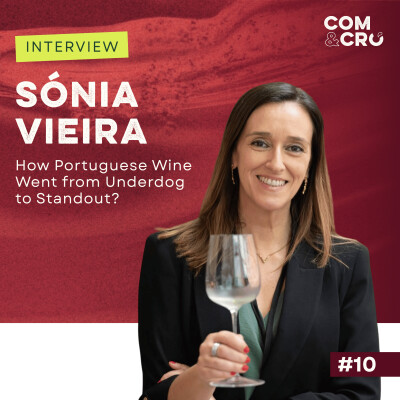
Hi everyone and welcome to Common Crew, the podcast where we unpack the branding, marketing and communication strategies shaping the future of wine, spirits and no and low. I'm Eva Crétois, founder of Common Crew, a bold branding and communications agency working with ambitious drinks brands across Europe. At Common Crew we help wineries, and Riggs Brands builds sharper positioning, stronger identities and offers that can truly compete in today's market. Our work is grounded in the field, shaped by real business challenges and built to drive clarity, relevance and growth. For this episode, I'm delighted to welcome Sonia Vieira to the podcast. And yes, today you are hearing me in English. This is a first for the podcast, this is the first for me, and hopefully the first of many. It marks the beginning of a more international chapter for the agency, even though we have already been working across Europe for more than three years now. But anyway, that's not the subject of today's episode. Now let's back to today's guest. If you don't know Sonia yet, here's the short version. Sonia is Marketing Director at Vini Portugal, the organization behind the Wines of Portugal brand. And for the past 18 years, she has worked with producers and appellations to bring the Thank you. richness and diversity of Portuguese wine to the world across its region, its native grape varieties and a story that goes far beyond port alone. What makes this conversation so interesting is that it is really about collective brand building at scale. We talk about what it takes to help an entire country sharpen its image, raise its value and build stronger international appeal. We also talk about the role of trade fairs such as Wayne Perry's and ProWine. and why they continue to be such strategic platforms for Portuguese wines. And of course, we talk about wine tourism too, because Vigneaux Portugal clearly understands something fundamental. If you want to be of desire internationally, you have to sell more than products. You have to make people want to experience the country, the culture, and the lifestyle that goes with it. This podcast is a conversation about consistency, ambition, and long-term brand building. So. Let's get into it. And here is my conversation with Sonia Vieira. So, Sonia, how are Portuguese wines perceived today?
- Speaker #1
I think that when we look to Portuguese wines today, what the perception from people is that is our identity, I would say. The perception of authenticity, you know, this is the... the perception of people that look to Portugal today. High quality wines, country with a lot of story, but with wines, with grapes that no one has in the world. I think this is how they look to us today.
- Speaker #0
Okay, and why being authentic is so important for Portuguese wines?
- Speaker #1
Okay, so we are a small country. We produce 5.9 million. hectolitres per year. This is what we are. We have more than 250 grape varieties. That is our treasure, this diversity that we have in Portugal. And this is how we are relevant now around the world, all the while, I would say, because we are a small country, so we need to position ourselves in this differentiation. We work for a value attribute and not for volume attribute.
- Speaker #0
Okay, okay. And if we go back to 10 or 15 years, how were Portuguese wines seen internationally? And back then, what was the biggest image problem, let's put it that way, Portugal had to overcome?
- Speaker #1
Well, I think that in the past, we didn't have image at all. Everyone knew port wine. That was very traditional. We were the first, the market and regulated region in the world. Douro Valley was the first one. So yes, people knew Portugal from port wine. But regarding still wines, the wines that we have at the table with food, we didn't have image at all. So I think that before the wine, the Portuguese wine sector created the Vini Portugal Association. before that. we didn't have that image. So I always give an example regarding US that is our our second main market regarding exports. In the beginning of the 90s, lots of consumers pointed to Iberica Peninsula, so they didn't know where was Portugal at all. So I think that only this hard work and consistent work that we have been doing allow us now, in our days, to have that image that we didn't have. We were like an empty piece of paper, I would say.
- Speaker #0
Okay, and today... Portugal is presented as a very distinctive premium wine country. And do you remember or do you know maybe what sparked that shift? And when did you realize it was time to raise the bar collectively?
- Speaker #1
Yes, I think that in the beginning, there was a few Portuguese producers well known. For example, Vispato from Bairrave is an example in another region. They started doing the work individually. The biggest producers nowadays, they started earlier to do the internationalization. But then they realized that we need to create an association specifically to promote Portugal abroad. So in 1996, they realized that they need to have their own. association in order to create conditions and to establish a strategy, an ambition, and start to communicate what Portugal does best. For you to have an idea, in our days, 48% that we produce, we export. 15 years ago was completely different. Our production was mainly consumption in Portugal. In our days, it's almost half. of the production that we export. So it's completely different.
- Speaker #0
So we talked about Vini Portugal, but I have a question about Wands of Portugal because Wands of Portugal was created in 2010. Why then? And why as a national umbrella brand?
- Speaker #1
Well, as I told you, in 1996, we created the association and we started doing the promotion work around the world in the markets that in that period... the association thought was strategic. And then we realized that we need to have a brand, an umbrella, as you said, in order to promote ourselves abroad. And in 2010, the Institute of Wine and Wine is a public institution, created the Brand Wines of Portugal. And they realized that the one that was prepared to be the brand manager of the brand needs to be Vini Portugal. So. From since then, in 2010, we are the brand manager of the brand Wines of Portugal. Why was in 2010? I think that when we start as Vini Portugal, Vini Portugal was a strong brand, I would say, because it was wine, Vini, wine, and Portugal was connected. But we need to have something that were more focused in the attributes of the country, not only the brand of the association. And we start. doing lots of activities that gave us knowledge in order to understand that we should have an umbrella brand with the objectives, with an ambition, with the guidelines for us to have a more focused work. And also that is a very important detail. In that period, we realized that we should present ourselves. with the same brands all over the world in order to work the awareness of the brand. That's why we created Wines of Portugal.
- Speaker #0
Okay, and do you remember what were your goals back then? What you wanted to achieve starting Wines of Portugal, like launching Wines of Portugal in 2010?
- Speaker #1
Okay, so the strategy, what we have been doing since 2010, we review our strategy each five years. But the focus was... very, very clear for everyone. The main objective was to promote Portugal as value. So our idea was to, our strategy is a value strategy and increase the perception of this value. If the idea was to work volumes and to be just another one playing market, I'm sure that Portugal in our days will not be in this position. So that was clear from the beginning. We need to work. in our identity, in our authenticity, and make sure that we create, transmit the perception of value that we have. So that has been our work since then.
- Speaker #0
But how do you boost the perceived value of a country that many consumers cannot even locate on a map? For example?
- Speaker #1
We have four main lines, I would say, regarding the strategy that we call the events, the education, the promotion and the communication. I think in the beginning for us, what was really, really relevant was the education. Teach the trade, where was Portugal? What was our attributes? Why we were different? That's why our signature of the brand was his wines of... Portugal, a world of difference. We need to explain that differentiation to the producers. In the beginning, for some producers, to keep the attention of the consumers, for example, some producers made some blends with Portuguese grape varieties and international varieties. And that was the key to keep the attention of the consumer. That was an example that some producers made in order to try to convince the... people that like to drink a Chardonnay try to try an incrusado from them so I think that that was the the strategy since the beginning education education indication and of course and bring the producers to the market I think that that was the first approach regarding Portugal was to explain our wines and our diversity yeah that's very clever
- Speaker #0
And that's precisely the question I was going to ask you, because difference sits at the heart of your platform. And how do you make that difference tangible and genuinely useful in the market today?
- Speaker #1
That is the key regarding Portugal, our differentiation. Let me give you an example. In our days, the sommeliers, when they want to surprise a consumer, a client, they choose Portugal exactly because of that. because we have different grapes. In such a small country as ours, we have different kinds of profiles because we have lots of different soils and microclimates that allow us to have, I would say, wine for each proposal of gastronomy around the world, I would say. That is our key. Otherwise, it would be difficult to compete in such a big market when we speak about wine. Okay, but that is difficult because you have plus then 250 grape varieties. What we do is to, in order to put all the regions under the umbrella, is to have two or three main grape varieties from each region and then start working on that. And then the other ones will follow the fruit.
- Speaker #0
We've just been talking about the diversity of Portuguese wines. But you have some very distinctive characteristics. You have history, you have traditions. And how have you incorporated these into this very brand platform and into your strategy? Because Portugal is not only about wines. I mean, a lot. But not only. You have so many things to share.
- Speaker #1
Yes, what we do regarding our communication is to... try to bring the wine and the heritage and the tradition and our history. So I think that this is a mix of what Portugal can offer. In our days, it's easier because the tourism increased a lot. So now the people have that experience about our way of living, the fact that we enjoy to be at the table with family, drinking, eating. So yes, in terms of communication, what we do is to... promote the wine, not only the wine, of course, but the way of living in Portugal and all this tradition, because wine makes part of our culture. We produce wine since 2000 years. So this is something that makes part of our tradition in our identity. That's why when you start to ask me how we are perceived today, I think it's that authenticity that people are looking for. And we see that when people visit us. to have that whole experience of not only to taste wines with grapes that no one has, but also that experience of the culture, the gastronomy, the way of living.
- Speaker #0
And how do you tell one national story while still respecting strong regional identities? Because as you said earlier, and with more than 250 indigenous grape varieties, how do you keep that richness? from becoming confusing for consumers.
- Speaker #1
I think the way that we approach the consumer needs to be easy, simple. and make sure that we don't share a lot of information. We do that, you can see that in our brochure, in the way that we explain our country, is to have links about grapes versus region. For example, if you want to speak about Bajada, the first grape that I like is Baga. And you can ask me, but there is only Baga in Bajada? No, there is lots of grapes, but this is one. One of the grapes that we highlight in order to explain the profile of that region. And we do that. So in our brochure, we do a highlight of 10 grape varieties, six reds and four whites, in order to introduce to the consumer, to the trade, to the one that wants to know more about Portugal, simple but very consistent information. That's how we explain Portugal. If you want to know more about... Portugal, of course, then we go further. So I think that is important to have the focus on key messages regarding who we are, how we are different, and the kind of profiles that we can provide to the market. This is the strategy. But the focus needs to be what makes us different, that is the web priorities. But of course, with a very simple and focused approach in order not to was the consumer.
- Speaker #0
Could you share, Vini, Portugal's key messages with the audience for us to really understand where you come from?
- Speaker #1
Yeah, it's the varieties, the more than 200 grape varieties, the human factor, the people that make the wines and the diversity of soils and climates. This is the three key messages that define the unique terroirs that Portugal can provide. This is how we start the message regarding Portugal and we start to detail Portugal. This is the diversity that came from our knowledge, because as our tradition of doing wine and the tradition of making blends, because this is something that came from the tradition of doing port wine. And so this human factor, the fact that we have plus that then 250 native grape varieties, this is very important to say that these varieties are only in Portugal.
- Speaker #0
Okay. And what shortcuts do you use to make the offer easier to understand for retailers, for consumers? Styles? Do you use families, occasion or something else?
- Speaker #1
Yes, I think that I can say that we use all of them. But one that I would like to highlight is the fact that we can have so many profiles in the versatility of the Portuguese wines. When we look to other countries, like, for example, Italy, you have the... pasta when you look to spain you have the tapas when we look to portugal we don't have as many restaurants as we would like around the world so i like what we do best is to match our wines with the with the local food so usually i say that i i believe that you can have one portuguese wines for each each dish that you have in your in our country because of that explains that the versatility of of our countries because we can have wines that have Atlantic influence, we have wines that have continental influence, that makes the difference. So that's what we use, the capability of doing different wines in our country. This increased the experience of enjoying food and good moments. So yes, our highlight is the consumption moment. and this versatility that we highlight regarding Portugal.
- Speaker #0
France and Portugal are quite similar. That is funny. Your strategy, as you told us, brings together events, training, PR, media and digital. What holds it all together today besides the 250 grape varieties?
- Speaker #1
Well, as I told you, education is essential. So that is something that is in our plan all over the year. and we focus a lot in that part.
- Speaker #0
Could you take us back on how you implemented this education strategy?
- Speaker #1
Yes, that is very important. Since the beginning, the education is the key. It's like the seed that you have to plant and you will collect the efforts later.
- Speaker #0
Nice metaphor, yes.
- Speaker #1
For us, it was fundamental. I worked in Vinny Portugal since 2001, 18 years of promotion. So I know why I'm speaking. People didn't know nothing about Portugal or they didn't recognize this authenticity, this identity. So the education is fundamental and education in both sides, the side of the trade and inside of consumer. So that is something that we have consistently in the 15 markets that we work with regarding the strategy that we have until 2030. But of course, the part of the plan that have a big weight is the events. we need to bring. the producers to the market. That is fundamental. in order for the trade and the consumer to know who is the producer behind the label. In our days, you don't sell wine. In our case, you sell a story, you sell a way of living. The events are the more important activities, market activities that we do in our days. Of course, we need to complement with the promotion events and communication, of course. And the main goal is to maintain a consistent approach all over the year in the market that we are target. You cannot go there once and then disappear. No, you need to have communication and a digital approach. The big moment of the year is when we go to the events, to the fairs, when the producers meet the consumer, meet the trade. That is fundamental in our days. And the producers are very, very conscious of that. They know that. when they choose an importer, they need to go to the market, work with them in order to make sure that they share the story of their country and the product to the sellers, to the staff of the importer is really important in our business. Yeah,
- Speaker #0
for sure. And it's becoming more and more important. Have you had to adjust your strategy in light of the global decline in wine consumption? And if so, what have you done to minimize the impact? on Portuguese wines?
- Speaker #1
Well, of course, we did that in COVID. It was the first, I think, the first twist of the wine business. And of course, this geopolitical situation that we are living, we need to adapt. Our producers are very resilient. That is the word that I use because since COVID, they are more prepared to react when these geopolitical things happen or consumption is decreasing. What we do is to diversify markets in order to go to other markets that are more able to grow regarding consumption. For example, we are the main consumer per capita. We are the main consumer per person per year because of that, because we receive more than 28 million tourists per year and this comes to the stats. But yes, we are the main with 61 liters per person per year. But for example, in Brazil, they only drink a little bit more than two liters per person. So we need to invest in that market where you have more chance to grow. What we have been doing is to search other markets to deal with this less consumption.
- Speaker #0
Okay, so export is important. And are there any other measures in play that you could share with us, for example, Without- giving away your strategy, of course.
- Speaker #1
What we do besides diversify the markets is to also have a response for the demands of the markets. Of course, the trends come and go, but we need also to answer to the demands of the market. In our days, we are increasing the number of white wines that in the past wasn't like that. Some producers are producing... wines with less alcohol in order to serve the demand of the market and also we used to usually we say what is the new Portugal explain that all the old traditions that we have now are fashionable so I think that what we need to maintain is that differentiation because in our days people are looking for experiences, looking for special things. can provide. When we went to a market, we're going with this message of differentiation. I think that allows us to be more competitive.
- Speaker #0
And wine tourism also is a huge pillar of your strategy, because wine tourism has become a real force for Portugal. And how did that build over time? And what part has Vini Portugal played in that?
- Speaker #1
It's true, wine tourism. I think that Portugal starts laid in that area. a very important part of the business. We sell a lot of bottles in the properties, in the wine tourism. One key of our objectives is, of course, promote also the wine tourism and we promote that on our communication. We highlight that when we go to the producers, to the market. And there is something that is really, really fundamental, especially because of that experience that consumers want to have. and when I speak in consumers, I speak also in reporters, in the buyers and in the journalists, so it's to bring people to Portugal. That is fundamental because when you come to the country that you are working with, it's like a click, you know, because all the things that we share when we go to the market, they can live that experience and that is really fundamental sometimes. That's why, for example, in terms of our investment, we invest a lot in travel from Bias to Portugal. And yes, of course, Portugal, our exports increase a lot because of the tourism. We are fashion now, so we receive a lot of tourism. So just for you to have an idea, the main market is the US, Brazil, UK and Germany. And France, France is the fifth.
- Speaker #0
31.6 million in 2024. It was incredible.
- Speaker #1
France is different because we have a huge community that lives in Portugal. And they are, I think that they are not tourists, of course, because they are living here, but they are good ambassadors of Portugal. So, yes, we sell a lot of bottles when the tourist goes to his home, as us, when we go to a country and we visit and we enjoy and we have a good experience. When we come home, we want to share that with our friends, with family. So, yes, we were the increase of the wine.
- Speaker #0
tourism and the tourism as a general to Portugal helps a lot the grow of the wines of Portugal category yeah for sure and could you could you go into more details about attracting people to Portugal because that is very interesting what steps have you implemented to achieve this I think that what
- Speaker #1
we what we did in Portugal was to prepare the producers to receive better people I think that the professionalization of the restaurants and hospitality. Yes, that was fundamental. And the producers realized that this is the key in order for you to come back again, I would say. So what we do as Vini Portugal is to share knowledge with producers and give them that recommendations in order for them to be better in terms of receiving. And regarding promotion, what we do is... We do some highlights, for example, this year in the fairs, we made, we always have a free tasting area. And we did the free tasting area. The highlight was a project with wine tourism. So in order for the trade, when they taste the wines, but they have the information, what kind of offer they had. So this is the kind of things that we do in order to help producers that have. wine tourism and also we have uh in portugal two wine tastings one in lisbon in lisboa and one in another one in porto and that is our visit card and when people can come and and we can explain a little bit about what we are regarding wine but we can share tips regarding where they should go and what kind of offer of wine tourism we have by the way you've
- Speaker #0
announced a huge presence at Wine Paris this year. Why do trade fairs still matter so much in 2026? And practically speaking, how do you stand out in a physical environment where visitors are overwhelmed and competition is so, so intense?
- Speaker #1
Well, the fairs is where the business happens, or at least this is something that producers want to be every year. And regarding the wine fairs, this year we increased 26% comparing to 2025. We had 969 square meters with 155 producers, so it was huge. But this is very relevant. The fair is where people connect together and the part of the year where you can have in the same space. for the buyers now for when i when speaking about the buyers is that is a is a place when you have all your your clients and an opportunity to review to review people to review strategies to see the new the new harvest so
- Speaker #0
I think in our business, because our business you need to taste, in order for you to buy wine you need to taste. So the fairs are still the main stage to do business, I would say. And it's very interesting because it's a very professional fair. No one goes to these kind of fairs without an agenda quite. organized. No. No one goes to the fair. No,
- Speaker #1
no, it's the worst thing to do.
- Speaker #0
Yes, and I think that in our sector, the wine sector is very organized. All the while, I think that is something that we see with our eyes when every year that we went to this kind of fair, particularly to Wine Paris, this professionalization, you know. So yes, this is fundamental and And, Just for you to have an idea, we invest in the wine pairings and provines that are the main fairs in Europe, 1.5 million per year. Because this is our second main investment. We invest in 15 markets. Our budget is around 8 million. The first market that we invest this year used to be the US, the main market regarding investment, with 1.35. million per year, but because of the geopolitical situation, this year we decreased a little bit. That's the reason that I already spoke about, be resilient and be reactive when things happen, have the flexibility to readapt the strategy. So this year the main market is Brazil with 1.45 million, but the fares is the main 1.5. So that's because producers want to be. And that is another detail that is fundamental, is the beginning of the year. So it's where everything is like the fair. Wine fair is the start of the business of the year. So that is very, very important for our business.
- Speaker #1
You're right. And did you... Did you talk about wine tourism, this Wine Paris?
- Speaker #0
Yes, in order to help the wine tourism, this year we have a free tasting zone in every fair because sometimes people want to understand first the profile of the wines and then go deeper with the producers and see things in detail. And this year we highlight the wine tourism exactly to help this good moment that we are living regarding the wine tourism.
- Speaker #1
Okay, and in White Paris, have you noticed an increase in visitor numbers this year?
- Speaker #0
Yes, yes, yes, we noticed, of course. That was a very successful fair and the producers were very happy. And now we have a good problem that we want to increase the area. But I think that, like us, it's a good problem to have. But like us, I think that lots of other wines are off. wants to increase as well because the fair was a success.
- Speaker #1
I wanted to go back to the main subject being wine tourism because when you look at the tourism figures 30.6 millions overnight visitors in 2024 including around 29 million non-residents and I wanted to know of course you talked about Brazil I wanted to know how do you turn that into a real export marketing asset?
- Speaker #0
It's the experience, I would say. 20 years ago or 15 years ago, when we went to a room in the US, for example, that now the main market that is visiting Portugal regarding wine tourism is from the US. When we asked people who have been in Portugal, we had like two, three people saying. Now, in our days, the first thing that we ask, have you been in Portugal? And almost the audience say, yes, I have been. So is the experience... I think that the experience to come to Portugal and the good experience that they have in the wine tourism is key for us to work in the markets and to stimulate people to come. And what we do and how we do it. In Brazil, we made a big event that targets 7,000 people in Rio de Janeiro and more 5,000 people in São Paulo. We... partnership with the tourism of Portugal in order to promote not only the wines but Portugal as a tourist destination. So that is the kind of things that we do. strategic partnerships in order to highlight the tourism. For example, in that event, we put the producers explaining a little bit, having some interviews, some we call taking a glass, in order for them to explain and to show and to share the experience for you to come to their property with videos, with interactive approaches. So that is the kind of...
- Speaker #1
things that we do around the world in order to promote the portugal as a destination okay seems uh seems fair and you know what um american or brazilian consumers like about portugal and it's wine besides for brazil like speaking the same language kind of yeah
- Speaker #0
yes yes that is that is different because we have a connection a historical and cultural connection that's of of course, that they are. very knowledgeable about Portugal and they have an interest and I think they are more interesting in the country because of that.
- Speaker #1
Okay and American consumers?
- Speaker #0
American consumers I think that the experience to come to Portugal is that the way of of living the weather the gastronomy the wine the landscape I think that that the American people like and what we are seeing as well. As regarding France, there are lots of American people that want to come to live in Portugal because of that. I think that Portugal is like... I travel for a long time now because of my job. And every time that I came home, I said, this is the country that I want to live forever. I think that Portugal has some attributes. It's a small country with good weather. It's safe. It's not... too expensive. So I think that this is the kind of attractiveness that people are looking for. And regarding the wine, I think that is always a discover when people come to Portugal and see that differentiation that I speak, that identity, the authenticity that they find when they go to a restaurant and they realize the different profiles that we can provide. In four words, I would say that wine tourism, pairing with the nature, gastronomy, culture, and health and well-being, you know, that is what Portugal, and you say, oh yeah, but another country can provide it, but that's what they share with us, that they are looking for.
- Speaker #1
And just hearing you speaking like this about Portugal makes me want to go there, makes me want to go to visit, definitely, I will. If another country or region wanted to learn something from Portugal, what are the three things they would absolutely need to get right and what is the one mistake they should avoid?
- Speaker #0
I think that consistency regarding the promotion work, be consistent in the approach to the markets, have a good strategy, clear objectives with an ambition. quantitative ambition to achieve and consistency regarding the kind of work that you do in that markets. I think that is the key when I look to Portugal and when I see our evolution is the working consistently in the markets that you previously established as the strategic for you to to increase. So I think that this is the key and sometimes it's difficult because When you have difficult moments, you may get a little bit away of this path to go a little bit to the left or to the right. I think that the key is to maintain what you believe that is your strategy as a country. And that Portugal has been doing is difficult. The competition is huge. you
- Speaker #1
only with this way of work we will be able to see our numbers increase all over the years i would say yeah i completely understand what you're saying about the temptation because we are a communication and branding agency and i can assure you that i have had plenty of clients who are tempted to stray from the strategy go left go right because it takes time and it can be tough at times to see competitors being a bit stronger. But once again, you're not the competition and you shouldn't focus only on your competitors. So that is a very good memo for us. We're coming at the end of this interview and I have like one, two more questions for you, Sonia. If you had 10% more budget tomorrow, where would you put it first and why?
- Speaker #0
I think that we have the strategy of the Portuguese wines is to concentrate investments in less markets. And this is what we have been doing. But at the same time, we need to be the one that's go on the front, you know, the train that's going to front to such other opportunities. So I think if I have more 10%, I would invest in such new markets that are not so aware that. This kind of work that we have been doing in the major markets or in the markets that we decide that will be strategic for us until now needs to be done. Some new markets in Asia that we are not working with. So I think that is important to take a look to other markets in order to work this decreasing of consumption. So I think that I would do that, try to do some approaches, some specific. approach is to understand some new markets that we are not working yet. Usually the first approach that we do with new markets is to bring buyers to Portugal and then in the second year go there with the tasting. This is very important that the first approach needs to be with the producers on the field with the producers. I think this is mandatory in order for you to have some quite vision of the market.
- Speaker #1
Yeah okay.
- Speaker #0
Bring you the producers with you.
- Speaker #1
Seems quite obvious, but once again, it's money, it's a lot of logistics, so it might not be easy. But you're right, it's definitely one of the best strategies to implement. I also have another question for you, Sonia. Not that there is anyone else in the interview, but yes, it's only for you. Looking back over the 18 years you have spent promoting Portuguese wine, what... are you most proud of in the work that has been done in recent years? About the progress made in recent years?
- Speaker #0
Oh, that is a very difficult question. For me, regarding Portugal, it's the perception of value that we are getting every year that we are working. That perception that Portugal has different wines and that you are... available to spend a little more money to buy Portugal. In the past, sometimes Portugal was connected to good value for money, but good value for money in cheap wines. And in our days, it's not that. We still have a good value for money in the country, but in the different price ranges, you know. You can buy a Mercedes that has a good relation between money and quality. And I think that... Portugal as that in our days perception of value is real and we are in the map of that differentiation when I speak with the sommeliers they always say to me yes when I want to surprise a client I choose Portugal because I have so many grapes that I can explore and that is our treasure and it was difficult to explain that diversity but now it's like Like... In our days, comparing 20 years ago, 18 years ago, it's easier to share that differentiation and people want to connect to that differentiation. Especially in the major markets, we have a theme of a masterclass that we call Eden Gems. And what we do there is to pick Portuguese native grape varieties that we have only a few hectares planted. in order to surprise people. And this is a big success when we speak about sommeliers of high-level restaurants, because they want to have that to surprise their clients. So I think that is the... When I look to the work that Wines of Portugal have made, that differentiation, that recognition of the wine world regarding Portugal is really amazing.
- Speaker #1
You're right. Today, you're targeting trendsetters. You know how to attract them with your hidden gems. So such confidential wines. So it's a very interesting strategy. Sonia, I think that is probably a good place to stop. Thank you so much for your time. It has been a real pleasure speaking with you. And you know what? Because I already told you during the interview, but wines of Portugal. and Portugal, generally speaking, is a real source of inspiration. And I think that this episode is going to help us French people to navigate in these troubled times. So thank you so, so much for your time.
- Speaker #0
Thank you. I hope it was useful. I tried to answer all your questions. Hope in the end that you can have good content to share.
- Speaker #1
And that's a wrap on this episode of Common Crew. What I think this conversation shows really well is that strong brands are built through consistency, not through noise, not through shortcuts, and not by trying to be everything at once. And that is very much what Vinnie Portugal has understood. They are not just promoting wines. They are building curiosity, credibility, and a wider experience around Portugal itself. And that, in the end, is what makes a brand more memorable and more valuable. It is also something I personally believe good branding is about clarity, distinctiveness, and making sure your brand has a real place in the market. So if this episode has made you think about your own positioning, your brand image, or the way your offer comes across, that is exactly the kind of work we do at Common Crew. You'll find all the links in the description. And if you enjoyed this episode, do leave a rating on Spotify or Apple Podcast. it really helps. You can also subscribe so you do not miss the next one. And if there is a question, a topic or a brand issue you'd like me to unpack in a future episode, feel free to get in touch with me directly on LinkedIn or Instagram. See you soon.

![Aperol Spritz : Comment il est devenu le réflexe apéro d’une génération ? [DÉCRYPTAGE] cover](https://image.ausha.co/jSgzMJtldd0gHcO9Vp5fVVBMhBZnyC6f4pprqdN9_400x400.jpeg)
![Saké : comment il a hacké l'export, entre savoir-faire et modernité [DÉCRYPTAGE] cover](https://image.ausha.co/khOOFmjXfVOKaW3QOGKKRVgzoGYQthIIZqVvZZtP_400x400.jpeg)