Description
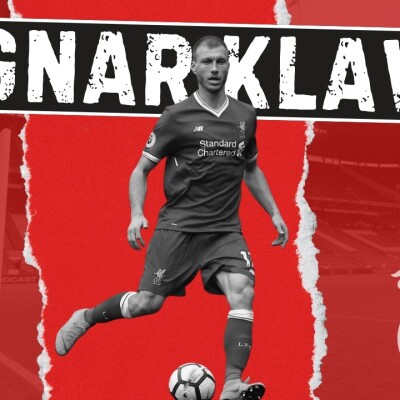
This podcast is hosted by Craig Campbell and has Ragnar Klaven on this episode talking about his career, Liverpool and what he is up to these days
Hosted on Ausha. See ausha.co/privacy-policy for more information.
Description
This podcast is hosted by Craig Campbell and has Ragnar Klaven on this episode talking about his career, Liverpool and what he is up to these days
Hosted on Ausha. See ausha.co/privacy-policy for more information.
Transcription
Huxley, Chamberlain, Lovren's late, it's in It's Liverpool's game on New Year's Day and Radnar Klavan turns out to be a massive hero
Welcome to today's podcast and we're joined by Radnar Klavan and he's joining me and Gregory for today's podcast. Radnar, it is an absolute pleasure to have you on the podcast.
Thank you, it's my pleasure as well.
Can I just ask where you are right now? You're obviously sitting in a professional office there with this nice logo in the background. Where are you?
Yes, like in every footballer's career, there's got to be ends and you need to start something new. So I came back to Estonia. So this is where I'm at my club office. So I'm president of a football club here in Estonia. So this is where I'm at. Everyday doings are happening in this room and others in this facility.
And what's it like, just out of curiosity, running a football club? That's always been my dream job, by the way. I've never played football, but I would love to run a football club. How is that different from a playing career?
In one sense... it's not a big difference uh you you have a team you need to create team chemistry team spirit leading the team is the same happening on the field but running the daily business of football club of course it's totally different in that sense i needed to learn many new things after my football career so Also the management side of doing things, how to get the team working. There's also some level of bureaucracy involved there as well, all those things. But it was a good challenge for me. I think in every player's career, when the career ends, if you've done good enough work, then some of them will have lifelong vacation. I didn't want that journey for myself, so I always wanted to come back to Estonia and give back to the youth side of Estonian young players. Hopefully they will have a bigger or higher career than I had. This has always been my dream and also one of the dreams, because Estonia as a national team haven't made it to the Euros, so this is also one of my big dreams to help them develop those youth. players that they are in the future be able to play in the euros so this is my kind of national estonianism if you would like to call it that way giving back to the estonia as a country and where i grew up but running daily business in estonia as a as a club president i think it's totally different than you would uh be the owner of the president in Premier League or in Bundesliga or in Serie A. So this is smaller markets, smaller problems. But I think at the end of the day, we all want to develop the players, give them the best possible pathway to the highest level of football. So this doesn't change even if the market is smaller.
How did your pathway start out there? what's the youth set up like? What was it like as a kid coming through and trying to make your way in Estonia? Just curious to know what that looks like compared to obviously over here in the UK, they've got academies and everything else. Is it a similar structure out there?
I think we're moving towards it. I think my youth was a little bit different than it is nowadays. I think it also needs to do a little bit with Estonian history as a country. So after 1991, we became free of the Soviet Union. So I'm born in 1985, old guy, I know. But then all the walls of the Soviet Union collapsed. So all the things opened up for us also in Europe, in the Western world. So then there were some possibilities of Estonian players also to start. dreaming about a career outside of Estonia or outside of the Soviet Union. And for me, there's always been, I think it's the same also, like smaller nations, there's always this glass ceiling on top of us that we put on ourselves. And for me, the biggest, like... like mentor or hero was also Mark Puhm who played for Tabe County Sunderland so he was the first Estonian Estonian to make it outside and then I was also like okay you can have this career and I could dream bigger and he was the kind of the the guy who who made it possible the for the younger generations also to dream a little bit bigger I think that this was also really important for me. I played together with many players from Iceland. And for them, they had a similar effect when Eidur Gudjonsson made his career. So for them, when we played together, they said the same thing. Like before, we couldn't dream that somebody from Iceland could make it so far in football. And after Eidur Gudjonsson did it, they could also dream a little bit bigger. So that's why Mark Pum was also really important for me. But... When I was growing up and going through the youth system, I don't think we had like a even close level of the academies that are in Europe. We just, I had a really good coach, youth coach, who took us through many, many years. Then I made it to the A national team of Estonia when I was 17. And after that, things moved quickly. So I went to Norway, after Norway I went to Holland, Holland to Bundesliga, Bundesliga, Liverpool and so on. So I got out quite early, I just turned 18 and then I moved abroad. So this is basically also for Estonia. We don't have this kind of environment to offer for the youth players, so they need to really early go to the senior teams. You see the guys, our young players, 16, 17, playing in the highest league already. But we need to understand also when they turn 19 or 20, nobody's looking at them in Europe. Nobody's waiting for them. There's not going to be a 26-year-old Estonian guy who's still in the Estonian league going to go to Bundesliga or Eredivisie. So we need to push them also really early to the men's football. Or the other option is you go to academy somewhere when you're 16, 17, 18.
I think it's really interesting because I met Ragnar two years ago in Riga. We had a conversation about this, about the league, the Baltics, the level, the pathway. And I think what you're seeing right now is really important. I believe about the talent. I think there is a lot of talent in your country, in the Baltics. I really like the player profile. and the attitude because they are working really, really hard. And I think it's really important to see you on board over there because I like your vision and the way you are talking. I think it's really, really good. So do you think in the next few years we can see more and more players from the Baltic football playing in the UK, for example?
I hope so. And I think also if you talk about the Baltic... countries, politics states in that sense. I think Latvia, Gregory, you also work in Erefs, one of the biggest, if not the biggest club in Latvia. So you have two Erefs and Eftariga. They are also doing great steps compared to what it was 10 or 15 years ago. Same is happening in Lithuania, same little bit in Estonia. But I think we as a political country, we need to also come together and at least start the discussion about Baltic League. So for us, the big challenge is to be, I don't know, fancy enough that the fans come to the stadium. We have this problem. So we don't also have like revenue streams of TV broadcasting, not from the fans, but doing it together, that you can create a league when you play this kind of turbies, Riga against Tallinn. It's interesting. You can see also they do it in basketball and it is working. So at the moment, there's Latvian-Estonian Basketball League that is really attractive. They don't have Lithuania there because, okay, Lithuanian basketball is really big. But in football, we can combine those three countries and we can play those top games together. So if you're looking also Estonian or Latvian or Lithuanian clubs who play in the summer, this is it. Champions League playoffs or Europa League or Conference League. They are doing better, but you can see that they are missing this environment. Even when they have more games against better opponents, the better you get. It's always about the environment. So if you every weekend play against the top opponent, you get better yourself as well. If you only play four games in a year, that's not good enough.
I think it would be a beautiful project.
Yeah, for sure. I'm curious to know, obviously when you jumped away from Estonia at the early age and went to Norway, what was that like as a footballer? Was that a massive step up from what you were used to? Did you have to improve physically or did you easily fit in there?
So yeah, my interesting... story is going to Norway I think it's now time flies 22 years ago and looking what kind of football Norway played 22 years ago and what we also saw now in the World Cup it's a little bit different so during that time all those players were like really strong physically strong but now if you look at Norway's national team how good they played they're still kind of physically capable you know I'm not even talking about Elling Holland who is uh who is a machine but also the other players they still have the physicality the height but they are more technical so during those 22 years when I was there and now they made a big change of how they are producing those players so this is like really interesting but for me to go to Norway of course it was this game was quite physical so I needed to improve in that area but I went to you Quite good club where they also developed that side. And I had the luck of this one year playing together, for example, two players. Stefan Iversen was also well known in the UK and Ronny Jonsson. With Ronny Jonsson, I was just six months. But being alongside also with those type of players and what they can teach you or coach you. So this was also really valuable. and there was already... little connection with the English Premier League. But this one year was really for me growing up. You are still a kid when you are 17 and just turned 18 and I needed to grow up really fast. I didn't have the time to somebody telling you, yeah, you have two years to adapt here and then grow up and get your shit together. Do you adapt or then somebody else comes and do it? You know, it's the football world. It's nice. You know, we always see this good part. But the other part is also how many people actually want to become professional football players. I think every time or every moment, there's like 250, 300 million people who want to become professional football players who are training for four times a week, you know. age groups. So the competition to become a professional footballer, I think if you put it in the numbers, it's just crazy. So you need to mature also really fast and understand what are your possibilities. And if you don't perform, then somebody else will come and take your place.
It's a cutthroat world. Obviously from Norway, you got your way over to the Netherlands. How did that come about? Was it luck or was there a coach that you followed over there? I'm just curious how you went from Norway straight to the Netherlands.
So before I went to Norway, I was like 17. I had a lot of test periods because the world was totally different than it is nowadays. Nowadays, top football is all about the data. You have your GPS, all the scouting is done on this Excel or on the computer. In the old days, yes, there's an interesting player, you need to travel there. Because I was testing also in Amsterdam Ajax, Feyenoord, and I was also in Real Sociedad. And then when I was in Holland... So one of the coaches went to work in a smaller club. So he knew me during that period when I was testing there. And it was interesting. And I went another test period there. So that's how it happened. But because I was already one year in Norway, so that gave them kind of certainty that I have this quality. And I also played already for the A national team in Estonia. So that's how it got. But my seven years. In Holland, if I'm looking back now, my career is finished, so I can look back and talk about many things. understand what kind of influence different people had in your career you know when you're still a player you just do your thing and don't think about what happened in the before so for me the first coach was Peter Boss who has been also quite good coach in Feyenoord in Ajax and he was also I think was it in Olympique Lyon or Marseille?
Lyon correct yeah.
Yeah so he was my first coach he said like Ragnar you're my guy even if you make a mistake, you will play. So this kind of confidence he gave, he was a really good coach. After that, when I went to AZ ALKMAR, my first coach was Louis van Gaal, Ronald Koeman, Tika Advokat. So those kind of coaches when you're so young. And it's crazy to think that I was so fortunate to be under so many good managers during my career.
And you could have played maybe for Rangers, eh? Yeah. Tika Advokat.
Yeah. Was it true that Van Gaal changed position for you from midfield to centre-half?
So one part that I was, when I was younger, I was the perfect player for every coach. You know, he can put me on as a left-back, as a number six. I don't say that I played good any of those positions, but they had to... They had the possibility to move me around and I could play on a decent level. So I played a lot of different positions. And most of the time I played as a left back. So when I was 23 and then Van Gaal. So we had this last meeting of will I sign to Aziz Alkmaar or not. So I had this one-on-one meeting with Louis Van Gaal. And he's sitting there, you know, he's like a... big boss type of manager and he's looking at me you're a center back I was like okay if you want me to be I can be no problem so after that so I started playing only as a center back so then my career made a lot of progress and I was kind of I found my position so to say so yeah I owe it to Louis van Gaal as well that my career after was 23 you took big steps forward.
What was he like as a guy? He always comes across as a scary, old-school guy. Was he actually like that in person?
Yeah, I think it's always a difference also where and which club the big talks are going to be. So Azit Alkmaar, also in Dutch standards, It's not... the biggest clubs. So when he came there, so he was, I wouldn't say that he was bigger than the club, but he was a big name for that level of a club. So he was really the boss there. So you could feel it also. So he was making many, many decisions where normally in the bigger clubs, the manager doesn't take. So in that sense, he was, yes, he was a big guy there and a mate. a lot of decisions. But you have to say, we became champion of Holland under him. And after that, he left to Bayern Munich, where his journey was not so successful, maybe.
But what was Koeman an advocate like? Were they completely different characters? Or how did you get on with those guys?
With Ronald Koeman, he was a good coach, you But in Alkmaar, his journey was, I would have to say, six months. And I truly believe that Ronan Koeman is a perfect national team coach rather than a club coach. So in the national team, he has... Because for me, at least, they're two separate things. to be a national team coach or club coach. So a national team coach gets the squad, whatever the situation you have. They train almost, I don't know, the national team break is altogether maybe 30 days in a year. So other 335 days they are with their home club. So all the developments, all the good things or bad things come from the club. We train every day. As a national team coach, you get them together, you motivate them, you do technically good work, and then there's the team spirit that carries you and the quality that you get into the squad. So he was really good in that. Maybe he wasn't so good of a club coach in that sense of developing players because we still had a young squad and maybe this was the difference for me with Ronald Koeman. I don't say he's a bad club coach, but he's a better national team coach. And Dick Watergat came in after Ronald Koeman, So. He was really strict. I think his nickname is also the General. Yes. So we were having a bad spell in the season, so they parted ways with Ron Koeman, so we were not doing good in the league. So he was the one who had to save the season. So he came in really strict and he got the job done.
You never played under Dijk, did you?
No, I came after Alec McLeish.
That's right, Alec McLeish. I was just curious if Dick was living up to his little general. I heard.
I heard his nickname.
He's a madman. But obviously after Holland, you went to Germany. Yes. Was that your own choice to go there or was there things going on at the club, maybe not being as successful? What led to the move to Germany?
so the I think that part, so after Di Cato got left, there was another coach as well, Gert-Jan Verbeek. And this is also, I think, looking back things, of course, we can always be those guys who say big words and all the bad things are good for something, blah, But looking back at my career, I had a really low point. I didn't play in Holland. I wasn't the starter under a new coach. And it was almost a whole season. And I kind of always had the feeling that if you don't play in Holland, you don't get a chance to go to the Bundesliga or other top five leagues. But for me, it was always like, yeah, it's a bad situation, but I need to always keep on training better, always be there if I even get those 10-15 minutes of playing time. And I was able to do that one year. the route. reward after that was that I got the chance to go to Bundesliga and this was also that they kind of saw my mentality that they were sure that I have the playing qualities maybe not at the moment in AZ Alkmaar but he's there you know and he's always training hard and all those things and that kind of earned me the chance to go to Bundesliga of course it wasn't that they took me in as a first XI starter, but after a couple of months, I fought my way into the first XI and I had amazing four years there, what was the kind of the high point of earning a contract in Liverpool. So this is the story of how I ended up in Bundesliga from a really low moment in my career where I didn't play a lot. the club took a chance with me and I was always there that even if the situation was bad that I was still giving my all even for those 10-15 minutes when I got the blank time and still training and being ready for the team.
Yeah it must be hard when you're left out not playing every week and you're just like but obviously you went to Germany what was the differences? Or was there any major difference from playing in the Netherlands over to Germany? What's the standards like in terms of, is it more physical in Germany or better technically? Was there anything different from the Netherlands?
Yeah, I think, I don't say all there. top clubs in the league of course we always talk about the top five and of course you have like Portuguese league, Dutch league and all of those leagues close by there's not a major difference that is it's like Eredivisie to Bundesliga is miles difference but I think the Bundesliga is of course the structure it's like every team every club operates like German machinery like Mercedes-Benz or BMW. And this is also doing the meters, you know, running on the field. Every guy needs to hit those targets. And it is, in that sense, more physical. It's not like physical of like, I don't know, in England, like championship, you know, it's a physical league. Physically, in that sense of stamina and gegenpressing and all those things. So there was a difference because Dutch Eredivisie is a fun league. If you're looking at the scores, you know, strikers are always the ones who are on the spotlight, scoring a lot of goals. It's a nice league to watch. But I think that, I don't say that they are bad defenders, but all the defenders are also like forward. thinking you know everybody wants to play with the ball so that means taking more risk and this is also a little bit different in Bundesliga already of course in Premier League really extreme in Serie A where I also played so I think there's differences in the league and also that in Dutch Eredivisie you play with a lot of young players as well so this brings this difference to the table as well so all the young players even if they are most talented, you're also still missing some kind of structure and they are still in the learning phase.
You moved on to Liverpool from there and I believe you played against Liverpool just before you signed on, right?
That was the year that was in 2015. So, where I played in Bundesliga after Auschwitz. It's not a big team in Bundesliga as well. It's now in the middle of the table always, many, many years now. But I think we had the third lowest budget and we got the fifth place in Bundesliga. So that qualified us into the Europa League, where we went through the group stage and then had the possibility to play against Liverpool in the Europa League. So this was also one connection. Other connection is always with me, with Jurgen Klopp. So I think it was Jurgen's last year in Borussia Dortmund. So his last year in Borussia Dortmund wasn't the biggest success. But there was also that we had small contact that he wanted me to go to Borussia. But he's... situation changed quite fast you know his last year wasn't successful and then they ended the journey there so we were in talks as well that maybe I will join Borussia Dortmund it didn't happen because a lot of things happened Jürgen left and so it was off the table so I thought okay it's over and it was a big surprise for me when it happened together with Liverpool and Jürgen in Liverpool.
And that's a massive move. At that point, did you think the kind of big move was off? Because you were 30 when you moved to Liverpool, right? Did you think that was, when the Brucey Adoptment deal didn't go ahead, were you like, I'm not going to make it to the kind of big teams?
Of course, for me, and still when I'm thinking back, when I heard the news from my agent at the club, that is interested in Premier League is Liverpool. It still blows my mind. But I still kept on working, even if I was in footballer years, I was old. Then I had a dream when I was 14 years old, you know, because my hero was Mark Poom. He made it to England, to Premier League, that I will one day make it to Premier League. to England. So that was my dream when I was a 14-year-old boy. And still I remember when I was playing in Augsburg in Bundesliga when I was 29, I was doing extra work with a private, not the private coach, but doing some extra work as well to make this dream happen. And I was still hoping even when I was getting older and older that I still have a chance, but I never gave up this dream. So this was just amazing. Many amazing things came together, and especially to be part of Liverpool when I was 30 years old. I don't think there's been any transfer after me that Liverpool is doing that kind of business, that paying for a 30-year player who doesn't have a resale value. So this was also something nice for me, that they saw this possibility.
with my playing time, in those two years, I had a three-year contract, but in those two years or three years that I will be able to pay this transfer fee with my playing time, not that they sell on value. Of course, they sold me to Galleria Calcio as well, so it wasn't a bad deal for them later on as well. But of course, 30-year-old guy to come into Liverpool, so this was... Something incredible for me as well.
Well, you know, for the fact, first signing for this football club is just amazing. Playing for Liverpool, I think, is another thing.
Yes.
Different factors. We are talking about the DNA, you know, and everything beyond the scene. Why it makes Han feel so special. For you, what will be your best memories? from these two to three years at Liverpool? If there is one in your mind right now.
Of course, Anfield, all those games when you play this, of course there's difference, but always when you play in Anfield, this is something extra. For me personally, because I made my debut... for Liverpool in Premier League. That was a away game. First game of the season 2016, we played Arsenal away. So that was the game where Sadio Mane, I think he scored three goals or was it two? So he killed Arsenal there. So that was my debut. Of course, this is always for me also kind of a milestone that I remember. But playing... at Anfield of course I had this opportunity to play there as an opponent as well in Europa League where we lost to Liverpool there in Anfield you know this is a main unbelievable difference to play in Anfield as a home team and as a away team so I experienced both of them and I have to say that this Anfield is like a 12th player so this atmosphere and this fire from the fans. And of course, I was lucky enough to be in this team also on this Jurgen Klopp's building years, let's say. I was stupid enough to leave and not winning the Champions League. So if I would have stayed one more year, I would have won the Champions League. So I could only manage the Champions League final.
I made the same mistake like you when I went to Rangers. But I went for Flores and Rangel.
Yes. This is the past, what we need to live with. So as a person, but for me to be part of it, 2016 until 2018, so this was really like the building years of Liverpool under Jurgen Klopp. So I could be part of that still. Me, personally, I feel really entitled and I could see, so I was old enough also to see how Jurgen and his staff and the club, I'm not only talking about... Jürgen and the first team, but as a club, how they were building up this club and doing the steps to become one of the best, one of the most interesting, fascinating teams, clubs in the world, where it was this kind of lower moment in Liverpool's history. So I could be part of it two years to see how Jürgen also was building up this team. It wasn't easy in the beginning. first year and then you can see things slowly starting to change and then the year of 17-18 making it to the Champions League final as well of course unfortunately losing it but this was during those two years I think the club and the team grew up so much and you could see that so many positive things are happening there
I think when I am or when we are talking about club always speaking about intensity.
Yeah.
I think the way Liverpool played in the Jurgen Klopp was unbelievable in terms of intensity. The way they pressed the ball, the way they wanted to regain the ball out of position, it was just unbelievable. And did you have this feeling right away when you signed for
Klopp? Yeah, I think I was a little bit aware of it when he was... in Borussia Dortmund, in Germany, you know. And the German market also changed with this idea of, of course, the gegenpressing has been there longer, but this kind of gegenpressing with that intensity, he was already producing it in Borussia Dortmund. And all the smaller clubs were also trying that and trying to adapt. Of course, there's always the question of the quality. If you have enough quality there, blah, the lower you get, the lower the quality gets. but you can see that the whole Bundesliga was trying to play that way because looking back of course there's like eras of different styles what are in top of the world you know before gegenpressing it was this tiki taka you know Barcelona era where you always played and you played through everybody of course Messi, Xavi, Iniesta, Busquets everything they were on fire you know and then it was became this era of Kegan pressing, you know, then this German mentality with Jürgen Klopp, it changed, you know, they could at least contain or kill or have this weapon against Tiki Taka. So then the whole market changed to Kegan pressing and then it's the era of Pep Guardiola's Man City, you know, where it wasn't only Tiki Taka, he also used both of them, you know, also one part for him was this high pressing, high intensity and he changed his... philosophy a little bit so you can see that the world football tactical or the style of play has changed you have some kind of eras or years you know when right now the gegenpressing was a little bit destroyed also you can say also the serbi era where you play through it and you were still really attractive and really really dangerous team, you know, with playing through this gegenpressing and you found this medicine. So the game changed again. But I was really happy and lucky to be part of it in Liverpool when Jürgen started implementing it to the team. You know, it wasn't easy. All the players had to do a lot more than they were used to it. You know, and Jürgen came, I think Jürgen came in 2015, November. If I'm correct.
You might be right, yeah.
So he came in and when I was in Liverpool already, I was also talking with the medical staff and everything. And he tried to change it a little bit during the season. But all the changes he did during the season, there were also a lot of injuries. The intensity grew. That meant that there were many injuries with the hamstrings. Because intensity grew. Jürgen was pushing his style and first year or this half season, he wasn't so successful. So the next pre-season, he did more. He brought in some kind of players and he could implement it more the next year, more and more. So for me, it was really interesting to be part of it and see it with my own eyes how this change happened.
And obviously you left Liverpool prior to them winning the European Cup. Was there an opportunity to stay there or was that not optional?
I still had one year left. So there's always with the older players, you know, I was 32. So at the table, of course, I had one more year left with Liverpool. And the other side was also a good deal for two years in Serie A. So this is the age where you're also... thinking pluses and minuses there. So after that, I took that kind of decision. It wasn't only about the length of the contract or the money, but it's always there with the pluses and minuses. So this was also one of the reasoning what I had. And I still had the possibility to play three years in top five leagues in Europe. So in Serie A, it was also different. playing style, different culture, those are so many things to learn there as well. Of course, you regret that you didn't take the chance of being in the team for one more year. You could be a Champions League winner. You can call it yourself a Champions League winner, not a Champions League finalist. So there's always a big difference. But at a certain age, these different factors come in as well. being able to still play in top five leagues in Europe. So that was also kind of, yes, decision-making point there.
And obviously they moved to Italy. People always say Italian football is a lot slower, more technical. You talk about the intensity from Klopp. Was that completely different in Italy, the intensity and the way they play over there? Because obviously I've not played, but I've always just been curious because you seem to have a lot more time when you watch the Italian football as a footballer on the ball.
Yes, I think Italian football has been there for three years. the games are so different but when you're part of the training process also then you can see that the tactical side is so important for them especially defensively and you can see some games can be so slow because everybody's playing it like a chess you know it's like oh we don't move out here we keep it there and sometimes the Serie A games become like a chess games between two teams between two managers but sometimes it can be also a little bit more free-flowing, but most of the games are more like one on the tactical side, what is really what the Italians love to do. And defense is there also. Number one thing, I remember I was 32, just came from being a Champions League finalist, went to Italy, Galleria Galzio, and one of the first coaches there, he's looking at me, he's like, you can't defend. I was like, what? I played for Liverpool. What are you talking about? No, your body positioning, everything is off. You know, those things we are teaching 17, 18 year old kids in here in Italy. I could have been like really arrogant guy. I said like, what do you know? I came from Liverpool and what are you talking about? But it was interesting for me because their view of everything, how the defenders body position, how they teach it to the youth players and tactically all those things. was really interesting and I took it as a good challenge. And right now I can say also I learned a lot during those years, defensively, tactically. So it was a great journey. But the journeys are always great when you're open to it. So if you're closed off, then nothing comes from it. But Italy was really... We were training 11 against 0 so many times. so many long hours it's incredible and when one guy on in defense line was like a half meter one meter off target let's say then you stop you do everything until this half a meter one meter is corrected so this that is also the training methods in Italy during that time when I was there of course they're also the game changing now they understand that this style of play maybe is not the best way to be top of the world.
Yeah. Obviously, you have eventually finished your career having played in the top five leagues across the top leagues in Europe. You mentioned Mark Puma earlier on was the kind of local hero for everyone. He's the one that made it. Would you say you're now the guy from Estonia that's made it and the new Mark? Pum, if you like, would you say Estonia look at you like that now? Because you've obviously done something that many people haven't done.
I think, yes, being back now in Estonia almost five years now, you can sense it a little bit. And it's always with the smaller countries, if you want to say that it's the same also in Estonia. And it's, of course, you have... fans, somebody is a Liverpool fan, somebody is a Man United fan, somebody is a Man City fan. But if your own guy becomes, I don't know, Liverpool player, Man United player, Arsenal player, then the whole nation shifts a little bit. Even if it's like, I'm not a fan of the club, but because it's such a big thing for the nation, so then it changes. You can see also, a little bit similar has happened in the past. with Finland, you know, Sami Hyypia being there and Jari Littmanen with Ajax and also a short spell in Liverpool. Then you have Norway as well, you know, Jonathan Riese, you know, one part, many Liverpool fans there. Then you have also this Ronny Jonsson, who was Man United. And I don't say that smaller nations work this way, but it has a big influence. And I think with my case, It is a similar thing and hopefully that was some kind of motivation for the young players in Estonia also to dream bigger and make those steps in world football. I don't know, it's difficult to judge yourself or be in the shoes of Mark Poum now, in my case.
Yeah, it's good, very good. So what would be next for you?
Very good to judge. I think if a player finishes his career, so I finished my career in... for the end of the year. I still played in Estonia in the highest league. I played here so I didn't fully retire. So December
2024. That's why you're still fit for the Legends game. I keep asking you to stay next to me.
So this is also one part where I'm still really grateful. of those two years when I was Liverpool and also grateful that with those two years I'm able to be part of Liverpool Legends game, you know, is to play against or to play together with the guys who have been there five years, ten years, won some silverware, you know, it's a big honour. And one part I also understand that in this team or in this... Legends game I'm still a youngster so all the others this is true it's true and this is also one part that whatever way I see it I'm always really excited and honored to be part of the Liverpool Legends game you know and if there's opportunity to be part of it I will take it you know we can't compare my Thank you. Me as a player, all my time there, only two years compared to Sami Hibia or somebody with such a big name. I do understand that my spell in Liverpool was quite short. Maybe it was for some people, some things I did good enough to be invited to the Liverpool Legends game. But it was only two years, so every time I get a call,
I'm honored. It doesn't matter the time in the years. You know this football club. If you show the right commitment, the right attitude, and you give everything, you will be part of this family forever.
Yes, and this makes Liverpool so special as well. Looking at the fans and understanding their culture, their environment, and this is what really represents this club as well. This is not only a slogan of you never walk alone, but this is also... people's DNA of the fans, of the club. So I totally agree with you. When you give your everything for this club, even if it's one year, two years, it still means a lot to people and you will be or stay as part of the family.
Correct. So now be ready for March, next March.
I need to start training my hamstrings. They're not so strong anymore.
When you will get my age, you will see. Perfect
I've got a couple of quick fire questions for you Obviously you've played Across many different leagues Who is the best player You've played with?
I would have to say Philippe Coutinho There's now of course Mo Salah, Sadio Mane as well Especially Mo Salah But it was that year When No. Philipp was phenomenal. Before he went to Barcelona, he was so good and also in trainings. And I don't say that he made a wrong choice of going to Barcelona. You know, his dream or childhood dream probably was also playing for Barcelona. And they saw him as an, I don't know. I don't say substitution for Messi when he's leaving, but a little bit in that sense. But he was really good. So Coutinho, of course, Mo Salah, extraordinary player. But first of all, as a human being, the same with Bobby Firmino, what he did for this club. I don't think he gets enough recognition of... What was the winning percentage when Bobby Firmino played for Liverpool as a striker? He did the defence work, he was running box to box, he was opening the passing lines to all the other players, to Sadio Mane, Mo Salah, Philippe Zoua, and I'm fortunate enough to play with so many good players. I liked Filip when he was in his best year in Liverpool. So that was something incredible. Unfortunately, he didn't stay. He left for Barcelona.
And who was the best player you played against?
I have to say, when I was in England, I had... possibility to play against Kun Aguero. He was different. Of course, I played against players who had good tools in the toolbox, but Kun Aguero had everything. He was short, but he wasn't weak. His center of mass was so low, so he could turn with you. Sometimes if you're a smaller player, you know that you have maybe an advantage physically that you can push him away in some positions. But he was strong enough to turn together also with you. So you couldn't count on that. You would be stronger there. So he was good with passing. He was good with finishing and also with the timing in the box. So for me, the most difficult player to play against him was Gunnar Gwera. And also, I think... I don't know how many goals he scored for Man City. So this is also like maybe he's, I don't say he's under the radar, but he wasn't the most spoken striker when he was in Man City or in the world football. But for me, he was number one.
And one last one, the best stadium you ever played in, apart from Anfield, you're not allowed to see Anfield.
I think something special is also in Germany. I think it's called Signal Iduna Stadium, Borussia Dortmund. So because in Bundesliga, there's a difference if they play Bundesliga or they play Champions League. You know, it's the yellow wall. In Bundesliga, they have the standing spots. So you can fit 30,000 people in this yellow wall behind the goal. In Bundesliga games. In Champions League games, it's less because you need to put benches in there because in Bundesliga, it's allowed to stand in those in the fan area or behind the goal there. So there was a big difference if it was Champions League game or the Bundesliga. So in Bundesliga, there was like 30,000 people behind the goal and this was also something special. So Borussia Dortmund And...
is also quite a good place to play well done yeah well done it's been a pleasure having you on mate it's been interesting to find out more about it and yeah appreciate your time yes no thank you for me also you know old man what
old man can do only talk about the past you know no it was a pleasure mate really really pleasure
Share
Embed
You may also like
Description
This podcast is hosted by Craig Campbell and has Ragnar Klaven on this episode talking about his career, Liverpool and what he is up to these days
Hosted on Ausha. See ausha.co/privacy-policy for more information.
Transcription
Huxley, Chamberlain, Lovren's late, it's in It's Liverpool's game on New Year's Day and Radnar Klavan turns out to be a massive hero
Welcome to today's podcast and we're joined by Radnar Klavan and he's joining me and Gregory for today's podcast. Radnar, it is an absolute pleasure to have you on the podcast.
Thank you, it's my pleasure as well.
Can I just ask where you are right now? You're obviously sitting in a professional office there with this nice logo in the background. Where are you?
Yes, like in every footballer's career, there's got to be ends and you need to start something new. So I came back to Estonia. So this is where I'm at my club office. So I'm president of a football club here in Estonia. So this is where I'm at. Everyday doings are happening in this room and others in this facility.
And what's it like, just out of curiosity, running a football club? That's always been my dream job, by the way. I've never played football, but I would love to run a football club. How is that different from a playing career?
In one sense... it's not a big difference uh you you have a team you need to create team chemistry team spirit leading the team is the same happening on the field but running the daily business of football club of course it's totally different in that sense i needed to learn many new things after my football career so Also the management side of doing things, how to get the team working. There's also some level of bureaucracy involved there as well, all those things. But it was a good challenge for me. I think in every player's career, when the career ends, if you've done good enough work, then some of them will have lifelong vacation. I didn't want that journey for myself, so I always wanted to come back to Estonia and give back to the youth side of Estonian young players. Hopefully they will have a bigger or higher career than I had. This has always been my dream and also one of the dreams, because Estonia as a national team haven't made it to the Euros, so this is also one of my big dreams to help them develop those youth. players that they are in the future be able to play in the euros so this is my kind of national estonianism if you would like to call it that way giving back to the estonia as a country and where i grew up but running daily business in estonia as a as a club president i think it's totally different than you would uh be the owner of the president in Premier League or in Bundesliga or in Serie A. So this is smaller markets, smaller problems. But I think at the end of the day, we all want to develop the players, give them the best possible pathway to the highest level of football. So this doesn't change even if the market is smaller.
How did your pathway start out there? what's the youth set up like? What was it like as a kid coming through and trying to make your way in Estonia? Just curious to know what that looks like compared to obviously over here in the UK, they've got academies and everything else. Is it a similar structure out there?
I think we're moving towards it. I think my youth was a little bit different than it is nowadays. I think it also needs to do a little bit with Estonian history as a country. So after 1991, we became free of the Soviet Union. So I'm born in 1985, old guy, I know. But then all the walls of the Soviet Union collapsed. So all the things opened up for us also in Europe, in the Western world. So then there were some possibilities of Estonian players also to start. dreaming about a career outside of Estonia or outside of the Soviet Union. And for me, there's always been, I think it's the same also, like smaller nations, there's always this glass ceiling on top of us that we put on ourselves. And for me, the biggest, like... like mentor or hero was also Mark Puhm who played for Tabe County Sunderland so he was the first Estonian Estonian to make it outside and then I was also like okay you can have this career and I could dream bigger and he was the kind of the the guy who who made it possible the for the younger generations also to dream a little bit bigger I think that this was also really important for me. I played together with many players from Iceland. And for them, they had a similar effect when Eidur Gudjonsson made his career. So for them, when we played together, they said the same thing. Like before, we couldn't dream that somebody from Iceland could make it so far in football. And after Eidur Gudjonsson did it, they could also dream a little bit bigger. So that's why Mark Pum was also really important for me. But... When I was growing up and going through the youth system, I don't think we had like a even close level of the academies that are in Europe. We just, I had a really good coach, youth coach, who took us through many, many years. Then I made it to the A national team of Estonia when I was 17. And after that, things moved quickly. So I went to Norway, after Norway I went to Holland, Holland to Bundesliga, Bundesliga, Liverpool and so on. So I got out quite early, I just turned 18 and then I moved abroad. So this is basically also for Estonia. We don't have this kind of environment to offer for the youth players, so they need to really early go to the senior teams. You see the guys, our young players, 16, 17, playing in the highest league already. But we need to understand also when they turn 19 or 20, nobody's looking at them in Europe. Nobody's waiting for them. There's not going to be a 26-year-old Estonian guy who's still in the Estonian league going to go to Bundesliga or Eredivisie. So we need to push them also really early to the men's football. Or the other option is you go to academy somewhere when you're 16, 17, 18.
I think it's really interesting because I met Ragnar two years ago in Riga. We had a conversation about this, about the league, the Baltics, the level, the pathway. And I think what you're seeing right now is really important. I believe about the talent. I think there is a lot of talent in your country, in the Baltics. I really like the player profile. and the attitude because they are working really, really hard. And I think it's really important to see you on board over there because I like your vision and the way you are talking. I think it's really, really good. So do you think in the next few years we can see more and more players from the Baltic football playing in the UK, for example?
I hope so. And I think also if you talk about the Baltic... countries, politics states in that sense. I think Latvia, Gregory, you also work in Erefs, one of the biggest, if not the biggest club in Latvia. So you have two Erefs and Eftariga. They are also doing great steps compared to what it was 10 or 15 years ago. Same is happening in Lithuania, same little bit in Estonia. But I think we as a political country, we need to also come together and at least start the discussion about Baltic League. So for us, the big challenge is to be, I don't know, fancy enough that the fans come to the stadium. We have this problem. So we don't also have like revenue streams of TV broadcasting, not from the fans, but doing it together, that you can create a league when you play this kind of turbies, Riga against Tallinn. It's interesting. You can see also they do it in basketball and it is working. So at the moment, there's Latvian-Estonian Basketball League that is really attractive. They don't have Lithuania there because, okay, Lithuanian basketball is really big. But in football, we can combine those three countries and we can play those top games together. So if you're looking also Estonian or Latvian or Lithuanian clubs who play in the summer, this is it. Champions League playoffs or Europa League or Conference League. They are doing better, but you can see that they are missing this environment. Even when they have more games against better opponents, the better you get. It's always about the environment. So if you every weekend play against the top opponent, you get better yourself as well. If you only play four games in a year, that's not good enough.
I think it would be a beautiful project.
Yeah, for sure. I'm curious to know, obviously when you jumped away from Estonia at the early age and went to Norway, what was that like as a footballer? Was that a massive step up from what you were used to? Did you have to improve physically or did you easily fit in there?
So yeah, my interesting... story is going to Norway I think it's now time flies 22 years ago and looking what kind of football Norway played 22 years ago and what we also saw now in the World Cup it's a little bit different so during that time all those players were like really strong physically strong but now if you look at Norway's national team how good they played they're still kind of physically capable you know I'm not even talking about Elling Holland who is uh who is a machine but also the other players they still have the physicality the height but they are more technical so during those 22 years when I was there and now they made a big change of how they are producing those players so this is like really interesting but for me to go to Norway of course it was this game was quite physical so I needed to improve in that area but I went to you Quite good club where they also developed that side. And I had the luck of this one year playing together, for example, two players. Stefan Iversen was also well known in the UK and Ronny Jonsson. With Ronny Jonsson, I was just six months. But being alongside also with those type of players and what they can teach you or coach you. So this was also really valuable. and there was already... little connection with the English Premier League. But this one year was really for me growing up. You are still a kid when you are 17 and just turned 18 and I needed to grow up really fast. I didn't have the time to somebody telling you, yeah, you have two years to adapt here and then grow up and get your shit together. Do you adapt or then somebody else comes and do it? You know, it's the football world. It's nice. You know, we always see this good part. But the other part is also how many people actually want to become professional football players. I think every time or every moment, there's like 250, 300 million people who want to become professional football players who are training for four times a week, you know. age groups. So the competition to become a professional footballer, I think if you put it in the numbers, it's just crazy. So you need to mature also really fast and understand what are your possibilities. And if you don't perform, then somebody else will come and take your place.
It's a cutthroat world. Obviously from Norway, you got your way over to the Netherlands. How did that come about? Was it luck or was there a coach that you followed over there? I'm just curious how you went from Norway straight to the Netherlands.
So before I went to Norway, I was like 17. I had a lot of test periods because the world was totally different than it is nowadays. Nowadays, top football is all about the data. You have your GPS, all the scouting is done on this Excel or on the computer. In the old days, yes, there's an interesting player, you need to travel there. Because I was testing also in Amsterdam Ajax, Feyenoord, and I was also in Real Sociedad. And then when I was in Holland... So one of the coaches went to work in a smaller club. So he knew me during that period when I was testing there. And it was interesting. And I went another test period there. So that's how it happened. But because I was already one year in Norway, so that gave them kind of certainty that I have this quality. And I also played already for the A national team in Estonia. So that's how it got. But my seven years. In Holland, if I'm looking back now, my career is finished, so I can look back and talk about many things. understand what kind of influence different people had in your career you know when you're still a player you just do your thing and don't think about what happened in the before so for me the first coach was Peter Boss who has been also quite good coach in Feyenoord in Ajax and he was also I think was it in Olympique Lyon or Marseille?
Lyon correct yeah.
Yeah so he was my first coach he said like Ragnar you're my guy even if you make a mistake, you will play. So this kind of confidence he gave, he was a really good coach. After that, when I went to AZ ALKMAR, my first coach was Louis van Gaal, Ronald Koeman, Tika Advokat. So those kind of coaches when you're so young. And it's crazy to think that I was so fortunate to be under so many good managers during my career.
And you could have played maybe for Rangers, eh? Yeah. Tika Advokat.
Yeah. Was it true that Van Gaal changed position for you from midfield to centre-half?
So one part that I was, when I was younger, I was the perfect player for every coach. You know, he can put me on as a left-back, as a number six. I don't say that I played good any of those positions, but they had to... They had the possibility to move me around and I could play on a decent level. So I played a lot of different positions. And most of the time I played as a left back. So when I was 23 and then Van Gaal. So we had this last meeting of will I sign to Aziz Alkmaar or not. So I had this one-on-one meeting with Louis Van Gaal. And he's sitting there, you know, he's like a... big boss type of manager and he's looking at me you're a center back I was like okay if you want me to be I can be no problem so after that so I started playing only as a center back so then my career made a lot of progress and I was kind of I found my position so to say so yeah I owe it to Louis van Gaal as well that my career after was 23 you took big steps forward.
What was he like as a guy? He always comes across as a scary, old-school guy. Was he actually like that in person?
Yeah, I think it's always a difference also where and which club the big talks are going to be. So Azit Alkmaar, also in Dutch standards, It's not... the biggest clubs. So when he came there, so he was, I wouldn't say that he was bigger than the club, but he was a big name for that level of a club. So he was really the boss there. So you could feel it also. So he was making many, many decisions where normally in the bigger clubs, the manager doesn't take. So in that sense, he was, yes, he was a big guy there and a mate. a lot of decisions. But you have to say, we became champion of Holland under him. And after that, he left to Bayern Munich, where his journey was not so successful, maybe.
But what was Koeman an advocate like? Were they completely different characters? Or how did you get on with those guys?
With Ronald Koeman, he was a good coach, you But in Alkmaar, his journey was, I would have to say, six months. And I truly believe that Ronan Koeman is a perfect national team coach rather than a club coach. So in the national team, he has... Because for me, at least, they're two separate things. to be a national team coach or club coach. So a national team coach gets the squad, whatever the situation you have. They train almost, I don't know, the national team break is altogether maybe 30 days in a year. So other 335 days they are with their home club. So all the developments, all the good things or bad things come from the club. We train every day. As a national team coach, you get them together, you motivate them, you do technically good work, and then there's the team spirit that carries you and the quality that you get into the squad. So he was really good in that. Maybe he wasn't so good of a club coach in that sense of developing players because we still had a young squad and maybe this was the difference for me with Ronald Koeman. I don't say he's a bad club coach, but he's a better national team coach. And Dick Watergat came in after Ronald Koeman, So. He was really strict. I think his nickname is also the General. Yes. So we were having a bad spell in the season, so they parted ways with Ron Koeman, so we were not doing good in the league. So he was the one who had to save the season. So he came in really strict and he got the job done.
You never played under Dijk, did you?
No, I came after Alec McLeish.
That's right, Alec McLeish. I was just curious if Dick was living up to his little general. I heard.
I heard his nickname.
He's a madman. But obviously after Holland, you went to Germany. Yes. Was that your own choice to go there or was there things going on at the club, maybe not being as successful? What led to the move to Germany?
so the I think that part, so after Di Cato got left, there was another coach as well, Gert-Jan Verbeek. And this is also, I think, looking back things, of course, we can always be those guys who say big words and all the bad things are good for something, blah, But looking back at my career, I had a really low point. I didn't play in Holland. I wasn't the starter under a new coach. And it was almost a whole season. And I kind of always had the feeling that if you don't play in Holland, you don't get a chance to go to the Bundesliga or other top five leagues. But for me, it was always like, yeah, it's a bad situation, but I need to always keep on training better, always be there if I even get those 10-15 minutes of playing time. And I was able to do that one year. the route. reward after that was that I got the chance to go to Bundesliga and this was also that they kind of saw my mentality that they were sure that I have the playing qualities maybe not at the moment in AZ Alkmaar but he's there you know and he's always training hard and all those things and that kind of earned me the chance to go to Bundesliga of course it wasn't that they took me in as a first XI starter, but after a couple of months, I fought my way into the first XI and I had amazing four years there, what was the kind of the high point of earning a contract in Liverpool. So this is the story of how I ended up in Bundesliga from a really low moment in my career where I didn't play a lot. the club took a chance with me and I was always there that even if the situation was bad that I was still giving my all even for those 10-15 minutes when I got the blank time and still training and being ready for the team.
Yeah it must be hard when you're left out not playing every week and you're just like but obviously you went to Germany what was the differences? Or was there any major difference from playing in the Netherlands over to Germany? What's the standards like in terms of, is it more physical in Germany or better technically? Was there anything different from the Netherlands?
Yeah, I think, I don't say all there. top clubs in the league of course we always talk about the top five and of course you have like Portuguese league, Dutch league and all of those leagues close by there's not a major difference that is it's like Eredivisie to Bundesliga is miles difference but I think the Bundesliga is of course the structure it's like every team every club operates like German machinery like Mercedes-Benz or BMW. And this is also doing the meters, you know, running on the field. Every guy needs to hit those targets. And it is, in that sense, more physical. It's not like physical of like, I don't know, in England, like championship, you know, it's a physical league. Physically, in that sense of stamina and gegenpressing and all those things. So there was a difference because Dutch Eredivisie is a fun league. If you're looking at the scores, you know, strikers are always the ones who are on the spotlight, scoring a lot of goals. It's a nice league to watch. But I think that, I don't say that they are bad defenders, but all the defenders are also like forward. thinking you know everybody wants to play with the ball so that means taking more risk and this is also a little bit different in Bundesliga already of course in Premier League really extreme in Serie A where I also played so I think there's differences in the league and also that in Dutch Eredivisie you play with a lot of young players as well so this brings this difference to the table as well so all the young players even if they are most talented, you're also still missing some kind of structure and they are still in the learning phase.
You moved on to Liverpool from there and I believe you played against Liverpool just before you signed on, right?
That was the year that was in 2015. So, where I played in Bundesliga after Auschwitz. It's not a big team in Bundesliga as well. It's now in the middle of the table always, many, many years now. But I think we had the third lowest budget and we got the fifth place in Bundesliga. So that qualified us into the Europa League, where we went through the group stage and then had the possibility to play against Liverpool in the Europa League. So this was also one connection. Other connection is always with me, with Jurgen Klopp. So I think it was Jurgen's last year in Borussia Dortmund. So his last year in Borussia Dortmund wasn't the biggest success. But there was also that we had small contact that he wanted me to go to Borussia. But he's... situation changed quite fast you know his last year wasn't successful and then they ended the journey there so we were in talks as well that maybe I will join Borussia Dortmund it didn't happen because a lot of things happened Jürgen left and so it was off the table so I thought okay it's over and it was a big surprise for me when it happened together with Liverpool and Jürgen in Liverpool.
And that's a massive move. At that point, did you think the kind of big move was off? Because you were 30 when you moved to Liverpool, right? Did you think that was, when the Brucey Adoptment deal didn't go ahead, were you like, I'm not going to make it to the kind of big teams?
Of course, for me, and still when I'm thinking back, when I heard the news from my agent at the club, that is interested in Premier League is Liverpool. It still blows my mind. But I still kept on working, even if I was in footballer years, I was old. Then I had a dream when I was 14 years old, you know, because my hero was Mark Poom. He made it to England, to Premier League, that I will one day make it to Premier League. to England. So that was my dream when I was a 14-year-old boy. And still I remember when I was playing in Augsburg in Bundesliga when I was 29, I was doing extra work with a private, not the private coach, but doing some extra work as well to make this dream happen. And I was still hoping even when I was getting older and older that I still have a chance, but I never gave up this dream. So this was just amazing. Many amazing things came together, and especially to be part of Liverpool when I was 30 years old. I don't think there's been any transfer after me that Liverpool is doing that kind of business, that paying for a 30-year player who doesn't have a resale value. So this was also something nice for me, that they saw this possibility.
with my playing time, in those two years, I had a three-year contract, but in those two years or three years that I will be able to pay this transfer fee with my playing time, not that they sell on value. Of course, they sold me to Galleria Calcio as well, so it wasn't a bad deal for them later on as well. But of course, 30-year-old guy to come into Liverpool, so this was... Something incredible for me as well.
Well, you know, for the fact, first signing for this football club is just amazing. Playing for Liverpool, I think, is another thing.
Yes.
Different factors. We are talking about the DNA, you know, and everything beyond the scene. Why it makes Han feel so special. For you, what will be your best memories? from these two to three years at Liverpool? If there is one in your mind right now.
Of course, Anfield, all those games when you play this, of course there's difference, but always when you play in Anfield, this is something extra. For me personally, because I made my debut... for Liverpool in Premier League. That was a away game. First game of the season 2016, we played Arsenal away. So that was the game where Sadio Mane, I think he scored three goals or was it two? So he killed Arsenal there. So that was my debut. Of course, this is always for me also kind of a milestone that I remember. But playing... at Anfield of course I had this opportunity to play there as an opponent as well in Europa League where we lost to Liverpool there in Anfield you know this is a main unbelievable difference to play in Anfield as a home team and as a away team so I experienced both of them and I have to say that this Anfield is like a 12th player so this atmosphere and this fire from the fans. And of course, I was lucky enough to be in this team also on this Jurgen Klopp's building years, let's say. I was stupid enough to leave and not winning the Champions League. So if I would have stayed one more year, I would have won the Champions League. So I could only manage the Champions League final.
I made the same mistake like you when I went to Rangers. But I went for Flores and Rangel.
Yes. This is the past, what we need to live with. So as a person, but for me to be part of it, 2016 until 2018, so this was really like the building years of Liverpool under Jurgen Klopp. So I could be part of that still. Me, personally, I feel really entitled and I could see, so I was old enough also to see how Jurgen and his staff and the club, I'm not only talking about... Jürgen and the first team, but as a club, how they were building up this club and doing the steps to become one of the best, one of the most interesting, fascinating teams, clubs in the world, where it was this kind of lower moment in Liverpool's history. So I could be part of it two years to see how Jürgen also was building up this team. It wasn't easy in the beginning. first year and then you can see things slowly starting to change and then the year of 17-18 making it to the Champions League final as well of course unfortunately losing it but this was during those two years I think the club and the team grew up so much and you could see that so many positive things are happening there
I think when I am or when we are talking about club always speaking about intensity.
Yeah.
I think the way Liverpool played in the Jurgen Klopp was unbelievable in terms of intensity. The way they pressed the ball, the way they wanted to regain the ball out of position, it was just unbelievable. And did you have this feeling right away when you signed for
Klopp? Yeah, I think I was a little bit aware of it when he was... in Borussia Dortmund, in Germany, you know. And the German market also changed with this idea of, of course, the gegenpressing has been there longer, but this kind of gegenpressing with that intensity, he was already producing it in Borussia Dortmund. And all the smaller clubs were also trying that and trying to adapt. Of course, there's always the question of the quality. If you have enough quality there, blah, the lower you get, the lower the quality gets. but you can see that the whole Bundesliga was trying to play that way because looking back of course there's like eras of different styles what are in top of the world you know before gegenpressing it was this tiki taka you know Barcelona era where you always played and you played through everybody of course Messi, Xavi, Iniesta, Busquets everything they were on fire you know and then it was became this era of Kegan pressing, you know, then this German mentality with Jürgen Klopp, it changed, you know, they could at least contain or kill or have this weapon against Tiki Taka. So then the whole market changed to Kegan pressing and then it's the era of Pep Guardiola's Man City, you know, where it wasn't only Tiki Taka, he also used both of them, you know, also one part for him was this high pressing, high intensity and he changed his... philosophy a little bit so you can see that the world football tactical or the style of play has changed you have some kind of eras or years you know when right now the gegenpressing was a little bit destroyed also you can say also the serbi era where you play through it and you were still really attractive and really really dangerous team, you know, with playing through this gegenpressing and you found this medicine. So the game changed again. But I was really happy and lucky to be part of it in Liverpool when Jürgen started implementing it to the team. You know, it wasn't easy. All the players had to do a lot more than they were used to it. You know, and Jürgen came, I think Jürgen came in 2015, November. If I'm correct.
You might be right, yeah.
So he came in and when I was in Liverpool already, I was also talking with the medical staff and everything. And he tried to change it a little bit during the season. But all the changes he did during the season, there were also a lot of injuries. The intensity grew. That meant that there were many injuries with the hamstrings. Because intensity grew. Jürgen was pushing his style and first year or this half season, he wasn't so successful. So the next pre-season, he did more. He brought in some kind of players and he could implement it more the next year, more and more. So for me, it was really interesting to be part of it and see it with my own eyes how this change happened.
And obviously you left Liverpool prior to them winning the European Cup. Was there an opportunity to stay there or was that not optional?
I still had one year left. So there's always with the older players, you know, I was 32. So at the table, of course, I had one more year left with Liverpool. And the other side was also a good deal for two years in Serie A. So this is the age where you're also... thinking pluses and minuses there. So after that, I took that kind of decision. It wasn't only about the length of the contract or the money, but it's always there with the pluses and minuses. So this was also one of the reasoning what I had. And I still had the possibility to play three years in top five leagues in Europe. So in Serie A, it was also different. playing style, different culture, those are so many things to learn there as well. Of course, you regret that you didn't take the chance of being in the team for one more year. You could be a Champions League winner. You can call it yourself a Champions League winner, not a Champions League finalist. So there's always a big difference. But at a certain age, these different factors come in as well. being able to still play in top five leagues in Europe. So that was also kind of, yes, decision-making point there.
And obviously they moved to Italy. People always say Italian football is a lot slower, more technical. You talk about the intensity from Klopp. Was that completely different in Italy, the intensity and the way they play over there? Because obviously I've not played, but I've always just been curious because you seem to have a lot more time when you watch the Italian football as a footballer on the ball.
Yes, I think Italian football has been there for three years. the games are so different but when you're part of the training process also then you can see that the tactical side is so important for them especially defensively and you can see some games can be so slow because everybody's playing it like a chess you know it's like oh we don't move out here we keep it there and sometimes the Serie A games become like a chess games between two teams between two managers but sometimes it can be also a little bit more free-flowing, but most of the games are more like one on the tactical side, what is really what the Italians love to do. And defense is there also. Number one thing, I remember I was 32, just came from being a Champions League finalist, went to Italy, Galleria Galzio, and one of the first coaches there, he's looking at me, he's like, you can't defend. I was like, what? I played for Liverpool. What are you talking about? No, your body positioning, everything is off. You know, those things we are teaching 17, 18 year old kids in here in Italy. I could have been like really arrogant guy. I said like, what do you know? I came from Liverpool and what are you talking about? But it was interesting for me because their view of everything, how the defenders body position, how they teach it to the youth players and tactically all those things. was really interesting and I took it as a good challenge. And right now I can say also I learned a lot during those years, defensively, tactically. So it was a great journey. But the journeys are always great when you're open to it. So if you're closed off, then nothing comes from it. But Italy was really... We were training 11 against 0 so many times. so many long hours it's incredible and when one guy on in defense line was like a half meter one meter off target let's say then you stop you do everything until this half a meter one meter is corrected so this that is also the training methods in Italy during that time when I was there of course they're also the game changing now they understand that this style of play maybe is not the best way to be top of the world.
Yeah. Obviously, you have eventually finished your career having played in the top five leagues across the top leagues in Europe. You mentioned Mark Puma earlier on was the kind of local hero for everyone. He's the one that made it. Would you say you're now the guy from Estonia that's made it and the new Mark? Pum, if you like, would you say Estonia look at you like that now? Because you've obviously done something that many people haven't done.
I think, yes, being back now in Estonia almost five years now, you can sense it a little bit. And it's always with the smaller countries, if you want to say that it's the same also in Estonia. And it's, of course, you have... fans, somebody is a Liverpool fan, somebody is a Man United fan, somebody is a Man City fan. But if your own guy becomes, I don't know, Liverpool player, Man United player, Arsenal player, then the whole nation shifts a little bit. Even if it's like, I'm not a fan of the club, but because it's such a big thing for the nation, so then it changes. You can see also, a little bit similar has happened in the past. with Finland, you know, Sami Hyypia being there and Jari Littmanen with Ajax and also a short spell in Liverpool. Then you have Norway as well, you know, Jonathan Riese, you know, one part, many Liverpool fans there. Then you have also this Ronny Jonsson, who was Man United. And I don't say that smaller nations work this way, but it has a big influence. And I think with my case, It is a similar thing and hopefully that was some kind of motivation for the young players in Estonia also to dream bigger and make those steps in world football. I don't know, it's difficult to judge yourself or be in the shoes of Mark Poum now, in my case.
Yeah, it's good, very good. So what would be next for you?
Very good to judge. I think if a player finishes his career, so I finished my career in... for the end of the year. I still played in Estonia in the highest league. I played here so I didn't fully retire. So December
2024. That's why you're still fit for the Legends game. I keep asking you to stay next to me.
So this is also one part where I'm still really grateful. of those two years when I was Liverpool and also grateful that with those two years I'm able to be part of Liverpool Legends game, you know, is to play against or to play together with the guys who have been there five years, ten years, won some silverware, you know, it's a big honour. And one part I also understand that in this team or in this... Legends game I'm still a youngster so all the others this is true it's true and this is also one part that whatever way I see it I'm always really excited and honored to be part of the Liverpool Legends game you know and if there's opportunity to be part of it I will take it you know we can't compare my Thank you. Me as a player, all my time there, only two years compared to Sami Hibia or somebody with such a big name. I do understand that my spell in Liverpool was quite short. Maybe it was for some people, some things I did good enough to be invited to the Liverpool Legends game. But it was only two years, so every time I get a call,
I'm honored. It doesn't matter the time in the years. You know this football club. If you show the right commitment, the right attitude, and you give everything, you will be part of this family forever.
Yes, and this makes Liverpool so special as well. Looking at the fans and understanding their culture, their environment, and this is what really represents this club as well. This is not only a slogan of you never walk alone, but this is also... people's DNA of the fans, of the club. So I totally agree with you. When you give your everything for this club, even if it's one year, two years, it still means a lot to people and you will be or stay as part of the family.
Correct. So now be ready for March, next March.
I need to start training my hamstrings. They're not so strong anymore.
When you will get my age, you will see. Perfect
I've got a couple of quick fire questions for you Obviously you've played Across many different leagues Who is the best player You've played with?
I would have to say Philippe Coutinho There's now of course Mo Salah, Sadio Mane as well Especially Mo Salah But it was that year When No. Philipp was phenomenal. Before he went to Barcelona, he was so good and also in trainings. And I don't say that he made a wrong choice of going to Barcelona. You know, his dream or childhood dream probably was also playing for Barcelona. And they saw him as an, I don't know. I don't say substitution for Messi when he's leaving, but a little bit in that sense. But he was really good. So Coutinho, of course, Mo Salah, extraordinary player. But first of all, as a human being, the same with Bobby Firmino, what he did for this club. I don't think he gets enough recognition of... What was the winning percentage when Bobby Firmino played for Liverpool as a striker? He did the defence work, he was running box to box, he was opening the passing lines to all the other players, to Sadio Mane, Mo Salah, Philippe Zoua, and I'm fortunate enough to play with so many good players. I liked Filip when he was in his best year in Liverpool. So that was something incredible. Unfortunately, he didn't stay. He left for Barcelona.
And who was the best player you played against?
I have to say, when I was in England, I had... possibility to play against Kun Aguero. He was different. Of course, I played against players who had good tools in the toolbox, but Kun Aguero had everything. He was short, but he wasn't weak. His center of mass was so low, so he could turn with you. Sometimes if you're a smaller player, you know that you have maybe an advantage physically that you can push him away in some positions. But he was strong enough to turn together also with you. So you couldn't count on that. You would be stronger there. So he was good with passing. He was good with finishing and also with the timing in the box. So for me, the most difficult player to play against him was Gunnar Gwera. And also, I think... I don't know how many goals he scored for Man City. So this is also like maybe he's, I don't say he's under the radar, but he wasn't the most spoken striker when he was in Man City or in the world football. But for me, he was number one.
And one last one, the best stadium you ever played in, apart from Anfield, you're not allowed to see Anfield.
I think something special is also in Germany. I think it's called Signal Iduna Stadium, Borussia Dortmund. So because in Bundesliga, there's a difference if they play Bundesliga or they play Champions League. You know, it's the yellow wall. In Bundesliga, they have the standing spots. So you can fit 30,000 people in this yellow wall behind the goal. In Bundesliga games. In Champions League games, it's less because you need to put benches in there because in Bundesliga, it's allowed to stand in those in the fan area or behind the goal there. So there was a big difference if it was Champions League game or the Bundesliga. So in Bundesliga, there was like 30,000 people behind the goal and this was also something special. So Borussia Dortmund And...
is also quite a good place to play well done yeah well done it's been a pleasure having you on mate it's been interesting to find out more about it and yeah appreciate your time yes no thank you for me also you know old man what
old man can do only talk about the past you know no it was a pleasure mate really really pleasure
Share
Embed
You may also like