Description
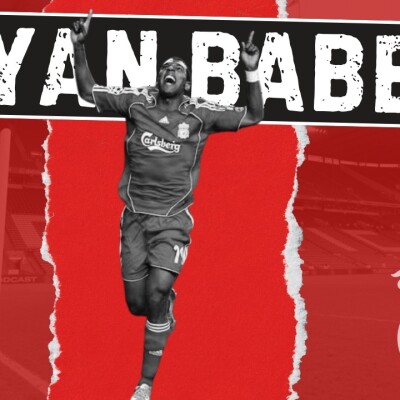
This podcast is hosted by Craig Campbell and this episode he has Ryan Babel on, the Netherlands international was happy to discuss his career in great detail.
Hosted on Ausha. See ausha.co/privacy-policy for more information.
Description
This podcast is hosted by Craig Campbell and this episode he has Ryan Babel on, the Netherlands international was happy to discuss his career in great detail.
Hosted on Ausha. See ausha.co/privacy-policy for more information.
Transcription
Torres wanted it, Babbel has it, oh lovely check, oh, it's gorgeous This is Ben Ayoun who's hungry for more, and that's Babbel,
and that's brilliant Welcome to today's podcast where we are joined by Ryan Babbel, what a legend, love the game, thank you for coming on Ryan.
Thank you, thank you for having me, thank you.
So, yeah, I want to... Kick off straight away. Me and Greg were both speaking about it prior to you coming on. Coming through at Ajax. Ajax must be up there along with Barcelona as bringing the guys who've come through that system and played professionally for clubs across Europe. It's got to be, if not better than Barca, some of the guys you guys have brought through. What was that like coming through at Ajax?
Yeah. I think now that you can reflect, I would say it was a real privilege to be part of the Ajax youth system. At that time growing up, I remember before joining that it was almost impossible. You had to really be somehow the perfect player. The standards were really, really high. And I remember being at my former team before joining. You had so many great players. of my generation and also from other teams that like yeah i was good but i was very insecure because you had so many a variety of different types of of people who players who are really really good and i was like if we don't even play for ix yet and we're already so good then how good are the ix players in the academy right so i wasn't sure what to expect and then i remember The very first time when Ajax reached out to my parents that they were interested, I was, of course, positively surprised. I was shocked. I was like, oh, whoa, like, did I catch their attention? Like, I must do something right. But yeah, eventually, you know, walking through the academy, learned so much. And then I realized it's more about Just being good with the ball on your feet. It's also the mindset aspect of it, the mentality aspect of it, the discipline aspect of it, and so much more. And that's, I think, still the last day of my career. I think most of the things that I implemented in my career was what I learned at Ajax. So, yeah, I have to give the props and credit to the youth system for sure.
Yeah, that's phenomenal. What is it you think? Obviously, having been there, it makes the difference between Ajax and any other youth academy. What are they doing that other people are not to bring all these guys through?
I think the difference is Ajax really cares. That's one. And the reason why Ajax also really cares is because they don't really have the luxury, maybe like teams in Premier League who can spend 100 million on players, right? So they have to find the next generational talent in order for their system to continue running, right? So if you look at the history, they have always produced young players and then eventually they sell the players for a lot of money. And that is their business module. So they have to put in a lot of time and effort to make sure that they pick players on early. And that comes with, you know, caring and really developing and taking time out to really improve players. I think maybe that's a little bit of a lack in a lot of other academies. Sure, you know, you have sometimes, for example, Liverpool, you know, Trent Alexander-Arnold coming through the academy. But if you look at the percentage of players every year coming through the Ajax system and compared to who's coming really through systems from Premier League teams or other teams, it's a big difference. And I think that is the reason why. Ajax is such a successful producing team for young players.
Obviously, you made your debut as a young kid at Ajax. Was there any preparation for that? Or were you literally just taken and thrown in at the deep end, like not pre-warned or anything? How did it work?
I mean, you can never really be prepared to make your first game, but I somehow felt it was close. I think prior to my first game for Ajax in 2004, I signed a contract. So I knew, okay, you know, they at least see something in me. They want to give me a chance. And I knew at that moment, like, okay, I have to prepare. I have to make sure I'm ready. And yeah, the whole reason why eventually I got a chance was because Zlatan Ibrahimovic was injured. And they had no striker in Ajax. And yeah, you know, and I was doing well on the second team. So they were like, hey, that was their philosophy. Like, there are no strikers, so we have to fall back on the striker of the second team. And they gave me a chance and I grabbed it with both hands. And shortly after they sold Zlatan to Juventus, they then decided to buy... an experienced striker because they felt I was too young to just play a whole season. And they bought Euro Cup winner Angelos Charisteas, who won the Euros with Greece in 2004. So he was then the experienced player and I was right behind him. And we had a little bit of a rotation. And of course, you know, he was costing a lot of money at that time for Ajax. terms, but I was doing really well and I got a lot of play time.
I'm curious, I've got a question about this. Was there anyone in that Ajax youth system who you thought was the biggest talent that didn't actually make it through?
Yeah, many, many players. And I don't know if it's relevant to drop names, but most likely nobody would know their names. But yeah, definitely, you know. There were a lot of players from my generation, generation slightly above, that I was like, oh, they definitely will make the first team, but somehow they didn't. And sometimes it had to do with timing. I remember very well that in my time you had, of course, players like Rafael van der Vaart and Wesley Sneijder, you know, already making a great name for themselves. Right under that, you had a lot of great players in their position. They were, in my opinion, very good, but they were not Wesley Sneijder. They were not Rafa van der Vaart. And because of that, Ajax put them on loan or Ajax sold them. So I would also say football sometimes is timing, right? And like I said, I don't know if they would see me as good enough if Zlatan was never injured. I don't know, right? We never know. But timing, and I would say... then also you know you taking your chance is very important right so um yeah and i'm just curious to know as well as a youngster grown up in the netherlands who was your idol grown up as a follower yeah uh growing up in the beginning initially was uh patrick clyford right he was a striker at ajax i grew up as a striker so he was immediately someone i idolized and tried to pin my game towards to and after that later on i fell in love with chedi henry you know the invincibles at at arsenal so also that's why i became an arsenal fan because you had players from ix going to arsenal mark overmars dennis bear camp from bronkhorst so i am medically also fell in love with arsenal also because their jerseys and colors were very close to ix red white so it was very easy to fall in love with arsenal and the way they played and all the aura that they had with the French football players, Arsene Wenger, et cetera, et cetera. And so, yeah, I would say first Patrick Kluivert, after Thierry Henry, and that's how it started for me.
Yari Litmanen,
no? Yeah, but Yari Litmanen was not my position, but of course, yeah, it was a good player. Like a lot of players, like Edgar David, Seedorf, a lot of these players, of course, they were superhero stars, right? They won the Champions League. They were very good. But if you really talked about who was my idol, I looked at a player who played in my position and I could learn from. And at that time, as a number nine, which was my position before I turned out to be a winger, was Patrick Leifert.
Okay.
Yeah.
Not a bad idol to have.
No.
That's a good choice. So, obviously, coming through Ajax, you played and obviously... you moved on to Liverpool. I'm just curious how long that process has taken. Was that a very quick thing or was that planned out over a long period of time? How did it come about?
It was actually very quick because... Prior, so we played in 2007 the Euros with under-21s. And in that summer, we won the Euros. And we had a very good generation at that time, a very good team. And then I went on holiday. And I remember actually prior to during the Euros and a little bit before the Euros, there were news articles where said that... Arsenal was paying attention and looking and funny enough I was kind of like dreaming I was like oh I hope I hope you know Arsenal will come and um and then I went on a holiday and then my agent called me and it was like Liverpool's interested and they want you and I was like oh and I never really paid attention like that to Liverpool and I was thinking like oh um like so let me do some research right and I remember of course the the final in Istanbul and I remember I think that summer, before the Euros, they lost to AC Milan in the final again. And you had already, you know, a few Dutch players like Senden and Dirk Kuyt playing for the club. So I was doing some research to see if it would fit my game, if it would fit my philosophy of thinking. And in the beginning, I was very hesitant. And what got me over the hurdle was a phone call with Benitez. You know, we had a phone call. I was on my holiday with my girlfriend at that time. And we had a phone call and he gave me a great feeling about joining and that they would look after me and give me time. And I was always sensitive for a team that really gave me the feeling that they really want you, right? And not that you're just an option and we have more options, we're talking to more players. And Liverpool really gave me that energy like, no, we really want you. We think you fit in our vision and you're the future. And that's why I was like, OK, let's let's fucking do it. so that's how I made my decision
Obviously Rafa was the guy that took you there what was the first impression of him as a person?
It's a very interesting one because now fast forward to today if you're going to ask me a question like From all the managers who you disliked the most, then Rafa Benitez is by far number one for me. He had, in my opinion, a very negative influence on the rest of my career after Liverpool. And that is not because he is not a good manager. I think he was a great manager, especially if you talk about tactically, knowing how to win games, knowing how to explain a tactic. on a team and how we have to execute. But he was not a people's manager, right? He was not a manager how we now have a lot of managers like Jurgen Klopp or Arteta, who's really bonding with players and trying to get the best out of them. He was... And what I wanted to say, it was a very interesting one because when we had the phone call, he sounded like a big uncle. Very warm, very like... you know like i'm gonna help you and and from day one when i came in in pre-season it was a totally different person you know it was he was very cold he was very like like like this and and and it was from day one very tough for me to build a connection and i was used to talking a lot with with um with managers at ajax right like if you didn't play or if you didn't play well they would pull you apart and say like look this is what you did wrong you have to try and do this try to work harder here and blah blah blah and at that time in Liverpool that was not the the way of I guess communicating with with with a manager and the manager only spoke with their star players and if you were a young players the the energy was just shut up and work hard like there's no there's no right for you to talk to me and that was very That was very difficult. So I had to learn and try to learn the hard way by looking at other players. And I had to get used to the 4-4-2 system, right? The English 4-4-2 system with two strikers and playing, you know. And I actually played 4-3-3. So there were a lot of things I had to learn and I had to really figure it out myself. It was very tough. And because I didn't play well immediately, that's the reason why I was on the bench. It was not easy and that's why I would say and if you also ask a lot of People and fans about my Liverpool career, you know, the opinions are a little bit mixed, right? People would say, oh, he was not good enough. And a lot of fans would say, oh, he didn't really get a chance or he was not managed right. If you think about it, you know, I was 19 when I joined Liverpool, right? So I was still very young. And I would say nowadays I feel young players are more taken care of. And back in the days, I would say, especially in my time, you had to figure it out yourself. And that was the big difference. So that was my relationship with the coach. And when I realized that I wasn't crazy, when I later heard that even Steven Gerrard or Fernando Torres or even Jamie Carragher would say, Oh, Benitez, he's a cold man or he's not really da-da-da-da-da. And that's when I knew like, OK, you know, it was not just me being biased because I didn't play enough. Like a lot of... players felt that way like Steven Gerrard played every game right Fernando Torres was Benitez favorite but even them they had certain opinions about him so and again you know I guess it's part of a manager style but this is just my experience I would say I wish it was different maybe my Liverpool career was maybe even way better but I'm still very very grateful for the things that have learned throughout the short four years that I was there. And I took that further in my career.
You know, it's really interesting what you are talking about, Ryan, because I came at the same age, roughly like you, around 20. And I think you don't realize the magnitude of this football club.
Yes.
So you are so happy to sign, so happy you say, OK, you will play for Liverpool. But I think you don't understand the... the pressure and the managers and the massive pressure yeah so on the phone uh i had gerard ulyay you know so yeah rafa also uh before to to go to rangers yeah and different type of two different type of guys you know and completely different but i think it's uh it's uh the expectation so high so so i understand why you're talking you know yeah i think about the your feeling about you know the relationship with Rafa oh yeah because because when you are young i think it's really tough and uh but i think for me you did really really great you know you had for me good spell liverpool i remember you like you know a fast player you know yeah yeah yeah and uh and to be honest you had some really really good games you know and yeah important one or so you know and i remember the one when you crossed for stevie i think he was yeah it was a game you know when he scored the third goal or something yes
Yes.
So I think you can be proud about your Liverpool years.
Yeah.
Was there ever a point where you said to Rafa, why the fuck am I not playing?
Yeah, yeah, yeah. Yes, I did. But not in that way.
Even worse.
No, but yeah, I mean, look, I think You know, there were times where I felt like, okay, I trained well, I see the players telling me, complimenting me, like, well done, Ryan, keep continuing, keep continuing. And then I didn't get a lot of playtime or enough playtime. So, yeah, I would go to his office and, you know, would ask. And then his words were, he would give me feedback, but I would not say feedback that really helped me. So he would just say like, yeah, yeah, you have to work hard. Look at Benayoun, look at Dirk, they work hard. Okay, but what does working hard mean? Yeah, you have to do more in defending. And I was thinking like, oh, okay, cool. So I would try and, you know, he would keep it short. So then I would look at, of course, Dirk, because Dirk was the ideal, I would say, role model with, you know, the working hard type of player. And then I realized, oh, okay, yeah, so Dirk is really like sprinting back and blah, blah, blah, blah, blah, and tracking back. So I was like, okay, cool, I will do that now. More, right? And again, like I said, I had to get used to the 4-4-2 system. So now I put a lot of energy in helping my full back and tracking back. But now I had no energy to attack, right? I had no legs anymore to go forward and sprint behind the defenders. So yes, I did my defending part, but... Actually, I had no added value for the attacking force. So I was still not playing because now it was like, oh, you don't show me enough in front. I was like, fuck. okay how do you explain a player to be more clever and to be more smart and like look this is the way you'll be more clever in defending so you save time so you save power and energy to them still go forward and i felt like me getting used to the 4-4-2 system and the the lines of walking you know getting narrow come back going forward shifting that was for me again like the whole my whole life. 4-3-3 system and Ajax system and the mindset was like... Ryan, you don't have to come all the way back because we have a left midfielder and we have a left back. We need you in front. So my defensive jobs would end at midline, right? And I would stay a little bit at the midline and then we would regain the ball and now I would go forward. So I had enough time and strength to go forward. I never came back all the way to the byline, my own byline. So I had to get used to that. How can I be clever with my lungs, with my legs? And he would not really explain that to me. right and so for the after the third four time you know you could tell like benitez was very upset with me coming to his office all the time and he was like you know uh he he had in one of the last conversations he he had sami lee also joining the the the the the meeting and then he had sami lee talking to me and you know sami lee sami lee is very aggressive sami is very direct he's like listen son you have to you fuck off now and shut up and and just fucking uh train harder and you will get your chance and i was like i just want to know how i can improve like i genuinely want to learn fuck off right and so it was very dead and again like i said i was 22 i was 21 right and and that to me i guess broke up the relationship also a little bit more as in like i didn't felt in the moment appreciated or liked enough right and It was very confusing.
You were looking for more qualification and a way to understand the game.
Yes, because I learned a lot from the other players in my position. For example, and that was also the confusing part, because the type of player I was, they expected me almost only to make runs. They would be so angry if I would ask the ball on my feet. But they told me, look at Benayoun. But Benayan would not run behind the defender. He would be inside. He would be in the ball. In between lines. Yeah, and I was like, I can play that too. So I would try that, and then they would shout at me, Ryan, stay wide and play higher. And I was so confused. I was like, you told me to look at Yoshi. You know, like, what's going on? So that was very, very confusing for me, right? And that played a lot of part in insecurities and not sure, you know, trusting my abilities. all the time and I think that's why I had a lot of impact on my career at Liverpool. I was very inconsistent. I had a few great games and then the next games I would totally not play well, right? So it was very inconsistent.
Did you have this feeling up and down? Yeah,
it was very inconsistent because I would sometimes play well two games in a row, then the third game I would not play so well and then all of a sudden the fourth game I was not in the squad. I was like, oh, you know, so then it completely affected my self-confidence and my whatever, right? And it was a total way, a total different way what I was used to in Ajax. A coach in Ajax would come to you and would analyze your game and would put the arms over your shoulder and be like, look, why did you not play well? Because this and that, and you were doing too much this. And I was like, oh, oh, so you would learn. And then the whole week of training, you would... pay attention and in the next game you learn from it but there was no communication i had to figure it out why did i play bad why am i not now outside of the squad why it was very difficult it was very difficult yeah interesting yeah no it's crazy when you don't realize what's going on behind oh beyond the scene there is a lot of things where you cannot imagine yeah yeah um
so eventually uh you obviously got out of liverpool and went to hoffenheim um Was that something where you chatted to him and said, I've had enough, I want to leave now?
I would say, yeah. And I do regret that decision. But also, I was a little bit pressured from all different sides because even though I was not, let's say, an ultimate starter for Liverpool, I was already in the national team since 18. And since then, I've always been selected. And now... There was a change of managers and now the manager put pressure to say like, hey, listen, you're not having as much playtime as I want you to play to remain a national team. So if you're not going to find playtime soon, I have to kick you out of the squad and have to give other players a chance. And that was also something I was like, no, I want to remain a national team, right? And I remember World Cup 2010 was around the corner. So now it was like, shit, I need to find a team to play. And at that time also, after Rafa, you had Roy Hudson, who came as manager. And then he promised me, like, you get more play time. Now, he was under pressure from day one. So he used still more experienced players. And I still didn't play enough. Then after Kenny Douglas came, and that was in that short spell of window where Kenny Douglas also said, like, I like you. You're going to play a lot. But at that time, almost I didn't believe. Liverpool anymore. I was thinking like, no, they just want me to maintain the club and then just holding me and blah, And then I decided to go to Hoffenheim, that window, just for the sake of finding a team to play. But I didn't do enough research because Hoffenheim was eventually not the right team for me in the sense of I was used to Ajax, I was used to Liverpool, I was used to... a team that was dominating and now you're joining a team respectfully at that time who was more chasing the ball than having the ball so i did not now i had to learn okay now you're gonna and and it helped my career more maturing but if you look at my stats like my stats were very poor like we would play we were so far i was like 80 defending and against all these big teams and and you did not had the ball a lot and It was a totally different experience. And then I played everything, but then the manager still kicked me out of the national team. So, you see, it was a fucking disaster at that time and I regretted leaving Liverpool just for the national team. I wish I would have remained at Liverpool and maybe Kenny Douglas would have given me a chance and things would have changed, right? And that was also the time when Liverpool went through a change. Fernando Torres left, a lot of players left. Xabi Alonso left to Madrid. A lot of new players came and maybe it could have been a great time to start again and rebuild your position. So I definitely do regret that decision in my career to leave Liverpool.
You are not the first one to say that, so you will be the last one. Yes,
yes.
And after Hoffenheim, you went back to Ajax for a period of time. Again, was that just going home, trying to recapture the Ajax thing? Was that move based on everything you've just said there? Like, you were comfortable there? Yeah.
Well, it was a strategic move. It was literally just for one season. Also, that was another time of, again, a new manager at national team. And Louis van Gaal came back in national team. And what Louis van Gaal did, he started kicking out old... players and started selecting a lot of players from the Eredivisie in the Netherlands. At that time, I was not already for two years in the national team. And I was like, okay, maybe if I go back to Ajax, then I will be in the eye of Louis van Gaal. So I was, I think I was, how old was I? I think I was 25. I think I was 25, 24. When I went back, so I went back for one season, I had a good season, and then after the season I was still not getting back to the national team. And that's when I went to Turkey, you know, so now it was kind of like, okay, you know what, let me just make decisions based on also the economic aspect of things, instead of being blind to just playing for great teams, but not looking at really my future, because already I had children and everything. And, yeah, after a year, I was a free transfer. And normally you would think, hey, you can pick up Ryan Barbel at age 25, age 26. No, no transfer fee. But the teams that I wanted to play for, they were not interested, right? Or they already had a lot of players. I remember my agent reaching out to Dortmund. And Jurgen Klopp was at Dortmund. And then Jurgen Klopp was like, oh, I love Ryan, but... we already have Mario Götze. You know, so yeah, if you have already a player and he was the future Dortmund, like they're not going to sign other players, right? So timing was not in my favor. That's when I chose to have, yeah, you know, a journey in Turkey. And that's how my Turkish career started there. And I started falling in love with the Turkish league and with the culture and with the football. And yeah, I ended up playing 10 years in Turkey for four different teams. You know, it was a great time in my career.
Do you think the Turkish football allowed you as a player to flourish more and attack more than everything else?
Absolutely. I think the Turkish league and the people and in general the clubs have way more, I would say, trust in players. Of course, it's not easy because if you don't show it, you're very quickly kicked out. They have more respect for what you have shown before and your career that you have had. And they also treat you that way. And that was very nice. I'm very grateful for my time in Turkey and the people I've met, all the teams that I played for there, you know. And that also gave me, again, the moment to flourish back. And when I was in Turkey, I came back a national team. I played back Champions League football with Besiktas and Galatasaray. And so, yeah, great, great time.
And obviously in between then, you had a spell at Fulham as well. Was that, I want to try something different from the Turkish league and we're going to try and do it again in England? What made the Fulham move come around?
I would say timing was perfect. Fulham needed some extra manpower. They were not doing well. And I was in my last season with Besiktas trying to negotiate a new contract. And, uh, when me and Besiktas were not really on the same page, unfortunately, because I wanted to stay. I had to look further to see, okay, in case I end up not signing, what are the options? And Fulham reached out, and that was, of course, something that I did not expect to get back into the Premier League. So that was now a chance of showing the English crowd and fans who... Maybe still had the idea of Ryan Babel at Liverpool, who was not maturing, who was still a young player, to come back and to see, look, this is the player that I have become, right? Because I think I joined Liverpool at age 31 or age 32, something like that. And I was, of course, a mature player. I was, you know, and yeah, and even though, you know, I couldn't help Fulham enough to maintain in Premier League, I think personally I had a good spell at Fulham. And I think, you know, the Premier League and the English fans were definitely fond of my return and to see the player I've become. And I was very grateful for that time at Fulham.
And obviously then back to Galatasaray. Yeah. Are the Turkish fans really as crazy as they look on TV? I've never been to a game of football in Turkey, but that atmosphere looks phenomenal.
Yeah, yeah, yeah. No, yeah, it's an indescribable atmosphere. It's nothing like it. I mean, sure, the Premier League and the English fans are experienced in itself, but I would say the Turkish environment is a whole different ballgame and an experience. And that makes it so beautiful. The Turkish fans are very emotional, very invested. They care a lot about their team that they support. And that makes a lot of great games, a lot of passion, a lot of emotion. Yeah, Turkish football is, I would say, still very much underrated. I feel like they deserve more respect. But you see a lot of players catering slowly more to that league because, you know, they have also the economics often. And once you're there, you also play amazing football. And you can still play Champions League if you play for the right team, or Europa League. Often you're being treated more with respect and that's why I think a lot of players love Turkey.
Yeah. Well, Mo Salah's there now, so we'll see how that... A lot of people were surprised by that move, but we'll see how that works out for him. It was also a loan spell back at Ajax. Were you back at Ajax for the third time? Yeah, yeah,
yeah. Absolutely, yeah. That was right before COVID. And... One of the reasons was at that particular time with Galatasaray, things were not going so well with the team, there was a lot of pressure. But after that season, you had the Euros, Euros 2020, supposedly. And I remember in Galatasaray, because of the inconsistency of the team, it also had an effect on my self-confidence a little bit. I was not really coming in my game. I didn't have a great fullback behind me who understood my game. So it was very tough in alignment and connecting with the team. And too much rotations and I was like... You know, I need to make sure that I have a good season and then have great Euros, right? And I remember there was an opportunity to go back to Ajax again. And I knew the Ajax system and I saw the players. They had Hakim Ziyech and Frankie de Jong and all these players. I knew if I would come back, I would very quickly get back in my self-confidence. So that was a strategic move. Galatasaray was okay to put me on loan for a season. And I went to Ajax and then literally...
one and a half months later kofi started kicking and the leaks were stopped so you know um was a very very short spell at ix yeah um and obviously you finished up and playing in turkey um and what what was the the reason that your uh career i know i because you're only 39 just now so you would have stopped playing about 36 37 37 um We were talking to Yossi Benayoun. He played up until he was 39. What was the reason? Was the body just starting to feel sore?
Yeah, no, not at all. Actually, I could have continued. Easily, I would say, right? Easily. But the reason why I stopped was I stopped at 37 with that particular team. So I was a free transfer. And then I started looking for teams in Istanbul, right? I think you have like five, six teams in Istanbul and all the teams did not have either the economics or space in their squad. So I had some offers from abroad, but at that time, towards the end of my career, I was tired and traveling and my kids went to school in Istanbul. So I wanted to maintain in Istanbul, close to my family. And yeah, it was like an executive decision. was like I want to play just because I enjoy it still and I love it so much. But I don't want to be in Cyprus or in Qatar by myself or in Saudi by myself. I wanted to remain in Turkey. I wanted to be close to my family. And the teams in Istanbul did not have the right offer or had no space. And therefore, at one point, I was choosing my family over continuing.
Yeah.
And that's the reason for eventually retiring. But I could have played longer. I wish I could have played longer also, right, in the ideal situation. But at that time, I was tired traveling abroad and going to another team again and a new environment. So that was an executive decision. But my body was still fine. I'm sure if I continued, I would still play today, probably. I had no injuries. fine. I still also very importantly, I liked it still, you know, because often players stop also because they're tired in their head. But yeah, that's the reason.
Yeah, but don't forget, you're back to Liverpool now, so it's perfect for us. Right.
Yeah, yeah. You know, so yeah.
And we need to talk a bit about your international career as well. You played Thanks. A hell of a lot for the Netherlands, alongside some of the guys that you mentioned. Or it was Jossie actually, Robin van Persie and absolute legends like that. What was your international experiences like overall?
Yeah, it was an interesting one. Different time, of course. Yeah, I joined the national team with all the experienced big players. Edwin van der Sar, Ruud van Nistelrooy, Cocu, Aria Robben was that time very still a young player. But already, you know, he was doing well. He was very established. But yeah, you know, I would say I learned a heck of a lot. It was a different time. If you look at Most national teams now, average age is maybe, what, 23, 22. And at that time, average age was 30 plus. And then you joined them as age 18. So you're one of the very few young players who joined a group of men who had already a big career. So it was a different time. And I learned a lot. I was very grateful for that time. I was part of the World Cup 2006. I missed Euros 2008 because of an injury. I came back, I experienced World Cup 2010 eventually, where we lost the final against Spain. But, yeah, I would say... My international career did not turn out to be what most players have had. That they had really great games and was a regular. Like I was always, I would say, a player that came from the bench and came in. Yes, sometimes these qualifiers, I had a start here and there. But if you look at the two World Cups that I was part of, I was mostly a bench player and then I came in or I didn't play at all. So it could have been better. But still, almost 70 caps on my name, you know. So, it's what it is. Different time.
Yeah. That would have been a hard team to break into. That's for sure.
Yeah. For sure.
Yeah. But, curious, what do you do now, Ryan? I know there's mention of you do real estate stuff and, you know, potentially invest in other things. But is there any future for Ryan Babble in football? Any kind of...
coaching um i i don't know i don't know but it is it is i i leave the door slightly open for that adventure but um for now i would say not yet um in the last i would say year or so i i had the privilege to to coach an under 16 for one day and and to coach some young teams and i must say this It is very fun to do. to kind of teach these kids about football. So it is fulfilling. I don't know at the moment if it would be a passion for me to do that constantly, day in, day out. So I let it come to me eventually. But right now, the things that I do in football is more, I would say, on the commercial side of things. So what I do is... I try to put brands together with former clubs. So I helped Galatasaray with a partnership that they are still trying to see if it's interesting enough to see if they can partner. So kind of like bringing revenue to football teams. And that's... Helps me just by being still flexible and being able to travel and visit here and visit there. So right now I don't want to be pinned down on one location because of my job or something, right? I like the freedom that I have. I still enjoy it. Throughout my career, we did not have the freedom to just go anywhere, right? And right now I'm still enjoying my freedom. And yeah, that's one of the things I do when it comes to football. I do, of course, also a lot of other things, you know, like you said, real estate stuff. But that doesn't require a lot of my time. It's just, you know, mostly on the phone. And you sometimes, you know, go watch a project or you travel and you have a lot of Zoom calls. But, yeah, you know, I mean, I have a fashion agency with other people. I have a music company that is in Los Angeles. Right now, I'm exploring a little bit creative directing in photography and film. But it's just my interest, just trying to see if it thinks that it's, you know, going to come out of that. But I like everything. I like to explore everything that I like.
I think that's mad. Because a lot of footballers always try and stick to football. And for me, I'm probably a lot like you, where I try different things to see what I enjoy, you know, and try and just learn more from the stuff that I get involved in as well. It's nice to see. You don't see many footballers trying that angle. They're always just like, it needs to be coaching. Nothing else matters. Right, right, right.
I'm leaving the room.
But it's true. It's true. You're just like, man, there's so many other ways to make money. And like you say, have freedom. I enjoy, I travel the world, speaking at conferences and shit like that. And I enjoy just travelling and not being pinned down to one place. So I get it. I get it.
I think it would be nice to have you around because you've got so many things to share. And I see in your eyes you still have the passion for the football. So maybe it's not the right time. And I understand it completely. But I think you can play a big part. That's my feeling.
Even just as an advisory thing, even like you say, you had those mistakes of maybe... going to the wrong team with the wrong style of play with the wrong manager, man I think a lot of people don't really think about a lot of those things, they just go and... and it's not going to work out for them and it obviously can have that long lasting impact throughout your career so I think yeah there's a lot of potential value there but it's whether you can be asked doing that or enjoy doing the music thing or whatever it may be but it's been a pleasure having you Ryan thank you very much for coming on of course,
of course, thank you
It was very nice to talk to you, mate.
Share
Embed
You may also like
Description
This podcast is hosted by Craig Campbell and this episode he has Ryan Babel on, the Netherlands international was happy to discuss his career in great detail.
Hosted on Ausha. See ausha.co/privacy-policy for more information.
Transcription
Torres wanted it, Babbel has it, oh lovely check, oh, it's gorgeous This is Ben Ayoun who's hungry for more, and that's Babbel,
and that's brilliant Welcome to today's podcast where we are joined by Ryan Babbel, what a legend, love the game, thank you for coming on Ryan.
Thank you, thank you for having me, thank you.
So, yeah, I want to... Kick off straight away. Me and Greg were both speaking about it prior to you coming on. Coming through at Ajax. Ajax must be up there along with Barcelona as bringing the guys who've come through that system and played professionally for clubs across Europe. It's got to be, if not better than Barca, some of the guys you guys have brought through. What was that like coming through at Ajax?
Yeah. I think now that you can reflect, I would say it was a real privilege to be part of the Ajax youth system. At that time growing up, I remember before joining that it was almost impossible. You had to really be somehow the perfect player. The standards were really, really high. And I remember being at my former team before joining. You had so many great players. of my generation and also from other teams that like yeah i was good but i was very insecure because you had so many a variety of different types of of people who players who are really really good and i was like if we don't even play for ix yet and we're already so good then how good are the ix players in the academy right so i wasn't sure what to expect and then i remember The very first time when Ajax reached out to my parents that they were interested, I was, of course, positively surprised. I was shocked. I was like, oh, whoa, like, did I catch their attention? Like, I must do something right. But yeah, eventually, you know, walking through the academy, learned so much. And then I realized it's more about Just being good with the ball on your feet. It's also the mindset aspect of it, the mentality aspect of it, the discipline aspect of it, and so much more. And that's, I think, still the last day of my career. I think most of the things that I implemented in my career was what I learned at Ajax. So, yeah, I have to give the props and credit to the youth system for sure.
Yeah, that's phenomenal. What is it you think? Obviously, having been there, it makes the difference between Ajax and any other youth academy. What are they doing that other people are not to bring all these guys through?
I think the difference is Ajax really cares. That's one. And the reason why Ajax also really cares is because they don't really have the luxury, maybe like teams in Premier League who can spend 100 million on players, right? So they have to find the next generational talent in order for their system to continue running, right? So if you look at the history, they have always produced young players and then eventually they sell the players for a lot of money. And that is their business module. So they have to put in a lot of time and effort to make sure that they pick players on early. And that comes with, you know, caring and really developing and taking time out to really improve players. I think maybe that's a little bit of a lack in a lot of other academies. Sure, you know, you have sometimes, for example, Liverpool, you know, Trent Alexander-Arnold coming through the academy. But if you look at the percentage of players every year coming through the Ajax system and compared to who's coming really through systems from Premier League teams or other teams, it's a big difference. And I think that is the reason why. Ajax is such a successful producing team for young players.
Obviously, you made your debut as a young kid at Ajax. Was there any preparation for that? Or were you literally just taken and thrown in at the deep end, like not pre-warned or anything? How did it work?
I mean, you can never really be prepared to make your first game, but I somehow felt it was close. I think prior to my first game for Ajax in 2004, I signed a contract. So I knew, okay, you know, they at least see something in me. They want to give me a chance. And I knew at that moment, like, okay, I have to prepare. I have to make sure I'm ready. And yeah, the whole reason why eventually I got a chance was because Zlatan Ibrahimovic was injured. And they had no striker in Ajax. And yeah, you know, and I was doing well on the second team. So they were like, hey, that was their philosophy. Like, there are no strikers, so we have to fall back on the striker of the second team. And they gave me a chance and I grabbed it with both hands. And shortly after they sold Zlatan to Juventus, they then decided to buy... an experienced striker because they felt I was too young to just play a whole season. And they bought Euro Cup winner Angelos Charisteas, who won the Euros with Greece in 2004. So he was then the experienced player and I was right behind him. And we had a little bit of a rotation. And of course, you know, he was costing a lot of money at that time for Ajax. terms, but I was doing really well and I got a lot of play time.
I'm curious, I've got a question about this. Was there anyone in that Ajax youth system who you thought was the biggest talent that didn't actually make it through?
Yeah, many, many players. And I don't know if it's relevant to drop names, but most likely nobody would know their names. But yeah, definitely, you know. There were a lot of players from my generation, generation slightly above, that I was like, oh, they definitely will make the first team, but somehow they didn't. And sometimes it had to do with timing. I remember very well that in my time you had, of course, players like Rafael van der Vaart and Wesley Sneijder, you know, already making a great name for themselves. Right under that, you had a lot of great players in their position. They were, in my opinion, very good, but they were not Wesley Sneijder. They were not Rafa van der Vaart. And because of that, Ajax put them on loan or Ajax sold them. So I would also say football sometimes is timing, right? And like I said, I don't know if they would see me as good enough if Zlatan was never injured. I don't know, right? We never know. But timing, and I would say... then also you know you taking your chance is very important right so um yeah and i'm just curious to know as well as a youngster grown up in the netherlands who was your idol grown up as a follower yeah uh growing up in the beginning initially was uh patrick clyford right he was a striker at ajax i grew up as a striker so he was immediately someone i idolized and tried to pin my game towards to and after that later on i fell in love with chedi henry you know the invincibles at at arsenal so also that's why i became an arsenal fan because you had players from ix going to arsenal mark overmars dennis bear camp from bronkhorst so i am medically also fell in love with arsenal also because their jerseys and colors were very close to ix red white so it was very easy to fall in love with arsenal and the way they played and all the aura that they had with the French football players, Arsene Wenger, et cetera, et cetera. And so, yeah, I would say first Patrick Kluivert, after Thierry Henry, and that's how it started for me.
Yari Litmanen,
no? Yeah, but Yari Litmanen was not my position, but of course, yeah, it was a good player. Like a lot of players, like Edgar David, Seedorf, a lot of these players, of course, they were superhero stars, right? They won the Champions League. They were very good. But if you really talked about who was my idol, I looked at a player who played in my position and I could learn from. And at that time, as a number nine, which was my position before I turned out to be a winger, was Patrick Leifert.
Okay.
Yeah.
Not a bad idol to have.
No.
That's a good choice. So, obviously, coming through Ajax, you played and obviously... you moved on to Liverpool. I'm just curious how long that process has taken. Was that a very quick thing or was that planned out over a long period of time? How did it come about?
It was actually very quick because... Prior, so we played in 2007 the Euros with under-21s. And in that summer, we won the Euros. And we had a very good generation at that time, a very good team. And then I went on holiday. And I remember actually prior to during the Euros and a little bit before the Euros, there were news articles where said that... Arsenal was paying attention and looking and funny enough I was kind of like dreaming I was like oh I hope I hope you know Arsenal will come and um and then I went on a holiday and then my agent called me and it was like Liverpool's interested and they want you and I was like oh and I never really paid attention like that to Liverpool and I was thinking like oh um like so let me do some research right and I remember of course the the final in Istanbul and I remember I think that summer, before the Euros, they lost to AC Milan in the final again. And you had already, you know, a few Dutch players like Senden and Dirk Kuyt playing for the club. So I was doing some research to see if it would fit my game, if it would fit my philosophy of thinking. And in the beginning, I was very hesitant. And what got me over the hurdle was a phone call with Benitez. You know, we had a phone call. I was on my holiday with my girlfriend at that time. And we had a phone call and he gave me a great feeling about joining and that they would look after me and give me time. And I was always sensitive for a team that really gave me the feeling that they really want you, right? And not that you're just an option and we have more options, we're talking to more players. And Liverpool really gave me that energy like, no, we really want you. We think you fit in our vision and you're the future. And that's why I was like, OK, let's let's fucking do it. so that's how I made my decision
Obviously Rafa was the guy that took you there what was the first impression of him as a person?
It's a very interesting one because now fast forward to today if you're going to ask me a question like From all the managers who you disliked the most, then Rafa Benitez is by far number one for me. He had, in my opinion, a very negative influence on the rest of my career after Liverpool. And that is not because he is not a good manager. I think he was a great manager, especially if you talk about tactically, knowing how to win games, knowing how to explain a tactic. on a team and how we have to execute. But he was not a people's manager, right? He was not a manager how we now have a lot of managers like Jurgen Klopp or Arteta, who's really bonding with players and trying to get the best out of them. He was... And what I wanted to say, it was a very interesting one because when we had the phone call, he sounded like a big uncle. Very warm, very like... you know like i'm gonna help you and and from day one when i came in in pre-season it was a totally different person you know it was he was very cold he was very like like like this and and and it was from day one very tough for me to build a connection and i was used to talking a lot with with um with managers at ajax right like if you didn't play or if you didn't play well they would pull you apart and say like look this is what you did wrong you have to try and do this try to work harder here and blah blah blah and at that time in Liverpool that was not the the way of I guess communicating with with with a manager and the manager only spoke with their star players and if you were a young players the the energy was just shut up and work hard like there's no there's no right for you to talk to me and that was very That was very difficult. So I had to learn and try to learn the hard way by looking at other players. And I had to get used to the 4-4-2 system, right? The English 4-4-2 system with two strikers and playing, you know. And I actually played 4-3-3. So there were a lot of things I had to learn and I had to really figure it out myself. It was very tough. And because I didn't play well immediately, that's the reason why I was on the bench. It was not easy and that's why I would say and if you also ask a lot of People and fans about my Liverpool career, you know, the opinions are a little bit mixed, right? People would say, oh, he was not good enough. And a lot of fans would say, oh, he didn't really get a chance or he was not managed right. If you think about it, you know, I was 19 when I joined Liverpool, right? So I was still very young. And I would say nowadays I feel young players are more taken care of. And back in the days, I would say, especially in my time, you had to figure it out yourself. And that was the big difference. So that was my relationship with the coach. And when I realized that I wasn't crazy, when I later heard that even Steven Gerrard or Fernando Torres or even Jamie Carragher would say, Oh, Benitez, he's a cold man or he's not really da-da-da-da-da. And that's when I knew like, OK, you know, it was not just me being biased because I didn't play enough. Like a lot of... players felt that way like Steven Gerrard played every game right Fernando Torres was Benitez favorite but even them they had certain opinions about him so and again you know I guess it's part of a manager style but this is just my experience I would say I wish it was different maybe my Liverpool career was maybe even way better but I'm still very very grateful for the things that have learned throughout the short four years that I was there. And I took that further in my career.
You know, it's really interesting what you are talking about, Ryan, because I came at the same age, roughly like you, around 20. And I think you don't realize the magnitude of this football club.
Yes.
So you are so happy to sign, so happy you say, OK, you will play for Liverpool. But I think you don't understand the... the pressure and the managers and the massive pressure yeah so on the phone uh i had gerard ulyay you know so yeah rafa also uh before to to go to rangers yeah and different type of two different type of guys you know and completely different but i think it's uh it's uh the expectation so high so so i understand why you're talking you know yeah i think about the your feeling about you know the relationship with Rafa oh yeah because because when you are young i think it's really tough and uh but i think for me you did really really great you know you had for me good spell liverpool i remember you like you know a fast player you know yeah yeah yeah and uh and to be honest you had some really really good games you know and yeah important one or so you know and i remember the one when you crossed for stevie i think he was yeah it was a game you know when he scored the third goal or something yes
Yes.
So I think you can be proud about your Liverpool years.
Yeah.
Was there ever a point where you said to Rafa, why the fuck am I not playing?
Yeah, yeah, yeah. Yes, I did. But not in that way.
Even worse.
No, but yeah, I mean, look, I think You know, there were times where I felt like, okay, I trained well, I see the players telling me, complimenting me, like, well done, Ryan, keep continuing, keep continuing. And then I didn't get a lot of playtime or enough playtime. So, yeah, I would go to his office and, you know, would ask. And then his words were, he would give me feedback, but I would not say feedback that really helped me. So he would just say like, yeah, yeah, you have to work hard. Look at Benayoun, look at Dirk, they work hard. Okay, but what does working hard mean? Yeah, you have to do more in defending. And I was thinking like, oh, okay, cool. So I would try and, you know, he would keep it short. So then I would look at, of course, Dirk, because Dirk was the ideal, I would say, role model with, you know, the working hard type of player. And then I realized, oh, okay, yeah, so Dirk is really like sprinting back and blah, blah, blah, blah, blah, and tracking back. So I was like, okay, cool, I will do that now. More, right? And again, like I said, I had to get used to the 4-4-2 system. So now I put a lot of energy in helping my full back and tracking back. But now I had no energy to attack, right? I had no legs anymore to go forward and sprint behind the defenders. So yes, I did my defending part, but... Actually, I had no added value for the attacking force. So I was still not playing because now it was like, oh, you don't show me enough in front. I was like, fuck. okay how do you explain a player to be more clever and to be more smart and like look this is the way you'll be more clever in defending so you save time so you save power and energy to them still go forward and i felt like me getting used to the 4-4-2 system and the the lines of walking you know getting narrow come back going forward shifting that was for me again like the whole my whole life. 4-3-3 system and Ajax system and the mindset was like... Ryan, you don't have to come all the way back because we have a left midfielder and we have a left back. We need you in front. So my defensive jobs would end at midline, right? And I would stay a little bit at the midline and then we would regain the ball and now I would go forward. So I had enough time and strength to go forward. I never came back all the way to the byline, my own byline. So I had to get used to that. How can I be clever with my lungs, with my legs? And he would not really explain that to me. right and so for the after the third four time you know you could tell like benitez was very upset with me coming to his office all the time and he was like you know uh he he had in one of the last conversations he he had sami lee also joining the the the the the meeting and then he had sami lee talking to me and you know sami lee sami lee is very aggressive sami is very direct he's like listen son you have to you fuck off now and shut up and and just fucking uh train harder and you will get your chance and i was like i just want to know how i can improve like i genuinely want to learn fuck off right and so it was very dead and again like i said i was 22 i was 21 right and and that to me i guess broke up the relationship also a little bit more as in like i didn't felt in the moment appreciated or liked enough right and It was very confusing.
You were looking for more qualification and a way to understand the game.
Yes, because I learned a lot from the other players in my position. For example, and that was also the confusing part, because the type of player I was, they expected me almost only to make runs. They would be so angry if I would ask the ball on my feet. But they told me, look at Benayoun. But Benayan would not run behind the defender. He would be inside. He would be in the ball. In between lines. Yeah, and I was like, I can play that too. So I would try that, and then they would shout at me, Ryan, stay wide and play higher. And I was so confused. I was like, you told me to look at Yoshi. You know, like, what's going on? So that was very, very confusing for me, right? And that played a lot of part in insecurities and not sure, you know, trusting my abilities. all the time and I think that's why I had a lot of impact on my career at Liverpool. I was very inconsistent. I had a few great games and then the next games I would totally not play well, right? So it was very inconsistent.
Did you have this feeling up and down? Yeah,
it was very inconsistent because I would sometimes play well two games in a row, then the third game I would not play so well and then all of a sudden the fourth game I was not in the squad. I was like, oh, you know, so then it completely affected my self-confidence and my whatever, right? And it was a total way, a total different way what I was used to in Ajax. A coach in Ajax would come to you and would analyze your game and would put the arms over your shoulder and be like, look, why did you not play well? Because this and that, and you were doing too much this. And I was like, oh, oh, so you would learn. And then the whole week of training, you would... pay attention and in the next game you learn from it but there was no communication i had to figure it out why did i play bad why am i not now outside of the squad why it was very difficult it was very difficult yeah interesting yeah no it's crazy when you don't realize what's going on behind oh beyond the scene there is a lot of things where you cannot imagine yeah yeah um
so eventually uh you obviously got out of liverpool and went to hoffenheim um Was that something where you chatted to him and said, I've had enough, I want to leave now?
I would say, yeah. And I do regret that decision. But also, I was a little bit pressured from all different sides because even though I was not, let's say, an ultimate starter for Liverpool, I was already in the national team since 18. And since then, I've always been selected. And now... There was a change of managers and now the manager put pressure to say like, hey, listen, you're not having as much playtime as I want you to play to remain a national team. So if you're not going to find playtime soon, I have to kick you out of the squad and have to give other players a chance. And that was also something I was like, no, I want to remain a national team, right? And I remember World Cup 2010 was around the corner. So now it was like, shit, I need to find a team to play. And at that time also, after Rafa, you had Roy Hudson, who came as manager. And then he promised me, like, you get more play time. Now, he was under pressure from day one. So he used still more experienced players. And I still didn't play enough. Then after Kenny Douglas came, and that was in that short spell of window where Kenny Douglas also said, like, I like you. You're going to play a lot. But at that time, almost I didn't believe. Liverpool anymore. I was thinking like, no, they just want me to maintain the club and then just holding me and blah, And then I decided to go to Hoffenheim, that window, just for the sake of finding a team to play. But I didn't do enough research because Hoffenheim was eventually not the right team for me in the sense of I was used to Ajax, I was used to Liverpool, I was used to... a team that was dominating and now you're joining a team respectfully at that time who was more chasing the ball than having the ball so i did not now i had to learn okay now you're gonna and and it helped my career more maturing but if you look at my stats like my stats were very poor like we would play we were so far i was like 80 defending and against all these big teams and and you did not had the ball a lot and It was a totally different experience. And then I played everything, but then the manager still kicked me out of the national team. So, you see, it was a fucking disaster at that time and I regretted leaving Liverpool just for the national team. I wish I would have remained at Liverpool and maybe Kenny Douglas would have given me a chance and things would have changed, right? And that was also the time when Liverpool went through a change. Fernando Torres left, a lot of players left. Xabi Alonso left to Madrid. A lot of new players came and maybe it could have been a great time to start again and rebuild your position. So I definitely do regret that decision in my career to leave Liverpool.
You are not the first one to say that, so you will be the last one. Yes,
yes.
And after Hoffenheim, you went back to Ajax for a period of time. Again, was that just going home, trying to recapture the Ajax thing? Was that move based on everything you've just said there? Like, you were comfortable there? Yeah.
Well, it was a strategic move. It was literally just for one season. Also, that was another time of, again, a new manager at national team. And Louis van Gaal came back in national team. And what Louis van Gaal did, he started kicking out old... players and started selecting a lot of players from the Eredivisie in the Netherlands. At that time, I was not already for two years in the national team. And I was like, okay, maybe if I go back to Ajax, then I will be in the eye of Louis van Gaal. So I was, I think I was, how old was I? I think I was 25. I think I was 25, 24. When I went back, so I went back for one season, I had a good season, and then after the season I was still not getting back to the national team. And that's when I went to Turkey, you know, so now it was kind of like, okay, you know what, let me just make decisions based on also the economic aspect of things, instead of being blind to just playing for great teams, but not looking at really my future, because already I had children and everything. And, yeah, after a year, I was a free transfer. And normally you would think, hey, you can pick up Ryan Barbel at age 25, age 26. No, no transfer fee. But the teams that I wanted to play for, they were not interested, right? Or they already had a lot of players. I remember my agent reaching out to Dortmund. And Jurgen Klopp was at Dortmund. And then Jurgen Klopp was like, oh, I love Ryan, but... we already have Mario Götze. You know, so yeah, if you have already a player and he was the future Dortmund, like they're not going to sign other players, right? So timing was not in my favor. That's when I chose to have, yeah, you know, a journey in Turkey. And that's how my Turkish career started there. And I started falling in love with the Turkish league and with the culture and with the football. And yeah, I ended up playing 10 years in Turkey for four different teams. You know, it was a great time in my career.
Do you think the Turkish football allowed you as a player to flourish more and attack more than everything else?
Absolutely. I think the Turkish league and the people and in general the clubs have way more, I would say, trust in players. Of course, it's not easy because if you don't show it, you're very quickly kicked out. They have more respect for what you have shown before and your career that you have had. And they also treat you that way. And that was very nice. I'm very grateful for my time in Turkey and the people I've met, all the teams that I played for there, you know. And that also gave me, again, the moment to flourish back. And when I was in Turkey, I came back a national team. I played back Champions League football with Besiktas and Galatasaray. And so, yeah, great, great time.
And obviously in between then, you had a spell at Fulham as well. Was that, I want to try something different from the Turkish league and we're going to try and do it again in England? What made the Fulham move come around?
I would say timing was perfect. Fulham needed some extra manpower. They were not doing well. And I was in my last season with Besiktas trying to negotiate a new contract. And, uh, when me and Besiktas were not really on the same page, unfortunately, because I wanted to stay. I had to look further to see, okay, in case I end up not signing, what are the options? And Fulham reached out, and that was, of course, something that I did not expect to get back into the Premier League. So that was now a chance of showing the English crowd and fans who... Maybe still had the idea of Ryan Babel at Liverpool, who was not maturing, who was still a young player, to come back and to see, look, this is the player that I have become, right? Because I think I joined Liverpool at age 31 or age 32, something like that. And I was, of course, a mature player. I was, you know, and yeah, and even though, you know, I couldn't help Fulham enough to maintain in Premier League, I think personally I had a good spell at Fulham. And I think, you know, the Premier League and the English fans were definitely fond of my return and to see the player I've become. And I was very grateful for that time at Fulham.
And obviously then back to Galatasaray. Yeah. Are the Turkish fans really as crazy as they look on TV? I've never been to a game of football in Turkey, but that atmosphere looks phenomenal.
Yeah, yeah, yeah. No, yeah, it's an indescribable atmosphere. It's nothing like it. I mean, sure, the Premier League and the English fans are experienced in itself, but I would say the Turkish environment is a whole different ballgame and an experience. And that makes it so beautiful. The Turkish fans are very emotional, very invested. They care a lot about their team that they support. And that makes a lot of great games, a lot of passion, a lot of emotion. Yeah, Turkish football is, I would say, still very much underrated. I feel like they deserve more respect. But you see a lot of players catering slowly more to that league because, you know, they have also the economics often. And once you're there, you also play amazing football. And you can still play Champions League if you play for the right team, or Europa League. Often you're being treated more with respect and that's why I think a lot of players love Turkey.
Yeah. Well, Mo Salah's there now, so we'll see how that... A lot of people were surprised by that move, but we'll see how that works out for him. It was also a loan spell back at Ajax. Were you back at Ajax for the third time? Yeah, yeah,
yeah. Absolutely, yeah. That was right before COVID. And... One of the reasons was at that particular time with Galatasaray, things were not going so well with the team, there was a lot of pressure. But after that season, you had the Euros, Euros 2020, supposedly. And I remember in Galatasaray, because of the inconsistency of the team, it also had an effect on my self-confidence a little bit. I was not really coming in my game. I didn't have a great fullback behind me who understood my game. So it was very tough in alignment and connecting with the team. And too much rotations and I was like... You know, I need to make sure that I have a good season and then have great Euros, right? And I remember there was an opportunity to go back to Ajax again. And I knew the Ajax system and I saw the players. They had Hakim Ziyech and Frankie de Jong and all these players. I knew if I would come back, I would very quickly get back in my self-confidence. So that was a strategic move. Galatasaray was okay to put me on loan for a season. And I went to Ajax and then literally...
one and a half months later kofi started kicking and the leaks were stopped so you know um was a very very short spell at ix yeah um and obviously you finished up and playing in turkey um and what what was the the reason that your uh career i know i because you're only 39 just now so you would have stopped playing about 36 37 37 um We were talking to Yossi Benayoun. He played up until he was 39. What was the reason? Was the body just starting to feel sore?
Yeah, no, not at all. Actually, I could have continued. Easily, I would say, right? Easily. But the reason why I stopped was I stopped at 37 with that particular team. So I was a free transfer. And then I started looking for teams in Istanbul, right? I think you have like five, six teams in Istanbul and all the teams did not have either the economics or space in their squad. So I had some offers from abroad, but at that time, towards the end of my career, I was tired and traveling and my kids went to school in Istanbul. So I wanted to maintain in Istanbul, close to my family. And yeah, it was like an executive decision. was like I want to play just because I enjoy it still and I love it so much. But I don't want to be in Cyprus or in Qatar by myself or in Saudi by myself. I wanted to remain in Turkey. I wanted to be close to my family. And the teams in Istanbul did not have the right offer or had no space. And therefore, at one point, I was choosing my family over continuing.
Yeah.
And that's the reason for eventually retiring. But I could have played longer. I wish I could have played longer also, right, in the ideal situation. But at that time, I was tired traveling abroad and going to another team again and a new environment. So that was an executive decision. But my body was still fine. I'm sure if I continued, I would still play today, probably. I had no injuries. fine. I still also very importantly, I liked it still, you know, because often players stop also because they're tired in their head. But yeah, that's the reason.
Yeah, but don't forget, you're back to Liverpool now, so it's perfect for us. Right.
Yeah, yeah. You know, so yeah.
And we need to talk a bit about your international career as well. You played Thanks. A hell of a lot for the Netherlands, alongside some of the guys that you mentioned. Or it was Jossie actually, Robin van Persie and absolute legends like that. What was your international experiences like overall?
Yeah, it was an interesting one. Different time, of course. Yeah, I joined the national team with all the experienced big players. Edwin van der Sar, Ruud van Nistelrooy, Cocu, Aria Robben was that time very still a young player. But already, you know, he was doing well. He was very established. But yeah, you know, I would say I learned a heck of a lot. It was a different time. If you look at Most national teams now, average age is maybe, what, 23, 22. And at that time, average age was 30 plus. And then you joined them as age 18. So you're one of the very few young players who joined a group of men who had already a big career. So it was a different time. And I learned a lot. I was very grateful for that time. I was part of the World Cup 2006. I missed Euros 2008 because of an injury. I came back, I experienced World Cup 2010 eventually, where we lost the final against Spain. But, yeah, I would say... My international career did not turn out to be what most players have had. That they had really great games and was a regular. Like I was always, I would say, a player that came from the bench and came in. Yes, sometimes these qualifiers, I had a start here and there. But if you look at the two World Cups that I was part of, I was mostly a bench player and then I came in or I didn't play at all. So it could have been better. But still, almost 70 caps on my name, you know. So, it's what it is. Different time.
Yeah. That would have been a hard team to break into. That's for sure.
Yeah. For sure.
Yeah. But, curious, what do you do now, Ryan? I know there's mention of you do real estate stuff and, you know, potentially invest in other things. But is there any future for Ryan Babble in football? Any kind of...
coaching um i i don't know i don't know but it is it is i i leave the door slightly open for that adventure but um for now i would say not yet um in the last i would say year or so i i had the privilege to to coach an under 16 for one day and and to coach some young teams and i must say this It is very fun to do. to kind of teach these kids about football. So it is fulfilling. I don't know at the moment if it would be a passion for me to do that constantly, day in, day out. So I let it come to me eventually. But right now, the things that I do in football is more, I would say, on the commercial side of things. So what I do is... I try to put brands together with former clubs. So I helped Galatasaray with a partnership that they are still trying to see if it's interesting enough to see if they can partner. So kind of like bringing revenue to football teams. And that's... Helps me just by being still flexible and being able to travel and visit here and visit there. So right now I don't want to be pinned down on one location because of my job or something, right? I like the freedom that I have. I still enjoy it. Throughout my career, we did not have the freedom to just go anywhere, right? And right now I'm still enjoying my freedom. And yeah, that's one of the things I do when it comes to football. I do, of course, also a lot of other things, you know, like you said, real estate stuff. But that doesn't require a lot of my time. It's just, you know, mostly on the phone. And you sometimes, you know, go watch a project or you travel and you have a lot of Zoom calls. But, yeah, you know, I mean, I have a fashion agency with other people. I have a music company that is in Los Angeles. Right now, I'm exploring a little bit creative directing in photography and film. But it's just my interest, just trying to see if it thinks that it's, you know, going to come out of that. But I like everything. I like to explore everything that I like.
I think that's mad. Because a lot of footballers always try and stick to football. And for me, I'm probably a lot like you, where I try different things to see what I enjoy, you know, and try and just learn more from the stuff that I get involved in as well. It's nice to see. You don't see many footballers trying that angle. They're always just like, it needs to be coaching. Nothing else matters. Right, right, right.
I'm leaving the room.
But it's true. It's true. You're just like, man, there's so many other ways to make money. And like you say, have freedom. I enjoy, I travel the world, speaking at conferences and shit like that. And I enjoy just travelling and not being pinned down to one place. So I get it. I get it.
I think it would be nice to have you around because you've got so many things to share. And I see in your eyes you still have the passion for the football. So maybe it's not the right time. And I understand it completely. But I think you can play a big part. That's my feeling.
Even just as an advisory thing, even like you say, you had those mistakes of maybe... going to the wrong team with the wrong style of play with the wrong manager, man I think a lot of people don't really think about a lot of those things, they just go and... and it's not going to work out for them and it obviously can have that long lasting impact throughout your career so I think yeah there's a lot of potential value there but it's whether you can be asked doing that or enjoy doing the music thing or whatever it may be but it's been a pleasure having you Ryan thank you very much for coming on of course,
of course, thank you
It was very nice to talk to you, mate.
Share
Embed
You may also like