- Speaker #0
The episode starts in a few seconds, but before that, I remind you, you can put 5 stars on Spotify and Apple Podcasts. You can also put a comment on Apple Podcasts or the survey section on Spotify. And finally, if you want to give me a return on Instagram, it's dedicated underscore podcast. I thank you in advance. Good listening. Peace out.
- Speaker #1
What's up, y'all? You're tuning in to the Dedicated Podcast.
- Speaker #0
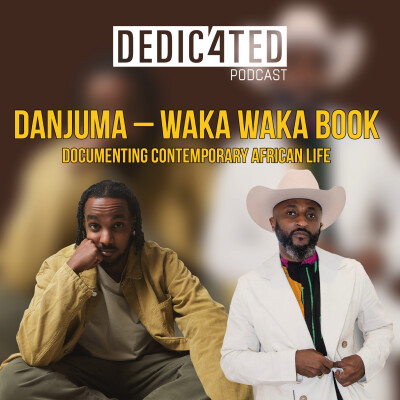
Hello, hello everyone. I hope you are well. So today is an episode in English. A tous mes auditeurs en français, on passe dans un épisode en anglais aujourd'hui. So I'm very glad to have someone who came all the way from the US to visit Switzerland and obviously do some work. Today I have Ernest Danjuma Enebi, aka Danj, Danjuma.
- Speaker #2
Le Donge.
- Speaker #0
Le Donge. How are you?
- Speaker #2
Fantastic, man. Thank you. Thank you so much for having me. It's good to be back in Geneva, back in Switzerland. We could do it in French if you want. Nah,
- Speaker #0
we'll... You know what? Drop the French word whenever you feel like it, but we'll keep it in English. So, first of all, why are you here?
- Speaker #2
Oh, so I'm here on the Geneva leg of my book tour. If you don't know, I wrote a book, a photo book, Waka Waka, Observations on Contemporary African Life, Culture, and Landscapes. It is my, I guess, dedication to... African storytelling to telling our stories over the last 20 years. Traveled 16 countries and it just talks. everything it's it's a story of of africa of who we are of african life african culture um you know it takes you through everything music all of that stuff and we've been through nine cities okay across the world and
- Speaker #0
for the release for the release yeah and geneva is the lucky number 10 okay perfect so uh we have a very very famous french rapper called booba who says que de numero 10 dans ma team so only number 10 in my team and number 10 in football means the best player so that's that's that's what i will refer to for your 10th uh release event we'll come back to the to the book because obviously that's why uh you are here um but before um we talk about the book i want to to talk a little bit about you that's right uh what were you curious about as a kid um
- Speaker #2
That's a good one. So I grew up in Kaduna, Nigeria. This is a town, a cosmopolitan town in northern Nigeria. And I was one of four kids. And to be honest, I was just very, I was obviously a very, very curious kid. So much they used to call me, in fact, Waka Waka is... Somebody who is... Moving around. Yeah, it's a Nigerian pigeon word, and I think it's in Cameroon has a version of it as well, of just somebody who likes to gallivant. And that was my nickname growing up. And so for me, I was very... I think I've always been very curious about the human condition, just about people, about their cultures, about... I was curious about information. I've always wanted to know. A lot of things that people think is useless information, I find fascinating. I want to know why people do the things they do. I want to know why people think the way they think. And so for me, I guess I'm curious about the human condition, I guess, is the way I would. So if it's art, the way humans express themselves, if it's religion, it's conversation, debate, politics, everything that represents human behavior, I'm always very fascinated by.
- Speaker #0
and um If you had a few pictures in mind from your childhood, what would they be?
- Speaker #2
A picture in my mind? Yeah.
- Speaker #0
No, I don't know if you had a picture that you could describe. I don't know. Maybe you and your friends playing, I don't know, whatever game.
- Speaker #2
Right. Oh, you know, what's coming to mind is a field trip that we took to the Coca-Cola factory when I was all the way. I think it's one of my earliest memories of a trip. We might have been, I couldn't have been more than four, three, four. And I remember that field trip. I think about that, and we took the train.
- Speaker #0
Yes, exactly.
- Speaker #2
And growing up in Nigeria, the trains kind of disappeared. They were at least passenger trains. They disappeared through much of my childhood. And so that image, that photo, I wonder where that photo is even, of just our school, our class on this field trip. They are going to Coca-Cola. It made me realize that, you know, when you bring kids together, you know, be it a basketball camp, be it a book reading, these experiences, you never know what they kind of spark in a child. And that's random, right? I haven't actually talked about this moment since that photo was taken.
- Speaker #0
Yeah.
- Speaker #2
um you know and so it's very very um uh that's that's what comes to mind um and i'm gonna ramble yeah i asked you those two questions because as you mentioned your book and we'll come back to it but has
- Speaker #0
a lot of pictures that's right and uh it takes a lot of curiosity to go to more than 15 countries so i wanted to to understand that we'll start talking about the seed of waka waka which is your book that you released in 2025. That's right. Do you remember the first moment where this project felt real? Whether it was manually real, technically real with something in your hand or when your idea was finally shaped?
- Speaker #2
Oh, you're getting hard. Because it seems very surface, but, you know, anybody who's ever birthed anything, you know, tough, you know. you know is that there's it you go through waves of of belief like absolutely we're gonna do this and then you're like man does anybody want to read like who gives a like there are people who have gone to more countries they're actual photographers you know like well who i why me if
- Speaker #0
i had to give an example you know we all have this friends group chat and we have the holiday the vacation that made exactly
- Speaker #2
what is what is that moment for the book right um so i think uh the moment when there are two moments i will say i should say the first one is uh so i so i make the book of course and there are waves of emotions at that point but you know it doesn't feel real um and then i send it off for publishing so when the first sample comes back i think that's when i'm like okay okay so it's quite far in the process yeah yeah so i i do the first sample was just for to see if the photos print well on paper okay Right. So it didn't it didn't really have, you know, a lot of the words. It's the book is a lot of words. So the final version and I have a copy of that original like, you know, version. I think just having that. was was a big big big big step and and people i i'm an engineer by training and so when when you prototype something psychologically that does do something for you and so that that moment where that first package comes in dhl uh anybody that knows me i mean that's what i ended up using to sell the book because i took that thing everywhere and just like your phone just like yeah that was That was my phone. Like, it was dead. everywhere with me everywhere i traveled they people have said that that original copy has done more more more waka waka than even anybody uh so that that was the first moment where it felt real uh of course nothing feels um nothing beats the the moment of selling the first copy of the pre first pre-order because now i'm like holy shit now i actually have to because i up until that point who gives you like whatever it's just a project my is my pet project yeah but when somebody else is like you know what here's
- Speaker #0
my money i'll be expecting a copy of that book yeah it gives you it gives you responsibility as well like Thank you. In this book, there's a lot of pictures. There's a lot of stories. That's right. I've seen that you're quite often defined as a storyteller.
- Speaker #2
Correct.
- Speaker #0
What's a storyteller?
- Speaker #2
What's a storyteller? Yes. And maybe it's good because I know that,
- Speaker #0
I mean, in Africa, the storytellers are really in the culture. But what would we...
- Speaker #2
define you as a storyteller so it's it's a very again um i think for me the the reason i got to storyteller as as my preferred uh title uh as opposed to you know so when people see a book or photo book they will often say are you a photographer mhm Yes, in many ways. I think I've come to that acceptance in some ways. And I accept that now because in the way that I think a photographer is somebody who has sold a photo that they took for money. If somebody is willing to pay for your photo.
- Speaker #0
I mean, it's a good, because, I mean, probably... 25, 30 years ago, a photographer was someone who was taking pictures. Exactly. But now.
- Speaker #2
Now everybody with a phone can be a photographer. So I think that's where I draw. So if we want to gatekeep, maybe that's. And I allow them, right? Because I think a lot of people put a lot of work, a lot of effort into their craft.
- Speaker #0
Definitely.
- Speaker #2
I don't think it's good that anybody can just come to that. a storyteller to your question i think we're all storytellers right um for me i i tell stories using different medium and so either you know i'm a visual storyteller i'm a writer you know i'm a builder and so i i'm telling stories i i take photographs um you know i the spoken word the the oral uh version of storytelling. So for me, it's all of those different things together that make me prefer storyteller to any one of those things. I am all of those things, so I could be any one of them. But I think when you put it all together, I think that's why I've come to storyteller.
- Speaker #0
The storyteller. in different countries in Africa, also has a, how to say that, a spiritual side, I would say. Exactly, they're revered. And in your case, you also, you were able to do this book, and is it now, being a storyteller, your job?
- Speaker #2
Right. So with, with, with there's a responsibility right so when you when you take on this title and when you take on a subject like this you know there are a lot of people who are looking at at how they are represented uh what stories you're telling about them um and so for me it's it's it's a responsibility i don't take lightly okay um i've always taken it very very seriously and and i've taught other people. I teach storytelling classes to leaders. uh because again life is really stories and so we're living in a sequence of stories and so stories are all very very important they're how we live our lives um but you're right uh as a storyteller you're vested with this responsibility to to both um document to tell the truth um but also uh And the truth may not be pretty sometimes, right? And so you have to figure out... It's just real. How to tell it responsibly, I think, is another thing that comes to mind. So yes, it is a very, very high title. It's not something I take lightly. I think generally speaking, we're all storytellers. So on some level, yeah. Yeah, it is what it is. But, you know, a title that they're they're they're they're foisting on me now is a historian. And, you know, that's another level because, you know, people are going to come back and and ask what the record of of our time here. And we are the people who have to tell that. Like, what was what was it like back in the in the 2020s? I mean, as we were talking about earlier on off camera, if you describe this time to somebody, they won't believe you.
- Speaker #0
No.
- Speaker #2
The things that are happening in the world right now, if you told somebody 20, 30, it might get more ridiculous as time passes, which is why documenting is particularly important.
- Speaker #0
Definitely, yeah. um so this book has been released as i'm already mentioned in 2025 was this book an idea that you had in your mind for years um or was it something that i don't know 2023 you decided okay maybe i need to use all this knowledge all this story all these stories and and and images and and you made when was the ID?
- Speaker #2
The moment.
- Speaker #0
The moment.
- Speaker #2
Good, good question. So I've been taking photos of my travels for a long time, but my actual medium, my primary medium of storytelling had been videos up until this point. Mostly visual storytelling and stitching it with photos and whatnot. But I think there was a trip that kind of made me, That brought... this to my consciousness and that trip happened so the the original trip i went to sudan i went to khartoum in 2019 okay december 2019 i went for a wedding and uh this is the wedding happens between the right after the the revolution that took out the um you know the dictator that had been in power for three decades. And I think that happened in May, I want to say, of that year. So by December, May or June. And then by December, you know, the city is alive in a way that it hadn't been in decades, right? Just imagine, think Lagos or Accra. That's what was happening in Khartoum. It was a beautiful time to be there. And, you know, the people I met just kept... remarking on how amazing this moment is um and so we we enjoy ourselves i i'm only there a couple of days um and then i go i go to addis ababa for another wedding and then we come back to the u.s and then the pandemic happens and okay you know uh but then after the maybe a couple years later the the conflict the the proxy war um that It's kind of, who knows if it's winding down. That's created the largest humanitarian crisis in maybe the last decade started. And a lot of people had to flee the capital. They had to flee Khartoum. And I remember my friend who I had stayed with when I had visited there, who was like, you know, we're piecing together photos and videos of... of um of everything of just the city of life um yeah because i i when i go i visit i kind of take pictures take videos you know i have my commentary all of these things and so he was saying they needed photos and videos if i if i could send them some of the photos and videos i took uh because that's all they have now a lot of people weren't able to go back home to take anything before they left. And I think that was a moment where I started to kind of understand, one, the power of these photos, right? Because they literally are the only thing that might be able to give you a sense of home.
- Speaker #0
Yeah.
- Speaker #2
Right? And having left my own home as well, you know, at a very young age, I think that that... became a thing that was so seared into my mind and the idea that this could be any of us any it could be it could happen in any country true this is the nature of of the world it could be um you know a disaster It could force people to leave. It could be even positive gentrification, right? Development comes and, you know, it pushes people out of neighborhoods. It changes the texture of neighborhoods. And so I coupled that with, you know, some other places I'd been, Piazza in Addis Ababa. that is now completely changed, you start to think about, okay, Africa is changing so rapidly. We don't even like, we're not even documenting or able to kind of piece together what our lives were like. And so that's what the first thing that catalyzed me to be like, okay, I'm going to write a book. Okay, now what does the book look like? And then I went into my archives. Obviously, I spent a lot of time in my archives just putting together different pieces of like stories that i tell you know over time and so you know i knew i had some stuff in there uh then once i started putting it together it was uh just a very it was a beautiful project to embark so that means that you
- Speaker #0
traveled a lot but you always had that habit of taking a lot of pictures and video yeah i did and where does this come from just
- Speaker #2
Yeah Your curiosity It's It's curiosity one But I don't know if, I know a lot of families have this. Do you remember those photo albums you used to have in our houses? Yeah. And you remember your guests would come and your parents would go through the photo and they had a story.
- Speaker #0
Exactly.
- Speaker #2
They knew where every photo was taken. They knew everybody in the photos.
- Speaker #0
But it was easier back then because we had the time and they...
- Speaker #2
on the pictures on the photos but that's not why they knew that yeah that's true they knew it but those things were there but it was not like they're thinking oh let me check when this was taken because sometimes it was sometimes it wasn't and so that's the essence of these i realize our coffee table books are our photo albums of you know of yesteryears i think that's that's what inspired me to create this book, particularly... And the way that it's created is almost like an ode to that, you know, to the photo album, you know, on your tables, which are disappearing in the age of digital photography, right? Yeah.
- Speaker #0
Yeah, and so. So we'll go deeper and deeper in the book, and we mentioned that it was a lot of photos, pictures, text as well. were you able to put some of your mood in your images like the images that we find there right do they represent you as well or are you taking are those picture a reflection of the moment it could be both actually you know it yeah i i think
- Speaker #2
My eye is there. It's unmistakable. My kind of, my lens, my approach to photography, my approach to storytelling. um in the the photos are one thing but the the context of the photos are are are a very big part of it actually i think that's what that might be what separates this from most other photo books it's it's really my reflections and and it's never really just a description of what's happening in the photo right so the photos in many ways are representative of of an idea right i just told you about a a moment um you know where i'm you know i'm a kid you know we go on this field trip to to a coca-cola plant and we take the train and you know it's it's seared into my memory how what that and then i told you a completely different story about how what it means for kids who get to go to camp and and the way that we think of changing the world. It could be just that one little moment and it could be one kid. It could be two kids that that affects, but that's the nature of, um, so, so those additional stories I think is what, what separates my own storytelling from other, um, from a lot of other stories that I consume. And, and you'll see that throughout the, throughout the book, both in the way that I capture things. It's not, my eye is not for perfection. like i'm not looking for a perfect photo the photos are amazing yeah but but but from your perspective it also reminds a moment so exactly it's a different perspective yeah exactly and the fact that it's able to communicate to people certain things and stir up emotion like some people see these you know some of these photos and they get really emotional because there's really nothing something yeah yeah i'm pretty sure you knew what you wanted this book to be why didn't you want this book to be what did i not want the book to be you know if i can say i i don't want Thank you. it to be just a i didn't want it to be decoration yeah okay it's it's a beautiful book i wanted it to be i mean i wanted a coffee table decoration yeah but i didn't want it to be just decoration um and so in my research on i mean in writing this book i i must have gone through thousands of of coffee table books um from around the world from japan to to yeah everywhere and from the size i did a lot of research into what kinds of books what size of books will people actually read as opposed to it's too heavy so big it's just it it'll be it'll be the corner piece of, you know, in the living room. Everything was, I was meticulous in how I thought about every little element of it. And so that's, that's the one thing I, there's a lot of stories in there. I hope people would at least would read the stories. I think the main piece of the book is really even the text.
- Speaker #0
Okay.
- Speaker #2
I'm being honest. But. But that's asking for a lot. And so I think what I don't want, as you said, was for it to just be decoration.
- Speaker #0
The book has different chapters. So you described it as an African contemporary book. You're talking about the book we can find stories about. food about the african different african countries culture music sports um how did you pick because at the end of the day for someone who knows africa they and and their countries they will discover other things that's right definitely but for someone who doesn't know africa at all that's also a good way to for them to to discover more about the country frame it yeah yeah
- Speaker #2
I think if I'm being honest, I had a bunch of the photos and then I started to kind of put them into buckets. And the themes started to kind of appear in many ways, right? You see the consistency and the beauty of pattern. And we're all, pattern recognition is a deeply human instinct. right it's it's our survival instinct right what we call intuition is pattern recognition and so they're going to be patterns in your behavior and what you do every day and if you start to kind of piece those things together it can tell a story about about you right i can go on so you can go on somebody's instagram you can see the way the all their photos and you can be like okay i could pieced together and loose. you know, idea of what I think this person might be interested in or what they might look like or what they might feel. And so for me, those photos over time actually exposed to me what my curiosities were.
- Speaker #0
That's what I was about to say. I was about to ask you, is this book your Instagram page?
- Speaker #2
It is. It 100% is. So a lot of my friends I find, like people who have followed me for decades, or decade and a half or however long Instagram has been around.
- Speaker #0
they they some some of them love it that finally they're able to bring all of these things together in one piece and bring it home with them and some people are like well why am i paying money to when i could just go on your instagram i've
- Speaker #1
seen all this stuff on your instagram anyway and so in many ways yeah it definitely is uh i mentioned that this book uh also speak about uh i mean tell stories about food. What's your...
- Speaker #0
favorite food i will not ask you a top one because i don't want you to get in trouble but top three and you know there's one you have to mention uh look at that i i'm i'm a very very very very simple person so my my top my my favorite food is exactly what you think it would be um it's it's jollof rice it's goat meat uh it's plantain um you know i could eat that every day you know a little stew on it um so i could eat that any day any day of the week twice on tuesdays um but uh other other places i mean i'm i'm i'm not the biggest foodie um in that i'm not a i'll try anything yeah once i understand what you mean uh but i i'm not going out and venturing and be like oh you know what i want to eat you know this cuisine today i want to eat that cuisine i'm very very simple and basic in my you know in my but i i'm always when people push me or people invite me i should say not push When people invite me, I'm always willing to go out. Sushi is amazing. On the continent, some of the things I love. I love food from everywhere. I love dibs. I love chip jam. I mean, across the Dajin, I love lamb. So, you know, nobody does lamb. I feel like the Moroccans, you know. I like sweet stuff. So there's also that. I like meat. So, you know, Yamachoma out in Kenya is always a good thing. I love chapati. oh yeah i mean um so yeah i'm i'm i'm uh i'm i'm definitely somebody that that eats where wherever i go but i'm but i'm not the i will admit i'm not the biggest like you know adventurer yeah
- Speaker #1
well i mean you've you've mentioned a lot of different foods so But I understand what you mean. You need food to be efficient.
- Speaker #0
There you go.
- Speaker #1
And if people take you to a specific place, you'll enjoy it.
- Speaker #0
I couldn't have put it better. That's right.
- Speaker #1
Just before we go to the next question, I'll take a little minute to give you one or two gifts. That's why I just mentioned food. One of my good friends has. his hot sauce company. Oh. And this is a spicy salt for you. So it's called LVDD.CH. He has different hot sauce. He had different spices for meat, fish, etc. He has this, so he has a spicy mayo. He has different products. LVDD.CH. So that's for you.
- Speaker #0
I appreciate the spicy salt. exactly yeah you're gonna enjoy it that is amazing and you know i i make uh steak uh every once in a while and and for steak you just want salt and and pepper and so if you can have spicy salt that
- Speaker #1
kills that that's going to be a different taste yeah you're gonna you're gonna level up your amazing i appreciate that and the second one is coffee uh from a brand called jabuna Yeah. So this one comes from Ethiopia. It's called Guji. And it's jabunacoffee.com. And he offers different type of coffee from different African countries. So here's for you.
- Speaker #0
That's my, I'm going to tell you, coffee is one of my. Favorite things. So I collect coffee from around the continent.
- Speaker #1
Okay.
- Speaker #0
And obviously, Ethiopia, you know, the original.
- Speaker #1
The original. I mean, the OG. Yeah, the OG.
- Speaker #0
So thank you for this.
- Speaker #1
Of course.
- Speaker #0
Yeah, I have coffee every morning. I'm a coffee snob. And that is the one thing that I'm very, not because I really care about it, but because, you know, it puts me in a, preparing it, going through the motions of actually making it. You know, it's the first, it gives you a creative win every morning.
- Speaker #1
Is this the first thing you do whenever you land in Addis Ababa?
- Speaker #0
There you go. Yeah. Makiato!
- Speaker #1
exactly so um you are come you are here in geneva uh for for this book uh to present the book um if you had to present it like let's say we go outside right now and we walk a little bit and someone stop us and say hey what is this book what would you tell that person um Wow.
- Speaker #0
This is a... This is not a coffee table book. It's not just a coffee table book. For sure. For sure. But it is not just a coffee table book. It is history in motion. I think it's a... If you want to understand what contemporary African life is like, And you should, because, you know, I'm not going to go into statistics of, you know, why Africa is important and getting increasingly important. But I think if you're curious about Africa. um you're curious about storytelling um then this this is a book that will uh will introduce you it's it's a primer i don't think this is the one of the be all and all book i i think it's it starts a conversation um on africa that i think is very very important and it's a very very beautiful book so it's why i don't get people to stop me and be like what is this book and maybe i need to i need to you know tighten my my elevator pitch on the book i mean the cover is great first of all and
- Speaker #1
i'll i'll obviously put pictures but the the cover is blue in french we would say almost turquoise So So I mean you cannot miss it If you put it in a bookshop, you cannot miss it. So I see there was a lot of work. You said you were meticulous. So there's a lot of work on the cover, which is great. And for everyone who is interested in this book, please have a look at the pictures, et cetera, because everything looks great. You can see people, landscape, moments.
- Speaker #0
That's right.
- Speaker #1
celebrities that's right do i need to say i don't know but uh yeah different different places different foods different uh people and um you mentioned obviously that okay it's not necessarily the best book of the year but not every movie win oscars so and we still watch them so to be to be clear this is the best book of the year is it this is the it's one of the best books of all time All right.
- Speaker #0
That's a statement. Let me talk my shit. uh i mean do you i mean this is this might be one of the most important books you will ever read um you know you know um and it's i think uh i mean i talk a lot of shit yeah we know what but i do think i do think a lot of work has gone into it it is a very very important book um And, yeah, I do think it should be mandatory reading for young kids, both on the continent and outside of the continent.
- Speaker #1
On the technical side, how difficult was it to put this book in place? Because definitely, I mean, finding someone to print it. First of all, just putting all the pictures together in a book. I forgot to mention there are a lot of quotes in the book as well. How to design them and all that. How difficult was it? Because I'm pretty sure you have seen someone who was in charge of the art.
- Speaker #0
That's right. So there's different people.
- Speaker #1
But there are so many good ideas.
- Speaker #0
That's right.
- Speaker #1
How difficult was it? to decide on how
- Speaker #0
Good, good, good question. So as you rightly pointed, I had a lot of amazing collaborators. And these people are the best in the world. Right? Which is why I said, you know, I don't want to just sweep it under the rug. There are people who have worked on some of the most important things, you know, of our time. And they're on here. They dedicated their time, their vision. As you said, even the cover, the thought that went into it, that was not just me. It's a collaborative effort. A bunch of people, a bunch of Africans from all around the continent, from Ethiopia, Eritrea, Ghana, South Africa, everywhere. Nigeria. And so I have my friend from Singapore. So it took a lot of effort. to get to this end product. So it's the work of African excellence, I will say. But technically, putting it together, I mean, it is, if you told me all the steps, I think in many ways, because I was not an expert in the field, I was able to do i was able to embark on it and and i it made me learn how almost the different things that it triggers it's like it's the reason immigrants to a country are are more they puzzle because they come and they maybe don't even understand the barriers that exist you know and sometimes people who are not experts in a profession are maybe more successful because they don't they don't understand the institutional barriers that exist. So they're just going through it and people are like, you know you can't do that, right? And by the time they even find out they can't do it, they've already gone too far. And so in many ways, I think my own lack of knowledge of the book publishing industry, all of these different things was the best thing for me. So as I was going I was always meeting, and I had enablers. When you have people who are hype people, man, let me tell you, you're going to do some things. Because these people are going to be like, what? I'm like, oh, you know, I'm looking for a publisher. You know, I need to publish. He's like, what the fuck are you talking about? Just talk yourself. You know everybody. I'm like, what? He's like, dude, here's the contact information for the guy who's XYZ. And before you know it, I'm like, okay, I guess I'm self-publishing this book.
- Speaker #1
I mean, sometimes it's good to be naive.
- Speaker #0
It is. It is. It is. And I'm not, not to toot my own horn, I'm not naive at a lot of things. Yeah, I mean. Because again, I'm somebody that is curious about things. Ignorance. So I learn maybe too much. To the point where I'm like, and I'm conditioned because I'm an engineer, maybe I'm conditioned to cut, to wonder about what, what is going to make something fail.
- Speaker #1
Yeah.
- Speaker #0
Right. Because once, once you know what's going to make something fail. then you know what to make, what to do to make it succeed. But sometimes that can be the thing that limits you. And so technically, we had an art director, we had a couple of editors, we had a photo editor who was going through the photos, and that was very difficult, man. Having to get rid of photos that you love.
- Speaker #1
The final peak must have been like...
- Speaker #0
Ay, But you have to trust them.
- Speaker #1
Yeah.
- Speaker #0
And they're people who maybe think the way I think. So they know I'm going to get rid of this photo, but I'm going to explain to you why it's in your best interest to get rid of this photo. And they leave the decision-making to me.
- Speaker #1
And so
- Speaker #0
I'm like, okay, fair enough. That makes sense. And they're very, very good at their job. Same thing with the copy editor. um definitely one of the best in the game not only knowing how to do the job but also knowing my writing so knowing how to kind of manage both of those things right because it's one thing some things are contextual so you need to be like yo i know this may seem like it doesn't make any sense but this is the reason it's here and then sometimes they would be like listen you can't you're not going to be there to explain everything to everybody who buys the book so If it can't speak for itself, it's got to go. That's hard. It was tedious, but I also wanted to. I did everything in-house because I wanted to also encourage people to, because on the one hand, this is a book that I wrote, but on the other hand, I want it to be a living testament for people to also tell their own stories, right? Or to remind them their own. Remind them that they can tell their own stories with just what they have in their archives.
- Speaker #1
Yeah, because sometimes, Doing a book has a, I don't know, we picture it as something for the elite.
- Speaker #0
Exactly. Exactly.
- Speaker #1
When we all have stories.
- Speaker #0
Exactly.
- Speaker #1
And we are all expert in something.
- Speaker #0
And so for me, I've taken on this as a way to show the gatekeepers on some level, you know, whatever, you know.
- Speaker #1
this book feels like A closing chapter or a new beginning?
- Speaker #0
Oh, a new beginning for sure. Yeah. Nowhere near. It is definitely a, it has so many layers. And the first question I get most of the time, in fact, not the first, but the question I get most frequently is, what's next? When is chapter, when is part two? What is part two going to be on? What's next? What, what? other venture will come out of it and there's just so many things that can come out of it that um i just hope i don't disappoint the people who are emotionally invested in it yeah well and and how
- Speaker #1
how close are you to the financial side of
- Speaker #0
the book uh do you yeah yeah i'm all i'm everything i'm financier i'm um yeah because the thing is that sometimes we do projects you know like with passion so
- Speaker #1
releasing the book might be enough for you and be like okay i did it and now i'm happy and i'm gonna go to those releases
- Speaker #0
events and obviously we're gonna sell some right but i enjoy myself most yeah there's an element of that i'm gonna lie i like a good time probably more than i like money um until but you need but you need money to have a good time and so and so um no no no i i think i have i think i have a plan um i think i've uh I'm always keeping the financial side in my view, but it's not the primary driver. And somebody had told me earlier on, even in the book publishing, you're not going to make money from the book. We have made money from the book, so I did want to prove that wrong because I think it's a worthwhile investment. But it's bigger than a book, like I said. I think it has so much. People love it. The first print run sold out in 60 days. So we've had to kind of do another run and another run. And so it's a project that will make money. If I get to sell as many as I want, I'll no doubt be rich.
- Speaker #1
But this person who said you don't make money out of a book, was this person's intention to tell you it's impossible to make money out of a book? Or the intention was to say, okay, you may not make money out of this book, but it might bring you other opportunities?
- Speaker #0
Right. I think it's the latter. Okay. This is somebody who has written two books now. Okay. similar like photo books in the same way has gotten you know um worldwide acclaim and and so in talking to them in in again in my research process you know these are the people i wanted to talk to right people who have walked the road that i was getting into and they're like you know you're probably not going to make money from from the book but it will open a lot of opportunities you want to keep your eyes open when, when, and not, not tunneling on how much the book is making you or what your advances or all of these different things. So that was the answer.
- Speaker #1
What? So you said that, no, we didn't mention it, but you live in the U S. Um, at your apartment what are the coffee table book that we can find oh interesting if you're a coffee table book person obviously i am maybe that's the first one this is the only one yeah yeah got no other coffee table books um
- Speaker #0
right now my coffee table on my coffee table i think i rotate what stays present because i don't have a big obviously i live in new york so it's not a The coffee table is not super massive. So I rotate them out there. Some are stored in a bookshelf. But the ones on the coffee table right now are a lot of books by people I've, you know, my contemporaries, actually. So there is Guzo, which is a coffee table book by Gelila Bekele.
- Speaker #1
Okay, yeah.
- Speaker #0
Amazing, just a phenomenal book. big um there is um chronicles of an enchanted world i think it's called um it's uh victor ahika manner um this is uh i forget what the art people call it and uh anthology or something it has a has a fancy name uh but that's that's that's on there as well uh my book my boy um steven onoja has a book it's it's more of a book but it's it's made like a coffee table book um sounds of pain um well i mean it's a lot of books yeah i got a i got a little stack um there's there's a book last last day in lagos okay um on on festac that's on my that's on my coffee table as well waka waka is there of course um probably the the first version right the first version actually Yeah. Actually, yay. So I got a couple of books. I have some of the classics. I have Kinfolk, Entrepreneur. A lot of books that I use for research on there as well.
- Speaker #1
Le Donge. Yes. I only have one or two questions before we go to the final, final questions. Okay. If someone discovers Africa through this book, and I ask this question for the listeners that are in Africa or in the US, they might not understand it, but we are in Switzerland here. And people don't know about Africa as they would, as people in France, for example, would, or in the UK. I'm not saying that they're ignorant. I'm just saying that the communities are smaller. So There's a lot of things to learn but if someone discovers africa through this book tomorrow for example what do you hope they unlearn all right um you know the the most um
- Speaker #0
what the book will will do over the course of the you know three four hundred pages is it'll methodically kind of take you through what life is like. So you go from what the airport is like, what the cityscape is like, and what the buildings, the architecture, and all of that is like. Then you go into celebrations and weddings, African weddings, and you go into fashion. and, you know, we go from, you know... the women making the clothes like traditional weaving to you know the runway um it'll take you you know everyday life like kids going to school in a uniform and kind of just chilling kids riding donkeys and you know it it explores every nook and cranny it's a deeply human book and then by the time it ends it ends with africans at rest this idea uh, that we often don't see, right? Which is kind of, you know, Africans just on vacation, like just relaxing, unwinding. What are they doing? Leisure and kind of. I think by the time you're done, it's going to be hard to dehumanize. Africans or to make it seem like it's just a place where we go to go get raw materials it's our farm where we go to go get the things we need and then come here and you know which is essentially what Africa is right now and then you know every once in a while we'll send we'll send them you know small small pocket change just to keep things going like it will it it contextualizes um the continent um in in its grandeur in its you know in in in its you know in not so sexy sexiness everything is in there um and and and i think that that's i'm lucky to be able to have experienced africa in that way a lot of africans haven't experienced that that's for everybody that's not just even the people who Yeah. There are a lot of people in Africa who haven't, I hadn't visited any African country until I came to the U.S. So it's not a, I don't think it's something, I'm not, my tactic is not this, you know, I'm not shit-talking people or shaming people for ignorance or whatever. Because I'm ignorant about a whole lot of, about Asia. I never went to Asia. So, you know, I haven't been to South America. So there's a lot of places I don't know much about. And so I hope that this even is a template for how other continents tell their own stories.
- Speaker #1
Definitely, yeah. My last question before we get to my final, final question that I ask everyone. And I had this discussion with some friends and we had mixed... not mixed feelings mix i mix uh feedbacks on this uh it's very linked to what happened these last weeks so you may have heard of a guy called i show speed these effects yeah so what do you he just finished i think yesterday his african tour that's right um and what's your opinion on that uh what what do you think about this kind of project and and the the the images that he shared etc i don't have any negative or anything ideas about this i just wanted to share this because we spoke i mean with my friends we had different discussions and we were saying oh that's these
- Speaker #0
are the positive things these are the negative things um somebody was asking me um on A friend of mine had sent me a DM that they want to hear my thoughts on it. And my response is I've not been doing any, I've not been weighing in on any topics because I'm like, listen, I'm minding my small business and selling my books. Everybody else can be doing whatever they're doing. Anything that's not making me money, I got nothing to do with. but I think this the eye show speed And for those who don't know iShowSpeed, if you're living under a rock, iShowSpeed is a streamer. And streamers are a big thing for young people, right? The new media. It's the new media. Not my generation. So I don't go online and watch streamers or, you know, it's just not my genre. But I had known about iShowSpeed. He's too big. We cannot miss him. I think overall, it was an amazing trip. Just seeing how many countries he even visited is mind-boggling to me.
- Speaker #1
I think it was more than 28.
- Speaker #0
It's been something. I think it was 28. It's mind-boggling to be able to pack that into a month.
- Speaker #1
It's crazy.
- Speaker #0
Right? And for every country that he went to, for how organized they all were, how excited they all were to have him. And a lot of these countries are run by older people who in past years would know nothing about him and so care nothing about him. And, you know, so the barriers that everybody else would face, he would have had to go through them. in the same ways yeah but the way that they were all able to kind of almost learn from from the next person from the you know the person before so it just kept momentum kept growing you know that's uh there are places where he had like maybe some you know not so positive interactions but even overwhelmingly even in those places i think he was received in a very very lovely way yeah And so I think that that was amazing. I love that he did it. I love the way that he was also, he did a very, very important thing, which people don't see often. It's one thing to go and be received and be shown love. It's another thing to tell stories responsibly. He was a very, very, they were very, very disciplined. And part of streaming culture is outrage. Yeah. And he was able to. Specifically him. more about like can we rouse like create like tension chaos chaos a little bit yeah and the way that they were disciplined in being able to responsibly even places where he wasn't really getting like maybe some of the what the kind of reaction maybe the he had gotten in some of the other places he was still very warm very respectful very complimentary of those And I think that that was the big, big, big, big thing for me. I think overall, if there's a bad thing that I saw, it was on the idea of people being like, he's changing through one-trip narratives that had been shaped in a generation. I think that that's hyperbole. I think it's not abnormal for us to think that these things, that one book or one trip or one is going to shift the narratives. I'm telling you, there are people who wake up every day and their job, these are my colleagues, I like to call them, the people who are shaping the counter narrative. This is their job. This is their career. There are industries that are built on it. So to think this one trip... around you know one two days in each country is going to change the narrative of the world i don't know what comes afterwards but he's a busy guy he's a young guy very 21 21 yes he's he's gonna have life you know he's gonna have things that happen he's gonna have you know he's gonna have ups he's gonna have downs who knows and so that job is not his That job is all of ours, right? I think that that can create this laziness of, oh, didn't you watch Azure Speed's thing? He changed the narrative. No. He's added one more data point to the narrative, but that narrative has been crafted over generations. And so it will take generations to undo. So that's my exclusive on the recently concluded I feel speed tour.
- Speaker #1
I think I agree on all your points. Honestly, I really loved how all the country were prepared. And that means that they understood the opportunity.
- Speaker #0
That's right.
- Speaker #1
because a lot of countries are trying to grow their tourism and other activities. So, yeah, I was happy to see how prepared the country. And obviously, as you mentioned, in some places there was one or two things happening. But I think that was part of the game.
- Speaker #0
I mean, you know, when you play… It could not be all great anyway. Like a lot of what we saw was maybe a lot of the… I feel like it was a little bit of this sanitized Africa. Which can add to the idea that we need to be perfect for people to come visit. Yeah,
- Speaker #1
exactly.
- Speaker #0
It's not perfect.
- Speaker #1
Yeah.
- Speaker #0
And it doesn't need to be. In fact, what I want to show is that if you just tell the whole truth of it, that is enough.
- Speaker #1
Yeah, well. Yeah,
- Speaker #0
we don't have to create some lie that we're all kings or whatever. But we also don't have to be hyper fixated on poverty or on some of these other things either.
- Speaker #1
Yeah, I definitely agree. Ladanj, thank you for your time. I'm going to go to the last two questions. But before that, so everyone can find your book. How can we get your book? So I don't think this episode will be out by the time. while you're in Geneva.
- Speaker #0
That's right.
- Speaker #1
So how can people get your book?
- Speaker #0
Fair enough. Well, once again, thank you so much for having me. This is amazing. Geneva is a very, very special place because the cover girl, of course, is from Geneva. I've had some of my favorite times on the European continent here in Geneva. It's probably the first place. in Europe that I actually visited. Okay. At least in the EU, I should say. I visited England. Well,
- Speaker #1
Switzerland is not part of the EU. Yeah.
- Speaker #0
You guys are playing footsie. You're doing what England, what the UK was doing before they ended up running away. No, no.
- Speaker #1
UK is worse. They came in and they left.
- Speaker #0
We're not here, but we're coming together. I'll see what y'all do but the book you can buy online wakawakabook.com it is worldwide ships worldwide it is available in stores in certain cities it's going to be available in stores in almost all cities by the time I'm done Thank you.
- Speaker #1
Follow the Waka Waka.
- Speaker #0
You can follow the Waka Waka at Waka Waka book on Instagram. They're the most updated tour dates, bookstores where it's available. It's available right now in, at the Brooklyn museum in New York at, at a couple. couple of um other stores um common things it's going to be everywhere um now that i'm here in geneva uh one of the things we're going to do is also work with retailers so it's going to be available at um at some retailers um once once where once once the reprint is back um on shelves and so look out for that but at waka waka book on Instagram waka waka book.com um is the website you'll you'll get the most updated um information you could pre-order there uh there's merch that's coming as well so it's going to be good um is
- Speaker #1
the the merch art director the same person who did the book
- Speaker #0
It is. It is. It is. Again, with collaborators. Just asking. With collaborators from, with my man Kwame from Ghana. He did some of the work there as well. So it's been a collaborative effort.
- Speaker #1
And to follow the storyteller, the Danjuma, you can follow him on Instagram at the Danjuma.
- Speaker #0
S-T-H-E. D-A-N-J-U-M-A. Exactly. Le Donge.
- Speaker #1
Le Donge. It's the French translation, I would say. So my final two questions are, first of all, what is the song of the moment? Your song of the moment. You can take a few seconds to check your...
- Speaker #0
My song of the moment. You know, you know... Um, ooh. There's a lot of Amapiano in my playlist right now. Tubeza 3.0 specifically, that's the one, man. They've done a few versions, but the 3.0, that's hitting hard these days. But Amapiano, every other day there's a new song. But Tubeza by Maestro, that's the jam that's on rotation right now.
- Speaker #1
That's perfect.
- Speaker #0
and if you could have a dinner with five people dead or alive who would you have sitting with you five people dead or alive it could be i
- Speaker #1
don't know a childhood friend or michael jackson okay i would i would have um
- Speaker #0
This is going to be the most random table.
- Speaker #1
Oh, yeah.
- Speaker #0
There is. All right. I'm going to tell you this table and then we're going to I'm going to tell you why. So first, we're going to have Jesus.
- Speaker #1
OK.
- Speaker #0
And we're going to have Mohammed.
- Speaker #1
OK.
- Speaker #0
Because, man, I want to tell them, yo, this motherfucker's out here lying on your name. I didn't say y'all had to kill people Set the record straight Is it the dinner table or courts? Dinner table I just have like chicken in Y'all bro You guys really did it Like the whole world. You guys have the best selling books. Like tell me how y'all did it first of all so I can sell some books too. So there's that. JC, JC, JC's a, since I don't have the, what was it, $500,000 they were saying? Or the dinner, I'll take the dinner. I find his. artistry um very um interesting um and he's he's inspired uh some of my own work as well uh there's there's a president of nigeria where i grew up that um that i've been very very very fascinated by um uh ibrahim babangida um he's still alive and i he wrote a book but but in that in that it'd be the most random table um you know and and then i would have um Who else would I have? I would have Fumilayo Ransom Kuti. She's a pioneering woman. She's the mother of the late, great Fela Nikolakbo Kuti. And she was one of the founding... mothers of Nigeria actually wanted yay and so either her or or the emperor Haile Selassie because I should have him there too and be like yo they got a religion after you as well wow
- Speaker #1
so that's a random table so if we summarize Jesus, Mohammed Jay-Z Babangida and
- Speaker #0
Fumilayo Ransomkuti Yay.
- Speaker #1
That's all right. What are you eating? What are you eating,
- Speaker #0
though? What are we eating? Ooh, we eating. We're eating jollof. It's a whole platter now. It's a whole African spread. You know, there's jollof. There's, you know, there's dibs. There's all kinds of different things on the table. It's a truly African, like, spread. You know, there's, you know, Jesus out here turning water to wine. You know, he's asking us what kind of wine y'all want. I'm doing miracles, baby. What's up? Nah, man. But yeah.
- Speaker #1
Perfect.
- Speaker #0
Absolutely.
- Speaker #1
The Donj, the Donj, thank you a lot. Before we end this, I want to give a huge shout out to Veronica.
- Speaker #0
That's right.
- Speaker #1
Who made this happen. So thank you, Vero. And well, tomorrow. I'll come to your event.
- Speaker #0
Yeah. Tomorrow, tomorrow's live. So by the time this comes out, the, the event would have happened. Exactly. But,
- Speaker #1
we're going to enjoy, enjoy the, the, the event. I hope that, everything goes very well for your book. I hope you sell a lot, a million of food copies. Yeah. A million copies. And that you get to meet all these people at this dinner table. Um, I'm a mint. Not yet. Not yet. No, no, no. I didn't do it. No,
- Speaker #0
no.
- Speaker #1
Reincarnation.
- Speaker #0
That's right.
- Speaker #1
But I really hope that you'll get the success. I'm very curious to see what will come next, whether it's another book you spoke about, merch. That's right. So, yeah, we'll see all that. And I hope a lot of release pop-up events for this book again, and maybe, I don't know, in other cities in Europe or in the U.S., in Africa. That's right. And yeah, that's all I had to say. So thank you for your time. Thank you for spreading the word and your story to all the audience who is in Africa or in the US or whatever in the world. After this episode, I have two or three other episodes in English, so you don't have to skip the page. You can go listen to the episode with Eden Dufoudi.
- Speaker #0
Turn the interpretation. Turn the interpretation. There's no excuse for not listening to things in French anymore.
- Speaker #1
Exactly. But I have one episode with Eden, Eden the foodie from Black Foodie.
- Speaker #0
I have another episode with Helen.
- Speaker #1
So if you look a little bit.
- Speaker #0
Which Helen?
- Speaker #1
Helen, she's a friend from Washington, D.C.
- Speaker #0
Nice.
- Speaker #1
And we spoke about a lot of things, a lot about growing in the US, et cetera. So, yeah. There are other episodes in English, so don't skip the podcast. I'll see you tomorrow anyway. Thank you for your time. Have a safe trip back to wherever you'll go. And I'll come see you either in the US or whenever you come back here.
- Speaker #0
Absolutely. Thank you so much. All right. This was a pleasure.
- Speaker #1
Yeah. And for all the auditors, thank you for your time. You have the five stars on Spotify, Apple Podcasts. Don't hesitate to give, to let a comment under the comments section. And yeah. I'll see you in the next episode. Bye-bye.
- Speaker #0
Dedicated podcast.
- Speaker #2
Merci d'avoir écouté. Bye-bye.