Description
Is Data Center Water Use a Threat to Your Town, or the Money Its Water System Has Been Waiting For?
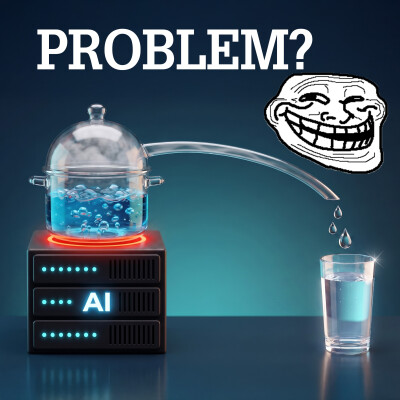
Data center water use has become one of the loudest arguments about AI, from the one-bottle-per-prompt claim to US Commerce Secretary Howard Lutnick arguing both sides on The Daily Show. So I looked into where that water goes, what the tech giants' promises are worth, and how smart towns make the AI boom pay for better water systems.
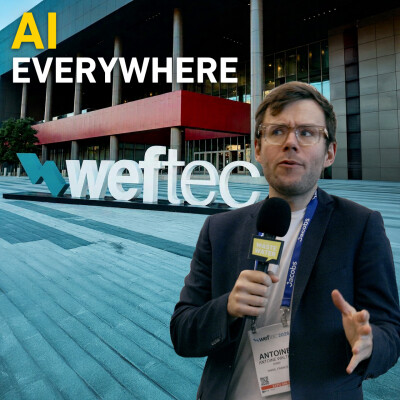
With insights from Ralph Exton, Executive Director of the Water Environment Federation (WEF), which founded the Water-AI Nexus Center of Excellence with Amazon and other partners.
🌶️ KEY SPICES 🌶️
🏘️ In The Dalles, Oregon, Google used a third of the city's water in 2024, and letting it grow meant new wells, storage and pumping that Google would build and then hand over to the city
🔍 Hinkley, Flint and Erin Brockovich's data center initiative show why neighbors want a baseline before construction, results they can check, and someone responsible for fixing problems
🚰 "Water positive" put to the test: Amazon's $2.2 million for leak detection in Orange County, and why a saving only counts if it reaches the same water system a data center draws from
❄️ Air cooling, treated wastewater or warmer-water designs: how to cut data center water use when thermodynamics offers no free lunch
🤖 AI inside water utilities: why operators must stay the human in the loop, after the FBI and EPA warned of attacks on water control equipment in at least seven states
💵 From Douglas County, Georgia, to Ralph's call to cut the ribbon at the new pump station rather than the data center: how the AI boom can finally fund the water projects communities need
🥜 IN A NUTSHELL 🥜
How much water does AI actually use? It depends on what the number counts (one response, training a model, or a whole building) and on whether that water goes back to its source or evaporates.
When does data center water use become a local problem? When one customer needs a big share of a town's supply, because someone then has to find more water, build the equipment and keep the taps running on the hottest day.
Can a data center really give water back? Yes, if the savings reach the same water system it draws from, anytime, and preserve more water than its infrastructure withdraws.
Who should control AI inside a water utility? The utility, with trained operators who stay the human in the loop for any change to pumps, valves or chemical feeds.
Who pays if the promised demand never arrives? That's the hard part of the deal, which is why utilities consider charges for unused capacity, and why water has to be on the table in the first six months of a data center project.
#️⃣ Mentioned Links #️⃣
📌 AI 101 for Water Professionals, the free 90-minute course by Watura and WEF: https://www.watura.us/courses/ai-101-for-water-professionals
📌 My previous video on the water-and-energy tradeoff of data center cooling: https://youtu.be/1o-cdb8xzZ0
📌 Water-AI Nexus, Principles for Sustainable Water Use by Data Centers: https://water-ai-nexus.org/insight-report/
📌 Erin Brockovich's data center initiative: https://www.brockovichdatacenter.com/
Hosted on Ausha. See ausha.co/privacy-policy for more information.