- Speaker #0
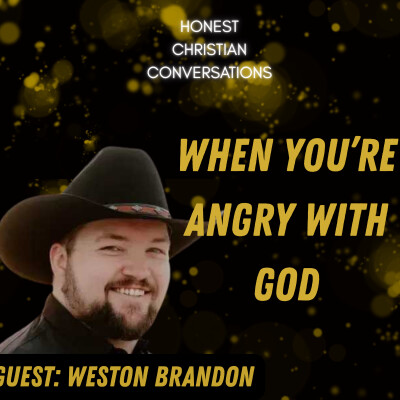
Have you ever been angry with God? I know I have, and it is okay. God is big enough to handle our frustrations, our anger, and our desire to just vent to him through quote-unquote prayer. But what about when we get this way after a tragic event? How should we respond then? Well, I had a very interesting conversation with Weston Brandon. who is part of the LDS church. When he was in his early 20s, he lost his wife only weeks after giving birth to their newborn son. And he had a lot of anger that he let go out at God. If you resonate with this, you are going to really be encouraged by this episode. I was encouraged to talk to him. I have never had a deep conversation like this with someone who is from the LDS church. So it was very interesting to hear his perspective on his relationship with God. This is a great episode. I enjoyed having him on to share his story. I am Anna Murby. This is Honest Christian Conversations. If this is your first time tuning in, thank you so much for joining me today. And if you are a returning listener, thank you as well for coming back. At the end of this episode, if you are feeling encouraged and blessed, by this, please go to the show notes and let me know in the comments. I enjoy getting all the feedback. This is how I make the show better for you. So I need to hear from you in order to know what you want. All right, let's get to it. Enjoy the show. Weston, thank you so much for coming on the podcast to talk with me today. I was moved by your profile. I actually watched an Instagram reel you posted on your Instagram page on December 8th of, wow, I can't even believe I'm saying this, but last year, 2025. And it was, your story is inspiring. It's definitely full of some heartbreak and to see how you have come up on top and it's just inspiring to me. So I'm very happy to have you on. to share that story with my audience.
- Speaker #1
Yeah, thank you. Love to do it.
- Speaker #0
All right. Well, take us back to who you were before your tragic incident with your wife and having your son. Who were you before all that?
- Speaker #1
Yeah. So at the time I was, I was 23 years old when all that happened and I was well on my way for making the life that I wanted. I had originally grown up on a cattle ranch in rural Utah. And I had served a mission for the Church of Jesus Christ of Latter-day Saints for a couple of years after I graduated high school and had come back and had gotten married, obviously. And I had started into a sales career. I did door-to-door sales after that for just a minute because I figured that was the fastest way to get into a high-performing career that way. And I was right. I figured it out and I did really good at it. And I transitioned into software sales. I I worked for a reseller of a... company called SolidWorks and I sold mechanical engineering software to manufacturing companies, aerospace companies. And I loved it. I did really good at it. And at 23, I was making about $100,000 a year by the time this had happened. And so I checked off all these, these like personal performance boxes and personal achievement boxes, you know, and, and me and my wife had a house and we were living in Texas at the time and a suburb of Dallas. And we decided our you know, we're ready to start a family. And so it took us a little while, but she eventually got pregnant. And so we're like, all right, everything's happening the way that we want it to. And we knew our kids were going to go to school. Like I had the whole, the whole plan, you know, it was all, it was all planned out and it was happening just, just how I had planned. And then at, at 26 weeks along, or excuse me, at 25 weeks along, my wife was diagnosed with an incompetent cervix, which when I was initially told about that, that sounded like a made up term. to me. Yeah.
- Speaker #0
Like that kind of sounds like an insult too. It's like, yeah, I was like,
- Speaker #1
I'll, I'll decide, like, what are you talking about? So yeah, it didn't sound like a real thing when I was first told, you know, but then they explained it to me and I find out that is actually a medical thing. And for your listeners, if they don't know what that is, it's basically she dilated, but what didn't go into labor. So the door opens to the womb and baby can come falling out of there. So they're like, Hey, you have to go on bedrest. until the baby comes. And she was a little too far along to do a surclosh because I get questioned about that a lot too. They're like, well, why didn't they just sew her up? Because that's fairly common. It is if they catch it early enough, but apparently for... I don't know what the cutoff is or, you know, anything like that, but it was too far along to do the surclosh. They said, well, you're on bed rest and we're just going to have to do pelvic exams pretty frequently and just check and make sure everything's good until the baby comes in. At, you know, 26 weeks to potentially 40 weeks or 38 weeks or whatever, that's potentially still a couple of months that she should be on bed rest at that point.
- Speaker #0
How scared were you guys during that time?
- Speaker #1
we weren't really weren't scared really during that time because Everything we were being told, like the baby is still like there's nothing wrong with the baby. They're doing extra ultrasounds. You know, they're doing extra tests just just to be sure. And they're like, baby's fine. Just the lock came off the door and we need to make sure it doesn't fall out of it.
- Speaker #0
Yeah.
- Speaker #1
And at 26 weeks, we were at Baylor Scott and White McKinney Hospital there in Texas and come to find out that that hospital has one of the best NICUs, like top three NICUs in the whole country. And they have babies that are born earlier than 26 weeks. flown out to Baylor, Scott and White and McKinney because they're so good at getting them to survive that early, you know? And they said that they were pretty confident given no other complications other than being early. They were pretty confident at 23, 24 weeks that they could, that they could have the baby survive. Obviously they didn't like it that early, but they, they're like, we were pretty good with that. And so at 25 weeks at this time, we're like, all right, we're just in this window. So we, they feel pretty confident. So we feel. pretty confident, you know, we're just hoping like obviously the longer he stays in is the better. And she ended up holding him in for about another week. And they had put some, they keep her on an IV while she's on bedrest, a little drip medication, some kind of steroids they gave her that was specifically made to help the baby's lungs develop faster and kind of kick those into gear a little bit. And whatever it was that they worked because by the time she'd held him in for another week, they go to do another pelvic exam and the baby's coming out breech. So I'm like, Kate, now we have to do an emergency C-section. And I get a call. I'm working at home on a computer. And it is in the morning. I just started working and my wife called me. She says, they're going to pull him out and they're not waiting for you. You need to, you know, all butt up here. I hopped in. I was driving just an old, like 90, I think it was a 97 diesel pickup at the time. And I found out how fast that thing went and got up to the hospital. I showed up just barely in time. and saw him pull him out of there and he was one pound 13 ounces oh so tiny yeah he was but the miracle was like i mentioned that whatever they gave him actually worked he didn't need the breathing tube shoved down his throat like most super early babies need to be intubated he didn't need that he was he could he could do it on his own as long as he had he just had a little c-pap they would put on his head to give some pressure you know yeah and of course they take him and go do a Everybody starts calling me dad at that time, which is weird for the first time, you know? And they're like, baby's fine and everything's good. And now you can come see him. And now we're going to focus on mom because baby is now, he's in the little incubator and he's all good. And now we need to focus on mom. We need to start getting colostrum flowing, you know, all these other things that, other words that I'd heard once or twice by my wife telling me. So I'm like, what is this? What is it? You know, all these things I'm learning so fast. But all in all, it. it ended up being being fine and my wife was discharged a day or two later after they sewed her back up and everything was good with her and the only thing that we're told like we really have to wait for is your son has to be big enough to maintain his own body temperature without assistance he needs to eat enough to grow without assistance without they put a little feeding tube like tape it to his face and go into his mouth or up his nose a little bit and then of course hold his own oxygen saturation. So those are basically the three. things we have to wait for. And like, however long it takes him to grow to that point. And then once he checks all three boxes, then you can take him home.
- Speaker #0
How hard was that for you not to be able to take him home right away?
- Speaker #1
That was, well, I didn't know any different,
- Speaker #0
you know,
- Speaker #1
I hadn't, I hadn't taken a baby home before. So I think I was still kind of deer in the headlights. I don't really know what's going on. I'm just doing what I'm told, but it still was when, when me and my wife go home and we're home by ourselves and baby's not, that was. That was especially harder on her than it was on me because I've done a lot of thinking about this and talking to so many other dads that have this. With my oldest son, Vance is his name, she didn't have him in long enough for me to start having the experiences that new dads have towards the later end of pregnancy that start to build the relationship a little bit, you know? Yeah. Feel him moving and stuff.
- Speaker #0
Yeah. Yeah,
- Speaker #1
like she was barely big enough to be showing. And so I think in my subconscious mind, it was still almost a story. I know that my wife's pregnant because I've seen the ultrasound. Obviously, it's not a lie. But my subconscious hadn't had time to really make a connection with the baby yet. So I was still like, I don't know what the heck's going on. But there was enough of a connection that I was like, I want to be up there with my kid. I want to take him home. I'm obviously stressed out. I'm making sure he's okay. I'm feeling lots of pressure now. I'm like, I'm being told Nikki is really expensive and that I got to, I got to work and pay this thing off. So there was a lot of, there's a lot of stress and anxiety on both of our parts. And I think the stress and anxiety was because I didn't have as much of a connection with him as my wife did at the time. Cause she could feel him moving and stuff. I think the stress and anxiety took over more for me on those feelings than, than she did. But obviously there, there was still something there. Right.
- Speaker #0
Yeah.
- Speaker #1
And What I found was key for me through the process later was I had to put intentional time into trying to learn who my son was. And I had to put intentional time spending time with him and holding him and getting the skin to skin contact. And the connection improved and I built a relationship with my son very, very quickly after that. You know, once I decided like, I'm going to be intentional, I am dad, I'm going to love this kid and make a... make a conscious decision to do that. And it happened super, super fast after that. But the first day, the first little bit there was weird for me. It was an interesting time.
- Speaker #0
So take us through the day things started going south for your wife and how did that affect you both? Was it instantly or was it something you could see like a progression before she actually passed?
- Speaker #1
Well, in hindsight, I could I can see signs. I can see some some symptoms. So there was a little bit of a lead up to it, but nobody picked up on it. Nobody recognized anything. It was kind of pushed off as anxiety, which given the situation, like everybody believed her when she said she was having some anxiety episodes and none of the nurses picked up on it. Her mother is an RN and she didn't pick up on anything like. So I've. After everything happened, I kicked myself a lot, you know, but I had to have some reality checks myself. Like there was so many other medical professionals in there and nobody noticed. How are you going to notice? You're not trained on any of this. So I had to forgive myself a little bit there. But what happened was she was diagnosed with a, well, posthumously diagnosed, I guess, with pulmonary embolism. Which is a blood clot that gets stuck in your lungs. Short story. And leading up to the day that she passed away, yeah, there were signs of her having some shortness of breath. and feeling like she couldn't catch her breath. Right. But as I said, she she thought it was anxiety and she had some anxiety issues before that. She even took medication for anxiety before she ever got pregnant. And so when she tells me I'm having anxiety, I just I believe her. I'm like, how can I help you to calm down? And that's what happened one morning. I'm working on the computer. I'm working at home because I'm closer to the hospital at home than I am at the office. And we're home and she tells me she's having another one of these anxiety episodes and wants me to help her to calm down except this time was never able to calm down. She was never able to catch her breath back. And I eventually took her into the bathroom and I was like, let's go, let's go take you into the shower and get you to cool off a little bit or something. And cause she was, she was feeling all sorts of weird physical things going on. And obviously again, looking back classic symptoms of a pulmonary embolism, feeling hands and things. Eventually she's in my arms and she tells me, she's like, no, something's really wrong. I think you need to call 911. So I do. And it was. while I was on the phone with 911 kind of explaining what was going on and holding her that she eventually collapsed in my arms. And that was the moment like, oh, pardon my French, oh shit, was the big moment. And so then the person on 911 went from asking me questions to she's like, you need to do CPR right now. And so she's like yelling at me through the phone. And so I had to start doing CPR. And she says, I've got EMTs on the way. Luckily for us, There was a fire station like. two blocks away. So EMTs showed up really fast within a couple of minutes they were there and they come in and took over for me. They put her on the stretcher there and had the, they had this thing that clamped over top of it that would do CPR for them while they were carrying her, a little machine with a piston on it to do it for them. And they hauled off to the hospital and I had to retell the story a couple of different times to the police officers that showed up there, a sheriff. showed up there and EMT and then the fire chief showed up. I told him the story. They make sure to get the story from multiple different people to make sure the details stay the same because at and when so I'm 23 and she's 25 when this happens for someone to. to have that happen at such a young age, like we got to rule out any type of foul play here, any type of drug overdose, any type of, you know, any of those. We need to make sure the story's the same. So I had to retell the story a bunch of times to some people and then hold up to the hospital. And they stuck us in this separate waiting room in the ICU that's not the main lobby of the emergency room, right? It's a little family waiting room in there. And a social worker gets... assigned to us to kind of be the liaison, the relaying information between what's going on in the ICU to the family in the waiting room. And by the time they finally were able to get a pulse sustained, it had been probably 30 minutes since she had collapsed, which is way too long, you know, way too long. So we knew just because of how long it had been that it was going to be, it wasn't going to be good, whatever, whatever happened. And the Social worker was relaying some of those things and they had pumped her full of some serious drugs to keep her heart going. And they suspected a blood clot based off of the symptoms. They put her some clot busting medication in there and eventually did get a very weak pulse back. But that was it. And that was in the morning, probably, I'm guessing now, this is years ago, probably eight or nine in the morning. And official time of death, we let her go about two o'clock in the morning, you know, 18 hours later or something like that.
- Speaker #0
Wow. Oh, Weston, I'm so sorry that you had to go through that. I can't imagine being so young, being scared, confused, not seeing the signs. You mentioned how you felt like somehow it was your fault and you had to reconcile with the fact that it wasn't your fault. Nobody saw this. And yeah, you. Wow. I don't I don't know what to say. I just I. feel the pain and you retelling the story. I feel the pain and the confusion and everything. And I am just so sorry that you had to go through such a trial. Did she ever get to see your son before she passed? I know he was in the queue. Okay. That's good.
- Speaker #1
Yes, she did. She passed away roughly two weeks later, actually, is what it was. And so I have pictures of them together of her. holding him and and a couple of videos of her talking to him and stuff like that so there there we do have some of that and she did get to she did get to see him and we went up to the hospital every day every evening after i got done with work you know we'd go up to the hospital and that was basically the routine was i would work and then we'd get done we'd eat dinner real quick and head up to the hospital and we'd spend four or five hours up at the hospital with him and she'd hold him and see what the updates are and stuff and That was when, that was actually when we looking back when some of the signs would, would come, the shortness of breath was we'd be walking up to the hospital and just taking a very short, very easy, a hundred yards at the most walk. And she would be almost completely out of breath as we got closer. And she's like, holy cow, I'm, give me a minute to catch my breath here.
- Speaker #0
And didn't,
- Speaker #1
didn't pick up on that. Didn't ask anybody about it, unfortunately.
- Speaker #0
Yeah. So was this a problem that she might've had? before getting pregnant and nobody just knew? Or was it something that happened because of the pregnancy, the embolism?
- Speaker #1
Pregnancy certainly adds a whole bunch of extra risk factors, right? And so does having major surgery, which a C-section is both of those in one.
- Speaker #0
I've had five. So yeah, I get that. It is definitely a major surgery.
- Speaker #1
Yeah. So when they do that, did they put leg massagers on you when you're in recovery after that.
- Speaker #0
Yeah.
- Speaker #1
That's why. That's why they do that. You know, so because you're the blood clots will usually start in the deep leg veins and because your clotting factors for your blood go up when you're going through physical trauma of the surgery of the pregnancy of those types of things. And then because of the C-section, you're on bed rest for a little bit more extended period of time. So then your clotting factors are up and your legs are no longer moving. Right. So that's where they're going to start is in those constricted leg veins. So they put the leg massagers on you to try to break those up and keep the blood from sitting still. That's why they put it. And they did the same thing for her. They didn't forget that. They did those. She just ended up, unfortunately, being a statistic that still got one and wasn't caught soon enough to stop it. But there are other factors that can play into that. There's a couple of blood clotting disorders, I guess. Factor V Leiden is one of those. I have, you saw my story, I've been remarried and I have a couple more kids now. My wife now actually has factor five light and she has a blood clotting disorder, which was kind of a, when, when she finally broke that to me at the time we were dating, I was kind of looking to God, I'm like, this is a sick.
- Speaker #0
Oh yeah. No,
- Speaker #1
it was, she, she knowing the story, she's like, I don't want to tell this guy.
- Speaker #0
I know. Wow. He had had,
- Speaker #1
you know, way before we ever met. think she was 19 when it happened. She had actually had multiple pulmonary embolisms, and that's how she found out that she had. or clotting disorder, but she had some other symptoms that are extremely rare with pulmonary embolism. She actually had severe pain in her back and her chest, which is very rare for pulmonary embolism. Usually you don't feel anything and Lauren didn't feel anything. Yeah. She had some, like, felt like someone was stabbing her in the chest or in the back. And so that's why she went into the urgent care and they did some tests, found out her clotting numbers were through the roof, went to the ER, did ultrasounds, found multiple pulmonary embolisms in her lungs and almost had to have surgery to remove them, but they busted them loose. So then they're like, hey, we've we've test your blood. You have this blood clotting disorder. So now just so you know, in the future, if you ever get pregnant, you have to take daily blood thinner injections every day while you're pregnant. So we've obviously we've had a couple more kids then. So we've gone through that whole, you know, we've we've been able to we've been able to make it work.
- Speaker #0
So when she told you this news, how did what was your first reaction when she told you this news that she don't think I said?
- Speaker #1
I don't think I said anything. I just remember looking and like. Your face probably said it all. Are you kidding me? You know, that was, that was a shock for sure. That was a rough one.
- Speaker #0
Yeah. The irony you stick with that. That's interesting. Wow. So how old is your son now?
- Speaker #1
He is six and he'll be seven in March.
- Speaker #0
Has he got to see the videos of his mom holding him and see the pictures? What was his first reaction?
- Speaker #1
I don't know if I could give you a first reaction because we've shown him the forever. So he's never really not known who she is. In fact, if you see behind me, we have this table here. Her picture is right over there, Lauren's picture. And this painting was actually a painting that Lauren wanted for a long time because she felt like the woman in this painting. She always related with that woman in Scarlet. kneeling at Jesus' feet asking for forgiveness for stuff you know she always wanted that painting so after she passed away I kind of go through my the whole phase of I have to do everything to to honor and do anything that she ever wanted you know that was one of the things that I got and oh and then inside this credenza here behind me is photo album she played college softball and there's photo albums for as a kid and her whole family like this is kind of a whole I don't know the right word to use but for her you know and her whole family really there's yeah there's a big tribute for her kind of on one side of this. And then there's pictures of me and my second wife over here and of our kids and stuff. So this is this actually this is why I like having this behind me for my podcast interviews, because this is our family. This is our story. This whole thing right here. You know, honestly, when you look in the background, you don't know what it is. But when I get to tell the story and I'm like, this is the story right here behind me. Yeah.
- Speaker #0
Yeah. I love that. It it reminds me a little of my situation. My husband was married before me and his wife died of a rare heart cancer. And before they could even have kids. So he's got plants in our front of our house that I don't touch because I'm a terrible plant person. I'm like, they'll die if I touch them. But he's been keeping them alive because they were something that she had. And so he keeps them alive for her. And we have a few yard ornaments that were things that she liked that were in there and things that remind him of her. It's ironic, her birthday and my birthday are in the same month, not the same day, but the same month. So that month is a positive, but also a sad time for him as well. So I have to remind myself when that day comes that it's her birthday, that he's a little more somber and it's not got anything to do with me, the day. Oh, yeah, I can, I can kind of relate to that situation. And I think it's beautiful that you wouldn't have your wife now if it wasn't because of the things that happened before. And it's the same with my husband. He was an atheist before I met him. And before when he was with his wife, she was a Catholic. So she kind of brought him to faith through her death. And we ended up meeting at our Christian church. And that's where we met. And we've been together for about 11 years now. So it's like I wouldn't have him if it wasn't for what happened to her. And he wouldn't have met Christ if it wasn't for what happened. to her as well. So it's like the life happens and sometimes it sucks really bad, but good things can come out of it. And it sounds like a lot of good things have come out of it for you. So why don't you share some of those things with us?
- Speaker #1
Yeah. I mean, obviously my, my family is, is the biggest thing, you know, that that's what my whole world revolves around. I wouldn't have the children that I do now. That did not happen. You know, I wouldn't have the marriage that I, I have now my my family is so. And our families are so unique in that sense that. I used to hear the word polygamy and think that like there's no way that that's possible. But then there's now I'm like, maybe there's I could I could maybe see that, you know, because only because I'm like my heart actually has two romantic relationships inside of it that coexist, you know. So for that reason, I'm like, I could I could see something.
- Speaker #0
Yeah.
- Speaker #1
But it's it's such a different it's it's such a different dynamic. And. that video that you said, I'm sure you probably saw the one that blew up was the one where it started like, hey, this is my wife, Lauren. This is our story. And it kind of went through a little slideshow. Yeah. Did you scroll through some of the comments on that video?
- Speaker #0
No, I haven't.
- Speaker #1
Yeah. You should go through the comments on that because there's plenty of really good comments, but there are a lot of.
- Speaker #0
Yeah. I noticed you highlighted a few in a video and I'm like,
- Speaker #1
wow.
- Speaker #0
Yeah. There's like a lot of people out there who just want to hate and they don't.
- Speaker #1
Because I think I kind of shot myself in the foot with that video a little bit also because I didn't clarify. We were married about a year after my wife passed away. But even still, the people that caught that that was a year later, because I mentioned I was like, hey, a few months later, I met this girl. They were like, you got married a couple months later while your baby's still in the NICU. I'm like, no.
- Speaker #0
Yeah.
- Speaker #1
Even still, someone that did catch on that it was a year later saying just terrible, terrible things, calling me a narcissistic piece of crap. and then I obviously was cheating during that time because there's no possible way that I could have been. And I don't blame them for this because I wouldn't have either. But grasp the truth that you can have love for a late spouse and hold that sacred and not lose that relationship, really. In fact, even kind of grow it a little bit while also growing another relationship and falling in love with somebody else. And having both together and that the new relationship does not replace the old one. And the best thing I can describe it to is when you have children. Before I ever had Vance, when I didn't have any children, I remember thinking like, I don't know how I can love another person as much as I love my spouse. And then you have a kid and obviously it's a different look, but it's incredible. And then really the biggest, the biggest. aha moment is when you have the one kid, you're like, there's no way I can love another kid as much as this kid. And then you have another kid and you're like, wow, okay, it is possible. It just happens. And there's no way you can, that you can grasp that concept until they're actually there. And then when they're there, then you can't think of not loving both of these kids. You can't imagine anything, but, and it's kind of the, kind of the same that that happened. So it happened very quickly and it happened very miraculously. And And after, after it happened and after we started, started dating, we're like, this is, this is kind of a meant to be thing in, in however it can be. Because at the time when I decided to open myself up to that, it made me nauseous. Like, I don't, I don't want to do this. I was feeling some spiritual pressure to do so. And in prayers and talking a lot to more like screaming at God a lot, you know, I was, was not happy. I, I hated his guts for a while, but I had heard somewhere from And from some somebody had told me once that even if you're mad at God, just don't stop talking to him because he can at least help you work through it. And so I kind of took that and I in my prayers, I would basically tell God, like, you know what? I don't want you to say anything. I got a bone to pick with you and I'm just going to yell at you and then I'm going to be done. And that's going to that's how it's going to be for a while, you know. But after a while, I started feeling like I needed to do whatever I needed to do inside my own heart, inside my own mind to. open myself to that again and be willing to do that.
- Speaker #0
And so I got, I was very blessed that I, after this happened, after my, my son got discharged from the NICU, we moved back to Utah where my family's at. Cause in Texas, I didn't have any family nearby and I needed some help. Right. So I moved back in, in with my parents, right back into the same bedroom that I was in when I graduated high school, you know, like, like start over. It was after being in there for a while that I started having that kind of pressure, those, those feelings. So I was like, well, all right. A neighbor of ours was a licensed clinical therapist that specialized in grief. He's like, come, come chat. I won't charge you a dime for anything. He's a good family friend. And so I did weekly therapy sessions with him for a while and and worked on some stuff and realized very quickly and quite abruptly that the grief and the pain that I was experiencing wasn't the core of my problems that were coming to me mentally of the things I was struggling with. It was just... a catalyst really to it. When the grief broke me open, it broke open all of the other old ones that I hadn't worked through. So there was there was other I hesitate to use the word traumas because having been through a serious trauma, I realized what I used to think was trauma was not.
- Speaker #1
Yeah. I think we all if we took a step back from what we consider trauma would have a different word for it.
- Speaker #0
Yeah. It's just a, just a challenge, you know? That's a good one. But it's still a hard challenge, you know, and realize that there were a couple of other things that my brain was treating as a trauma the way that a brain does treat trauma. But most of them were just paradigms of belief that I had stuck myself in inside this mental box of who I was and what I was capable of because of stories that I was told throughout growing up. I had to break those paradigms and had to realize that I'm not what other people said I was. I'm not. these kinds of things that I could work through. And as I started breaking through some of those, I started getting a feeling like you need to put effort into finding whoever it is that's supposed to be the mother of your children here on this earth and who's supposed to be your partner here. Because I was on FMLA leave. I was basically kind of in this limbo period, but eventually I had to go back to work. I had to start taking care of this kid. And I really didn't want to leave that on my parents because both my parents worked full time. I didn't really have anybody that could just watch my kid all day while I was working and I couldn't afford daycare. Eventually I decided I was like, all right, I'll be open to this if that's what you want me to do. And it makes me nauseous. I don't like it, but I'll try to make myself open to it. And so that was kind of how it started for a week or two. It was like, all right, I'll be open to it if you stick somebody here. And then after a couple of weeks of praying about it and still feeling this pressure, I was like. Now, if something's going to happen, you need to put yourself in an environment where it can. And just staying cooped up in your mother's basement is not where that's going to happen.
- Speaker #1
Yeah.
- Speaker #0
So I tried going to some single adult church activities and stuff and that. I didn't like that because even though most people were still my age, there was, I don't know, an emotional disconnect between me and everybody else. I had a kid. I had been married. She had died and I was a dad. there's just a the position was so different that I didn't feel like I related to anybody in there. So I was like, I don't want to do that. So eventually there's this, there's a dating app in Utah called Mutual that was originally made for LDS folks. So I was like, I'll try that, I guess. I really hate this because I was like, I don't want to do this, but I'm feeling like I need to. A few months later, I put pictures of me and my son and filled the... bio section of the profile with as much as it would allow me to tell the story of what's going on where we're at you know and I published it and I was like okay if anybody swipes on this they're not playing games they're they're very emotionally stable ready to to have a serious relationship or they're absolutely nuts they're absolutely crazy so I'm like at least my situation weeds out all the tire kickers so I remember going through and swiping through some of those and I said no to every single other person that you could swipe on in there. Got to the end and I was like, well, tried that. That didn't work. Guess I'm not doing that. And I had this moment where I was like, nah, you said no because none of them are actually your wife. You're looking for your wife and they're not her. So you said no. And that's not going to work. So then I'm like, well, then I'm going to keep saying no because I don't want anybody else. And so I got digging into it. And there's a premium version that you could pay for like 20 bucks a month or something like that where. you wouldn't have to swipe and if anybody swiped on your profile it would just notify you that hey somebody swiped on your profile like all right cool take my money because i don't want to i it's making me sick to my stomach to be on this app and so i did that and i disabled notifications on that app for a while so it wouldn't even tell me and I just refused to look at it for a while. And then it's probably a week later or something up in the middle of the night, feeding my son and got him back down. And then just felt like this strong pull to go check that. And it's like, I don't want to, I don't want to, I don't want to. And fought it for a little bit. And then I finally gave in and looked at it and there was four or five women that had swiped on mine. So then I'm like, all right, I guess, I guess start talking. I don't really even remember how to. how to do this because I don't want to do this.
- Speaker #1
Yeah.
- Speaker #0
But send some messages and started some conversations. And they were all they seemed from the conversations we were having like they were all really, really cool people had been through some stuff on their own. And my my wife that I'm married to now is the one that I went the first one that I went on a date with. And I remember after after that first date was well, it was after I think it was after our second date. that I decided like I'm not pursuing any any any of these other ones not because I don't I don't think they could work but I'm like this is yeah you just felt the connection with her yeah there is a there's a very powerful experience um that I had that told me like I was no I don't I I'm not one to say that God will tell you you have to marry a particular person I don't I don't subscribe to that. But at the time. I'm still very, very angry with God. I had some serious issues with him still. But again, still praying, still making sure I do that. And before I went on this first date with my now wife, I remember praying. I'm like, hey, whatever you need Lauren on the other side for that is so important, that's more important than us. You know, kind of giving him jabs the whole time I'm praying. I'm like, whatever you got her over there, I'm calling in some PTO. And I want her to come with me because I don't trust my own. mental judgment on if this is someone that I should trust or not or or things like that if if this is something to pursue and yeah I want her to come with me and I want her to tell me if I should continue on with this or not and so I go on the date and we have a great time conversation's awesome and you know it goes good when you get to the end of your original plans but neither of you want to stop being together for a while so you kind of make up some extra stuff Thank you. And so like we ended up going to get some ice cream, you know, doing some extra stuff and spending more time than we planned together on that first date. And as she was driving away, I was like, well, that was fun. But then I kind of prayed a lot more talking to to my late wife, Lauren. And I was like, well, babe, what do you think? And the the feeling that I got just hit my chest, like went across my whole body and like kind of made me tear up a little. I was like, whoa, this was just just felt so much. love there. And it was more like, I felt like I got a confirmation. You can feel confident pursuing this. It's okay. Don't hold anything back here. It just gave me the confidence like, okay, I can feel comfortable moving forward with this if that is also reciprocated, right?
- Speaker #1
Yeah.
- Speaker #0
So then we planned another date and did a whole motorcycle ride up and through this canyon and introduce her to my family and hang out at the house for a bit and just kind of feel some things out. And after that second day, we're like, yeah, we really. want to do this. So then after that was like, all right, I'm going to message these other women that I have conversations with right now and tell them respectfully, I'm going to pursue this one. And I, I don't want to pursue any of this. So that's, that's how it started. So in hindsight, looking, it happened very, very fast. My wife had passed away in early April and I was now dating somebody else in August, which was five months or something like that. Five months. And yeah, I, Didn't expect that. However, Lauren's parents, and they're private people, so I don't say their names or anything, but I do have explicit permission from them to share one detail about their story, is that my father-in-law lost his first wife when he was, when they were in their 20s, but they didn't have any children. Through some medical complications that she had had throughout her whole life. She was actually a conjoined twin and had to be separated surgically from her twin and her twin hadn't, didn't survive. And she had medical issues internally for a long time after that. And it eventually took her life in her 20s. But they had gotten remarried after she had passed away. Maybe six or five or six months after she had passed away, he remarried another woman. And that is that is Lauren's mother. And Lauren's middle name, if you saw the picture of the headstone on that reel, if you pause and you look at her name, her name's Lauren Connie Gordine. And Connie was the name of my father-in-law's first wife.
- Speaker #1
That was...
- Speaker #0
where she got her middle name. And so they, you know, they, she's very big part of their family, their story. It's not something they just throw away. They have, they have three sets of grandparents on their side. And now my kids are experiencing the same thing. a very, very similar situation. So they, having experienced something very similar, with the exception of having a child, but very similar situation were kind of role models for me. And I took a lot of conversations with my father-in-law because he's the only one that I knew kind of understood what I was going through a little bit. But for him to be now on the other side of the table was rough for him and for them. So they... counseling with them and talking with them was a big part of that process. And they were very involved with us and with our relationship and how we did things and even down to how we designed the headstone. I ran a lot of things past them. And how did you guys do it? What was your experience? These kinds of things. So it was very involved, which is not something I talk about on my Instagram, right? So when those disgusting comments come through of like, Like, I hope her family hates you forever. And, you know, you don't even know. Yeah.
- Speaker #1
Some people just like to troll. And I think it's disgusting. And I don't understand it.
- Speaker #0
I understand why there's a why that story can cause a reaction like this. What the crap? Because, like we said before, for those that have never been in a relationship with a with a widow or widower or those who haven't been widowed or. something like that. It's really hard to wrap your head around how you can, you can have another emotional relationship or romantic relationship with somebody without, without losing the other one without, it doesn't replace, right. And we, we already kind of talked about that and that's, that's hard for people to wrap their mind around that have, the only things they've experienced with another romantic relationship was because of breaking up with the other one and having to Literally, like, I'm no, I'm... intentionally not having this relationship so that I can have this one. Yeah. I have to get over this breakup. I have to get over this divorce or whatever so I can focus on this one. So yeah, I get it. That's why some people are like, he must have been cheating. There's no way he could have this relationship if he also had this one.
- Speaker #1
Yeah.
- Speaker #0
I'm not going to explain that to you because it's not going to make sense to you.
- Speaker #1
Yeah.
- Speaker #0
I'm just going to post it so that the people who need that are in this situation or need to see that. they see that and those people never comment. Those people, if they do anything, they send me direct messages and nobody ever sees what they say.
- Speaker #1
So you've mentioned a few times the LDS church and your faith in God. I don't know enough about LDS. As a Christian, I've heard some of them believe that they're also Christian. I've also heard Christians say that we kind of disagree on certain things. I just want to know how instrumental in this whole thing was your faith. I know you mentioned how you were angry with God and you had conversations. And a lot of the stuff that you're saying is stuff that I hear Christians say as well. You know, when bad things happen, they get mad at God and they just, they want him to be quiet and listen to their grievances. Like, I think maybe there are some differences in what we believe about God or about heaven, hell, all those different things, whatever. I'm not going to get into all that.
- Speaker #0
Sure.
- Speaker #1
I just think that even despite whatever differences we may have in those avenues, human beings are human beings and we have feelings and we all feel things along the same lines. Because as you were talking about what you're feeling, I get it. And I could understand why you were angry with God about what happened and how you're like, really, God? How could you give me another woman who's got the same problem? Like, what kind of sick joke is that? That's something I would have thought as well. And I can relate to your story in a certain way as well, because with my husband, he's my third husband. I was not always a good Christian. I was not making smart choices. I have two kids with two different fathers, but they call him dad because he's been more of a dad to them than their dads have been. Although my second husband is stepping up his game now, and that's a whole different beast that you got to ride because he's involved and my husband's involved. And that's just like a whole thing. So I get what you were saying about blending the families together. And it's beautiful when that can happen in a healthy way because the children matter in that situation. And I think it's healthy for my son to see that his father and I can hang out in the same room and not want to kill each other. But yeah, like my kids know the situation. So whenever he comes over to pick him up, they'll say hi to him. And I know you mentioned that they call her Mommy Lauren as well, which I think is absolutely beautiful. And yeah, it's just giving honor to the whole situation because whatever God had planned through the pain, the suffering, he makes everything beautiful again in its own time, in his own timing. And we don't get it. And it goes back to what you were saying about the comments. If you're not in the situation, if you've never been involved in that situation, you aren't going to be able to get it from the perspective that you have. My husband and I, we got married. very shortly after my divorce was final. But I tried to save that second marriage. And then in the end, it just dissolved. But I met my husband, I think like two months later at our church. And we've been married 11 years now. We have three kids together. So, I mean, I owe everything that I have with him to who he is today. I owe all of that to his first wife, Julie. I wouldn't have what I have if it wasn't for what happened to her and not. that I wanted what happened to her to happen to her.
- Speaker #0
Right, yeah.
- Speaker #1
But, you know, God has plans for what he's doing. And yeah, I just, I think your story is absolutely beautiful and how you've risen from that. And like I said, despite whatever differences might be in our religion, we're not here to debate those things. I'm here to know who you are as a person and to get to understand your story and what you went through. And despite whatever differences we may have in what our religions believe, we are still people. We can still relate. And I absolutely relate to what you're going through. Not completely, obviously. I wasn't the one who was widowed. But I get the feelings that you're going through. And it gives me new perspective to help my husband through those moments where I just feel like he's ignoring me or maybe he's mad at me today. And then I have to remind myself, no, this is me. That's her day. This is what that's bringing up for him. It's not about you. And you're giving me new perspective into how to respect that. And I've met parts of her family as well, and they're very lovely people. And yeah, it's just beautiful the way God can redeem things. And I just, I love your story. It's inspiring. It's heartbreaking, but it's encouraging as well to those who have been widowed and who may not see that there's. a chance at love again. There is and there shouldn't be guilt for that either. If you're feeling like you need that or you want that, you should not feel guilty for it. And if someone makes you feel guilty, then like you were saying, they might not understand why you feel that need because they haven't been there before.
- Speaker #0
Yeah. And I've also met some other people that have been widowed or have experienced loss of maybe a child or a parent or someone still close to them, right that are still very bitter and still have issues understanding the moving forward piece, you know. And when I have conversation with those people, they don't have a relationship with Jesus. At least not, they've decided to not make that a priority. And yeah, as a member of the Church of Jesus Christ of Latter-day Saints, I'm an unapologetic Christian. There's some other people who don't believe I'm a Christian because I believe that God and Jesus are technically two physically separate people. but part of the same Godhead. And that's kind of where... I guess you could say I'm not a credo Christian. I don't follow the Nicene Creed Trinity, but I still, I worship God the Father. I believe 100% that Jesus Christ suffered and died on that cross for me. And at the end of the day, when I get to the other side and I get to meet my wife again, and I get to stand before Jesus, if it turns out they are the same guy, okay, cool. And then if they are separate, I don't think that all the Christians that think that they are physically the same person are going to be like, oh, well, you misunderstood some descriptions of us, so you're going to hell now. Like, what? That's not the God that I believe in that actually loves me and can experience mercy and, you know, those kinds of things. I don't think that. I just have an issue with people saying, like, if you don't understand God perfectly, then you're going to hell. I'm like, well, then I'll bet you're all going to hell. I, I.
- Speaker #1
Absolutely agree with you. And I was just about to say that, too, that there's a lot of debate, especially now going on within Christian realms, people who are like, we're Christians, but there's different versions or they think different things, they believe different things. Even within my version of Christianity, Baptist, non-denominational, stuff like that, there's people who disagree with certain things. There's a hot debate going on right now about hell. And what's the difference between that and who's right, who's wrong in that? And honestly, it's like, as a Christian, you should be focused on helping people not want to go there. Not not what kind of experience will they have once they get there?
- Speaker #0
Guess what? When you get to the other side and the veil is taken off and we can see everything, then there's going to be a lot of things that make sense. And I I bet you money there's not going to be a single one of us that says this is exactly how I saw it. This is 100 percent. I had this right the whole time. You know, I don't think that's going to happen. I think we're all going to be quite blown away by what the eternities are actually like. You know what I mean?
- Speaker #1
Yeah.
- Speaker #0
It is only in and through. Jesus Christ that we're able to even have that hope. It is through him and only him. It's the only way we make it is because of his, right? And that's what we had to lean on as a family. That's what I had to lean on that I'm like, you know what? There is absolutely nothing I can do to earn any type of, I guess, grace in this situation and just in general in life. There's nothing I... I am a fallen person, and it is quite obvious because of this anger that I'm having towards God that I am not perfect. And anybody else would tell me, well, good riddance. Go figure it out on your own then, sir, if you don't want my help. Because I was kind of in that time for a while. I was telling him to leave me alone. You know, I was like, you obviously don't care about it. You know, obviously he does. But in the moment when you're in deep one, it feels like you've been dropped in this pit. Yeah. Yeah. I So, yeah, that's where it is. And now what I've taken from that experience, and another thing I didn't even talk about was I had to completely change careers because I couldn't do the sales thing anymore. Like I said, I was making plenty of money, but that also relied on me being very mentally sharp,
- Speaker #1
right?
- Speaker #0
And I could do the sales thing very effectively and I could build and nurture relationships and those kinds of things. And now relationships and making emotional connections with other people is a very key part of being a successful salesman. actually having authentic relationships with people, then this happens and that kind of gets my capability to do that gets severely damaged. And I couldn't do that. So it was no wonder that my sales career kind of fell apart. And I had to like, I felt like that was a whole other piece of my identity was success in my career. As a man, I feel very passionate about protecting and providing for my family. And a huge key part of that is financially, right? And that was something that I was proud of and something that was a really big. piece of me. So then to lose the capability of doing that, I felt like, well, that was just another piece of me that got ripped away through this situation, you know? So just another thing to be mad about. And I had to decide I got to change careers entirely. And I went into the trades and I got into HVAC and refrigeration because I just want to have a job where I don't have to talk to people, but I can still make good money. So I... That's my day job right now that I still go do. I still go fix commercial kitchen equipment. I fix McDonald's ice cream machine.
- Speaker #1
Nice. Those things are always going down. Or are they? Maybe they just don't want to use them.
- Speaker #0
I was going to say, you want to do a whole other podcast episode on the McDonald's ice cream machine, I can give you the whole lowdown on that. The short answer is no, it's not down room.
- Speaker #1
They knew it.
- Speaker #0
But I had to pivot and go down an entirely new life path. But I I learned to apply the same tenacity that I did in the sales that I really learned in my childhood growing up in a cattle ranch on work ethic, you know, and applied the same tenacity. I'm just going to outwork everybody, but also found out that work ethic alone wasn't enough and that there was there were some other things I had to work on. And I became very successful at that very quickly. And I started being the guy that they would send all the new guys with because he was really good at training. I, you know, I. I still had the communication skills and the teaching skills that I had in the sales, but now it was being used more in a training role. And I quickly learned through training the new guys on the job that there were masks that we wear, just in general people, personas that we put on that we want the world to see that sometimes maybe we don't actually believe ourselves deep down. And those stem from the wounds that we have from earlier in life. emotional wounds that we have. And if we don't understand how to work through those, or we consciously choose not to, then we kind of put on this persona to hide it. You know, we hide those things that are wrong with us inside instead of working on them. And I discovered that that was not unique to me because I had to do a lot of work to figure that out for myself. When I was in the middle of going through the therapy and changing my careers and all that, I figured out what some of my older wounds were and had to really figure those out. and work on those so that I could actually show up authentically for another relationship and authentically for starting a new career. And when I'm training these other young adult men and they're wondering like, why am I not progressing as fast as you did? They didn't because they couldn't show up authentically. So they couldn't actually put their full self into the work and to actually learning. And I discovered that these guys were having a hard time actually I guess, assimilating new information and learning, really learning the material behind why we're, because we're having a conversation about thermodynamics and electricity and, you know, like theory of how these things work so they can troubleshoot this stuff. They're having trouble learning it. And as I'm having conversation with them, I'm realizing it's because the information is having to get through multiple layers of a fake persona before it actually hits them to where they can actually latch onto it. Because they're telling me what they think I want to hear. Rather than actually focusing on learning. You know what I mean?
- Speaker #1
Yeah.
- Speaker #0
And this was consistent. It happened in different ways. You know, every guy's a little different. But there were layers to this with everybody that I had trained. And some guys worse than others. And what starts as just like on the job technical training quickly turned into like accidental life coaching. Because they... I would start, I remember one particular conversation I had with a guy we were driving. We had a job about two hours away. And so we got a long drive. And after spending a couple of weeks with this guy, I'm starting to be able to read him a lot better and have some assumptions about how he grew up and things. And I asked him, I said, hey, I want to, I want to make some assumptions about you and your, your life and what your family life is like. I want you to tell me if I'm right or not. And I made a couple of, I, what. Probably sounded like wild guesses, but they were almost all right. And the dude's like, how the hell do you know that? I'm like, because I experienced some of the same things, but I can read it just in how you're behaving and how you're showing up. And I can see where this is kind of coming from. And that was what led me into, I was like, there's something here that I can, there's something that I've learned on how I went through building my life in the first place to get to where I was successful in the sales career. that like I obviously did something right there. But then when I lost everything, I had to overhaul my entire life, overhaul myself and became very successful in a completely different career. After these guys were like, how did you do that? And having a lot of those conversations, like how did you do that? How did you do this? Realized that there was kind of a process that I followed without really knowing it. But I could go back and see that I applied the same I applied many of the same things to the new part of my life as I did the old with a couple of caveats, right? A couple of shifts, a couple of changes. And that's when I got told by multiple people, like, you need to write a book. You should put this in the book. So that's what I ended up doing. I'm like, hey, maybe you're right. Okay, I'll try writing a book. So I did. I wrote a book and published it. And that's called The Overhaul. And I'm pretty proud of that one. Now, looking back, there's some things I would change about it.
- Speaker #1
As authors, I think we're all in that boat. I've published three books and I'm like, I should have done this better. Yeah,
- Speaker #0
I'm already like, I need to write it. I'm only going to write one, but now I might need to write another one. Yeah. Yeah. So that turned into, well, now I go around and I speak to schools. I speak to high school kids. I speak to universities. I got flown out to Tennessee. to speak at Lincoln Memorial University to veterinary science students of all people. I'm like, I'm not a vet.
- Speaker #1
You worked on a firm, so you must know something.
- Speaker #0
Yeah, there was a little bit of it, you know, probably a little bit more. But actually, so the reason that they hired me to go out there, there was a connection there. This guy was the chapter president of the Veterinary Business Management Association at the school. And his wife went to high school with me. I didn't know her super well, but we were just acquaintances. And she had kind of been following just from the back of the house. She immediately kind of seen how it was going and that I was starting to do this kind of stuff. And so they needed a speaker for an event they were having out there for these veterinary science students. She's like, you should call this guy. So they called me and we talked to him. And in the conversation, I'm like, well, what is it that you want to accomplish? What's the goal here? And it was, well, he's like, I think you can help these guys because They're all super highly motivated, high performing people. You know, most of them in their late 20s at this point as they're finishing their veterinary science degrees and getting ready to go into their clinicals and actually hit the ground running in their careers. And they've all been told their whole life that they're going to make good money. But that also involves probably some business skills and some other things of running a practice. And he says, honestly, they're all scared to death because their whole life has been school. And now it's like they're jumping off of a cliff. into the life of the career and the anxiety is through the roof. And I think maybe obviously you're not a vet, but you could maybe speak to that. I'm like, oh yeah, I can do the whole life overhaul, big new, feels like you're on the edge of a cliff. You just have to jump kind of a thing. Yeah, we can talk about that. And that was the first time that I gave something, gave a keynote speech on that kind of a thing to a group that you would think I have nothing to relate to these people with, but it went amazingly well. And so that was another thing. I'm like, okay, there's something to this too. And now fast forward, I've developed a whole success system for reprogramming the subconscious for high school kids. And when schools are like having a bunch of behavioral issues or absenteeism, kids just checking out, not caring. I went and spoke to a couple of schools and was talking to kids. They were all dealing with the same things that I was dealing with. not knowing what my future looked like. And because of that, my anxiety goes through the roof and then I don't have any motivation to do anything because I don't know what to do. And I'm just too scared to figure it out. So then that turned into the whole, now I go to high schools and school districts and I have this whole like journaling system that they implement to start getting to think like, what are the lies I believe about myself and how can I reprogram those into something I would rather believe in? It's just turned in, like I would never, if you would have asked me a few years ago, if this is what I would be doing with my life, I would have said that. Absolutely not. I never would have believed that I would be going to all these schools and even some other companies that just feel like they're younger employees that are supposed to be their future leaders. There's a disconnect. They're scared to death or we need to do something for these guys and help their work ethic. That's usually what when I talk to somebody like the work ethic of these guys sucks. I'm like, maybe. There's probably more there. Yeah, there's probably more there. And that's usually what we end up what we end up finding out. It all stems from what I learned through that process. And it's a, God can do so many, God could do anything with you that you'll let him do.
- Speaker #1
Yep, I agree. It's very inspirational that you're able to help young men now. They are the future and they need to have that peace knowing that they can jump into their futures. And yeah, anxiety is very crippling. for a lot of people. And that's probably where a lot of different behavioral issues start is because of anxiety. So if you can tackle that and get rid of that, then the behavioral issues will probably go away. The focus will be there, the determination, all those things. I mean, there's jokes that men can compartmentalize or they can literally think about nothing. But I think they're also thinking about things too. You know, like you said, Being a provider means financially being a provider and you were concerned about how you were going to do that with the current job you had and you needed to make a change. That was in the back of your mind. Even if you were having a moment where you were probably thinking about nothing, it's still in the back of your mind that this is what I need to do. This is my role. I need to do this. And I think sometimes we dismiss the young men because what do they have to be worried about? They're still young. They have their whole lives ahead of them. We tell them these things, but that's what they're about because they don't know what to do with it. Yeah. And I don't think we think about it that way. We just say these things because we think they're encouraging. But I think it's making them more stressed out because they realize they have their whole future and they don't know what to do with it. So it's great that you can speak into that.
- Speaker #0
There's a scripture that I usually share if I'm able to when I go speak somewhere. You know, some people like don't do anything religious in here. But Every once in a while, I get a little bit of leeway that I can. And if I can, I always share James 1, 5 and 6. If any of you lack wisdom, let him ask of God. And the next verse after that is the thing that clarifies how you'll get what you want. And James says, but let him ask in faith, nothing wavering. And then, you know, that was kind of like the condition on that, right?
- Speaker #1
Yeah.
- Speaker #0
It's like, well, how do you not waver? Because if you're feeling anxiety about it, you're wavering.
- Speaker #1
Right?
- Speaker #0
So is God just telling, is James just saying, well, you can't be anxious about it. Like, good luck with that. You know? I was like, well, I had a, I had an epiphany one, one day as I was, as I was pondering on that. How's that possible? to not waver. And I thought of Peter when he asked the Lord if he could walk on water, because whose idea was it in the first place for Peter to walk on water? It was Peter's idea. He's the one that asked for it, right? Because Christ is coming across the water. And of course, all the disciples, they freak out. They think he's a spirit or something. They're all scared to death, right? They're like, oh my gosh, we're going to die. And Christ calls out to him. He says, be of good cheer as I. It's me. You're fine. And then Peter, he says, all right, if it's you, I want to walk on water. Let me walk on water and come to you. And Jesus stops. He's like, that is well within your power. Go ahead and do it. You know, I don't even have to touch you or anything. And so Peter actually steps out of the boat. And that was how I think that's the only way that you can not waver is you actually act.
- Speaker #1
You actually do go do something.
- Speaker #0
You actually step out of the boat. Right. Because then again, Peter starts to sink at some point. And what was he doing when he started to sink?
- Speaker #1
He was looking away. He was looking around.
- Speaker #0
He started to fear. He started to fear. It says that he saw the storm and he began to fear. And when he began to fear or he began to doubt, that's when he began to sink. And then he calls out to the Lord, says, save me. And the Lord grabs me. And then the Lord says, believe little faith. And when we first read that, I think if walking on water is a little faith, then what is mine?
- Speaker #1
Yeah.
- Speaker #0
And as I ponder that one more, I think that, well, I don't think he's saying that Peter has not very good faith. I don't think he's saying that Peter has little faith. I think he's saying in that moment when he was sinking, look at the faith you just had. Your faith got you to walk on water. You did that. And then you decided to stop believing that you could do that in the middle of literally doing it. And because you stopped believing, then it stopped working. It's just, oh, you have little faith, like compared to what you just did, right? Wherefore didst thou doubt? Why did you doubt? The doubting is what killed it. And one of the coolest things that I learned that I was able to attach some of this to my... career and what I learned was because I had to study thermodynamics and because I had to study electricity and magnetism a lot to understand how those worked. I understand kind of the physics of what makes this world go around, right? And it operates through energy, through vibration, through stuff like that. And I was able to make connections with that scripturally because as I started studying on some of this personal development stuff, you know, when I was having these conversations with these guys and writing the book and studying on those things. I found a... a whole bunch of studies done by an organization called the HeartMath Institute that would read the electromagnetic frequencies coming off of people and that your heart and your mind have completely distinct electromagnetic frequencies that come off of them. And where this connects is they found that when people exhibited authenticity, specifically authenticity, but also gratitude, then those electromagnetic frequencies coming off of people were super strong, super stable. But when people exhibited fear and doubt, they were chaotic. disproportionate and they actually interfered with other electromagnetic frequencies in the area and had destructive interference. And so me understanding from my work that the way that we transmit energy, the way that we attract things and repel things, we move energy is through vibration, through frequency. That's how we do it. That's how we capture heat energy in our house and we send it outside for air conditioning is through vibration at the molecular level. And when I see some of these studies, these are the belief systems. These are the emotions when they're exhibiting. these different, I guess you could say vibrations, right? I connect that to that scripture in James, where he says, you can't waver. You have to believe. And what is belief, but authentic gratitude for being able to do what you're about to do. So when you actually believe, when you're authentic with what you want, you actually believe you can do it. The only way you can not waver is to actually go do it. And then when I'm talking to blue collar workers, I'm teaching them what James is teaching people, but I'm using a scientific lens to teach it. This is what's happening with people, right? And you guys understand in thermodynamics that this is how it works. And so I'm just taking a completely different angle to teach them how to have faith and to act in faith, but from a scientific perspective. Nice. Yeah. And it was only because of those experiences I had in my life that threw me into a situation where I had to learn all these things, that all this kind of comes together into who I am now and what I do now and how I can help. other people and how God's given me a unique ability to help other people learn how to create the life that they want to live, even if they don't believe in God. And that's what I think is amazing, that he wants us to be able to do that, even if we don't believe in him. He's still interested in us.
- Speaker #1
I have learned so much from you. You're a very positive person. And I love that you are trying to lead the next generation of men to stand firm in faith, even if they don't. believe in the same God that you do. It's very inspirational. It's going to be a blessing to my audience. And if anyone wants to read your book, where can they get it?
- Speaker #0
You go to my website, westinbrandon.com slash the book.
- Speaker #1
Well, thank you again, Weston, for coming on and sharing with me today.
- Speaker #0
This has been fun. I appreciate it.
- Speaker #1
If you were encouraged by Weston's story today, like I was, leave a comment below and share that information so I can share it with him. Who doesn't love to hear that their story, their life has impacted somebody? else in such a way that it moved them to change. I know that Weston would be encouraged to hear this and I would definitely be encouraged as well. So tell me what you thought of the episode. I look forward to hearing from you. Thank you again for tuning in today. I look forward to our next conversation.