- Speaker #0
I've been getting less and less anxious about the SaaSpocalypse because I don't think it exists. The AI companies have a strong incentive to do PR and content marketing and tell us that it's the end of the world, for good or ill, you know, the end of employment, right? But I don't think that's true. I think that's good marketing for them and helps them raise money.
- Speaker #1
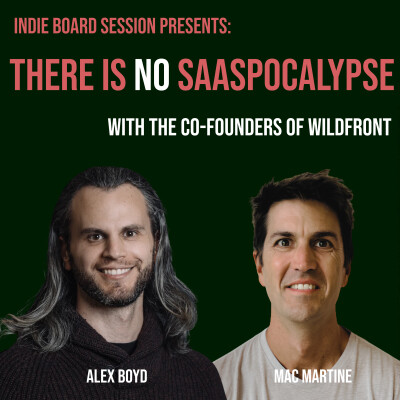
AI is coming for Thas. Will you survive it? Will I? I don't know. Let's find out. Today, I'm happy to welcome Alex Boyd and Max Martin from Wildfront. Alex, Max, welcome to the podcast.
- Speaker #2
Thank you for having us.
- Speaker #0
Great to be here, Pascal.
- Speaker #1
So for people who don't know Wildfront, tell us a little bit about what you do and all it comprises.
- Speaker #0
We're a portfolio of mostly B2B SaaS products and a few other things, but mostly SaaS. And we're not investor backed, so we're bootstrapped and cash flow oriented.
- Speaker #1
Okay. And you have how many SaaS businesses?
- Speaker #0
Probably four generating revenue at this point.
- Speaker #2
It changes a lot. We always have things in the hopper. Some make it to...
- Speaker #1
see the world and some don't yeah way more than that four that are like businesses doing stuff these days and you're so you're a little bit like newsletters but one of the particularities is that so you some of the four you've bought and some of those before you actually built yourself right yeah and the reason why you said you do mostly sass is that you also have a newsletter And on Substack in a community, like a paid community on Substack, Wildfront Plus. Yeah,
- Speaker #0
we're in the process of probably migrating it off Substack, but that's where it started. It's like a founder mastermind for SaaS founders. And there's like financial investments and stuff too. So we're just open to like taking stakes in agencies and other companies and just generally being just stacking cash flow. We just think SaaS is...
- Speaker #2
fun and one of the best ways to do that but we're not like only doing that necessarily um okay yeah thanks that like the newsletter yeah i was gonna say things evolve into things we didn't plan for example the newsletter was a way for us to keep in touch with people and share information and then all of a sudden we found that we started doing calls and then people wanted masterminds and so now all of a sudden we're kind of shifting the community to become a little bit more mastermind focused and yeah so you
- Speaker #0
we our minds are just always kind of open to whatever comes so and then every day we talk about buying like a senior living or a plumbing business too uh just for diversification we haven't done that yet but uh that's what i mean we routinely we're like what if we started a treadmill moving company and hired a couple guys and just moved treadmills stuff like that but um uh it's all digital so far uh but ask ask us in a year okay um and so
- Speaker #1
And that's a good segue, actually, to my next question, which is what has AI changed in how you view your company? So maybe the answer is that you might buy some senior living facilities in a year. But what else?
- Speaker #0
Well, Mac is way faster than before at building product. And he's the primary one building product.
- Speaker #1
Yeah.
- Speaker #0
Which is really cool to watch for me because. I mean, I can not promise, but like expect that if a customer requests something small in the product, it'll be done by like the end of day because Mac will just tag Claude in the GitHub ticket and it'll just be done. Versus in the past, it'd be like, let's put it in the backlog and revisit when it becomes a priority and enough MRR stacks up that it depends on it. And like, we can just move way faster than before, which is nuts. Cool for me as the one selling and marketing, but I imagine equally cool for you as the builder.
- Speaker #2
It is. I think fundamentally, AI hasn't changed the way we view business. I think it's made us significantly more productive and let us do a lot of very cool and useful things, especially sort of internal tools and backend stuff. But it hasn't changed the way we view business. We don't think of what can we build with AI. We don't think of things that way. We want long-term sustainable businesses. It doesn't mean That we won't ever build something that is like maybe a fad or maybe riding a wave. We're not opposed. to it necessarily but we certainly don't seek that out um so it's yeah i think again it's like it's really propelled us and what we can build and the utilities and things we can build sort of behind the scenes especially um but
- Speaker #0
yeah no we're not like looking for how can we build ai for a blah and like going down the list of what we can build ai for and it's just um It seems like half of Twitter is just doing that. And we're not interested on that basis alone. It has to be a good business. And if it's AI native, cool.
- Speaker #1
But do you still do acquisitions, for example?
- Speaker #0
Well, we're more picky. So a lot of stuff that is coming up for sale is coming up for sale because the owners and founders have a strong sense that their business will be... hindered by ai and so if they see that their revenue is likely to decline because claude can do it they have a choice they can either build faster to outpace what a model company can do with their own model or they can try to sell to sort of a greater fool who will buy it on a multiple that is sort of assuming ai won't reduce its revenue when it in fact it will so like they're like, well, it's a, you know, I want five X earnings. even IBEX ARR. It's like, okay, that's fine if you don't have significant disruption risk, but if you do, then that's not a great thing. And so there are enough fools buying SaaS companies that have significant AI disruption risk that we can't outbid them intelligently. So we just end up not doing more deals in the same way that like... I feel so arrogant comparing us to Berkshire, but I learned a lot from Warren Buffett. Just I'm trying to emulate that skill set of if there's nothing attractive to buy, we just won't buy. We'll just run our own stuff and grow organically. And when there are more attractive things to buy, we'll do more of those acquisitions. But we're not going to buy for the sake of it.
- Speaker #2
I also think one of the things that we find really interesting, why we like to look at other businesses we could buy is because it... Well, one is it exposes to niches and areas that we wouldn't otherwise come up with, because that's what we like, the sort of unsexy things a lot of times or things that are kind of undiscovered or something. That's one of our products that we bought, View Export. We never would have just come up with it. And another is that we know, well, I, as a builder, know how many builders just want to build. And even now, AI has made it really even easier to build. And so a lot of people know how. to build or can build or want to build, but they don't know how or want to do any of the other part of marketing or building a business and getting on the phone and all these things. And so we not only but especially like to look at opportunities where someone built something that is really cool or the concept is cool or the market is cool and they have no idea what to do with it or or they got it to 1k and don't know what to do with it. There's a lot of this. And so we feel like there's some cool opportunity in that. And so that's. Even when we don't buy stuff, it's fun to kind of browse around and open our eyes to things that we didn't know existed.
- Speaker #1
And so what is it that you don't, that you think it's foolish to buy today? If you go back to what you were saying, Alex, earlier. I mean,
- Speaker #0
things that seem very much next on the list for Claude to do itself. So like, like a. Bank statement converter probably seemed like a great idea many years ago. And the chances of, I mean, right now I could put a bank statement into Claude and it'll convert it for me. I don't need a separate app to do that. And so the Claude adoption curve is the decline curve of that product. Unless it does other stuff and continues to build and so forth. But if you just do the old school thing of like, I built it. you know, it's good and you never touch the product, you never improve it, then now you're going to get eroded way faster. A YouTube transcriber AI, not interested. The vast majority of SEO AI content creators, not interested. AI video creation, I mean, to some extent with Sora, Sunset and there's a little more legs there, but it's like how long till Cloud comes out with Cloud Video, you know? Whereas, um... you know, with what we're launching with Demandbird. Well, okay. Can Cloud do that? No. To build it yourself, you'd have to get access to like 10 different APIs. architect them well, battle test it all. It's not something that you can just kind of, you know, I put in YouTube video, I get out transcript. So anything that seems like this sort of experimental thing that just our judgment call is that ChatGPT could do it in three months if they just haven't announced it yet, or maybe they can already do it internally and they haven't publicized it. We want to try to avoid that. Anything where there's like significant integration mode, data mode, we love that. um compliance mode compliance mode is great too um like for example we were looking at an app that had a google casa certification and i was like that's kind of cool that takes a long time to get it's not easy to get um anyone who wants to vibe code that would also have to get it um and we bid like i think like just lower like our max was just lower than what the winning bid ended up being but It was like a Google Chrome or maybe even. a google drive extension it wasn't even an app store extension like a google drive extension i was like oh that's that's great like no one's thinking about this it's used by a niche like legal um type um they probably don't want to put that data into cloud they probably want to put it into something they know is secure so it's a security mode um that we thought was interesting we came pretty close didn't quite do it but um uh yeah we have to be able to see pretty clearly why it's unlikely that anyone will be able to do that with a $20 a month OpenAI subscription in a year from now. Unless we bid, you know, so low that we don't care. Yeah,
- Speaker #1
of course.
- Speaker #0
That's not, that's less common.
- Speaker #1
And that's very helpful. And so if you, but now if you think about SEO, I mean, obviously a lot of your product historically for many IndySaaS founders are distributed through SEO. Um, how has SEO or inbound, uh, changed for you, um, for your existing businesses? Um, or do you rely more on other channels like socials, your newsletter, et cetera?
- Speaker #0
Um, it doesn't seem to have changed anything functionally. Um, the only thing that has gone, so basically all this stuff is pretty similar, except we get fewer clicks to our website. But the clicks we lost were not the clicks that were ever going to turn into customers. You know, why should I create a LinkedIn company page? Previously, Aware got a lot of clicks for that, one of our prior SaaS companies. But those never were contributing to sales. It's the ones where they wanted to buy something where they're like, okay, before I buy it, I need to see your website. And that's still very much the case. They need to see your website before they buy. I mean, ChatGPT wound down e-commerce shopping because it was too difficult. I mean, I can't even imagine trying to buy SaaS through ChatGPT. That's just a nightmare waiting to happen. So people are still going to go to your brand site when they want to buy. And if they're going to do that, then the principle is the same. You've got to be able to be found, whether it's through AI search or Google search or any conceivable search tool, you should be findable. easy to do business with. So yeah, if you, I guess if your business was reliant on those like low quality clicks, like an ad publisher, you're screwed. Like your revenue went down by like 85 to 95% because you're just relying on monetizing clicks. But you know, a SaaS company doesn't monetize clicks. You monetize interest in buying a tool. So that's why we haven't really seen a decline. We've just seen growth. AI is citing our products a lot. We've had thousands of citations in ChatGPT for view export in the last few months alone. It grows every month. I pushed a free layoff alert tool live a few months ago. Again, thousands of citations. We get free signups every day and we monetize. Well, we're thinking about monetizing it. We haven't really decided on a big strategy yet, but like buy referrals to attorneys and stuff rather than charging per use. So, yeah. betting stuff around, but we don't like a business model that is dependent on monetizing any click. It's not that great.
- Speaker #1
And you were mentioning earlier in our conversation that now you can fix a bug or add a feature almost like the same day. Do you see that your customers have shifted their expectations with AI? Do you feel that they're expecting these changes? Do they still thank you the same way? Like what changes have you seen in terms of product expectations?
- Speaker #2
I would say I haven't noticed that significantly yet. I will also say one of the things that we have always done is highly prioritized customer requests. It doesn't mean that we do everything at the drop of the hat, but if it makes sense or if it's certainly if it's a bug, if it's a bug, we would drop everything and do it. Like I don't care if I'm on a plane or like having breakfast with my kids, but we do it as quickly as humanly possible. features. And similarly, if it makes sense, we will do it as quickly as we can. So I feel like we've always been sort of that way. So I don't know if the reason that we haven't or I haven't noticed that significantly is due to that or what.
- Speaker #0
Maybe in a few years it'll change. You'll have more smartasses who use cloud code once or twice being like, you can just do this right now. Do it for me. But we haven't gotten that yet.
- Speaker #2
um probably because what you have no i was gonna say some sometimes at all like i have gotten that kind of thing in the past and i'm like yes it's not that i couldn't do it but it doesn't make sense for the product yeah exactly or you know type of thing it's a judgment call it's like we need to talk about this whether we actually want to do it not that we can't but like how
- Speaker #0
should this be done does the way you want it to be done match how our other customers want it to be done. Like, for example, in our last product. there was a choice to make the default button in our engagement for you to reply or reply and like. And you would not believe the amount of people on both sides who were like, I can't believe you guys have reply. That's so stupid. It should be reply and like. Equal number of people being like.
- Speaker #2
As soon as we switch it. Yeah.
- Speaker #0
They were so mad. Like, why did you switch it? That's so dumb. I needed to just reply. I want to like separately. And we were like, so it wasn't that we couldn't do it. It was just that people had differences of opinions. And so. a lot of it's that, but now we can more easily add things as preferences settings more easily with cloud code. So we can like make those trade-offs more easily. Whereas in the past, it was more complicated to do that. Yeah.
- Speaker #1
And so let's switch gears and talk about Demandbird, which is a new product that you're launching. It's a online scheduling tool. And the reason why I wanted to talk about it for a few minutes is because it's your It's a product that you're building in a obviously very competitive market, but you're building, you decided to build it and you're using AI a lot for it. And so I wanted to understand how, like, like what has changed building? What made you decide to build Demandbird today? Let's maybe let's start there.
- Speaker #0
Well, we built a LinkedIn tool. That did well commercially, but then was not a terms of service compliant tool. Yeah. And then we shut it down because of that reason. And we had all these customers who kept saying, like, I know why you shut it down, but I really miss having it. And we just got that week after week after week. And months went by and we were like, why are we not building something for all the people who want to buy? a social media tool from us and who know us to be good at building social media tools. And then Mac sat down and was like, let me just see how hard it would be to get all these APIs. And he was like, actually, not that crazy, you know. And then I think it took me a bit to go from thinking in the mode of, well, we can't do the same use case we were doing, so what's the point? To going to, well, there's a bunch of other use cases. I think a lot of SaaS founders see any competitors in this space doing something reasonably similar and they're just like, OK, that's their turf. I won't touch it. And they don't have this thought of like, OK, well, there are some people serving this, but what could be better about it? I mean, there's so many project management tools that all have significant revenue because some people like it some ways and some people like it other ways. I mean, beyond that, there's. a bunch of stuff that the current crop of scheduling tools either don't do at all, only do for a very, very expensive amount, or in some other way, make it hard to do business with. Like you have to sign up for an annual contract and we can just compete on pricing and packaging, for example, in those cases. But there's pretty much always something new. I mean, people told me the same thing when I started a marketing agency. In 2017, oh, there's so many people writing blogs. You'll never make it. I was like, I'll just do it differently. And we built it and sold it. And it was great. And it was very popular. Now it's a household name brand in content marketing. I think the same is true for SaaS. I think just because some other company is doing something like it doesn't mean you can't do it different, better with products, pricing, anything.
- Speaker #2
And so,
- Speaker #1
yeah, go ahead, Mike. Sorry.
- Speaker #2
Well, all of that is true. And during, you know, over the past few months, especially, well, over the past maybe six or eight months, we've been building a lot of internal tools. And it basically just started as this big umbrella app with all these tabs on the left that are all these things that we. do and want to do there. Some of them were complete, some were incomplete, some were, you know, and as we started to work through them, we found that one of the things we needed the most was this, this good cross platform post scheduler, because, yes, there are a lot of out out there, and I don't want to talk bad about any of them. But we have found that they just didn't work well for us. And we envision a better way. and one that just works and all the things that you need to do to like, like when you post to Instagram, it has to be a certain ratio. And if it's not, you got to go out and fix it. And we do all that for you. And we found that as we had all these tabs and all these things we were trying to build to help our own processes, that was the one thing that became like highest priority for us because Alex spends a lot of time on social media. I try to, but I don't have the capacity to do it in the way I want to do across all the things. And so it became like, this is what we need to do. And we like to dog food things too. So we just like this, we feel like there's a better way and we feel like we know how to do it. And it does have overlap with a previous product that we had where it was aware in the sense of the customer base and just overall knowing how people interact with social. And so it just kept rising to the top. And we fortunately with AI have had the capacity to be able to. put a lot more into it. And so it's just coming together really fast. And we have a huge vision for it. So right now, I still think it is a cross-platform post scheduler, but there's a lot more subtleties to it that are coming out already and will be continuing to come out. So we're really excited to see what happens with it.
- Speaker #0
Yeah, like even things like an MCP and being able to think Give a post idea while you're walking around and then text. to demand bird your idea and our mcp will take that put it in your drafts and clean it up for you or you can be like hey that post that's supposed to go out schedule post that now you can text that while you're out somewhere and we'll be like great got it and the agent will do that for you so like little little ai subtleties it's not an ai company but like ai subtleties that fit into everyone's workflows um like that stuff i don't i don't think you can do that in hootsuite or sprout social that's not really like how they're thinking about it
- Speaker #1
And so one thing that you told me is that, um, it was interesting is that in terms of builds, uh, demand bird has, the demand bird has a fair amount of features and you, you've launched, you've built it in three weeks, you said, I think a month.
- Speaker #2
Oh, it's hard to say. Cause it's been, it was kind of in the background and then it became, but I would say, uh, I don't know,
- Speaker #0
the full-time equivalent of three,
- Speaker #2
four weeks, something. Sure. Yeah. Like, like a month of.
- Speaker #0
Mac never does one thing for even a full day, if not to say the least about three weeks straight. But if I were to put it in full-time equivalent, probably, yeah.
- Speaker #2
Or at least like full focus.
- Speaker #0
Full focus equivalent, yeah.
- Speaker #2
Majority of focus.
- Speaker #1
I mean, obviously you had the experience from before. So from in terms of understanding the subtleties, that's something that you had figured out. But it's very different from what would have happened three years ago, I assume, right? It would have been... A much bigger endeavor.
- Speaker #2
Yeah. Yeah. Yeah.
- Speaker #0
I mean, it took several months to get the prior social media tool to MVP. And it took, you know, two weeks to get to basic MVP of this. I mean, say maybe even like quicker. And then some of the effort has been like non-technical, like applying for the various compliance things. Like getting Twilio access was.
- Speaker #2
very difficult to do we just got it i think this morning yeah after weeks and weeks but i mean the while the ai building is amazing the whole pareto principle is still very much at play where this thing feels like within a couple days i can be like here it's almost there and then it's weeks before that last 20 is done and that's everything from like even deploying is getting easier and monitoring is getting easier but you still have to do all these things you have to know all these things you have to apply to all these api things you have to there's a lot you have to Dude, I forget. I still forget every time. I'm like, oh, no. This will be ready to launch tomorrow. And then two weeks later, almost, you know, so, um, yeah. Yeah. It's been amazing.
- Speaker #1
And from a go-to-market standpoint, um, what has changed compared to before? Like, what are you doing anything differently, um, than before? I mean, you have, you know, customers because there are customers that liked your previous software. So obviously you have that. But in terms of, do you see any difference in how you approach your go-to-market today versus two years ago? Or is it mostly the same?
- Speaker #0
The only real change for me is that instead of using Webflow to build sites, I'm using Cloud to build our marketing websites. That's pretty much the only, for me, the only change.
- Speaker #2
I would also say for now, for example, I think we've mentioned that this week, past couple of weeks, we've been... I would say soft launching demand bird. We're still waiting on some integration, some approval and stuff, but we've been getting some people in there. What's definitely different to us. I mean, this doesn't, this is more specific to Wildfront, but we now have a bigger audience. We have a bigger mailing list, a bigger newsletter from just from being around, but also from our previous product. So we're able to blast thousands of people and get, I mean, right now we're getting floods of new trials because we had email go out this morning. So that. Again, isn't specific to the AI development, but it's different for us. But no, I don't think generally things have changed. It's still pick the top two or three channels, try them, double down on what works and stop what doesn't. Maybe try something else.
- Speaker #0
I visited two customers in person yesterday at a happy hour. So I'm going non-AI for a lot of it. If anything, it's pushed me to do more things like... call people, get lunch with people, and like things that you can't do in an end-to-end workflow. I am embracing more. So it's almost like our go-to-market is maybe almost anti-AI in some ways because people want to use AI for marketing, but they don't want to be marketed to with AI, I've noticed.
- Speaker #1
Yeah. Okay. And so... Now, like, obviously you've mentioned earlier that in terms of how it changes how you operate, you're using AI, like, code for software development, probably also a little bit on the content side. What, you mentioned also that you've built a lot of internal tools. I'm curious, what kind of tools have you built? that powers how you operate.
- Speaker #2
That's,
- Speaker #1
I think, a quite interesting thing.
- Speaker #2
Yeah, there's a ton of them. But one of the ones, like there are some things. So we're both in Slack. We have a lot of Slack channels with bots coming in and doing things. And so some examples are like when someone signs up, we usually have a different channel for each product. And then we have a sales channel and all these things. So. As soon as someone signs up for a trial or an account, it goes into Slack with the plan that they signed up with and their email. And then we have a bot that will go back and it will profile that person in that company. And it will go out and it will do all this stuff and it will come back and it will be like, here's their LinkedIn profile. This is a company that's 500 people. It's this kind of company. They are here. Here's why it's a good fit or why it's not a good fit. And this is the kind of thing where. We might poke around briefly for some of our products where it's like a bigger price point. We might go try to figure out who they are and we usually reach out to people, but it gives us a lot more information that we would have otherwise had and very quickly. We also have some social listening tools that are like we're iterating on that we use that may or may not end up in, well, most likely some of which will end up in Demandbird. What else do we have?
- Speaker #0
Finance tools. that do forecasting, bookkeeping, memo creation, analytics tools that roll up analytics across all our properties, pulling AI rank tracking data from Bing into that, creating journal entries from unbundling Stripe payment processing fees that go right into QuickBooks. Deferred revenue schedules are automated by a little minion I created. Like I use cloud code to create a deterministic program to do stuff. I'm not like. It's not all LLM stuff, like we're using AI to create non-AI internal tools, but it just would have been prohibitively expensive to do that before. And now it's not. I can whip it up in a couple of days.
- Speaker #1
So you build something that, for example, takes, if a customer pays, I don't know, a thousand bucks for a yearly plan, then it breaks it down into monthly things so that you can... have the right revenue numbers on a monthly basis from an accounting standpoint?
- Speaker #0
Yeah. And so I don't have to pay Stripe for their revenue recognition product, which is expensive. It takes the fees, it takes the deferred revenue, and the balance left in Stripe creates one journal entry. And I just copy that into QuickBooks and I'm done. It took like an hour to do that before. And then it also goes into Google Analytics for each product. And then copies the traffic data to like my master forecasting sheet. So I just hit a button and then it like pulls all the information for all the products and then updates the spreadsheet. And like I guess I could have been a dashboard for that. But some things I just want on a Google Sheet. I don't want it to be something that the AI can like wipe the database. I want the security of just give me the freaking spreadsheet. So I just have AI do that and rather than creating a different thing. but I'm not updating it manually. I did that for our household budget too. I had the same type of spreadsheet approach. I had AI pull the numbers from Monarch and update my own spreadsheet. It tells me which of my stocks that I own are more or less valued on a fair value basis and gives me a little graph for that. Just like anything under the sun that I was doing manually, I'm building an internal tool for, all of which is giving me more time to do the shaking hands and so forth of non-AI stuff. which is great.
- Speaker #1
Interesting. So a lot of finance things, a lot of finance automations, a lot of dashboard analytics.
- Speaker #0
Yes.
- Speaker #1
And no, it's a good idea. It's not something that I have played with. I've played a lot with management, internal management software, but because I have a bigger team. And also company analysis, like memo, you wrote something, you told about it. How do you prioritize among the four businesses that you have, how you allocate your time? Because Mac is very productive, but it's also, it makes every hour that you can use on the product side or your time having. meeting customers in person more valuable how do you decide where to allocate your time between these different businesses um i guess for marketing some of it is some of it is reactive like if most of our business is inbound so um there's
- Speaker #0
a lot of just like people sign up for free trials i notice who signs up i reach out to them the ones that want to talk will offer time to them. For the free tool things, it's just like... Some of it is energy level. Like sometimes I just don't have the energy to do, to write a great social media post or like write a newsletter. And I just don't have the mental bandwidth. So I'll use that time to like build an internal tool that takes much less energy to do. I think Mac probably do that too on the product side. Like some of you just, sometimes you can work on a big thing. Sometimes you just want to work on a side thing.
- Speaker #2
Yeah. I mean, and we definitely, there's normally one product that's the focus. like the majority of our time like for and then it usually gets to some point of either uh not runs on its own but like we it just doesn't need us all the time like view export is kind of that way right now where it doesn't take a ton of our time um and demand bird is taking all of our focus because that's where we want to put it um i personally am like i'm like a list i've always got to get everything out of my head and i'm constantly very much paying it it's it's Bugs and customer requests. Again, that doesn't necessarily mean I just do whatever they request, but I process that. I consider it. After that, it's literally like what will move the needle the most. And it's harder to describe exactly how I, but that's an intuition thing. Sometimes it's a long-term thing. Sometimes it's a short-term thing. But it's truly like what will move the needle. And I feel like that's sort of how we have to be when we're two people and moving fast and doing a lot of things. Um, so it's just a, it's a gut and an intuition that I think, um, you just kind of get over time. It's there's, I wouldn't say that we sit around spending much time figuring like, huh, what should we do? What should, it's just, we just kind of know.
- Speaker #0
you know most of the time I mean or there might be a bigger discussion on like all right I think it's time to shift some energy from this overall project to this overall project but it's usually like a bigger longer term shift as opposed to day-to-day yeah and my default if I can't think of what to do I'm gonna write LinkedIn comments and build SEO it's like those are just two things I can do in my sleep and if I have low energy but I want to do something I'll just grind on um engaging with customer or prospect posts and then um seo for our sites link building and content building um if i can't think of what to do i know those to be valuable activities and just they're easy they're kind of mind numbing so i just i can default back to that if i get a little energy spike i have an espresso all right i can tackle something that's you know more interesting um but yeah it's kind of vibes and intuition after i don't know fucking 10 years of sales marketing. I don't have to think about it too hard.
- Speaker #1
How do you view, I mean, obviously you're, you're just two of, there's just two of you for now. But how does AI change how you view growing the company? Today, the businesses are small-ish. At some point they won't be, they will be hopefully much bigger. Like, does it change how the calculation you make in terms of... hiring folks for help, what kind of help you would want in terms of skill sets? For example, cheap labor that is maybe less skilled in AI versus maybe more expensive but more skilled in AI. How do you view how you build your company in the future in the wake of AI progress?
- Speaker #0
Well, it's kind of nice to have a clean slate. With our last company, we had a full-time engineer at 30K MRR, and that would be absurd now. Like, you just don't. I mean, we didn't need it before. It was nice to have, but, I mean, probably something in the range of, like, $2 million of gross profit-ish per person. So, yeah, if we're, like. clear into you know seven figures of bottom line hiring somebody full-time can probably make sense for higher level stuff in the in the meantime i don't think we need labor so much as um non-labor things so like for um for hiring people i'd much rather hire people to post about our products than i would to have them like work on development or something you We almost certainly are not going to need a developer for much, much longer than before. And when we do, they'll need to be good and senior and probably part-time at first. But what we want to budget for almost immediately is reach audience and paying influencers rather than doing stuff internally. So I guess the focus has changed to if all you want to do is internal marketing, that's not worth very much. But if you have an audience, that's worth a lot more. We want to hire you for that. So it leads us away from full time and more toward contract. Pushes way up the amount of revenue we can do per person before we hire at all. And which is nice. I mean, I like people, but the fewer people you have, the fewer relationships there are to manage. And if you are people who need time off and vacation benefits and all sorts of stuff.
- Speaker #2
We don't actually, for the foreseeable future, we don't have the goal of growing a team or hiring anybody, or at least at some point that would make sense. But we're having so much fun. And the goal right now is just like, have a good time generating cash flow businesses. postpone needing to spend money as much as possible. Yeah. You know? Uh, and so like hiring, like Alex said, we did hire somebody previously, uh, and it made sense at the time. And now I don't, I mean, sure. We could probably start to replace some of what we do if we wanted to, but I at least don't really want to right now. And, um, so it's hiring isn't on my mind and it's certainly not, I don't feel like we're at all hitting. the capacity that we were before. So, yeah, I mean,
- Speaker #0
like I can probably see hiring and marketing earlier, like. People who have audience, have opinions, are people who are entertaining, who can create entertaining content. Like I would look to hire for that much earlier than for, you know, a bookkeeper or I don't know. I can't even think of how we would hire operations. Like why would you need an operations manager? I have God to build internal tools that can anyway. I'm exaggerating a little bit, but like you need the pushes hiring way later, which is bad for employees and good for entrepreneurs.
- Speaker #1
Okay. Now, I want to understand a little bit more about your psychology in this SaaSpocalypse. I mean, we've been inundated a month ago with headlines about the end of SaaS, SaaS is dead. I mean, we've heard SaaS is dead for three years now, but you know, a month ago, it was a bit more tangible.
- Speaker #2
SEO died like 20 years ago. Yeah.
- Speaker #1
Yeah. When Atlassian and Salesforce stock price went down by 50 plus percent. And so how has this period been like for you personally, emotionally? How did you deal with that? Does it affect you? Does it not affect you?
- Speaker #0
I think I was, I've been getting less and less anxious about the SaaSpocalypse because I don't think it exists. I get more and more confident every day that what people who are not in SaaS think is going to happen to SaaS is not actually happening and going to happen. I have thought for years that AI is much closer to like normal technology. exciting, cool, very productive and productivity enhancing, but normal technology and not a singularity that will end the world either benevolently or evilly. I think the AI companies have a strong incentive to do PR and content marketing and tell us that it's the end of the world for good or ill, you know, the end of employment, right? But I don't think that's true. I think that's good marketing for them and helps them raise money. But it was pretty loud a few months ago. Um, if anything, I've for the first time looked at maybe buying tech stocks, um, now that they're so far off their highs and in a way that I did not and would not have done in 2021 or two at all. Um, but you can't replace the business of Salesforce with cloud code. I mean, what a ridiculous assumption. And so, yeah, people who don't use it think it's going to kill. All software companies, people who do use it are like, it's super useful. But you're not going to. You're just going to reduce junior level developer and admin employment. And those people are going to have to find, you know, different jobs to do. But the rate of AI adoption is so slow that, like, I think it'll adopt at a similar rate as people will generally find new jobs. Productivity will go up and it'll be like the Internet where, like, the same thing happened. Computer used to be a job title, not a name of an object. And we don't need computers, people computing anymore. And like, but anyway, so I could go on. But the more time goes on, the clearer it becomes, I think, how this stuff is affecting and impacting. And I don't think it is a sasspocalypse at all. I think it is just a changing of how you run companies, grow products, write code.
- Speaker #2
uh in a good way for the owners of sass for sure what do you think yeah i i think we have to i i personally try to balance like i i like some twitter is sort of where i keep up on kind of what's happening but it's also like kind of toxic and all this like everything's all sensationalized it's all crazy now and every time i open it i'm just like oh my god stop so i try not to look at it that much, but like I said, do because it's where I need to look at it some because it's where I keep up on the happenings. But it's also important to step back and try to just like look at our business and like everything is it's made it better. It's made it more fun. It's made us more productive. It hasn't hurt us. And I we talk a lot about we do these sort of like thought exercises and like, well, what five years from now, if we look back, what's going to be the obvious thing that we should have known or So we try to pay attention. I think what's scary is like the moats are changing. We also talked a lot about moats. What are the moats? The moats are definitely changing. And we don't know exactly what they are. And Alex and I, we have differing opinions a little bit on like what the infinite change is. So we have to keep talking about that and thinking through that and trying to, you know, place bets in different places and do our best to, you know. be predicting sort of where it might go, but also like a good business is a good business. And so I don't know, trying to, again, like until it's like breaking down the walls of our business, like we feel like everything's good and we just got to keep not getting too high on our horse, but also not get freaked out because if we freaked out, freak out then.
- Speaker #0
And if you're too anxious, close Twitter. Yeah. And go take a walk and you'll feel better, I think.
- Speaker #2
Yeah.
- Speaker #1
Mike, what do you think is the moat? Because Alex mentioned that a little bit earlier, but what do you think is the moat?
- Speaker #2
I mean, very similar because we talk about this at lunch most days. But yeah, I think deep integrations, information, sort of data, you know, compliance. But there's also so many variables to this too, right? Like, because... There's also different things to be scared about with AI. Are we scared about AI or SaaS? Like everyone can build their own thing and they don't need us anymore. Well, I don't think we're there. Every time it takes me three or four weeks to build an app, even though that's incredibly fast for what I'm building, it tells me it's a moat. Like that alone is a moat to the guy who works at some company. He's like, oh, we shouldn't pay $200 a month for this thing. I'm just going to build it. Okay, go build it. It's going to take you. Is that really the priority of someone at Salesforce or wherever to spend three weeks doing this? And sometimes it just doesn't make sense. And it's helpful for us, too, to look at, like, what do we still spend money on? And what are we not willing to spend money on? And there are some things. But most of the things I would say we build internally, either we're building it because we now have the capacity and we don't like the options out there or there's nothing that does it. or maybe In a couple cases, it's like it just isn't worth us spending $30 a month for this thing, but I can build it in two hours and it's sufficient. So while we can say, oh, it's so easy to build, like, okay, great. I don't see a lot of new people making a bunch of money off of these people vibe coding their apps. Like, yeah, there's some, but no, no, there's more to it. There's more to building a business and more to, so. can you build a bank converter or bank statement converter or some tiny little one page tool? And honestly, yeah, there's some there's still some openings, but I don't know. I'd be concerned if it'll still be around to pass down to your kids.
- Speaker #0
Yeah. Yeah. Tell a tell a non tech person that they need to install GitHub and open their terminal. And they're going to be like, I'm not I'm not doing that. I'm just not I'm just not doing that. You know, I did that yesterday. And it took me two hours. My friend was like, okay. And he like actually got the courage to do it and got stuck pretty quickly. But he was just like grasped the reality that you can now do this without writing code. It's still a lot to learn and a lot of work.
- Speaker #1
Yeah. Yeah. It took me a month to get up to speed on code code. So I...
- Speaker #2
And obviously there's different markets too, right? There's going to be the builders and the tech people who are all over ChatGPT and open it. They can... They know that they can go throw in an image into ChatGP and have it resize it, for example, or whatever. But then there are going to be huge markets that don't, like, that don't know that or don't even think of it. And they're just going to buy that they're going to need the tool or, I don't know, there's a lot of moats. I mean, sometimes it's just like needing all this information in one place where you can come back and revisit it in a specific format and a specific thing. Can you go dig it up in your chat, GPT History? Probably,
- Speaker #0
but pricing, just being priced lower than a company that is so big and has so much payroll that they need to charge more. And you are small and do not need to. That's another very simple note too.
- Speaker #1
Has your definition of success changed recently?
- Speaker #0
No.
- Speaker #1
Or not really?
- Speaker #0
Not for me.
- Speaker #2
I mean. No. I don't know. Is that supposed to be specific to AI or just generally?
- Speaker #1
Yeah, I mean, for example, before. founders, I mean, you're not really building for exiting, but, um, you know, the price of a SaaS business, if you were to exit it will probably be different today than it was three or four years ago. Um, and so, I mean, because you're building for cashflow, it doesn't affect you as much, but it could, it could, it could change, um, you know, how you view success in this new world because maybe prices will be lower for some time.
- Speaker #0
I think that's good. I think if we want to, the things that are durable and have moats, I think will cost more. And the things that do not have moats that are not durable will cost less. So if we build things that are cashflow positive and durable, we will have assets that are among the few that are worth. their weight, whereas the ones that are largely for sale now are not because they're trying to owners are trying to unload them because they know they're not durable. I think that's shaking out in public markets, too. I mean, sales forces stocks should not be down as much as it is. PayPal trades at what is it like seven times earnings? PayPal trades at the same earning less than an earnings multiple of an oil and gas pipeline. that's that's nuts i think that applies to small companies too um people are not rational and do rational things and if we hold through this i think it's gonna come back to the right weighting of what is viable not viable not in this year maybe even not next year but i think it'll shake out to our favor if we just build in the right way and we don't take shortcuts i think if we It went all in on like... AI, AI, you're going to get cooked if you don't use this and you're screwed if you don't do that. And just like the Twitterverse, basically. I think the valuation of that is pretty low. To say nothing of the margins of having a pure AI rapper. I mean, someone who, for example, I don't think is going to come out of this in good shape is Cursor. Something like that. Oh, man, your gross margin is negative. Each customer is unprofitable, huge valuation, huge revenue. Well, I don't know, but I don't, that I can't see how it ends well. Love to be wrong, but an app with a moat that grows every month, has good cashflow. There's no reason that shouldn't sell for a good amount. Not that we intend to, but I don't think it'll affect valuations that much if it's a good solid business.
- Speaker #2
Yeah, I think one other thing that is. kind of interesting to highlight is that we while we use ai we certainly we like it's a tool in the toolbox and we're also sort of betting i mean what alex was just saying made me think of this very specifically of how we're kind of betting a little bit against ai in the sense of like with demand bird and how you know if we really just wanted to make as much as big of a splash with the product as possible we it would be all like here just automate you know all these tools there's automate your social media automate your commenting automate your posting all this crap that no one wants nobody or well they might want it for themselves but they don't want to engage that with that they don't want to see that and so we are betting against that in the sense of like uh making a tool that let's makes it really Thank you. easy to be authentic to i gotta use the word but like to be to to be able to write genuine content and spread it across all these things without feeling you have to use some bot to do it because nobody that's that's gonna i don't know i think that's gonna backfire either either that or just no one's gonna go to social media anymore something but uh so that's we're playing a long game i think with with demand bird and that doesn't again mean to say that like there will be no ai in there, we do have some little gentle AI rewriting and things like that. this, but it's intended to make your workflow easier and better. It's not intended to replace you. As with all of this, the AI is significantly better with humans. I don't think in most cases it's replacing humans, at least not well.
- Speaker #1
I think it's a good way to end this podcast. Before we, I want to finish with, you know. with a question that I often ask in my podcast, but it's also very human. What is the most important thing that you both learned from your mother?
- Speaker #0
Mother?
- Speaker #1
Yeah.
- Speaker #0
Don't give up.
- Speaker #1
Good. Thank you very much. Thank you, Alex. Thank you, Mac, on these two very important and wise words. White Express Fund will end this podcast. Thank you very much.
- Speaker #0
Thanks, Pascal.
- Speaker #1
Thank you. Thank you for joining in the board session. Please make sure to like, subscribe, add a five-star review, or anything that you can do. to make more people discover our show.