- Speaker #0
Global reach from the group Credit Agricole, very local, grounded roots in France territory.
- Speaker #1
It means that we are with our clients in the good times and not so good times, which is not the case of everybody. Yes, the NFDIs are coming. I don't see them as a threat. Of course, we have to be careful about them. They are more partners than competitors. A banker, he needs to be fair in business and with his people, and he needs to listen. to show that you care for them.
- Speaker #0
In another life, what would have been your favorite job?
- Speaker #1
I was quite a good soccer player, so they wanted to rejoin a professional club, but my dad asked me to go to school.
- Speaker #0
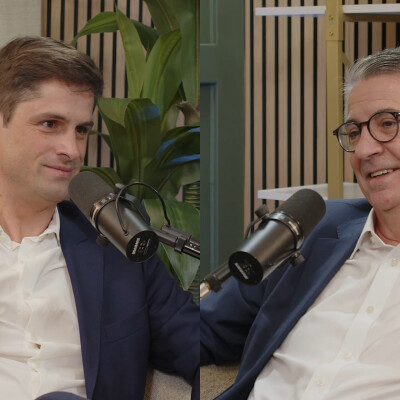
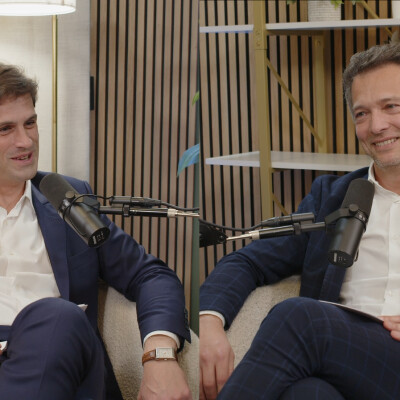
What is the project you are the most proud of? Welcome to the first episode of Podcast by Audactus, telling us inspiring leadership tales. Strategy and transformation journeys for financial services, professional services, and transaction M&A. Today, we are very pleased to host Stephane Publie, the head of coverage and Investment Banking at Credit Agricole CIB America. Hello, Stephane. Welcome. Today, we start this day with this podcast recording. What is your morning routine as a banker?
- Speaker #1
In the train, reading Les Echos, French newspaper, economical newspaper, and the 200 emails coming from Paris.
- Speaker #0
So Stephane, you are heading the coverage and the advisory team, and you are responsible for a pretty extensive geographical scope, as you say, starting from the north of Canada and till the south of Patagonia. what is your next location, next destination for your business trip?
- Speaker #1
After Mexico last week, I will go to Chile, Argentina, and finish in Brazil.
- Speaker #0
Okay. So you have, Stephane, always held a position related to client relationship and Investment Banking. And... You spent most of your career in the group Credit Agricole and Crédit Lyonnais. And what I'd like to emphasize today is your very transatlantic role, as you've been expatriated in the U.S. three times, if I'm not wrong.
- Speaker #1
Yes, three times.
- Speaker #0
And so with the mission to foster the exchange and the synergies between the American continent and the European and even Asian continent, we'll have the opportunity to further discuss this topic. So before maybe going to those set of questions, I'd like to make a quick introduction of the Credit Agricole Group. So the story started in 1885 in the east of France and then today the group became the ninth bank in the world by the total asset. You count almost 54 million clients across 30 countries and served by 157,000 staff members, which is pretty impressive figures. And then the very specific and what makes very unique the Credit Agricole Group is that the CASA, Credit Agricole SA, the holding of the group, is owned by a federation of 39 regional banks in France. And those 39 regional banks are owned by up to 12 million sociétaires mutualistes in French and what we could call the... customer shareholders so it makes the global reach from the group Credit Agricole and very local grounded routes in France territory and the other piece of this holding is listed on the French stock exchange market which is the CAC 40 M&A piece also for the staff members. The group serves a large spectrum of corn markets from the retails of course. Leasing, Asset Management with Amundi, which is the leading player of asset management by the AUM in Europe. And of course, CACIB, which is your company, Stephane, which is the entity operating here on the US market and in the America. So let's start, Stephane. It makes the US market a smooth transition to the first set of questions. This is the largest financial market in the world. Trusted by major US incumbents, for sure. What are the, to your point, Stephane, what are the key challenges for a foreign bank, a foreign corporate and Investment Banking, looking at expanding in this market? And according to your... Experience. Strategy should be applied between a generalist approach or very focused targeting niche approach?
- Speaker #1
Thank you. So as you said, we are very, very small in the Americas, in the US. So we need to have specific Strategy to develop ourselves. So first, we are client driven. It means that we are with our clients in the good times and not so good times, which is not the case of everybody. We give them access to an international worldwide network, which, once again, is not the case of everybody. We are one stop-shop bank, so we have the full range of products, all the different products. And specific on some industries, we are leaders on energy, on infra. In addition, the balance sheet of Credit Agricole is very strong. We have a very strong rating and the balance sheet is very strong. And we can help our customers. We can give them all access to those products and services.
- Speaker #0
And do you have any example that you would like to mention?
- Speaker #1
For the time... Today, we are working with two American clients, one EPC contractor and one industrial energy company. And we are helping them to... to develop a huge huge energy nuclear project in europe
- Speaker #0
okay so we we mentioned it earlier that you have operated on both continents uh could you just tell us what is what are the most striking differences between the american and the european banking markets
- Speaker #1
I think it's uh and it's it's a It's a good thing for us because in the Americas, the client, the doesn't really care about the reputation, the brand. If you bring added value to your clients, they will trust you, they will give you business, and they will pay for it. For the European clients, it's a bit different, in French, because they are with us. Yes, they are with us. We are working with them in Finance and different things. But regarding the advisory, they prefer to have a brand, a very famous name beside them, and it's more difficult.
- Speaker #0
Yeah. And it's interesting to speak about those differences. And we see also that the American company used Finance themselves through the markets compared to the European company that's more dependent to the banking Financing. But now what we see since the financial crisis in 2008, that's with the liquidity constraint and the regulatory requirement imposed to the bank, the Non-financial banking institutions and NBFIs, bringing on the market credit debt, credit and private debt, are playing an increasingly prominent role in this market. And what I'd like to know is, how do you see, if it keeps going this way, how do you see the wholesale valuation evolving within the years? And what are the bank responses to this?
- Speaker #1
First, you're right. In the Americas, it's a very deep and more sophisticated market across all the asset classes than Europe. But the banks have a bigger role to play there. Yes, the NBFIs are coming, but I don't see them as a threat. For me, first, they are clients. They are clients of us. So we can do some business with them. And by the way, they are bringing solutions that the banks are not able to provide. So we need to use them to work with them for something that we cannot provide. And at the end, we can add to the clients different services that those NFDIs don't provide. Hedging, advisory, different long-term presence with our clients. And I think we can originate solutions and transactions for those NFDIs, which are becoming more and more and more clients. So some people have concerns about them, but at the end, okay, they are not regulated as the banks are, but they have shareholders, they have LPs, they have accounts, and they need to produce documents very efficiently. Of course, we have to be careful about them, but they are more partners for us than competitors.
- Speaker #0
So we'll have the opportunity to further discuss those projects, but given also the massive... amount of Finance needed for example for the ai uh valuation we know that it's it's really a partnership between the banking uh ecosystem and and all the the funds thank you Stephane for this uh first uh part on the market uh us so we started the presentation with a quick introduction of a critical group. I'd like just to come back to you CACIB, Credit Agricole CIB, which is the CIB branch of the group. So here in the US, the story started in 1979 with the opening of the first representative office in Chicago with the aim of reaching... the commodity market, agro, business commodity market, right? And even if we consider the Crédit Lyonnais, which is the bank which was acquired by the group 20 to 30 years ago, it's the first entry into the U.S. market that's from back at the end of the 19th century. So, Stephane, what makes the Credit Agricole CIB very unique and what are the strengths? overall and in this US market.
- Speaker #1
Our first credit agricole, as you said, is present since a very long time and we have a strong franchise of clients in the Americas. What we can offer to those clients, both issuers and investors, is the worldwide presence of the group and we can take them from Europe to America, from America to Europe, to Asia, everywhere. So it's really a strength and we should capitalize on this one. And in the US, we are present in many places. You mentioned Chicago, it was first agribusiness. We are still there doing agribusiness, but it's a big hub for the automotive industries. And you know, automotives are present everywhere in the world. So we help them in Europe, in Latin America, in Asia. And same thing for... Automotive Asian customers, they are big in the US and we are following them from Chicago. We have two other offices in addition to New York. We have San Francisco dedicated to tech companies and Houston dedicated to energy companies. And those worlds are joining together because, as you said, AI is huge. The needs of data centers is enormous. If you want data centers, you need energy. So we are our clients of Houston doing that, and we have all the investors, the PE funds, the infra funds, the NBDI, and all the Canadian pension funds that we can bring Finance all those kinds of assets. So there is big synergies between all our branches, and it's really a strength that allows us to join the investors, the issuers. Finance the real economy.
- Speaker #0
Yes and you mentioned this massive project that you had as a salt green structuring agent for the Constellation project. Yeah. That's a good example.
- Speaker #1
Yeah yeah yeah we were the lead bank, we did everything for Constellation, the largest nuclear company in the US and Credit Agricole was at the forefront of this transaction, building the framework with them. taking them to the market at the junk book arranger and providing them with a full range of investors to finance this multi-billion bond.
- Speaker #0
Okay thank you. So now as you know, Stephane at Audactus, we are very passionate about Strategy and transformation challenges so I'd like to ask you a couple of questions on that regard. The first one, as you are heading the coverage team here in CACIB, You serve a multitude of specific clients and players with specific advisory and financing needs. I'm thinking about the corporate, I'm thinking about the infrastructure funds, PE fund, insurer. Here in the US, the pension funds that are very massive. To your experience, what is the best coverage model to adopt in this configuration? seeking sector-based organization, generalist or... coverage, business line integrated model? What's the best?
- Speaker #1
It's not an easy question. Best organization, it's always difficult to proclaim because, in fact, people are making the difference. But if I would have to say something, I think we need for each type of client a real banker, global banker, not a specialized in products. He needs to have a global view on everything. Having said that, as you mentioned, we have different kinds of clients, so this banker needs to be specialized. He needs to understand the sector he's working with. So he has to do a lot of capex to have a strong knowledge of this sector. At the same time, if he's too much specialized, if he's covering only all the players in one sector, if we talk Strategy, it can lead to... conflict of interest because he will push one of his clients against another one which is not really what we want to do because he's going to lose trust on the other. But at the end, if the banker, if they convey integrity and with their behavior they generate trust and they work for their client, they will do good business with them.
- Speaker #0
Yeah. And then we know that This is the first layer of the rocket, the coverage, but it's also a team who's working with the business line. And we saw in the past that sometimes we experience some concern with silos between those or across those business lines. How do we stand today? How do you deal with this situation?
- Speaker #1
It's not an easy one, but first we always have to think about the client's relationship. What does the client need? What are his issues? And from there, you have to involve all the business line, brainstorm with them. But if you have respect to the business line, you are fair, very fair with them, and always acting in the benefit of the client's interest, it works. And the business line, they are there. They follow the good bankers. They love to go with the good bankers who provide them with good opportunities.
- Speaker #0
So we mentioned those two first layers, the coverage, the origination, and then the structuring. And I'd like also to have a quick discussion on this second big pillar, which is the risk analysis framework. This is really the heart of the bank as well. So given an increasingly uncertain... Environment. We see the tariff evolution, instability. We see also an increasingly innovative pace breaking or disrupting well-established business models. I think about the retail with the marketplace, for example. It's not a new topic, but we see the consequences. How do you deal and how do you adapt your risk appraisal framework to prevent the bank from... Risk of default.
- Speaker #1
The first thing, and it's related to the previous question, the banker needs to focus on the understanding of the business models and everything that could threaten this business model. So he needs to understand the business model. First, business model before the structuring or the financing or anything. Then he needs to keep focused, curious, and talk to his client, embrace any impact that could impact. his business model and try to understand why, to prevent, to be proactive on that. And he needs to do that by being all the time, all the time with his clients. He needs to talk to him. He needs to visit him because it's not when it's on the newspaper or something, it's too late. So you need to anticipate of that. And the best way to anticipate is to live with your client.
- Speaker #0
Thank you, Stephane. And then the last question of this section is related to AI. Of course, this is a hype topic. And I assume that in the group that you are working on implementing AI-powered use cases to foster the productivity. And how do you consider the impact for the benefit for the coverage and your clients?
- Speaker #1
I think it's very good news for the coverage and for our clients because it should help us to speed up the decision-making process. It should avoid... writing 100 pages of many things that take a long, long time and they are not very exciting. So it will automate some administrative tasks. And by doing that, the banker, they will have to do their real job, being with their clients, thinking, brainstorming with them, and being able to help M&A to provide good business for the bank.
- Speaker #0
Okay, thank you, Stephane. That was the transformation section. Before going to the conclusion, I'd like to discuss and to hear you about the banker and the manager that you are. What is the Stephane Publie's secret sauce as an Investment Banker? That's the first answer. And then the second one, what would be your team answer to that question?
- Speaker #1
I think the banker... needs to be humble. He doesn't know a lot. The clients know a lot and his people know a lot. So he needs to be humble. He needs to be fair in business and with his people. And he needs to listen, to listen to the client and to his people. And I think that if you do those three recipes, it works well. And I think the teams are looking for this kind of attitude. behavior.
- Speaker #0
Yeah. And you have an experience of 20 years and what has changed the most in the banker world over that period?
- Speaker #1
In fact, I don't think the role of the banker changed a lot. You need to be a global banker, you need to be an Investment Banker, Finance banker, you need to understand all that and client first. This didn't change. Business line, the products, the markets have changed a lot. It's faster, it's deeper, it's more sophisticated. But I consider it's a good opportunity because the banker can use all those tools to be more efficient with his clients. So the role of the banker has not really changed, but the tools have changed a lot.
- Speaker #0
Okay, indeed, indeed. And so being a banker, it means that you cover a lot of deals, a lot of... clients and I assume you have a bunch of stories to tell us what would be the favorite one for today?
- Speaker #1
The favorite one is not the biggest one but I think it's a very interesting one because when I was a young banker very knowing nothing I was for they sent me in the north of France and I was following a champagne company and I knew the family very well and I have them in good time bad times as I was saying before And then I came back 15 years, 20 years later in the same place. I met again this family. And they had some issues because they could not anymore manage and own the company and they wanted to live another life. And I've been able to take this family-owned business to a big French CAC 40 company a nd they did a deal and I was the only banker in the middle. gaining trust from the seller and the buyer and it was a good deal for everybody very fair and very good so it's and it shows that you can bring very small guys to a big name and it's very important for both for the small one M&A big one and the bank has a big role to play in that
- Speaker #0
Thank you thank you and then to to to complete or to finish this this section what would be your best advice in managing the team of bankers?
- Speaker #1
I think you need to show the team that you're still a banker. So you need to be part of the deal. You need to be with them. You need to fight to get the deal with them. You need to help them internally to get the approval to do the deals. So you need to spend time with the team. You need to act as a banker and not to stay above. And you need to show that you care for them. You care for your clients. You care for your bankers. And when you care, people care about you as well.
- Speaker #0
Perfect. So before closing this podcast, I'd like to ask you a couple of questions. This is a new section, a recurring section across the podcast we will have in the future. It's Rapid Fire Rule. So the rules are pretty simple. You must answer a series of quick questions with brief responses and no elaboration. okay So what do you prefer between client relationship and management?
- Speaker #1
Both. Taking care of people is great.
- Speaker #0
What is the most important value for you in the business and the management?
- Speaker #1
Taking care of people.
- Speaker #0
What is the project you are the most proud of?
- Speaker #1
In fact, it's not a project, but it's more a global way of moving people around the group from different countries from LATAM to US, US to Europe, Canada to Asia, to make sure that we are growing up our young talents and they are really the key assets of the bank.
- Speaker #0
In M&A transaction, you prefer to be on the sell or the buy side?
- Speaker #1
What I prefer is to get an idea, sell it to the client and originate a deal. And after that, I don't really like to execute. We have much better people to do it. So to buy or to sell, I don't really care.
- Speaker #0
Beyond the banking sector, what is your favorite industry?
- Speaker #1
I'm coming from the countryside and agribusiness, one-night spirit.
- Speaker #0
So you're really focused with the DNA of the group.
- Speaker #1
Yes.
- Speaker #0
In another life, what would have been your favorite job? If you could do it again.
- Speaker #1
Two ideas. One, I was quite a good soccer player, so I wanted to rejoin a professional club, but my dad asked me to go to school, and I was thinking at some point to be a priest.
- Speaker #0
Okay. Well, you can still be a coach. Argentinian or Bordeaux Wine?
- Speaker #1
Bordeaux, grave.
- Speaker #0
Luxury luggage or horse saddle?
- Speaker #1
I think those two. are the great assets of France, so I love both.
- Speaker #0
And to complete, it's a private joke, but ballet or rodeo?
- Speaker #1
Ballet, of course.
- Speaker #0
So thank you, Stephane. This podcast comes to the end. And thank you for your authentic responses and your time because we know your schedule is pretty busy. That was our first podcast by Audactus. Audactus is a New York-based Management Consulting firm specializing in Strategy and transformation for the financial services, the transaction M&A the professional services. We help clients solve questions about business growth, organization effectiveness, and external acquisition integration. Among our clients, we are very thrilled to have CACIB, CIC, Airbus, Societe Generale, and AXA. To learn more about Audactus, you can visit our website on www.audactus.com. Thank you for having watched or listen to this podcast. More interviews to come in the next weeks with leadership tales Strategy and transformation journeys. Follow us on our social accounts, YouTube, LinkedIn, or Spotify. Thank you and bye.