- Speaker #0
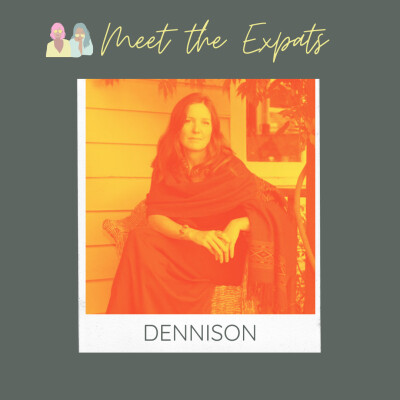
guess what i'm moving country again i don't know maybe a year maybe more where's home home's everywhere i'm an expat hi it's pauline welcome to meet the expats today i am with Denison Smith, an American author who is now based in Portugal. And we'll be discussing the big move from the US to Portugal, the challenges that come with settling in and the great way of life that you have there. Hi, Denison. How are you?
- Speaker #1
Hi, Pauline. Good to see you. I'm on the east side of Portugal. I'm near to Badejoz.
- Speaker #0
Okay. Well, I'll let you introduce yourself and then we'll dive into your big move.
- Speaker #1
Okay. So I'm Denison Smith and I'm an author. I'm a novelist. And actually, today is a significant day for me because my latest novel, The Westward Hours, comes into the world today. Oh, wow. It's available across Europe and the UK as of today. And there's a relationship between it and why I decided to move to Portugal. So The Westward Hours is a work of speculative fiction, which is set between tomorrow and 100 years from tomorrow. And it follows three generations of women ranchers in California as climate change ushers in not only environmental, but massive geopolitical changes. And the United States government falls to the first intercorporate Congress. The next civil war erupts in the United States called the Sacrifice Wars. And when I was writing this, it took me 10 years to write this, to get the climate science right to. and even just to internalize the knowledge of it. And when I first started writing it, it seemed a little beyond the pale for some people. It seemed unlikely. It wasn't unlikely to me, but it was unlikely to some. And that's no longer the case. So where the relationship really comes into moving to Portugal was... As I watched the changes that were happening in the United States government, I decided that it was time to use my golden visa and to leave. And it was at the end of the last Trump administration that someone very close to me said to me that she and her husband were going to do the golden visa and that I should do it too. And I thought, well. I already have Canadian citizenship, so I've got an exit strategy. But then I thought about it and I thought, well, you know, you might as well have as many options as you can muster.
- Speaker #0
Right.
- Speaker #1
So I went ahead and did it kind of as an insurance policy. Okay.
- Speaker #0
Can you just specify what the golden visa is?
- Speaker #1
Right.
- Speaker #0
I'm sure a lot of the listeners don't know.
- Speaker #1
So the golden visa has changed. It's no longer like this. But when I did it. you could basically buy an investment flat in Portugal to qualify for the golden visa. So that's what I did. So if you could afford to buy an investment flat.
- Speaker #0
This is very specific to Portugal. So you already knew that you wanted Portugal.
- Speaker #1
It had to be Portugal, right? So there are golden visas all over the world, but they're terribly, terribly expensive.
- Speaker #0
Okay.
- Speaker #1
You know, they're million dollar visas, right?
- Speaker #0
Right.
- Speaker #1
Whereas Portugal's... golden visa was unusual because it was a basically like a $300,000 investment into a property that you could then rent out. And you didn't have any requirements beyond having to be here for two weeks a year. Two weeks every two years, I believe. So most places have residency requirements. If you get the visa, you have to move. And most places had very, very expensive golden visas. So the Portuguese golden visa was kind of a no-brainer. It was complicated to get, but it was also very, very flexible.
- Speaker #0
Right. Okay. So you got into the golden visa. When was that?
- Speaker #1
So things moved very slowly in Portugal. So it was over four years ago that I applied for the golden visa. Okay. And then it took almost, it took about three years to actually have it in hand.
- Speaker #0
Wow.
- Speaker #1
Yeah. So I had it just in time, really, for when I wanted to leave.
- Speaker #0
Okay. Good planning, I guess. So this is actually a very long-term strategy of it wasn't just, okay, I wake up one day, I'm packing my stuff, I'm going. You actually planned.
- Speaker #1
Yeah, it was. And actually, there are ways to come to Portugal that are much more spontaneous. There's a D7 visa, and I know a lot of people have come on that who responded to the crisis in the United States and just left. Okay. But I had this visa in hand and it wasn't that I was planning on moving here. But also, you see, my daughter lives in England and I lived for many years in England. So Portugal was basically the closest I could get to England if I wanted to be near to her.
- Speaker #0
OK, so if I understand correctly, when you initiated, it was more of an in-case strategy. And then once you had it, you felt, OK, this is actually the time for me and I'm ready to move.
- Speaker #1
Right. Yeah. Okay. Yeah. So, so when Trump got in the second time and it really took me until the inauguration that when the inauguration happened, yeah, then I started having the nightmares and that proved to be very prescient about what was about to come down the pipe. Right. And I was from New Mexico. And so we've seen the impact on our neighbors. enormously because we're a very Hispanic and Spanish state, right? Because New Mexico, of course, was part of Spain and Mexico until the late 1800s. So this is when I said, okay, first I thought, okay, I should just get away for a while. And then it was like I was dipping my toe into leaving that. Especially because I loved my community and I loved my home in New Mexico. But eventually I just thought, no, just do it. Do it fully.
- Speaker #0
Okay.
- Speaker #1
Yeah.
- Speaker #0
And so you had your way out through Portugal. Had you done a little research before of what life could look like here?
- Speaker #1
No. Yes.
- Speaker #0
The visa was there. So great. Let's do it.
- Speaker #1
Exactly. So you say planning, but on the other hand, it was actually extremely spontaneous. I didn't have a clue what I was getting into. I had actually been to my flat, which is up in Braga. So that is in the north, but I don't live there. I had been there once for two days.
- Speaker #0
Got the case visited.
- Speaker #1
Exactly. So I did a lot of armchair traveling from New Mexico.
- Speaker #0
What do you call armchair traveling?
- Speaker #1
So armchair traveling. is basically you sit with your computer and look at places. Okay. So as I was trying to figure out, well, where do I want to go to? What do I want to rent? So originally I rented when I got here. And I quickly realized that the thing that I did not want to give up about my life in New Mexico were the dark skies and the vast expanses where you see. You just saw into the great distance there. It was a beautiful, beautiful place to live. And you saw every star in the sky. So that made me realize that it had to be the Alentejo.
- Speaker #0
Interesting. It's actually quite refreshing to meet people who don't live in the usual areas of Portugal. Generally, we think of Portugal, we think, okay, Algarve. around Lisbon, around Porto, maybe the wider suburb, Eritrea and all that. But everything's by the sea. And initially, when you told me I'm by the Spanish border, indeed, I was thinking the north side by the sea, you know, it's like the first instinct. But yeah, you're saying you wanted to find, yeah, to bring with you part of those landscapes that you had in New Mexico. Interesting.
- Speaker #1
Yeah. There are times, you know, if you squint, you can think you were in New Mexico. And so I really do love living in the Alentejo. It's absolutely beautiful. And it's extremely challenging in comparison to other parts of Portugal. Right. Because of the language barrier. Of course. So I really plunged in that way that it's been full submersion and submersion, not immersion. Yeah. And as a result, I've been learning the language quickly and fiercely. You know, it's scary when you go to a dentist and they don't speak your language. Yeah.
- Speaker #0
I think it's probably much more challenging than in a larger city like Lisbon, of course, where you're... Yeah, you're in smaller towns. People aren't used to having that many foreigners or even the infrastructure. So just in terms of infrastructure and day-to-day life and just settling in, apart from the language, how did you start making your nest and your life there?
- Speaker #1
Okay, well, so now I own a home. So I looked on a site called Idealista. in order to rent a place. And I rented what looked and is absolutely beautiful, but only in the summer. I rented what's called a moño, or moño agua. It's a water mill on a quinta, on a great big farm. So it was right on the river in this old mill that had been converted into a house. And it was gorgeous until the rains came. And then the rains just came straight into the house. I had three distinct streams running through the house and black mold. And everything just became covered in mold. It was very difficult. I can imagine. And that kind of helped to propel me to decide that I would buy sooner rather than later. Okay. So I started looking and, you know, the interesting thing is that the process of buying a house also integrated me very much into the community because the, the realtor that I found is just, she's wonderful and, and gregarious and invited me to one party after another and had this whole international crowd of friends out here in the Alentejo. So that was really my introduction into a whole world of people from Portuguese to Americans, to Dutch, to French. There is a international community here, sort of tucked away. A lot of artists, because this is not, it's not the place you go if you want a, if you want your creature comforts, you don't come to the Allentation. But if you want a wilder world,
- Speaker #0
you come here. But all this was a surprise then. Yeah, that's amazing that it turned out this way of you're finding this international community. Sorry, it's also full of artists that you actually completely match with the area.
- Speaker #1
Yeah, yes, exactly. And then I'm sort of finding the same thing here in Elvish. So I came here with my two border colleagues. Okay. Um, and as a result, they, traveling with a dog with, well, it's only one dog now because one of them was very old. So he, so he's passed, but, um, traveling with dogs is challenging, but it's also this opener into, into community. So I go for, you know, walks every day with my dog, Sessie, and I meet people like crazy. And here. Interestingly, the people I'm meeting here first are a very fascinating historian, a wonderful, interesting contemporary musician. These people are sort of tucked away into Elvish. Elvish is a place that you don't come here unless you are either from here or there's something about you that... wants to be off the beaten track. So again, artists are tucked away here.
- Speaker #0
Okay, interesting. So you talked about finding a house, you had a great realtor, the language for sure. Any other challenges that you've faced or still face?
- Speaker #1
Oh, yes. Okay. So you would think that at this point, the transition would be over the actual logistics of arriving, because life becomes entirely about logistics when you first get here. And this, I think, is particular to Portugal. Portugal buries itself in bureaucracy. And everybody complains of that. But also Portugal takes a very, very long time to do anything. The government is really slow. Everything's slow. And then doubly slow in the Alentasia. But I am not done with those logistics. So I arrived here in October and I'm still sorting stuff. about. And one of the big mistakes I made was to decide to bring my car over. It was the first time that I'd ever bought in the States a brand new car. And I just bought it when I suddenly decided that I was going to move to Portugal. And I thought, well, I'm just, you know, throwing away money if I don't bring it with me. And everybody, I'd looked online and it had talked about how expensive it was to buy cars here in Portugal and how easy it was to import. Well, never import your car to Portugal. Never, ever, ever. So the first thing that happened was... when it finally arrived here. And I was actually very lucky because the car didn't get held up in customs, which it can. And I've known people that it did and it cost them a fortune. But so it was a new Kia Sportage hybrid. You know, I'd read all about how it's a popular car over here, but Americans don't have fog lights. So suddenly the holy grail is to find fog lights. So I take it to the Kia dealership in Evra, which is the capital of the Alentejo. But no, they won't actually look at it until it's become a Portuguese car. So then it has to be driven all the way to Sete de Foro. And then it takes all day and they have no determination as to whether they can actually put fog lights in. So then I have to drive down. It takes another day. At the end of the day, they say, oh, no, no, it's impossible. Nothing can be done to this car. You cannot have fog lights. If I don't have fog lights, I don't have a legal car. So then I wake up one morning in Elvish and I think, all right, there's just going to be like, there's some small mechanic out there who's going to improvise something for me and give me fog lights.
- Speaker #0
And somewhere in the countryside that can do that.
- Speaker #1
Yeah. But of course it took having enough Portuguese at that point to be able to negotiate such a thing. So this happens, but then you take it to be legalized. You take it for your inspection. They, they look at it and they say, ah, It's a new car. No, we don't have the tools for new cars. And we don't have them and you have to buy them. But where do you buy them? Oh, you buy them at this shop. You go to that shop. No, You buy them at that shop. You go to that shop. You go to that shop. So now the last shop has told me that no, the only place you can buy them is across the border in Spain, where I am not legally allowed to drive. So it's like that.
- Speaker #0
Okay, it's going to finish with an Amazon at some point.
- Speaker #1
So, yes, so that kind of thing has been very challenging. Trying to furnish a house, dealing with orders, especially, again, the language was very, very challenging at first, you know, and it's getting better and better, but because I'm getting better and better at Portuguese. But basically, it's like you'll... have the language skills of a three-year-old. Yeah. But you have to negotiate the world of an adult. So those were the most challenging things, as well as just dealing with this winter, which was challenging for the entire country. You know, Portugal flooded very badly. Yeah. And, you know, the fire department even came out to my house to make certain that the river was not going to flood it. Yeah.
- Speaker #0
It's true that, yeah. this year was complicated. Usually Portuguese winters are okay. They're actually quite mild and not too annoying. A little wet, yes, but not that, not flooding.
- Speaker #1
Yeah. So that came as a surprise. And at one point I decided I needed to get out of the Moinho that it was so damp and so miserable. But I thought, okay, I'm going to take a few days away. And I found a dog-friendly hotel in the Algarve. And I drove down to the Algarve. And there's this beautiful hotel, but it's right across this creek. And I'm thinking, it looks to me like that creek is rising. But in order to get across to the hotel, you have to drive across it. So I drove across the creek. And it was, you know, I've got a Kia Sportage, and it can handle that. I get to the other side and I unpack and I think, you know, I want to park on the other side of that creek because it really does look like it's rising. By the time I go to park on the other side of the creek, it's running so hard that it rips the bottom off of the plastic bottom off of the Kia. I park on the other side. By that evening, you cannot even cross by the footbridge anymore. It's a river now. And it was going to be a river for weeks to come. So if I had parked at the other side, I would have been living at the hotel, basically. So that's how this winter was.
- Speaker #0
Okay, it was intense. What about the good sides of living in Portugal?
- Speaker #1
There are so many good sides. It's a very beautiful country to start with, but it's also a really gracious country. The very thing that makes it difficult also makes it wonderful, which is that things happen slower and things happen face to face. You know, if you're coming from somewhere like the United States where you expect efficiency and everything can be done online or done by phone, it's just not the way it is here. It is a face-to-face world. Yeah. And it's a very nurturing thing in a way. You know, I live in a place now where most of my neighbors cannot speak to me, right, because they have no English. Yeah. But you wouldn't dream of walking by somebody without saying, good morning. Yeah. Right. How are you doing? All well. So it's gracious, it's warm. It's a little bit like walking backwards in time 50 years, which as I get older, I like that.
- Speaker #0
It's slowing down the pace also. It's just going back to the roots and those relationships, as you're saying.
- Speaker #1
Yeah, and there's a sense of watching out for each other and trust. And of course, the food is wonderful and the wine is great and costs almost nothing. But those are the more obvious things. I think it's really just the feeling of calm and graciousness and everything returning to a more human level and to a more interpersonal level that I really like about Portugal.
- Speaker #0
Great. Before we move to the recommendation, I want to touch on the book very briefly. You did mention it a little bit at the beginning. Is there anything else that you want to talk about today? It's launch day.
- Speaker #1
I think it's launch.
- Speaker #0
Exciting day.
- Speaker #1
You know, it was an interesting thing. It was after I made the decision to move to Portugal that Extraordinary Books over in London suddenly picked up the Westward Hours. I had actually just sort of sat on that book for a few years, that I'd gone through a period of choosing just to be a little bit more reclusive and just wasn't pushing it out there when I got a call from my old editor in London who was with The New House, and he had read it previously and loved it. And... Asking if it was still available. I said, yeah. So, you know, the Westward Hours is, it's a story of resilience. It's a difficult story because, of course, the world is in serious crisis. But where the hope lies is in a slower world. So there's parallels with being here in Portugal. It's in the slower, more invisible. processes of the resilience of the earth itself. And in the deeper interpersonal relationships between humans and between humans and the, the land that, that they are a part of and inhabit. I know that you end with a song, right? And yes, the idea of a song runs through the westward hours. I should maybe preface this with saying that. Over in London, I had an art gallery and curatorial team called the Baldwin Gallery. And we specialized in bringing First Nations Indigenous art, specifically from the Northwest Pacific coast to the European art scene. Now there, particularly amongst the Northwest Pacific tribes, the song is all important. And one of the experiences of colonization was... that their songs had been stolen. And the idea that a song actually is the arc of your life and it's the hinge and the relationship between you and your world. So there's an aspect of the Westward Hours where songs, it's constantly coming up, the question of the song, and have we been singing the wrong song for a very long time?
- Speaker #0
A long time.
- Speaker #1
Yeah.
- Speaker #0
Interesting. Well, what is your expat song? The song of your life. It's a great addition.
- Speaker #1
Well, on a lighter note, the song that I chose is Doris Day singing Que Será, Será in Alfred Hitchcock's The Man Who Knew Too Much. Because that really is the attitude that you have to have in order to flow with the way things happen here in Portugal. I was actually joking with my editor the other day and saying, you know, maybe I should write a book called The Zen of Portugal.
- Speaker #0
All right. And then, well, we'll end with what your two recommendations are in Portugal of a cafe or bar and restaurants.
- Speaker #1
Okay. Funny. I didn't actually prepare for that one. But Howard's Folly. Howard's Folly is in Stramage. And I think you're just going to have to make do with one. We will, then. And it's not because there aren't so many wonderful places here. There are so many. It's because I don't know the names of them.
- Speaker #0
Well, we'll stick with that one. Okay. Well, thank you so much for sharing, Denizan. We'll put the link to your book, Westward Hours. It will be linked in the comments, of course, and your profile, as well as the song and the recommendation in Russian.
- Speaker #1
Wonderful. Thank you. It was really good to talk to you.
- Speaker #0
Likewise. Guys, if you enjoyed the episode, you can put a rating on Apple Podcasts and Spotify and also follow all the updates on YouTube, Instagram, and TikTok.