- Speaker #0
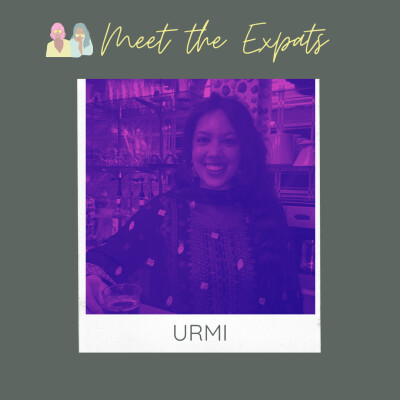
guess what i'm moving country again i don't know maybe a year maybe more where's home home's everywhere i'm an expat hi it's pauline from meet the expats today i meet with umi umi is an Italian with a Bengali origin. She grew up in Italy, is now living in Canada. And so she has gone through multiple moves, is also a third culture kid, and is going to talk us through growing up in different environments, different languages, and also talk a little bit about the job market in Canada. How are you?
- Speaker #1
I'm good. I'm good. And you? How's everything?
- Speaker #0
Yeah, good. We're happy to be here and talk expats, expat and immigration world. I'll let you introduce yourself briefly and then we'll go into your different moves and your life as a TCK.
- Speaker #1
Yeah, for sure. So my name is Urmi. I am currently based in Montreal. Like you said, I'm a true culture kid. I was born and raised in Italy and both of my parents are from Bangladesh. And since a young age, we were always moving around. I grew up in different parts of Italy. I also have lived in the UK for a year, then came back to Italy. And now I have been living in Canada for a while. And I would say that living in different countries really gave me a lot of cultural exposure. Sometimes I felt like moving around was actually weakness and probably put me into a like a position of disadvantage because I really struggle in like identifying myself from a cultural point of view and I never had like a home that I could go back to because we just kept moving around so many times and we changed houses so many times I changed school I don't know how many times and so for me it was always it was always a challenge I would say, but only need a... Yes, it was always a challenge because I was leaving my friends behind. I had to start over. Only now I'm realizing that this was probably a gift, something that I actually go proud of because I feel like I'm able to have friends from different parts of the world. And I feel like it gave me a different vision and perspective of the world because I have lived in so many places.
- Speaker #0
Okay. Well, Daphne. go through that full journey let's start from the beginnings so you were born and raised in Italy you were saying um how come your parents moved to Italy do you have this context and information to to bring us
- Speaker #1
I do only know what they told me they just wanted to have a better future a better life especially after they got married and they were like okay let's just go abroad Italy was one of the options along with that there was also I think Canada and the UK and then I think and then I did they just went with with Italy and they have settled in Palermo which is in Sicily and they have lived there for for like nine years we have lived there in nine years I was born later on after they have moved and that was the first I would say like my dad often says oh you're the first Bengali girl to be born in Italy so I'm like okay so I'm gonna take that And And then later on, other Bengali people started to move, but the community was like little by little built. So it was, yeah. Yeah, so that was how it was at the beginning.
- Speaker #0
They led a little bit of that move, and you're saying they didn't have that much of a community there. All right, let's talk about your memories as a child. So you grew up in Italy and I guess sort of took it as your home about this dual identity of having Bengali parents. But in Italy, how did that work? How did you understand this duality?
- Speaker #1
To be honest, to be honest, when I was a kid, there was only a little bit that I could understand about the duality. I just, I was very much aware of the differences and I was aware of the position that I was standing in. Because, of course, like I grew up in a very conservative and traditional South Asian household. Like my parents were super, super like, um, religious, very attached to their culture. So I remember having like a dual life, I would say. Right, at school and at home. Exactly. At school, it was a certain kind of Urumi and at home, it was a different kind of Urumi. And when I was a kid, if we talk about like me being six, eight years old, I just have vivid memories of things such as like I was always being told, yeah, we don't celebrate Christmas. And then like even the school I went, for instance, it was of course like. in Italy and there was a church in this school and I remember like seeing nuns and church and the crucifix and I was wondering like what that what that was especially when I would see the nuns I didn't know who they were and um and and I remember my dad being like no we don't follow that religion so that was one one thing that I remember from my own childhood and and then when I started to, of course, like, reach a certain age, like... like 12, 13, 15, I started to understand more and more the duality and the difficulty in wanting to be Italian and also feeling like I was not fitting in. I think I went through that struggle where it wasn't the people that did not make me feel like I was fitting in. Like let's say when I would be with my Italian friends, like I was aware that I was like, I felt like I belonged to the group, but I was aware that I was very different. Like aesthetically, I was very different. And then I would go back home and I was like, yeah, everyone here looks like me. But then even there, like I felt like my mentality was very different. I had a very Western mentality. So I feel like inside I felt one way, outside I felt another way. So that was the struggle that I went through. Yeah.
- Speaker #0
Let's fast forward a little bit. You said you moved to the UK and moved back to Italy and all this before the big move to Canada. watch. led you to want to make those moves?
- Speaker #1
It was my parents. I was 13 when they decided to move to the UK. I think at that point, we thought we were going to move definitely to, like it was a permanent move to the UK. And the UK, I had a very different experience. It was almost like a nice experience, I would say. When we first moved to the UK, there was a big community of Bengali people. So I felt like I just belong, you know, exactly. Like everyone looks like me. And I was not shy of like wearing certain type of clothes, whether it was traditional South Asian clothes, or I was never like afraid of that or showing, you know, that I had a hand in my hands. Like I was never afraid of being judged. Not that I was being judged in Italy, but I was afraid that people would just look at me differently. And especially at that age, when I was 13, I... started to have the freedom that my parents were not giving me back in Italy so for instance in Italy I was always like told that you cannot go out with your Italian friends there was a fear that I was going to become too Italian but then in in the UK I had like one Bengali friend and my my dad would never question where I would go with her because it's a perception behind that oh if you're around Bengali people you're the same it's the same values same habits exactly so that was like the experience it was very like it was a very nice experience in that sense but but that's not how I feel about the UK anymore because my parents now they live in the UK so I get to visit the UK okay I um I just don't have that experience anymore because I feel like there is such a big community of Bengali people in the UK that they just went backward-minded with the mentality instead of like going forward so it's a very closed community where You didn't even need to know the English to go around. It's sufficient to know Bengali. People just hang out with Bengali people instead of integrating with the rest of the community or of the people in the UK. So it was a great experience back then, but it's not something that I would like to relive in this moment of my life.
- Speaker #0
Okay, yeah, because it just stayed really within this community and didn't help integrate as you were saying. Yeah,
- Speaker #1
yeah.
- Speaker #0
All right. What about... Canada, how did that come up? Because this time I'm guessing it was you on your own.
- Speaker #1
That's right. That was my decision. And Canada was quite a surprise, if I have to say. It was a pleasant surprise. I often say it was a blessing in disguise because there was, honestly, I just didn't know much about Canada. I just knew that it was just cold.
- Speaker #0
So how did you choose? Why Canada up first.
- Speaker #1
It was for personal reasons that I chose Canada. I have to say it's Canada that chose me. Then when I moved here, I had a couple of discoveries. I don't like to call them cultural shock because I feel like there's a negative connotation with the shock. For me, it was more like a discovery. So when I moved here, like, of course, the fact that I live in Montreal, which is a very bilingual, like it's a bilingual city. So you need to know both English and French. And people just approach you with like saying bonjour, bonjour, hi. And then it's up to you to choose which language you want to be served in. And also there is so much nature and it's so multicultural. That was the thing that I was not expecting, especially because it. In Italy, I was just surrounded with Italian people. It's just only people who are Italian live in Italy. You don't see that much of a diversity as much as I saw it in...
- Speaker #0
I think specifically in Sicily also, it's an island, it's smaller, it's really close-knit and a little bit... Yeah, and... ...in the south and the north of Italy in terms of just international dynamic companies. Yeah.
- Speaker #1
Yeah. And we also lived in the North and even there, like I didn't see so much of a diversity, especially at school. Like in my high school, I was the only one who had Bengali origins. And then there was this other girl from Latin America. And I think there was a Turk girl. And that's it. Like there wasn't so much of a diversity in the whole high school, if you think about it. Okay. When I moved to Montreal, I just had friends from all over the world. I went to university here. And it was a very different and interesting dynamic because now I find myself living in Montreal and using two languages that are not mine to begin with. So I did my university in English and now I work in French. So I am using my third and fourth language to communicate and to make a living out of it, for instance, whereas in Italy, it was just Italian and Bengali. this one I That was the interesting dynamic and interesting change. But I think what I appreciate the most is that Montreal is so rich in cultures and every single culture is celebrated through the different festivals and events that we have throughout the year, especially in the summer. So that was the discovery for me. But I do feel very nostalgic because, of course, Italy is my home. It's the place where I feel my most selves. And so when I am, let's say, on the street and I see people drinking coffee, I immediately think of Italy. When I see people having a croissant, I think of Italy. So I feel nostalgic in that sense.
- Speaker #0
Yeah. So there are things, yeah, that you've, of course, I mean, spending so many years in Italy, it is home and you still pick it up elsewhere. What are the things that you picked up from Montreal then in your... day to day that you feel like it feels like home today?
- Speaker #1
So one of the things that I was really looking forward, not looking forward, that I was actually searching for, it's my Italian food. So in Italy, for instance, there are certain things that I would eat, especially when I would buy things from the supermarket. There are certain brands that you eat and you're used to like eating those things when you're... growing up and so when I came to Montreal I was looking for my Italian grocery stores and there is one grocery store that I go in particular that every time I walk in I just feel like I'm back home just just seeing the product itself it just makes me feel like I'm home and so I really enjoy going there and then when I as soon as I'm there like I'm just like I'm back home I start to speak to the cashier in Italian and then they start talking to me and be like oh what are you from where did you like how come you're here how how come you know italian so then we start having a conversation so that is one thing that is like very close to home and the other thing that i do is that we have a little italy in in montreal where basically you know you can you you can find like i wouldn't say authentic but you can find very good like italian products so one of the things that I very much enjoy eating is uh ikan nani and um And there is this family from Napoli that actually moved from Italy and they make fresh cannoli. So every time I go there, I start talking to the owner anytime and be like, oh, I want cannoli al pistacchio. And then she's like, yeah, I have them for you. So the little things make you feel like you're back home. So I like to do that just once a week because I just miss my home.
- Speaker #0
And so what about specific? canadian things that you've adopted as like new new traditions i want to say or habits
- Speaker #1
I would say one of the things that I started doing in Canada is, for instance, one thing that it's something that I wouldn't do back in Italy. So in Canada, there are a lot of places where you can go for a hike. And there are so many mountains and so forth. So hiking is the thing that I think it's part of the Canadian culture. Like people love to go in the nature. They love to go for a hike. It's something that I started to do. um the other thing and i don't know if you're familiar with this do you know what's a poutine i do know what poutine is but i think you have to explain for the audience who may not know okay so basically i would say poutine is the national i guess dish of canada and i would say quebec is the one that makes it the best like if you want to have a good poutine you have to do it you have to have it in quebec and the province of quebec of course and basically what it is it's junk food. it's not healthy food but it's good food and then how it works is that basically it's just french fries and then you have um you have basically french fries garnished with like pieces of cheese it's like a card cheese i think that's how how it's called it's like it's like squishy cheese and then on top of that you you put like a gravy sauce and it's supposed to like melt the cheese on top of the french fries and then you just eat it it's it's junk food but it's actually so good very much comfort food yeah yeah there you go it's comfort food so if you ever come to Montreal you have to have that yeah all right so you've been in in Canada for
- Speaker #0
10 years you were saying when you left did you leave thinking this is it like or did you have a timeline in mind so
- Speaker #1
I had this conversation with other Turkish culture kids. And I think here's the thing that makes that we all share. It's that once you move, you will always going to move. I think Turkish culture kids are good in that sense that we're adaptable. We embrace change in a different way and we're open to the changes. I think we have a very, I would say, a spirit that it's more like we like to explore different things. We don't like to keep that. door closed and so for me when I moved to Montreal I I wouldn't say it was like okay that that's it like this is this is it and I'm not gonna move anymore I do like to keep that option open whether I want to go back to Italy eventually or if I want to move um elsewhere who knows I like to keep that open uh because I do think that um tour culture kids are not meant to be in one place only no Yeah.
- Speaker #0
I think at some point we, I think third culture kids are good at one, making it work wherever they go. Like there's that resilience that you were talking about. Um, but I think there's also that thing about knowing when it's time as in like, yes, you've settled, but sometimes you just outgrow the place. And when you feel that it's time to go, you're ready to make that leap again. But it's all about keeping those doors open of not necessarily setting a timeline because you don't know what the timeline of life of opportunities or whatever will be.
- Speaker #1
I agree. And I do think that I feel like if I have lived in Italy, I wouldn't have gotten that much or that many opportunities as I got them here in Montreal. because I do it in front of... economic point of view especially even for younger people is much harder to like get exposure to to do projects to do things that are like make you really like like they make you valuable like it's i can see right now the whole situation in italy how younger people people of my age in their 20s and 30s they just leave italy because there is no future for them like even if they even if they work for a company they feel like you know i'm not being recognized for the work that i'm doing. And so a lot of them, they just leap. Italy and they just go out. There are so many times right now in the UK, in Spain, in other parts of Europe. Now we also see them in Canada a lot more. And it's because I do think that Canada or like in the States, it's a place of opportunities. You can be whoever you want and you can do whatever you want. So I do think that I grew with Montreal as I've been living here. And I just, I learned so much by being Montrealite. And I think the fact that I have friends from all around the world. It really helps me.
- Speaker #0
Let's dig in a little bit to the work. and the job market. You touched on it slightly, so let's hone into that. How did you navigate this job market in Montreal, navigating the different languages also? And what, I want to say, tips would you have for anyone who's trying to make it there?
- Speaker #1
Yeah, for sure. So let me tell you this when I have moved to Montreal of course I um Like I did my university in Montreal. And I don't know if people are aware of this, but when you are enrolling into university, you get to choose if you want to do like a university just in English or just in French. So there are some options. There are universities that are just English and there are those that are just French. And depending on the program, depending on what you're comfortable with, you can go in either one. So I went to an English university and I got my... I got my degree in finance and so forth. And then, of course, you have to start working.
- Speaker #0
It's important, yes.
- Speaker #1
Exactly. At some point, you have to start working. And for me, it was like, okay, how do I do this? And it was quite a challenge because one of the things that they don't teach you in Europe or especially in Italy is that you have to keep networking, even from a young age. You always have to go to networking events. I didn't do any of that. Bye. I would go to networking events just to get the free food and then I would just leave.
- Speaker #0
I mean, it's hard to start networking when you've never done it and just to get out of your comfort zone. I think even when you're used to it, it's not that easy for everyone.
- Speaker #1
Exactly. So I was like, OK, I don't know who's going to hire me. And I didn't do any work to put myself out there. Like I didn't even have a link. LinkedIn profile, for instance, because I didn't find it valuable. But one thing that people must be aware of is that in Canada and in the States, having a good professional LinkedIn profile, it's very, very important. Like that's how headhunters reach out to you. That's how you have potential employers like sending you a message and asking you like if you're interested in an opportunity. Because I know in Europe it's a little bit different when it comes to LinkedIn, but in Canada or in the States is highly, highly valued to have a good LinkedIn profile. So I didn't have any of that. And then one day it happened that I went to a career fair. I gave my resume and they were hiring a bunch of like new graduates. And then I was so lucky that I got the phone call and I got my first job. So here's the things that happened to me. I worked for about, I would say six years in an English company. And I just got hired because for the first job, someone, they were looking and I just quickly got hired. And then for the next ones, I really had to like find connections and I have people that would like refer me for companies. And then in the last four years, I've been working in a French environment. So when you work for a French company or when you work for a bilingual place, one thing that you need to be aware is that the interviews are bilingual. They're conducted both in English and French. and French because that's a way to test like how good proficient you are in either one of the two languages. So maybe let's say the first question will be, okay, tell me about yourself. This is going to be in English. And then the next one will be like, okay, why should we hire? And it will be in French. So it's conducted in both languages and it's very normal in Montreal that you are using both languages.
- Speaker #0
at the same time and we call it I think it's called franglais yeah well it's a lot of bilinguals will talking together indeed they'll start a sentence in one language and add in a word in the other and just mix up the two yeah
- Speaker #1
so it's um it's it's called franglais so let's say I'm saying and I'm talking then I start saying ok je ne sais pas quoi and then you just continue saying it in English, the rest of the sentence. So it's... It's very normal that it's like that. And no one judges you for like doing that because everyone does that. So I remember when I did my interview, like especially to work in a French company, when I say French, I mean French Québécois, not French from France. Like it was both in English and French. And even internally, it's always English and French. The communication first is French and second is English because we give, at least in Quebec, they give a lot more importance to the French language because they want to keep it as much as possible. And so that was one thing that I really had to, had to like learn the dynamic of like using the, you know, both languages. And only later on, I understood the importance of having a LinkedIn profile. Like I actually... put a lot of time and effort in creating a proper LinkedIn profile because this is how people reach out to you. Like for anyone who want to work, let's say in Canada, you get reached out, contacted if you have a proper LinkedIn profile where you highlight all your achievements, all the projects, any references, you make sure that it's highlighted there. And I started to network really late in my life, I would say, like it was only like, I think after six years in and I realized the value of networking. and having people referring you for different jobs, because this is how I got hired afterwards. It's, I got referred, and then, of course, I would do the interview, and then they would see if I was fit for it or not. And so when they talk about references, especially like in Canada or in the States, they're so, so important that you have good connections. They say your network is your net worth is actually so true.
- Speaker #0
Wow. Okay, I didn't know it was that important in Canada. I think in Europe it's important, but I don't think it does the whole thing. It does help you get a foot inside the door, of course, first interview, but it won't necessarily do the whole flow. Anything else you wanted to add on those points or on life in Canada?
- Speaker #1
I would say for people who actually want to... work in Canada I think it's always important that you are aware of the dynamic of the languages because it's um it changes depending on the provinces of course Quebec it's very bilingual but then if you go outside of of Quebec like Ontario is very English and I know from personal experience and from the connections that I got a lot of the people they have left Quebec because they were like I can't find a job because they I don't know how to speak French so for For anyone who's moving, just be aware of that, that if you want to work and if you want to find a good job, you need to know both languages. You have a higher chance of getting hired if you know French than English, unless you want to work just in an English environment. But if you want to work for like good big companies, then you need to know both languages. Otherwise, you have to move to Ontario or other provinces that are more English focused. And of course, you will have a chance also to find a job there. And I think once you start working. like find allies and mentors who can like guide you along the way and it's highly emphasized especially here like in Canada the importance of having a mentor which I think it's not something that they ever talked to me about when I was in Europe but having a mentor who guides you throughout your career journey is very very important and yeah it's it's it's important like there's so many like programs especially when at work where they have mentorship program you get paired up with someone and... you can ask questions you can you know ask for guidance and they help you out it's not it's not um i would say what you need to get a promotion that's not what it is it's just someone it's just someone who helps you like to understand a little bit let's say you especially if you have moved for the first time and you're like okay how can i put myself out there maybe a mentor can help you in some of those things so it's highly highly important to have a mentor and um of course to And that's it. work which is very very important to put yourself out there and another thing that i think it's very important especially in canada and in the states it's the importance of like investing in your learning like in um in canada and in the states one thing that i noticed is that people are really taking their time as soon as they're done with their with their undergraduate they go for the next thing which is i'm gonna i'm gonna do an mba i'm gonna go to graduate school i'm gonna do let's say certification like They keep themselves competitive in the market by getting all these additional things. And it's very competitive. It can get competitive, I would say. And people are always hopping from one job to another. Maybe in Europe, let's say, you find one job, you stick to this job until you retire. But it's very normal in this part of the world that you jump from one place to another because you want to look for a better opportunity, better salary, better promotion and so forth. It's very common.
- Speaker #0
Okay, great. Um, let's move on to a lighter topic and move to your recommendations in Montreal. So, um, what are your favorite, uh, spots, bar or cafe, restaurant, and then carte blanche, whatever.
- Speaker #1
Okay. So there is this, um, coffee place that I go to, it's called Cafe Italia. And then they have celebrated 70 years of the coffee place. And it's a legacy that they have left. Basically, it was this Italian couple who have moved from Italy. And then they opened this coffee shop. And when you go inside the coffee shop, it's very like Italian. Italian style. So you see like people watching soccer and you drink coffee like it's in Italy.
- Speaker #0
Exactly. You don't have those fancy things like matcha or whatever. Like it's not that it's like cappuccino and cafe and things like that. And people that work there, they're all Italian and they are so like welcoming, like they're actually Italian, like people that you see in Italy. So they they just you just can go there and chat with them as much as you want and you feel like home. So that is my first recommendation. um for coffee place then there's this other place that i very much enjoy which is a pizza place of course we're just i'm just everything's gonna be italian i'm just like staying over there so um there's this pizza place called the pizzeria gemma and they make of course there is italian style pizza there is also the canadian style pizza but i very very much enjoy their pizza because It's the coolest thing that I get to do. to the Italian pizza so it's like thin crust and so that is one place that I very much enjoy and still staying in the same country there is this place that make good cannoli and it's called the Casa di Totò which is run by this family that come from that comes from Napoli and they make like Italian style like like food, so you can find a good cannoli, Coda d'Aragosta, which is the lobster tails, Fogliatelle, it's really, really good. So these are my three top recommendations. I usually go there. So I get that sense of that feeling of home, I would say.
- Speaker #1
All right, well, we'll add them to the comments and the notes so people can find them if they're around and in the neighborhood. And last, what is your exit song?
- Speaker #0
I have to tell you the first thing that comes to my mind. I very much enjoy listening to Italian music. And I don't know if you know this singer. His name is Tiziano Ferro.
- Speaker #1
No,
- Speaker #0
I don't know. No? Okay. He's a very popular Italian singer. And I used to listen to him when I was a kid, when I was growing up. And he recently did a concert, which is why I'm thinking of him right now. And one of my favorite songs of him is Perdono. okay which means uh to forgive i i just like the rhythm of this music there is nothing emotional or sentimental of this music i just enjoy listening to this music and because it reminds me back to my high school time yeah okay well definitely add that one to the list uh
- Speaker #1
and the media experts playlist thanks um so you are also a host to a podcast Do you want to say a couple of words about it?
- Speaker #0
For sure. So my podcast is called Stories Beyond Borders. And it's a podcast about storytelling, which are related to stories of immigration. So people who have moved around. And I also interview people who are third culture kids, people who grew up in different cultural exposures and the struggle that they went through in trying to fit in. or trying to integrate. And also we speak a lot about the meaning of home, especially because we move around, we might not have a physical home. So what does home mean? So it's basically a podcast of storytelling.
- Speaker #1
Interesting. Well, we'll add the link and you guys can check it out. Thank you so much for sharing your story, sharing the part of Italy and how you're living Italy in Montreal, finding home again. Guys, if you enjoyed the episode, you put a rating on apple podcast or spotify and as usual find all the updates on tiktok instagram and