- Speaker #1
I'm an expat.
- Speaker #0
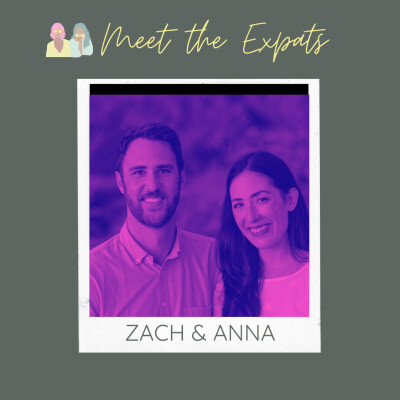
Hi, it's Corbyn from UC Expats, and today I'm with Zach and Anna from Start Abroad. They have quite a... few moves under the belt and started this relocation company to help expats move abroad. So we'll definitely go through the highs and lows, the expat mistakes that people have made and yeah, go into detail. So hi, how are you?
- Speaker #2
Hi, thanks so much for having me.
- Speaker #1
We're excited to be here.
- Speaker #0
Yeah, likewise. I mean, you definitely have a lot of moves under your belt. It's quite crazy. Let's talk about... how it started, I'll hand it over to you for a brief introduction and go into those.
- Speaker #1
Yeah, sure. Sure. Okay, so I'm Anna. And my first move abroad was actually immediately after finishing university at the United States, American. I moved to England for my very first job teaching in a boarding school. I came back to the US for eight months, and then I moved again to Kenya.
- Speaker #2
uh for um and that is where our paths crossed so i'm why did you move to kenya uh for a job uh for a job with a great um ngo yeah interesting uh so i'm zach i out of college i went to the peace corps i was in the dominican republic for about four years in total and then uh i went back to grad school because i wanted to work in international development and i was hired out of grad school by Anna's company. She actually did my second round interview, which was maybe inappropriate, that we then ended up together.
- Speaker #1
It was long after that.
- Speaker #2
She was the HR leader of this company, so she would know if it was a boat. But yeah, we lived in Kenya. We got together and then we moved to Rwanda together. And that's the first time we lived together. And then during COVID, we kind of got accidentally stuck. in the U.S. We were supposed to go to two weddings in the U.S. and be there for a week, and we ended up being there a year. So what we packed was like two wedding suits. What I packed was like two wedding suits and like seven pairs of underwear.
- Speaker #1
And we got stuck in the U.S.
- Speaker #2
for a year and then decided we wanted to kind of do something different. And so ultimately, we ended up living in Costa Rica where we live now.
- Speaker #0
Okay, so yeah, quite a... quite a journey I'm curious like what started those first move abroad when you're quite young and you're out of school what's the motivator to go to Kenya it's not an easy move it's definitely very exotic very different yeah well I mean I think for both of us it was this passion
- Speaker #1
that we had around the work um that we were doing so we both have a background in international development. And I don't want to speak for you, but I think it's true to say that we both felt like it was important to be in the place where that work was being done to really understand it. Right. And so it made a lot of sense to us, given what we wanted to kind of dedicate our lives to.
- Speaker #2
I think, and maybe this resonates with yourself, Pauline, but when, you know, from a young age, too, we have the opportunities to travel abroad and kind of fell in love with it and fell in love with learning about other cultures and how much you can learn from those experiences. And so I just, I think we both had a passion for living in different cultures and exploring different cultures also. And then we both felt it was really important to be kind of helping people to help themselves. You know, that's ultimately led to the work we do now, but also led us to those initial kind of jobs.
- Speaker #0
Initial moves. Yeah. And working NGO, definitely. There is that giving back piece and volunteering, of course, that's very much involved.
- Speaker #2
Yeah. Yeah, absolutely.
- Speaker #0
And in those moves specifically, like moving to Africa, Kenya, Rwanda, and then Costa Rica, like what did you find so interesting? I'm sure there was loads, but also challenging and difficult.
- Speaker #1
Yeah. So it was very different, I would say, the first couple of moves, because those were all for jobs. So we had this like built-in network of support. Right.
- Speaker #2
And your job handles a lot of the logistics. So where you live. Yeah.
- Speaker #1
That actually used to be my job was like handling everybody else's like situation. So yeah, it's, you know, you, you show up and not only do you kind of have a built-in social network because you have all these colleagues and you're kind of living near them because at this company where we met, we actually would organize housing for new international arrivals or employees. Okay. So, you know, it's, you kind of have like your housing figured out, your visa figured out, like your taxes figured out, all of these things. Nice. Yeah. Yeah. Really nice. Also,
- Speaker #2
when you're young, you'll just go and you'll figure it out.
- Speaker #0
Yeah. And you have no clue about the end.
- Speaker #2
You're like, it'll work out. And then as you get older.
- Speaker #1
Well, when we moved to Costa Rica, it was the first time we weren't moving for another job. Like somebody else's employment offer. We wanted to move because we love the place. And we were moving on our own. And that's a very different experience.
- Speaker #2
No one's helping you. So you have to figure out all the way. You're alone. We're being a different person. in maybe a language you don't speak. So there's all the logistical challenge. And then there's also a lot of the little challenges that you don't expect. So there's what we consider like an emotional roller coaster, right? Even though now I've moved five times, it still got me when I moved to Costa Rica. Oh,
- Speaker #0
it still comes. Yeah.
- Speaker #2
Yeah. The first few days you're on a honeymoon, you're like, this is amazing. I love this place. And then something happens and you're like, this was terrible. What did I do? I made the worst decision. And then there are really strong fluctuations. eventually it balances out. But it's challenging just from an emotional perspective, those first three to six months, and people aren't always patient with themselves or didn't expect it. And then even little things like when I first moved to Kenya, I didn't know where to like get food and didn't really know how to house people. So I was like in a house, my roommate at the time had like one apple. So I ate the apple. It's all I kind of ate for a day. So. There's the big logistical challenges, especially when you're moving on your own, there's these bureaucracies, and then there's the emotional challenges, and there's the day-to-day challenges. Moving abroad can, hopefully it's ultimately worth it for you, but it is certainly a transitional challenge.
- Speaker #0
Definitely. I think you go through, you've really expressed it, that range of emotions of going from the very highs and the lows. It can just be a tiny, tiny thing in your day, but that's so different to the norm. where
- Speaker #2
you knew everything so me you're like a kid starting from scratch and it's frustrating especially as an adult i think you're used to being competent and being able to get things done and knowing how things work and you move to a place where things just work different and part of the reason we're moving to these places because they work differently and we like that but
- Speaker #1
um and then on top of it you might speak the language and sound like a toddler so it really is like one movie comes to you No,
- Speaker #2
we don't.
- Speaker #0
beginner level yeah yeah I mean how to get something completely all right um so you move to Costa Rica let's talk about start abroad where does this project and company arise
- Speaker #2
from well it was what Anna was mentioning before is when we started to look at moving to a place without the support of a company We wanted to hire somebody. So if we were 23 when we moved, we would have gone and figured it out. But we weren't. We wanted to start a family. We needed to do things correctly. So we actually looked for people to help us and realized that there weren't necessarily the services out there that we were looking for. And at the same time, we were doing research and hearing all these horror stories about people that wanted to move abroad and really needed to for different reasons. And we're getting scammed or we're just so overwhelmed that they weren't ever getting started. And with Anna's background, especially as HR lead and having managed some of the people's moves, we thought we could actually help people. And so we started Start Abroad. And the idea is that we're a full service relocation company offering a lot of the same support that someone would get from a company. But individuals that are making the move. We try to create the service that we wish would have existed.
- Speaker #1
We now offer that service in Costa Rica, where we are now. I'm also in Panama, in Portugal, and in Spain.
- Speaker #0
Okay. So a couple of locations today. And so what is the range? So you mentioned like the admin, the visa, I guess, the housing piece. What's a little bit more of the wider services that you had dreamed about at that time?
- Speaker #1
Yeah. Well, it does vary a little bit by country because it depends on what the requirements are. but You know, it'll be the if you need any kind of identification numbers set up, then we will include those. If you need to open a bank account, if that's a requirement to move to the country for visa, we'll open that. In some countries where it's really common, most people are going to want to buy a car. We can assist with that. We also will assist with the tax piece by connecting you with our accountant to have a consultation. It's important for Americans, I will say.
- Speaker #2
And those are the logistical pieces. And then what we strive to offer, too, is some kind of just emotional support. We do. for a lot of our clients you're having consistent coaching calls and so we're getting on calls and you're moving to portugal and you're feeling really overwhelmed and so what we try to do is break it down step by step we have checklists and things to help not make it this big overwhelming thing but to break it into to manageable chunks and then we're coaching people through that and answering questions that come up so not only do we want to kind of take your hand and guide you through the logistical piece but also just kind of managing the whole thing yeah
- Speaker #1
And then I will say there's additional type of support depending on the person and what they need. And like, especially who's in the family, right? Like, do you care a lot about health care? Do you need to understand what prescriptions are available and what specialists to work with? Okay, we could help with that. Do you have a pet that you want to be? Remember, how are you going to come through? Do you have kids? Children,
- Speaker #2
schools.
- Speaker #1
What schools can be nice for your family? All these types.
- Speaker #0
Yeah. Yeah, and then finding the neighborhood that matches all of...
- Speaker #2
That's a big thing that we help people think through. Sometimes people will come to us and already know where they want to move, and then we just help facilitate finding a rental, for instance, because that can be very difficult. But then sometimes they say, look, I want to live in the greater San Jose area. My kids are 7 and 10. Where would make sense for me? And we talk about schools and neighborhoods, and that's the first step.
- Speaker #0
Yeah, I think it's nice to have that point of contact that knows the area. I can just guide you through at least the first steps that can be a hassle when you don't know you don't know the right neighborhood you don't know where the schools are you don't know that yeah this process exists and is necessary to actually find a house or something um just in terms of having a bank account or having an id switch something things like that appreciate and so regarding the pets i think it's something we never talked about on the podcast but what are like the usual steps that people have to go through if they want to move with their pet?
- Speaker #2
Well, first I'd say we've helped hundreds of people move abroad. And even though it's a really stressful process, people are always the most anxious about the pet piece. They're always also most willing to spend the most money on the pet piece.
- Speaker #1
It's true.
- Speaker #2
Just very consistent.
- Speaker #1
It's true. Well, okay, obviously it's going to be a little different depending on whatever country you're moving to. but generally speaking. You have to make sure that your pet is going to meet the import requirements of the new country, which is usually vaccinations. Most importantly, rabies. If you're moving to some places, a microchip, that's important in the EU specifically. And then getting this form completed. So you have to get a health certificate filled out by a vet within a very specific window of time. before that. yeah it gets to the country so that's always the stressful part that's like the timing of okay at a time frame yeah i've got to get the vet to fill this out and then i sometimes in some places i have to get it sent away to be endorsed by this other government agency and then like how long is that going to take when am i going to get back we work with a lot of americans specifically and i always have to tell someone if this process is working perfectly and as it should You are not going to get your certificate back in the mail until 48 to 72 hours before you get on the plane. Like that's when everything's working exactly as it should. So, you know, this is going to be stressful. So just like, of course.
- Speaker #2
And they're already anxious about it.
- Speaker #1
Yeah.
- Speaker #2
And so our main clientele come from the U.S., Canada and the U.K. And so most of the time people are getting on flights. And so one of the things to keep in mind, too, is. A lot of airlines have policies that they won't take pets as baggage or cargo during certain times of the year. So if it's too cold in any of the airports or if it's too hot.
- Speaker #1
Especially if it's too hot.
- Speaker #2
Yeah. So if it's like deep summer or deep winter, it could affect your planning. So those are just things to consider about your moving.
- Speaker #1
I mean, I don't know how much detail you want to get into, but we could talk.
- Speaker #2
For a day.
- Speaker #1
All the options.
- Speaker #0
Might not be the full focus, Cynthia.
- Speaker #1
Do you want to move your pet on a private jet? Yeah, so that's...
- Speaker #2
Yeah.
- Speaker #0
Okay, yeah, there's first class service for pets also.
- Speaker #1
Truly there is.
- Speaker #2
And people will not buy, you know, upgrade their seats to premium economy for themselves, but they'll buy like a bunch of them. But they'll do it for them.
- Speaker #0
Well, it's the last baby of the family usually. It often is. All right. And so what about the biggest mistakes or I want to say like frequent questions that you would get, but more than mistakes?
- Speaker #2
There's a lot of people that come to us after trying to do these things themselves.
- Speaker #0
Okay.
- Speaker #2
And it's because they'll come in and, for instance, coming to Portugal, for instance, they can't, they'll try to do everything and they'll find a lot of information online. There's so much information online, which is great, but it also is a negative in that a lot of it is outdated. A lot of it's wrong. A lot of it's, you know, these things are changing all the time.
- Speaker #1
All the time.
- Speaker #2
And so somebody might go through the whole process because technically they can do it on their own. And they found something online that said they could do it this way, and they did it that way, and then they were rejected. And they have to start the process all over again. It's actually very common. Or they found somebody on a Facebook group that said they could help them find a rental, and it was a scam. And now they're out 5,000 pounds or whatever it is. And so trying to do it on your own is certainly possible, and a lot of people do. But just a lot of mistakes are from trusting the wrong information or trusting other information or just getting hooked into a scam online.
- Speaker #0
yeah i think yeah doing the research and checking the sources is definitely you got to check the sources and you got to make sure the sources are current because they'll find something and not see that it was from three years ago when the rules with portuguese immigration have changed and to be totally honest with you some
- Speaker #1
of these rules are changing on like every three months basis so it has to be like current current otherwise you can't get turned away from your appointment that you've spent months with her. Yeah. And that's really frustrating.
- Speaker #2
And then you have to get all the documents issued. Start from scratch, yeah. And it becomes a lot more expensive than it would have been to just work with somebody. Okay. Depending on the country, there's all these little mistakes. In Costa Rica, the car market is wild. And there's all these scams. And people will buy a bad car. And that's like a $15,000 mistake because they didn't know how the car market works and some of the scams.
- Speaker #1
I think that... Kind of generally what it boils down to is you need to have people that you trust who can advise you about how systems work in these new countries. Right. So whether it's us or like, is there someone that is truly like trustworthy and looking out for you? It's on your side. It's on your side. In one of these countries that can be like, okay, and this is how it works if you want to sign a rental contract. This is how it works if you want to buy it.
- Speaker #2
And in general, just to a point that we were talking about earlier. I think a mistake that people can make is just not being patient or not managing their expectations. So some people will move and they just want to move the U.S. or the U.K. or Canada to Portugal because of the benefits of living in Portugal. And the idea is like Portugal is very different from how our home countries operate. And we need to conform to how those countries operate and not expect that they're going to conform to us. And so, for instance, Costa Rica. They don't value like ease of commerce the way the U.S. does. So like the U.S. and the U.K. and Canada are set up to allow us to spend money as quickly as possible. Relationships are business relationships. I mean, Costa Rica, they don't really care about the speed or ease of commerce. And they don't. It's personal relationships, not business relationships. So as an American, I came here and I just was like, well, I just want to give you money to do this thing. But that's that's kind of rude here. And so then I would get really frustrated. I'd be like, well, why not? But that's not the point. Like, I moved to Costa Rica because of Costa Rica, because Pura Vida. It's not going to change for me. And I shouldn't expect it to.
- Speaker #1
Everyone goes through cultural adaptation.
- Speaker #0
Yeah. It's part of the process and the journey, for sure.
- Speaker #2
It's wonderful and frustrating.
- Speaker #1
So just, you know, knowing that that's going to be a thing. Yeah. And, um, and... remembering as you are frustrated with differences that you are not used to but oftentimes those are the exact differences that drew you to the place totally also yeah well said yeah it's a good way to keep your patience and just yeah yeah except except
- Speaker #0
and see the girls is there anything else you wanted to add on the topic
- Speaker #2
Just generally, I know that you're a third culture kid. And we, so we're raising our, we had a daughter once we moved to Costa Rica. And we are, one of the reasons we decided to continue living abroad was to raise her. in a different culture. Okay. And she's going to grow up being a native Spanish speaker.
- Speaker #0
That's great.
- Speaker #2
In a culture we're just really excited about. And printing and...
- Speaker #1
Yeah.
- Speaker #2
And...
- Speaker #1
That is, like, just really welcoming and... Family-oriented. Family-oriented, like, more tranquil. Yeah. Yeah. Like, a lot of people in the town know her and are looking out for her, you know.
- Speaker #0
Wow. That's very nice, that sense of community.
- Speaker #1
Yeah. Yeah.
- Speaker #2
It's wonderful. One of our neighbors, too, like her whole family, their whole family has adopted our daughter. And so she's all over there all the time.
- Speaker #1
She gets invited to Easter. We're not. She goes to there. She goes.
- Speaker #2
We just get picked.
- Speaker #0
You get a date day.
- Speaker #1
I mean, it's great. So what were you going to ask about?
- Speaker #2
I just wanted to point that out. I know that that was your experience. And one of the things that we're really excited about in terms of raising our daughter in that way. We really see the value.
- Speaker #0
Yeah, I think there is definitely, I think as a kid, you don't realize it. I mean, when you're young, but later as an adult, for sure, I did see like all the things, what I learned just in terms of languages, but also that mindset of being capable to adapt, to understand different cultures and have that sort of curiosity and open mindedness towards it. I think there's also definitely a piece around. being more adventurous and a bit daring with the unknown than you would in another situation.
- Speaker #1
That's definitely something we want to encourage.
- Speaker #0
I'm sure Costa Rica is a good place for that.
- Speaker #1
I was just speaking with a client this morning who said they're moving to Portugal, but they were saying like, oh, you're in Costa Rica. I love Costa Rica. Costa Rica is beautiful, but everything is dangerous. And I was like, what do you mean? It's like, well. you know i was walking on this nature trip and there was such a cute little frog and we asked the guide oh it's such a cute little frog look at that little red frog and the guy's like don't touch that poison yeah they're really cool that's true when you live in the jungle you have to be careful yeah
- Speaker #0
yeah yeah yeah i mean yeah australia is the same south africa but yeah it's exciting I'm sure like for her going to visit family in the u.s is probably a bit of a shock and very different in terms of family for thanksgiving and for her going to the u.s you know for us it's like oh we're going to the u.s for her it's like amazing
- Speaker #2
she's running around and she gets to go on a plane and it's cold for the first time in her life yeah yeah but actually i mean to that point it is interesting to see like um
- Speaker #1
One of the differences in, like, cultures and what's accessible is, like, in the U.S., things are so easy to buy or get. So all of a sudden, it's just, like, there are so many toys and, like, so many, like, gifts available. So many things on the shelves that you can point to and be like, I want that thing.
- Speaker #2
You can just get it in, like, a day.
- Speaker #1
Yeah, it's crazy, honestly. And then we get back here and we're like. Okay, well, I think we've probably stashed away enough toys in the closet to last us for a few seconds. Okay, you stocked up on us.
- Speaker #0
Slowly over time. Stock up on everything before. Okay, well, let's move to your recommendations then in Costa Rica.
- Speaker #1
Sure.
- Speaker #2
We live in a really, there's a lot of recommendations for Costa Rica. Okay. Do you want just like general, like if you're going to come here and travel, do you want specific to a town?
- Speaker #0
I guess more to your town, what would be a bar or cafe? And then I'd like to also leave it open to a carte blanche. So that would be anything that you want to share on Costa Rica.
- Speaker #1
Okay, so we'll answer the question at hand first, which is like in our town, a restaurant, a cafe.
- Speaker #2
We live in Nuevo Arnaud, Costa Rica. So there's a big lake in the northwest. It's called Arnaud Lake. It's near La Fortuna, which probably a lot of people have heard of. So it's a very small town.
- Speaker #1
It is, however, has a good number of restaurants per capita, like for the size of the town.
- Speaker #2
Yeah, like really good restaurants.
- Speaker #1
And I think our favorite one is called Gingerbread. It's on the lake road as you're approaching town, and it's just delicious. Oh, pro tip, ask for the chef's menu if you can. Yeah,
- Speaker #2
the chef's menu, they'll just bring you out a bunch of stuff. and so When we first moved to Costa Rica, we didn't know exactly where we wanted to live. So we picked five towns and we spent a week in each.
- Speaker #0
It's a piece of advice. It's great when you can do it.
- Speaker #2
Yeah, it's great. If you have the flexibility. Getting a long-term rental or buying property is a big investment that's often hard to get out of. And so what we hate to see is people that say, well, I went on vacation to Costa Rica for a week, five years ago. I love that, yeah. Then you buy a $300,000 car. Don't do that. Go rent first. Live in a few different areas. So we checked out five different places.
- Speaker #1
We did not end up in the place we thought we would.
- Speaker #2
We thought we were going to be in the beach like everyone does. And then it was just hot and expensive. And we came up here, so we lived higher up on the lake. and it was green and we it was a lot cooler a lot it was like 10 degrees cooler and we went on a kayaking tour and the kayaking guide was like oh we're gonna go to gingerbread this restaurant tonight like there's live music so we were in this beautiful lake town with the jungle and there was like monkeys and birds and toucans everything and we went to this like really nice bar restaurant where there's a lot of music and delicious food and we were like this place kind house at all, even if it's like a very rural and quiet.
- Speaker #1
It didn't hurt that the restaurant owner was giving out free shots to everyone.
- Speaker #0
It was like St.
- Speaker #1
Patrick's.
- Speaker #2
Yeah, so we just got a bunch of free shots.
- Speaker #0
Is that a very St. Patrick's in Costa Rica?
- Speaker #1
They sell...
- Speaker #2
And so we were like, well, we want to try out this town first. So we rented a place for a month, and we rented a place for a year, and then we eventually bought it. That was a long way to say that gingerbread, which we recommended, one of the reasons we decided to live here.
- Speaker #1
It was great. and now we go back all the time and actually the woman who did the kayaking tour for us made our baby's quilt it's like a beautiful quilt anyway so yeah
- Speaker #2
I understand the community side you were talking about yeah exactly so it's a recommendation in town a cart plush I went to Paris I know how to say it correctly would be well we have different
- Speaker #1
I'm sure we have different ones. Okay, I do want to talk about beaches because I feel like a lot of people coming on a visit to Costa Rica want to know about beaches. Okay, I have two favorite beaches that I want to mention. They're both in Guanacaste, which is like the northern Pacific because it's the region closer to us where we go regularly. One of them is Playa Conchal, which is like really beautiful when it comes to white sand. If you aren't staying in this like... Hmm. kind of fancy resort that has direct access you have to walk along the beach to get there but it's beautiful it has a nice shade the water is like crystal clear it is so stunning so that's one um and then the other one i almost don't want to say i
- Speaker #2
veto it's a hidden gem wait get on the call with us and i'll tell you book the free consultation and you'll get the secrets Yeah,
- Speaker #0
exactly.
- Speaker #2
My favorite beach is in the South Pacific. So there's obviously two coasts in Costa Rica. There's the Caribbean side, which is really cool, but kind of under, like, less visited. And the Pacific side is a lot more popular and more developed. So Guanacaste is the north. And then the South Pacific, so the other, you know, closer to Panama, to me is stunning. And there's a beach called Marino Baena. Maybe people have seen pictures of the Whaletail Beach. It's called the Whaletail Beach. It's Marino Baena. It is this like lush tropical jungle map that rolls directly into this beach. And it's, to me, like the top three prettiest beaches I've ever seen in my life.
- Speaker #1
It's incredible.
- Speaker #2
I saw manta rays there.
- Speaker #1
Like in the waves. Oh, wow.
- Speaker #2
I did get stung by a jellyfish.
- Speaker #1
Oh, me too. Same jellyfish, I think.
- Speaker #2
He was ornery that day. But besides that, I think that's just incredible.
- Speaker #1
It is like a national park. that extends into the ocean. Like most of the Nautilus Park is actually in the ocean. So it's just incredibly preserved.
- Speaker #2
It's an excellent town called Vuvita, which a lot of people like.
- Speaker #0
Cool. Well, we'll note them in the comments and notes for sure. And so last, what about your expat song?
- Speaker #1
Okay, so I am going to let Zach explain what the song is and just let me say before we go into this that We discovered this song literally less than a week ago. And since we discovered it, I think I have heard it at least 30 times.
- Speaker #2
I really like it. Okay,
- Speaker #1
go ahead.
- Speaker #2
So I will caveat that I think your ex-pat song changes over time. Yeah. With your ex-pat experience. I agree. Like different phases of life and things. Yeah. So I think when we were in Africa, there was probably some South D. Soul song that we loved a lot. And now we're living in Costa Rica. And so there is. And we also have a two-year-old daughter, so we're watching a lot of Disney and listening to a lot of Disney. So there is a salsa version of Under the Sea called Baja. Okay.
- Speaker #0
Under the Sea by Alejandro Sanz. S-A-N-Z. And it is awesome.
- Speaker #1
It is a great song.
- Speaker #0
And last night was the first night my daughter and I picked her up and danced salsa with her while we were listening to this song.
- Speaker #1
It was extremely cute.
- Speaker #0
And it is just like a perfect encapsulation, I think, of this phase of our expat lives.
- Speaker #1
Yeah.
- Speaker #0
And it's also just a book. So I recommend it.
- Speaker #1
Check it out.
- Speaker #0
Baja Del Mar. Oh, yeah.
- Speaker #2
I'll definitely listen to it.
- Speaker #0
Yeah.
- Speaker #2
For sure. The salsa version of your expat life.
- Speaker #0
Yeah, exactly.
- Speaker #2
Okay. Well, thank you so much for sharing. We'll put everything in the comments, so the link to start abroad. There's also going to be a link for a free consultation with you guys and all the recommendations, of course. So if you enjoyed the episode, you can... put a rating on apple or spotify and follow all the updates as usual on instagram talk and youtube thank you thank you so much thank you moving abroad we'd love to speak