undefined cover
undefined cover
undefined cover
undefined cover
undefined cover
undefined cover
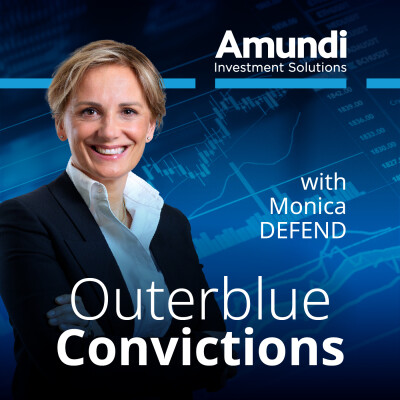
Monetary policy resolutions for a new year -  Global Investment views by Outerblue Convictions cover
Outerblue

Monetary policy resolutions for a new year - Global Investment views by Outerblue Convictions

Monetary policy resolutions for a new year - Global Investment views by Outerblue Convictions

13min |19/12/2025
Play
undefined cover
undefined cover
undefined cover
undefined cover
undefined cover
undefined cover
Monetary policy resolutions for a new year -  Global Investment views by Outerblue Convictions cover
Outerblue

Monetary policy resolutions for a new year - Global Investment views by Outerblue Convictions

Monetary policy resolutions for a new year - Global Investment views by Outerblue Convictions

13min |19/12/2025
Play

Description

It's the time of year to look ahead, reflect back on what has happened, and make resolutions for the coming year. After explaining our market forecasts and investment views for 2026 in last month's podcast, in this episode we're focusing more closely on a key factor that drives market movements, monetary policy.


Sitting down with Monica Defend, Head of the Amundi Investment Institute, for the last time this year, our host, Swaha Pattanaik, asks all the essential questions to help investors understand the different expectations for monetary policy decisions in the months to come and which resolutions are realistic. 


Starting with the largest, the Federal Reserve, we explore the baseline scenario, we analyse the competing pressures and how the Fed is responding.  We then compare this to the outlook in the Eurozone and our expectations for the ECB in 2026 in terms of interest rate movements. Finally, we compare these potential developments to our portfolio positioning in fixed income and equities and discuss some of the fragilities investors need to keep in mind.


Concise, insightful and timely, this episode is essential listening for investors and asset allocators seeking a clear, expert take on macro-economic signals and monetary policy moves. Tune in for practical perspectives, investment views and the themes that will shape portfolios in the year ahead.


Topics covered: Market forecasts, monetary policy, policy making, investment views, asset allocation, economy, central bank, Federal Reserve, European Central Bank, growth, GDP, markets, investors, inflation, interest rates, bonds, fixed income, equities, United States, Europe, emerging markets, diversification


Hosted on Ausha. See ausha.co/privacy-policy for more information.
Transcription

  • Disclaimer

    This podcast is only for the attention of professional investors in the financial industry. Outerblue by Amundi. Welcome to Outerblue Convictions, Market Analysis and Asset Allocation Views.

  • Swaha Pattanaik

    Hello and welcome to this Amundi podcast where we discuss markets, macroeconomics and portfolio allocation. I'm Swaha Pattanaik, the head of the Publishing and Digital Strategy Division at the Amundi Investment Institute. And I'm delighted to be joined by the head of the Institute, Monica Defend. Great to have you here with us, Monica.

  • Monica Defend

    Thank you, Swaha. And it's my great, great pleasure to be with you today.

  • Swaha Pattanaik

    Well, it's that time of year. We look ahead, we make good resolutions and we plan for the next 12 months. But as all good investors know, it's vital to be ahead of the curve. So we at Amundi have already issued a podcast on the 2026 Investment Outlook a few weeks ago. We recommend you check it out on our Research Centre or on your podcast platform of choice. As a result, today we're going to focus a little bit more closely on one of the issues that's absolutely vital for markets, monetary policy. Monica, let's start with the Goliath, if you like, of the central banking world, the Federal Reserve. Our forecast for what the Fed is going to do is a little bit away from market pricing. What are you exactly expecting the Fed to do next year? And why is it that we are not exactly aligned with the market consensus?

  • Monica Defend

    Thank you, Swaha. We have not been changing our mind as we confirm the baseline scenario for the United States. So we still expect two cuts in 2026, but we acknowledge that the leadership uncertainty adds a tail risk of a more dovish path, potentially also below 3%, if the Fed leans more on forward-looking inflation expectations and the labour market continues to cool. Then, it's really the Fed is facing the complex policy decision amid competing pressures from the dual mandate. But we see a gradual approach to rate cuts given the labour weakness as appropriate. But on the last meeting, I think an important shift, that we had anticipated actually, took place. It regards the balance sheet. The balance sheet of the Fed is seen as a liquidity channel and the Fed's reserve management purchases that are relevant technically. They are not really a QE because it is concentrated in the T-Bill, in the short end of the curve, not on the longer term as it is the case for a proper QE, but it still implies a balance sheet expansion and therefore, a liquidity backdrop improvement at the margin. All in all, the Fed is doing its job preserving the market stability when the uncertainty is around the Treasury general account requirement, fiscal tax resistance spending, and how dovish the Fed might become under the new chair.

  • Swaha Pattanaik

    Thank you, Monica, for that. So, we're also a little bit off consensus in the Eurozone. The ECB has a difficult decision as well, but perhaps easier in the sense that it's not facing this continuous drumbeat of political commentary, perhaps. What are you expecting from the ECB where we've heard people like Executive Board Member, Isabel Schnabel, talk about the next move potentially being a hike, albeit not immediately?

  • Monica Defend

    Well. Honestly, on the ECB discussions and talks have been all over the place at the point, as you are mentioning, that part of the market has already been starting talking about a hike. We don't think this is the case. The region is not ready, in our opinion, for a rate hike. And again, what we expect is the ECB to cut rates twice in 2026. Why is that the case? Because of the growth profile and the inflation that is still on a moderating path. So this should allow the ECB to cut further and if once we don't buy the hawkishness of the ECB, as well as the risks to the upside that they are attaching to the inflation probably are kind of overshooting.

  • Swaha Pattanaik

    So thanks for laying out those risks, Monica. But just given your views are a little different from market pricing, perhaps we could turn now to the fixed income market, which has been reacting a little bit differently to usual. We've been seeing a yield curve steepening, even as the Fed's been cutting. So how do you see things playing out in fixed income as we go ahead, given we are already not at market consensus, if things go as we are expecting?

  • Monica Defend

    Well, on duration and curve, we remain broadly neutral. But in general, we prefer curve expressions because supply pressures is more visible in the long end and this is a global factor with a specific reference to the US. We will say that as of now the pressure is stable. Policy uncertainty is high, and again this is a global factor, and the front end is still anchored by the cutting path. So in practice we keep steepeners in the United States, in particular in the 5 to 30 years bucket, because the front end is anchored while supply and term premium rebuild risk sits further out. What if US growth proved to be stronger than this? It could trigger a further rise in yields. But in terms of expectations, we really see rates moving in a trading range. Moving into the Eurozone, we keep steepeners and relative trades. We could see the periphery outperforming core in 2026, given the more favourable supply dynamics. German and French net supply will be high in 2026 and a significant amount of the ECB holdings will mature. And this could weigh eventually on the curve and extend the bear steepening. And we are looking in the 2 to 10 years bucket of the curve. In Japan, where the central bank is expected to hike. So it's the only central bank in the developed market that is going in the opposite direction, we are ready to reduce the shorts as yields are approaching key levels where domestic investors may become more inclined to repatriate. And in general the repatriation theme is something that we are looking for in 2026, but still for now we have not seen noticeable flows in the region.

  • Swaha Pattanaik

    Interesting, that's really an interesting point to watch out for. We'll come back to this no doubt, in the podcast next year. Let me turn now to the equity market. You have been flagging for a while the US equity market concentration risks. Any sign of this changing, given people are well aware of these dangers?

  • Monica Defend

    So, concentration risk is still a matter. But if we look at the 2026 expectations on the S&P 500 EPS, they look less concentrated, though the high-tech sector is still expected to deliver very strong earnings growth around 30% on a last 12 month basis. And at the same time, the hyperscalers capex cycle is expected to cool and normalize toward the mid teens. So if earnings remain that strong while capex growth slows or normalize. The story has to shift from spend more to earn more per dollar spent, so margins, monetization and productivity gains needed to shore up. And investment implication is that the market will increasingly reward proven profitability and cash flow conversion and be less forgiving where capex intensity stays high without clear monetization. Valuations therefore are more nuanced. There are, let me summarize the fragilities that we see amid this concentration risk. What we have seen so far is a boom in the digital space that is now requiring huge physical component growth, but is facing new constraints, as we are highlighting in the outlook, related to power and the potential bottlenecks. The second difference in this new wave of investments is that up to now, the capital had been paid by free cash flow by tech firms and now capex. CAPEX increases that will need financing, and this financing is will likely occur outside the ecosystem and we are seeing some signs of it. And third that AI this year explained almost one-third of GDP growth so beyond the concentration risk in the equity market there is a concentration risk in the macro space where we might watch out for fragilities.

  • Swaha Pattanaik

    It's really important to point all those out, because as you're sort of getting various clumps of risks, very focused in certain sectors or macro areas, you have been talking with clients and explaining the importance of diversification over and over again, I know. How is this theme showing up right at this end of the year in, say, your EM convictions, which I know that was an important diversifier for?

  • Monica Defend

    Indeed, the emerging market spectrum is essential, I would say. So in emerging markets, we keep an overall constructive stance, but with differentiations between regions and countries. As you were mentioning, the bond component is pivotal for diversification and income. If we look at local rates, notably Brazil, Mexico, Hungary, India, even after the rally, we see room if growth softens and inflation stays controlled. We focus on the real yield. On the hard currency component, we overweight mainly for carry, but we are selective where spreads compensate. If we look at the emerging market equities, again, it's a story of diversification combined with selectivity. Our view is supported by tech earning cycles, and improving macro momentum with strong export domestic consumption stories, but we are cautious where valuations are stretched or revisions risk is high. In the equity context we prefer LATAM that is cheaper on the valuation side, and we favour also emerging market Europe.

  • Swaha Pattanaik

    Thank you, Monica. We always seem to run out of time, certainly. I have more questions, but we'll leave it for next time. And I'll wind it up here by thanking you for joining us today.

  • Monica Defend

    Thank you, Swaha.

  • Swaha Pattanaik

    And thank you for listening to this podcast. From all of us at the Institute and Amundi, we wish you an excellent holiday season and a great start to the New Year. We'll be back in January with a brand new episode. Join us then.

  • Disclaimer

    This podcast is only for the attention of professional investors as defined in Directive 2014-65-EU, dated 15 May 2014, as amended from time to time on markets and financial instruments called MIFID II. Views are those of the author and not necessarily Amundi Asset Management SAS. They are subject to change and should not be relied upon as investment advice, as a security recommendation, or as an indication of trading for any Amundi products or any other security, fund units, or services. Past performance is not a guarantee or indicative of future results.

Description

It's the time of year to look ahead, reflect back on what has happened, and make resolutions for the coming year. After explaining our market forecasts and investment views for 2026 in last month's podcast, in this episode we're focusing more closely on a key factor that drives market movements, monetary policy.


Sitting down with Monica Defend, Head of the Amundi Investment Institute, for the last time this year, our host, Swaha Pattanaik, asks all the essential questions to help investors understand the different expectations for monetary policy decisions in the months to come and which resolutions are realistic. 


Starting with the largest, the Federal Reserve, we explore the baseline scenario, we analyse the competing pressures and how the Fed is responding.  We then compare this to the outlook in the Eurozone and our expectations for the ECB in 2026 in terms of interest rate movements. Finally, we compare these potential developments to our portfolio positioning in fixed income and equities and discuss some of the fragilities investors need to keep in mind.


Concise, insightful and timely, this episode is essential listening for investors and asset allocators seeking a clear, expert take on macro-economic signals and monetary policy moves. Tune in for practical perspectives, investment views and the themes that will shape portfolios in the year ahead.


Topics covered: Market forecasts, monetary policy, policy making, investment views, asset allocation, economy, central bank, Federal Reserve, European Central Bank, growth, GDP, markets, investors, inflation, interest rates, bonds, fixed income, equities, United States, Europe, emerging markets, diversification


Hosted on Ausha. See ausha.co/privacy-policy for more information.
Transcription

  • Disclaimer

    This podcast is only for the attention of professional investors in the financial industry. Outerblue by Amundi. Welcome to Outerblue Convictions, Market Analysis and Asset Allocation Views.

  • Swaha Pattanaik

    Hello and welcome to this Amundi podcast where we discuss markets, macroeconomics and portfolio allocation. I'm Swaha Pattanaik, the head of the Publishing and Digital Strategy Division at the Amundi Investment Institute. And I'm delighted to be joined by the head of the Institute, Monica Defend. Great to have you here with us, Monica.

  • Monica Defend

    Thank you, Swaha. And it's my great, great pleasure to be with you today.

  • Swaha Pattanaik

    Well, it's that time of year. We look ahead, we make good resolutions and we plan for the next 12 months. But as all good investors know, it's vital to be ahead of the curve. So we at Amundi have already issued a podcast on the 2026 Investment Outlook a few weeks ago. We recommend you check it out on our Research Centre or on your podcast platform of choice. As a result, today we're going to focus a little bit more closely on one of the issues that's absolutely vital for markets, monetary policy. Monica, let's start with the Goliath, if you like, of the central banking world, the Federal Reserve. Our forecast for what the Fed is going to do is a little bit away from market pricing. What are you exactly expecting the Fed to do next year? And why is it that we are not exactly aligned with the market consensus?

  • Monica Defend

    Thank you, Swaha. We have not been changing our mind as we confirm the baseline scenario for the United States. So we still expect two cuts in 2026, but we acknowledge that the leadership uncertainty adds a tail risk of a more dovish path, potentially also below 3%, if the Fed leans more on forward-looking inflation expectations and the labour market continues to cool. Then, it's really the Fed is facing the complex policy decision amid competing pressures from the dual mandate. But we see a gradual approach to rate cuts given the labour weakness as appropriate. But on the last meeting, I think an important shift, that we had anticipated actually, took place. It regards the balance sheet. The balance sheet of the Fed is seen as a liquidity channel and the Fed's reserve management purchases that are relevant technically. They are not really a QE because it is concentrated in the T-Bill, in the short end of the curve, not on the longer term as it is the case for a proper QE, but it still implies a balance sheet expansion and therefore, a liquidity backdrop improvement at the margin. All in all, the Fed is doing its job preserving the market stability when the uncertainty is around the Treasury general account requirement, fiscal tax resistance spending, and how dovish the Fed might become under the new chair.

  • Swaha Pattanaik

    Thank you, Monica, for that. So, we're also a little bit off consensus in the Eurozone. The ECB has a difficult decision as well, but perhaps easier in the sense that it's not facing this continuous drumbeat of political commentary, perhaps. What are you expecting from the ECB where we've heard people like Executive Board Member, Isabel Schnabel, talk about the next move potentially being a hike, albeit not immediately?

  • Monica Defend

    Well. Honestly, on the ECB discussions and talks have been all over the place at the point, as you are mentioning, that part of the market has already been starting talking about a hike. We don't think this is the case. The region is not ready, in our opinion, for a rate hike. And again, what we expect is the ECB to cut rates twice in 2026. Why is that the case? Because of the growth profile and the inflation that is still on a moderating path. So this should allow the ECB to cut further and if once we don't buy the hawkishness of the ECB, as well as the risks to the upside that they are attaching to the inflation probably are kind of overshooting.

  • Swaha Pattanaik

    So thanks for laying out those risks, Monica. But just given your views are a little different from market pricing, perhaps we could turn now to the fixed income market, which has been reacting a little bit differently to usual. We've been seeing a yield curve steepening, even as the Fed's been cutting. So how do you see things playing out in fixed income as we go ahead, given we are already not at market consensus, if things go as we are expecting?

  • Monica Defend

    Well, on duration and curve, we remain broadly neutral. But in general, we prefer curve expressions because supply pressures is more visible in the long end and this is a global factor with a specific reference to the US. We will say that as of now the pressure is stable. Policy uncertainty is high, and again this is a global factor, and the front end is still anchored by the cutting path. So in practice we keep steepeners in the United States, in particular in the 5 to 30 years bucket, because the front end is anchored while supply and term premium rebuild risk sits further out. What if US growth proved to be stronger than this? It could trigger a further rise in yields. But in terms of expectations, we really see rates moving in a trading range. Moving into the Eurozone, we keep steepeners and relative trades. We could see the periphery outperforming core in 2026, given the more favourable supply dynamics. German and French net supply will be high in 2026 and a significant amount of the ECB holdings will mature. And this could weigh eventually on the curve and extend the bear steepening. And we are looking in the 2 to 10 years bucket of the curve. In Japan, where the central bank is expected to hike. So it's the only central bank in the developed market that is going in the opposite direction, we are ready to reduce the shorts as yields are approaching key levels where domestic investors may become more inclined to repatriate. And in general the repatriation theme is something that we are looking for in 2026, but still for now we have not seen noticeable flows in the region.

  • Swaha Pattanaik

    Interesting, that's really an interesting point to watch out for. We'll come back to this no doubt, in the podcast next year. Let me turn now to the equity market. You have been flagging for a while the US equity market concentration risks. Any sign of this changing, given people are well aware of these dangers?

  • Monica Defend

    So, concentration risk is still a matter. But if we look at the 2026 expectations on the S&P 500 EPS, they look less concentrated, though the high-tech sector is still expected to deliver very strong earnings growth around 30% on a last 12 month basis. And at the same time, the hyperscalers capex cycle is expected to cool and normalize toward the mid teens. So if earnings remain that strong while capex growth slows or normalize. The story has to shift from spend more to earn more per dollar spent, so margins, monetization and productivity gains needed to shore up. And investment implication is that the market will increasingly reward proven profitability and cash flow conversion and be less forgiving where capex intensity stays high without clear monetization. Valuations therefore are more nuanced. There are, let me summarize the fragilities that we see amid this concentration risk. What we have seen so far is a boom in the digital space that is now requiring huge physical component growth, but is facing new constraints, as we are highlighting in the outlook, related to power and the potential bottlenecks. The second difference in this new wave of investments is that up to now, the capital had been paid by free cash flow by tech firms and now capex. CAPEX increases that will need financing, and this financing is will likely occur outside the ecosystem and we are seeing some signs of it. And third that AI this year explained almost one-third of GDP growth so beyond the concentration risk in the equity market there is a concentration risk in the macro space where we might watch out for fragilities.

  • Swaha Pattanaik

    It's really important to point all those out, because as you're sort of getting various clumps of risks, very focused in certain sectors or macro areas, you have been talking with clients and explaining the importance of diversification over and over again, I know. How is this theme showing up right at this end of the year in, say, your EM convictions, which I know that was an important diversifier for?

  • Monica Defend

    Indeed, the emerging market spectrum is essential, I would say. So in emerging markets, we keep an overall constructive stance, but with differentiations between regions and countries. As you were mentioning, the bond component is pivotal for diversification and income. If we look at local rates, notably Brazil, Mexico, Hungary, India, even after the rally, we see room if growth softens and inflation stays controlled. We focus on the real yield. On the hard currency component, we overweight mainly for carry, but we are selective where spreads compensate. If we look at the emerging market equities, again, it's a story of diversification combined with selectivity. Our view is supported by tech earning cycles, and improving macro momentum with strong export domestic consumption stories, but we are cautious where valuations are stretched or revisions risk is high. In the equity context we prefer LATAM that is cheaper on the valuation side, and we favour also emerging market Europe.

  • Swaha Pattanaik

    Thank you, Monica. We always seem to run out of time, certainly. I have more questions, but we'll leave it for next time. And I'll wind it up here by thanking you for joining us today.

  • Monica Defend

    Thank you, Swaha.

  • Swaha Pattanaik

    And thank you for listening to this podcast. From all of us at the Institute and Amundi, we wish you an excellent holiday season and a great start to the New Year. We'll be back in January with a brand new episode. Join us then.

  • Disclaimer

    This podcast is only for the attention of professional investors as defined in Directive 2014-65-EU, dated 15 May 2014, as amended from time to time on markets and financial instruments called MIFID II. Views are those of the author and not necessarily Amundi Asset Management SAS. They are subject to change and should not be relied upon as investment advice, as a security recommendation, or as an indication of trading for any Amundi products or any other security, fund units, or services. Past performance is not a guarantee or indicative of future results.

Share

Embed

You may also like

Description

It's the time of year to look ahead, reflect back on what has happened, and make resolutions for the coming year. After explaining our market forecasts and investment views for 2026 in last month's podcast, in this episode we're focusing more closely on a key factor that drives market movements, monetary policy.


Sitting down with Monica Defend, Head of the Amundi Investment Institute, for the last time this year, our host, Swaha Pattanaik, asks all the essential questions to help investors understand the different expectations for monetary policy decisions in the months to come and which resolutions are realistic. 


Starting with the largest, the Federal Reserve, we explore the baseline scenario, we analyse the competing pressures and how the Fed is responding.  We then compare this to the outlook in the Eurozone and our expectations for the ECB in 2026 in terms of interest rate movements. Finally, we compare these potential developments to our portfolio positioning in fixed income and equities and discuss some of the fragilities investors need to keep in mind.


Concise, insightful and timely, this episode is essential listening for investors and asset allocators seeking a clear, expert take on macro-economic signals and monetary policy moves. Tune in for practical perspectives, investment views and the themes that will shape portfolios in the year ahead.


Topics covered: Market forecasts, monetary policy, policy making, investment views, asset allocation, economy, central bank, Federal Reserve, European Central Bank, growth, GDP, markets, investors, inflation, interest rates, bonds, fixed income, equities, United States, Europe, emerging markets, diversification


Hosted on Ausha. See ausha.co/privacy-policy for more information.
Transcription

  • Disclaimer

    This podcast is only for the attention of professional investors in the financial industry. Outerblue by Amundi. Welcome to Outerblue Convictions, Market Analysis and Asset Allocation Views.

  • Swaha Pattanaik

    Hello and welcome to this Amundi podcast where we discuss markets, macroeconomics and portfolio allocation. I'm Swaha Pattanaik, the head of the Publishing and Digital Strategy Division at the Amundi Investment Institute. And I'm delighted to be joined by the head of the Institute, Monica Defend. Great to have you here with us, Monica.

  • Monica Defend

    Thank you, Swaha. And it's my great, great pleasure to be with you today.

  • Swaha Pattanaik

    Well, it's that time of year. We look ahead, we make good resolutions and we plan for the next 12 months. But as all good investors know, it's vital to be ahead of the curve. So we at Amundi have already issued a podcast on the 2026 Investment Outlook a few weeks ago. We recommend you check it out on our Research Centre or on your podcast platform of choice. As a result, today we're going to focus a little bit more closely on one of the issues that's absolutely vital for markets, monetary policy. Monica, let's start with the Goliath, if you like, of the central banking world, the Federal Reserve. Our forecast for what the Fed is going to do is a little bit away from market pricing. What are you exactly expecting the Fed to do next year? And why is it that we are not exactly aligned with the market consensus?

  • Monica Defend

    Thank you, Swaha. We have not been changing our mind as we confirm the baseline scenario for the United States. So we still expect two cuts in 2026, but we acknowledge that the leadership uncertainty adds a tail risk of a more dovish path, potentially also below 3%, if the Fed leans more on forward-looking inflation expectations and the labour market continues to cool. Then, it's really the Fed is facing the complex policy decision amid competing pressures from the dual mandate. But we see a gradual approach to rate cuts given the labour weakness as appropriate. But on the last meeting, I think an important shift, that we had anticipated actually, took place. It regards the balance sheet. The balance sheet of the Fed is seen as a liquidity channel and the Fed's reserve management purchases that are relevant technically. They are not really a QE because it is concentrated in the T-Bill, in the short end of the curve, not on the longer term as it is the case for a proper QE, but it still implies a balance sheet expansion and therefore, a liquidity backdrop improvement at the margin. All in all, the Fed is doing its job preserving the market stability when the uncertainty is around the Treasury general account requirement, fiscal tax resistance spending, and how dovish the Fed might become under the new chair.

  • Swaha Pattanaik

    Thank you, Monica, for that. So, we're also a little bit off consensus in the Eurozone. The ECB has a difficult decision as well, but perhaps easier in the sense that it's not facing this continuous drumbeat of political commentary, perhaps. What are you expecting from the ECB where we've heard people like Executive Board Member, Isabel Schnabel, talk about the next move potentially being a hike, albeit not immediately?

  • Monica Defend

    Well. Honestly, on the ECB discussions and talks have been all over the place at the point, as you are mentioning, that part of the market has already been starting talking about a hike. We don't think this is the case. The region is not ready, in our opinion, for a rate hike. And again, what we expect is the ECB to cut rates twice in 2026. Why is that the case? Because of the growth profile and the inflation that is still on a moderating path. So this should allow the ECB to cut further and if once we don't buy the hawkishness of the ECB, as well as the risks to the upside that they are attaching to the inflation probably are kind of overshooting.

  • Swaha Pattanaik

    So thanks for laying out those risks, Monica. But just given your views are a little different from market pricing, perhaps we could turn now to the fixed income market, which has been reacting a little bit differently to usual. We've been seeing a yield curve steepening, even as the Fed's been cutting. So how do you see things playing out in fixed income as we go ahead, given we are already not at market consensus, if things go as we are expecting?

  • Monica Defend

    Well, on duration and curve, we remain broadly neutral. But in general, we prefer curve expressions because supply pressures is more visible in the long end and this is a global factor with a specific reference to the US. We will say that as of now the pressure is stable. Policy uncertainty is high, and again this is a global factor, and the front end is still anchored by the cutting path. So in practice we keep steepeners in the United States, in particular in the 5 to 30 years bucket, because the front end is anchored while supply and term premium rebuild risk sits further out. What if US growth proved to be stronger than this? It could trigger a further rise in yields. But in terms of expectations, we really see rates moving in a trading range. Moving into the Eurozone, we keep steepeners and relative trades. We could see the periphery outperforming core in 2026, given the more favourable supply dynamics. German and French net supply will be high in 2026 and a significant amount of the ECB holdings will mature. And this could weigh eventually on the curve and extend the bear steepening. And we are looking in the 2 to 10 years bucket of the curve. In Japan, where the central bank is expected to hike. So it's the only central bank in the developed market that is going in the opposite direction, we are ready to reduce the shorts as yields are approaching key levels where domestic investors may become more inclined to repatriate. And in general the repatriation theme is something that we are looking for in 2026, but still for now we have not seen noticeable flows in the region.

  • Swaha Pattanaik

    Interesting, that's really an interesting point to watch out for. We'll come back to this no doubt, in the podcast next year. Let me turn now to the equity market. You have been flagging for a while the US equity market concentration risks. Any sign of this changing, given people are well aware of these dangers?

  • Monica Defend

    So, concentration risk is still a matter. But if we look at the 2026 expectations on the S&P 500 EPS, they look less concentrated, though the high-tech sector is still expected to deliver very strong earnings growth around 30% on a last 12 month basis. And at the same time, the hyperscalers capex cycle is expected to cool and normalize toward the mid teens. So if earnings remain that strong while capex growth slows or normalize. The story has to shift from spend more to earn more per dollar spent, so margins, monetization and productivity gains needed to shore up. And investment implication is that the market will increasingly reward proven profitability and cash flow conversion and be less forgiving where capex intensity stays high without clear monetization. Valuations therefore are more nuanced. There are, let me summarize the fragilities that we see amid this concentration risk. What we have seen so far is a boom in the digital space that is now requiring huge physical component growth, but is facing new constraints, as we are highlighting in the outlook, related to power and the potential bottlenecks. The second difference in this new wave of investments is that up to now, the capital had been paid by free cash flow by tech firms and now capex. CAPEX increases that will need financing, and this financing is will likely occur outside the ecosystem and we are seeing some signs of it. And third that AI this year explained almost one-third of GDP growth so beyond the concentration risk in the equity market there is a concentration risk in the macro space where we might watch out for fragilities.

  • Swaha Pattanaik

    It's really important to point all those out, because as you're sort of getting various clumps of risks, very focused in certain sectors or macro areas, you have been talking with clients and explaining the importance of diversification over and over again, I know. How is this theme showing up right at this end of the year in, say, your EM convictions, which I know that was an important diversifier for?

  • Monica Defend

    Indeed, the emerging market spectrum is essential, I would say. So in emerging markets, we keep an overall constructive stance, but with differentiations between regions and countries. As you were mentioning, the bond component is pivotal for diversification and income. If we look at local rates, notably Brazil, Mexico, Hungary, India, even after the rally, we see room if growth softens and inflation stays controlled. We focus on the real yield. On the hard currency component, we overweight mainly for carry, but we are selective where spreads compensate. If we look at the emerging market equities, again, it's a story of diversification combined with selectivity. Our view is supported by tech earning cycles, and improving macro momentum with strong export domestic consumption stories, but we are cautious where valuations are stretched or revisions risk is high. In the equity context we prefer LATAM that is cheaper on the valuation side, and we favour also emerging market Europe.

  • Swaha Pattanaik

    Thank you, Monica. We always seem to run out of time, certainly. I have more questions, but we'll leave it for next time. And I'll wind it up here by thanking you for joining us today.

  • Monica Defend

    Thank you, Swaha.

  • Swaha Pattanaik

    And thank you for listening to this podcast. From all of us at the Institute and Amundi, we wish you an excellent holiday season and a great start to the New Year. We'll be back in January with a brand new episode. Join us then.

  • Disclaimer

    This podcast is only for the attention of professional investors as defined in Directive 2014-65-EU, dated 15 May 2014, as amended from time to time on markets and financial instruments called MIFID II. Views are those of the author and not necessarily Amundi Asset Management SAS. They are subject to change and should not be relied upon as investment advice, as a security recommendation, or as an indication of trading for any Amundi products or any other security, fund units, or services. Past performance is not a guarantee or indicative of future results.

Description

It's the time of year to look ahead, reflect back on what has happened, and make resolutions for the coming year. After explaining our market forecasts and investment views for 2026 in last month's podcast, in this episode we're focusing more closely on a key factor that drives market movements, monetary policy.


Sitting down with Monica Defend, Head of the Amundi Investment Institute, for the last time this year, our host, Swaha Pattanaik, asks all the essential questions to help investors understand the different expectations for monetary policy decisions in the months to come and which resolutions are realistic. 


Starting with the largest, the Federal Reserve, we explore the baseline scenario, we analyse the competing pressures and how the Fed is responding.  We then compare this to the outlook in the Eurozone and our expectations for the ECB in 2026 in terms of interest rate movements. Finally, we compare these potential developments to our portfolio positioning in fixed income and equities and discuss some of the fragilities investors need to keep in mind.


Concise, insightful and timely, this episode is essential listening for investors and asset allocators seeking a clear, expert take on macro-economic signals and monetary policy moves. Tune in for practical perspectives, investment views and the themes that will shape portfolios in the year ahead.


Topics covered: Market forecasts, monetary policy, policy making, investment views, asset allocation, economy, central bank, Federal Reserve, European Central Bank, growth, GDP, markets, investors, inflation, interest rates, bonds, fixed income, equities, United States, Europe, emerging markets, diversification


Hosted on Ausha. See ausha.co/privacy-policy for more information.
Transcription

  • Disclaimer

    This podcast is only for the attention of professional investors in the financial industry. Outerblue by Amundi. Welcome to Outerblue Convictions, Market Analysis and Asset Allocation Views.

  • Swaha Pattanaik

    Hello and welcome to this Amundi podcast where we discuss markets, macroeconomics and portfolio allocation. I'm Swaha Pattanaik, the head of the Publishing and Digital Strategy Division at the Amundi Investment Institute. And I'm delighted to be joined by the head of the Institute, Monica Defend. Great to have you here with us, Monica.

  • Monica Defend

    Thank you, Swaha. And it's my great, great pleasure to be with you today.

  • Swaha Pattanaik

    Well, it's that time of year. We look ahead, we make good resolutions and we plan for the next 12 months. But as all good investors know, it's vital to be ahead of the curve. So we at Amundi have already issued a podcast on the 2026 Investment Outlook a few weeks ago. We recommend you check it out on our Research Centre or on your podcast platform of choice. As a result, today we're going to focus a little bit more closely on one of the issues that's absolutely vital for markets, monetary policy. Monica, let's start with the Goliath, if you like, of the central banking world, the Federal Reserve. Our forecast for what the Fed is going to do is a little bit away from market pricing. What are you exactly expecting the Fed to do next year? And why is it that we are not exactly aligned with the market consensus?

  • Monica Defend

    Thank you, Swaha. We have not been changing our mind as we confirm the baseline scenario for the United States. So we still expect two cuts in 2026, but we acknowledge that the leadership uncertainty adds a tail risk of a more dovish path, potentially also below 3%, if the Fed leans more on forward-looking inflation expectations and the labour market continues to cool. Then, it's really the Fed is facing the complex policy decision amid competing pressures from the dual mandate. But we see a gradual approach to rate cuts given the labour weakness as appropriate. But on the last meeting, I think an important shift, that we had anticipated actually, took place. It regards the balance sheet. The balance sheet of the Fed is seen as a liquidity channel and the Fed's reserve management purchases that are relevant technically. They are not really a QE because it is concentrated in the T-Bill, in the short end of the curve, not on the longer term as it is the case for a proper QE, but it still implies a balance sheet expansion and therefore, a liquidity backdrop improvement at the margin. All in all, the Fed is doing its job preserving the market stability when the uncertainty is around the Treasury general account requirement, fiscal tax resistance spending, and how dovish the Fed might become under the new chair.

  • Swaha Pattanaik

    Thank you, Monica, for that. So, we're also a little bit off consensus in the Eurozone. The ECB has a difficult decision as well, but perhaps easier in the sense that it's not facing this continuous drumbeat of political commentary, perhaps. What are you expecting from the ECB where we've heard people like Executive Board Member, Isabel Schnabel, talk about the next move potentially being a hike, albeit not immediately?

  • Monica Defend

    Well. Honestly, on the ECB discussions and talks have been all over the place at the point, as you are mentioning, that part of the market has already been starting talking about a hike. We don't think this is the case. The region is not ready, in our opinion, for a rate hike. And again, what we expect is the ECB to cut rates twice in 2026. Why is that the case? Because of the growth profile and the inflation that is still on a moderating path. So this should allow the ECB to cut further and if once we don't buy the hawkishness of the ECB, as well as the risks to the upside that they are attaching to the inflation probably are kind of overshooting.

  • Swaha Pattanaik

    So thanks for laying out those risks, Monica. But just given your views are a little different from market pricing, perhaps we could turn now to the fixed income market, which has been reacting a little bit differently to usual. We've been seeing a yield curve steepening, even as the Fed's been cutting. So how do you see things playing out in fixed income as we go ahead, given we are already not at market consensus, if things go as we are expecting?

  • Monica Defend

    Well, on duration and curve, we remain broadly neutral. But in general, we prefer curve expressions because supply pressures is more visible in the long end and this is a global factor with a specific reference to the US. We will say that as of now the pressure is stable. Policy uncertainty is high, and again this is a global factor, and the front end is still anchored by the cutting path. So in practice we keep steepeners in the United States, in particular in the 5 to 30 years bucket, because the front end is anchored while supply and term premium rebuild risk sits further out. What if US growth proved to be stronger than this? It could trigger a further rise in yields. But in terms of expectations, we really see rates moving in a trading range. Moving into the Eurozone, we keep steepeners and relative trades. We could see the periphery outperforming core in 2026, given the more favourable supply dynamics. German and French net supply will be high in 2026 and a significant amount of the ECB holdings will mature. And this could weigh eventually on the curve and extend the bear steepening. And we are looking in the 2 to 10 years bucket of the curve. In Japan, where the central bank is expected to hike. So it's the only central bank in the developed market that is going in the opposite direction, we are ready to reduce the shorts as yields are approaching key levels where domestic investors may become more inclined to repatriate. And in general the repatriation theme is something that we are looking for in 2026, but still for now we have not seen noticeable flows in the region.

  • Swaha Pattanaik

    Interesting, that's really an interesting point to watch out for. We'll come back to this no doubt, in the podcast next year. Let me turn now to the equity market. You have been flagging for a while the US equity market concentration risks. Any sign of this changing, given people are well aware of these dangers?

  • Monica Defend

    So, concentration risk is still a matter. But if we look at the 2026 expectations on the S&P 500 EPS, they look less concentrated, though the high-tech sector is still expected to deliver very strong earnings growth around 30% on a last 12 month basis. And at the same time, the hyperscalers capex cycle is expected to cool and normalize toward the mid teens. So if earnings remain that strong while capex growth slows or normalize. The story has to shift from spend more to earn more per dollar spent, so margins, monetization and productivity gains needed to shore up. And investment implication is that the market will increasingly reward proven profitability and cash flow conversion and be less forgiving where capex intensity stays high without clear monetization. Valuations therefore are more nuanced. There are, let me summarize the fragilities that we see amid this concentration risk. What we have seen so far is a boom in the digital space that is now requiring huge physical component growth, but is facing new constraints, as we are highlighting in the outlook, related to power and the potential bottlenecks. The second difference in this new wave of investments is that up to now, the capital had been paid by free cash flow by tech firms and now capex. CAPEX increases that will need financing, and this financing is will likely occur outside the ecosystem and we are seeing some signs of it. And third that AI this year explained almost one-third of GDP growth so beyond the concentration risk in the equity market there is a concentration risk in the macro space where we might watch out for fragilities.

  • Swaha Pattanaik

    It's really important to point all those out, because as you're sort of getting various clumps of risks, very focused in certain sectors or macro areas, you have been talking with clients and explaining the importance of diversification over and over again, I know. How is this theme showing up right at this end of the year in, say, your EM convictions, which I know that was an important diversifier for?

  • Monica Defend

    Indeed, the emerging market spectrum is essential, I would say. So in emerging markets, we keep an overall constructive stance, but with differentiations between regions and countries. As you were mentioning, the bond component is pivotal for diversification and income. If we look at local rates, notably Brazil, Mexico, Hungary, India, even after the rally, we see room if growth softens and inflation stays controlled. We focus on the real yield. On the hard currency component, we overweight mainly for carry, but we are selective where spreads compensate. If we look at the emerging market equities, again, it's a story of diversification combined with selectivity. Our view is supported by tech earning cycles, and improving macro momentum with strong export domestic consumption stories, but we are cautious where valuations are stretched or revisions risk is high. In the equity context we prefer LATAM that is cheaper on the valuation side, and we favour also emerging market Europe.

  • Swaha Pattanaik

    Thank you, Monica. We always seem to run out of time, certainly. I have more questions, but we'll leave it for next time. And I'll wind it up here by thanking you for joining us today.

  • Monica Defend

    Thank you, Swaha.

  • Swaha Pattanaik

    And thank you for listening to this podcast. From all of us at the Institute and Amundi, we wish you an excellent holiday season and a great start to the New Year. We'll be back in January with a brand new episode. Join us then.

  • Disclaimer

    This podcast is only for the attention of professional investors as defined in Directive 2014-65-EU, dated 15 May 2014, as amended from time to time on markets and financial instruments called MIFID II. Views are those of the author and not necessarily Amundi Asset Management SAS. They are subject to change and should not be relied upon as investment advice, as a security recommendation, or as an indication of trading for any Amundi products or any other security, fund units, or services. Past performance is not a guarantee or indicative of future results.

Share

Embed

You may also like

undefined cover
undefined cover