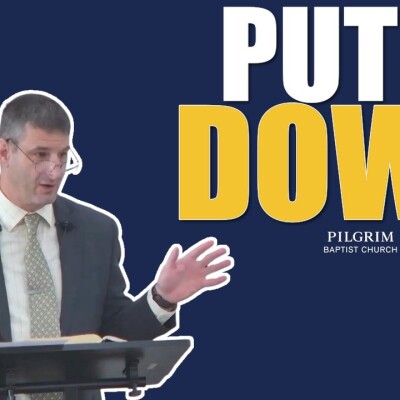
Description
John 9:24-34 — They surrounded him with pressure, a snare, and an insult. He had no
argument. He had one thing — a testimony — and he wouldn't trade it away.
⛪ Preached at Pilgrim Baptist Church • Cookeville, TN • July 5, 2026.
📚 Part of our verse-by-verse expository series through the Gospel of John
This expository preaching message walks through John 9:24-34, where the healed beggar
stands alone before the full council of Israel's religious establishment. Pastor Fortunato
traces the legal "confession formula" back to Joshua 7 to show that the council has no
transgression and no transgressor — only a man's unbending testimony they cannot dismantle.
This verse-by-verse exposition through John's gospel is for anyone who has ever felt pressured
to soften, qualify, or bury their own testimony to keep the peace.
Have you ever been offered the trade — just stay quiet, and none of this will be brought up
again? This sermon speaks directly to that moment. The beggar in John 9 was offered his old
life back in exchange for one sentence. He wouldn't take the trade. If you've been holding
back your own testimony to avoid conflict, this message will confront that silence.
This is expository preaching through John 9:24-34 in its fullest sense — Pastor Fortunato
connects the council's demand ("Give God the praise") to Achan's confession in Joshua 7, then
contrasts the beggar's public boldness at noon with Nicodemus's private confession by night in
John 3. The text builds toward one conclusion: pressure failed, a snare failed, insult failed,
and the only thing left standing in the room was a testimony — "whereas I was blind, now I see."
This sermon walks through John 9:24-34, explaining:
- Why "give God the praise" was piety's vocabulary hiding an abuse of power
- The two legal requirements for confession under Israel's law (Joshua 7) — and why neither applied to this beggar
- Why a testimony can't be cross-examined the way an argument can
- How the beggar's plain answer ("I know not... one thing I do know") became his defense
- The council's snare in verse 26 — and why his answer turned it into an invitation
- Why "thou art his disciple," meant as an insult, became his eternal title
- The contrast between Nicodemus's midnight confession (John 3:2) and the beggar's noonday testimony
- The trade the council offered — and why he wouldn't take it
- The difference between holding truth as a weapon and holding it as a confession
⏱️ Timestamps:
00:00 - Setting the Scene — John 9:24
00:49 - "Give God the Praise" — The Vocabulary of Piety
01:14 - Joshua 7 — The Law of Confession
05:08 - Neither Condition Is Met — Abuse of Power
07:13 - "Whether He Be a Sinner, I Know Not" — Testimony, Not Argument
11:08 - The Snare — "How Opened He Thine Eyes?"
11:38 - Boldness — "Will Ye Also Be His Disciples?"
12:49 - Reviled — "Thou Art His Disciple"
15:21 - The Beggar's Sermon — Two Premises, One Conclusion
17:36 - Nicodemus vs. the Beggar — Private and Public Confession
25:49 - The Trade They Offered — Silence for Peace
30:43 - Confession vs. Suppression — Two Roads, One Room
Hosted on Ausha. See ausha.co/privacy-policy for more information.