- Speaker #0
Groupama came to Romania and they bought three companies. They should dream about the future. They should sell this dream to the people and so on. Optimism pays off. There are things in life that you can control 100%. Deal with them because it is yours. They need to mention at least 100 times AI. If they do this, then the stock will rise. And then 15th of March 2020 came. And then we had the lockdown. And everybody was home. So what do you do? You don't... Solves your problem with a claim?
- Speaker #1
The biggest risk in business today, climate change or cyber attack?
- Speaker #0
Arrogance.
- Speaker #1
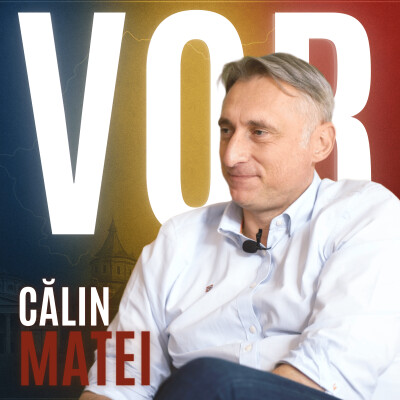
We are inside one of the top insurance companies in Romania, a place where calm, precision and responsibility meets every single day. Behind this atmosphere of numbers and policies, there is a story of leadership. A story about trust, transformation and the people who make systems work. Today, I'm sitting with Céline Maté, the CEO of Grupama Asigurar Romania. A leader who spent over two decades inside this company, rising from technical roles to the very top. We will talk about leadership in uncertain times, how to build an anti-fragile company, and what it means to believe in Romania's potential, not just as a market, but as a community. I'm Dylan Delomoye from Romania Insider, and this is Voices of Romania, recorded on the ground where things really happen. Hi, Céline.
- Speaker #0
Hi.
- Speaker #1
What does a day in your shoes as a CEO really looks like?
- Speaker #0
Well, it starts with the morning coffee. I have just coffee in the morning, three espresso, all of it this week. Then a short ride to the office and then the full day it's, let's say, 80% dedicated to meet and discuss with people. I'm either in my office discussing, either in a meeting or either going to them to talk to them, to ask them, OK, how can I help you today? What can we do better? How is the business going? Do you need anything? And this kind of thing. This is my day. I have another maybe 10% of my time when I'm looking on some figures. to get a sense of how we are, where we are. And then within the full day, I have another maybe 10% of my time where I'm following on YouTube what's happening with AI,
- Speaker #1
okay?
- Speaker #0
On the one side, and what's happening with the stock exchange on the other side. And this being something that it's attracted me, I find it fascinating, both of them. And the stock exchange, it's a bit of... long love that I have for a long time.
- Speaker #1
Yeah, to go back on your background, let's say you studied at ACCE, Cybernetics, Statistics, Actuarial Sciences. So I believe the passion that you have now for figures, for stock exchange, stocks of companies, are linked to that path. Why did you choose this path of going to ACCE for Cybernetics, this field?
- Speaker #0
Because I was... I loved mathematics. I still love mathematics. So that was one. And the second, I loved the idea of stock exchange. I love the idea of how this is happening. And I love the idea that behind all this investment, behind all the things that you can do on the stock exchange, there are some mathematical formula based on which you can have, let's say, a success and you can win money and so and so I'm That was the thought of going to this university in Bucharest, where I realized that for five years, I did 70% of the courses that I did were pure mathematics, 5% about economy, 5% about management and these kind of things, which honestly, to learn about it, it's... totally different than to experience it and the rest, some other stuff, but it was a lot, a lot of math in this.
- Speaker #1
And if you would share the same split now in your time, is it still like a lot of mathematics?
- Speaker #0
No, no, the reality is that it's less and less math today. It's more talking to people because it's more powerful. For most of the people, it's more powerful being there for them. supporting them in what they do, in their dreams, in showing empathy to their struggles and trying to help, than to just show them a few formulas. Maybe the formula can solve the problem very quickly, but this will not make the people grow, this will not develop them, this will not make them stronger for the future. So it's more 80%. um, discussion, encouragement and support and the rest a bit of Excel, a bit of things like this. So this is how it goes.
- Speaker #1
And talking about supporting the people, helping them to grow, you personally in your career path, was there a mentor that helped you to arrive where you are today?
- Speaker #0
It's difficult to say a mentor, but... I have some people in my career which helped me a lot. And what is common to all of them is that each of them, they recognize that I'm young, but they put a lot of faith and trust in me. And this is what I learned from them, that I need to trust the people. I need to give people trust and... support them and help them grow and they will deliver and they will do the job and they will become better and we as a company will grow through through this so i i had three people which gave me a lot of put a lot of their faith in and trust in in me and looking back i believe that they are quite happy with where i am today and that the decision and the choice that they made.
- Speaker #1
Talking about the way you grew with the three people, I suppose that it was a lot of learning over the years. What was like your first big failure that made you learn?
- Speaker #0
Ah, the big one. The first big one is, you know, I finished university, so learned a lot of modeling, a lot of... Nice formula, theoretical formula, and in my mind was that, then I go and apply this to the real world. And I went after a couple of months to my new boss, and he says, look, I learned this, I know how to do it, you need to give me, I said, yeah, but look, do it. And I realized that what I learned in the university, it was so theoretical. and zero link to the reality that it shit me like a wall. I was, at that moment, I said, oh my God, five years, five years. What did I do? And I am not able to deliver and to do what I have promised to do this. You don't have the data. The data are not like you are taught in the university that you get it like this. It's organized. The quality of data and all of this. So it was, you know, like an avalanche of things that I'm discovering overnight and I don't know what to do with them and I don't know how to change them. So then what I learned at the end, I learned that, well, theory, theory, practice, it's a totally different thing. So I need to readjust on these topics. I need to lower some expectation in terms of how things should work in a real life, that I should be maybe less arrogant from my knowledge, because maybe my knowledge is not where I believe it is. So this helped me as a learning.
- Speaker #1
There is a good point in that story, is that your boss at that time trusted you to try to do what you had in mind.
- Speaker #0
Yes, he was.
- Speaker #1
But was it a piece of cake? No,
- Speaker #0
he was the kind of guy, because he tried to hint it through different questions and so on. But I think this was the problem. I was a bit too arrogant to say, no, no, but I can manage, I can do this. I think he was the type of guy who said, okay, I tried gently, but let him hit the wall, because he will learn. And the reality is that over this... 26 years of work. Looking back, I think... I learned far much more from the failures and from the difficulty that I had than from big successes or easy successes. I know that this is, everybody's saying this, but it's really reality. The success or the failure in difficult condition, it sticks with you. It remains, even if it's not consciously, but in subconscious, you get it, you have it there. And in specific moment in time, in day-to-day business, it comes back. And then it's like a trigger. It's like, I have a gut feel. No, you don't have a gut feel. You have an experience which is just popping out. The day and it's bringing you attention to a specific topic or it gives you a hint or this kind of...
- Speaker #1
Do you think that it's good to follow intuition?
- Speaker #0
Yes, I think it's good to follow your intuition, but I think that it's good that you check also with the reality. So do the step, start moving, but don't forget that you need to look to see if this is the correct one.
- Speaker #1
And with your experience over time, did it get easier, let's say, to digest a failure? The way then you react after, is it easier to digest it, to learn from it?
- Speaker #0
Yes. Yes, yes. But this, you need to learn it. You need to say it in your mind. You need to have the people around you to support you and to explain to you why it's, how to do it and how to move. And because if you have, let's say, colleagues or a boss, which is punishing very hard the failure, then you will do only safe things. If you do only say things, if you don't take risks, if you don't take chances, if you don't follow difficult things, yeah, maybe you will have an easy life. But that's it, you will not have, you are not building something for the future. You are not developing, you are not gaining anything.
- Speaker #1
Taking risks can bring overperformance?
- Speaker #0
Exactly, yes. Yeah, for sure, for sure, for sure. Calculated risk, because... Nevertheless, we are an insurance company. We should take risks. It's our job to take risks. But it's also the job to understand the risk and to take calculated risks. But you can do it. It's part of life and you need to accept it.
- Speaker #1
And talking about lessons you've learned over your career, you've been like for over, let's say, two decades at Groupama. Is there any other key lessons you've learned about the climb?
- Speaker #0
Oh, I learned a lot of lessons. I learned a lot of things that I should not do.
- Speaker #1
Yeah?
- Speaker #0
Yes. I learned...
- Speaker #1
I'm curious.
- Speaker #0
Yeah, I learned that you need to stick to your beliefs. And you need to be able to express it clearly. And then to have a debate or a discussion on this. So openness, I believe, and I hold it very dear to me because at the end of the day, it's how we will grow together. Another thing that is quite dear to me is keep your word. So if the two of us agree on something today, then this is what we will do. You and me. If you cannot do it, come and say, look, I cannot do this because of this, but don't wait until the last moment. Don't wait until the deadline or until... Come and say before, why you cannot do it, why you have second thoughts and this kind of thing. So this is important because this is building trust. And trust is the most valuable thing that you can have in a team. As I told to you, I have three people in my career which put a lot of trust and faith in me. And so I'm valuing a lot this. Because without that one, without those people, maybe I would not be here. So that's why I'm valuing quite a lot the trust. And trust, it's something that you earn, but then you need to keep it each and every day by doing exactly what you promise. By having a straight discussion, by openly, clearly expressing your beliefs, your opinion, with arguments and so on. Without trust, you cannot have a functioning team, you cannot have a good cooperation with your boss, with your peers. And all of this. So these are things that I learned, some of them I knew, some of them I got reinforced, that they are really core and valuable on this.
- Speaker #1
And it's super difficult to build, let's say, trust, but it's super easy to lose trust.
- Speaker #0
Yes. You lose it very fast and then afterwards, after you lost it, it's very difficult to regain it 100%. So it's better not to lose it. If there is something to be taken, it's don't lose the trust that you have gained.
- Speaker #1
In the last years, you integrated new businesses within Groupama like Bank Assurance, OTP. I suppose that you faced a lot of cultural... or operational challenges. Yes. Can you tell us a bit about that?
- Speaker #0
So the moment of the merger, because Groupama came to Romania and they bought three companies. The moment of the merger was, it's one of the most important experiences that I have. Because we had three companies with completely different cultures. Completely different IT systems. And we had to put this together. Different set of products, different set of procedures and all of this. But one thing that I find the most difficult was to reconcile the culture of the three companies. And how do you define the culture of Groupama? Because you cannot say that it's a sum of this. No, it doesn't work like this. It's not like in Excel, it's not a mathematical function. And this was the most difficult part. So we started the merger in 2008. I think, culturally speaking, we have achieved, let's say, one company, probably 2015-2016. Not sooner than this. So it's a very long transformation because to change the way people are behaving, it's very long. It's very long. Especially if you want to keep the people. If you don't want the people, then it's easy. But the purpose is to build with the people because they are valuable. They were valuable people. That's why Groupama bought the companies. The companies are created by people, not by... you know walls and the cars and the IT system. So this was very difficult and this was one quite rewarding in working on this topic and it helped me a lot on let's say becoming a better leader, better understanding people, behaving starting to behave in a specific way and so on. On the IT systems, that's a bit more transactional on the one side, and it needs a lot of rigor to plan it, to work on it, to decide when to do it, what are the steps to create prioritization and these kind of things. But it's also a topic of negotiating, because at the end of the day, you have maybe 15 lines of business. And it needs to be a discussion and a negotiation, which one comes first, which one is the second, which is the third, and so on. And you need to find the right balance in order to keep the people engaged. Because, you know, if nobody is helping or working for you, then it starts to be an issue. On the other side, you need to understand what is the impact on the business. We are a market where the level of intermediation is quite... quite high so you need to take into account also your distributors opinion how you serve them and so on so and not the least one is the clients how do we impact the clients in in all of this all of this point so it was a very very interesting and
- Speaker #1
if you would put like a leaderboard i mean not a leaderboard but if you had to rank one two three between the clients the it system and the team in terms of The hardest it was during the Merdim? The team?
- Speaker #0
The team was by far the hardest.
- Speaker #1
And we were talking about trust, but was it like... a part of the challenge, like to gain their trust about the managing because if they weren't... For sure,
- Speaker #0
yes. Yeah, it was the trust. It was to find, for each of them to find their own place in the new company. It was, as you can imagine, there were a lot of redundant positions. So there was people, they were afraid and so on. But what I find that is very important is to have clear communication and to really clearly communicate what's happening, when it's happening, how it is happening, what is the process and all of this. So clarity in this area, it was crucial. Did you do it perfectly? No, but you know, after the war...
- Speaker #1
It's easy to say after the war,
- Speaker #0
sure. But it's clarity, it's very important and to constantly communicate to people. Don't leave, people are smart. Don't leave them in a shady area, in a gray area or in dark, because then everything bursts out. There will be only suspicion, talks, which...
- Speaker #1
This is something that you would do different if it would have been today, like from the beginning to involve them more and more into the...
- Speaker #0
I think what I would, what probably I would communicate much more. I will have much more clarity on the steps that it will be taken. And instead of just giving hope, I will be very clear on what's going on, when it's going on, and what are the positions that will disappear. So I believe that this needs to be done. And again, if you leave people in a place where they don't know what's happening, then they will create their own stories. This is it. But this was, to me, and I think to the entire company, the hardest part.
- Speaker #1
And was it your biggest challenge so far?
- Speaker #0
Yes and no. Yes and no. No, it's difficult to say which was... There were a lot of challenges. We went through a difficult period during 2018-2019 for different reasons. But it was a difficult period with some losses at that moment, with some questions coming from the head office, what they are doing, is it the right way, is it so? We had a different challenge, but it was important and we felt it. to be important and we felt it to be in a difficult spot at that moment and the need of coming with a solution and the need of let's say turning the boat to the right direction and so because at the end of the day yes you can come with a lot of arguments why is bad but this is not enough no okay people are caring and they will listen to you why you are there but then the question is okay what's the next step what's i need you because i trust in you that you will put together a plan which will or a strategy which will give what you'll take out from this problem so it was challenging it was uh it was challenging because we felt it hard it was a bit unexpected on some of the topics and We had to come up with a solution, but where we've been very lucky, and I consider myself lucky, is that the team of the executive committee is very tight. And all the people went in the same direction and tried to make the company work and to regain the trust of the group and all of this. It has been done and we are the same people today here. And we are...
- Speaker #1
So it was a success?
- Speaker #0
Yes, yes. You see, that's why I'm saying that sometimes the big struggles that you have can be transforming your important successes.
- Speaker #1
And was it a period where personally you adopted yourself?
- Speaker #0
Oh, but for sure. Yeah. Yeah. It's always. If you don't, if you don't have any doubt about yourself, there is an issue. And I cannot imagine in the today world with so much volatility, with so much changes, that everybody, there is somebody who is 100% certain of himself. You always need to. And I think it's important to question. Is it the right thing? Don't super-analyze the topic. Don't do analysis to paralysis. But you need to ask yourself, okay, and you need to look back and to say, what could I have done better? Because through this kind of question, you will prepare yourself for the future. Because maybe it's highly unlikely to be in the same situation twice. But it will be similar. But it will be something that can help you. If you start thinking, it can help you in the future. It can help you make it better, make it faster. Maybe sometimes avoid the problem and so on. So, yes, yes.
- Speaker #1
This is why we say, York is more company than crisis.
- Speaker #0
Yeah, I fully agree with this. I fully agree with this. And two things. arrogance and ego. It's the one thing that and I'm saying to my colleagues, I said, one of our biggest risks is to become too arrogant. And then this is the downfall for an organization. And I'm constantly asking all the people that I know, I said, look, when you see that I'm in the cloud, just say, okay, come down on earth. And I think this is important to do it. And especially the higher you are in an organization, the risk of living in a cloud, it's more and more. Your top focus should be, am I still down to earth? Am I still down to earth? And you need to find your own solution in finding out, am I there or am I... dreaming and they see a lot of people which are just disconnected yes yes yeah but it's a risk and it's a big risk yeah it's a big risk because then you will make decision which has nothing to do with the reality and then you will have an entire organization looking and say what
- Speaker #1
the hell is he doing what he's talking about and this is where you lose trust exactly yeah but it is this is
- Speaker #0
It's purely your job to do it. And it's a job of all the leaders which are high in the organization to ensure that they are down to earth. They should dream about the future. They should sell this dream to the people and so on. But they should realize that I need to be down to earth. And I need to sell this dream and to make this dream, I need to move my company. in a specific direction.
- Speaker #1
Super interesting. I love your vision about that. That's really, really great. When you stepped into the CEO role in 2023, what was the first priority for you?
- Speaker #0
For me, the first priority, I would say two things were for me first priority. One, innovation and innovation with meaning. And the second is to say, Optimism pays off. So I am a strong believer in the idea that optimism will pay off. If you are sitting in your chair and complaining, outside is raining, I don't have the right shoes, I don't have this, I don't have that, the economy is bad, that one is not doing this. So after you do this for 30 minutes, I tell you, you don't want to exit your house. You don't want. You will be depressed. You will open the TV. You will get some sleep. And that's it. So this is the problem also with organizations. There are organizations which are by definition pessimists. Everything is crumbling around me. And I need to fight with all of this. And I'm making a conscious choice. We need to find to be optimist. And why is good? because If you are an optimist, you have an undying belief that even Even if today is difficult with the people around me Tomorrow it can be better and in one year it will be even better. And this will give you the possibility to search for opportunity because you understand that today is difficult. So I need some opportunity. I need to create some winning position. So then you will look and then you will have a sort of hunger to look for this kind of thing. So then you will be open to catch it. If you are on the other side, and if you know that everything is dark, you are not open to see them. And that's why at the end of the day, to be an optimist, it pays off.
- Speaker #1
Negativity attracts.
- Speaker #0
It will open, exactly, because it will open the horizon for you. And this is what I wanted to say to my team, and this is what I'm trying to say to everybody, because yes, yes, yes, is it perfect? No, it's not perfect.
- Speaker #1
Do you consider yourself as an eternal optimist?
- Speaker #0
Yes, yes, yes. I want to be an optimist. I want to be an optimist.
- Speaker #1
We live in such a society where the news are dark. Everything is super negative. So it's super important to keep this optimism.
- Speaker #0
But you need to fight for it. Because, again, I'm telling you, at the end of the day, it pays off. I do it for one year. And do it, don't... Don't start to be an optimist like next year I will be a millionaire. It's not about this. So it's not about, you know, living in the cloud.
- Speaker #1
It's not like toxic optimism, but be realistic at the same time.
- Speaker #0
Yes, but it's a thing that the things, it can be better for me. It can be better for my family, for my company. And how I can do this. And look how we can do this. This is coming also from something that I learned. There are things in life that you can control 100%. Deal with them because it is yours. If it goes well, it's yours. If it doesn't go well, it's still yours. There are things in society and in your life that you can influence, but you don't control it. You just influence. Go and influence. Go and talk to people. If they don't listen, think back to what you talked. Maybe you didn't find the right words. Maybe you were not prepared with the right arguments. But you can work on it and do it. And don't just do it once and then go home. No, do it once, do it the second time, the third time. Work on this because it is you. And the third topic, there are things at which you can contribute, but you are just dropping the ocean. Go and do also those. Because if all the drops in the ocean don't fall into the ocean, you don't have an ocean. And this is the perfect example for this. It's voting. Go and vote. Because your vote is not only for the candidate that you want or you don't like or you like or you blah, blah, blah. No, your vote is for this democracy, for your freedom. to speak, to love or not love somebody. And this is fundamental to, let's say, democratic society. So go and do it. If you do this, if you understand all of this, then you will be able to define and to make, to be an optimist and also to obtain the success out of it.
- Speaker #1
The negativity is coming all the time on the table. And I feel it's important to have someone like you, like in a company that is always optimist, because this is how I believe you, you are taking the people with you. You have a vision and then you try to carry the vision over the time with the team. This is a super approach.
- Speaker #0
Again, I was lucky being around people that they had this kind of values and that they say, okay. Maybe today I'm on one of my knees, but I need to get up and move on this.
- Speaker #1
You were talking a bit earlier about opportunities, but as well about AI at the beginning. Innovation, it's a big buzzword now, nowadays. What does it mean concretely for Groupama clients? Are you like... investing a lot into AI to facilitate a lot of your processes. Can you tell us?
- Speaker #0
I agree with you. Innovation is a buzzword. Everybody's talking about innovation. And for example, on the Wall Street, all the CEOs, when they make a presentation of the accounts, they need to mention at least 100 times AI. If they do this, then the stock will rise. So it's where we are. So for us, for me, what is important is to do innovation, not for the sake of innovation, but which has... a positive impact either in clients, in employees' life, or in our partners' life. So this is it. It needs to be meaningful. It needs to make sense. Because if I do an innovation, but it's just, you know, something which is just to be on an article and that's it, and then it's not useful, no, it's not. It doesn't help. Innovation should be something that it will help you for medium to long term.
- Speaker #1
Not just to follow the trend.
- Speaker #0
Exactly. So, and we had a few examples like for the innovation. So, for example, we've been the first company in Romania to introduce video assistance. And we did this in 2019. And it was not easy because... We had to convince our people to use it. We had to convince our people to propose to the customers and so on. And at the beginning, it was difficult. Customers were not convinced. We were not, ah, but why? It's better if I come to you and then you do the claim or you show the, you will see the car and you will do the writing. So, no, let's not complicate with this technology. And then, 15th of March. 2020 came and then we had the lockdown and everybody was home so what do you do you don't you don't solve your problem with a claim and then in two days from eight percent penetration of this video it went up to
- Speaker #1
89 wow in two days so was your team ready for that increase
- Speaker #0
Yes, because they understood that it can help. They saw the solution. So then we started.
- Speaker #1
And does it become an habit like now? Is it still?
- Speaker #0
It's not at 89% anymore. No, it's decreasing, but it's normal. But it is used today. It is used today for some topics. Maybe that why a customer should spend 45 minutes in Bucharest. in the traffic of Bucharest to reach a specific position when he could be only with the telephone and that's it. And then during my lunch break, in 15 minutes, I solve everything related to my claim. I know what I need to do afterwards and I'm closing the topic. Why to go 45 minutes to Urbama? And then from there to go home or to go back another 45 minutes to the office and so on. So no, 15 minutes and it's done. This is one example. Another example is the telematics for Costco. Where, again, it's not a gimmick. There are clients which they have their second car, their third car. And they are using it maybe three times or four times per year. With these telematics, you know exactly, and he can prove it, and then he can get the correct price for his risk. There were clients coming and saying, I want this, not for myself, but because I give the car to my son or to my daughter, and I want to be sure that they are properly driving. And I can monitor them and I know where they are and I know how they are driving. Because maybe they will push the brake too hard or pedal to the metal because I need to be... And so on. So you see, you can do innovation at the service of the customer, at the service of your employee, at the service of your partner. Is it easy? No, but you need to work a bit harder. And not only this, but you need to create within your company this time, this way of thinking. Because if you start accepting whatever small thing... as being innovation and proposing it as an innovation, you will not get the most important one.
- Speaker #1
It's like make innovation useful.
- Speaker #0
Exactly. On the AI, yes, we are working on the AI. We signed very recently a partnership with Google on this direction. I believe that AI will change the way we work. And I believe that we need to see how this can be part of our day-to-day workflows. And how we are structuring this topic of AI in our company, it's on three layers. First is the personal level. So can AI help me in my day-to-day business? Can it help me do it a bit faster? Can it be more accurate? Less stress and this kind of thing. So this is the first level. So we are giving to selected part of the company access to the AI to try to see, can it be better? Second level, it's at department function level. So I can create an agent for my team. And then instead of everybody starting calling me, Kalin, how to do this, Kalin, how to do that. They have somewhere where they can find faster the information, they can have this kind of things. And the third layer, it is to be embedded into a process. So meaning what it means, means that either you fully redesign the entire process to be AI ready, meaning that everything is done by the AI, but we are not there yet. Or some parts of the process, some steps of the process can be done fully by the AI. And then you set the confidence level. The ones that are passing very well, they go to the next step. The ones that are failing, then reviewed by a person and then move further. And we are working on all these three layers. And just today we had an AI steering committee where... We are looking to real projects and we have more than 20 projects, either in execution, either in benefit realization, either in pipeline. So there is a, but it's important to start it. It's important to test. It's important to see what works, what doesn't work and to move again and to do it again and to do it again and to do it again. Because otherwise, if you just look and read about it, no, it will. It's again, it's like with the university. You look on the YouTube and you understand, I can do this, this, and then when you try it, you realize that, okay, it's maybe not that simple.
- Speaker #1
It cannot work for our business.
- Speaker #0
Exactly. So you need to understand different things. And I have a strong belief that AI, within the next five to 10 years, it will fundamentally change the way we work. and probably the way we will be as a society. And that's a bit more complex. It's a different discussion. It's a philosophical topic. Yeah.
- Speaker #1
I have two questions linked to AI. Like, do you feel that your employees can be reluctant with AI? And the other question that I have is that you were talking about it will change a lot, like the future of the companies. But do you feel that it's helping people to, let's say, do better or to overperform? Or do you think that it can be a break sometimes?
- Speaker #0
I'm, again, I'm an optimist. I think that this will give companies, teams, and people, it's a tool that will help them overperform. On a medium to long term, it will be like this. Is everybody embracing it? No, some of them, they are not embracing it because they don't know about it. Some others, because they fear about their job and so on. But I strongly believe this. And I think that we as a company, we have a duty towards our employees to help them during this transition, to help them understand... how specific jobs will change in time, what they can do in this change, how we as employers, we can help them. Maybe... enhance their current job, or maybe change their job if this is what they want, how we can support them in this transformation. Because at the end, it's not only for them within Groupama, but it's for them as people, because it will happen. And when you look to all the big transformations, all the big technology breaks, In the history, they were happening over maybe 40 years, 50 years and this kind. So it was a very long time. The society had time to adapt over a longer period of time. Looking to where we are today, it looks like the adaptation needs to be faster. And even when you look to the society, it's running faster. Things are happening faster. You consume news faster, things are happening faster because of this. So it would be like this. But we are investing, so this is one topic. The second topic is that companies, and because of the AI, I believe that the value that we are able to create will increase. So because the company will increase, it's not about making people redundant. No, you always need people. What I want, I want to grow them. I want somebody who is doing just a really data-inputting job today to grow and to do something more. Because I know that they have the capacity to do it. And I want to help them to do it. And I want to make them aware that this needs to evolve. And this is the tools. These are the... investment that I'm doing in order to help you to do this. And I strongly believe, look, in Romania on insurance we are at 1.3% penetration of the GDP. In Poland it's 4%. In Germany it's 6.5%. In France it's 9%. In Hungary, which is next door to us, it's 2.4%. The potential of the market, it is there. The need of people is there. Do we need the same skills as of today? No, this will change. Do I believe that we have the people capable of changing? Yes, because I see the transformation that they went through. And I will give you an example. In 2007 and 2008, all the NTPL policies were issued on a piece of paper. Yes, so we had to... small pieces of paper like this. You were writing by hand everything and just giving to the customers and so on. Today, it doesn't exist. Today, everything is on a computer. Everything is on a computer. So I've seen people adapting and I have big faith that they are able to do it. But we as a company, it is our duty to help them to do this.
- Speaker #1
And you need to take the train at some point anyway. Yeah. And you talked about the market penetration with the GDP in Romania. Why do you think Romanians are reluctant?
- Speaker #0
For a lot of reasons. Certainly the financial part, it is a topic. If you look to the banking sector, you see that 50% of the population... They don't have an account. They don't have a credit card and so on. So it's difficult to have an insurance if you don't have something which is even more simpler than an insurance. So this is one topic. The financial knowledge is not there. It was not there, so we need to build it. Then the financial power is not there because... First, it's like the Maslow pyramid, you know? You need to eat, you need to have where to sleep, and then you start thinking about some other topics. Then, I believe that the insurance market went through a lot of turmoil. Within the last 10 years, we had four bankruptcies. And for sure... The way this company went bankrupt because they didn't properly do their job. They were not treating correctly the customer, they were not doing correctly the business and so on. This created also a mistrust. And yes, a lot of people are able to make, most of the people are able to make the difference between Groupama and somebody else. But even though it's a stain that it is on the image of the insurance company. But this is changing. This is improving. This is so... We are getting better and better because the current players on the market, they are a serious company. They are trying to do a good job. And so market is improving from this perspective. And I believe that it will continue to improve and it will help on this. Then it's also a topic of realizing or being aware of the risk. A lot of people are not aware of the risk. Because, you know, it's easy for Casco. One of the big penetration is Casco. Why? Because they know they see accident all over the place. They know it will happen. They know it will cost money. So they understand that. But look, the last big earthquake of Romania with headlines, it was in 77. A lot of people which lived in 77, they are no longer to tell the story. And a lot of people which are today, they didn't leave the 77. They were too small to leave it, like myself. And they know it just from the study. So some of the risks are not perceived. And even when they are perceived, it's a question of if they have the financial possibility to do something in order to... But it's improving. Not fast. Clearly we want to do it faster, but step by step it's improving. And I believe that it will continue to improve because, look, we've seen a lot of, at least on the climatic side, we've seen a lot of deterioration. Higher frequency of the events and more violent. So this is where we are. But what I'm seeing, I'm seeing also the potential of what it can be in the next five years, ten years. And we need to be ready for that potential.
- Speaker #1
You answered to my next question. So, yeah, Romania is worth betting on for sure in terms of insurance. And for you, it's a good market, I believe. Yeah,
- Speaker #0
no bad. There is potential and there is potential not only in insurance. There is potential in a lot of places in Romania.
- Speaker #1
I truly believe in that.
- Speaker #0
And it's for the people to realize it. But it will be for the optimist.
- Speaker #1
Yeah. But this is good because the next topic is about the diaspora and the talent angle, you know. You were talking about the opportunities in Romania, which I truly trust. I mean, I'm 100% sure as well. If a Romanian in London or Berlin, for example, is considering returning to Romania, what should they know about opportunities here?
- Speaker #0
That they are here and probably coming from a Western culture where the topic of optimism, of looking to opportunities, of taking responsibility about you and about your life is quite strong, they will have more... they will be let's say better fit for compete with the compete uh so yeah on the other side i see a lot of people who left romania and they are in paris or in munich or in london where they have an exceptional life so the question is why should i live that life so not easy not easy
- Speaker #1
It's a risk as well to take, yeah. And how do you personally attract and retain talents in Romania?
- Speaker #0
I would say at least for the last five years quite easily. No, but it's a lot of work. It's a lot of work done by the entire team with support coming from HR. So we believe in fair pay. So that's the entry ticket. So you need to be competitive on the market in order to attract talent. But then on top you need to come with recognition programs. financially and non-financially then you need to to put in place a career career path and to look and to always be able to help your people identify your people to manage your talents yes so maybe for some of them they have a high potential how do you help them realize that potential to grow faster and so on so with a lot of dedication on on this part And not only this, so this is what you can do on the HR. But then it's about the values of the company. So if you are a company which have nice values and more than this lives by those values, then you will attract... Then if you are a company which is promising tools and really delivering those tools, then you will become attractive. So you see, it's a big combination about... all of this topic. And again, the executive team, it's quite tight together and we know each other for a long time and we are working together for this part and for these topics because we know that at the end of the day, people are the ones to build a company. So without them, we cannot have a company. We cannot have just robots. No, we need people. We need people and we believe that what we can deliver through people and through good people, it's also empathy because it's not only about the service, but it's also the way you deliver the service to the customer.
- Speaker #1
I really appreciate it because it's... You were talking about empathy, you were talking about career plans for employees, but this is a way to build trust when you keep this promise to the people. And this is where I feel that they feel like they can have a career in this company. What belief do you hold strongly? And even if most people disagree?
- Speaker #0
Optimist pays off.
- Speaker #1
And the last question, if you had a billboard in Bucharest that everyone would see, what message would you put on it?
- Speaker #0
And ensure that Romania is more powerful.
- Speaker #1
Thanks a lot, Kalin. It was a real pleasure to be here today in this wonderful building in Bucharest. Thanks a lot for the people that watch the podcast or listen to it on the platform. Don't hesitate to subscribe and like. And just, Céline, before we leave, I have like 10 questions to ask you. Those are quick questions. You just have to, it's usually a choice. You choose the first that you have in mind. Insurance, protection or opportunity?
- Speaker #0
Opportunity.
- Speaker #1
Risk taker or risk averse?
- Speaker #0
Risk taker.
- Speaker #1
Digital tools or face-to-face meetings?
- Speaker #0
Both.
- Speaker #1
The biggest risk in business today, climate change or cyber attacks?
- Speaker #0
Arrogance.
- Speaker #1
Your favorite Romanian city outside Bucharest?
- Speaker #0
My favorite Romanian city? I should say
- Speaker #1
Brasov. One thing Romanians are really good at?
- Speaker #0
We are good at everything. No, we are... What we are good at? I think we are hardworking. I think we are hardworking.
- Speaker #1
yeah if you weren't ceo of an insurance company what job would you have done investment banking investment banking thanks a lot kevin thank you very much