Description
Hosted on Ausha. See ausha.co/privacy-policy for more information.
Description
Hosted on Ausha. See ausha.co/privacy-policy for more information.
Transcription
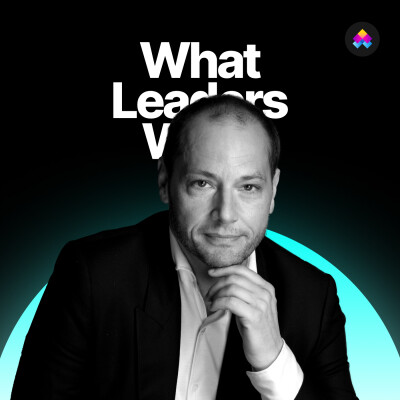
Welcome to What Leaders Want, the podcast series that features experts in the finance and tech industry. Today we'll have a discussion with Soraya Tribuywa, who is the co-founder and CFO at InCard, which is a financial platform tailor-made for digital businesses. Thank you, Soraya, for being with us and sharing your time with us. Can you please introduce yourself with your own words?
Yeah, perfect. Thank you so much for having me. Very happy to be here. here with you. So as you said, I'm co-founder and CFO at InCard. I lead the financial strategy, so everything linked to finance, fundraising, monetization, and making sure we scale sustainably across markets. But as a co-founder, my job goes far beyond numbers. I work on the branding, the communication strategy, how we create our team, how we set up our vision and make sure it So yeah, it's a super creative and interesting role. And I'm very proud to be part of a team where I can do so much.
Was it your first try? I mean, was it the first time you launched your own company?
Yeah, absolutely. It was my first time. I came from a more corporate background, but launching a business, it was the first one.
How long ago was it?
So we started in Cod in 2021. But honestly, like first year was really... business plan exploration and putting the basis of the business. But we really started in 2022 and launched our beta in 2023.
Okay, so now it's been really two years that you were... Okay. When you reflect on your career journey, what initially motivated you to pursue this path?
Yeah, so I started in investment banking where I learned about structure, rigor, discipline... a very organized environment. And what I really wanted was to create something from scratch, to create tools that would empower entrepreneurs, empower people. And what keeps me passionate today is really that entrepreneurship has become very accessible. Like today if you are determined, you have a passion, there's a, you have a talent, you can build a business. There are tools like Shopify or Incode now that enables entrepreneurs to do amazing things So that makes me passionate, like being able to build something that empowers them. It's it really motivates me. I love our customer niche.
Were there any moments or decisions that that really shaped your career?
Yeah, definitely. I'd say the moment I met my co-founders at the time they were running a SaaS media agency, helping thousands of founders. And I discovered their talent. this niche, I discovered this segment. I was used to work with very big companies like venture-backed or publicly listed companies. And I discovered that they were like small LinkedIn creating nine figure brands, super successful. And yeah, like this moment getting to know this customer niche made it like obvious that I wanted to develop in this industry. I think that's super powerful that these type of creators, entrepreneurs can... change tomorrow's world, like the way we consume, etc. So yeah, I think that's really like getting to know about the digital economy and the digital world.
Talking about that, I want to know more about InCard. So can you tell me about InCard activities more in detail?
Yeah, absolutely. So InCard is a next generation business banking platform for digital entrepreneurs. It comes with vertical integrations and add-on features that are available on the App Store. So basically, the idea is simple. Entrepreneurs need to have their data centralized, so financial data and their entire e-commerce stack in one place. And we give them on top of this a suite of industry-specific features to enable them to grow and scale their business faster. Like there are multiple of... different type of e-commerce agencies, marketplaces. And all these need like different things. They have different workflows. So what we offer them is a totally tailor-made and custom platform made for the business. Like it's no longer the old way of thinking about banks, like one bank fits all. It's like the bank that needs to adapt to the needs of its clients. That's really our vision.
And why did you... choose to focus on next generation clients?
I think these type of clients were not enough covered by existing solutions. They have a lot of pain point because you know they need to juggle between multiple banks, multiple payment processors, a lot of SaaS like social media accounts. So there's data everywhere. I think they're the future of our world and at the same time existing banks don't get them so it was really key for us to build something tailor-made for them. So I think this niche in specific is just because I trust in like the creativity of smaller brands, not necessarily super small, but not like the big companies that we have in mind for consumption.
That's interesting that you've, that you said that you focus on next generation client, because I was wondering when I had a look at your platform, which clients did you have? Because, because of the catchphrase that you have at the, at the front, which say, say goodbye to banks. that don't get you. So yeah, why did you choose the humor touch to address your clients?
Yeah, I mean, because what I said at the beginning was that I got to know this client niche from my co-founders and when I met them, we started and when we wanted to start InCard, we discussed with all of them and the financial experience for this type of customers is so bad. Like really, They are facing like, so what I've just said about not having integration and not having visibility, but also about like being like blocked or temporarily like having account frozen without any justification. It's really hard to them to navigate into the banking world just because banks don't really understand what they do. For us, just because we have a lot of integration, we can understand the entire client journey better. and we can know what's legit, what's not. When we ask them a question about their business, we know their business model, so we don't ask questions that are totally out of the scope. So I think it's a super big typology of clients that has not been addressed enough. So I'd say physical businesses, a bakery, are super well covered today. Very big businesses, the same. But the digital economy... Not enough. And because we have so many data available, like we need to leverage this to offer something better. So yeah, I think that's super important to build for them and to understand them. And then one step more is having them being able to custom their experience depending on their specificities because digital businesses, it's super large as well. So if you have an e-commerce business or if you are an agency or if you are a marketplace, you have different needs. So you can custom your bank depending on what you really want.
And that's super interesting that you're saying that you really want to personalize your approach to them because when we talked earlier out of the camera, you said that this type of clients, they don't go on LinkedIn, they go on Instagram. And so you have also a different approach, a different marketing approach to communicate with them. So we are... B2B, but also we have sometimes a B2C approach in the way we target them because it's,
as I said, leaner team, very powerful team, but not necessarily like 50 people. What you get is often the founders taking decisions, the founder embodying the brand. So you need to address this client where they are, where they as well communicate with their own clients. So it's not a corporate world where you'll see your clients on LinkedIn. I think I'll see my clients more on Instagram, on Twitter, even like on Discord or other channels. So yeah, that's super interesting. And also one thing that is not exactly your question, but our clients are really into communities. So it's super powerful to see how online businesses collaborate. how they communicate and they go to events and get motivated by like-minded people. So you'll find that more into group communities rather than on LinkedIn. So that's pretty interesting as well.
So you were talking about the pain points that your clients face. So how does your company fix these pain points?
Yeah, absolutely. So as I said, entrepreneurs today juggle with too many tools. payment processors, banking platform, SaaS, CMS, Shopify accounts, their Instagram account and so on. So what we do is... From the past fragmented view, we create a unified view. So we're building a financial operating system. That's how we call ourselves as well. It's more than a banking platform. It's an operating system that centralizes their entire income stack and powers it with industry-specific tools that I've mentioned before, like the add-on features that you can add to your account. So it enables them to have a tailor-made account that's fitting their needs and to have a great visibility at all time on all their business. Finance, and not just finance, but also like performances, like you can see their revenues, their performances on their ad accounts, so from their campaigns and so on. It's really like the powerhouse to run their business.
So that's your client issues and that's how you fix it. But The financial sector itself faces significant obstacles. So I was wondering, what are the challenges impacting your profession today?
The biggest challenges are legacy systems, very complex regulation as well. And it's true that banking is very hard to navigate, especially for a new company. But that's also where the opportunity is. I think that the biggest challenge is making finance simple, is leveraging the tools and assets that we have, such as the data, to make it more automated and make it more compliant while keeping it super simple. So I think we have the opportunity now to rethink the entire banking system and to try to get to build a future of banking. And it comes from tech. So I'm very convinced that tech is the future of banking. And the more we incorporate it into like today's world, we'll come over the pain points that we face in the industry.
And on a more personal note, what's one challenge that you and your co-founders faced along the way? And what did it teach you?
Yeah, I'd say one thing is that So fintech and tech in general is amazing. And you have like truly innovative fintechs, but you have also like so-called fintechs that are not really like tech. And I think what's super important is to navigate between like in this landscape and make sure you are building on the right side of innovation. Just one quick story. When we first started and we were speaking with a potential partner during a demo, there was like... an odd flow that it was showing. And then I asked like, but how do you actually make this happen? And he said like, you know, fintech is fake. It's just about putting buttons and having people behind them pretending it's like automated. So that was obviously a big red flag. So my thing is really like you need to pay attention to the environment, who you work with and to make sure you're always building something innovative and not just trying to either reinvent the wheel or pretend you're building something. So yeah, I think that's a big thing you need to be careful of.
So it makes me wonder about the story of how it all started. So I want to know that story. So can you share it to me, please?
I met my co-founders long time ago. Theo Cesarini in Caratseo and Matteo Martino in Caratseo were at uni together. I've known Matteo at primary school. So we've known each other for a very long time. we met Liam our CTO in London when we started to brainstorm about this entire business so it's like super motivated people with like big dreams and then we step by step build the team so they'll matter and myself were French but where is your new friend from the team everybody else come from a everywhere in the world which makes it amazing and we have such an incredible diversity in the team. Liam, so our fourth co-founder is from the UK has Australian background, he's a super young tech expert, he's just impressive. He started his first company when he was like 16. So yeah, it's it's a great story. I think we've been super lucky to all meet and and then it's just a the story that remains to be written. But yeah.
So you said that you were in bank investment previously.
Yeah.
So how was it for you? How did you manage to start that company? still being in bank investment?
Yeah, absolutely. When I met them and I started to be like, I knew this is what I needed to build. And I knew this is where I would be extremely happy and where I can really create an impact. So I took my decision. It took a bit of time, you know, in between the security of having a very good salary, you stay in that company, you can grow if you just do the job. to leaving everything suddenly and just starting something that could work or could not work. So that was a big move during the first six months of thinking around InCard. I was still working in my company. I also pitched to some of my MDs in the company, in the bank, and the fact that they liked the project and wanted to invest in our income in Pre-Seeds, was also very comforting into me making the move. So obviously, I decided to leave that company and to fully start at InCard. But it's worth it. It's the best decision I've made. Great to know. Today,
what's new at your company?
Q4 2025 is extremely dense and very exciting for us. There's a lot of things happening. So I hope by the time this episode will be live, All this will be as expected, but we just signed our lead investors for our Series A. So this is a very great news because this will enable us to go far beyond and to have the means for our ambitions. So that's very exciting. Plus, the lead is an amazing investment fund that we are so happy to be collaborating with. And also, we should have our EMI license in the UK. So until today, we were working as an agent. But now having our own license makes everything super different. This is just the beginning of a long list of milestones we want to achieve. But these ones are big, big things. So the entire team is super excited. We are growing it as well. And yeah, like lots of great things for this end of the year.
That's exciting. So what are your ambitions? for the future of your company?
Yeah, we want to build a category leader. The first financial OS for the digital economy.
That's an ambitious goal and that's great. What are the steps that you're taking now to position your company as the first financial OS for the digital company?
Yes, it's a long journey. We need to go into different markets so now the UK is ticked The next step is the EU. Even though we are available today in the EU, we want to get our own licenses to get further control and be able to further scale into the region. So this will be for early next year and then it will be for the US. Then regarding the product, we have a very great roadmap with a very exciting feature that we want to launch in the coming months. We are growing the team. We have already a very strong team. So that's amazing. Like having new members joining this already very cohesive team is going to be very powerful.
So yes, it's just going to new market, improving the product always more and more. It's great. I'm curious about one thing. Do you have any fun or unexpected or proud moments from along the way? Yeah,
we have this counter in the office that we bought before having a single client. So it was very exciting, like looking at it growing with the, you know, the first joiners. Most of them are still with us today. So that makes me super proud as well. So yeah, I think it's like seeing clients on the platform and also like getting positive feedback from customers we absolutely don't know because, you know, it's easy to get the feedback from the one that you've met. But seeing like some reviews on Trustpilot that are positive is just making us super proud.
Great. So you've grown a lot since you started. And I'm wondering how many of you are you today?
We're 20 people in the office in the UK, sometimes a bit more, sometimes a bit less, but full time, 20.
How do you approach leadership in such a fast evolving industry because of... all the new trends that we experience, such as AI.
You need to stay super curious and adaptable. Things move extremely fast in the fintech industry. So you need to have a very... clear long-term vision and to share it with your team to inspire them and for them to know exactly where you want and where we want to go together. So you need to make sure you are incorporating innovation because you can't stick to your roadmap and not look at what's happening. Otherwise, at the moment you'll deliver, it will be already outdated. But you also need to make sure you're not falling for every trend. So it's super important.
Can you tell me one leadership myth? you wish people would stop believing?
Yeah, absolutely. Obviously that leaders need to know everything. Leaders don't know everything and they should not otherwise they'll do company by themselves and it will be like not very interesting. I think leaders really need to inspire people and really need to create a space where all the team feels fulfilled and can do their best and also feel inspired by the leaders to follow the mission. So yeah, I think that's super important. At Incred, our team is gold. The cohesion within the team is amazing. How people collaborate with each other is super impressive. And that's really like the main force of the company. So it's not about the leaders at all. I think our role is just to make sure everybody feels listened, everybody feels fulfilled and can do their best to... To reach the goal of the company, it's like a long vision and a team work.
On a more personal note, outside of work, do you have any hobbies or interests that influenced how you tackle challenges or how you approach leadership?
To be super honest, I'd be lying if I was saying I'm doing very amazing things. When you build a company, especially at the beginning, it takes a lot of time and efforts, and it's hard to engage into very time consuming things. Though I'm super up for a nice yoga class, meditative class or Pilates class, as long as it's in a very immersive environment. And you know, I can like disconnect ground and just like feel recharged. I think building a company is a constant race and you need to make sure you're taking like moments to slow down, to be sure you're fully present in the journey. Otherwise, you are seeing like, you know, so next step is a fundraiser, next step is a launch of whatever features and then you continue to jump from one to another. So having this moment to connect enables you to be sure you're living the journey because that's a super great journey and I'm very lucky to have the chance to experience this.
Diversity is a key value in today's business landscape. And unfortunately, in tech and finance, women remain underrepresented at the top. So what do you believe changes when a woman sits at the decision-making table?
That's a super interesting question. When a woman sits at the decision-making table, the center of gravity shifts from consensus to challenge. Not because women are better leaders, not at all, but just because diversity breaks the patterns of like-minded people. Obviously, when you have a room full of clones, you can take decisions super quickly just because it's easy. Everybody thinks in the same way. When you have diversity, you bring like different sensibility. You bring different point of view and experiences. So it makes maybe the decision a bit longer, but also more sustainable and last longer. So I think it's like super important because it enables a decision process to go up.
What are the advantages you see in the feminization of the sector?
Yeah, I think the feminization of the sectors enables two things to improve the external message and to improve the internal space. So messages and products become relevant to more people. If you have a woman in product development team or in communication team, they'll bring like their own sensibility and experience to enable to. deliver messages that are going to target more people or products that are going to feed the needs of more people. And internally, if you have women at decision-making roles, they tend to, from their experience, build space that are inclusive, where other women would feel like more welcomed, more fulfilled. So that's why I believe in the feminization of the sector, not as a slogan or something like, we need to do, but really as a performance lover. Like more inclusivity brings better decisions longer term. And yeah, I think that's really needed.
So what are the barriers that they face today?
So the system wasn't built for diversity. It starts very early. By the time young women are at the age of choosing a tech career or finance career, they have received thousands of subtle messages from the societies that don't belong there. One thing is very interesting. You know, we tell to little girls like... Internet is dangerous, but you can't retell to little boys. Oh, you should play with video games. That's game for kids. And internet is dangerous. The connected world has a danger, but same for girls and boys. And it's super important to make sure that we are encouraging kids to look at tech, not because everybody needs to go work in tech, but just because you should not prevent them from... from being able to do so later on. In Inkheart's tech team and in reality, like, you know, most of the biggest, like the strongest devs of my generation had their first experience building mods on Minecraft when they were like 12 years old. So, you know, like it all starts from there.
It's super interesting the fact that you said that it should all start at school. It made me think of a time when I was went to a conference and the speaker, she was a CTO, so Chief Technical Officer. And she was saying that before computer became a tool for children to play, it was mainly used by scientists. And back then there was more women using computers than now. And that's super interesting that the shift came when
toys companies created campaigns aimed for little boy to use computers because before that computers were greatly used by scientists women yeah what you say is super interesting even like in the message game boy it's like for boys like it's in the name like there's a lot of of sexual like uh messages like this that uh creates this barrier in the middle but also there's I think we're on a path to solve things because, you know, more and more funds are now built around empowering women. You have like Sista Fund in France, for instance. More and more platforms like SheCodes empowers young girls to start coding. So I think that's amazing. And I think... It's also like the goal of all this is not to have like women on one side and men on the other. The goal is really like to empower women enough for them to be able to be in the room, a balanced room where there are men and women. And you know, there's no like it's just all great together. So I don't see any of the women I see at women events that say, oh yeah, it's great to be just woman and to speak about like women thing. It's just not this at all. We are creating representation. We are spreading the message and we are getting stronger to be able to be then in the room all together. And I think at the moment, like there won't be any of this idea of women in tech. It will be just because it will be sorted kind of because we won't have to create separate events to be then able to be balanced at the diverse events. So, yeah. I think that's super interesting, but I think we will get there for sure.
Great. Do you feel welcome in your own company?
Absolutely. Like at Incord, we have diversity, not because we've thought about it, but it was just all natural. Now that the team grows, we need to make it actually like something concrete just because we won't be able to look at all the hiring. So it needs to become part of the DNA of the company now. But that's already the case, like the InCard team spans into multiple nationalities, great gender balance. I'm really proud that it's a very safe space.
In your experience, has your perspective as a woman allowed you to approach certain situations differently or bring unique value to leadership?
I'd say that's a hard one to answer for myself. And I think my... perspective is more driven by my personality like who I am but also I'm being able to be who I am and to fully say what I want to say because I'm in a company where my quality of woman is not like
challenge or does not prevent me from saying anything. So I think it's really about welcoming everybody, no matter the gender, no matter the origin, background, making everybody comfortable enough to speak, to participate in like the challenges, how we take better decisions and so on. So it's really about like, I'm being able to be myself as a woman. Because I'm in a company that appreciates and appreciates me for what I am.
You said that diversity was not implemented. It was there naturally. How does your mission support a more inclusive financial ecosystem?
Look at, in Crowd, our mission is simple. It is to empower every entrepreneur, no matter their background, their gender, their origin. We want to give real tools to the hustlers. to the builders and help them unleash their potential. We deeply believe in the power of entrepreneurship as a driver of inclusion. Being able to build a company for anyone is a way to solve so many problems. The digital world has opened doors that were once closed, allowing new talents to rise. And by creating a financial operating system that is designed for this new generation of digital entrepreneurs, we're helping to break old patterns and to enable a more inclusive world. Because when more people from diverse backgrounds can create, the entire world is marked by this. Like, you know, it's not the same people building the same type of companies for the same. audience it's anyone who has a solid sustainable idea who can start creating something and and i think like that's devastating and only be amazing and only bring more inclusion inclusivity what's
the best carrier advice you've ever got um work hard i think okay that's a good advice What advice would you give to someone aiming for a leadership role in finance and tech, whether it's a boy or a girl?
Yeah, I'll use this one and I'll add some things around.
Let's do that.
So nothing is impossible. Work hard and follow the process. Like, trust in yourself and also surround yourself with the great people. Because no one, like, most people are much better. surrounded with other people that are going to challenge themselves and make them like the best version of themselves so yeah are there any role models that have guided you along the way so I'd say definitely my mother she is an incredibly driven and generous person who taught me confidence from a very young age so I owe her a lot for what I'm doing today And then since we've talked about women in tech, I can't not mention Maëlie Staub. She's the one who has enabled me to join Women in Tech for Future. She founded Pocket Results, and she's behind a lot of initiatives such as Women in Tech for Future, Nova in Tech, and FAMAT Numeric. She's a powerhouse committed to helping other women thrive. And I think that's amazing because she gives visibility and open doors using her own success to other women. So I think the more we get role models, feminine success stories, the more we solve the problem. And that's the same with every missed diversity. The more different representation we have, the better the world will be for sure. And yeah. That's it. Good to know. One last question to wrap it up.
I'd like to know what do you think leaders really want to achieve?
So I think leaders want to have a positive impact, to leave a mark and create something that will make the world better, at least for the great leaders. Personally, I want to build tools that reduce inequalities and that open doors to more people. As mentioned, online entrepreneurship gives anyone, no matter where they come from, a chance to thrive. And solutions like InCode make it easier for them. So it's super important for me to be part of that movement and to further empower this new wave of entrepreneurs.
Great. I'm glad to hear that. And it was nice talking to you. It was nice that you came sharing your time and your insights. So thank you, Soraya.
Thank you very much. Thank you for this great conversation and question.
Description
Hosted on Ausha. See ausha.co/privacy-policy for more information.
Transcription
Welcome to What Leaders Want, the podcast series that features experts in the finance and tech industry. Today we'll have a discussion with Soraya Tribuywa, who is the co-founder and CFO at InCard, which is a financial platform tailor-made for digital businesses. Thank you, Soraya, for being with us and sharing your time with us. Can you please introduce yourself with your own words?
Yeah, perfect. Thank you so much for having me. Very happy to be here. here with you. So as you said, I'm co-founder and CFO at InCard. I lead the financial strategy, so everything linked to finance, fundraising, monetization, and making sure we scale sustainably across markets. But as a co-founder, my job goes far beyond numbers. I work on the branding, the communication strategy, how we create our team, how we set up our vision and make sure it So yeah, it's a super creative and interesting role. And I'm very proud to be part of a team where I can do so much.
Was it your first try? I mean, was it the first time you launched your own company?
Yeah, absolutely. It was my first time. I came from a more corporate background, but launching a business, it was the first one.
How long ago was it?
So we started in Cod in 2021. But honestly, like first year was really... business plan exploration and putting the basis of the business. But we really started in 2022 and launched our beta in 2023.
Okay, so now it's been really two years that you were... Okay. When you reflect on your career journey, what initially motivated you to pursue this path?
Yeah, so I started in investment banking where I learned about structure, rigor, discipline... a very organized environment. And what I really wanted was to create something from scratch, to create tools that would empower entrepreneurs, empower people. And what keeps me passionate today is really that entrepreneurship has become very accessible. Like today if you are determined, you have a passion, there's a, you have a talent, you can build a business. There are tools like Shopify or Incode now that enables entrepreneurs to do amazing things So that makes me passionate, like being able to build something that empowers them. It's it really motivates me. I love our customer niche.
Were there any moments or decisions that that really shaped your career?
Yeah, definitely. I'd say the moment I met my co-founders at the time they were running a SaaS media agency, helping thousands of founders. And I discovered their talent. this niche, I discovered this segment. I was used to work with very big companies like venture-backed or publicly listed companies. And I discovered that they were like small LinkedIn creating nine figure brands, super successful. And yeah, like this moment getting to know this customer niche made it like obvious that I wanted to develop in this industry. I think that's super powerful that these type of creators, entrepreneurs can... change tomorrow's world, like the way we consume, etc. So yeah, I think that's really like getting to know about the digital economy and the digital world.
Talking about that, I want to know more about InCard. So can you tell me about InCard activities more in detail?
Yeah, absolutely. So InCard is a next generation business banking platform for digital entrepreneurs. It comes with vertical integrations and add-on features that are available on the App Store. So basically, the idea is simple. Entrepreneurs need to have their data centralized, so financial data and their entire e-commerce stack in one place. And we give them on top of this a suite of industry-specific features to enable them to grow and scale their business faster. Like there are multiple of... different type of e-commerce agencies, marketplaces. And all these need like different things. They have different workflows. So what we offer them is a totally tailor-made and custom platform made for the business. Like it's no longer the old way of thinking about banks, like one bank fits all. It's like the bank that needs to adapt to the needs of its clients. That's really our vision.
And why did you... choose to focus on next generation clients?
I think these type of clients were not enough covered by existing solutions. They have a lot of pain point because you know they need to juggle between multiple banks, multiple payment processors, a lot of SaaS like social media accounts. So there's data everywhere. I think they're the future of our world and at the same time existing banks don't get them so it was really key for us to build something tailor-made for them. So I think this niche in specific is just because I trust in like the creativity of smaller brands, not necessarily super small, but not like the big companies that we have in mind for consumption.
That's interesting that you've, that you said that you focus on next generation client, because I was wondering when I had a look at your platform, which clients did you have? Because, because of the catchphrase that you have at the, at the front, which say, say goodbye to banks. that don't get you. So yeah, why did you choose the humor touch to address your clients?
Yeah, I mean, because what I said at the beginning was that I got to know this client niche from my co-founders and when I met them, we started and when we wanted to start InCard, we discussed with all of them and the financial experience for this type of customers is so bad. Like really, They are facing like, so what I've just said about not having integration and not having visibility, but also about like being like blocked or temporarily like having account frozen without any justification. It's really hard to them to navigate into the banking world just because banks don't really understand what they do. For us, just because we have a lot of integration, we can understand the entire client journey better. and we can know what's legit, what's not. When we ask them a question about their business, we know their business model, so we don't ask questions that are totally out of the scope. So I think it's a super big typology of clients that has not been addressed enough. So I'd say physical businesses, a bakery, are super well covered today. Very big businesses, the same. But the digital economy... Not enough. And because we have so many data available, like we need to leverage this to offer something better. So yeah, I think that's super important to build for them and to understand them. And then one step more is having them being able to custom their experience depending on their specificities because digital businesses, it's super large as well. So if you have an e-commerce business or if you are an agency or if you are a marketplace, you have different needs. So you can custom your bank depending on what you really want.
And that's super interesting that you're saying that you really want to personalize your approach to them because when we talked earlier out of the camera, you said that this type of clients, they don't go on LinkedIn, they go on Instagram. And so you have also a different approach, a different marketing approach to communicate with them. So we are... B2B, but also we have sometimes a B2C approach in the way we target them because it's,
as I said, leaner team, very powerful team, but not necessarily like 50 people. What you get is often the founders taking decisions, the founder embodying the brand. So you need to address this client where they are, where they as well communicate with their own clients. So it's not a corporate world where you'll see your clients on LinkedIn. I think I'll see my clients more on Instagram, on Twitter, even like on Discord or other channels. So yeah, that's super interesting. And also one thing that is not exactly your question, but our clients are really into communities. So it's super powerful to see how online businesses collaborate. how they communicate and they go to events and get motivated by like-minded people. So you'll find that more into group communities rather than on LinkedIn. So that's pretty interesting as well.
So you were talking about the pain points that your clients face. So how does your company fix these pain points?
Yeah, absolutely. So as I said, entrepreneurs today juggle with too many tools. payment processors, banking platform, SaaS, CMS, Shopify accounts, their Instagram account and so on. So what we do is... From the past fragmented view, we create a unified view. So we're building a financial operating system. That's how we call ourselves as well. It's more than a banking platform. It's an operating system that centralizes their entire income stack and powers it with industry-specific tools that I've mentioned before, like the add-on features that you can add to your account. So it enables them to have a tailor-made account that's fitting their needs and to have a great visibility at all time on all their business. Finance, and not just finance, but also like performances, like you can see their revenues, their performances on their ad accounts, so from their campaigns and so on. It's really like the powerhouse to run their business.
So that's your client issues and that's how you fix it. But The financial sector itself faces significant obstacles. So I was wondering, what are the challenges impacting your profession today?
The biggest challenges are legacy systems, very complex regulation as well. And it's true that banking is very hard to navigate, especially for a new company. But that's also where the opportunity is. I think that the biggest challenge is making finance simple, is leveraging the tools and assets that we have, such as the data, to make it more automated and make it more compliant while keeping it super simple. So I think we have the opportunity now to rethink the entire banking system and to try to get to build a future of banking. And it comes from tech. So I'm very convinced that tech is the future of banking. And the more we incorporate it into like today's world, we'll come over the pain points that we face in the industry.
And on a more personal note, what's one challenge that you and your co-founders faced along the way? And what did it teach you?
Yeah, I'd say one thing is that So fintech and tech in general is amazing. And you have like truly innovative fintechs, but you have also like so-called fintechs that are not really like tech. And I think what's super important is to navigate between like in this landscape and make sure you are building on the right side of innovation. Just one quick story. When we first started and we were speaking with a potential partner during a demo, there was like... an odd flow that it was showing. And then I asked like, but how do you actually make this happen? And he said like, you know, fintech is fake. It's just about putting buttons and having people behind them pretending it's like automated. So that was obviously a big red flag. So my thing is really like you need to pay attention to the environment, who you work with and to make sure you're always building something innovative and not just trying to either reinvent the wheel or pretend you're building something. So yeah, I think that's a big thing you need to be careful of.
So it makes me wonder about the story of how it all started. So I want to know that story. So can you share it to me, please?
I met my co-founders long time ago. Theo Cesarini in Caratseo and Matteo Martino in Caratseo were at uni together. I've known Matteo at primary school. So we've known each other for a very long time. we met Liam our CTO in London when we started to brainstorm about this entire business so it's like super motivated people with like big dreams and then we step by step build the team so they'll matter and myself were French but where is your new friend from the team everybody else come from a everywhere in the world which makes it amazing and we have such an incredible diversity in the team. Liam, so our fourth co-founder is from the UK has Australian background, he's a super young tech expert, he's just impressive. He started his first company when he was like 16. So yeah, it's it's a great story. I think we've been super lucky to all meet and and then it's just a the story that remains to be written. But yeah.
So you said that you were in bank investment previously.
Yeah.
So how was it for you? How did you manage to start that company? still being in bank investment?
Yeah, absolutely. When I met them and I started to be like, I knew this is what I needed to build. And I knew this is where I would be extremely happy and where I can really create an impact. So I took my decision. It took a bit of time, you know, in between the security of having a very good salary, you stay in that company, you can grow if you just do the job. to leaving everything suddenly and just starting something that could work or could not work. So that was a big move during the first six months of thinking around InCard. I was still working in my company. I also pitched to some of my MDs in the company, in the bank, and the fact that they liked the project and wanted to invest in our income in Pre-Seeds, was also very comforting into me making the move. So obviously, I decided to leave that company and to fully start at InCard. But it's worth it. It's the best decision I've made. Great to know. Today,
what's new at your company?
Q4 2025 is extremely dense and very exciting for us. There's a lot of things happening. So I hope by the time this episode will be live, All this will be as expected, but we just signed our lead investors for our Series A. So this is a very great news because this will enable us to go far beyond and to have the means for our ambitions. So that's very exciting. Plus, the lead is an amazing investment fund that we are so happy to be collaborating with. And also, we should have our EMI license in the UK. So until today, we were working as an agent. But now having our own license makes everything super different. This is just the beginning of a long list of milestones we want to achieve. But these ones are big, big things. So the entire team is super excited. We are growing it as well. And yeah, like lots of great things for this end of the year.
That's exciting. So what are your ambitions? for the future of your company?
Yeah, we want to build a category leader. The first financial OS for the digital economy.
That's an ambitious goal and that's great. What are the steps that you're taking now to position your company as the first financial OS for the digital company?
Yes, it's a long journey. We need to go into different markets so now the UK is ticked The next step is the EU. Even though we are available today in the EU, we want to get our own licenses to get further control and be able to further scale into the region. So this will be for early next year and then it will be for the US. Then regarding the product, we have a very great roadmap with a very exciting feature that we want to launch in the coming months. We are growing the team. We have already a very strong team. So that's amazing. Like having new members joining this already very cohesive team is going to be very powerful.
So yes, it's just going to new market, improving the product always more and more. It's great. I'm curious about one thing. Do you have any fun or unexpected or proud moments from along the way? Yeah,
we have this counter in the office that we bought before having a single client. So it was very exciting, like looking at it growing with the, you know, the first joiners. Most of them are still with us today. So that makes me super proud as well. So yeah, I think it's like seeing clients on the platform and also like getting positive feedback from customers we absolutely don't know because, you know, it's easy to get the feedback from the one that you've met. But seeing like some reviews on Trustpilot that are positive is just making us super proud.
Great. So you've grown a lot since you started. And I'm wondering how many of you are you today?
We're 20 people in the office in the UK, sometimes a bit more, sometimes a bit less, but full time, 20.
How do you approach leadership in such a fast evolving industry because of... all the new trends that we experience, such as AI.
You need to stay super curious and adaptable. Things move extremely fast in the fintech industry. So you need to have a very... clear long-term vision and to share it with your team to inspire them and for them to know exactly where you want and where we want to go together. So you need to make sure you are incorporating innovation because you can't stick to your roadmap and not look at what's happening. Otherwise, at the moment you'll deliver, it will be already outdated. But you also need to make sure you're not falling for every trend. So it's super important.
Can you tell me one leadership myth? you wish people would stop believing?
Yeah, absolutely. Obviously that leaders need to know everything. Leaders don't know everything and they should not otherwise they'll do company by themselves and it will be like not very interesting. I think leaders really need to inspire people and really need to create a space where all the team feels fulfilled and can do their best and also feel inspired by the leaders to follow the mission. So yeah, I think that's super important. At Incred, our team is gold. The cohesion within the team is amazing. How people collaborate with each other is super impressive. And that's really like the main force of the company. So it's not about the leaders at all. I think our role is just to make sure everybody feels listened, everybody feels fulfilled and can do their best to... To reach the goal of the company, it's like a long vision and a team work.
On a more personal note, outside of work, do you have any hobbies or interests that influenced how you tackle challenges or how you approach leadership?
To be super honest, I'd be lying if I was saying I'm doing very amazing things. When you build a company, especially at the beginning, it takes a lot of time and efforts, and it's hard to engage into very time consuming things. Though I'm super up for a nice yoga class, meditative class or Pilates class, as long as it's in a very immersive environment. And you know, I can like disconnect ground and just like feel recharged. I think building a company is a constant race and you need to make sure you're taking like moments to slow down, to be sure you're fully present in the journey. Otherwise, you are seeing like, you know, so next step is a fundraiser, next step is a launch of whatever features and then you continue to jump from one to another. So having this moment to connect enables you to be sure you're living the journey because that's a super great journey and I'm very lucky to have the chance to experience this.
Diversity is a key value in today's business landscape. And unfortunately, in tech and finance, women remain underrepresented at the top. So what do you believe changes when a woman sits at the decision-making table?
That's a super interesting question. When a woman sits at the decision-making table, the center of gravity shifts from consensus to challenge. Not because women are better leaders, not at all, but just because diversity breaks the patterns of like-minded people. Obviously, when you have a room full of clones, you can take decisions super quickly just because it's easy. Everybody thinks in the same way. When you have diversity, you bring like different sensibility. You bring different point of view and experiences. So it makes maybe the decision a bit longer, but also more sustainable and last longer. So I think it's like super important because it enables a decision process to go up.
What are the advantages you see in the feminization of the sector?
Yeah, I think the feminization of the sectors enables two things to improve the external message and to improve the internal space. So messages and products become relevant to more people. If you have a woman in product development team or in communication team, they'll bring like their own sensibility and experience to enable to. deliver messages that are going to target more people or products that are going to feed the needs of more people. And internally, if you have women at decision-making roles, they tend to, from their experience, build space that are inclusive, where other women would feel like more welcomed, more fulfilled. So that's why I believe in the feminization of the sector, not as a slogan or something like, we need to do, but really as a performance lover. Like more inclusivity brings better decisions longer term. And yeah, I think that's really needed.
So what are the barriers that they face today?
So the system wasn't built for diversity. It starts very early. By the time young women are at the age of choosing a tech career or finance career, they have received thousands of subtle messages from the societies that don't belong there. One thing is very interesting. You know, we tell to little girls like... Internet is dangerous, but you can't retell to little boys. Oh, you should play with video games. That's game for kids. And internet is dangerous. The connected world has a danger, but same for girls and boys. And it's super important to make sure that we are encouraging kids to look at tech, not because everybody needs to go work in tech, but just because you should not prevent them from... from being able to do so later on. In Inkheart's tech team and in reality, like, you know, most of the biggest, like the strongest devs of my generation had their first experience building mods on Minecraft when they were like 12 years old. So, you know, like it all starts from there.
It's super interesting the fact that you said that it should all start at school. It made me think of a time when I was went to a conference and the speaker, she was a CTO, so Chief Technical Officer. And she was saying that before computer became a tool for children to play, it was mainly used by scientists. And back then there was more women using computers than now. And that's super interesting that the shift came when
toys companies created campaigns aimed for little boy to use computers because before that computers were greatly used by scientists women yeah what you say is super interesting even like in the message game boy it's like for boys like it's in the name like there's a lot of of sexual like uh messages like this that uh creates this barrier in the middle but also there's I think we're on a path to solve things because, you know, more and more funds are now built around empowering women. You have like Sista Fund in France, for instance. More and more platforms like SheCodes empowers young girls to start coding. So I think that's amazing. And I think... It's also like the goal of all this is not to have like women on one side and men on the other. The goal is really like to empower women enough for them to be able to be in the room, a balanced room where there are men and women. And you know, there's no like it's just all great together. So I don't see any of the women I see at women events that say, oh yeah, it's great to be just woman and to speak about like women thing. It's just not this at all. We are creating representation. We are spreading the message and we are getting stronger to be able to be then in the room all together. And I think at the moment, like there won't be any of this idea of women in tech. It will be just because it will be sorted kind of because we won't have to create separate events to be then able to be balanced at the diverse events. So, yeah. I think that's super interesting, but I think we will get there for sure.
Great. Do you feel welcome in your own company?
Absolutely. Like at Incord, we have diversity, not because we've thought about it, but it was just all natural. Now that the team grows, we need to make it actually like something concrete just because we won't be able to look at all the hiring. So it needs to become part of the DNA of the company now. But that's already the case, like the InCard team spans into multiple nationalities, great gender balance. I'm really proud that it's a very safe space.
In your experience, has your perspective as a woman allowed you to approach certain situations differently or bring unique value to leadership?
I'd say that's a hard one to answer for myself. And I think my... perspective is more driven by my personality like who I am but also I'm being able to be who I am and to fully say what I want to say because I'm in a company where my quality of woman is not like
challenge or does not prevent me from saying anything. So I think it's really about welcoming everybody, no matter the gender, no matter the origin, background, making everybody comfortable enough to speak, to participate in like the challenges, how we take better decisions and so on. So it's really about like, I'm being able to be myself as a woman. Because I'm in a company that appreciates and appreciates me for what I am.
You said that diversity was not implemented. It was there naturally. How does your mission support a more inclusive financial ecosystem?
Look at, in Crowd, our mission is simple. It is to empower every entrepreneur, no matter their background, their gender, their origin. We want to give real tools to the hustlers. to the builders and help them unleash their potential. We deeply believe in the power of entrepreneurship as a driver of inclusion. Being able to build a company for anyone is a way to solve so many problems. The digital world has opened doors that were once closed, allowing new talents to rise. And by creating a financial operating system that is designed for this new generation of digital entrepreneurs, we're helping to break old patterns and to enable a more inclusive world. Because when more people from diverse backgrounds can create, the entire world is marked by this. Like, you know, it's not the same people building the same type of companies for the same. audience it's anyone who has a solid sustainable idea who can start creating something and and i think like that's devastating and only be amazing and only bring more inclusion inclusivity what's
the best carrier advice you've ever got um work hard i think okay that's a good advice What advice would you give to someone aiming for a leadership role in finance and tech, whether it's a boy or a girl?
Yeah, I'll use this one and I'll add some things around.
Let's do that.
So nothing is impossible. Work hard and follow the process. Like, trust in yourself and also surround yourself with the great people. Because no one, like, most people are much better. surrounded with other people that are going to challenge themselves and make them like the best version of themselves so yeah are there any role models that have guided you along the way so I'd say definitely my mother she is an incredibly driven and generous person who taught me confidence from a very young age so I owe her a lot for what I'm doing today And then since we've talked about women in tech, I can't not mention Maëlie Staub. She's the one who has enabled me to join Women in Tech for Future. She founded Pocket Results, and she's behind a lot of initiatives such as Women in Tech for Future, Nova in Tech, and FAMAT Numeric. She's a powerhouse committed to helping other women thrive. And I think that's amazing because she gives visibility and open doors using her own success to other women. So I think the more we get role models, feminine success stories, the more we solve the problem. And that's the same with every missed diversity. The more different representation we have, the better the world will be for sure. And yeah. That's it. Good to know. One last question to wrap it up.
I'd like to know what do you think leaders really want to achieve?
So I think leaders want to have a positive impact, to leave a mark and create something that will make the world better, at least for the great leaders. Personally, I want to build tools that reduce inequalities and that open doors to more people. As mentioned, online entrepreneurship gives anyone, no matter where they come from, a chance to thrive. And solutions like InCode make it easier for them. So it's super important for me to be part of that movement and to further empower this new wave of entrepreneurs.
Great. I'm glad to hear that. And it was nice talking to you. It was nice that you came sharing your time and your insights. So thank you, Soraya.
Thank you very much. Thank you for this great conversation and question.
Share
Embed
You may also like
Description
Hosted on Ausha. See ausha.co/privacy-policy for more information.
Transcription
Welcome to What Leaders Want, the podcast series that features experts in the finance and tech industry. Today we'll have a discussion with Soraya Tribuywa, who is the co-founder and CFO at InCard, which is a financial platform tailor-made for digital businesses. Thank you, Soraya, for being with us and sharing your time with us. Can you please introduce yourself with your own words?
Yeah, perfect. Thank you so much for having me. Very happy to be here. here with you. So as you said, I'm co-founder and CFO at InCard. I lead the financial strategy, so everything linked to finance, fundraising, monetization, and making sure we scale sustainably across markets. But as a co-founder, my job goes far beyond numbers. I work on the branding, the communication strategy, how we create our team, how we set up our vision and make sure it So yeah, it's a super creative and interesting role. And I'm very proud to be part of a team where I can do so much.
Was it your first try? I mean, was it the first time you launched your own company?
Yeah, absolutely. It was my first time. I came from a more corporate background, but launching a business, it was the first one.
How long ago was it?
So we started in Cod in 2021. But honestly, like first year was really... business plan exploration and putting the basis of the business. But we really started in 2022 and launched our beta in 2023.
Okay, so now it's been really two years that you were... Okay. When you reflect on your career journey, what initially motivated you to pursue this path?
Yeah, so I started in investment banking where I learned about structure, rigor, discipline... a very organized environment. And what I really wanted was to create something from scratch, to create tools that would empower entrepreneurs, empower people. And what keeps me passionate today is really that entrepreneurship has become very accessible. Like today if you are determined, you have a passion, there's a, you have a talent, you can build a business. There are tools like Shopify or Incode now that enables entrepreneurs to do amazing things So that makes me passionate, like being able to build something that empowers them. It's it really motivates me. I love our customer niche.
Were there any moments or decisions that that really shaped your career?
Yeah, definitely. I'd say the moment I met my co-founders at the time they were running a SaaS media agency, helping thousands of founders. And I discovered their talent. this niche, I discovered this segment. I was used to work with very big companies like venture-backed or publicly listed companies. And I discovered that they were like small LinkedIn creating nine figure brands, super successful. And yeah, like this moment getting to know this customer niche made it like obvious that I wanted to develop in this industry. I think that's super powerful that these type of creators, entrepreneurs can... change tomorrow's world, like the way we consume, etc. So yeah, I think that's really like getting to know about the digital economy and the digital world.
Talking about that, I want to know more about InCard. So can you tell me about InCard activities more in detail?
Yeah, absolutely. So InCard is a next generation business banking platform for digital entrepreneurs. It comes with vertical integrations and add-on features that are available on the App Store. So basically, the idea is simple. Entrepreneurs need to have their data centralized, so financial data and their entire e-commerce stack in one place. And we give them on top of this a suite of industry-specific features to enable them to grow and scale their business faster. Like there are multiple of... different type of e-commerce agencies, marketplaces. And all these need like different things. They have different workflows. So what we offer them is a totally tailor-made and custom platform made for the business. Like it's no longer the old way of thinking about banks, like one bank fits all. It's like the bank that needs to adapt to the needs of its clients. That's really our vision.
And why did you... choose to focus on next generation clients?
I think these type of clients were not enough covered by existing solutions. They have a lot of pain point because you know they need to juggle between multiple banks, multiple payment processors, a lot of SaaS like social media accounts. So there's data everywhere. I think they're the future of our world and at the same time existing banks don't get them so it was really key for us to build something tailor-made for them. So I think this niche in specific is just because I trust in like the creativity of smaller brands, not necessarily super small, but not like the big companies that we have in mind for consumption.
That's interesting that you've, that you said that you focus on next generation client, because I was wondering when I had a look at your platform, which clients did you have? Because, because of the catchphrase that you have at the, at the front, which say, say goodbye to banks. that don't get you. So yeah, why did you choose the humor touch to address your clients?
Yeah, I mean, because what I said at the beginning was that I got to know this client niche from my co-founders and when I met them, we started and when we wanted to start InCard, we discussed with all of them and the financial experience for this type of customers is so bad. Like really, They are facing like, so what I've just said about not having integration and not having visibility, but also about like being like blocked or temporarily like having account frozen without any justification. It's really hard to them to navigate into the banking world just because banks don't really understand what they do. For us, just because we have a lot of integration, we can understand the entire client journey better. and we can know what's legit, what's not. When we ask them a question about their business, we know their business model, so we don't ask questions that are totally out of the scope. So I think it's a super big typology of clients that has not been addressed enough. So I'd say physical businesses, a bakery, are super well covered today. Very big businesses, the same. But the digital economy... Not enough. And because we have so many data available, like we need to leverage this to offer something better. So yeah, I think that's super important to build for them and to understand them. And then one step more is having them being able to custom their experience depending on their specificities because digital businesses, it's super large as well. So if you have an e-commerce business or if you are an agency or if you are a marketplace, you have different needs. So you can custom your bank depending on what you really want.
And that's super interesting that you're saying that you really want to personalize your approach to them because when we talked earlier out of the camera, you said that this type of clients, they don't go on LinkedIn, they go on Instagram. And so you have also a different approach, a different marketing approach to communicate with them. So we are... B2B, but also we have sometimes a B2C approach in the way we target them because it's,
as I said, leaner team, very powerful team, but not necessarily like 50 people. What you get is often the founders taking decisions, the founder embodying the brand. So you need to address this client where they are, where they as well communicate with their own clients. So it's not a corporate world where you'll see your clients on LinkedIn. I think I'll see my clients more on Instagram, on Twitter, even like on Discord or other channels. So yeah, that's super interesting. And also one thing that is not exactly your question, but our clients are really into communities. So it's super powerful to see how online businesses collaborate. how they communicate and they go to events and get motivated by like-minded people. So you'll find that more into group communities rather than on LinkedIn. So that's pretty interesting as well.
So you were talking about the pain points that your clients face. So how does your company fix these pain points?
Yeah, absolutely. So as I said, entrepreneurs today juggle with too many tools. payment processors, banking platform, SaaS, CMS, Shopify accounts, their Instagram account and so on. So what we do is... From the past fragmented view, we create a unified view. So we're building a financial operating system. That's how we call ourselves as well. It's more than a banking platform. It's an operating system that centralizes their entire income stack and powers it with industry-specific tools that I've mentioned before, like the add-on features that you can add to your account. So it enables them to have a tailor-made account that's fitting their needs and to have a great visibility at all time on all their business. Finance, and not just finance, but also like performances, like you can see their revenues, their performances on their ad accounts, so from their campaigns and so on. It's really like the powerhouse to run their business.
So that's your client issues and that's how you fix it. But The financial sector itself faces significant obstacles. So I was wondering, what are the challenges impacting your profession today?
The biggest challenges are legacy systems, very complex regulation as well. And it's true that banking is very hard to navigate, especially for a new company. But that's also where the opportunity is. I think that the biggest challenge is making finance simple, is leveraging the tools and assets that we have, such as the data, to make it more automated and make it more compliant while keeping it super simple. So I think we have the opportunity now to rethink the entire banking system and to try to get to build a future of banking. And it comes from tech. So I'm very convinced that tech is the future of banking. And the more we incorporate it into like today's world, we'll come over the pain points that we face in the industry.
And on a more personal note, what's one challenge that you and your co-founders faced along the way? And what did it teach you?
Yeah, I'd say one thing is that So fintech and tech in general is amazing. And you have like truly innovative fintechs, but you have also like so-called fintechs that are not really like tech. And I think what's super important is to navigate between like in this landscape and make sure you are building on the right side of innovation. Just one quick story. When we first started and we were speaking with a potential partner during a demo, there was like... an odd flow that it was showing. And then I asked like, but how do you actually make this happen? And he said like, you know, fintech is fake. It's just about putting buttons and having people behind them pretending it's like automated. So that was obviously a big red flag. So my thing is really like you need to pay attention to the environment, who you work with and to make sure you're always building something innovative and not just trying to either reinvent the wheel or pretend you're building something. So yeah, I think that's a big thing you need to be careful of.
So it makes me wonder about the story of how it all started. So I want to know that story. So can you share it to me, please?
I met my co-founders long time ago. Theo Cesarini in Caratseo and Matteo Martino in Caratseo were at uni together. I've known Matteo at primary school. So we've known each other for a very long time. we met Liam our CTO in London when we started to brainstorm about this entire business so it's like super motivated people with like big dreams and then we step by step build the team so they'll matter and myself were French but where is your new friend from the team everybody else come from a everywhere in the world which makes it amazing and we have such an incredible diversity in the team. Liam, so our fourth co-founder is from the UK has Australian background, he's a super young tech expert, he's just impressive. He started his first company when he was like 16. So yeah, it's it's a great story. I think we've been super lucky to all meet and and then it's just a the story that remains to be written. But yeah.
So you said that you were in bank investment previously.
Yeah.
So how was it for you? How did you manage to start that company? still being in bank investment?
Yeah, absolutely. When I met them and I started to be like, I knew this is what I needed to build. And I knew this is where I would be extremely happy and where I can really create an impact. So I took my decision. It took a bit of time, you know, in between the security of having a very good salary, you stay in that company, you can grow if you just do the job. to leaving everything suddenly and just starting something that could work or could not work. So that was a big move during the first six months of thinking around InCard. I was still working in my company. I also pitched to some of my MDs in the company, in the bank, and the fact that they liked the project and wanted to invest in our income in Pre-Seeds, was also very comforting into me making the move. So obviously, I decided to leave that company and to fully start at InCard. But it's worth it. It's the best decision I've made. Great to know. Today,
what's new at your company?
Q4 2025 is extremely dense and very exciting for us. There's a lot of things happening. So I hope by the time this episode will be live, All this will be as expected, but we just signed our lead investors for our Series A. So this is a very great news because this will enable us to go far beyond and to have the means for our ambitions. So that's very exciting. Plus, the lead is an amazing investment fund that we are so happy to be collaborating with. And also, we should have our EMI license in the UK. So until today, we were working as an agent. But now having our own license makes everything super different. This is just the beginning of a long list of milestones we want to achieve. But these ones are big, big things. So the entire team is super excited. We are growing it as well. And yeah, like lots of great things for this end of the year.
That's exciting. So what are your ambitions? for the future of your company?
Yeah, we want to build a category leader. The first financial OS for the digital economy.
That's an ambitious goal and that's great. What are the steps that you're taking now to position your company as the first financial OS for the digital company?
Yes, it's a long journey. We need to go into different markets so now the UK is ticked The next step is the EU. Even though we are available today in the EU, we want to get our own licenses to get further control and be able to further scale into the region. So this will be for early next year and then it will be for the US. Then regarding the product, we have a very great roadmap with a very exciting feature that we want to launch in the coming months. We are growing the team. We have already a very strong team. So that's amazing. Like having new members joining this already very cohesive team is going to be very powerful.
So yes, it's just going to new market, improving the product always more and more. It's great. I'm curious about one thing. Do you have any fun or unexpected or proud moments from along the way? Yeah,
we have this counter in the office that we bought before having a single client. So it was very exciting, like looking at it growing with the, you know, the first joiners. Most of them are still with us today. So that makes me super proud as well. So yeah, I think it's like seeing clients on the platform and also like getting positive feedback from customers we absolutely don't know because, you know, it's easy to get the feedback from the one that you've met. But seeing like some reviews on Trustpilot that are positive is just making us super proud.
Great. So you've grown a lot since you started. And I'm wondering how many of you are you today?
We're 20 people in the office in the UK, sometimes a bit more, sometimes a bit less, but full time, 20.
How do you approach leadership in such a fast evolving industry because of... all the new trends that we experience, such as AI.
You need to stay super curious and adaptable. Things move extremely fast in the fintech industry. So you need to have a very... clear long-term vision and to share it with your team to inspire them and for them to know exactly where you want and where we want to go together. So you need to make sure you are incorporating innovation because you can't stick to your roadmap and not look at what's happening. Otherwise, at the moment you'll deliver, it will be already outdated. But you also need to make sure you're not falling for every trend. So it's super important.
Can you tell me one leadership myth? you wish people would stop believing?
Yeah, absolutely. Obviously that leaders need to know everything. Leaders don't know everything and they should not otherwise they'll do company by themselves and it will be like not very interesting. I think leaders really need to inspire people and really need to create a space where all the team feels fulfilled and can do their best and also feel inspired by the leaders to follow the mission. So yeah, I think that's super important. At Incred, our team is gold. The cohesion within the team is amazing. How people collaborate with each other is super impressive. And that's really like the main force of the company. So it's not about the leaders at all. I think our role is just to make sure everybody feels listened, everybody feels fulfilled and can do their best to... To reach the goal of the company, it's like a long vision and a team work.
On a more personal note, outside of work, do you have any hobbies or interests that influenced how you tackle challenges or how you approach leadership?
To be super honest, I'd be lying if I was saying I'm doing very amazing things. When you build a company, especially at the beginning, it takes a lot of time and efforts, and it's hard to engage into very time consuming things. Though I'm super up for a nice yoga class, meditative class or Pilates class, as long as it's in a very immersive environment. And you know, I can like disconnect ground and just like feel recharged. I think building a company is a constant race and you need to make sure you're taking like moments to slow down, to be sure you're fully present in the journey. Otherwise, you are seeing like, you know, so next step is a fundraiser, next step is a launch of whatever features and then you continue to jump from one to another. So having this moment to connect enables you to be sure you're living the journey because that's a super great journey and I'm very lucky to have the chance to experience this.
Diversity is a key value in today's business landscape. And unfortunately, in tech and finance, women remain underrepresented at the top. So what do you believe changes when a woman sits at the decision-making table?
That's a super interesting question. When a woman sits at the decision-making table, the center of gravity shifts from consensus to challenge. Not because women are better leaders, not at all, but just because diversity breaks the patterns of like-minded people. Obviously, when you have a room full of clones, you can take decisions super quickly just because it's easy. Everybody thinks in the same way. When you have diversity, you bring like different sensibility. You bring different point of view and experiences. So it makes maybe the decision a bit longer, but also more sustainable and last longer. So I think it's like super important because it enables a decision process to go up.
What are the advantages you see in the feminization of the sector?
Yeah, I think the feminization of the sectors enables two things to improve the external message and to improve the internal space. So messages and products become relevant to more people. If you have a woman in product development team or in communication team, they'll bring like their own sensibility and experience to enable to. deliver messages that are going to target more people or products that are going to feed the needs of more people. And internally, if you have women at decision-making roles, they tend to, from their experience, build space that are inclusive, where other women would feel like more welcomed, more fulfilled. So that's why I believe in the feminization of the sector, not as a slogan or something like, we need to do, but really as a performance lover. Like more inclusivity brings better decisions longer term. And yeah, I think that's really needed.
So what are the barriers that they face today?
So the system wasn't built for diversity. It starts very early. By the time young women are at the age of choosing a tech career or finance career, they have received thousands of subtle messages from the societies that don't belong there. One thing is very interesting. You know, we tell to little girls like... Internet is dangerous, but you can't retell to little boys. Oh, you should play with video games. That's game for kids. And internet is dangerous. The connected world has a danger, but same for girls and boys. And it's super important to make sure that we are encouraging kids to look at tech, not because everybody needs to go work in tech, but just because you should not prevent them from... from being able to do so later on. In Inkheart's tech team and in reality, like, you know, most of the biggest, like the strongest devs of my generation had their first experience building mods on Minecraft when they were like 12 years old. So, you know, like it all starts from there.
It's super interesting the fact that you said that it should all start at school. It made me think of a time when I was went to a conference and the speaker, she was a CTO, so Chief Technical Officer. And she was saying that before computer became a tool for children to play, it was mainly used by scientists. And back then there was more women using computers than now. And that's super interesting that the shift came when
toys companies created campaigns aimed for little boy to use computers because before that computers were greatly used by scientists women yeah what you say is super interesting even like in the message game boy it's like for boys like it's in the name like there's a lot of of sexual like uh messages like this that uh creates this barrier in the middle but also there's I think we're on a path to solve things because, you know, more and more funds are now built around empowering women. You have like Sista Fund in France, for instance. More and more platforms like SheCodes empowers young girls to start coding. So I think that's amazing. And I think... It's also like the goal of all this is not to have like women on one side and men on the other. The goal is really like to empower women enough for them to be able to be in the room, a balanced room where there are men and women. And you know, there's no like it's just all great together. So I don't see any of the women I see at women events that say, oh yeah, it's great to be just woman and to speak about like women thing. It's just not this at all. We are creating representation. We are spreading the message and we are getting stronger to be able to be then in the room all together. And I think at the moment, like there won't be any of this idea of women in tech. It will be just because it will be sorted kind of because we won't have to create separate events to be then able to be balanced at the diverse events. So, yeah. I think that's super interesting, but I think we will get there for sure.
Great. Do you feel welcome in your own company?
Absolutely. Like at Incord, we have diversity, not because we've thought about it, but it was just all natural. Now that the team grows, we need to make it actually like something concrete just because we won't be able to look at all the hiring. So it needs to become part of the DNA of the company now. But that's already the case, like the InCard team spans into multiple nationalities, great gender balance. I'm really proud that it's a very safe space.
In your experience, has your perspective as a woman allowed you to approach certain situations differently or bring unique value to leadership?
I'd say that's a hard one to answer for myself. And I think my... perspective is more driven by my personality like who I am but also I'm being able to be who I am and to fully say what I want to say because I'm in a company where my quality of woman is not like
challenge or does not prevent me from saying anything. So I think it's really about welcoming everybody, no matter the gender, no matter the origin, background, making everybody comfortable enough to speak, to participate in like the challenges, how we take better decisions and so on. So it's really about like, I'm being able to be myself as a woman. Because I'm in a company that appreciates and appreciates me for what I am.
You said that diversity was not implemented. It was there naturally. How does your mission support a more inclusive financial ecosystem?
Look at, in Crowd, our mission is simple. It is to empower every entrepreneur, no matter their background, their gender, their origin. We want to give real tools to the hustlers. to the builders and help them unleash their potential. We deeply believe in the power of entrepreneurship as a driver of inclusion. Being able to build a company for anyone is a way to solve so many problems. The digital world has opened doors that were once closed, allowing new talents to rise. And by creating a financial operating system that is designed for this new generation of digital entrepreneurs, we're helping to break old patterns and to enable a more inclusive world. Because when more people from diverse backgrounds can create, the entire world is marked by this. Like, you know, it's not the same people building the same type of companies for the same. audience it's anyone who has a solid sustainable idea who can start creating something and and i think like that's devastating and only be amazing and only bring more inclusion inclusivity what's
the best carrier advice you've ever got um work hard i think okay that's a good advice What advice would you give to someone aiming for a leadership role in finance and tech, whether it's a boy or a girl?
Yeah, I'll use this one and I'll add some things around.
Let's do that.
So nothing is impossible. Work hard and follow the process. Like, trust in yourself and also surround yourself with the great people. Because no one, like, most people are much better. surrounded with other people that are going to challenge themselves and make them like the best version of themselves so yeah are there any role models that have guided you along the way so I'd say definitely my mother she is an incredibly driven and generous person who taught me confidence from a very young age so I owe her a lot for what I'm doing today And then since we've talked about women in tech, I can't not mention Maëlie Staub. She's the one who has enabled me to join Women in Tech for Future. She founded Pocket Results, and she's behind a lot of initiatives such as Women in Tech for Future, Nova in Tech, and FAMAT Numeric. She's a powerhouse committed to helping other women thrive. And I think that's amazing because she gives visibility and open doors using her own success to other women. So I think the more we get role models, feminine success stories, the more we solve the problem. And that's the same with every missed diversity. The more different representation we have, the better the world will be for sure. And yeah. That's it. Good to know. One last question to wrap it up.
I'd like to know what do you think leaders really want to achieve?
So I think leaders want to have a positive impact, to leave a mark and create something that will make the world better, at least for the great leaders. Personally, I want to build tools that reduce inequalities and that open doors to more people. As mentioned, online entrepreneurship gives anyone, no matter where they come from, a chance to thrive. And solutions like InCode make it easier for them. So it's super important for me to be part of that movement and to further empower this new wave of entrepreneurs.
Great. I'm glad to hear that. And it was nice talking to you. It was nice that you came sharing your time and your insights. So thank you, Soraya.
Thank you very much. Thank you for this great conversation and question.
Description
Hosted on Ausha. See ausha.co/privacy-policy for more information.
Transcription
Welcome to What Leaders Want, the podcast series that features experts in the finance and tech industry. Today we'll have a discussion with Soraya Tribuywa, who is the co-founder and CFO at InCard, which is a financial platform tailor-made for digital businesses. Thank you, Soraya, for being with us and sharing your time with us. Can you please introduce yourself with your own words?
Yeah, perfect. Thank you so much for having me. Very happy to be here. here with you. So as you said, I'm co-founder and CFO at InCard. I lead the financial strategy, so everything linked to finance, fundraising, monetization, and making sure we scale sustainably across markets. But as a co-founder, my job goes far beyond numbers. I work on the branding, the communication strategy, how we create our team, how we set up our vision and make sure it So yeah, it's a super creative and interesting role. And I'm very proud to be part of a team where I can do so much.
Was it your first try? I mean, was it the first time you launched your own company?
Yeah, absolutely. It was my first time. I came from a more corporate background, but launching a business, it was the first one.
How long ago was it?
So we started in Cod in 2021. But honestly, like first year was really... business plan exploration and putting the basis of the business. But we really started in 2022 and launched our beta in 2023.
Okay, so now it's been really two years that you were... Okay. When you reflect on your career journey, what initially motivated you to pursue this path?
Yeah, so I started in investment banking where I learned about structure, rigor, discipline... a very organized environment. And what I really wanted was to create something from scratch, to create tools that would empower entrepreneurs, empower people. And what keeps me passionate today is really that entrepreneurship has become very accessible. Like today if you are determined, you have a passion, there's a, you have a talent, you can build a business. There are tools like Shopify or Incode now that enables entrepreneurs to do amazing things So that makes me passionate, like being able to build something that empowers them. It's it really motivates me. I love our customer niche.
Were there any moments or decisions that that really shaped your career?
Yeah, definitely. I'd say the moment I met my co-founders at the time they were running a SaaS media agency, helping thousands of founders. And I discovered their talent. this niche, I discovered this segment. I was used to work with very big companies like venture-backed or publicly listed companies. And I discovered that they were like small LinkedIn creating nine figure brands, super successful. And yeah, like this moment getting to know this customer niche made it like obvious that I wanted to develop in this industry. I think that's super powerful that these type of creators, entrepreneurs can... change tomorrow's world, like the way we consume, etc. So yeah, I think that's really like getting to know about the digital economy and the digital world.
Talking about that, I want to know more about InCard. So can you tell me about InCard activities more in detail?
Yeah, absolutely. So InCard is a next generation business banking platform for digital entrepreneurs. It comes with vertical integrations and add-on features that are available on the App Store. So basically, the idea is simple. Entrepreneurs need to have their data centralized, so financial data and their entire e-commerce stack in one place. And we give them on top of this a suite of industry-specific features to enable them to grow and scale their business faster. Like there are multiple of... different type of e-commerce agencies, marketplaces. And all these need like different things. They have different workflows. So what we offer them is a totally tailor-made and custom platform made for the business. Like it's no longer the old way of thinking about banks, like one bank fits all. It's like the bank that needs to adapt to the needs of its clients. That's really our vision.
And why did you... choose to focus on next generation clients?
I think these type of clients were not enough covered by existing solutions. They have a lot of pain point because you know they need to juggle between multiple banks, multiple payment processors, a lot of SaaS like social media accounts. So there's data everywhere. I think they're the future of our world and at the same time existing banks don't get them so it was really key for us to build something tailor-made for them. So I think this niche in specific is just because I trust in like the creativity of smaller brands, not necessarily super small, but not like the big companies that we have in mind for consumption.
That's interesting that you've, that you said that you focus on next generation client, because I was wondering when I had a look at your platform, which clients did you have? Because, because of the catchphrase that you have at the, at the front, which say, say goodbye to banks. that don't get you. So yeah, why did you choose the humor touch to address your clients?
Yeah, I mean, because what I said at the beginning was that I got to know this client niche from my co-founders and when I met them, we started and when we wanted to start InCard, we discussed with all of them and the financial experience for this type of customers is so bad. Like really, They are facing like, so what I've just said about not having integration and not having visibility, but also about like being like blocked or temporarily like having account frozen without any justification. It's really hard to them to navigate into the banking world just because banks don't really understand what they do. For us, just because we have a lot of integration, we can understand the entire client journey better. and we can know what's legit, what's not. When we ask them a question about their business, we know their business model, so we don't ask questions that are totally out of the scope. So I think it's a super big typology of clients that has not been addressed enough. So I'd say physical businesses, a bakery, are super well covered today. Very big businesses, the same. But the digital economy... Not enough. And because we have so many data available, like we need to leverage this to offer something better. So yeah, I think that's super important to build for them and to understand them. And then one step more is having them being able to custom their experience depending on their specificities because digital businesses, it's super large as well. So if you have an e-commerce business or if you are an agency or if you are a marketplace, you have different needs. So you can custom your bank depending on what you really want.
And that's super interesting that you're saying that you really want to personalize your approach to them because when we talked earlier out of the camera, you said that this type of clients, they don't go on LinkedIn, they go on Instagram. And so you have also a different approach, a different marketing approach to communicate with them. So we are... B2B, but also we have sometimes a B2C approach in the way we target them because it's,
as I said, leaner team, very powerful team, but not necessarily like 50 people. What you get is often the founders taking decisions, the founder embodying the brand. So you need to address this client where they are, where they as well communicate with their own clients. So it's not a corporate world where you'll see your clients on LinkedIn. I think I'll see my clients more on Instagram, on Twitter, even like on Discord or other channels. So yeah, that's super interesting. And also one thing that is not exactly your question, but our clients are really into communities. So it's super powerful to see how online businesses collaborate. how they communicate and they go to events and get motivated by like-minded people. So you'll find that more into group communities rather than on LinkedIn. So that's pretty interesting as well.
So you were talking about the pain points that your clients face. So how does your company fix these pain points?
Yeah, absolutely. So as I said, entrepreneurs today juggle with too many tools. payment processors, banking platform, SaaS, CMS, Shopify accounts, their Instagram account and so on. So what we do is... From the past fragmented view, we create a unified view. So we're building a financial operating system. That's how we call ourselves as well. It's more than a banking platform. It's an operating system that centralizes their entire income stack and powers it with industry-specific tools that I've mentioned before, like the add-on features that you can add to your account. So it enables them to have a tailor-made account that's fitting their needs and to have a great visibility at all time on all their business. Finance, and not just finance, but also like performances, like you can see their revenues, their performances on their ad accounts, so from their campaigns and so on. It's really like the powerhouse to run their business.
So that's your client issues and that's how you fix it. But The financial sector itself faces significant obstacles. So I was wondering, what are the challenges impacting your profession today?
The biggest challenges are legacy systems, very complex regulation as well. And it's true that banking is very hard to navigate, especially for a new company. But that's also where the opportunity is. I think that the biggest challenge is making finance simple, is leveraging the tools and assets that we have, such as the data, to make it more automated and make it more compliant while keeping it super simple. So I think we have the opportunity now to rethink the entire banking system and to try to get to build a future of banking. And it comes from tech. So I'm very convinced that tech is the future of banking. And the more we incorporate it into like today's world, we'll come over the pain points that we face in the industry.
And on a more personal note, what's one challenge that you and your co-founders faced along the way? And what did it teach you?
Yeah, I'd say one thing is that So fintech and tech in general is amazing. And you have like truly innovative fintechs, but you have also like so-called fintechs that are not really like tech. And I think what's super important is to navigate between like in this landscape and make sure you are building on the right side of innovation. Just one quick story. When we first started and we were speaking with a potential partner during a demo, there was like... an odd flow that it was showing. And then I asked like, but how do you actually make this happen? And he said like, you know, fintech is fake. It's just about putting buttons and having people behind them pretending it's like automated. So that was obviously a big red flag. So my thing is really like you need to pay attention to the environment, who you work with and to make sure you're always building something innovative and not just trying to either reinvent the wheel or pretend you're building something. So yeah, I think that's a big thing you need to be careful of.
So it makes me wonder about the story of how it all started. So I want to know that story. So can you share it to me, please?
I met my co-founders long time ago. Theo Cesarini in Caratseo and Matteo Martino in Caratseo were at uni together. I've known Matteo at primary school. So we've known each other for a very long time. we met Liam our CTO in London when we started to brainstorm about this entire business so it's like super motivated people with like big dreams and then we step by step build the team so they'll matter and myself were French but where is your new friend from the team everybody else come from a everywhere in the world which makes it amazing and we have such an incredible diversity in the team. Liam, so our fourth co-founder is from the UK has Australian background, he's a super young tech expert, he's just impressive. He started his first company when he was like 16. So yeah, it's it's a great story. I think we've been super lucky to all meet and and then it's just a the story that remains to be written. But yeah.
So you said that you were in bank investment previously.
Yeah.
So how was it for you? How did you manage to start that company? still being in bank investment?
Yeah, absolutely. When I met them and I started to be like, I knew this is what I needed to build. And I knew this is where I would be extremely happy and where I can really create an impact. So I took my decision. It took a bit of time, you know, in between the security of having a very good salary, you stay in that company, you can grow if you just do the job. to leaving everything suddenly and just starting something that could work or could not work. So that was a big move during the first six months of thinking around InCard. I was still working in my company. I also pitched to some of my MDs in the company, in the bank, and the fact that they liked the project and wanted to invest in our income in Pre-Seeds, was also very comforting into me making the move. So obviously, I decided to leave that company and to fully start at InCard. But it's worth it. It's the best decision I've made. Great to know. Today,
what's new at your company?
Q4 2025 is extremely dense and very exciting for us. There's a lot of things happening. So I hope by the time this episode will be live, All this will be as expected, but we just signed our lead investors for our Series A. So this is a very great news because this will enable us to go far beyond and to have the means for our ambitions. So that's very exciting. Plus, the lead is an amazing investment fund that we are so happy to be collaborating with. And also, we should have our EMI license in the UK. So until today, we were working as an agent. But now having our own license makes everything super different. This is just the beginning of a long list of milestones we want to achieve. But these ones are big, big things. So the entire team is super excited. We are growing it as well. And yeah, like lots of great things for this end of the year.
That's exciting. So what are your ambitions? for the future of your company?
Yeah, we want to build a category leader. The first financial OS for the digital economy.
That's an ambitious goal and that's great. What are the steps that you're taking now to position your company as the first financial OS for the digital company?
Yes, it's a long journey. We need to go into different markets so now the UK is ticked The next step is the EU. Even though we are available today in the EU, we want to get our own licenses to get further control and be able to further scale into the region. So this will be for early next year and then it will be for the US. Then regarding the product, we have a very great roadmap with a very exciting feature that we want to launch in the coming months. We are growing the team. We have already a very strong team. So that's amazing. Like having new members joining this already very cohesive team is going to be very powerful.
So yes, it's just going to new market, improving the product always more and more. It's great. I'm curious about one thing. Do you have any fun or unexpected or proud moments from along the way? Yeah,
we have this counter in the office that we bought before having a single client. So it was very exciting, like looking at it growing with the, you know, the first joiners. Most of them are still with us today. So that makes me super proud as well. So yeah, I think it's like seeing clients on the platform and also like getting positive feedback from customers we absolutely don't know because, you know, it's easy to get the feedback from the one that you've met. But seeing like some reviews on Trustpilot that are positive is just making us super proud.
Great. So you've grown a lot since you started. And I'm wondering how many of you are you today?
We're 20 people in the office in the UK, sometimes a bit more, sometimes a bit less, but full time, 20.
How do you approach leadership in such a fast evolving industry because of... all the new trends that we experience, such as AI.
You need to stay super curious and adaptable. Things move extremely fast in the fintech industry. So you need to have a very... clear long-term vision and to share it with your team to inspire them and for them to know exactly where you want and where we want to go together. So you need to make sure you are incorporating innovation because you can't stick to your roadmap and not look at what's happening. Otherwise, at the moment you'll deliver, it will be already outdated. But you also need to make sure you're not falling for every trend. So it's super important.
Can you tell me one leadership myth? you wish people would stop believing?
Yeah, absolutely. Obviously that leaders need to know everything. Leaders don't know everything and they should not otherwise they'll do company by themselves and it will be like not very interesting. I think leaders really need to inspire people and really need to create a space where all the team feels fulfilled and can do their best and also feel inspired by the leaders to follow the mission. So yeah, I think that's super important. At Incred, our team is gold. The cohesion within the team is amazing. How people collaborate with each other is super impressive. And that's really like the main force of the company. So it's not about the leaders at all. I think our role is just to make sure everybody feels listened, everybody feels fulfilled and can do their best to... To reach the goal of the company, it's like a long vision and a team work.
On a more personal note, outside of work, do you have any hobbies or interests that influenced how you tackle challenges or how you approach leadership?
To be super honest, I'd be lying if I was saying I'm doing very amazing things. When you build a company, especially at the beginning, it takes a lot of time and efforts, and it's hard to engage into very time consuming things. Though I'm super up for a nice yoga class, meditative class or Pilates class, as long as it's in a very immersive environment. And you know, I can like disconnect ground and just like feel recharged. I think building a company is a constant race and you need to make sure you're taking like moments to slow down, to be sure you're fully present in the journey. Otherwise, you are seeing like, you know, so next step is a fundraiser, next step is a launch of whatever features and then you continue to jump from one to another. So having this moment to connect enables you to be sure you're living the journey because that's a super great journey and I'm very lucky to have the chance to experience this.
Diversity is a key value in today's business landscape. And unfortunately, in tech and finance, women remain underrepresented at the top. So what do you believe changes when a woman sits at the decision-making table?
That's a super interesting question. When a woman sits at the decision-making table, the center of gravity shifts from consensus to challenge. Not because women are better leaders, not at all, but just because diversity breaks the patterns of like-minded people. Obviously, when you have a room full of clones, you can take decisions super quickly just because it's easy. Everybody thinks in the same way. When you have diversity, you bring like different sensibility. You bring different point of view and experiences. So it makes maybe the decision a bit longer, but also more sustainable and last longer. So I think it's like super important because it enables a decision process to go up.
What are the advantages you see in the feminization of the sector?
Yeah, I think the feminization of the sectors enables two things to improve the external message and to improve the internal space. So messages and products become relevant to more people. If you have a woman in product development team or in communication team, they'll bring like their own sensibility and experience to enable to. deliver messages that are going to target more people or products that are going to feed the needs of more people. And internally, if you have women at decision-making roles, they tend to, from their experience, build space that are inclusive, where other women would feel like more welcomed, more fulfilled. So that's why I believe in the feminization of the sector, not as a slogan or something like, we need to do, but really as a performance lover. Like more inclusivity brings better decisions longer term. And yeah, I think that's really needed.
So what are the barriers that they face today?
So the system wasn't built for diversity. It starts very early. By the time young women are at the age of choosing a tech career or finance career, they have received thousands of subtle messages from the societies that don't belong there. One thing is very interesting. You know, we tell to little girls like... Internet is dangerous, but you can't retell to little boys. Oh, you should play with video games. That's game for kids. And internet is dangerous. The connected world has a danger, but same for girls and boys. And it's super important to make sure that we are encouraging kids to look at tech, not because everybody needs to go work in tech, but just because you should not prevent them from... from being able to do so later on. In Inkheart's tech team and in reality, like, you know, most of the biggest, like the strongest devs of my generation had their first experience building mods on Minecraft when they were like 12 years old. So, you know, like it all starts from there.
It's super interesting the fact that you said that it should all start at school. It made me think of a time when I was went to a conference and the speaker, she was a CTO, so Chief Technical Officer. And she was saying that before computer became a tool for children to play, it was mainly used by scientists. And back then there was more women using computers than now. And that's super interesting that the shift came when
toys companies created campaigns aimed for little boy to use computers because before that computers were greatly used by scientists women yeah what you say is super interesting even like in the message game boy it's like for boys like it's in the name like there's a lot of of sexual like uh messages like this that uh creates this barrier in the middle but also there's I think we're on a path to solve things because, you know, more and more funds are now built around empowering women. You have like Sista Fund in France, for instance. More and more platforms like SheCodes empowers young girls to start coding. So I think that's amazing. And I think... It's also like the goal of all this is not to have like women on one side and men on the other. The goal is really like to empower women enough for them to be able to be in the room, a balanced room where there are men and women. And you know, there's no like it's just all great together. So I don't see any of the women I see at women events that say, oh yeah, it's great to be just woman and to speak about like women thing. It's just not this at all. We are creating representation. We are spreading the message and we are getting stronger to be able to be then in the room all together. And I think at the moment, like there won't be any of this idea of women in tech. It will be just because it will be sorted kind of because we won't have to create separate events to be then able to be balanced at the diverse events. So, yeah. I think that's super interesting, but I think we will get there for sure.
Great. Do you feel welcome in your own company?
Absolutely. Like at Incord, we have diversity, not because we've thought about it, but it was just all natural. Now that the team grows, we need to make it actually like something concrete just because we won't be able to look at all the hiring. So it needs to become part of the DNA of the company now. But that's already the case, like the InCard team spans into multiple nationalities, great gender balance. I'm really proud that it's a very safe space.
In your experience, has your perspective as a woman allowed you to approach certain situations differently or bring unique value to leadership?
I'd say that's a hard one to answer for myself. And I think my... perspective is more driven by my personality like who I am but also I'm being able to be who I am and to fully say what I want to say because I'm in a company where my quality of woman is not like
challenge or does not prevent me from saying anything. So I think it's really about welcoming everybody, no matter the gender, no matter the origin, background, making everybody comfortable enough to speak, to participate in like the challenges, how we take better decisions and so on. So it's really about like, I'm being able to be myself as a woman. Because I'm in a company that appreciates and appreciates me for what I am.
You said that diversity was not implemented. It was there naturally. How does your mission support a more inclusive financial ecosystem?
Look at, in Crowd, our mission is simple. It is to empower every entrepreneur, no matter their background, their gender, their origin. We want to give real tools to the hustlers. to the builders and help them unleash their potential. We deeply believe in the power of entrepreneurship as a driver of inclusion. Being able to build a company for anyone is a way to solve so many problems. The digital world has opened doors that were once closed, allowing new talents to rise. And by creating a financial operating system that is designed for this new generation of digital entrepreneurs, we're helping to break old patterns and to enable a more inclusive world. Because when more people from diverse backgrounds can create, the entire world is marked by this. Like, you know, it's not the same people building the same type of companies for the same. audience it's anyone who has a solid sustainable idea who can start creating something and and i think like that's devastating and only be amazing and only bring more inclusion inclusivity what's
the best carrier advice you've ever got um work hard i think okay that's a good advice What advice would you give to someone aiming for a leadership role in finance and tech, whether it's a boy or a girl?
Yeah, I'll use this one and I'll add some things around.
Let's do that.
So nothing is impossible. Work hard and follow the process. Like, trust in yourself and also surround yourself with the great people. Because no one, like, most people are much better. surrounded with other people that are going to challenge themselves and make them like the best version of themselves so yeah are there any role models that have guided you along the way so I'd say definitely my mother she is an incredibly driven and generous person who taught me confidence from a very young age so I owe her a lot for what I'm doing today And then since we've talked about women in tech, I can't not mention Maëlie Staub. She's the one who has enabled me to join Women in Tech for Future. She founded Pocket Results, and she's behind a lot of initiatives such as Women in Tech for Future, Nova in Tech, and FAMAT Numeric. She's a powerhouse committed to helping other women thrive. And I think that's amazing because she gives visibility and open doors using her own success to other women. So I think the more we get role models, feminine success stories, the more we solve the problem. And that's the same with every missed diversity. The more different representation we have, the better the world will be for sure. And yeah. That's it. Good to know. One last question to wrap it up.
I'd like to know what do you think leaders really want to achieve?
So I think leaders want to have a positive impact, to leave a mark and create something that will make the world better, at least for the great leaders. Personally, I want to build tools that reduce inequalities and that open doors to more people. As mentioned, online entrepreneurship gives anyone, no matter where they come from, a chance to thrive. And solutions like InCode make it easier for them. So it's super important for me to be part of that movement and to further empower this new wave of entrepreneurs.
Great. I'm glad to hear that. And it was nice talking to you. It was nice that you came sharing your time and your insights. So thank you, Soraya.
Thank you very much. Thank you for this great conversation and question.
Share
Embed
You may also like