
Description
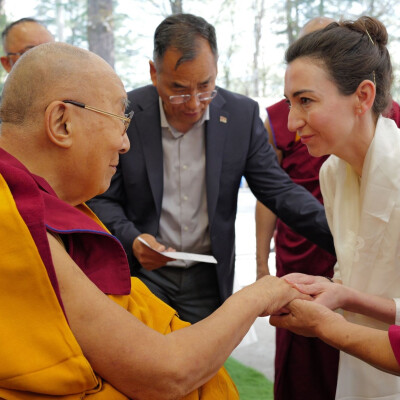
This conversation was recorded in March this year in McLeod Ganj, near Dharamsala, India, during a trip by Dr Caroline Emmer de Albuquerque Green https://www.oxford-aiethics.ox.ac.uk/caroline-emmer-de-albuquerque-green , Director of Research at the Institute for Ethics in AI, together with Ambassador Audrey Tang https://afp.oxford-aiethics.ox.ac.uk/people/ambassador-audrey-tang and their collaborator Tenzin Yangtso, to learn from the Tibetan Buddhist community about their approach to the ethics of AI.
In this episode, Caroline is joined by Geshe Lodoe Sangpo, a Tibetan Buddhist monk born in Tibet who came to India in 1992 and has since studied Buddhist philosophy and spiritual practice at Ganden Jangtse Monastery in South India. From 2006 he began studying science alongside his monastic training and today he teaches science to fellow monastics while collaborating on several research projects, including work on lucid dreaming and Dream Yoga, and the "Tukdam" project, which investigates a rare meditative state observed in highly advanced practitioners at the time of death.
Geshe Lodoe Sangpo explains what it takes to earn the title of Geshe: a demanding academic and spiritual journey spanning logic and epistemology, the vast Prajnaparamita texts, Madhyamaka (Middle Way) philosophy, Abhidharma, and monastic discipline, followed by six years of board examinations. He describes the three levels of Buddhist study - becoming well informed, testing that knowledge through critical reflection until real conviction takes hold, and finally internalising it through daily practice - and how this shapes his view of AI.
At the heart of the conversation is a question the Institute keeps returning to: can a machine ever be compassionate? Geshe Lodoe Sangpo is doubtful. As he puts it, information is not happiness, and compassion is "not a skill" but "a way of being" - something that has to be felt and lived rather than assembled from data. He and Caroline discuss an analogy he shared from a conversation with Audrey Tang that morning: sending a robot to the gym on your behalf might raise your score, but it will not strengthen your own muscles - and outsourcing emotional and cognitive effort to AI carries the same risk for human growth.
The two also explore interdependence, one of the foundational concepts in Tibetan Buddhism, and how it connects to the Institute's work on Civic AI: smaller, contextualised AI systems designed to serve specific communities rather than concentrate power. Geshe Lodoe Sangpo reflects on how learning about Civic AI shifted his own outlook on technology, from wariness to cautious hope, provided that AI remains a tool for building healthier human relationships rather than a substitute for the inner work that compassion requires.
Read more about the wider trip to Dharamsala, including the delegation's audience with His Holiness the 14th Dalai Lama: https://www.oxford-aiethics.ox.ac.uk/news/insights-ethics-ai-dr-caroline-greens-trip-dharamsala-india
To find out more about the Institute's work on Civic AI, visit: https://civic.ai/
Hosted on Ausha. See ausha.co/privacy-policy for more information.