Description
Hosted on Acast. See acast.com/privacy for more information.
Hosted on Ausha. See ausha.co/privacy-policy for more information.

Description
Hosted on Acast. See acast.com/privacy for more information.
Hosted on Ausha. See ausha.co/privacy-policy for more information.
109 episodes
Season 1


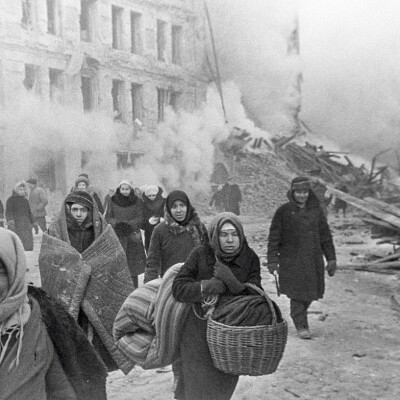
The 900 Days of Leningrad's siege saw the greatest destruction in modern history, and the larges loss of life in a modern city. It dwarfed urban campaigns elsewhere in the Second World War by a factor of magnitude. This episode links this immense struggle with the rest of the war in the East. Map 1: Finnish and Soviet forces on the eve of Barbarossa, 1941 Map 2: Finnish offensive operations in Karelia, summer and autumn, 1941 Map 3: The siege of Leningrad Hosted on Acast. See acast.com/privacy (https://acast.com/privacy) for more information. Hosted on Ausha. See ausha.co/privacy-policy for more information.
38min | Published on October 19, 2022


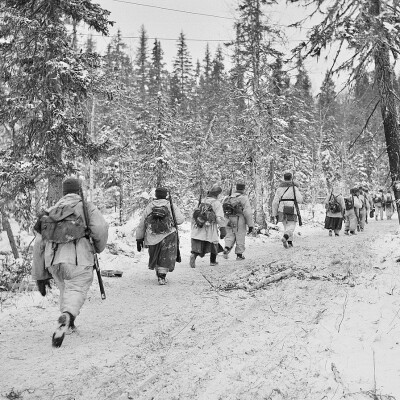
The German 36th Mountain Corps moves through Lapland to cut the vital Murmansk Railroad to Leningrad. But under the midnight sun, it meets a foe even more difficult than the Red Army. Map 1: Finland 1940-41 The red area around Salla is the target for the 36th Mountain Corps. Figure 1: Finnish soldiers moving through the Arctic forest on their way to the Murmansk railroad Sources: David Glantz, Operation Barbarossa: Hitler's Invasion of Russia 1941. Stroud, Gloucestershire, UK: The History Press, 2011. David Stahel, Operation Barbarossa and Germany's Defeat in the East. Cambridge, UK: Cambridge University Press, 2009. Operation Silver Fox: The History of Nazi Germany's Arctic Invasion of the Soviet Union during World War II. Charles River Editors, 2016. Timeline of World War II (1941). Wikipedia. https://en.wikipedia.org/wiki/Timeline_of_World_War_II_(1941) Hosted on Acast. See acast.com/privacy (https://acast.com/privacy) for more information. Hosted on Ausha. See ausha.co/privacy-policy for more information.
30min | Published on October 5, 2022


Operation Silver Fox in the farthest northern reaches of continental Europe had a direct impact on the war in the Eastern Front. Map 1: Finland from 1920 to 1938 Map 2: The Winter War, 1939-1940 Map 3: Areas Finland ceded to the USSR after the Winter War Sources: Operation Silver Fox: The History of Nazi Germany's Arctic Invasion of the Soviet Union During World War II Published by Charles River Editors, 2016 Operation Barbarossa and Germany's Defeat in the East, by David Stahel. Cambridge University Press, Cambridge, UK, 2009. Hosted on Acast. See acast.com/privacy (https://acast.com/privacy) for more information. Hosted on Ausha. See ausha.co/privacy-policy for more information.
32min | Published on September 28, 2022


My apologies. It will be another week for the full episode 10 on Operation Silver Fox. BUT there is a bonus episode available for supporters. Hosted on Acast. See acast.com/privacy (https://acast.com/privacy) for more information. Hosted on Ausha. See ausha.co/privacy-policy for more information.
3min | Published on September 20, 2022


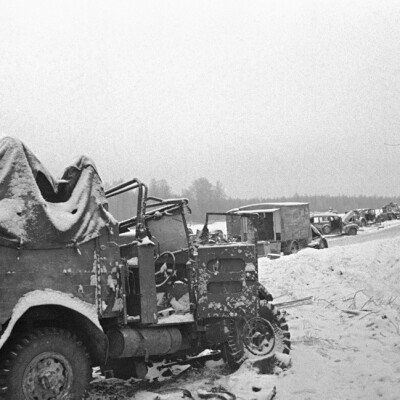
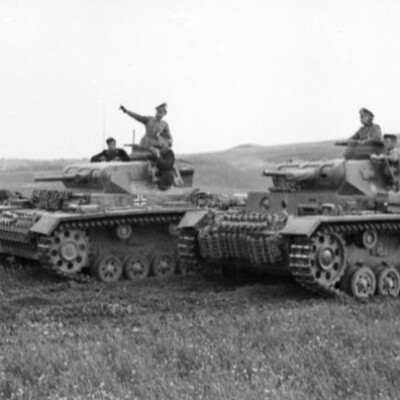
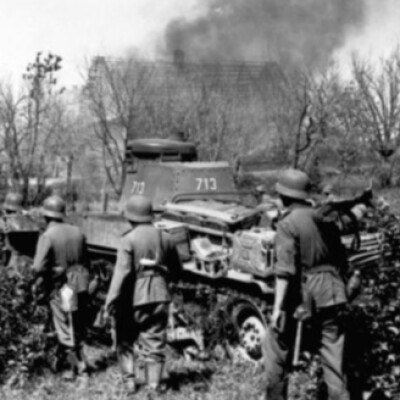
German's final, final assault on the capital of the USSR in November 1941. Map 1: The Battle of Moscow, November 1941. Map 20: The bigger picture. Source: U.S. Army archives. Soviets fighting back during "offensive weather": Rasputitsa: Defense of Moscow: Women militia training in Moscow, fall 1941: New T-34 tanks roll off the assembly line, 1941 Soviet air power: The Yakovlev Yak fighter Ilyushin Il-2 in flight near Moscow, December 1941 Winter Abandoned German vehicles in the snow, on the highway from Volokolamsk to Moscow, December 1941: Wrecked Panzer III, December 1941: Hosted on Acast. See acast.com/privacy (https://acast.com/privacy) for more information. Hosted on Ausha. See ausha.co/privacy-policy for more information.
35min | Published on September 7, 2022


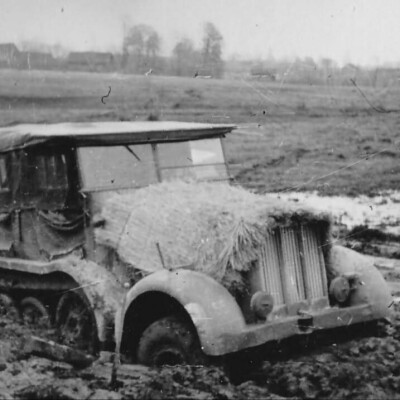
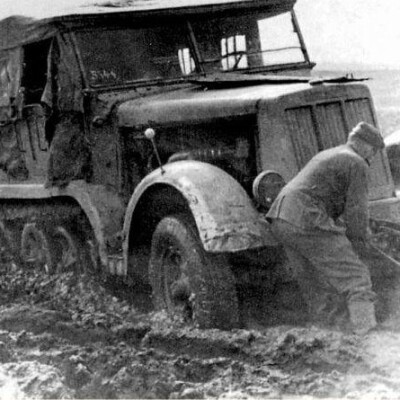
The Wehrmacht assembles its biggest concentrated force for the largest single campaign of Operation Barbarossa. Image 1: German half-track, deep in the mud of rasputitsa. Image 2: Pulling vehicles through the mud of Russia in fall. Image 3: Eventually, the Germans had to resort to horses to haul even their field guns during rasputitsa. Map: The push toward Moscow in the fall of 1941. If you enjoyed this podcast, consider leaving a five-star rating on your preferred podcaster. You can also support the podcast through Patreon (https://www.patreon.com/BeyondBarbarossa). https://www.patreon.com/BeyondBarbarossa Sources: David M. Glantz: Operation Barbarossa: Hitler's Invasion of Russia 1941. Stroud, Gloucesgershire, UK, The History Press, 2013. Peter G. Tsouras, editor: Fighting in Hell: The German Ordeal on the Eastern Front. New York, NY: Ivy Books, 1995. David Stahel: Operation Typhoon: Hitler's March on Moscow, October 1941. Cambridge, UK: Cambridge University Press, 2013. David Stahel: Operation Barbarossa and Germany's Defeat in the East. Cambridge, UK: Cambridge University Press, 2009. Hosted on Acast. See acast.com/privacy (https://acast.com/privacy) for more information. Hosted on Ausha. See ausha.co/privacy-policy for more information.
36min | Published on August 24, 2022


Sponsor: The Eastern Front Trilogy by Scott Bury The true story of a Canadian drafted into the Soviet Red Army in World War II. https://scottburyauthor.com/books/the-eastern-front-trilogy/ As the Germans strangle Leningrad and sweep across Ukraine, we can see just how complicated the Eastern Front is, and how connected to events and decisions a world away. Map 1: Closing on Leningrad. Photos: Rasputitsa Horses sank up to their bellies in mud in Ukraine during rasputitsa. Even tracked vehicles became mired in the deep mud. Hosted on Acast. See acast.com/privacy (https://acast.com/privacy) for more information. Hosted on Ausha. See ausha.co/privacy-policy for more information.
40min | Published on August 10, 2022


Having captured most of Ukraine and with a choke-hold on Leningrad, Germany appears to be winning as it advances on Moscow. But the big picture looks different close up. The Battle of Smolensk may just be the big turning point in the was in the East. This episode sponsored by The Eastern Front Trilogy, the true story of a Canadian drafted into the Red Army in World War II. The Eastern Front Trilogy (https://bit.ly/EFTforUkraine). All proceeds from the sales of The Eastern Front Trilogy in paperback or its constituent e-books will go to helping Ukrainian refugees until all Ukrainians can return home safe from Russian military aggression. Contact the author by email to contact@writtenword.ca (mailto:contact@writtenword.ca) Support the podcast on Patreon (https://www.patreon.com/BeyondBarbarossa). Map 1: The situation in the summer of 1941 Map 2: The Battle of Smolensk The best tank of the war: the Soviet T34 This file is licensed under the Creative Commons (https://en.wikipedia.org/wiki/en:Creative_Commons) Attribution-Share Alike 3.0 Unported (https://creativecommons.org/licenses/by-sa/3.0/deed.en) license. Attribution: Лишь человек (https://ru.wikipedia.org/wiki/%D0%9B%D0%B8%D1%88%D1%8C_%D1%87%D0%B5%D0%BB%D0%BE%D0%B2%D0%B5%D0%BA) The Soviet KV-1 heavy tank The Soviet PTRD-41 anti-tank gun Source: RIA Novosti archive, image #4408 / N. Bode / CC-BY-SA 3.0, via Wikimedia Commons. The Katyusha The Katyusha in action This file is licensed under the Creative Commons (https://en.wikipedia.org/wiki/en:Creative_Commons) Attribution-Share Alike 3.0 Unported (https://creativecommons.org/licenses/by-sa/3.0/deed.en) license.Attribution: RIA Novosti archive, image #303890 / Zelma / CC-BY-SA 3.0 Books cited in this episode: David Glantz: Operation Barbarossa: Hitler's Invasion of Russia 1941. Stroud, Gloucetershire, UK, 2011. David Stahel: Operation Barbarossa and Germany's Defeat in the East. Cambridge, UK: Cambridge University Press, 2009. Hosted on Acast. See acast.com/privacy (https://acast.com/privacy) for more information. Hosted on Ausha. See ausha.co/privacy-policy for more information.
37min | Published on July 27, 2022


After the Battle of Smolensk, Germany changes its strategy. It diverts forces away from the drive on Moscow toward two other key objectives: Leningrad in the north, and Kyiv in Ukraine. This is how that played out. Map source: US Military Academy. Bibliography: Glantz, David: Operation Barbarossa: Hitler’s Invasion of Russia, 1941. The History Press, Stroud, Gloucestershire, UK, 2001. https://www.thehistorypress.co.uk/ Bury, Scott: Army of Worn Soles. The Written Word Publishing Company, Ottawa, Canada, 2012. https://writtenword.ca/books-by-scott-bury/army-of-worn-soles/ Music by Nicolas Bury. Hosted on Acast. See acast.com/privacy (https://acast.com/privacy) for more information. Hosted on Ausha. See ausha.co/privacy-policy for more information.
37min | Published on July 20, 2022


Operation Barbarossa caught the USSR unready. But that doesn't mean they were helpless. They hit back—hard. Hosted on Acast. See acast.com/privacy (https://acast.com/privacy) for more information. Hosted on Ausha. See ausha.co/privacy-policy for more information.
31min | Published on July 13, 2022
Description
Hosted on Acast. See acast.com/privacy for more information.
Hosted on Ausha. See ausha.co/privacy-policy for more information.
109 episodes
Season 1


The 900 Days of Leningrad's siege saw the greatest destruction in modern history, and the larges loss of life in a modern city. It dwarfed urban campaigns elsewhere in the Second World War by a factor of magnitude. This episode links this immense struggle with the rest of the war in the East. Map 1: Finnish and Soviet forces on the eve of Barbarossa, 1941 Map 2: Finnish offensive operations in Karelia, summer and autumn, 1941 Map 3: The siege of Leningrad Hosted on Acast. See acast.com/privacy (https://acast.com/privacy) for more information. Hosted on Ausha. See ausha.co/privacy-policy for more information.
38min | Published on October 19, 2022


The German 36th Mountain Corps moves through Lapland to cut the vital Murmansk Railroad to Leningrad. But under the midnight sun, it meets a foe even more difficult than the Red Army. Map 1: Finland 1940-41 The red area around Salla is the target for the 36th Mountain Corps. Figure 1: Finnish soldiers moving through the Arctic forest on their way to the Murmansk railroad Sources: David Glantz, Operation Barbarossa: Hitler's Invasion of Russia 1941. Stroud, Gloucestershire, UK: The History Press, 2011. David Stahel, Operation Barbarossa and Germany's Defeat in the East. Cambridge, UK: Cambridge University Press, 2009. Operation Silver Fox: The History of Nazi Germany's Arctic Invasion of the Soviet Union during World War II. Charles River Editors, 2016. Timeline of World War II (1941). Wikipedia. https://en.wikipedia.org/wiki/Timeline_of_World_War_II_(1941) Hosted on Acast. See acast.com/privacy (https://acast.com/privacy) for more information. Hosted on Ausha. See ausha.co/privacy-policy for more information.
30min | Published on October 5, 2022


Operation Silver Fox in the farthest northern reaches of continental Europe had a direct impact on the war in the Eastern Front. Map 1: Finland from 1920 to 1938 Map 2: The Winter War, 1939-1940 Map 3: Areas Finland ceded to the USSR after the Winter War Sources: Operation Silver Fox: The History of Nazi Germany's Arctic Invasion of the Soviet Union During World War II Published by Charles River Editors, 2016 Operation Barbarossa and Germany's Defeat in the East, by David Stahel. Cambridge University Press, Cambridge, UK, 2009. Hosted on Acast. See acast.com/privacy (https://acast.com/privacy) for more information. Hosted on Ausha. See ausha.co/privacy-policy for more information.
32min | Published on September 28, 2022


My apologies. It will be another week for the full episode 10 on Operation Silver Fox. BUT there is a bonus episode available for supporters. Hosted on Acast. See acast.com/privacy (https://acast.com/privacy) for more information. Hosted on Ausha. See ausha.co/privacy-policy for more information.
3min | Published on September 20, 2022


German's final, final assault on the capital of the USSR in November 1941. Map 1: The Battle of Moscow, November 1941. Map 20: The bigger picture. Source: U.S. Army archives. Soviets fighting back during "offensive weather": Rasputitsa: Defense of Moscow: Women militia training in Moscow, fall 1941: New T-34 tanks roll off the assembly line, 1941 Soviet air power: The Yakovlev Yak fighter Ilyushin Il-2 in flight near Moscow, December 1941 Winter Abandoned German vehicles in the snow, on the highway from Volokolamsk to Moscow, December 1941: Wrecked Panzer III, December 1941: Hosted on Acast. See acast.com/privacy (https://acast.com/privacy) for more information. Hosted on Ausha. See ausha.co/privacy-policy for more information.
35min | Published on September 7, 2022


The Wehrmacht assembles its biggest concentrated force for the largest single campaign of Operation Barbarossa. Image 1: German half-track, deep in the mud of rasputitsa. Image 2: Pulling vehicles through the mud of Russia in fall. Image 3: Eventually, the Germans had to resort to horses to haul even their field guns during rasputitsa. Map: The push toward Moscow in the fall of 1941. If you enjoyed this podcast, consider leaving a five-star rating on your preferred podcaster. You can also support the podcast through Patreon (https://www.patreon.com/BeyondBarbarossa). https://www.patreon.com/BeyondBarbarossa Sources: David M. Glantz: Operation Barbarossa: Hitler's Invasion of Russia 1941. Stroud, Gloucesgershire, UK, The History Press, 2013. Peter G. Tsouras, editor: Fighting in Hell: The German Ordeal on the Eastern Front. New York, NY: Ivy Books, 1995. David Stahel: Operation Typhoon: Hitler's March on Moscow, October 1941. Cambridge, UK: Cambridge University Press, 2013. David Stahel: Operation Barbarossa and Germany's Defeat in the East. Cambridge, UK: Cambridge University Press, 2009. Hosted on Acast. See acast.com/privacy (https://acast.com/privacy) for more information. Hosted on Ausha. See ausha.co/privacy-policy for more information.
36min | Published on August 24, 2022


Sponsor: The Eastern Front Trilogy by Scott Bury The true story of a Canadian drafted into the Soviet Red Army in World War II. https://scottburyauthor.com/books/the-eastern-front-trilogy/ As the Germans strangle Leningrad and sweep across Ukraine, we can see just how complicated the Eastern Front is, and how connected to events and decisions a world away. Map 1: Closing on Leningrad. Photos: Rasputitsa Horses sank up to their bellies in mud in Ukraine during rasputitsa. Even tracked vehicles became mired in the deep mud. Hosted on Acast. See acast.com/privacy (https://acast.com/privacy) for more information. Hosted on Ausha. See ausha.co/privacy-policy for more information.
40min | Published on August 10, 2022


Having captured most of Ukraine and with a choke-hold on Leningrad, Germany appears to be winning as it advances on Moscow. But the big picture looks different close up. The Battle of Smolensk may just be the big turning point in the was in the East. This episode sponsored by The Eastern Front Trilogy, the true story of a Canadian drafted into the Red Army in World War II. The Eastern Front Trilogy (https://bit.ly/EFTforUkraine). All proceeds from the sales of The Eastern Front Trilogy in paperback or its constituent e-books will go to helping Ukrainian refugees until all Ukrainians can return home safe from Russian military aggression. Contact the author by email to contact@writtenword.ca (mailto:contact@writtenword.ca) Support the podcast on Patreon (https://www.patreon.com/BeyondBarbarossa). Map 1: The situation in the summer of 1941 Map 2: The Battle of Smolensk The best tank of the war: the Soviet T34 This file is licensed under the Creative Commons (https://en.wikipedia.org/wiki/en:Creative_Commons) Attribution-Share Alike 3.0 Unported (https://creativecommons.org/licenses/by-sa/3.0/deed.en) license. Attribution: Лишь человек (https://ru.wikipedia.org/wiki/%D0%9B%D0%B8%D1%88%D1%8C_%D1%87%D0%B5%D0%BB%D0%BE%D0%B2%D0%B5%D0%BA) The Soviet KV-1 heavy tank The Soviet PTRD-41 anti-tank gun Source: RIA Novosti archive, image #4408 / N. Bode / CC-BY-SA 3.0, via Wikimedia Commons. The Katyusha The Katyusha in action This file is licensed under the Creative Commons (https://en.wikipedia.org/wiki/en:Creative_Commons) Attribution-Share Alike 3.0 Unported (https://creativecommons.org/licenses/by-sa/3.0/deed.en) license.Attribution: RIA Novosti archive, image #303890 / Zelma / CC-BY-SA 3.0 Books cited in this episode: David Glantz: Operation Barbarossa: Hitler's Invasion of Russia 1941. Stroud, Gloucetershire, UK, 2011. David Stahel: Operation Barbarossa and Germany's Defeat in the East. Cambridge, UK: Cambridge University Press, 2009. Hosted on Acast. See acast.com/privacy (https://acast.com/privacy) for more information. Hosted on Ausha. See ausha.co/privacy-policy for more information.
37min | Published on July 27, 2022


After the Battle of Smolensk, Germany changes its strategy. It diverts forces away from the drive on Moscow toward two other key objectives: Leningrad in the north, and Kyiv in Ukraine. This is how that played out. Map source: US Military Academy. Bibliography: Glantz, David: Operation Barbarossa: Hitler’s Invasion of Russia, 1941. The History Press, Stroud, Gloucestershire, UK, 2001. https://www.thehistorypress.co.uk/ Bury, Scott: Army of Worn Soles. The Written Word Publishing Company, Ottawa, Canada, 2012. https://writtenword.ca/books-by-scott-bury/army-of-worn-soles/ Music by Nicolas Bury. Hosted on Acast. See acast.com/privacy (https://acast.com/privacy) for more information. Hosted on Ausha. See ausha.co/privacy-policy for more information.
37min | Published on July 20, 2022


Operation Barbarossa caught the USSR unready. But that doesn't mean they were helpless. They hit back—hard. Hosted on Acast. See acast.com/privacy (https://acast.com/privacy) for more information. Hosted on Ausha. See ausha.co/privacy-policy for more information.
31min | Published on July 13, 2022