Description
Hosted on Acast. See acast.com/privacy for more information.
Hosted on Ausha. See ausha.co/privacy-policy for more information.
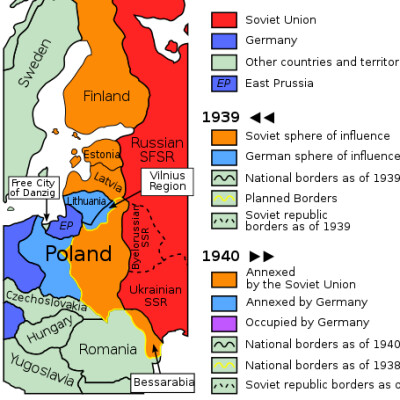
Description
Hosted on Acast. See acast.com/privacy for more information.
Hosted on Ausha. See ausha.co/privacy-policy for more information.
106 episodes
Other episodes


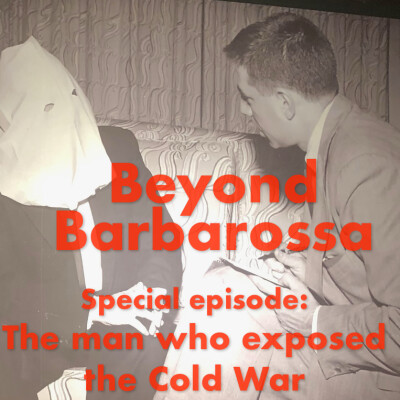
In this special episode of the podcast on the Eastern Front of World War Two, we go beyond Beyond Barbarossa and beyond the end of the Second World War. 80 years ago to the day of this publication a handsome young man approached Canadian media and officials with proof that the Soviet Union was spying on its allies. The Cold War was on. Former Soviet cypher clerk Igor Gouzenko, hooded to protect his identity, being interviewed by Associated Press reporter Saul Pett in Montreal in 1954. The Gouzenkos’ apartment building on Somerset Street in central Ottawa. There is no plaque commemorating Igor Gouzenko. (Photo by Scott Bury, 2025.) Igor Gouzenko in Canada, 1946. Sources Winston Churchill, “The Sinews of Peace,” speech given at Westminster College, Fulton, Missouri, U.S.A., 5 March 1946. https://www.americanrhetoric.com/speeches/winstonchurchillsinewsofpeace.htm J.L. Granatstein and David Stafford, Spy Wars: Espionage and Canada from Gouzenko to Glasnost. Toronto: Key Porter Books, 1990. John Sawatsky, Gouzenko: The Untold Story. Toronto: Macmillan of Canada, 1984 Wikipedia, Gouzenko Affair. https://en.wikipedia.org/wiki/Gouzenko_Affair Wondery Podcasts, “The Spy Who, Season 7: The Spy Who Started the Cold War” https://wondery.com/shows/the-spy-who/season/7/ Hosted on Acast. See acast.com/privacy (https://acast.com/privacy) for more information. Hosted on Ausha. See ausha.co/privacy-policy for more information.
50min | Published on September 5, 2025


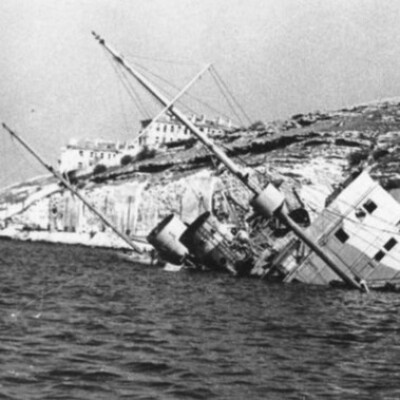
Crimea was a critical asset to hold for Germany's plans for its summer 1942 offensive. Especially its best harbour, and the base for the Soviet Black Sea Fleet: Sevastopol. Map: The Battle of Sevastopol, 1942 Figure 1: Western Crimea by satellite. Severnaya Bay is the long, narrow estuary going east from the Black Sea. Sevastopol is in the narrow bay that comes south from it. Figure 2: Sturmgeshutz III "StuG III" self-propelled assault gun Figure 3: Goliath disposable explosive vehicle Figure 4: Thor's brother, Karl-Geralt super-heavy mortar Figure 5: An unexploded 600-mm shell in Crimea, 1942 Figure 6: Dora, the biggest gun ever made, firing 800 mm shells Figure 7: The sunken Abkhazia transport ship in Sevastopol Harbour, 1942 Hosted on Acast. See acast.com/privacy (https://acast.com/privacy) for more information. Hosted on Ausha. See ausha.co/privacy-policy for more information.
36min | Published on May 22, 2023


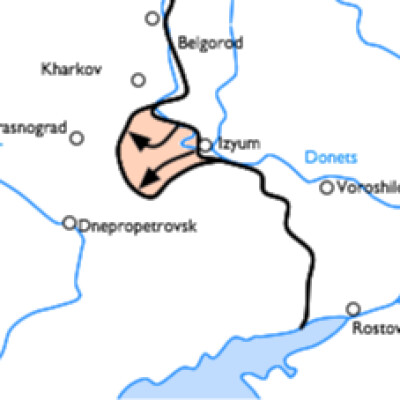
It's the spring of 1942. As the German Wehrmacht and Luftwaffe rebuild, the high command plans a new offensive in the east. Meanwhile, the Soviets strike back in Crimea and Kharkiv. Map 1: The Crimean peninsula Map 2: Kerch peninsula Map 3: The Second Battle of Kharkiv Sources Antony Beevor, The Second World War. London, UK: Little, Brown and Co., 2012. Ray Harris, The History of World War II podcast. https://worldwariipodcast.net David Glantz, Operation Barbarossa: Hitler's Invasion of Russia 1941. Stroud, Gloucestershire: The History Press, 2011 David Stahel, Operation Typhoon: Hitler's March on Moscow, October 1941. Cambridge, UK: Cambridge University Press, 2013. David Stahel, Operation Barbarossa and Germany's Defeat in the East. Cambridge, UK: Cambridge University Press, 2009. Hosted on Acast. See acast.com/privacy (https://acast.com/privacy) for more information. Hosted on Ausha. See ausha.co/privacy-policy for more information.
36min | Published on April 24, 2023


A very special guest joins the podcast this week: the one and only Daniele Bolelli of the History on Fire podcast. Sources: The History on Fire podcast http://historyonfirepodcast.com/ Hosted on Acast. See acast.com/privacy (https://acast.com/privacy) for more information. Hosted on Ausha. See ausha.co/privacy-policy for more information.
37min | Published on February 19, 2023


One of my favourite podcasters, Sebastian Major of Our Fake History, joins me for a talk about historical myths about the Eastern Front of World War II. It's one of the best podcasts out there about history. Listen to it on your preferred podcasting app, and find it at OurFakeHistory.com. Hosted on Acast. See acast.com/privacy (https://acast.com/privacy) for more information. Hosted on Ausha. See ausha.co/privacy-policy for more information.
42min | Published on December 19, 2022
Description
Hosted on Acast. See acast.com/privacy for more information.
Hosted on Ausha. See ausha.co/privacy-policy for more information.
106 episodes
Other episodes


In this special episode of the podcast on the Eastern Front of World War Two, we go beyond Beyond Barbarossa and beyond the end of the Second World War. 80 years ago to the day of this publication a handsome young man approached Canadian media and officials with proof that the Soviet Union was spying on its allies. The Cold War was on. Former Soviet cypher clerk Igor Gouzenko, hooded to protect his identity, being interviewed by Associated Press reporter Saul Pett in Montreal in 1954. The Gouzenkos’ apartment building on Somerset Street in central Ottawa. There is no plaque commemorating Igor Gouzenko. (Photo by Scott Bury, 2025.) Igor Gouzenko in Canada, 1946. Sources Winston Churchill, “The Sinews of Peace,” speech given at Westminster College, Fulton, Missouri, U.S.A., 5 March 1946. https://www.americanrhetoric.com/speeches/winstonchurchillsinewsofpeace.htm J.L. Granatstein and David Stafford, Spy Wars: Espionage and Canada from Gouzenko to Glasnost. Toronto: Key Porter Books, 1990. John Sawatsky, Gouzenko: The Untold Story. Toronto: Macmillan of Canada, 1984 Wikipedia, Gouzenko Affair. https://en.wikipedia.org/wiki/Gouzenko_Affair Wondery Podcasts, “The Spy Who, Season 7: The Spy Who Started the Cold War” https://wondery.com/shows/the-spy-who/season/7/ Hosted on Acast. See acast.com/privacy (https://acast.com/privacy) for more information. Hosted on Ausha. See ausha.co/privacy-policy for more information.
50min | Published on September 5, 2025


Crimea was a critical asset to hold for Germany's plans for its summer 1942 offensive. Especially its best harbour, and the base for the Soviet Black Sea Fleet: Sevastopol. Map: The Battle of Sevastopol, 1942 Figure 1: Western Crimea by satellite. Severnaya Bay is the long, narrow estuary going east from the Black Sea. Sevastopol is in the narrow bay that comes south from it. Figure 2: Sturmgeshutz III "StuG III" self-propelled assault gun Figure 3: Goliath disposable explosive vehicle Figure 4: Thor's brother, Karl-Geralt super-heavy mortar Figure 5: An unexploded 600-mm shell in Crimea, 1942 Figure 6: Dora, the biggest gun ever made, firing 800 mm shells Figure 7: The sunken Abkhazia transport ship in Sevastopol Harbour, 1942 Hosted on Acast. See acast.com/privacy (https://acast.com/privacy) for more information. Hosted on Ausha. See ausha.co/privacy-policy for more information.
36min | Published on May 22, 2023


It's the spring of 1942. As the German Wehrmacht and Luftwaffe rebuild, the high command plans a new offensive in the east. Meanwhile, the Soviets strike back in Crimea and Kharkiv. Map 1: The Crimean peninsula Map 2: Kerch peninsula Map 3: The Second Battle of Kharkiv Sources Antony Beevor, The Second World War. London, UK: Little, Brown and Co., 2012. Ray Harris, The History of World War II podcast. https://worldwariipodcast.net David Glantz, Operation Barbarossa: Hitler's Invasion of Russia 1941. Stroud, Gloucestershire: The History Press, 2011 David Stahel, Operation Typhoon: Hitler's March on Moscow, October 1941. Cambridge, UK: Cambridge University Press, 2013. David Stahel, Operation Barbarossa and Germany's Defeat in the East. Cambridge, UK: Cambridge University Press, 2009. Hosted on Acast. See acast.com/privacy (https://acast.com/privacy) for more information. Hosted on Ausha. See ausha.co/privacy-policy for more information.
36min | Published on April 24, 2023


A very special guest joins the podcast this week: the one and only Daniele Bolelli of the History on Fire podcast. Sources: The History on Fire podcast http://historyonfirepodcast.com/ Hosted on Acast. See acast.com/privacy (https://acast.com/privacy) for more information. Hosted on Ausha. See ausha.co/privacy-policy for more information.
37min | Published on February 19, 2023


One of my favourite podcasters, Sebastian Major of Our Fake History, joins me for a talk about historical myths about the Eastern Front of World War II. It's one of the best podcasts out there about history. Listen to it on your preferred podcasting app, and find it at OurFakeHistory.com. Hosted on Acast. See acast.com/privacy (https://acast.com/privacy) for more information. Hosted on Ausha. See ausha.co/privacy-policy for more information.
42min | Published on December 19, 2022