- Gary
Welcome to Searching for the Brighter Pod, a podcast about peanuts. I'm your host, Gary Little, and with me is North Carolina Peanut Extension Specialist, Dr. David Jordan. David, this is podcast number seven. Did you think we'd get this far?
- David
Well, it was a little doubtful at one point, but I think we have... Worked hard at it. I think we're going to stick with it for a while. I think this is one way we can get some information out to folks that is different from our normal avenues. So hopefully some folks that are listening are getting a little bit out of it.
- Gary
Yes, hopefully listeners or people are listening and enjoying it, at least learning something. So I guess the big thing is. how did the weather last week impact the peanut crop?
- David
Yeah, that's a good question, Gary. So if we go back a little bit beyond before last week, we had been in really high temperatures, relatively dry. We had caught some showers of rain in different places, but we were on the dry side, if you look at early September. Last week, we had some of the weather pattern that went with the nor'easter that went up the the coast, not as much in the peanut area, more out towards our extreme coast here in North Carolina, I think is where we had greater amounts. But there were some places that got significant rain, even in the peanut area. That rain helped quite a few farmers who had been dry, their fields had gotten dry. And especially in some of our reduced till conservation tillage fields, it can be a challenge to dig those in the fall during dry periods. But that rainfall really helped some growers get in the field. They could get the plow points in the ground and get those peanuts dug. We were pretty dry. So that rain from last week really didn't slow people up that much. So on balance, I think that was a positive. Whether or not it was going to have a huge impact on the crop in terms of peanuts that hadn't been dug and adding more yield, I don't know that it would have helped at that point. But it certainly helps some people not lose peanuts during the digging process. Some people had peanuts that were dug and wanted to combine those or thresh those. And they had to put some of those operations off until early this week. But we've had a good run so far this week.
- Gary
Okay. What is the status of the harvest right now then?
- David
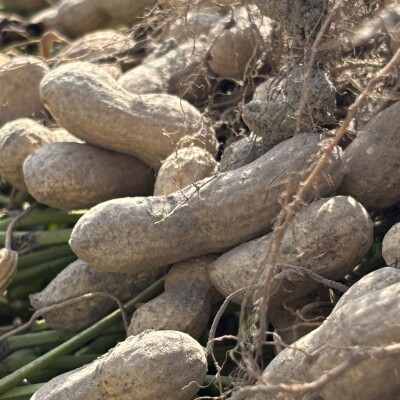
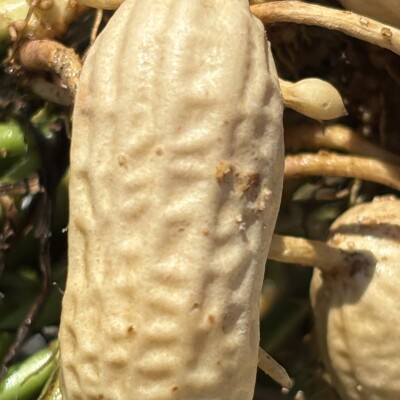
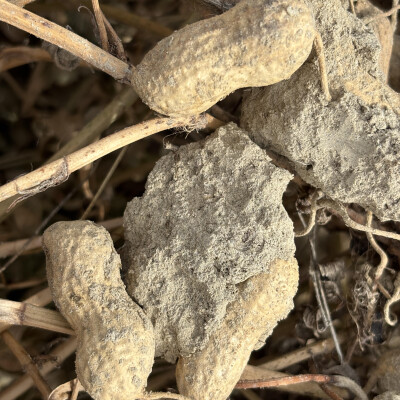
Yeah, so harvest in North Carolina is moving on pretty quick. is As many of the listeners will know, we have a two-step process with peanuts. We dig peanuts, hopefully at optimum maturity. They get dug out of the ground and then the vines get inverted. So you have the pods up in the air and then the vines sit there for, depending on what's going on, seven to 10 days. They can sit in the field much longer if they have to, but they sit out in the field, they dry down as much as possible, and then growers will come in with another machine that will separate the pods from the vines. and blow the pods up in a basket, and then they move on to a buying point. So there's a two-step process. So if you think about step one, digging, last week my estimate was that we were at 40% of our acreage was dug. We've had a lot of peanuts dug since last week. So my guess as of today, which is Tuesday, would be maybe close to 60% of our acreage is dug. It's getting a little harder and harder to find a field. peanuts that hasn't been dug across the state. We still have plenty to get out of the ground, but we're making good progress. I suspect by the end of this week, if people continue at the pace we're doing now, we'll be pushing maybe 65 or 70 percent. And that's, you know, to have that many peanuts dug by the first couple of days of October, that's earlier than most of the time where our crop was probably... a week earlier. It depends on where you are, but kind of the consensus was our crop just got ready faster than it did in most years or does in most years. And we've had weather for the most part where folks can get in and do their operations without a whole lot of delays. So we know we've got some weather coming maybe this weekend, and we'll see how that materializes. That could slow up some field operations, but right now things are moving on. quite fast. So, you know, right now, 60% of our peanuts, I think, are dug. I think by the end of the week, we'll be... moving on up towards about 70% or more. And from a threshing or harvesting standpoint, that always lags behind. The peanuts have to stay in the field for a period of time to dry down. But I would guess, and again, part of it is a guess, that we might be at 25% that have been combined or harvested. That might be a little high. It's a little hard to tell. But we're moving along with that operation as well.
- Gary
Okay. What do you think we have in store as we move into October? What do we need to be thinking about?
- David
Yeah, so I think most growers, you know, they've got their eye on the prize ahead, which is getting peanuts dug and out of the field and moved on along as quickly as they could. So I think moving into October, one thing we do worry about is getting a cool snap that would slow maturity to a point where peanuts don't progress. I think in the vast majority of fields, peanuts are at optimum maturity. They've had enough heat units to get there. So that's not as big a concern for us. At least the weather forecast that I've seen for the next seven to 10 days, I don't see any situation where our temperatures are going to drop below 50 at night. And usually if we have two nights in a row where temperatures get below 50, degrees, we would say that the crop is going to stop maturing or moving forward because that just kind of chills those plants a little bit. It certainly doesn't kill them, but it really slows them down and it's really hard for them to get back and tooled up during the day. But I don't see that coming. So if somebody needs a little more time to let their crop mature and they've got the moisture to go with it, which we could pick up some maybe later in the week, then they could let those peanuts sit a little longer and mature. The other thing that I think growers are dealing with now, and certainly will be for the next couple of weeks as they move through the harvest, is what's the status of the vines from a disease standpoint? So I've been going around to quite a few fields trying to sample for tomato spotted wilt to get a sense of what we have across the state. And in many of the fields that I walk in to look at spotted wilt, there's quite a bit of leaf spot, the lesions from that particular disease down in the canopy. And so we've, you know, we that cool weather last week really would have slowed down the pathogen and those epidemics. But we've worn back up this week and it's supposed to potentially get in the in the 90s by by Friday. And if you've got some moisture and 90 degree temperatures, some of those lesions will really, not the lesions, but the pathogen will continue to develop and you'll have more and more challenges. Our threshold is if you happen to be at 40 percent defoliation in the canopy, we would encourage people to dig no matter what the maturity is. I think our maturity is in good shape. It's just a matter of logistics. Can everybody get to all their fields? before we get above 40% defoliation. What happens at 40% defoliation is you have the pods that shed off at that point. So it's kind of this train happens. So you get infection from the pathogen. Next thing you know, you have a lesion that forms. Then there's a period of time after that lesion forms on a leaf where the leaf will shed off. And at some point soon after the leaves shed off, you begin to have pod shedding off. And the key is to try to keep the plant from having more than 40% defoliation. If you can do that with fungicides, especially not necessarily now, but maybe two or three weeks ago, trying to get that little extra protection, you'll maintain a lot of your yield potential. But as most growers worry, if we were to get a lot of rain, say this weekend, and they can't get in the field and dig, and it happens to be warm and moist, that leaf spot could really continue to take off, and then we could get to greater defoliation in a very short period of time. What we find is defoliation and lesions showing up almost double every week. So you can feel like you're in great shape, and then all of a sudden, you're at 20% lesions, and then you're at 40% and 80% over a two or three week period. period. And the same things happens with defoliation. So growers are going to be looking at that. I think they're going to be pushing along to get the crop out at this point as quick as they can. So I think that's where most people are at. They're working around the clock to try to get. get things dug and harvested.
- Gary
Okay, so we're heading around third base, but we're not at home yet.
- David
Definitely not at home yet. I thank you for the Orioles metaphor with the Yankees, and that's as you spoke of October. I know, Gary, you're a Yankees fan, and that's okay. I'm an Orioles fan, and I guess that's okay. You know, we started that, I guess, when we were young kids, and it's hard to shake that. Y'all have had a... Y'all have had a great run. We had some good runs early in the 70s and a little bit in the 80s, but we'll keep moving forward.
- Gary
Catfish Hunter for me, he was peanut man.
- David
He certainly was, Mr. Hunter. And then Gaylord Perry up in the Williamson area. I think they all had a, probably when they were growing up and even after their baseball careers, they might have had their hand in peanuts a little bit then. I don't know. I know Mr. Hunter did. I'm not sure about Mr. Perry. Good to think about those guys from up in the Northeast.
- Gary
All right. Well, thank you. And thank you for listening this week. This has been Searching for the Brighter Pod. You can contact us at brighterpod at gmail.com or on the web at go.ncsu.edu slash brighterpod. And we thank you for listening.