- Gary
Welcome to episode nine of Searching for the Brighter Pod. I'm your host, Gary Little, and with me is North Carolina Peanut Extension Specialist, David Jordan. David, how are you doing today?
- David
Gary, I'm doing well. I got back into your stash of coffee, so I'm feeling pretty good right now. Looking forward to talking to you this morning.
- Gary
Well, that's good. So let's talk about how is the harvesting going up until now?
- David
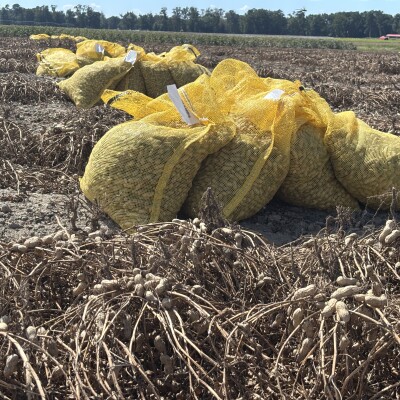
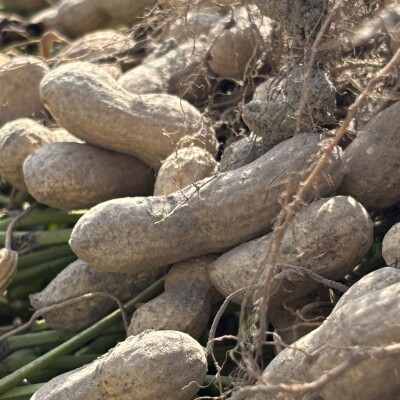
So harvest is moving on quite well. There's maybe a few peanuts left in the field to dig, but not very many at all. Most people have been successful in that area. There's a lot of peanuts that are being combined in the field. Just an estimate might be that we're at 75% harvested. We did have some rain this past weekend. That slowed up some field operations, but we avoided a lot of heavy rainfall and people were able to get back in the field pretty quick. I know we are getting towards the end of our research plot harvest on the stations and on farm as well. And we're down to three more on farm tests and then a couple more tests where we've got to pick on the stations. But the rain, I was worried that we would be delayed a lot. after some of the rain, but we, most folks got very limited rain and folks were able to jump right back in. So we started back yesterday, which was a Monday, um, harvesting, even though we got some rain over the weekend.
- Gary
So things are winding down, I guess.
- David
Yeah, winding down, but you know, that last 25% can be the hardest. So, but, uh, you know, so, uh, but farmers are working hard at that. We have, you know, we certainly have had some fall-like weather. this week. We certainly had a front that came through over the weekend and changed temperatures on us, but it kind of pushed some of that moisture out. So we're, we're, folks are moving along. Hopefully it looks like just what I've seen weather-wise, and I know we'll get to some of the the outlooks in a little while, but it looks like we're good for the rest of the week for the most part with clear weather and, and the wind's been blowing sunny. So we're, should be able to to really get close on the harvest by the end of this week.
- Gary
Yes. Last week you mentioned aflatoxin. Can we go into that in more detail?
- David
Sure. And I'll say that in North Carolina, we certainly can have aflatoxin, and it's produced by a mold, Aspergillus flavus. There's Aspergillus parasiticus that also can create the toxin. But we're not... We don't have the intensity of aflatoxin contamination like the southeastern U.S. where they, in some ways, they have shorter rotations than maybe we do here, but they have some pretty intense heat and they can have drought down there. We can certainly have drought up here as well, but it seems to be, in some ways, those extremes and the intensity is greater down there and they will have some huge challenges. Now, in a dry year like this year, we can have that. had hot, dry conditions at different points in the season, but certainly as we move towards harvest. And what we know is the mold, well, the causal agent for the mold that we see on peanut pods and kernels, that's fairly ubiquitous in soil. And what it does is that organism produces a toxin. And if you think about things from an evolutionary standpoint, an organism that produces a toxin, it's designed as a protection mechanism. So that's the thought on it. The challenge is we, if we have contamination with the mold in our peanuts and the mold has caused the toxin to be present, then we're at risk from a human health standpoint. And just a couple of things about that, the risk is, there can be some acute risk, but it's... primarily a long-term risk of being exposed at a certain amount over time. And that's where people's health can go downhill, especially if you've got, if you're very young, older, much older, or if you've got a compromised immune system. So that is a concern. And that's why we have at the inspection service, the inspectors look for mold as they do a sample. And if they find that that's related to Aspergillus flavus, they're going to mark that. Those peanuts are not going to go into the normal process. And that's... That's where we find the mold. It's usually in the portion of the peanuts, like the loose shell kernels, the damaged kernels, and so forth. And anywhere that soil can move in with the causal agent can cause the mold to expand, and then you can have greater aflatoxin. And so one way that we could really cut down on it or almost eliminate it is if you can irrigate. and avoid that stress, especially during the latter part of the season. You really cut back on the likelihood of having contamination with aflatoxin. We only irrigate about 15% of our acres in the state, so we're at risk in most of our fields if we have the right conditions. So from a management standpoint, we don't have anything that really, other than irrigation, can really reduce it. It's not something that... you can treat chemically in the field like we do for other pathogens. So it can be a challenge, but it's an important one. If you're a consumer, one of the things you shouldn't worry about in terms of consuming peanuts is that you would have aflatoxin because we have an inspection service that catches that. The shelling industry knows that that would be one of the last things that they would want to have in their products that are sold. So they do some additional measures. in the mill to make sure that the food products that we have that we're consuming that are peanut related don't have aflatoxin in it. I do some work in other countries around the world where inspection services aren't in place. And there's a lot of people that are consuming pretty high levels of aflatoxin in their peanut soups or whatever foods they have there. So we're fortunate that we've got a system in place and that really helps our human health and the quality of the peanuts that we have here.
- Gary
Are there any other issues related to quality that we need to be thinking about right now?
- David
Yeah, that's another great question, Gary. There's a couple of things that can affect quality that can keep peanuts from going seg one. So aflatoxin, you would go to seg three. It's kind of in a class by itself. But seg two peanuts are segregation two, and that means those peanuts have some damage in them. The value of those peanuts is... about 30 to 40 percent of what your contract price would be and that those prices do float some. So one thing is just in a hard fall where maybe we've got wet then dry, wet then dry, and some extremes, we might have some damage that's just damage to the kernels. And that is a part of the inspection. There's two other places where we might have seg two. peanuts. And one of those is freeze damage. So we haven't had a freeze or frost in North Carolina this year. If I look at our frost advisories that we've got available from the Virginia Tech Frost Advisory Portal that they've got through their program, I don't know of any freeze damage or frost over the next seven to 10 days. Of course, that can change if we have a system that comes through. But if you get freeze damage... And that's an official inspection thing that people look at, the graders look at, and you can tell if they're damaged or not. Those peanuts could go seg too. The issue there is, as you know, with freezing and thawing, once you have a cell that gets frozen and then it thaws, you have the membranes and all the components that can allow different products to move around. And you can get some all flavors and bitter flavors from. from the freeze damage. So that's an important thing right now. We've skirted that. If we've got, let's just say that most of the peanuts get dug by the middle of this week, it doesn't look like we've got any freeze issues ahead of us that I know of. We're probably not going to have any freeze damage this year. Now, there are some big operations that still have some peanuts that might not get dug until, you know, very late October, early November. I know that can happen. And And they may have to be more careful about the digging. So in that case, we would want peanuts to not be dug within 96 hours before a freezer frost. Those peanuts need to dry down some. They also need to shrink a little bit so there's an insulation layer in there. But hopefully we have avoided that for the most part this year. We'll see what happens as we move forward. We just had good weather to get the crop dug and get it combined out of it. the field. The other thing is we've got a relatively new insect called burrow bug. And that's a mouthful to say, but that has been a problem in the southeast. We've had some in North Carolina for a very long time. We just haven't seen it as an issue until about three or four, five years ago. And then we started seeing some damage. We feel like that probably corresponded with us losing chlorpyrifos as a granular insecticide. We were using that material to suppress southern corn rootworm, but we probably were suppressing burrow bug as well. So when we lost the tolerances to that material, it was no longer used in peanuts. We started seeing more damage around the state. So we have this past week, I had several calls from farmers that wanted an explanation of what burrow bug damage was. And we've got some excellent entomologists here in North Carolina, Virginia Tech, South Carolina, also certainly down in the southeast as well, who work in that area. um I'm not an expert in it, but I can definitely talk about it a little bit here and point people in the right direction. That insect, it's a soil-borne insect. And what it does is it feeds on the pods. And we're doing this as a podcast, so I can't really show a picture. But we've got plenty of those on the portal, and you can find them. But it causes damage to the kernel, and it's very noticeable. And so the last thing we would want. and I see you have some peanuts over here, I won't say the name of the company, is for somebody to pull up one of those and see that damage because it would really tell them that there's a problem with that batch of peanuts and they might not eat anymore. So that's been a sporadic pest. The problem with that pest is certainly if you have enough of it, you could reduce yield. But the biggest problem is the quality side of things. So when the inspection occurs, if you have a high enough amount of burrow bug damage, those peanuts could go seg two. And that means that whole load that you're selling could go seg two, which again would be, you know, much lower, 30 to 35 percent of the value of the of the contract. And so it's it's catastrophic for people that have those. And I've talked to a couple of people and they have. multiple tractor trailer loads that have gone seg two. And we're getting more calls around the state with that. So that's a big issue. And the thing is you could come off the farm when you're picking those peanuts and they look great. The weights are good, but in the sampling process, if you have burrow bug damage, it's a very low percent and then they could go seg two. So that's a new emerging issue for us. Now, I know when folks are going to be asking that question as we move into the planting season next year, is there anything we can do? And we'll cover this in our portal. I put a short post up the other day just laying out what we know from a management standpoint. But we'll talk about that more. But just for the audience that's listening now, a couple of things that we always try to do for our our pest is can we do get a good crop rotation to minimize it right now it's and we're not seeing that crop rotation doesn't have an effect but we we don't know for sure what the best rotations are and even mark abney down in georgia who has a lot of burrow bug to deal with he's got some some information that points sort of to some rotations but he's not overly confident that he can say rotation has this major effect Another thing we think about is variety selection. So for our pathogens, we say, yeah, man, you need to grow this variety if you have this pathogen or disease. It can really help you. There hasn't been any clear winners or losers, even down in the southeast, in terms of what most people are growing. In North Carolina, we have commercial varieties, and we don't know for sure that there's a big difference between those. The other thing is the pest is pretty sporadic. So predicting it can be a challenge. It tends to be more of a problem during hot, dry years or dry years or dry soils. Also in reduced till or conservation tillage systems, we tend to have more damage. But that doesn't mean that you won't have damage if you have high enough numbers, even under irrigation or under conventional till systems. And so there's some challenges there. there are some ways to monitor fields with some pitfall traps that the entomologists have. But when you start thinking at the grower level and being able to put out enough traps to know what you've got and then to sample those, it becomes... It becomes a big challenge from their standpoint, being able to put that in place. So those are important things to keep in mind. We don't have any chemical control, which again, I mentioned chlorpyrifos earlier. Lorsban would have been a trade name for that. So we don't have chemical control. So we're pretty vulnerable, especially for a very sporadic pest like that. The one thing that we know works. quite well, and it's not 100% effective, but it might be effective enough to keep that percentage low enough, is moldboard plow or breaking land, depending on where you are in the state, what the terminology is. But this is something that was done widely many years ago in peanuts is where you flip the soil. Very energy costly, relatively slow tillage operation to go across a field, flipping that. A lot of folks don't want to do it. We have about you 5% of the folks that do, but that's the only proven management practice we have right now to reduce the risk from burr bug. And certainly I have just historically, when I started in this position 30 years ago, we were at about 60% of the peanuts were moldboard plow or the ground was broke, whatever you want to call it. And over time we got away from that. And I think that was a positive from a soul. protection standpoint, less erosion, less energy to prepare land and so forth. But we might be in a situation where we're going to, until we have an effective insecticide option, we might have some growers that are going to increase their moldboard plowing. And about every five years, I do surveys at production meetings. So I don't think I'm due to do one this winter, but probably the following winter, I need to figure out to see how many folks have. shifted back to moldboard plow. That's a, as an agronomist that wants to conserve soil and not have, you know, let the soil take care of itself in that sense with reduced tillage, it's hard to, it's hard to think about going back to a lot of moldboard plowing. But this, this pest is catastrophic, catastrophic if you have it. So got a little long winded on that one, Gary, kind of like the spotted wilt thing a couple of weeks ago, but hopefully that helps. people get a little information on burrow bug and seg2 peanuts. That was your major killer question.
- Gary
No, that's important information to know. So we need to remain diligent. What's on tap for the coming week?
- David
So I think hopefully we can, if we can maintain the weather we have, I hope growers can go ahead and get the crop completely out. We'll probably certainly have some peanuts on in November. I think the vast majority will be out by November 1st. And this week's weather is really, really helping us on that. We'll see what we've got. We'll see if there's any frost or freeze potential. I don't, there's just nothing on the horizon that I'm aware of that would cause us to worry about that. And if you had some peanuts dug now with the weather we've got, I think they would dry down to where you would have very little risk. So again, just staying with that October theme of getting the crop. out of the field and to the buying point.
- Gary
All right. Well, thank you. Thank you for listening. This has been Searching for the Brighter Pod. You can contact us at brighterpod at gmail.com or on the web at go.ncsu.edu slash brighterpod. We thank you.