- Speaker #0
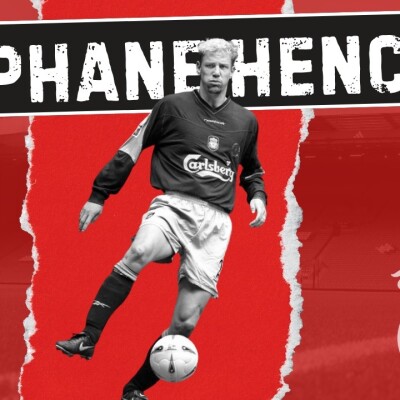
Guys, welcome to the podcast where Greg and I are joined by Chris Kirkland, or Kirky as his name is on there, so a pleasure to have you mate.
- Speaker #1
Thanks for having us on, yeah I appreciate it. And Kirky's fine yeah, I only get called Chris or Christopher when I've... I've done something wrong, normally by the missus.
- Speaker #0
So, yeah,
- Speaker #1
Kirky's fine.
- Speaker #0
Kirky.
- Speaker #1
In that Scottish accent that she does as well. When I hear Christopher in the Scottish accent, I know that I'm in serious trouble.
- Speaker #0
Deep trouble. Anyway, we're going to have a slightly different spin on today's topic. Obviously, we will talk a bit about your football career, but I think today's topic, talking about mental health been Everything else is obviously something you've went through and probably not enough people open up about it and talk about it. So I think that topic choice is going to be an interesting one today. But can we just talk about how it started? Because obviously I've done some research, Chris, and it started with you had a back injury or something and then you were taking painkillers and got addicted to the painkillers. Is that right?
- Speaker #1
Yeah, yeah. I mean, it's when I left Liverpool. Sorry, when I left Wigan. I was at Liverpool for five years, Liverpool for Wigan for six years. Lived in the same area. I was 15 minutes from either training ground, either ground. My routine was spot on. When Lucy was born in 2006, I could take her to nursery, drop her off, pick her up after training, walk the dogs in the afternoon. My routine was brilliant. And it was the best I played during my career, particularly when I was at Wigan. When I went to Sheffield Wednesday, Lucy had just started school, so we didn't want to commute. And I'd only signed a year deal as well at Sheffield Wednesday, so we didn't want to move the whole family. So I commuted from Liverpool to Sheffield, which is a tough commute. It's a horrible journey. Sheffield Wednesday was an amazing club, but I was struggling with anxiety. So I started developing anxiety when I was leaving the house, thinking... I'm not going to be able to do this today. I'm not going to be able to do my normal routine that I did for 11 years. All of a sudden it stopped. The football was still the same, but everything else, the more important things, family and life and that was all, it was different and I just couldn't, I couldn't handle it. I was anxious. I was getting down. But as we do, and particularly as men, you think, I'll just get on with it. Just get on with it. I'll be all right next week. I'll get used to it. I'll get used to it. I actually pulled out of, I was meant to go away pre-season with Sheffield Wednesday when I signed for them in 2012. And actually, we was going to Portugal for 10 days and I thought, I can't go away, I don't want to go, I don't want to leave home. So I actually said it was Leona that was struggling with depression, which is awful. And I look back on that now and thinking, why the hell didn't I say it was myself? So we said it was Leona. I got away with not going on tour. And then I started going back again, but I was really struggling. But the thing is, why I took the painkillers in the first place was because when I went to Sheffield Wednesday, the last... Two years at Wigan, I wasn't playing, I wasn't injured. I was just not preferred, like happens in football. And when I went to Sheffield Wednesday, Sheffield Wednesday were a little bit concerned. And I said, look, I've been fit. These are all fitness records from training. I didn't miss anything. The odd day here and there and stuff. But they said, well, listen, we're a little bit concerned. So we want to put a clause in the contract. So if you miss four games with your back, then we can rip your deal up. Now in the Championship, that can be Saturday, Tuesday, Saturday, Tuesday. Within 10 days, you could be out. So my agent was saying, you cannot sign that. You cannot sign that deal. And I went, well, I know there's nothing wrong with my back. I know that, yes, I have issues every now and again, I says, but I know I'll go there and I'll play every game. And he was like, well, I'm advising you not to sign it. But I did sign it. And anyway, two days before the first game, because I was anxious as well, my back was really stiff and I was thinking, flipping hell, if I don't play on Saturday, then... You know, the club were going to go, blimey now, we shouldn't have signed him. And the fans all say we shouldn't have signed him. So I got hold of some painkillers. But what the painkillers did was they made me less anxious. So they made me feel great. I'll be honest, they made me feel like some painkillers do. Some make people feel sick. With me, they made me feel great, but they made me feel less anxious. So I thought, oh, I can just use these when I'm away from home, when I'm travelling to and from Sheffield. But very quickly, they got hold of us. And after about three months, I knew I was... reliant on them. By then, you don't want to say anything. You don't want to say anything to the club doctors. You don't want to say anything to the physios. You don't want to say anything to your family because you know what you're doing is wrong. I knew what I was doing was wrong. I knew it was going to lead down a terrible path. Not as extreme as it did get. You never think that, but I knew what I was doing was wrong. I just couldn't stop. So, yeah, I was taking them for the right reason at the start, but then for the wrong reasons.
- Speaker #0
I'm just curious. Prior to that, were you ever an anxious guy or was it just that change of routine that started the anxiety and that long commute to Sheffield?
- Speaker #1
Yeah, really. I mean, I've always been a home person. I think that was it as well. So I've always liked home comforts. Even when I was a kid, I didn't really like going away with England. I mean, England back then when we were in the squads, it was tough. It's nothing like now. You know, you literally trained, went to your room. eat, train and you kept in your separate, that's why England never did as well as they should have done because it was Arsenal, Liverpool Man Utd and you always just sit on separate tables, never talk so I never used to like going away but I've always been a home person but yeah the change of routine just, football was still the same and training was still the same, it was just everything else that was changing and I just couldn't handle it and I became really really anxious and really depressed
- Speaker #0
And how long were you on those? Was it for the full duration of your Sheffield Wednesday career?
- Speaker #1
I was on them for 10 years. So, yeah, I was on them for, I had a break for about six months. So when I retired in 2016, so I was on them from 2012 all through the Sheffield Wednesday three years. And I left Sheffield Wednesday because I thought, well, I need to get back home. I need to get closer to home. So I left Sheffield Wednesday. I was literally going to sign a new deal. New two-year deal in 2015. I was in my training kit. I travelled over. As I'm travelling over, I'm thinking, I'm not signing this deal. I cannot sign this deal. I need to get closer to home. I didn't have a club lined up. I was just thinking, I need to try and get a club in the northwest. Gone up to sign a deal. I was in my training kit. I had the pen in my hand. 2015. Carlos Cavalio, just become manager. Said, great to meet you, Chris. Looking forward to working with you. Heard a lot about you. And I had the pen in my hand. I just said, I'm sorry, I can't sign. And put the pen down and just went home. So I ended up signing for Preston, retired in 2016, got off them. I told the PFA not everything, but I got off them for about six months, went back on them. By this time, I'd retired from football. I tried to come back after about a year. But as Greg will tell you, when you stop for a year doing that, as physical as it is, you can keep fit, but nothing like playing. I couldn't come back. Went back on them. Went to rehab in 2019. Got off them for six months and then went back on them again in lockdown. So over the 10 years, I was on them for probably eight and a half years, over the 10 years. But in spells that just, I mean, I was on, I don't know if you know too much about Tramadol, but I was on like two and a half thousand milligrams a day at my worst. Yeah,
- Speaker #2
I was on two and a half.
- Speaker #1
You're not meant to take any more than 400 max. and that's only for like three or four days. I was on it for years. And I was on cocodamol, sulcadine. I was mixing it with antidepressants. I just got into that bad of a place mentally. I just didn't want to be here anymore. I just couldn't see a way out. And because nobody knew about it, that's the biggest thing. Because nobody knew about it, you just go with it.
- Speaker #2
It's just amazing. I think you are really brave to speak about this. And sometimes people need to understand what's going on behind the scenes. Because they just see primary players, you know, they just see the morning, just see, okay, good life, nice car, big house, but they don't realize what's going on behind the scenes. And you just said something about Traumatol, Kirky, and I had this medication for my LCA, you know, operation after my LCA injuries at the end of my career. To be honest with you, I've been lucky to have my wife next to me because I was a completely different man. I had to stop this medication because I became a little bit mad, you know, and starting to see things in the house and everything. It was crazy. And I never had the bravery, I think, to speak about that. And I think what you are doing today or what you've done, of course, with your book and now with the foundation, so with Liverpool, I think it's just amazing. But people need to understand the message, you know. they need to take care about this because because as a human being i mean you can show how you are like a rock solid you know and strong but but mentally sometimes is really really tough you know because we are in a bubble since the age of maybe 10 you know for from the age of 10 to 20 we just perform to become a first team players and after you become like a first team player from from 20 to 30, 33, 34, but after what's going on. You know, what's happening? And when you have this type of injury or something where you don't feel good, bad, sorry, wow, it's really tough.
- Speaker #0
Yeah. I'm just curious, Chris, what was the kind of mindset you had? Obviously, you would have had the opportunity to potentially speak to the manager or a coach or a physio or anything. What was going through your head? Like, I'm going to be seen as a weak person here or, you know, why didn't you try and talk to someone?
- Speaker #1
Because I knew it was wrong. And I think you kid yourself, don't you, to start with as well. You think, oh, I'll be okay. And that's the addiction. The addiction, you've got the devil on one shoulder and the angel on the other. The angel saying what you're doing is wrong. The devil saying, shut up, don't listen to him, it'll be fine. Just keep it to yourself. Because no one knows. And listen, like I said, I knew what I was doing was wrong. But I also deep down knew that if I said something, they would have helped me. But I just didn't for whatever reason. I just don't know if it's... Listen, I loved it at the start, I'll be honest. That made me feel great. They took the anxiety away. And when you find something that makes you feel good, even though you know it's wrong, it's very hard to stop that. Very hard to stop that, especially when you feel great. And it did. But then after about a year, it started to make me feel really, really bad, like depressed. It did something mentally, obviously taking that amount. It messes your head up. But by then, the addiction is just I tried to stop so many times. I'd wake up on a Sunday, I'd say, right, tomorrow, Monday morning, that's it, I'm done. And I'd get through one day and then the withdrawals were just horrendous. Like I would be sweating, I'd be shaking and I'd be thinking, bloody hell, what's this? Is this because I've not took these tablets? It can't be, surely. And then I'd take the tablets and it would just calm me down. And I was thinking, Jesus Christ. But by then the addiction, like the withdrawals, trying to stop was just impossible. On your own it's impossible. I tried to stop so many times on my own and I just couldn't do it. I just couldn't do it. So my biggest regret is... he's not speaking out not talking because when i did come out in 2022 and when um chef of wednesday there's a lot of staff that's still there at chef of wednesday and they just messaged and rang me saying why the hell didn't you tell us said we'd have helped you like because and and they would have done and anybody would have done but you just you just don't you just whether it's men whether it's just you know like i said because i enjoyed it at the start and then the addiction was just it had a grip on me completely it just consumed my whole life you and it just took control of everything I did. Addiction is one of the hardest things to break. And if you're on your own and no one knows about it, it's almost impossible. You can do it, but I wouldn't have done it without, Greg just said there, he had his lovely wife. I wouldn't have done it without my wife and daughter and family and friends, the club. I wouldn't be here now. There's no question at all. I'd have either killed myself or the tablets would have killed me because the amount I was taking was just, I mean, I don't know how I was, you know, Well, When I told the doctors, they were like, you shouldn't be here. Like, the amount you're taking is just, you know, the amount of times I nearly overdosed was, I can remember it, Greg was saying there about hallucinations, I remember many times. I'd take so many, started seeing things, started hearing things. I was on edge, I was sweating, my heart was beating out of my chest. So the amount of times that happened, yeah, very lucky that I'm still here. But all my own fault. All my own fault. I don't blame anyone else at all. Don't blame scenarios. Don't blame situations. Don't blame about being away from home, other people, football decisions. It's all my own doing.
- Speaker #2
But you know, Kirky, to get this medication, you need a prescription from the doctor. I have many doctors. Because my main concern is if I am a doctor and I see you in this situation, you know? I would say something's going wrong. I can't keep going, you know, and I can't give you this type of precretion, Chris, because it's not working at all. You're not good. Well,
- Speaker #1
I was getting them off the internet. I was getting them off the internet because I was taking that many. Like, I was on 2,000 milligrams a day, which is like 10, 200 milligrams a day. So, because I was on that many, I needed to get them off different doctors. So, I was getting them off the internet. I was getting them off private doctors. I was getting them any way I can. When I was at Sheffield Wednesday, I was going into the opposition changing room and taking them out of their medical bag. Because you know in football, you've got a medical bag in changing rooms. So I was going in and seeing if they had any tablets. Because I needed that many, I had to get them from multiple, multiple places. And then you'd lie. So if you got them off the doctor, I'd say football was perfect. Because I would say, I've left them down in London. We had a game down in London at the weekend and I've left them in the hotel. And I need more. So they'd just keep writing prescriptions for you. But yeah, I mean, when we... stopped in 2022, which we'll talk about in a little bit. My wife and myself went into the doctors. So we had to put everything in place to keep off them. So we went into the doctors where I was getting most of them from. And my wife sat in front of the doctor and she's Scottish and she's only five foot five, but she's scary. And she said to the doctor, if you give him any more tablets, I'm going to sue you and I'm going to sue your practice. And the doctor just went... And it stopped after that. She said, if he ever rings the doctors, I need to be on the phone. If he ever comes to see you, I need to be here. So we put things in place, drug tests at home. They've been the best things we've ever done. We've had drug tests in the drawer just over there. Yeah,
- Speaker #2
because now you've got your proper routine with your dog or so. So maybe it would be nice to carry on because this is really interesting what you are seeing right now.
- Speaker #1
Yeah, so in 2020, so listen, in 2020, April 17th, 2022, nearly lots and I'd nearly overdosed. I got some off the internet from India. My God, they weren't tramadol. I don't know what they were, but they just sent me mad. My wife always remembers I got home and she says, I was sweating. I looked drunk. I was slurring my words. I was hyperventilating. She said, I went to bed and slept for 18 hours. Woke up the next day, April the 18th. That's the day when I said, right, now I've got to tell her the truth. I've got to tell everyone the truth because if I don't, I won't be here anymore. So April the 18th, then we put things in place. So we went through, I went through withdrawals for about a week, 10 days up in the bedroom. Just being sick, vomiting, couldn't eat anything, sweating. Managed to get through that. Again, if I was on my own, I'd have stopped after about an hour because I was in so much pain with the withdrawals. And I was with Leona and Lucy, they kept checking on me. You know, they knew I couldn't, I knew we couldn't bring the doctors. I couldn't bring the doctors and say I need some more because he knew the situation. any parcels that come to the house the girl the postman was told not to give me any parcels or envelopes yeah we did we put everything in place to not fail and then the biggest thing were the drug tests so the best thing we ever did and if anyone's listening and they're addicted to whether it's drugs if it's alcohol get a breathalyzer at home get your partner or your friends to breathalyzer every day every day and morning and night and people go wow that's extreme it's not because i if you need to stop and i did need to stop you We did everything, the drug test were the best things we ever did. Knowing they're there and knowing I can't get away with it anymore and knowing the thought of seeing the devastation on Lucy and Leona's faces if I did get hold of anything, that's been the driving force and they've worked for the last four and a half years. I've not had any slip-ups. I've had cravings, yes. I've had thoughts. But we've had no slip-ups at all over the last four and a half years but only because I've got the support of them and what we've put in place. So you can beat it. You can come back and listen, I was at rock bottom. I shouldn't be here at all. But you can beat it. And that's why I do what I do now, because I had no hope. I didn't think I could get out of it. But when I told the truth and I got help off the family and friends and the club, that's when I did beat it. So you can come back from anything.
- Speaker #2
OK, and now you've got a proper routine, correct? Every day you go for the walk. Of course, we can see you on Instagram. And with a lot of... post and I think it's just amazing. Could you maybe speak to us exactly?
- Speaker #1
You know, Griez, routine, like you said there, from an early age, it's routine, isn't it, to be a footballer? You're desperate to be a footballer and when you become pro, it consumes you. That's your life. You train, you go home, you look after yourself and it's a routine, a dressing room. When that's gone, it's difficult, really difficult. It's a big void, a big, big void. You know yourself, you miss so many things about it. not just the training but everything that goes with it you miss it I loved everything I love going into the training ground I love seeing the staff I loved having a chat I loved having my breakfast in the morning with the chef it's just and when that's gone it's you know you've done that for 19 years it's you can't just get over that you don't just say okay that's gone you know a lot I hope some people do but me I struggled so with the routine now I've got I knew that I needed to keep busy the foundation come at the right time you I love what I do with them. You know what you do. You've done a lot of stuff with them now as well. The community stuff. After this session, we've got walking football this morning at half eleven. Then I've got a meeting with Forbes this afternoon. We're doing stuff in the community. Then I've got my goalkeeper academy later tonight with my daughter. So my days from the morning till night are packed full because I know if I don't, if I know if I've got a bit of time to myself, which is not very often, I struggle mentally. So exercise every single day. I've done my stuff this morning. I'll be out for a walk, hopefully later as well, with the dogs. But, yeah, I know what I need to do now to do. I know what I need to do routine-wise to make me feel good. And exercise. I'm addicted to exercise.
- Speaker #2
That's a good thing.
- Speaker #1
Yeah, it is a good thing, but sometimes being white, because Jesus Christ, just have a day off, and I'm like, no, I can't. I need to, you know, like before the game yesterday, I went out and did 10 miles before the game. I've actually got a bit of a calf injury at the minute as well, so I pulled my calf.
- Speaker #2
Aye, aye, aye.
- Speaker #1
I went out running, I hardly ever run because I love running, but I went and wore a weighted vest when I ran the other day, I did nine miles with a 10K weighted vest on and pulled my calf, and I got home and my wife's like... what are you doing you idiot what did you think was gonna happen so my calf sore but I still went out yesterday but yeah routine that's anyone watching it's routine you've got to find something that when you're struggling listen this time of the year I hate this time of the year now I love it for Christmas but I don't like the early nights I don't like the dark nights that's when it I think it's a lot of people struggling those those times and find a routine find something that you enjoy doing and um on those yeah on those bad days stick to that routine.
- Speaker #2
Yeah, I think it's crazy because when I'm listening, when you are talking, I've got the same things now, you know, I've got my proper routine.
- Speaker #1
Yeah.
- Speaker #2
You know, and it's, I think you're absolutely right. When you've done something for nearly 20 years, when you walk away, you know, from this routine, it's just really, really difficult. And I'm glad we are talking about this today because I presume there is a lot of, you know, ex-first-team player, footballers, you know, player. We are struggling right now, but they don't have the bravery to speak.
- Speaker #1
I get what you're saying. And I never see it as that, Greg. I never see it as brave. I just see it as though... My biggest regret talking to you now is that I didn't do this back in 2012. So what's that? Nearly 14, 15 years ago. Yeah, yeah. 2016. 2016, when I retired, I sort of told half the truth, but I was sitting there doing an interview with the PFA thinking I'm lying here, I'm not telling the truth. 2019, it took me 10 years to tell the truth and that's my biggest regret. And I do what I do now, not for pats on the back, not for... It's a way of me coping as well because I know that I'll always be addicted. I've got an addictive personality. It's funny actually because when I went to rehab in 2019, they said in there that there's no such thing as an addictive personality. I'm thinking there is because I've got it. If I've got my head on something or if I'm there, I'm all in. So if it's pickleball now, I play pickleball, I'm not focused on it or exercise. So I've got a very addictive personality. So I know what I need to do now, but it's took me so long to figure that out. But again, you mentioned it there. I think we are very lucky because I've always been with Leona. We've been together 27 years. You've been with your wife, Helen. We're very lucky. A lot of players, when they come out of football, end in divorce. Yes. Ends in bad ways. We're very lucky that we've got a brilliant family behind us. And certainly without those, mate, I wouldn't be sitting here now without those.
- Speaker #0
I've got a question. Obviously, you went through rehab and everything else. And you said there, you know, some of the rehab people were saying, you know, there's no such thing as addictive personality. But in terms of you coming out of this and, you know, getting out of that, was it just the rehab or was it the routine and getting back to training and filling your life up with stuff? And was it the rehab people who told you to do that? Or was that just something where you realised yourself, I know when I was well, I was doing this routine? Yeah, a bit of both. Maybe struggling?
- Speaker #1
Yeah, a bit of both. So when I went to rehab in 2019, I went in July 2019. And when I come out, they said, listen, you need to fill your time now. So they asked you, obviously, and I knew what I did. You have to tell them that before you went in. When you're in rehab, they talk about routine, structure, obviously they talk about your career, what you've done and what you've done. And then they say, when you leave, listen, you've had this structure, you need to get back to a structure, you need to get back to routine, you need to have things that you're going to need to do. I just never did it when I come out. I don't know why. I think, well, I do know why, because six months later, COVID hit, and then that just put everything out the window, didn't it? So we couldn't do anything. So if COVID wouldn't have hit, would I have gone back on them or not? I don't know. Probably had more of a chance of not doing, but COVID did hit. And then it was just getting through those two years, weren't it? It was just fucking horrendous. I mean, you couldn't do anything, could you? You could go out for a walk, but seeing people, routine, work, just wasn't there. So I ended up going back on them. But yeah, they were very, they told me about the drug tests. They said, listen, get these when you go home. Never did it because in the back of my mind, I was probably thinking, I'll have a few months off them and then go back on them again. Because, again, nobody knew the truth at all. Leona knew bits, but not to the full extent of what it was. I was saying, oh, not that bad. I just take them every other day or this and that. But it was... Yeah, they told me what to do and I just didn't do it. I didn't do it until 2022. And then when 2022 came and I told the owner and the family the truth, she went, right, this is what we're doing. You've not got a choice now. I'm telling you what we're doing now as a family. You've got to do everything we say you've got to do now. And she wrote everything down, put everything in place and said, there's no light bargaining. You're not going to say, oh, well, I'll do this. No, this is what we are doing. You stick to this routine and it's worked.
- Speaker #2
Wow. Chris, if you don't mind, could we speak a little bit about your book?
- Speaker #1
Can do if you want.
- Speaker #2
Yeah, could you show me the first page? So why did you choose this picture with a finger on your mouth?
- Speaker #1
Well, because that's what I did for 10 years. I kept it quiet. So I'm never keeping it quiet. Yeah, so I never told anyone. So when they... Listen, I got asked to do a book a few times, but listen, my career is decent. Nothing like the levels of other people and other goalkeepers in particular. But the only reason I did this book is for this. It's for the stuff during football, yes, because I started to suffer during it, but it's more for the stuff after. And that's the reason why I did it. It's got everything, obviously, from the career. It's got all the stories, all the, you know, from a kid, from Liverpool days, standing on the Kop, all my clubs. But more importantly, the last... The last third of it is about what we're talking about now. And the response has just been, I never thought it would get the traction it has, the response it has, the message I get, mate. I went to somewhere the other week, the foundation, and a lady come up to us, I'm not going to mention her name, and she just says, oh, I've read your book. I went, oh, yeah. I said, what do you think? She went, saved me life. And I went, I said, what do you mean? She went, I was drinking nearly a bottle of whiskey every other day. And I've done for years and years and years. And she said, I've not touched anything in three months since I've read your book. Because I knew I was in trouble. But you almost need to read it from someone else or listen to someone else before it hits home. When it's yourself, you sort of, you just dismiss it. But when it's somebody else that says it to you, and particularly when you read something, I think. I think when somebody says something to your mouth, yeah, it takes in. But I think when you read something, I think that's when you're taking it even more. And she just said that, and that's why I did it. even if it's just that one lady, which it's nice a lot more, but even if it was just her, somebody said to me, you'll write a book and this one lady will stop being addicted to alcohol. Would you do it? Yeah, of course I would. So that's the reason. So it's got everything. It's got a lot of dog pictures in as well, Greg, because you probably...
- Speaker #2
Oh yeah, show me one. Because you know what? I love the story with the dog, you know, and when I heard the story about, you know, going out, you know, for a walk every single day.
- Speaker #1
that's me and Leona when we were like we met when I was 18 the top picture obviously when I was 18 she was 21 and that's who's now like so we've been together 27 years that's me with my first family dog so yeah if you can see that one so dogs I just love dogs dogs are man's best friend and then obviously we've got the two we've got now
- Speaker #2
Sam and Ted but yeah dogs who gave you the idea to write this book you
- Speaker #1
So somebody, I say I got off, somebody rang me a couple of times and then when I was in a good place, so I got asked about a year ago, maybe a year and a half ago, and they rang me and said, look, and I went, I come home to the wife and daughter and said, look, they want me to do this book again. Or somebody wants me to write it. And Leona and Lucy just went, well, why don't you then? And I was, I'm in a great place. I've been for a while. And I thought about it. And I asked the club first, asked the foundation, obviously, because you have to, because I'm working for them. I'm the ambassador, you have to check things. And I'd come home and thought, do you know what, it's the right time now. So yeah, and I did it. And it was the best thing I ever did. And the people that did it, Curtis Sports, they did an amazing job. They made it so, so easy. Rob Careless, who did it, made it so, so easy. And we had meetings, we had Zoom calls like this. They'd send me a message the day before, right, we're going to talk about this tomorrow. Can you just try and remember this, remember stories and stuff like that? And it was effortless. and yeah absolutely delighted with the outcome of it so where where i can buy this book if i want to buy your book for example if i'm listening to the podcast and i want to buy your book there's a lot of copies in the local bins so you can get them in there if you want i'll send you the link so there's a link on there's a i'll text you the link um okay so there's a link you can get it online as well and then obviously i'll go to a lot of a lot of mental health talks and and they always say look bring some books down and then they'll they'll they'll buy some there and stuff so Yeah, and a lot of the money that we're raising from it, I put back into charities and everything like that. So I buy a lot of food for the food banks and stuff like that. So we donate quite a bit of money to different families and stuff like that, which we won't go into. But yeah, so that's what I did it for. So it's going to, yeah, it helps a lot of people.
- Speaker #0
I'm just curious obviously you mentioned your wife there being the big part of it and obviously she's helped you through it and put down the good Scottish way of making you toe the line but going through all of that was there ever any danger of her saying I'm off, I'm not putting up with this
- Speaker #1
Brilliant question because when you're going through it yourself you're selfish, not in a bad way but you don't eat You're sort of that consumed within your own head. You don't think about other people around you. And it's only since I've been in a great place that I've thought, Jesus Christ, like the stuff I put them through. And listen, I never cheated. I was never violent or anything like that. It was just, I was existing, I wasn't living. So the amount of times where we were meant to go to engagements or we were meant to go out with people and I'd say, I'm not going. Like literally last minute. I'd say I don't feel like it today or I've got a headache or, you know, the whole family would be ready to go and I'd say, oh, I'm not going now. Like literally, so the stuff that you do, but I just thought, I just don't want to go. I can't be bothered. I don't want to be around other people. I want to just stay in the house, shut the gates. So yeah, what you don't realise until you come out of it. Like now, you know, my daughter, she's back from uni actually this week, which is lovely. But she suffered with panic attacks, with anxiety. Because I think... She's seen, obviously, me do that and suffer with that. And I think it's had a knock-on effect on her. And she's getting a lot better now. But yeah, my wife is just... Yes, we're so strong together. And it's a good job we are. Because, yeah, I think a lot of people might have bailed and walked away. But she's never been like that. We've been together 27 years now. And you stay through thick and thin, don't you? But without her and without my daughter, there's no way I'd have got through it. No chance at all.
- Speaker #2
Yeah. I keep saying the kids are like a sponge at home.
- Speaker #1
Yeah.
- Speaker #2
You know, they see everything, they're listening, everything. And sometimes we don't realize, you know, when we are talking at home. So that's why now I'm not talking anymore about job at home, you know, especially when we are around the table.
- Speaker #3
Yeah.
- Speaker #2
You know, and I think this is the family time because I agree about what you are saying about the kids, you know, and they give you an extra, I would say, hope.
- Speaker #1
Yeah, they're resilient.
- Speaker #2
They are next to us.
- Speaker #1
Yeah, they're so resilient. Kids are just so resilient. But like now, Lucy, she's got a headache. She will very, very rarely take any paracetamol. Because she's seen, she's thinking, my dad got addicted to tablets. So, you know, even now, me, people ask me, what can I take now? So I can't take any opioids, any opiates. The only thing I can take, and it's very occasionally, if I've got an headache, I can only take paracetamol. But, you know, people get addicted to paracetamol as well, so you've got to be very, very careful. But, yeah, I try not to take it. My daughter very rarely takes it. If she'll have a stinking headache or, obviously, women problems as well, we'll be like, just take some. No, I don't want it. I don't want it. And you can see the effect it's had on her, obviously because I got addicted to tablets. So it's only these things when you come out of it that you see that, you know, not the damage it's done, but some of the things that are arising now have come from, obviously, Bye.
- Speaker #2
the experience we suffered as a family question do you need to pass the dbs uh test to work for the because now you're working for the foundation correct dbs yes yes yeah
- Speaker #1
every three i think it lasts for three years i've just just done my one again um so yeah you have to do dbs because obviously we go into a lot of schools we go to a lot of universities and everything but yeah you have to have your DBS done yet.
- Speaker #2
So that could be maybe a big plus for you, no? Because it's compulsory, so you need to stay, I would say, clean, if I can use this word.
- Speaker #1
Yeah, I mean, I don't think, I know a lot of businesses do, they do random drug tests, don't they? So, but yeah, is that what you're asking? Do the foundation do the drug tests?
- Speaker #2
Yes.
- Speaker #1
Yeah, I don't think so. They might do, I mean, yeah, I don't, but obviously, as I said, I've got, let me show you one, actually. I'll show you one of the ones we've got here.
- Speaker #2
Okay. Kirky will be back soon. It's very interesting, Greg.
- Speaker #1
Yeah.
- Speaker #2
It's the first time...
- Speaker #1
So they're literally in a drawer. With a key. In the kitchen. So these are the drug tests that my wife and daughter can test us. So she did one the other week, actually. So she's not testing me for a while. Okay. I come back from somewhere the other night and there was just one waiting on a table for me next to a cup. And she just says, can I do a drug test? So I joked with her, I said, oh, listen, I need seven to ten days notice before I do one now.
- Speaker #2
So we joke about stuff like that.
- Speaker #1
But listen, she knows if I ever turn around and say no, then there's an issue.
- Speaker #2
So what's going on, for example, if for any reason you say no to your wife, I don't want to do it?
- Speaker #1
Well,
- Speaker #2
then she knows there's an issue. What would be the protocol? She will ring someone? She will ask the doctor to come to see you? Yeah, well,
- Speaker #1
she'll sit me down and, yeah, give me a few stern words and ask me why I'm not doing a test. Greg, I'm never going to turn around and say no, I can assure you. Never going to turn around and say no. But if I turn around and say no, I'm not doing that, she'll know there's an issue or she'll, you know, she's going to think straight away, he's took some. He's took some. So, yeah, I've never, ever said no. My daughter does it as well. These are honestly, these are the best things. If these weren't here, if these weren't in the house, then the last four and a half years, would I have gone back on them? There's every chance. Every chance. Because once you've been addicted to something, particularly over a 10-year period, it's very hard to feel. I constantly think about it every day. So, you know, you watch things on the TV. We watched a programme a few weeks ago, and there was a doctor that was addicted to tablets. It was only on Netflix. But the next morning, I woke up, and I was like, Jesus Christ, I was like, I'm shaking here. I'm thinking, I need some tablets. I need some tablets. But straight away, I thought, well, I know they're in the drawer. So there's no way I'm going to get away. But if they weren't, mate, then there's a good chance that I would have gone back on them at some point over the last four and a half years. So if it is alcohol, like I said, I'll get it. I'll say, well, mine's not drunk, mine's alcohol. I'll say, well, get a breathalyser at home. Get your partner to test you every morning, every night. And if you need to stop and you have to stop, you've got to put everything in place to stop because addiction, like I said, when nobody knows, it's almost impossible to break it yourself.
- Speaker #0
I'm curious, after obviously coming public with all of this kind of stuff, obviously I'm not asking you to name names, but has there other footballers went to you, I'm in the same situation here? Have you come across other footballers who are now reaching out, going,
- Speaker #1
please help? Loads, yeah, loads. Loads, yeah. Loads. Particularly in the lower leagues as well, because those lads in the lower leagues, they'll be on a contract, but most of their money will come from appearances, so they have to play. A lot of these players have got mortgages, bills, everything like this. So if they don't play, they know they're not going to get half the wages, so they'll do anything to play. So yeah, particularly in Monaco, rugby is a huge issue in rugby, massive.
- Speaker #2
In rugby?
- Speaker #1
Yeah, I mean, listen, the hits those boys take, their body's in pieces. So rugby's got a huge, huge problem. So I've had rugby people contact me, but I've known that for years anyway, because when I went to rehab back in 2019, they said there's a big, big issue. in rugby. But I think just in society as well, mate, like I said, listen, I owe football everything. As you know, it gives us the life it gives us. But just in general, in society, the amount of people that have come up to us in the supermarket when I'm out walking, they'll say, yeah, I've seen your story. I'm addicted to that. The amount, I could show you hundreds and hundreds of messages on my phones because I leave my DMs open and I get messages off people saying... You know, how they'll stop, how they'll stop. And the biggest thing you have to do first is tell your partner, tell your family. And a lot of people will tell me, I can't do that. Can't do that. It's embarrassing. You know, I can't put that. But you have to.
- Speaker #2
It shouldn't be. It shouldn't be embarrassing.
- Speaker #1
No, it's not. It shouldn't. Listen, no, it's not. It's not. It shouldn't be. That's why I say to them, I say, listen, don't be embarrassed. So you've got to tell your partner. You've got to tell. But a lot of them will tell me, I say, I can't do that. But then I say, listen, I'm telling you, you need to. And then you put things in place to get better. And then I'll get a message like a few weeks later saying, I've done it. I told my partner, I told my wife. We're on the right track now and stuff like that. So listen, you're not going to help everyone. There's ones that just can't break the cycle for whatever reason. Obviously, there's a lot of people on their own and they haven't got that support around them. But if you have got support around them and a family and friends and work colleagues, you have to tell them.
- Speaker #0
And would it be fair to say, Chris, that... If this hadn't have happened, you'd have probably extended your football career. This probably, because 35 or whatever you would have been when you retired, relatively early for a goalkeeper. Without a doubt. Without a doubt,
- Speaker #1
I'd have carried on until in my 40s. Definitely. Because I was fit as a fiddle. This is the thing, people think that when I was at Liverpool, I was injured. I got some serious injuries. When I left, I went to Wigan, played more or less every game. Went to Sheffield, I don't know if you can hear me. Mrs. Kate, sorry, you're on set. You all right? Just me and Greg are just bad mouthing you.
- Speaker #2
I don't want to be in trouble. Come on, please. She's Scottish. Be careful.
- Speaker #1
I would have, listen, no doubt, I'd have played into my 40s, definitely. Not at the top level, but I'd have been, yeah, because I trained with a chap called Mike Pollitt. He was at Wigan. And he played until he was, I think he was 41. And I always, me and him had this rivalry where if he was in the gym, I'd be in the gym. If one of us was on the treadmill, it'd be whoever first to get off or whoever lasted the longest. Out of training, it would be who could do the most reps. So I was always thinking, I'm going to beat you. I'm going to beat you. And Oggy, Steve Igarizovic, retired when he was 42, I think his last game was. So I always had it in my mind, but got to 35 and I just didn't want to do it anymore. But yeah, Rob B. Not just the football, but it robbed us of a lot of stuff over that 10-year period. Like you said about the family before as well, the amount of time, the sacrifices they've had to make, the amount of time to let them down, not doing family stuff, not wanting to do stuff, withdrawing. So it cost us a lot more than just five years of the career.
- Speaker #0
But thankfully,
- Speaker #1
we've fought back from it now, thankfully.
- Speaker #0
I'm curious. Do you see when you go on holiday and things like that, And obviously... upset your routine do you find it hard to go over that if you're going away to Spain or something for two weeks and you've not got your dogs to walk and you've not got your academy stuff or whatever do you really struggle never go away for two weeks that's too long away from the dogs we do a week don't we a week we do but even
- Speaker #2
on holiday you need a routine even on holiday it drives the it drives the please tell your wife to come two minutes come on the podcast please we need to talk to you how are you
- Speaker #3
I'm good, thank you.
- Speaker #2
I'm Scottish as well, by the way. Yeah, you're good. Really nice to meet you.
- Speaker #1
Glasgow.
- Speaker #2
Glasgow.
- Speaker #3
I'm here.
- Speaker #2
I'm just down the road. Hi. Hi. South of France. The only time I get...
- Speaker #1
When I get called Christopher by you, that's when... Oh,
- Speaker #3
yeah, yeah. That's when I get really Scottish,
- Speaker #2
when I'm angry. Yeah. We heard... No, you can stay one minute with us. It would be nice to have you a little bit. And just that we heard you, you have done a really, really good job. I am really pleased, like I said, to speak to Kirky today because I think we went through, of course, all the issues, you know, but sometimes we don't have the bravery to speak about this and we don't speak enough about our wife.
- Speaker #3
Yes.
- Speaker #2
Because, now to be honest with you, because like he said, you know, he spoke really well about you and I think I've been lucky also to have my wife next to me because people... don't realise, you know, what's going on behind the scenes. And I think the way he talks now to explain to people, you know, of course, what he did, but what he's doing now with you next to him, I think it's just amazing.
- Speaker #3
Thank you.
- Speaker #2
So just my hat on and well done because, like he said, now he's talking to us because of you.
- Speaker #3
Ah, thank you. I mean, a lot of it, you know, it comes from him as well. it's nice to hear that not recognition but a lot of people do talk about you know who's got the he's had his issues and he's came through it and things but it impacted the family such a lot and it's not until now that I realize god how did we get through it sort of thing you know it took us took a lot so yeah I suppose accepting that sort of hearing that you don't do it for those you don't do it for any other reason than you love that person but it's nice to hear that People can understand. It's tough on everyone else around about them, like the closest ones, but you wouldn't have it any other way. I wouldn't, you know. I knew Chris was always in there and it was just a case of sticking by him and doing what we needed to do as a family, yeah. So it's nice to hear.
- Speaker #2
Do you have any advice for the people who are listening? You know,
- Speaker #3
it's just for me, it is... It's tough. It's very, very tough. But it is that never give up. You need to talk to people as well. You know, Chris talks about now if you've got problems or you're not feeling, you know, you're not feeling yourself. You've got all this going on. Talk to people. And now I've realized that I should have probably spoke to people as well to support me. Help me through it. So, you know, you don't need you don't also need to take it all on yourself. you know use your friends do you think this is really important very yes because for a long time i probably kept a lot on my own shoulders and to the outside world i was just focused on Chris and Lucy and my family and making sure we were all okay without realizing that it was taking a toll on me as well so I wish I'd opened up more to my friends and family sooner if that makes sense as well to get that support to help me because you're on your own with it as well so that you're on the one with the other side of it you're not the person going through that but you're going through something else so you need as much support you as they do as well. That's, you know, that's how I feel now. And it took me a long time to realise that as well.
- Speaker #0
Can I ask just one question? Were you ever suspicious that something was wrong? Because obviously he said he was very good at hiding it, but were you ever like, something's not right here?
- Speaker #3
Oh yeah, absolutely. But that, see, for a long time I battled with that, thinking how did I not see it? And I beat myself up about that. But when you're living in... Something that's very difficult to see. I knew he wasn't Chris. I knew something was going on. I thought it was just depression, anxiety. It was getting worse and worse. But at no point would I have ever thought he's got an issue with painkillers. Because it's difficult because people will say to me now, would you spot it straight away? And I'd love to say, oh, absolutely. But I can't. Definitely say that I would because it's very difficult to explain.
- Speaker #1
You talked about he's the painkiller's relief, you had them in it.
- Speaker #3
Yeah, I would notice, I think, the personality changes. So obviously now I would be able to sort of say, right, are you back on, you know, or is it other things? But at the time when you're living in something, it's very difficult to, and at no point would I have thought he's addicted to painkillers, you know, that's Chris, he wouldn't be. You know what I mean, he's not an addict. Because you've got this perception of what an addict is, and it's completely not what a lot of people have in their head as what an addict appears as, if that makes sense.
- Speaker #1
Just said no, if I said no to a test. I said to the other day, I need seven to ten days' notice.
- Speaker #3
Yeah, yeah, he jokes a bit. So we joke about it.
- Speaker #1
We do now, we're like, it's got to the point now where I think you have to joke to get through it as well. It can't be serious, serious, serious all the time. But the biggest thing is if I turn around and said no, you'll know there's a problem. Yeah,
- Speaker #3
and I know that for some people they might think, God, that's like, how do you do that? You know, is the trust gone or is this or is that? But knowing that I can do that at any time, it gives me that security because I can't guarantee 100% that I would know if he was back on painkillers. So it just gives us that little bit. But as time's going on and you've done all the work.
- Speaker #1
And a daughter as well, and for Lucy as well, I think it's a big relief for her knowing that they're there.
- Speaker #3
because um as i said so she very rarely takes yeah she won't take paracetamol yeah it took her a while to take paracetamol for a headache or you know so it's so many implications that have you know it affected the family without realizing but it just gives us that reassurance and as time's going on we do it less than we used to which i feel the trust is building up but i would i know that it's still there if the if i was ever thinking hang on a minute something's not right here that would probably be my first go-to now because I know that's there.
- Speaker #2
You said something really important. You used the word trust.
- Speaker #3
Yeah.
- Speaker #2
And trust takes time. It does. Yeah, that is really important. We had this conversation with our last guest, Alistair McCaw, about the trust. And I think it's so vital.
- Speaker #3
Oh, it's massive. It's probably the biggest thing there is. And it has taken a long time to build that trust. And you accepted that it was going to take time. I was always like, he'd go out the door if he was going out to his car for something. And in the beginning, it was like, oh, what's he doing now? Is he going out to take more? And, you know, it was hard in the beginning. And it's hard to build that back up. And you feel bad for it. But at the same time...
- Speaker #1
I used to say, so when I was ringing the doctors, so you ring the doctors at eight in the morning, don't you? To try and get an appointment, you have to ring the doctors. So I would say that I've got an interview with TalkSport, I've got an interview with this, and I'd go out to the car like every other day, basically, and go and ring the doctors and get an appointment at the doctors.
- Speaker #3
Whereas I wouldn't question that because I know the signal's bad in the house and I know it's better to be in the car when he's doing that interview with TalkSport, so I wouldn't question it until obviously all this came out. So when he started saying he was going to do an interview in the car, And actually you were like, you have to sort of try and think, right, he's not, he's doing an interview and that took a long time to...
- Speaker #1
I cut a hole, yeah, I cut a hole in my car floor. Yeah. So under my driver's seat, I took a Stanley knife and cut a hole in the carpet and hid tablets under my car because I knew that every single day I would be in my car a lot. So I knew I always had tablets.
- Speaker #3
You could access them whenever. Yeah,
- Speaker #1
so I could access them. The things you do, the things now that I did to get all the tablets and to feed the addiction was just crazy.
- Speaker #3
I think that's what helped me, except why did I not spot it? Because when Chris told me everything and the things he used to do to cover it and hide it, I think, wow, you know, I would never have spotted it. Why would I have thought to go out to his car and that I'd better cut the carpet and had a stash of tramadol underneath? You just wouldn't. It was, you know, the things that you do to cover it, it shocked me. But now I understand how it can be hidden so well for so long.
- Speaker #0
And I'm curious, Chris, how many times have you actually been on TalkSport for an interview?
- Speaker #1
Well, to be fair, a lot, because I used that as an excuse. So, as Greg knows, you do a lot of stuff. So I was using it as an excuse. Sometimes it was legit, but most of the time I'd think, right, and the signal in the house isn't great either. So I knew that. So these are all the things you think of. So I plan it all out. Like in the mornings, I'd have a drink next to the bed. And under the, so literally, see under a cup, you've got a little bit of gap under a cup. I would hide two tablets under the cup in the morning. So I'd literally pretend I'm having a drink. I'd put my hand under, put the tablets in and take the drink. And she'd never know. So it's the length you go to, to hide addiction is just. And it's only when you come out of it, is when you're thinking, Jesus Christ. I mean, why are you doing that for? You need to. You need to find ways to take tablets. When I was at Sheffield Wednesday, I was taking them onto the pitch. So I was taking them in. I always used to carry a bag. Like I had drinks in it, like Jaffa Cakes, bananas and stuff for the players, more than anything for the players. But then I used to, because I needed to take them during training as well, I'd take the bag out, I'd take them out of the packaging and it'd be loose. So I know I could go into my bag at any time. Bang, do it, have a drink. Pretending I'm having a drink, I'll take them. I was taking them on the training pitch, I was taking them in matches. Because when it got to the point where if I went an hour, hour and a half, without having a tablet, I started to shake a little bit. So I knew I needed to take them before a certain time, and particularly when you're playing, you can't be on the pitch and be shaking. So I would plan out exactly when I was going to take them, leading up to a game, leading up to training, to make sure that I could still try and perform on the pitch.
- Speaker #2
So now we've got a new man with us. Are you a new man now?
- Speaker #1
Yeah. Well, I think I'm back to just the way I was. You're back to your present. No, no, no. I'm a better, I think...
- Speaker #0
A better version. Yeah,
- Speaker #1
a better person now. But I wouldn't want to go through it again to get to this person. I'd rather be Kirky of old, like, you know, before the tablets. But like I said, through every situation, you've got to try and make a positive out of it. And I think we are doing that, aren't we? Yeah. I would, if I could take it all back and never do it, oh my God, I would. I would, yeah, I would definitely not go through all that, and for the family as well. But yeah, now it's about, right, it has happened. It's hard still, really hard to think of it all, but it's about what we do now and trying to help other people now as well.
- Speaker #0
Did you do a doctorate in this, or is that something I read online that you went to do a doctorate in mental health, is that right?
- Speaker #3
you were given
- Speaker #1
I was given a doctorate I was given an honorary doctorate for the work in philosophy like mental health and philosophy so I do a lot of stuff at Edge Hill University as well and they gave me an honorary doctorate so yeah technically I am a doctor but at home I get called something else beginning with D and
- Speaker #3
it's not a doctor he was expecting to be called Dr Kirkland that's never going to happen they call me dickhead they say that on the podcast If I need...
- Speaker #2
If I need a prescription, I will give you a call. Exactly,
- Speaker #1
yeah. If I was still on them now and being a doctor, I could just go into the thing and say, well, I'm a doctor. Give me some of them. But no, it's opened a lot of other doors. But yeah, it was sort of a lot. I got awarded it, but yeah, I didn't earn it. No, you did.
- Speaker #3
You did a lot of work and it was for everything you've done.
- Speaker #1
It was funny to be fair because we've got a... I can say it now. because she's not part of the group anymore. But we've got a friend that his wife... basically got the doctorate that I got but she had to work for like seven years for it she had to work right and she was fuming yeah when I got one she was we went out for a meal this was a few years ago went out for a meal and um my best mate like he went I'm gonna wind her up I went don't mate don't and he went you've got an honorary doctorate like Lacey haven't you and and she was like have you Well... how long did you work for yours for? I went, oh, I got given it. She went mental. She went mental. She wasn't happy. She wasn't happy, was she? No.
- Speaker #2
Well, perfect. It's really nice to see you smiling with your wife. Yeah.
- Speaker #1
My daughter's home at the minute as well. Her daughter's back. She's back from uni for eight or nine days. So it's nice to have her back because that's a big thing as well. So it's always been the three of us because Leona's family obviously live in Scotland. My family are down in Leicester, which don't really seem... I don't see him much anymore, unfortunately. But it's always been the three of us. And then Lucy went to uni, what, six weeks ago? Yeah.
- Speaker #3
And it was hard, wasn't it? Yeah, it was a big change. It was a really hard big change for us again. Stuck in the house with just you now.
- Speaker #1
I know, yeah.
- Speaker #3
Hard work just the two of us now.
- Speaker #2
So, you still have a child at home, eh? Yeah,
- Speaker #3
do you know what? He's harder at work than she was.
- Speaker #1
I've got the dogs. Yeah, I know.
- Speaker #3
But no, yeah.
- Speaker #2
Lovely.
- Speaker #3
Life's good.
- Speaker #1
Good, go make your porridge.
- Speaker #3
Yeah. Yeah, I need to fill my time.
- Speaker #1
She's been to a class this morning, a fitness class.
- Speaker #2
Thank you very much.
- Speaker #3
Good to see you.
- Speaker #2
Take care.
- Speaker #1
Bye-bye.
- Speaker #3
Bye-bye.
- Speaker #1
So,
- Speaker #2
what's next now, Chris?
- Speaker #1
So, I've got today or in general?
- Speaker #2
Today, for example, yeah.
- Speaker #1
So, today I'm in it at Anfield Sports Community Centre. We've got walking football at 11.15. So, the oldest one that takes part in that is 90 years old. I think,
- Speaker #2
to be honest with you, I think I met him last time. Yeah, of course,
- Speaker #1
yeah.
- Speaker #2
I remember this guy, yeah.
- Speaker #1
Sol and Joe. Yeah, yeah, yeah. Lovely,
- Speaker #2
lovely man. Yeah, yeah,
- Speaker #1
I know him. There's three pitches. So the front pitch is just literally walking football, obviously because we've got some very old chaps. And then the other two pitches are much more competitive. And yeah, they get out of hand a little bit. So a few of them need the wrist slapping. And then I've got a meeting with Forbes. We're doing something with... Let's be blunt I don't know if you've seen that so it's after the Southport attacks a lot of authorities now are trying to get knives without the the tip on them because it's the actual tip on knives that obviously cause the damage so they're trying to get the end of it blunt so it's called Let's be blunt so we've got a meeting about that this afternoon at half one for an hour or so with Forbes you know Forbes Forbes is just what a guy just incredible
- Speaker #2
Terry Marigot is a lovely lovely guy
- Speaker #1
And then we've got Goalkeeper Academy tonight. So from five till half eight, we've got three groups of keepers. So we only work them in groups of four. But it's nice tonight because it's actually Lucy's Goalkeeper Academy and I help her out with it. So it's actually her little thing. But she's back tonight. So she's coming along to the sessions this week. So all the kids are delighted to see her. So, yeah, we've got that. And then the rest of the week is really busy. Into Norway. We're going to Norway on Thursday. We've got something with the foundation out there with Robbie. Pete McDowell, myself. And then, yeah, just I need to know, like I said, every single week is really, really busy. Really busy. And that's what knowing I've got stuff on every single day helps me. Really helps me.
- Speaker #0
And I'm just curious, you mentioned your daughter was at uni, but it's her academy. So are you filling in for her when she's at uni?
- Speaker #1
Oh, yeah, yeah. I've had to take somebody else on for her. So, yeah. Yeah, so it's her. She said to me, like, because she wanted to earn a bit of extra dough, and she said, look, I want to do it. Will you be my coach? And I was like, yeah, all right, then, yeah, because you do things for your kids, don't you? So, and I was at a point where at night I wanted to be doing something a little bit more because most of the stuff's during the day. There is some stuff at night as well. But then I thought straight away, well, I struggle between that, like, five o'clock period till about nine o'clock at night, and particularly during these winter months. Straight away, I was thinking, that's actually going to help me because I know at least two nights a week I'll be doing stuff. So, yeah, it's actually her, a goalkeeper academy, and she employs me to help her out with it.
- Speaker #0
Oh, man.
- Speaker #2
Good job.
- Speaker #0
Fair enough, fair enough. But, yeah, no, it's been a good story and I think it will make for a very good podcast.
- Speaker #2
Yeah, I think it will be really interesting.
- Speaker #0
Yeah.
- Speaker #2
Thank you. Thank you very much for your words. and to share of course a few things with your wife we wasn't expecting this but it's even better it's nice because it's nice to hear it from
- Speaker #0
From the partner's point of view as well. Because, you know, like I said, without her, without Leona, I wouldn't be sitting in front of you. And that's no exaggeration at all. So it's nice for them to, it's not reckoning, but it's nice for them to know that, you know, without her, we wouldn't have done it at all. So it's nice for people to hear it from that side, from the other side as well.
- Speaker #1
Yeah, absolutely. Absolutely. We will put a link to your book and everything down below. F guys. If there's anyone watching this and they're going, I need to talk to this guy. I need help. You said your DMs are open. Is that something anyone can reach out to you? I don't want you to get bombarded. Yeah,
- Speaker #0
yeah. Listen, I did it for that. Because, listen, there's no point in me, I'll say preaching, there's no point in me saying this, I want to help, and then, like, shutting people off. So I'm not like that. So. my DMs are open. I'm on Twitter. I'm on Insta. If you do log onto my Instagram or Twitter, as Greg will tell you, you'll probably just see pictures of the dogs and me out walking and boring stuff. But yeah, they're open. They're open. So if anyone is listening, reach out, send me a DM. I'll get quite a few, but I will get back to you eventually. Mostly I'll do it by voice notes. So I like voice notes because you can say a lot more in voice notes. So, but the advice is, no matter the situation no matter how bad you feel whatever the situation is if it's around addiction mental depression you can fight back from it but you have to talk you have to and people always say well what's your two best tips for when you're suffering and it's the same i'm going to say the same as everyone else does exercise and talking to people and routine it's saying people say well everyone always says that but it's true it's true without those things i wouldn't be sitting here now without exercise without coming out and talking I won't be sitting here now, so if anyone is listening, be brave, talk to that person. I tell you now, I can still feel the relief when I let it all out. I let it all out. I had chains around me back for 10 years and keeping secrets and hiding things. My mind was just... And when I told the truth, that just went... And then it's about putting things in place then to fix things. So you can do, but make sure you tell somebody first. yeah okay thank you mate thank you for having us good to see you thank you thanks Craig