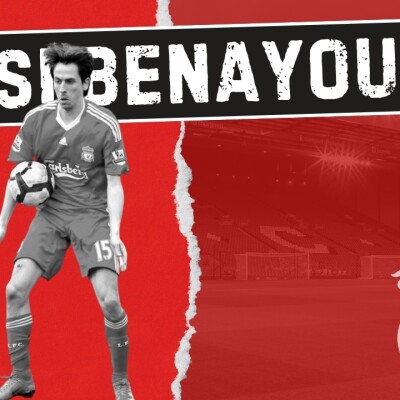
- Speaker #0
Turning it on, there's no flag, it's Obrey It's a great chance Thierry O'Ree Well, Wilthorpe was up in support of it. He went for goal, saw the angle, he couldn't squeeze it in.
- Speaker #1
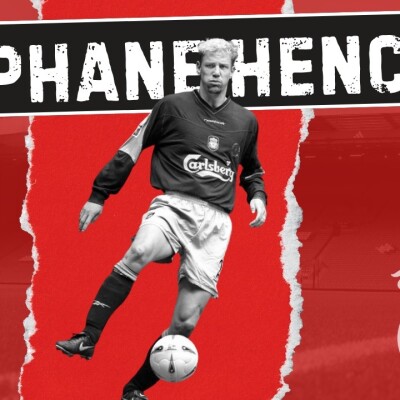
Welcome to today's podcast where I'm joined by Greg and Stefan Henchoz. I'm going to say Henchoz, that's the way we say it in Glasgow. How do you say it? Hencho?
- Speaker #2
Hencho, Henchoz. I like to say intro but thank you for coming along and joining us today it's a pleasure to have you here same,
- Speaker #1
same thing very happy you were in Glasgow for a very small period of time right? yep I'm just curious, how did you find it? did you enjoy Glasgow?
- Speaker #3
Yeah, I think I enjoyed the city, I enjoyed the people and everything. And obviously Celtic being a big club, massive club, unfortunately, sporting-wise, it wasn't so good for me. After leaving Liverpool, maybe I wasn't ready, you know, mentally really to come to the Scottish League and perform at my best. So I didn't play that much. and it was a bit disappointing you know in terms of like i said uh playing was i wasn't at my best but i still enjoyed my what four or five months uh in glasgow and like i said you know i had a i had a good time in the city and especially with the people in glasgow it's interesting yeah it's interesting steph because you said something you know about liverpool leaving liverpool to go to the scottish league but
- Speaker #2
sometimes i think maybe doing our time, I'm speaking during 2004-2005, I think the league were pretty strong and sometimes you're not ready maybe to handle this type of expectation. Because playing for Liverpool, you've been a legend for Liverpool, you won so many trophies for Liverpool, starting every week in and week out. But I think it's not easy. And what you said, I think I agree with you about this. I don't know if you now with the past, you were expecting maybe such demand from Celtic or not?
- Speaker #3
I think from the outside, I knew Celtic was a very big club. And when I arrived, maybe I was sort of disappointing. If you understand, leaving Liverpool, it's not like I was happy to leave. I chose to leave because I wasn't playing on a regular basis anymore since Rafa Benitez arrived. And at this stage of my career, I thought, I'm too old just to sit on the bench and take my paycheck. So I wanted to play. And Celtic, you know, when I spoke with Martin O'Neill, they were offering me this opportunity. I knew they were not competing in Europe anymore because they didn't qualify after Christmas. So I knew it was more or less one game a week. But when I arrived, I started to play the first couple of games I played. But I had competition as a centre-back. We had Valde. Yeah, yeah, big boy, you know. Varga? Varga, exactly. So two very good centre-backs, to be honest, who were performing well for Celtic before I arrived. So I would have to be better if I wanted to get as number one or number two as centre-backs. And I think I couldn't really manage to do that, unfortunately. Because like I said, mentally, probably after leaving Liverpool, I had a bit of a dip. And... And it wasn't my best period as a footballer, to be honest.
- Speaker #2
Yeah, but you're right. I think it's not easy when you're leaving a club like Liverpool. Because I left the same season like you. I just left in July when Rafa came during the first season. And it's not always easy when you have to go because of the demand from Liverpool, the expectation. The DNA, it's always difficult. And I was younger than you, but yeah, I think you're... What you said is right. Bobo was strong. Yeah. Varga also. So it was a big competition in the back end.
- Speaker #1
What was the question you asked me to ask Stéphane? You ask.
- Speaker #2
Do you remember, Stéphane? We had a chat story about Martin O'Neill, what he said about me at halftime during the game. Remember when I scored and we won, you know, and he wasn't happy about my attitude, remember?
- Speaker #3
Yeah, yeah, yeah.
- Speaker #2
When you said to me, don't leave this fucking big name. Doing what he wants.
- Speaker #3
To be honest, to be honest, I was on the bench for the two derbies we played and we lost both of them. with Rangers you won at Celtic Park. I think the return, I can't remember when we played at Ibrox. I'm not sure of the result, but what I remember definitely is that we lost the title the last day of the season. That's for sure. And obviously Martin was not very pleased with the way we played in the derbies. That's the only one, to be honest, that the only one time he came on the first day, I remember, so three days after the game, and he just stopped the training. We were doing five a side. And he said, OK, lads, everybody on the line. And we started and we had to start running around the pitch like crazy. So we've done it six, seven times. The last time he said, OK, everybody the same time, but two seconds less if one is not back. In the time, everybody has to do it again. So I remember me wasn't very, very good physically. I had to make sure I'm back in time. I didn't want the whole team to have to do it again. But that's what I remember, you know, both losing derbies against Rangers. Fun times. But anyway,
- Speaker #1
I want to talk about... uh your full career because celtic was only uh a very small part of it yeah um but just curious uh for for people to find out how it all started um back home but prior to going to blackburn and everything um want to talk a bit about the starting point of your career where you started did you come through the youth academy and what was it like yeah
- Speaker #3
I think back these days, it wasn't like it is today with football. It was more about enjoying playing football in the park with your friends. And I had no big dreams. These days, you can hear kids dreaming about being a footballer or wanting to play in big clubs. For me, it was only coming from a small village in Switzerland, like I said, enjoying football, playing with the friends. And that's it, really. And then obviously when you come to 14, 15 years old, then you start to see that you're not bad. You start to play in, you know, in Switzerland, bigger clubs, you realize that maybe you can do something. So I started to play with Xamax Neuchatel in Switzerland. Good club at the time. We were Swiss champions. We had a good team. and we are always competing and play in Europe every season. By the way, we played Celtic when I was at Xhamax in the UEFA Cup. We beat them. We beat them 5-1 at home and I think we lost 1-0 away. So that's how it all started for me, playing for Xhamax Neuchâtel and then quite young with the Swiss national team, the A-Swiss national team. and then I had the chance to move abroad to Hamburg in the Bundesliga. So I played I think four seasons with Xhamax and then I went to Hamburg. And from Hamburg then Roy Hodgson, who knew me from my time with the Swiss national team, he brought me to Blackburn. So that's roughly, you know, how it happens. And that's not something I was, you know, dreaming when I was a kid because I didn't think it would be possible for me to play at this level. But it just a bit, I would say, it just happened like that. Only by, you know, enjoying my football and then, you know, having the abilities, you know, to compete at this level.
- Speaker #1
Did you always start out as a centre-half?
- Speaker #3
No, not at all. When I was a kid, I was playing midfield, but more like an attacking midfield, or even striker. So I was scoring goals when I was a kid. Not anymore after that, definitely. But you just realise when I got older, I had the opportunity to play centre-back because it's very often the case that With Xamax, you had people missing at the back. They didn't have the money to replace them straight away. So what does the manager do? He looks for who could play at the back. And then he thinks, OK, I'm maybe tall enough. I'm OK. I'm strong enough in the challenge, in the duel. I like that. I'm aggressive. And I started by accident to play as a centre-back. And then the manager thought, oh, he's not bad. He's the guy. And from that point, when I was 17, 18, I didn't move anymore. I played as a centre-back, which was the best decision ever because as a midfield player, I would never, never have done the same career. So, you know, sometimes when kids, they think, oh, they want to play winger, they don't want to play full-back or they play midfield, they don't want to play centre-backs. I always tell them, you know, sometimes just accept that you may be not good enough to play forward or something, but you can make a career. It's not as sexy maybe playing centre-backs, but it's definitely worth it. So that's what happened with me.
- Speaker #1
And how was the adaption to English football? Obviously coming from Switzerland and on to Germany to playing for Blackburn, was that a big step up in terms of physicality?
- Speaker #3
Yeah, definitely. So moving from Switzerland to the Bundesliga, it was already harder. The demand and everything, better players, but physically. but when I moved from the Bundesliga to the Premier League, at first, wow, the adaptation. You think Bundesliga is quite a physical league. But when you compare to the Premier League, definitely back these days, it was something different. Obviously, the referee didn't give the fall they would give, you know, abroad in Europe. So at first, you think you're going to a challenge, you know, you fell on the floor. And you think, OK, the referee is going to give you a fall. No, no, no fall. Play on. So then you have to realise, oh, I'm in a different league. And you need to adapt. That's why I think some players, they can adapt. And some players, they just simply can't. Physically, the demand of the Premier League or the British football is different. And sometimes you do adapt, sometimes you don't. It took me maybe, yeah, I think two to three months to adapt. Then I realised I have to change my game. I have to be even more aggressive, physically stronger. And then I was OK.
- Speaker #1
Did you ever come up against Dunk? Well, you must have come up against Dunk in Ferguson.
- Speaker #3
Big Dunk, definitely. I love
- Speaker #1
Big Dunk.
- Speaker #3
Big Dunk Probably the strongest player I played against. Very physical. So strong in the air. I didn't win much challenge in the air against the big dunk. Using his elbow as well. But back at the time, you could. You got an elbow in the face, you were bleeding, but the game still carried on. Still carried on, you had blood on your shirt, no problem, you know. Do you remember that when we played
- Speaker #2
Denkheim with Campbell at front?
- Speaker #3
Yeah, yeah, yeah, against Everton, you know.
- Speaker #2
Away from home, it was always a difficult game.
- Speaker #3
It was a war. It was a war. before being a football match, if you remember, you know. Everton at Goodison, long ball, second ball, headers, throw-ins, everything, set pieces. Yeah, but that was the type of football we played. And it was definitely different than the game played in the Premier League these days.
- Speaker #1
Yeah, I would hate to have come up against Duncan Ferguson. But yeah, I love him. So you obviously went to Blackburn and then you got your big move to Liverpool. How did that come about? Were you aware of their interest or did that come out the blue? No,
- Speaker #3
I think I had two seasons at Blackburn. So the first season... I had a good season. It was under Roy Orton. And I remember this game when we played at Anfield with Blackburn against... And I was facing Robbie Fowler and Michael Owen. They were the two strikers. So I was playing at the back with Colin Hendry. Another legend, Scottish legend, Colin Hendry. And we had both a good game. We kept a clean sheet. So we drew nearly at Anfield. And I think that was the starting point. Gerard Houllier was the manager and he must have noticed this guy is not bad. That was the point when Liverpool started to follow me. In my second season at Blackburn, things became a bit more concrete. They came, they watched games. And then they came to this point when they got in touch with my agent. And from that point, obviously, when Liverpool is coming for you, that's where I wanted to go. So the things moved forward and I signed for Liverpool at the end of my second season with Blackburn.
- Speaker #1
And when you first went to Liverpool, Obviously, that was probably a time where you weren't winning that many trophies. What was the big attraction to Liverpool at that point? You said that was the only place I wanted to go. Was it the history of the club?
- Speaker #3
Yeah, it was still a massive club. Even though they were not winning that many trophies in the last few years before I went, it was still Liverpool, you know, it was still Anfield and everything. So when I came to the Premier League... that was already, you know, something, an achievement for me playing at this level. Blackburn was a big club, or not a big club, but a very good club at the time. They won the title two years before I arrived. But then Liverpool is another step, obviously. It's one of these clubs well-known all over the world. And you know the history. So that's why for me... playing for Liverpool. It's not something I was thinking, should I go there? Is there a better club or something like that? No, as soon as I could sign for them, that's what I wanted to do.
- Speaker #1
And when you went to Liverpool, was there anyone there who took you under their wing and showed you about the club? Who was the guy that welcomed you to the club?
- Speaker #3
Yeah, I think for me it was not easy because when I signed for Liverpool, Actually... It was three days after I went off the hospital. Because after the season at Blackburn, I had an operation, a groin injury I had. So a problem with the groin. So I had an operation right after the season. I knew I would be old for four to three months. So I signed for Liverpool. Actually, I was more or less, yeah, definitely injured. And when I got to Liverpool beginning of July, I couldn't train with the team. So I was, you know, away from the team. So you get to a new club, it's already not the easiest. And then obviously when you only train, you know, with the physios, you're not with the team, it's even more difficult. So I remember the player who helped me a lot, who was the club captain at the time, was Jamie Redknapp. You know, Jamie Redknapp always, you know, tried to ask, what are you doing and stuff like that. try to include me at lunch and stuff. That was a player who really helped me. Because I only made my debut, I think it was mid-October. So when you start training at the beginning of July and you make your debut only mid-October, it's a long time and it's not easy. But yeah, I would say Jamie helped me a lot.
- Speaker #1
Jamie Redknapp, I forgot all about him being at Liverpool. He was a great player. But yeah, and obviously when you were at Liverpool, you're most famous for your pairing with Sammy Hippia. You said he was the best centre-half that you ever played alongside. What do you think made you two guys work so well together? Because you've obviously done an amazing job against some amazing players.
- Speaker #3
Yeah, it's just, you know, we played the first time together in a game at Aston Villa away. So that was the first time we played together and we kept a clean sheet. it clicked straight away. We didn't have to talk that much, you know, to be honest, only a few words and things like that. And his game and my game was something that the connection sometimes difficult to explain why you connect well with somebody or why the game connect well. But I think he was very, very good in the air, much better than myself, to be honest. So it's something like he was going for the header, for the long ball and stuff like that. I was covering, I was trying to read the game and covering him. And I think it was a combination who just was working very well right from the start.
- Speaker #1
Yeah, I always remember we're talking about Duncan Ferguson. He was asked who... His most difficult opponent was, and I think Sammy Hippier was up there, he says. Couldn't get the better of that guy. So, yes, he was obviously very good in there. Do you think, obviously now in today's day and age, defenders are expected to play more like midfielders and stuff like that. Do you think you guys would have been able to handle today's environment? Because you were quite aggressive. stuff like that but you know real fair than that or not even real fair man but other i think the defending side of things has changed a lot and uh people expected to do more with the ball rather than the good old-fashioned stuff that you guys done yeah i agree with you back at the time it was more about defending only and
- Speaker #3
uh no problem if you would kick the ball in the stand to be honest yeah then it becomes uh like central backs have to play from the back So they have to be comfortable on the ball. And when it came to a stage when it was more or less more important, sometimes that the guy is playing well from the back, you know, so he can hit the balls, he can break lines, he can come out from the back, you know, dribbling the ball and stuff like that. But then you realize, and it's late again lately in the last, you know, four or five years. You come again to a point where you realise the guy who is only able to play from the back and stuff, but costs you every game one or two goals, and you concede every game two to three goals, it's not really what you want. So I think we are again now, and clubs and coaches, managers, they are again now looking for proper defenders, proper centre-backs, who, yes, can play from the back. It's not the most important thing anymore. Now it's again, you know, you take, you know, Van Dijk, Opa Meccano, they are proper defenders. Yeah, they can play from the back, but they don't do incredible things where they fit. First, they are proper defenders and strong, you know, quick. And, you know, that's what, again, now it's coming back to this type of defenders.
- Speaker #2
Yeah, I think you're right, Steph, when talking about this. because we spoke many times about the foundation, the foundation from the back, and be solid, compact. And you maybe remember every time Phil. Yeah, of course. He was saying to us, no risk at the back.
- Speaker #3
No risk at the back. That's what we've heard before every single game.
- Speaker #2
Correct. Every time the same message in the dressing room. And you spoke about you and Sammy, about your relationship.
- Speaker #3
Yep.
- Speaker #2
And because I was a fullback. So I was connected with this guy, you know, and two different profiles. But it works really well because we had two smart players. Yeah. Smart player one because they know each other really well. And Stefan spoke about, you know, Sammy were playing the long ball. Steph was around to cover the communication. The small detail from the game was amazing.
- Speaker #3
Yeah.
- Speaker #2
And that's why we won Summit Trophy because they played so, and they were so strong at the back.
- Speaker #3
Yeah.
- Speaker #2
And now, I think now because of the animation of the game, you know, you want to see a four or five become a six play, you know, play from the back three. So, but I think now, yeah, and I think to become solid again, I think it's part of the project, you know, I mean, from what I see from the game.
- Speaker #1
Yeah. Something else we need to talk about during your career was the incident, the FA Cup final versus Arsenal. Yeah. that's obviously something you're very famous for was that a penalty?
- Speaker #3
Definitely, these days with the VAR, there would have been no escape. There would have been a penalty and probably a red card. But yeah, you know, 20 years ago, you had no VAR and you could have got away with this type of incident. But obviously, yes, I made myself big on the goal line, trying to block Thierry Zanri's shot. Yeah, the ball hit, I would say, yeah, my elbow, but I made myself big. And these days it would have been a penalty after a VAR review. Yeah, definitely.
- Speaker #2
It wasn't on purpose, Steph. Yeah,
- Speaker #3
yeah, yeah. Like I said, I just made myself big and the ball went to hit my arm or my elbow. So, yeah, I got away with it and I've been lucky. And as a team, we've been a bit lucky. And we all know how he ended up. We won the cup with a double from Michael Owen the last four minutes.
- Speaker #1
And around that instant, did Thierry Henry say anything to you after that?
- Speaker #3
No. No, he didn't. He didn't ask, did you touch the ball or anything like that? No, He didn't ask me, no.
- Speaker #1
And would you say that match... was one of your most memorable parts of being at Liverpool? Yeah. That would have been the first trophy for a while, right?
- Speaker #3
No, it was the second because we won the League Cup in February. Yeah, we won the League Cup. And then a couple of months later, we won the FA Cup. But for me,
- Speaker #2
that was at Cardiff.
- Speaker #3
Both at Cardiff. For me, that was the best memory. Why? Because as a kid, We didn't have international football on TV, at least in Switzerland. Nothing at all. But the only game we had, that was once a year, the FA Cup final on the national TV. So as a kid, I remember growing up watching every year the FA Cup final, Saturday afternoon, four o'clock in Switzerland, four o'clock in England. And I was watching that thinking, wow, that's something incredible. And then maybe 15 years later or 10 years later, I found myself playing in this competition and lifting the trophy. So when you think about that, yeah, best memory I had, to be honest.
- Speaker #1
It's always good to win trophies. I'm sure you were in the squad at that time.
- Speaker #2
Yes,
- Speaker #1
I was in the squad at that time.
- Speaker #2
Oh, you were a roommate?
- Speaker #1
Yeah,
- Speaker #3
yeah, a roommate.
- Speaker #2
And do you remember we had this story about, you know, the...
- Speaker #1
the incident in america you know whether before the i think it was before the champions the game it was before the first grames group stage against boyar vista all right yeah yeah because it was my first championship game and i was with stephen simon yeah i've got some history to to to yeah carry on yeah but we can talk about your stories are probably better uh no i'm only joking um so Obviously, You won the FA Cup, but what about the UEFA Cup final as well? That was obviously another memorable game. Obviously a high scoreline as well. You were in that squad, right?
- Speaker #2
Yes, correct.
- Speaker #1
Yeah, 5-4. Yeah.
- Speaker #2
Gary Mack scored.
- Speaker #3
Gary Mack scoring. It was the fifth goal and it was the golden goal. So the game stopped after that. So this was this rule. We didn't last for long. But when you went to extra time, they had this rule, golden goal. If a team scores a goal, it stopped. And it happened for us because Gary Mack scored his free kick where nobody touched the ball. And we won the game. But the funny thing was, before the game, everybody was saying it will be the most boring final ever because obviously we... The game we played before, we didn't score that many goals. There were a lot of nil, nil, nil, one nil. We were quite, I would say, compact and defensive. And we played Alaves, who were not also, you know, the most attractive team. So everybody was saying, I'll be boring.
- Speaker #2
Yeah,
- Speaker #3
but with good players, Steph,
- Speaker #2
if you remember the squad.
- Speaker #3
Very good. Yeah, yeah. No, no, Alaves had a very good team and good strikers, I can tell you. And... And you had a nine goals thriller in this game. So everybody remember this game.
- Speaker #2
What a night.
- Speaker #1
And how the hell did you go from having such a compact team to losing four goals in the final? Was it you just underestimated them?
- Speaker #3
Probably. Probably. That's my opinion. I think we were 2-0 up after 20 minutes.
- Speaker #0
quite easily if I remember and then you know you think ah in your head it's only Alaves we beat Barcelona in the summit only Alaves two nil up nearly too easy and then just before half time they scored 2-1 from across I remember then we scored a 3-1 so again we went into the dressing room at half five thinking yeah three one up Not much can happen. Then we came back after the tee and straight away they scored 3-2, 3-3, bong, bong. And then the game was on. Then we scored 4-3, they came back to 4-4 and then, you know, went to extra time. Yeah.
- Speaker #1
That was good memories. From, obviously, your Liverpool career, I want to talk about some of the guys you played in that Liverpool team with. and we'll get some of your stories from the dressing room as well but you talk about Gary McAllister another Scottish legend and he must he must have been about 40 at that time right playing in that team he was an old guy
- Speaker #2
37 maybe no 37.
- Speaker #0
I don't think I don't think he was that old I don't think no such as you might be right here you mean we need to double check I'm not sure yeah but how important was he to that team First, for me, he was a very good player. With the ball, technically, being able to play short, long passes. He still had the power to run forward with the ball, the acceleration. He had a great right foot. It was very important that at the time he had the experience. He had the leadership. He was a proper leader. He had the leadership and I think he helped a lot Steven Gerrard in his career. Because Steven Gerrard was still a young player when you look back at 2001, 2000. And Gary Mack, you know, the partnership worked very well. And Gary Mack helped Steven Gerrard, I think, quite a lot in the early days of his career.
- Speaker #2
I think it was a really great and smart signing from Gerrard. Yeah, I agree. You look back and you have a look at the squad because he won the Premier League with Leeds. you know yeah he's got a striker and eric canton have big players also and uh and i agree with you i think he what a great you know guy um technically top class even for the corners set place you know and uh but i think he was a really really good signing from jerome yeah you know for the for the process and the project just surprising one but he done really,
- Speaker #1
really well from what I remember anyway.
- Speaker #2
And it's got some important goal, Steph.
- Speaker #0
You remember this goal he scored against Everton at Goodison?
- Speaker #2
Yes.
- Speaker #0
Again with a free kick.
- Speaker #2
Clever. Last kick of the game. He's rushing on the right-hand side and he played the ball over the right-hand side.
- Speaker #0
Exactly.
- Speaker #2
So, yeah, you know, it's...
- Speaker #0
And he scored. I think he scored. Who scored the penalty in the semi-final, the return leg against Barcelona? So, we drew nil-nil the first leg and then... And then we had this penalty after 10 minutes in the return leg. I think Gary Mack scored on the penalty.
- Speaker #1
Obviously, you played with Mike Colon and everything, Steven Gerrard, Jamie Carragher, but was there anyone in that squad that you felt was quite underrated in that squad as well? They didn't maybe get the credit they deserved?
- Speaker #0
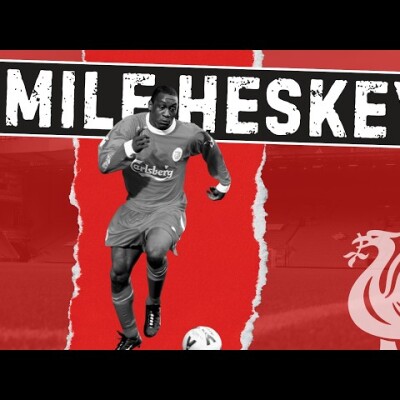
Underrated? Maybe Emilowski for the work he was doing for the team. Michael Owen obviously has been Ballon d'Or and everything, scoring goals. I think Emil, I remember playing against him once at Blackburn, he was playing for Leicester. Very strong player, quick, powerful, great in the air, great shot. Difficult to play against when he played for Liverpool, for me. Same thing, he's done a tremendous job for the team. He was pressing, he was making the run, he was good in the air, winning the flick-ons. And I think Michael Owen got a lot of credit, which is normal. He was a top player, but I think Emilowski was a big part of the success and the team. I think that's a fear.
- Speaker #1
answer. Now, obviously you guys were teammates, roommates and everything. Is there any crazy stories that you can share? from your...
- Speaker #2
Crazy story though, I don't know if we can speak about it.
- Speaker #0
You couldn't get crazy at Liverpool under Gerrard, would you? Yeah,
- Speaker #2
it was difficult.
- Speaker #0
There were no whisky in the minibar.
- Speaker #2
Yeah, no, nothing at all. Gerrard, I think Gerrard came with an idea to change, you know, the mentality and the process, you know, and step can speak about this also but if you if you are speaking with uh jimmy carragher mike carlo and steven gerrard they will tell you the same things about the nutrition you know and the drinks and everything gerard came with the idea to to make the next step so so and i think he works really well because we won trophies but uh i don't know what do you think about this but i think you know and of course the new building help no yes for me for me the the big change i could see it's uh
- Speaker #0
I spent two years at Blackburn before coming to Liverpool. And at Blackburn, it was still the drinking culture. It was normal, you know, to go to the pub, having lagers and stuff, even on the first day. Right after the game, it was the same thing, the dressing room, having beers. And it was just normal, part of the culture. The food was not always healthy food and stuff like that. But when I arrived... At Liverpool, under Gerard Houllier, it was totally different. He changed the regime. Like I said, no more alcohol, never. Even a beer was not allowed. Never, ever. The food, you know, and everything, the diet, the discipline in a way. And I think he helps a lot, especially maybe, I would say, the British players who are used to this drinking culture. us as European players, you know, foreign players, it was already, I would say, normal not to drink or not too much. But it changed the whole culture of the club for the better. And then you could see the result. And then he developed also the new Melwood, like you said, Greg. Because when I arrived, we had this old Melwood. It wasn't really, you know, for a club like Liverpool. It was... It was not great for a club like Liverpool, but then we had these all-new facilities and Gerard Houllier really, I think for me, took the club to the next level.
- Speaker #2
I think the chairman said he took the club to the next century.
- Speaker #0
Yeah, yeah, yeah.
- Speaker #2
He's right. By doing this. But we had a team bonding night during the pre-season. You remember when we went away to the training camp? It's normal. But after the discipline... really, really strict in general. He could be really bad with us if he heard anything, you know. Honestly, he wasn't in the manager.
- Speaker #1
Sounds a bit like Sir Alec Ferguson. He had spies everywhere saying to people, this guy was in this nightclub.
- Speaker #2
Yeah, yeah, yeah.
- Speaker #1
But obviously going on to play, obviously you played through, again, some amazing strikers. I'm just curious. Obviously, you've spoken publicly about Thierry Henry, but you've come up against Shearer, Bergkamp, and all of these guys. Out with Henry, who would you hate playing against where you're like, ah, fuck, not this guy?
- Speaker #0
Yeah, for me, I played, obviously, against a lot of strikers. You name a few, there are a lot more. But overall, Thierry Henry was... maybe for me the most difficult and maybe the most complete. He was not only fast, obviously he was very fast, but he was tall, he could strike the ball from outside the box. Technically he was good. His running, the timing of his running was very good. So he had not only one or two weapons, he was a complete striker. And the most difficult was playing at home, at Anfield against him. Because when we played away at Highbury, the pitch was quite narrow. It was a small pitch, Highbury. And we could sit a bit deeper, you know, with a lower block. So you didn't have that much space in behind. But when we played at Anfield, you have to attack. You know, the fans, they want you to attack. The problem is what happens when you lose the ball. You are exposed in behind, a lot of space. And when you have a bear camp, players like that, you know, to serve Henry into space, I can tell you, you look very, very old when you run against Henry.
- Speaker #2
Like we are now for the Liverpool Legends game.
- Speaker #0
Now you, Greg, you're fine. Greg, you can play 90 minutes for the Legends. You know, me last time I played 12 minutes and I got injured.
- Speaker #2
The pitch gets bigger and bigger.
- Speaker #1
But obviously, you left Liverpool and obviously went on to Celtic. But I just want to talk about, obviously, Rafa Benitez came in. When did you realise? Because obviously, you left a few months before Istanbul. I'm just curious when you realised in your head, I'm going to have to go. Was it straight away when he came in? Did he say something to you?
- Speaker #0
He didn't really speak to me, but right away. As a footballer, you can feel if you have the manager's confidence or not. And right away, I felt with Rafa, I don't think he trusts me a lot. And then you had pre-season and then you have friendlies. And then you start to realize... I'm not sure, you know, he can't hunt me that much. And then you have the first game of the season. You're not in the starting 11. You're on the bench and stuff like that. So it was quite early. I realized I might have to move. And even at the end of the Mercato, at the end of August, I remember Man City wanted to take me. It was Kevin Keegan. who was the manager. And I spoke with Kevin Keegan and I thought, yeah, why not? Why not joining Man City? It was maybe two or three days before the end of the Mercato. And Liverpool and Rafa Benitez, at that time, they didn't have the cover, I mean, you know, to find somebody else. They say, no, you can't move from now. But I had the feeling it's the right time to move. And my feeling was right because the next four months i hardly play a game i was on the bench a few times but hardly play a game and then i knew in in january i have i have to move obviously you know when you see liverpool winning the trophy in istanbul four or five months later sometimes
- Speaker #2
yeah i do regret i think i could have maybe stay and you never know in football i think you you could play in this team because if you have a look the squad and i'm not the only one to say that but the squad wasn't specifically strong this this season when they won the champion that's that's the that's for the fact that's the reality yeah and i think i think you could play a big part you know and and it's a shame because because uh with your experience i think you could bring after they wonder when they want it's easier to speak yeah of course of course but i think you know and uh yep so
- Speaker #0
that's maybe that's maybe a regret you know after when you look back you think
- Speaker #2
That could be maybe your only regret. If you could have changed something, do you think it could be your only regret? Yeah,
- Speaker #0
probably. Only regret is I should maybe have stayed and show that I'm ready to fight for my place. And like I said, you never know in football. Sometimes you get your chance, you take it. But obviously I thought, no, I want to move. And if I could come back... in time, I would probably have stayed.
- Speaker #2
This is crazy because I don't know if you remember this, but this is exactly what you told me before I left Liverpool. We were talking maybe 20 years ago because I was really close with Steph. Speaking French was easier for me. And you told me exactly the same thing. You said to me, still young, be patient.
- Speaker #1
Yeah,
- Speaker #2
exactly. But he's absolutely right. Was it true that you could have signed for Rangers prior to going to Celtic?
- Speaker #0
Yeah, yeah. Greg was at Rangers. He can explain you maybe even better than myself.
- Speaker #2
I had a chat with Maklis about, because I knew about the, I would say the rumour or not, you know. Yeah. But yes, I said, when I heard this, I said crack on because we were looking, I mean, the club were looking for a central defender. And I knew for the fact Steph would be the perfect, you know. player for us because of his commitment, you know, his abilities, his experience. Because it's not easy to play for a big club like Rangers, you know. It's like Liverpool in terms of DNA and demand, you know. The expectation is to be a winner week in and week out. So after, I don't know exactly what happened behind the scenes because we were in the same hotel, you remember, with the wife and the family, staying in the same hotel in Glasgow when you signed also. Yeah. But after he moved to Celtic, so I don't know exactly why, but...
- Speaker #0
But yes, for the fact that the club spoke to me about stuff. Yeah, yeah. We were in touch. I've been in touch with Rangers. But then, you know, I was still under contract with Liverpool. And then, you know, between the two clubs, it was, you know, Celtic was maybe ready to pay more money in terms of wages and stuff like that. And Liverpool preferred. Only Celtic is ready to pay you the full wages. uh rangers is not so uh the solution was was with celtic
- Speaker #2
Yeah, I think that's why we signed Kyrgios. Yeah, yeah. Yeah.
- Speaker #0
It was a good signing for Rangers.
- Speaker #2
Yeah, it was a good signing. Very good signing.
- Speaker #0
Yeah, yeah.
- Speaker #2
But obviously,
- Speaker #1
you only played a small amount of games at Celtic and then you went to Wigan thereafter. Was there ever a period of time where you're like, I'm just going to retire now, I'm fed up? Or were you still... Did Paul Jewell basically... convince you to keep going and because obviously you played quite a lot of games when you went down to Wigan.
- Speaker #0
Yeah, no, so when I left Celtic obviously I was a bit down. Yeah, mentally it wasn't like I said, it wasn't a good a good period for me. But I was still young enough to think I still have you know something to offer and I wanted to carry on playing. I had a few opportunities during the summer. But one thing I didn't really want to do is to move away from Liverpool because I had my house still in Liverpool. So the family was settled. I didn't feel like going abroad. So I had a few, I think I had a few, a few clubs in Italy, one in Spain or something like that. And I had other opportunities in England, smaller clubs. But then, like I said, the main thing was staying around Liverpool so I could just travel. And then Wigan came, a club who was just promoted. And I thought, why not? I spoke to Paul Joule and I had a good feeling. I had a good feeling with him. And I decided, OK, why not? And right decision because we had a great season with Wigan. We finished, I think at Christmas, we were nearly second in the league. Second or third at Christmas. Okay, after Christmas, we dropped a bit and we still finished in the top 10. And then we went to the League Cup final. So we beat Arsenal in the semi over two legs. We lost against Man U in the final, but okay. And we had a great season, great team spirit. I think we achieved that. It just shows you, it's not... always the best player who achieved the most. It's this connection between players, the team spirit, working out for each other. We still had a couple of good players, don't get me wrong, but we overachieved if you take the quality of the squad. But I really enjoyed my time at Wigan.
- Speaker #1
Yeah, and then you went back to Blackburn again. To finish off your
- Speaker #0
Yeah, then at Wigan, OK, they didn't necessarily offer me straight away a new contract. And I had the opportunity to go to Blackburn, a club obviously I knew. Mark Hughes was doing a very good job. They had a new training ground. I thought, why not? And I went to Blackburn. The first season was quite good and then the second season unfortunately I already had problems with my Achilles tendon in the past. I already had an operation and in the pre-season again it was again the same Achilles tendon. It wasn't totally teared but it was partially teared so I had to go through another operation at I think it was beginning of September. And the surgeon after the operation said, oh, you should retire. You know, for me, don't play football anymore. Take the insurance, the money from your insurance or stuff like that. And at first I thought, no, I don't want to finish like that. I don't feel like, you know, I just finished. So I said, no, no, I will do the rehab and everything. So which I did, I did the full rehab. I was back in April on the pitch training every day. at a good level. At the end of the season, I remember Mark Hughes asking me in his office, and he said, okay, so we won't offer you a new contract. I thought, I knew, but thanks for telling me. I didn't think you would tell me that, but thanks. He said, but to be honest, how I see you, you can still play at least one or two seasons, maybe not in the Premier League, but Championship, definitely. So I think you should consider that. And I listened to him. Went back to Switzerland for my holidays. And during that time, I realized now it's time to finish my career because I didn't have the hunger anymore to start somewhere in a new team, a preseason and everything. So I knew at the end of August when all the championships had started again, I didn't feel like I was not missing that. I didn't feel I would like to play. I would like to train. No, I was quite happy sitting back at home with my family. And that's when that's when I decided it's time for me to retire.
- Speaker #2
And say goodbye.
- Speaker #0
Exactly. Yeah.
- Speaker #2
So now, Steph, after this beautiful, fantastic career, what are you doing now?
- Speaker #0
OK, so I've done quite a few different things, but everything in football. So I've been assistant coach. I've been then head coach in Switzerland in the top division to three different clubs. I've done it. I enjoyed it so, so. I think it's a very, very difficult job. Probably the hardest job in the world, I would think. So I've done the experience. I enjoyed my time when I was assistant. That was my best time. Assistant coach, I really enjoyed it to be on the pitch every day, to work with the players. Then head coach, like I said, so-so. And then I had the chance to move a little bit, but still in football, I went into recruitment with Olympique Lyon because of Bruno Cherou, another player who we played with, Greg, at Liverpool. Okay, so I spent, I think, three years at Lyon, which was a good time. I really enjoyed the club and everything. I enjoyed, you know, being in the recruitment and the travelling, watching the games, the players. And then when Olaz, you know, left the club, Bruno left the club straight after, I thought, hmm. It's changing a little bit at Lyon. I still stay, I think, another six months. And I thought, maybe it's time for a new challenge. And that's exactly when a club in Switzerland called me. A guy which I played with in the national team, who was head coach, called me and said, we are looking for a sporting director in Lausanne. That's the goal is called Lausanne Sport. And I thought of you. I think you could be a good fit. And I think, oh, why not? Especially, it's only, what, 40 minutes from where we live with my family. So I thought, yeah, great opportunity. And since that, it's nearly three years I'm here as a sporting director in Lausanne Sport. So that's what I'm doing these days.
- Speaker #2
Perfect.
- Speaker #0
Yeah.
- Speaker #1
That's what you need to do.
- Speaker #2
sporting director no no not yet not yet later maybe you know Stefan I love too much the pitch I need to go yeah yeah so I left Blackburn and I miss you know so the pitch yeah so let's see but no I think it was it was really good great to have you today for this podcast really really enjoyed the time okay same for me thank you very much and hopefully you will have a great season I hope so fingers crossed speak. yeah yeah thank you very much guys and uh and hopefully to see you soon say hello to the family by the way okay okay we're the same greg okay and we keep in touch greg see you thank you keep in touch okay take care guys thank you bye-bye bye-bye