- Speaker #0
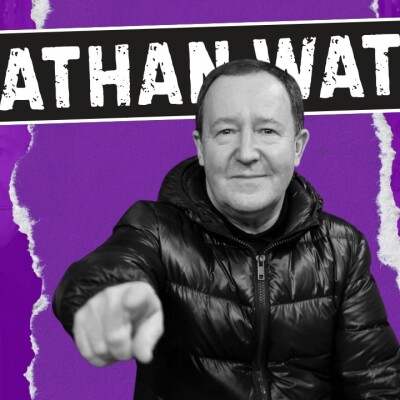
Welcome to today's podcast where I'm joined by the legendary Jonathan Watson. Thank you very much for joining me.
- Speaker #1
Thanks for asking me along.
- Speaker #0
Looking forward to it. As I was saying to you there before, obviously as a young kid growing up, watching Only An Excuse, also City Lights actually, I'm going to start at the start. I used to watch that, or my mum and dad used to watch it and I get forced to watch it, but I think that was my first time seeing you guys. Oh really? Talking about you and how you got into TV in the first place, how did your career start?
- Speaker #1
So, how long have you got? Oh,
- Speaker #0
as long as you like.
- Speaker #1
Well, I used to do stuff when I was a kid. Yep. When I was about 10, somebody had mentioned to my dad that there was a junior course at the Drama College, Ross Scottish Academy of Music and Drama, which is down in St. George's Place, now Nelson Mandela Place. And it was a Saturday morning thing. And my dad said, do you fancy going along? And I said, I'll give it a go. So I went along and I loved it. I really enjoyed it. And it was a great set up because, you know, you think drama lessons or drama classes at that time would be a very middle class thing.
- Speaker #0
Yeah.
- Speaker #1
It wasn't. It was kids from all over Glasgow. Newton Burns, Springburn, the Gorbals, you know. I was brought up in St George's Cross. It was kids from all backgrounds. I loved it. I really enjoyed it. And at that time, if the BBC in particular, if they were casting anything that required kids in it, they would come along on a Saturday and sit up the back, and if they thought you might be right for the part, you'd be asked to read, and you might get a part. So from quite an early age, about 11 or 12, I started doing TV work. Because the benefit I had, when I was 11 or 12... I could look about eight or nine as well, you know, so that helped. So as a result, I spent, until my voice broke, when I was about 14, 15, I did a lot of stuff for BBC, Dr Finlay's Casebook, Sutherland's Law, you know, worked with some amazing people, worked with the director, Alan Parker, when he was still, just before he did Bugs Him Alone, when he was doing... Big commercials, they're a big commercial inn. So things like that. So that's how I started in it. But I had no intention of doing it as a career. Yeah. I just, it didn't enter my head. It was fun. It was a good laugh. Made a few bob, not much, but I just enjoyed it. But I had no idea or no wish to pursue it as a career. And so... I left school not really knowing what I was going to do. My dad, he was a commercial artist by trade. He'd gone to art school to do commercial art and gone into advertising. And I'd got a summer job at his place when I was about 17. At the end of the summer job they said, we'll take you on, train you and all that. And I went back there a sixth year, because all my mates were doing that, and wasted a year. And then when I left school at sixth year, that's what I was going to do. So I did a course that was going to set me up for a career in advertising, knowing that I had a job at the end of it as well. And then halfway through it, the BBC phoned up and said, There's a play we'd like to offer you. And the college wouldn't give me the time off. Three weeks or something I had to get off. They wouldn't give me the time off. And my dad sat me down and said, What do you want to do? And I said, I'd quite like to do the play. And he went, just do the play. So I did it. I dogged it for three weeks. Did the play and then after that I thought, No, this is what I fancy doing. And I went and I got one of the last additions for the next year's intake for the drama college. Did that, three years there, came out, got my equity card at the Citizens Theatre, the tie company, and that's been me ever since.
- Speaker #0
Never went back to a normal job? Even in between stuff?
- Speaker #1
No, I've always, one of the things I'm very fortunate, I've always had a job to go to in this line of work, so I'm very fortunate in that respect, but no I haven't.
- Speaker #0
it's weird because there was a guy I'm not going to say his name because he was embarrassed he was in River City very very well known guy and he was doing a bit of Amazon in between because obviously he was in between jobs and I'm like can I have a wee thing up over his face and I'm looking at him and I'm going I know you and it dawned on me who it was and my missus loved River City and she loved that particular character and I'm like any chance I pick her I don't want to be seen with her Amazon and I embarrassed them I think as well but I never really thought that you just assume these guys are all making a fortune and they're all making a lot of money and I didn't really realise until I spoke to a few other people like these guys don't actually always make a lot of money and there's obviously a lot of jobbing actors who are out of work for a year and all that kind of stuff.
- Speaker #1
Oh yeah I mean the percentage it's a really high percentage I think it's something that there's only about there's about 90% of people who are trained to be actors that are out of work all the time. It's a very small percentage that have kept going. But especially over lockdown as well, I think people found it very, very difficult. I was lucky. I got a job over lockdown, but I was very lucky. I mean, a lot of folk didn't. So things like that. Working in a pub is another thing that a lot of folk would do in between jobs as well. So things like that. but you've got that's what you do what you do so you obviously done
- Speaker #0
done all of this kind of stuff, you went into City Lights and various other things as well, were you always destined to become a funny guy?
- Speaker #1
I don't know, I don't I don't think so many people would question that what happened was I started out doing the sort of normal stuff, you would do plays, you would do, usually in the summer you would do a drama a big drama in BBC Scotland and you'd hopefully get into that But after about a couple of years of being out, just I'm trying to think, get my bearings. I did things like work with Sim 84, then I got a part in Local Hero, things like that. And I was doing, I was plugging away, mate, and I was beginning to sort of make, you know, get a good sort of body of work behind me. And then I did a play, and one of the guys in it was working with the comedy unit. Yeah. Which was set up in BBC Scotland. and they were doing things like kick up the 80s, laughing nearly paid my licence fee and all that kind of stuff. And he recommended me to him because they were doing a thing called Naked Radio at the time.
- Speaker #0
Yeah.
- Speaker #1
So I became part of the Naked Radio team, which then... And then I did the pilot of City Lights and then that was shelved for a wee bit. We did Naked Video and then after the first series of Naked Video, Colin Gilbert, the producer, had said to me... Remember that thing we did a couple of years ago? And I said, yeah, it's going to go to series. So that's how City Lights got started. The only ones that survived the pilot were Kelly, Jerry Kelly, me and Dave Anderson. Or the bank workers. Everybody else got binned.
- Speaker #0
Oh, man. Good memories. It was a good show. So I thoroughly enjoyed it. But after... City Lights, how long was it before Only an Excuse became a thing? Was that, couldn't have been much,
- Speaker #1
innit? Eh, no, the, what, eh, so I'll tell you, Only an Excuse started, eh, round about the exact same time as, eh, as City Lights got commissioned.
- Speaker #0
Yep.
- Speaker #1
The very first, eh, Broadcast of Only an Excuse was the summer of 1986. And that was roughly when we got the commission for City Lights. And that came about because there was a documentary on BBC Scotland called Only a Game that was written and narrated by William McIlvany. And Philip Differ and I, who I work with in Naked Radio and Naked Video, we loved it. Only a Game We Threaten was brilliant. And, I mean, I used to... We'd be sitting up... We'd go into the trough and to record Naked Radio, and I'd be sitting up at the back, marking my script, doing William McIlvany and Dennis Law. And on the back of that, it was his idea. He went to the then head of BBC Scotland Radio and said... A guy called Stan Taylor said to Stan, he said, Look, he said, I've got this idea to do a spoof of Only a Game. And I'll write it along with Ian and Bob, and I'm going to get Johnny in it, I'm going to ask Tony as well, I wonder if I can get the money for a pilot. And Stan took a long draw of his embassy tip and said, forget the pilot, that sounds brilliant, just make the programme. No script or anything like that written yet. And that would never happen now. That would never happen, but he went with his gut feeling. And the three of us, Philip, Me and Tony, maybe more, maybe Jim Hunter doing sound, we recorded Only an Excuse, the first one, over a Saturday and Sunday in Queen Margaret Drive with nobody in. Jeez. Just as we just recorded it. And when it came to do the Jimmy Sanderson phone-in, famous Jimmy Sanderson from Radio Clyde, Philip says, right, you can't be sitting here. You go into another office and phone in. So I actually did phone in. So, it was great.
- Speaker #0
Ah, yeah.
- Speaker #1
Great memories.
- Speaker #0
How much of that, see, we used for writing, only an excuse and all that. How much of an input did you have in the writing and all that as well?
- Speaker #1
Very little at that point. At that stage, when we did the first one, I mean, the writing talent that contributed was huge. It was, you know, Philip Differ, who also produced it. He was writing stuff. Bob Black, the wrote City Lights. Ian Patterson that wrote Rabsy Nesbitt, that's the kind of quality of writing we were having to deal with. These guys were great. So that was a real plus from our point of view.
- Speaker #0
And were you quite happy to just go with the flow? Yeah,
- Speaker #1
because at that stage I didn't have the experience. I was still pretty sort of new to it all. And I didn't have the experience. But over the years... You learn by listening, sitting in and listening to different script sessions. You get an idea of script editing, what works, what doesn't, when you should trim something down, when you should just let it go, when you should maybe come out early and have a sketch, rather than have it dry-go and things like that. So I began to learn that. And then laterally, Philip is more recent... Well, not more recently, probably about 20 years ago. He started to encourage me to write a little bit more as well. But if I did, it was just, you know, quick gags rather than prolonged sketches. Yeah. But also very much encouraged to contribute ideas, especially when it transferred to television.
- Speaker #0
Yeah.
- Speaker #1
Very much encouraged to suggest characters. So, you know, there was an input there, but maybe not. so much in the writing front
- Speaker #0
I need to ask about Chick Young because I said to Chick, I was asking about the only excuse thing and all that and he says I still don't know where they got that from he says, because I said did you actually do that he he he thing and he's like no, I've never done that he says,
- Speaker #1
he'd made that up what happened was this with that, because I saw the thing that he said and I'd said to Philip, I said I kind of remember how we got the laugh and he reminded me So I first met Chick, I think, I was invited to take part in a 10 at 6s, a Scotland versus England match, celebrity match if you like, that was put on between the second semi-final and the final itself to give those, the guys, a breather. And who was on the team? So it was managed by John Gregg. The Scotland team. And I was in it. Chick was in it. Derek Johnson was in it. Let me just check. Willie Callican was in it. He played with Celtic. I'm not sure if Bobby Lennox was there. I mean, with Ducla. Anyway, that was roughly the Scottish set-up. There's a few others as well. I can't remember. And so that was the first time I met him. And I got on great with him. I didn't start. Chick's a good footballer, you know. He scored a really good goal. John Greig subbed him right away and put me on. And he was raging because I was hopeless. I was not fit. It was terrible. I always remember I got hammered by an England team. They were quite a good out. We could beat. But Rick Wakeman. I was playing, who I used to go and see in Yes and the Apollo when I was younger, when Yes toured. Rick Waitman and John H. Stacey, the world champion boxer, they absolutely nailed me twice against the boards. I mean, like, knocked the stuffing out of me. But we had a right good laugh, and on the back of that, Chick and Derek Johnson were at that time working with Radio Clyde. And they invited me, there must have been a spare place at one of their events, and they invited me along. And Philip said to me, he said, after that you came in, you said, you had a really good night with them. And Chick had a kind of laugh that we might be able to do something with. But then any semblance to reality went out the window and I really did a big sort of caricature on it. Just to give it a wee bit of spike. That's class. But that's how it came about, yeah. But he'll have told you his story about when he was doing the voiceover.
- Speaker #0
I don't think he did, actually.
- Speaker #1
So he was doing a voiceover for a... I won't name the company, but he used to get a free car for this mob on the side. And they got him in to do a voiceover in Morricans, where he used to always go and do the voiceovers. And it started off with a laugh, right?
- Speaker #2
This is me, Chuck Young. Standing where I am, would you see it, right?
- Speaker #1
And they went, hey, cut. Can you do it again, please, Chuck?
- Speaker #2
Certainly.
- Speaker #1
And he was going, he was doing two laughs. He was going,
- Speaker #2
hee-hee, this is me, Chuck Young,
- Speaker #1
right? It's three laughs, right? Yeah. He kept on doing two. And at the umpteenth time, eventually he said, where am I? What's wrong with my laugh? What's wrong? And he said, wait, the guy says, you haven't got it right. He goes, it's my fucking laugh. So, eh. That actually did happen. So, yeah.
- Speaker #0
Oh, man. I love that story. It's brilliant. But was there anybody you ever done that to that didn't take it well? Because obviously you've done a lot of characters where they've won.
- Speaker #1
I'm sure there have been. There have been a couple. We've heard about a couple over the years. But, you know, by and large, it's been great. And I think the reason for that is because the players, you know, were kicking about at the time. They knew that we had a love of the game.
- Speaker #0
Yeah.
- Speaker #1
You know? And, you know, when you consider how cruel dressing room banter can be, you know,
- Speaker #0
we were actually going easy on them.
- Speaker #1
You know, it was mild, you know? But I did a podcast recently with Jackie McNamara and Simon Donnelly, and Jackie was saying, he said, you know, he said, if they were sort of rooming together at New Year, just before they played an old firm game. They begluted to see if that was the thing they were wondering about. Who's going to feature? That took their mind off it.
- Speaker #0
Aye, just waiting to see if they're getting flung under the bus. That's right. Couldn't they have been nice? Was there any of the characters that you'd done over the years that you suggested? Now, you were saying Phil said to you you could maybe suggest a character.
- Speaker #1
Oh, yeah, yeah. Oh, God, off the top of my... Yeah, I suppose so. In different stages, you know, I would be able to say... I can do Souness. I've got Souness right. I think I can do Ken Douglas. It was me, I can do Dennis Law. So these are ones, more recently, just at the tail end of the programme, I said I think I can do Jurgen Klopp. So he'd get the big teeth in and all that. So no, Philip would encourage me to contribute in that way and say there's one that I got. Sometimes he would give me one that would be very difficult, you know?
- Speaker #0
Yeah.
- Speaker #1
So it was always better if I kind of found it myself, you know? And then also suggest little phrases that would help me get the character. For instance, the one, the Soonest one, Soonest voice, I was watching, I was trying to get him, and I was watching a programme and he was talking about Terry Butcher and he was saying... He's a better player than I first thought. So when I got that, a better player than I first thought, that was the hook.
- Speaker #0
Yeah.
- Speaker #1
And I could do it. So Philip would try and get that line in.
- Speaker #0
Yeah.
- Speaker #1
So things like that, you know.
- Speaker #0
And how long would it take you to master a scene? Were you just sitting watching interview after interview? No, no.
- Speaker #1
No, no. Sometimes it just would come quite quickly or it would just come into your head. But I never sat down and studied. Because I'm not... It was um, it was more than a hobby, you know, I'm not um... I'm not an impressionist in the way that John Culshaw is or Rory Bremner and Mark Ford more recently. I mean, these guys are amazing, you know. And, you know, there's a change of Prime Minister. They can do it brilliantly right like that. I would, that's not my bag. So I never did that. It would be if I was driving a car and all of a sudden, you know, I'd maybe listen to... Radio Scotland, the Radio Clyde, and I'd hear something and maybe try it and say it felt like I may be able to get him, you know. But I never sat down and studied it.
- Speaker #0
Was there any one of the characters you've done that you absolutely loved doing?
- Speaker #1
A favourite one? I enjoyed, I've got to be honest with you, I enjoyed doing them all. And also that kind of depended on what the gag was, but the one that you couldn't... Top. When we did the live shows, we would always leave this character to the end, because you couldn't top it, and that was the Frank McAveney character. That was, which was, you know, if you're doing a live show, that was so much fun. I mean, you could just, and you know, I would do things that I would never normally do. You know, I'd start chanting away to Good Look Woman in the front row. I wouldn't do that, no, I'd be too embarrassed, you know. But under the guise of Frankie, I was just let loose. Easy. So that was great fun to do. And looking back, Tam Cown was reminding Philip and me that one of the last ones we did at the Kings, we'd sell at the Kings for a week and stuff like that. I know it's not like the Hydro is still game or won't go, but at the time, that was a big deal. And in the live recording, there was one woman. up the back laughing so much you know that way you hear people laugh and it sounds sore yeah well that was like listen to this woman and she just went on for ages i stood for yonks no doing anything just looking at her like that with the teeth in but yeah yeah it was i actually had frank in for a podcast and it was one of my friends who introduced me to frank i spoke to him a few other times in here for something else i hadn't seen him for years and years and years in the paper I'm writing and the
- Speaker #0
I was just expecting your wee face to pop up, see when I seen him I was like gutted it wasn't the same and it's the same with Chick as well, I think for me Chick Young and Frank were always just your face was always the thing where you're just like man and it's just the teeth and everything were just magnificent Well I did,
- Speaker #1
I was one of the first guests when Frank started doing his podcast And it was great fun. And he was... Because, you know, where's the birds come from? Because he always denied it. Aye. And I said, no, you said it. He said, no, I never know it. I said, I'll remind you. And I told him the story about... There was a wee guy who used to work in the props in BBC called Andy Hutton. He was a big Celtic fan. And... Phil and I were walking through the corridors one Monday morning and we bumped into Andy, did a wee recap of football, he's a great wee guy. And he said, I've got to guess what happened to me on Sunday, or what I saw on Sunday. I said, what's that? He said, I was in Baird's Bar, east end of Glasgow, and a friend of mine gave any walks in. He walked in, had a wee look around, turned to the bar and said, where's the birds? Eh? And walked out again. And we were knotting ourselves.
- Speaker #0
Yep.
- Speaker #1
And I said, fuck, we've got, we can use that. Aye. We can definitely use that. And Frank goes, I know what it was. So this is proof that he actually did say it. He had bought the franchise of a restaurant, themed restaurant, him and his brother. And it was, it was merely for guys and sort of stag do's and all that. But all the waitresses. were done up as schoolgirls. It was like a St Trinian's themed thing. Yeah. Right? I remember it. They had one down in London. Anyways, Frank was going to open one up in Glasgow. And on that particular Sunday, they were going to interview all the girls that were applying.
- Speaker #0
Yeah.
- Speaker #1
And Frank thought he was meeting in Bear's Bar, but it was in a bar nearby. It was in Bear's. Yeah. So that's why he walked in to Bear's and went, where's the birds? He was thinking it was all them. But they were across the road somewhere. God
- Speaker #0
That was good. Good memories. Obviously, only an excuse, how did the filming all that work? Because obviously in the end it became a kind of Hogmanay type thing. What was the kind of filming schedule for that? Was that filmed in the summer? I'm just curious how.
- Speaker #1
It was filmed probably, it was usually around about the end of November.
- Speaker #0
Yeah.
- Speaker #1
To be delivered by the middle of December. So we only really covered stories from about... August September onwards yeah because all these things that had happened early you know till the end of the season or whatever they were kind of forgotten about and uh so we really focused on stuff that was uh that happened from about autumn time onwards yeah and we would film it in the course of about five four or five days uh so monday to thursday or Monday to Friday and we started out, we'd film nearly all of it At Broadwood. Yeah. We'd film all the exteriors, because you'd, the pitch, the stands, all that stuff. And then they would set up all the sets under the stand. Yeah. Where the breeze block was and all that. So you could do all that and it was soundproof. Plus we could use the dressing rooms, we could use the little offices, the manager's office, all that was all there, all in place. and it was always freezing it was bitterly cold but great fun but that's where we used to always fall and then latterly we used Maryhill Juniors and the comedy units soundstage which is in Maryhill as well so that would be sort of replaced that but it was done over the course of a few days and say something Say something happened that we weren't expecting, like for instance one year when Dick Advokah was the manager, he all of a sudden stood down and Big Alec McLeish was appointed for verbs. That came out of the blue. And we filmed something very quickly. I rushed in, we did it one morning, and they were able to edit it and put it in and make it up to speed. We did that a few times, I'm giving that as an example. That's the only one I can remember, but we did that a number of times. Should a story break that we had to cover, we'd fire something in. So we'd do it that way.
- Speaker #0
About five days to do that? I just thought it'd been a lot longer, I don't know why.
- Speaker #1
No, you move pretty... when you do filming, and the lights have two doors down, and similarly with years before with City Lights, you do it about an ebb a week. So you're filming... Certainly with two doors, there's not any studio stuff. You're filming on a certain location and you're doing a bit of NEP Monday to Friday. That's roughly the turnaround for a half-hour programme.
- Speaker #0
That's interesting. And I take it, the last thing and only excuse, will that ever come back?
- Speaker #1
No.
- Speaker #0
Never?
- Speaker #1
No. What we did do... We were asked to contribute something for this year's World Cup and we talked it through and I said look if we're going to do something let's do it on the radio and bring it full circle because that's how it started out. So we did and we had great fun doing it and the other thing to pad it out, people who had featured in it contributed. In the same way as when we did the very final one, which was, I think it was an hour long for television. I had six hours, an awful long time to do sketches. I said, look, why don't we pepper it through with contributions from Dalgleish, Souness. I think Walter was still alive at the time. I think he contributed as well. Frank McIverney, Chick, all these guys put their tuppence worth in. So we did a similar thing for the radio thing. And also I was joined by my colleague in Two Doors Down, Grado. And he fired in with some voices. Because he's got a talent for mimicry. And he does voices that I cannae do.
- Speaker #0
Aye.
- Speaker #1
And we have a right good laugh working together. So, eh... So he joined us. So that was the kind of last kick of the ball of that, if you like. Yeah. But we wouldn't, it would be wrong to bring it back.
- Speaker #0
Yeah.
- Speaker #1
You know, it was the right time to finish it. Philip and I were in total agreement about that. And maybe, you know, in the benefit of hindsight, maybe we should have called it a day, maybe a couple of years earlier.
- Speaker #0
Yeah.
- Speaker #1
But...
- Speaker #0
We finished strongly, we finished with the audience with an upward trend, but it was the right time to pull up.
- Speaker #1
Aye. So, yeah. Ah, fair enough, fair enough. And obviously, two doors down, move on to that. How are you enjoying doing that? Is that what you were away recently doing?
- Speaker #0
So, no, well I might have been away for the read-through, but actually we're about a week today. I start rehearsals for... the stage show at the Hydro, which goes on at the end of September. There's about five dates there and there's five dates at the end of the first week of October. So we start rehearsals for that and so that'll be something different because of the size of the venue, you know. But so that's my next thing with that. But then in April next year... We start filming a new series of that for BBC One.
- Speaker #1
Yep.
- Speaker #0
So, yeah, that's a very enjoyable job to do. So,
- Speaker #1
yeah. And what else do you do in between times? What other stuff are you involved in?
- Speaker #0
So I'm hoping to do a theatre job. I'm not going to say what it is yet, but I worked on the development for it down at the National in the South Bank just over a year ago. And so I'm hoping to... to do that so I try and do at least one play a year and just other things come up I'm in the process of working with a young writer director who's from Glasgow who's from Springburn and we're hoping to do something together as well so other things come in you know and you know I do sort of quite a few other projects open to anything
- Speaker #1
Well,
- Speaker #0
not everything, but if it's something that I quite fancy doing and, you know, it's a good part, yeah.
- Speaker #1
I think the two doors down, how long have you been doing that? It's been on for about 10 odd years, is it not?
- Speaker #0
I think it may be slightly longer than that. Well, I think we did the first one, it may be about 12 years ago. And people called it the pilot. It was a one hour special. But it wasn't a pilot. It was, what happened was, there had been a slot, a 9pm slot on BBC One on New Year's Eve. And the person who was meant to fill it, for whatever reason, pulled out and they were left with a gap. And Simon Calell and Gregor Sharp had written this script, I think of... probably about a year or so before and it was on the shelf and it had been put forward again and right, let's do this. And we were all assembled very quickly. Yeah. I mean, I got a call. It was something like on a Wednesday from my agent, can you go down tomorrow to meet Simon and the producer and the director. Went down and met them. The deal was done the next day and that was it. And then a few days later. Well, it was a couple of weeks later, we're all assembled, and we filmed for ten days straight, from 8am to 8pm, in this wee council house in Paisley. There's about 60 folk in it, you can only swing a cat. And, yeah, so we filmed it, and it went out on Hogman 8, and I think... Because social media was just about beginning to kick in and have an influence, people picked up on it and were going nuts over it. Not just in Scotland, but all over the UK.
- Speaker #1
Yep.
- Speaker #0
Because it went out in the network, but it did the trick, good write-ups. And early in January, it was decided, this will go to a series.
- Speaker #1
Yep.
- Speaker #0
But it was about... It was about a year or so later that we started work on the series and there was it was me, Dune, who plays my wife Kathy, Arabella. We are Alex Norton and Sian Rooney. We were the only ones, I think, that survived that one hour special.
- Speaker #1
Yeah.
- Speaker #0
And, yeah, so, yeah, it's been great to do. And we thought, I don't know if you know or not, but one of the writers, Simon Carlyle, tragically died a couple of years ago. It's probably just over a couple of years ago now. And we kind of thought... That was it. We'd never do it again. Because we were due to do another series, we were due to do the Hydro, but Gregor couldn't cope with doing it on his own.
- Speaker #1
Aye.
- Speaker #0
And then with the passage of time and all that, and I think, you know, for Simon's memory, he began to start writing again. And we did a... Last summer, we filmed a Christmas special, which did well. But before we did that, we knew he was hoping to do the hydro and also do a series as well. So, yeah, I'm looking forward to getting started on it.
- Speaker #1
I'll be mad. Obviously you're used to being behind a camera. Do you get nervous around in front of big crowds?
- Speaker #0
Well, you get a wee bit of adrenaline. the same It'd be wrong if you didn't. You want to be hyped up a wee bit. But no, that's part of the buzz, that's part of the thrill of doing it. You know, certainly the live shows. And I enjoy that aspect, I enjoy that side of it. I mean, you get people who absolutely are terrified.
- Speaker #1
Yeah.
- Speaker #0
You know, and that's one of the reasons I try and do a play every year. It's because of that. I remember I did a job once. it was a theatre job and the actor was a lot more experienced than me he hadn't done a play for about seven years and you could hear him throwing up every night before he went on and I thought that ain't me that's not going to happen to me so I try and do a play every year and I've got a lot of good friends that I like working and collaborating with in that particular field so
- Speaker #1
I'm fortunate from that point of view as well it makes sense because I speak I've done YouTube for years so I've got like Millions of subscribers on YouTube for my business channel as well as the podcast. And obviously for me it's just like when you're filming, you know, in the comedy studio, you've just got a couple of cameras, you don't realise how many people are watching. But I remember my first ever live speaking event at a conference, and it was there was only 30 people there in London, and I had a bead of sweat dripping off the end of my nose. I locked myself up into a frenzy, just, I don't know why, because it was comfortable speaking in front of a camera, but just that thought of seeing people, but obviously with time. I think obviously you just get out and doing a play a year or whatever just kind of eases it a bit. Yeah,
- Speaker #0
it just builds it up. But, you know, it's funny you say that because playing to the likes of 30, that's actually more difficult than probably playing to 300.
- Speaker #1
Yeah.
- Speaker #0
You know, so I know exactly what you mean.
- Speaker #1
I know because I've done it in front of 6,000 people and all I can really see is the lights and that. You can see about five faces at the front. You can't really see anything. So a bigger crowd is easier, but the 30, I was just like...
- Speaker #0
I cannae see Emre. I black it out. I don't, I mean, Gerard Kelly, he said, she was in tonight, he could pick people out. I remember my wife and son came to see me at a thing in Glasgow. I said, where were you sitting? And the guy goes, the front row. Didn't even know. Nah,
- Speaker #1
it's mad. But I was just curious though if there was a difference of the kind of life thing.
- Speaker #0
There's a huge difference. It's a completely different... discipline you know and also in the playing of it as well you know but when you're in front of the camera you you've got to pull it back quite a bit but as when we do the hydro it will be lifted up a little bit you know i mean it won't be over the top but it's it'll be slightly different for it so you you get it across you know yeah and is it the full grade on everything doing all of this life the whole cast yeah yeah the i think there's eight is that eight of us that's it's yeah So. Maybe nine of us. It's the whole cast, so we're all in it.
- Speaker #1
That'll be fun. I might try and get along to that, actually. If there's tickets left, I don't know if it's sold out or not.
- Speaker #0
The first five, I think, are pretty much sold out at the end of September. But I think there are a few that are available in October.
- Speaker #1
Yeah. I'll have a swatch and see what happens. And for other things, is there anything else that you've got in the pipeline or you would like to do? Is there anything, because obviously you've done quite a lot, you've been City Lights, you've done all of that, is there anything you would like to go and do?
- Speaker #0
No, I don't set myself a specific programme or anything like that, you know, I want to be in that and all that. I, you know, I work closely with my agent and what's coming up and what, you know, what I might be suitable for and things like that and approach it that way.
- Speaker #1
Yeah.
- Speaker #0
But I think... Because you never, the thing is, in this game, things can change in a minute.
- Speaker #1
Yeah.
- Speaker #0
With a phone call.
- Speaker #1
Yeah.
- Speaker #0
You know? So, you try not to think too far ahead. Yeah. But I'm busy with it in the next year, so I'm not really focusing on, you know.
- Speaker #1
Further forward than that.
- Speaker #0
Further forward than that, just now, so,
- Speaker #1
yeah. Has that always been the same, though, like for an actor, just see what happens and go with the flow and see what rabbit hole you go down?
- Speaker #0
Well. Yeah, I've always sort of had a few months in advance, so I know what I'm going to be doing. So that gives me the backup to try and get something for after that. So that's how I sort of approach it. I'm in a very fortunate position. I know it's not always the case, but that's what I try and do.
- Speaker #1
Yeah.
- Speaker #0
You know, because I'm always... On other occasions I've been asked by... people coming into the business you know you know advice what not and i always say to you know you're in charge of your own destiny here yeah it's up to you you can don't listen to all the different things you're told about been hard and all that you can make it happen you know you it's within your power yeah
- Speaker #1
try and get these things and encourage them that way you know well i'll tell i'll tell you a funny story uh i've done a bit of acting but you bullshitted my way in, right? I'm a marketing guy, so I do digital marketing and I needed this thing called a knowledge panel on Google. The only way I could do it, I launched an Amazon book, a Google book, done all of this kind of stuff, but it kept telling me I needed to be an INDB. But I didn't even know what INDB was. So anyway, I went on there and I put my name in and they come up saying there was a guy in a porn flick in 2009 but he hadn't claimed his profile. So I went in and I've clicked, claimed his profile. and it's asked me to upload my passport, job done. So I put my picture on and said, Craig's a business guy, marketing guy, and he's also a bit of an actor. Anyway, about three months after, a woman, because it slips into my DMs on Facebook, and she says, Craig, are you an actor? And I say, I am, aye, how? And she says, yeah. She says, well, what it is, my husband's got the same name as you and your face is plastered all over his profile. So I'm sitting going, fuck's sake. The porn star? Aye, the porn star. I'm like fucking hell so anyway I blocked her and I went to River City and there was I just went to the River City thing and it said Boy B was in episode 236 and nobody knew who it was so I said it was me I'd done the same with Tiger and I'd done it with a few other things where they didn't know who the actor was so anyway I was just hoping that I was I was trying to skew this guy's profile anyway another three months passes by nothing happened I thought that woman was going to report me to IMDB you Another three months goes by and a guy messaged me and said Craig are you an actor? And I'm like oh no, no that's crap again. He said I'll tell you what it is, I've seen you've been in River City and I've seen you've done a bit. Do you want to be in this crime series in Glasgow? And I'm like, why not? So he came and met me and we agreed to be in it and all that kind of stuff. So I went in and obviously I've done the acting, bullshitted my way in, got it. Now because I had been in five or six different end screen credits according to IMDB, I was able to get Spotlight like that.
- Speaker #0
Oh God, you're in Spotlight as well?
- Speaker #1
I'm in Spotlight and everything. And the guy's like, do you know people, you were talking about you went to drama school and all that. He said, do you know that people have been to drama school and everything? Can I get on Spotlight? Because I think on Spotlight you need to be in five end screen credits to trigger your profile. I'd be fucking bullshitting my way in. And I've been in a few other wee things as well.
- Speaker #0
I'll keep it quiet.
- Speaker #1
I tell it everywhere I go anyway. But great story and I enjoyed it. that batty I'm drawing I was just curious if it was that easy just to bullshit your way, when you're saying you're going to charge your own destiny.
- Speaker #0
So, I mean, when I, I'm just trying to think, it's all changed, the system and the way of getting into it has all changed. I mean, when I started, you had to have an equity card, you had to have a union card, and you couldn't get a union card without a job. Yeah. It was like catch 22. And so... People did all kinds of things. People sang in pubs and all that. I cannae sing, so that was the question. But I auditioned for the sits. And they would have... Their main company, TIEE company, had two equity cards to hand out each year to kids that they thought had potential.
- Speaker #1
Yep.
- Speaker #0
So I auditioned for the main company and the guy who was artistic director of Tag, Alex Norton and Billy Patterson worked in. He's up the back and he contacted me and he offered me a job and said, you get your equity card. So that's how I got mine. Yeah. And then after that, I don't, the credits thing for Spotlight, I think that's a fairly new thing. Yeah. You just, you put yourself in Spotlight, that was the director. Yeah. IMDB is a very new thing now. Yeah. And it's perhaps the best. tool people have to check folk out now. Even more so than Spotlight. So, you know, so to get in that, that's no bad.
- Speaker #1
That's no bad for a bullshitter. It's winged my way in. But aye, I was just curious, so any actors, it can be done. But obviously Jonathan's not condoning it. Has there ever been jobs you've went for where they went, nah, no chance, you're not a good fit for us because of, maybe because you're a funny guy, do you think that kind of thing's... Harden you with certain roles?
- Speaker #0
Yes, it probably has, yeah. I mean, I can't think of anything offhand, but there are certain jobs that might not look at me because of the comedy background, but that's fine. A lot of the drama stuff I get is from down south, so they don't really view me in the same way, you know? Although that's beginning to change slightly because of Two Doors Down, but... yeah, it's fine, it doesn't really it's not a big thing but there will be things, but you know that happens, it doesn't matter how famous you are, how well known you are, like I'm talking about mega famous, like big film stars there'll always be jobs that you don't you want to do, and you don't get people, you know, you've got that's the thing that they don't teach at drama colleges how to deal with rejection yeah Right? And that covers everybody.
- Speaker #1
Mm-hm.
- Speaker #0
Not just, you know, jobbing actors and stuff like that. Yeah. You know, right up to the very top, you've always got to deal with that rejection now and again, you know? Yeah. So that's that.
- Speaker #1
I'm assuming you're past the day of doing self-tapes and all that. No, no, no, absolutely not. You've still got to do that.
- Speaker #0
Oh, no, And I enjoy doing them.
- Speaker #1
Yeah.
- Speaker #0
And in many ways, it's actually... more rewarding to do a self tape and get a job. And the thing is though, self tapes, they really kind of gain momentum during lockdown. That's the big difference about auditioning. Now for a part, you know, when I started out, you would get a call to go and see BBC about a drama.
- Speaker #1
Yep.
- Speaker #0
And you wouldn't have a clue what it was about. You'd go in. You'd be handed two bits of paper, you'd have about five minutes in the corner to look at it, and you'd go in and you'd read for it.
- Speaker #1
Yeah.
- Speaker #0
Right? Now, with self-taping, they can see an awful lot more people.
- Speaker #1
Yeah.
- Speaker #0
And there's a lot... So the competition is fiercer.
- Speaker #1
Yeah.
- Speaker #0
So that's the main difference now. So if you do get a part... By doing that, you know that you've beaten an awful lot of people to the job.
- Speaker #1
Aye.
- Speaker #0
The downside is you don't have the interaction with the director. So you've got to hit it dead right what they're looking for. You don't have the luxury of somebody coming back to you and saying, that was really good, but could you do it this way a wee bit? Aye. So you've got to nail it. And the other thing is, when you do these self-tapes, because of the competition, You've pretty much got to hit performance level.
- Speaker #1
Yep.
- Speaker #0
You know, you can't be walking through it. You've got to absolutely, more or less, nail it.
- Speaker #1
Yep.
- Speaker #0
Which means learning it, you know? And that's the big difference. Or you do what I do. I write crib sheets all over the kitchen or the lounge when I'm doing it and do it that way.
- Speaker #1
And does the wife react all right with that?
- Speaker #0
Sometimes she's holding some of the crib sheets.
- Speaker #1
She's.
- Speaker #0
I remember once, I didn't get this job it was an American job, but I remember I had, my wife was filming it I had the lines going on her iPad, she was filming it on my iPad the lines are going on an app, scroll the lines on that iPad, our Jack for one line, he's sold stuff that was written on the back of a cornflake packet but soon it was all put together I look great, you wouldn't have known, but I didn't get that job.
- Speaker #1
Maybe that's why.
- Speaker #0
Maybe that's why.
- Speaker #1
I saw the cornflake back in the background. But it's nice to know that someday your experience is still having to do that kind of stuff. No,
- Speaker #0
but I think people a lot more experienced than me will still have to do that. Especially, you know, you'll get a lot of the big film roles. They'll want to have an idea of what it looks like, of what it could look like.
- Speaker #1
Yeah.
- Speaker #0
So I think you'll probably find that it's a very common occurrence for people to do that now.
- Speaker #1
Yeah.
- Speaker #0
Yeah.
- Speaker #1
It's one of my pet hates, trying to do that now. People mess with me, do you want this role? But I need a self-tape and I'm like, I don't fancy doing that self-tape stuff.
- Speaker #0
I quite enjoy it. I must say, I quite... If I get a cause... We've got a self-tape for you. I'm like, yeah, right, come on, let's go.
- Speaker #1
See, I'm the opposite. I'd rather see if you said to me, go on a day this, do that. I don't give a shit. I would do it in front of you, but see if I had to do that in a camera. It just feels weird. I don't know why. No,
- Speaker #0
well, it's just maybe, I don't know.
- Speaker #1
Something I enjoy. Aye. No, fair play. But it has been a pleasure having you, Jonathan. Ah, thanks for having me. It's good to hear the ins and outs of what goes on in the career of an actor. So, I appreciate it. My pleasure. you