- Speaker #0
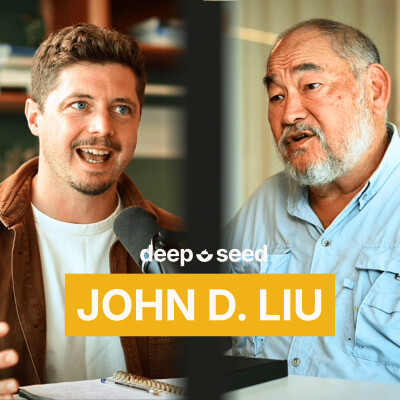
This place was called the most eroded place on earth. And so now it's all revegetated and it's completely different. You can see trees and grasses and diversity and it's much more wealthy. You know, the people make more money, they have more food, they have more everything. Today's episode is a really, really special one because I had the privilege to talk to an absolute legend, John D. Liu. We talk about large-scale ecosystem restoration projects such as the Loess Plateau in China. That's an area roughly the size of France that was turned from a barren desert into a lush, vibrant ecosystem full of life. We then tackle the big question of if we know that we can do this. Why are we not doing it everywhere? And that naturally leads us to a really important conversation about the major flaws in our current economic system and the need for a paradigm shift where we put nature at the heart of our society, of our economy, instead of doing the exact opposite. Please, please don't forget to like this video and to subscribe to the channel because it makes a huge difference for us. I'm your host today, Raphael. This episode was made in partnership with Commonland. You're listening to The Deep Seed. Enjoy.
- Speaker #1
We're rolling, right? I'll tell you a story. So I was asked to speak to the global environment facility, high level. technical roundtable in 2000, and I believe it was 2005. And I gave this presentation where I discussed what I had seen in the rehabilitation of the Luz Plateau in China. And after that, the head of the soil Institute at Wageningen. Now, this is an independent international institute, but it's based at Wageningen. He came to me and he said, I'm handing the baton to you. And I looked at him like, what does this mean? And so now I see a 36-year-old in front of me, and you're interested in these same things. So let me just say, I'm giving the baton to you.
- Speaker #0
What an honor.
- Speaker #1
No, it's a serious...
- Speaker #0
You know, but I take it very seriously.
- Speaker #1
It's a serious responsibility, actually. So the thing is, it means that for the rest of your life... You have to realize all of those things I'm talking about when I'm talking about time, or when I'm talking about the hydrological cycle, or the soil fertility, or the atmospheric systems, or the biodiversity. All of that you have to understand in order to really grasp what's going on.
- Speaker #0
I watched last night a documentary made by Dutch TV about you. That was about 10 years ago. And you opened the documentary by asking the question, wait, I wrote it down. And you said it's possible to rehabilitate large-scale damaged ecosystems. So why are we not doing it? Have you found the answer since?
- Speaker #1
Unfortunately, more or less, I have. The reason that it's not happening is because people imagine that our money, our economy, wealth emerges from buying and selling manufacturing and buying and selling material things. And this, unfortunately, emerges from this part of the world. With mercantilism, with the creation, early creation of the East Asiatic Company and exporting and importing and then colonization, all these European states moving out to colonize. And so now we have a global civilization. And this global civilization... is made up of people who have, and the political systems that we have and our economic systems that we have, were created by domination all around the world. And that has led to certain outcomes. So when I... I first saw the degradation in the Les Plateaux. I was wondering, is it really possible to restore this? But when I saw it was possible to restore it, I wondered, what exactly caused this to degrade? So, when we think about this, The degradation is logical because we've made certain choices. So, 10,000 to 12,000 years ago, humans looked around and they were gathering berries and fruits and leaves and roots and things to eat and they were killing animals. So, they were hunting and gathering. And they said, oh, this is a lot of work. We're hunting and gathering. What about this one plant that hangs right over with all these grains? We like that one. And so let's capture those or get those and spread the seeds and kill the other plants. That's ignorance. He does that not because he understands anything. He does it because he wants something. So he's acting from desire and from ignorance. And what's the result? 10,000 to 12,000 years ago, vast deserts, massive areas. Well, what happens when you have a desert? So that's a desert. What do we know about deserts? It's hot. Where does the water go? You know, like, does it never rain in the desert? It sometimes rains a lot. You can find video. if you try hard, of cars floating through Dubai last year, Valencia, other places, all over the place. There's enormous rains, but there's no way to infiltrate and retain the moisture. So, what happened? For 10,000 to 12,000 years, human beings made a decision that monoculture annual cropping was a good idea. So you can go into the Amazon or the Congo Basin, and you can destroy it and turn it into a desert. And that will cause higher temperatures, where the solar radiation directly hits the surface of the Earth. Well, what does that do? That sterilizes the top area. where the microbial and fungal communities live. And those are the methodology for the transmission of mineral nutrients from geologic materials into plant life and into human beings. And to all life, basically. And this is also the basis of photosynthesis, which creates the oxygenated atmosphere. And this is also the basis of the cycling of the water and the growth of the fertile soils, because each generation of life dies and gives up its body. So, once you understand this, Then you think, oh, a mistake was made long ago. Do we have to maintain that mistake? No. But if we don't maintain that mistake, then we have to look at what are all the systems of our governance? or our economics that include this mistake. And we have to exercise this mistake. If we don't, we get the same result. So now you go back in this concept of time that we were talking about, the vast time, the cosmic time. Earth time, evolutionary time, and human history all kind of make sense. And then you realize, oh, in evolution, there's life. And then you think, oh, look, in my body is DNA. What does this DNA say? It says all life is connected to all life since the beginning of time. And it can't be any other way. And I think often we're thinking that we're physical beings. And maybe we'd like to pray or meditate. or do something to have a spiritual experience. Or sometimes we are just in awe of nature, or in awe we fall in love, and we are surprised by the beauty and the elegance of this. And then we're thinking, oh, we're experiencing a spiritual moment, you know. But what if we're not physical beings? What if we're spiritual beings who are just experiencing a physicality for this moment in time? And eventually we will go back to where we came from.
- Speaker #0
Yeah. There is so much to unpack in everything you just said. I want to start with the economic system. This is the first thing you mentioned. The globalized economic system that we live under and the fact that this is a very... sort of extractive system and that it's one of the root causes of the problem right now and the fact that we have these amazing solutions. We have science, we have data, we have pioneers proving that things can be done yet we're not really doing it, not on the scale, not anywhere near on the scale that we should. Do you think we can solve our problems within the current sort of globalized financial system?
- Speaker #1
Well, no. No, we have to have a change. So, I think it was Einstein who said, you will never solve a problem with the same understanding with which you caused the problem. That's what change is about. So, we have so many mistakes, and the mistakes are not just, I mean... You can reduce the mistakes to sort of discussing economics if you want to, but actually it's also the lack of justice. And the lack of equality. And then the other part is what you said before. The outcomes of this type of economy, as I was talking about the desertification, it doesn't take into consideration what's true. And that's not even to talk about the other species of life. What's the point of killing things, other species, other beings, that we don't even know what they are? If you study ecology, you have to realize all living things are co-evolved into, well, paradise on earth. But it's human beings who made the mistake of saying, well, we own everything. Everything's for us. These are ecosystem services. There are no ecosystem services. There's only functional and dysfunctional ecosystems. And the dysfunctional ecosystems are dysfunctional because we broke them. Because we said we don't need these animals or we don't need these plants because we didn't know what they were. And thought, let's just eliminate them because we're scared of the big ones with the big teeth and the big things and run faster than us. Let's just kill them. And, you know, well, wait a minute. They co-evolved with all the other life. When you take out the top predator, what are you doing to the whole food chain? And then you start to have extinctions. Well, we better think about extinctions then. Because when you have an extinction event, the top of the food chain is the most at risk. Who's the top of the food chain? We are. So, this is like outrageously wrong. The scale of what's wrong is bad. And if you have one corporation or 50 corporations or 1,000 corporations and they all make huge amounts of money, But you have billions of poor people and people who are born on the earth but have no human rights. How is that okay? How is that success? Is that wealth? No, that's terrifying.
- Speaker #0
Definition of wealth is problematic, right? Something that occupies my mind a lot is that the majority of people seem to still be obsessed with the idea that growing the economy, growing GDP, growing the number of transactions within an economy. is going to lead to better lives for people, better livelihoods for... for people, right? And it's so obviously, painfully, obviously untrue. I mean, you just look at the US in recent years, their economy has been booming. Everyone is like, oh, we should do like the US, look at their growth numbers. But everything else has been declining. I mean, in terms of ecological health, safety, polarization of society, we can, you name it. Psychology. Psychology. Yeah. You name it, pretty much everything has been declining. The lives of people are not getting better because the economy is getting... So, we have kind of an issue. We need to maybe change our definition of what we consider to be wealth, right?
- Speaker #1
Exactly. Absolutely. And what happens when we do? Now, this is the hopeful part. So, if we change our economics to realize that ecological function is more valuable than things, what would happen? Suddenly, you couldn't waste anything. You couldn't pollute. If you polluted, you'd be degrading your economy. Why would you do that? You're also poisoning yourself. Why would you do that? You know, so all the things which we're doing wrong would kind of disappear because the central intention of human civilization would be to do the right thing. So, I think a lot of what's happening, we talk about like, well, we have to make this policy or we have to make this. incremental change or whatever. And the idea of doing that means it's less bad than what we were doing before. Well, that's not the same as doing what's right and doing what's good. I think doing what's good is better than doing what's less bad. And so, that means we're going to have to have a Reckoning.
- Speaker #0
I want to turn a little bit to maybe hope. We've established that things are bad. So people are aware that there are problems, but I want them to leave this conversation knowing that there's also a lot of reasons for hope. And you've been involved in your life in many very impressive large-scale restoration projects. I would love to discuss some of those. Maybe we could start with... One that you're quite famous for. You made this documentary, Hope in a Changing Climate, about the restoration of the Loess Plateau. Did I pronounce that right?
- Speaker #1
Yeah, Loess Plateau. It's a German word.
- Speaker #0
Oh, wow. Okay. Which is an area in China that is roughly the size of Belgium, the country I'm from. Yeah. It's a huge area. Maybe you could tell us this story.
- Speaker #1
Right. Actually, the pilot project was the size of Belgium. The entire Loess Plateau is the size of France. And it's called the Loess Plateau because of its geomorphology of its soil. So this is granites high up in the Himalayas, and they've been ground down by the movements of glaciers. But then, over time, it's colonized. By plant life. And then as it's totally... Covered with plants and trees, then it has massive forests and it has rivers and it has grasses and, you know, wetlands over here and this. So whatever the type of rainfall is, as long as it's not nothing, you know, then like if you get 400 or 500 millimeters of rainfall per year, that's enough for a deciduous hardwood forest. And then it's also that what happens is the respiration of the plants circulates in the lower hydrological cycle, so below the canopy of the trees. And because the solar radiation doesn't directly hit the surface of the earth, it doesn't create thermic drafts, which push this moisture into the upper atmosphere. So that's cooling system. And this cooling system brings your temperatures down to where humans have lived for the last thousands of years and become the dominant species. But what we saw when we got to the Loess Plateau was it was ruined. It was devastated. You know, could it be repaired? But the Chinese were getting rich on the coastal regions with all their factories and buying and selling their things. So in this materialistic world, they had changed, and rapidly. had rapid growth of the GDP. And then as a government and as a people, they said, you know, there's a lot of people who live in the poorest parts of China who are not enjoying this increase that's taking place in all this manufacturing and buying and selling of exported goods. So what about them? And so to their... you know, credit, they said, well, we're going to, let's go fix it. And this was also the cradle of Chinese civilization in ancient times. So, all the early dynasties were in this region. They did the same thing that happened in North Africa. They took out all the vegetation and they started planting things and then they just overused it. They deforested and then they overgrazed it and then they also planted poorly with monocultures. So by the time I got there in 1994, the World Bank had asked me to film a baseline study of the Loess Plateau to be able to... measure what kind of changes would take place if the Chinese made these interventions. And the World Bank had provided the Chinese government, the Ministry of Water Resources, the Chinese Academy of Sciences, the Academy of Social Sciences, the ability, you know, $500 million. in a revolving development loan, which meant they could use this money. And if they were able to generate income and pay it back, then they could take it again, because it's like your checking account or like your credit card account. And so, the Chinese said, all right, in order to do this, we're going to have to go out to this place, which is huge. And basically everyone who lives there is desperately poor. poorly educated, a lot of illiterate people, and a lot of people in despair because they've been experiencing famine and they're miserable. And then we have to tell them, by the way, you're not going to be able to cut trees anymore. You're not going to be able to free-range goats and sheep anymore. And you're not going to be able to plant. crops on the sides of hillsides. Any slope over a certain degree, we're not going to allow you to plant on anymore. If you make it flat, then you can plant there. But if it's not flat and everything's going to erode, you can't do it anymore. Because this place was called the most eroded place on earth. So, for a long time, people had known, oh, that's the most eroded place on earth. Giant gullies. Gullies, you know, from here to, well, you know, over there is a gully. And it was all flat before and now it's gone. And so, So, those gullies are a clue. That's a lot of water. You have to have a lot of water to create like the Grand Canyon or some giant eroded place. So, what they did was they said, all right, unfortunately, the only things people did was cut trees. And free-range goats and sheep and plant on the sides of hills. So you're not going to be able, that's illegal now. You can't do it. So we have to train you to do something else. So here's what we recommend. We hire you, we pay you to learn how to do restoration. And you take on the task of doing restoration. And when you've restored the landscapes, if you can make it flat, you can have that land to grow things on. And we recommend perennial polycultures as opposed to just annual. Monocultures.
- Speaker #0
So just to specify, when you say making it flat, it's like terracing on the hillsides?
- Speaker #1
Terracing, mainly.
- Speaker #0
Terracing, and then like perennials or plants that grow there for many years?
- Speaker #1
If you plant trees or fruit trees and everything. But you can also grow annuals, but recommendation would be perennial polycultures.
- Speaker #0
Yeah.
- Speaker #1
And... Then they had to make some water catchments in order to hold the water, especially in the beginning. But now it's 30-some years later, and so now it's all revegetated, and it's completely different. You can see trees and grasses and diversity, and there's it's much more wealthy. You know, the people make more money. They have more food. They have more everything. And it's easy to pay back the loan. So, everything that was about this... said, oh my goodness, it's possible to rehabilitate large-scale damaged ecosystems.
- Speaker #0
They really went from an ecosystem that was completely degraded. And when you say degraded, it's like almost desert. It's rocks and desert and nothing's growing almost anymore, right?
- Speaker #1
It looked like it was a desert.
- Speaker #0
Like from the images in your documentary, it's very striking. And then how they managed to turn something that looks like a desert into something completely green, where you feel like it's a living ecosystem.
- Speaker #1
Yeah, they did that.
- Speaker #0
What's the biological process to go from one to the other?
- Speaker #1
Well, it's basically, if you go back to that concept of time, and you have... Cosmic time, earth time, and you get to evolutionary time. Now, you have to think, what does that mean? What was evolutionary time? What happened? And it's cell division. And it's living. It's like living a process of life. And so, when that one organism... begets other organisms, but then that organism dies, and then the new organisms have more progeny, and they die. So, it's biomass is the living. living biological life forms. So, the beginning, it's bacteria, and it gets, then it's more fungal, and then it's more symbiotic, like lichens and other things, which are symbiotic things. And then, gradually, it just gets into vascular plants, and it changes. Every generation is mutating. And then... Each generation is dying and it's accumulating necromass. So you have the biomass as living material and the decaying organic matter or necromass is accumulating. And so suddenly you don't have just the sediments of Lus. You've got all this fungal communities and bacterial communities and all this plant material. So you have biomass. and necromass, and you have biodiversity because all this is changing. So, all this symbiotic life forms create, constantly filter, and continuously renew the atmosphere, the freshwater system, the fertile soils, and the amazing biodiversity. And then, you know, if we understand that, And we also realize that over time, humans had destroyed that. But that's not a good idea. we can turn it around. Why don't we do that? So, here's an example of why don't we do that? And we did it, and now the question is, why don't we do that on a planetary scale? Why don't we do that everywhere? And that's really where we're kind of at, and the more people who kind of have this like awakening that, well, yeah, why don't we do that? So, you know, then you have to question, well, what is it? And And, you know, in my opinion and my sort of analysis of the situation, we are still acting from selfishness and ignorance. Because these things are baked into our systems, baked into our laws and baked into our governance and our economy.
- Speaker #0
At the root, it seems like maybe... One of the biggest problems is that we think that we're separate from nature. We've kind of forgot that we are nature, that we are part of it, that this is one living, breathing ecosystem that we're part of, and that by damaging nature,
- Speaker #1
we're actually hurting ourselves.
- Speaker #0
By damaging nature, we are actually hurting ourselves. That is such an important key message. And if like John and I, you think that more people should hear this, please help us spread the word by doing these three really simple things. One, just click on the like button. Two, subscribe to the Deep Seed channel. And three, leave us a question or a message in the comment section down here. Doing these three things will really, really help the algorithms on YouTube boost this video and show it to more people around the world. And it makes a huge difference. Thank you so much in advance.
- Speaker #1
Yeah, we need to restore all degraded lands on the earth. We have to not have any trash, no waste. There's no waste in nature. It's all biodegradable. It's all, you know, death is part of life. We have to get rid of the fear of dying and realize that that's an inevitability. Better not be afraid of that. You better think of that a lot. rather than not think of it. And then suddenly, you know, you die. How terrifying is that? So you want to be prepared for that. But this concept of collective intelligence, if we can get there, there. And we have to think about like all these billions of people on the earth, where's the problem? The problem is in the highly developed, wealthy parts of the world, not in the tribal peoples. jungles or in, you know, more simpler societies. They still, you know, where they are not in good shape is where they're adopting the behaviors of the dominating cultures who brought them materialism. And now their forests are getting cut down and their animals and biodiversity are being lost to... produce more generally for international corporations or something. You know, it's not even going to help them. They're going to be left in poverty than in a more degraded state. And so, getting into the concept of human rights or what is just. What is even true, I would say birthright, the fact that every living being on the planet that's born on the earth has the right to life. How could it not be? Who among us has the right to say, you don't get to live. You should not have food. You don't need a home. You can't live on the earth. I own it all. You know, what? You know, really? Where did that come from? That happens. It had to be, that's made up. That's a concept. So that made up concept is evil. You know, like that's a bad idea. And, you know, justice and everybody having the right to life. And the idea that we own the earth, you know, we're going to die. We're going to give up our bodies. How do we own the earth? You know, we borrow it from our children or we inherit it from our parents, you know, but we're going to, it's not ours. We are part of it. That you said, I think, you said, we are part of nature. That's exactly correct. And when we understand that and we put that into our equations, then we have to say, in this scenario, in this understanding of evolutionary climax evolution, there's no waste. Everything's biodegradable. All the biomass becomes necromass. It deteriorates to feed the communities of organisms that make geologic materials bioavailable to... living things. So, okay, now we get it. So, if we all know that, and we say, okay, that is the basis of the water cycle. That's the basis of the atmosphere. That's sequesters carbon. And so, carbon is this idea of the it's all carbon. That's wrong. Anyway, carbon's not a poison. Carbon's not wrong. You're carbon. So, the abstracting of these things to make them into commodities to sell, buy and sell on the market doesn't answer the problem of why you have disequilibrium. in the carbon cycle once you understand why you have disequilibrium in the carbon cycle and you want to restore the ecosystems yeah and you want everybody to live on the earth and in a righteous way that's not destroying nature. So how do we do that? We have to have less stuff, you know. It doesn't mean we have to be desperately poor. We have to be uniformly affluent. We need to be uniformly affluent.
- Speaker #0
Petey Collective consciousness that you're referring to.
- Speaker #1
Petey Yeah. And share. Realize that if we all share, we all have everything. Petey Yeah. have some people who think they deserve to have everything and billions of people can wander the edges of deserts with nothing you know what you know like i don't think that's going to work i mean they're going to get kind of angry you know that
- Speaker #0
you know that's not good yeah fair enough do you think we should rethink the concept of private property well i think we should have a conversation,
- Speaker #1
whether it even exists. I mean, you know, nobody wants to have my socks and underwear, but, you know, I think, and, you know, and I think it's nice to have a house, but shouldn't everybody have a house? If you say, no, no, no, these people can't. Well, wait a minute. I think we've crossed lines now. about this. And we're just saying, well, I want to justify selfishness now. You know, you want to justify selfishness? Why? What's that about? No. You know, and of course, it's saying, generally speaking, it's always sort of saying, This culture, our culture, my culture, whatever it is, is better than your culture. Or we dominate you. We're more intelligent than you are. You don't have the same rights. What? You know, really? You know, like, where does it come from? So, that's not an evolved, you know, that's not a wise, evolved thought. That's a selfish thought. And that's been the basis of history. If you, you know, when they're teaching you, okay, this war took place and we took that and they took that. And, you know, well, is that a good thing? Are we going to keep doing that? You know, and now we have nuclear weapons. We can just blow up everybody. What? You know, like, I don't know. That doesn't seem to be the direction of human evolution.
- Speaker #0
Are you hopeful about a future?
- Speaker #1
Well, I mean, I think we can see that there's good in the world. I think the world is beautiful and fantastic and love is great and life is wonderful. And so I think we have a responsibility to do the right things. Will everybody do that? I think everybody has a chance. I don't know. You know, some people do the wrong things. Probably everybody. Nobody's perfect. But that doesn't matter exactly. What matters is that we do our best. Isn't it?
- Speaker #0
I think so, yeah.
- Speaker #1
Yeah. So I think there's a lot of reasons for hope.
- Speaker #0
Yeah. Well, let's come back to hope then. Okay. Yeah, you told us about this wonderful story in the Leus Plateau in China,
- Speaker #1
but you've also been involved in many other projects. Is there one in particular that you'd like to talk to us about? Well, yeah, there are many. But I think one that I'm really excited about right now is Barneo. Because we're in a place where we need to reach scale. So one of the great things about the Loess Plateau is it's really big. And so if you do restoration over a really big scale, then you actually see... what it does for the people, for production of different things, but you also see what it does for the global ecosystems. So we need to address climate change. We need to address biodiversity loss. We need to have food security for people all over the world. And We have to restore the hydrological cycle, keep the moisture close to the earth instead of having thermic drafts pushing it up into the upper atmosphere, where it's more of a greenhouse gas than CO2, both in quantity and in quality. So like CO2 in the atmosphere is less than high altitude moisture, and it's less effective. at holding in the greenhouse effect than atmospheric moisture. So there's a lot we can do. And what's interesting about Barneo is that it has two things that are, well, there are three things that I think are three pillars of this project that I'm interested in. One is... Over relatively recent periods, they have converted rainforest into palm oil plantations. And these palm oil plantations, palm oil, it turns out, is about 70% of something like that, of industrial plant-based oils. And some of the processes, they're using a lot of chemicals in the growing, and they're using high-temperature refining. So if you put those things together, the chemicals that are in the oil under high temperature become more and more dangerous, and some become carcinogenic. So, it all ends up together in this huge amount of palm oil. So, you don't know if you're getting palm oil, organic palm oil, or you're getting palm oil with chemicals in it. And it also destroys the hydrological function where the rainforest had maintained. Rainforests are like dripping, and they reduce the temperature. So it's always raining in a rainforest. It doesn't have to rain for it to drip on you. It's really interesting. And it changes the temperature. It has a huge amount of oxygen. And so when you don't have that, you're getting a lot of... Plus, the necromass, the decaying organic material, is really fast deteriorating in the tropical areas right on the... on the equator. And that's where you're growing a lot of this stuff. And that's also where the water needs to be regulated. So you have a whole bunch of reasons why it's really interesting to have this. But it's a problem. It's a big problem. You've got all these chemicals, you've got all this, and then you have the rainforest that's been taken away. What if you could transform the monoculture palm oil plantations to polyculture? palm oil plantations and organic polyculture plantations. That would be massively different. Plus, you could reduce the scale of that potentially and increase the scale of the areas in rainforest. That would be brilliant.
- Speaker #0
So, the proposition is not just to rewild everything, but it's to keep producing, but in a way that is much more intelligent and in harmony with nature.
- Speaker #1
agroforestry basically still we're talking so like the disruption if you took away 70% of the plant based industrial oils it's not possible so you can't do that now without having a complete breakdown of the existing system. And I certainly don't think that's a good idea. We need to have the replacement for this system. I think we can change. We can change how we value things. If we change how we value things, then money is, we made it up. So we can make it up again and say money is based on ecological function, and then let's give money to everybody, not just give money to a few corporations. And then if we have, everybody has enough money to have a home and to eat. And instead of maybe getting bigger and bigger and bigger homes and saying, oh, my home is my castle and I've got this gigantic thing. We say, well, you know, everybody needs a home, actually. And that seems fair. And let's make them all nice. You know, let's make them all wonderful. And everybody needs food. And all that food should be healthy and organic and nutrient rich. And, you know, that's better. better. You know, let's go, let's do what's right, not what's less bad. And then, so, if we realize that the economy can change, so if we realize we can restore degraded ecosystems, let's realize we can change the economy. That all the economies that have ever existed all collapsed because they destroyed their ecology. Well, what if we made a decision, we understand this, we're going to fix the mistake in the equation. then everything goes better after that. I think this is where the hope is. And also, everybody in those villages, in Sarawak, in Barneo, they can do this. They have nothing else to do. They don't need to go work in fast food restaurants or make more kind of silly anything, plastic goo gauze or junk to trade in the global economy. They need to restore the rainforests. They need to turn all the palm oil plantations into polyculture organic systems that are biodiverse. And in this way, that's the highest value for that entire population. And then they can live in their traditional homes in the way that they lived for centuries. and thousands of years because they're not the reason that the global economy became materialistic. They were victims of it. So, you know, why should keep on punishing them for not for what? You know, it's crazy. They get a chance to do this. Now, then when you go further, you realize it's not just Sarawak. It's all over. In Malaysia, Indonesia, it's in Africa, it's in the Amazon in South America, because all of these palm oil plantations are everywhere. It's 70% of the industrial plant-based oil. So, if we can do this successfully in Sarawak, what's stopping us from doing it in every other place where there are palm oil plantations? Now, that's the scale. Now we could then go, well, I wonder about the Sahara. I wonder about the Sinai Peninsula. Could we restore the Sinai Peninsula? We've been looking at that for about 10 years. I think it can be done.
- Speaker #0
So do you think that we could theoretically re-green the Sahara, the Sinai?
- Speaker #1
The Sinai, of course. We've actually, in modeling, done it. So, the weather makers have been using computer modeling, if then, you know, if you did this, what would happen? And when you do that, if you do the right things, you'll bring back moisture-laden air from the Indian Ocean that reversed its direction thousands of years ago. and Killed all the vegetation and all the biodiversity in the Sahara. Well, we can reverse this by revegetating. And we can revegetate with lots of, I mean, the Chinese have shown it's possible to bring back even... entire vegetative corridors through the middle of the second largest shifting sand desert in the world.
- Speaker #0
Yeah.
- Speaker #1
I can give you pictures if you want to show this. I'd love to, yeah. I'll give you the pictures. Yeah. No problem.
- Speaker #0
The video, yeah. There's a really important point that you've already made several times, but I really want to highlight, is the fact that we can actually change the climate. We can change weather in regions. There's this kind of idea that some parts of the world are deserts because it's just too dry, and there's not enough rain, and it's just the way it is. But we can actually change the weather locally by revegetating.
- Speaker #1
Well, I think what you're going to find is that the local weather and the global weather, are all interconnected. And I would say another thing that I learned when I went to Mali was that actually what we're calling poverty is just the reason that we don't. The only reason for the poverty is we have decided that the ecological function has no value, that only our transactional materialistic economy is really where money comes from. So if we valued the ecological function, function, there would be no poverty there. The population's tiny, and the place is twice the size of France. And the water that's in there is rising every year and receding every year into huge, huge, vast area from the Niger River coming down into the... into this basin. And it just, people have to float away to, I have these pictures too. So, the people have to float away in the rainy season because everything's covered. And then it all disappears. And that's the place where all the birds go from here, go down there to Mali, and then they fly back here. And so, this is what I start, what is that? It's going this and this and this and this every year like this. What is that? It's a pump, and that's the water that circulates surrounding the earth around the equator. It's the most valuable thing we have. It's ridiculous to say that they're poor. How could they be poor? That's, you know, not even the population of Los Angeles in a place twice the size of France. It's ludicrous. So, you know, the idea... that we know what value is in the existing economy is just false. We have all these people who are making jobs, making businesses about getting money to themselves. And, you know, that's all about buying into these mistakes and maintaining them. But we need to do this. Now, there's a lot of talk in the EU, there's a lot of talk in ecology and in science. We have to value earth systems, biodiversity, the hydrological cycle, the soil. We have to. We know this now.
- Speaker #0
I see it a lot proposed as an add-on to the current system. Like, what if we value biodiversity, we put a price on it like we did with... with carbon, but what you're referring to is something much deeper than that. Much deeper. Yeah.
- Speaker #1
This is, the idea of commoditizing nature is to devalue it. That makes it less valuable. It's way more valuable. The only thing that we actually have to say, we don't need to change or commodify or express. the nature as money, we need to naturalize the economy. If we understand this, that by only saying it's relational, ecological function is always more valuable than anything else.
- Speaker #0
Yeah.
- Speaker #1
So, once you do that, you can't do all these other Thank you. degrading things that we've done all this time. But we can't say it's worth just this. That's saying, like, what do you mean? It's infinitely valuable. It's ridiculous. So you can't commodify or monetize nature. You have to naturalize the economy. naturalize the economy.
- Speaker #0
Yeah. How do you get there? Because right now you have some very, very wealthy and powerful people. Like we have the first trillionaire now. Well,
- Speaker #1
you think he should have more rights than everybody else in the world?
- Speaker #0
But what I'm saying is that he has the power now to buy elections, to buy algorithms, to buy media, to... How do we get people like that to give that up and accept to push for a complete... overhaul of the financial system where we put ecological value at the center.
- Speaker #1
I think we have to, what I would recommend personally, is we work with communities. And the communities can understand this right away. And even the people in corporations and even the people in government, they can understand this. But they have to let go of their own interests. They can't say, selfishly, I would rather do this for myself than to do what's right for humanity or what's right for the earth. We have to do what's right. Not make it less bad. So if we say there's, if we understand that there's errors in the existing thought, and that if we leave those errors in place, we're not getting a different result. That's going to... be the same result. And then we look at it and we say, oh, that's just really too hard to do. It's really hard. We can't get that, you know, that's thousands of years of socialization. We, my grandfather did that, you know, there's nothing I can do about it. Well, Okay, then you're accepting this. You're saying it's all right. How is it okay? How is it okay for an individual to have more than billions of people around the world? How is that okay? Who says it's okay? So, you know, no, everybody has to, as soon as this, as soon as you think about it, For any length of time, it's irrational. So if it's unacceptable, then how can we accept it? You know, logic should work, you know. Everybody who's born on the earth, and all living beings that are born on the earth, have the right to life. We need to realize that we don't own the earth. The earth owns us. We're part of the earth. We're part of life. And that we're destroying life if we don't understand what it is. We don't value it, really. So let's value it. And let's answer those mistakes that exist in the system. We'll have to do that collectively. So, you know, we came together after World War II and created a world order. Well, I think we better convene again and we have to say, well, maybe that didn't work very well. And it brought brought us to this place of material wealth for some, but mass poverty for many others. And it's unsustainable because we're destroying the hydrological cycle, the biodiversity. And And the climate. So, either we say, oh, it's too hard, we can't do it, and say, okay, that means we're going to accept the consequences of biodiversity loss, climate change. We can't. We can't. It's too horrible. So, we can't. So, we have to make this change. This is where we're at.
- Speaker #0
Yeah.
- Speaker #1
So I'm hopeful, but...
- Speaker #0
But, yes, yes. You mentioned the importance of local communities.
- Speaker #1
Yeah.
- Speaker #0
I know you started a project maybe 10 years ago, something like that, called the Ecosystem Restoration Communities. Is that right? Yeah, yeah. Maybe you could tell us a little bit more about that initiative.
- Speaker #1
Well, yeah, I actually didn't have much faith in it at first. But I also thought... That I had dreams. I just kept waking up in the morning. And in my dream, when I woke up, I could see my dream perfectly. And there were all these people and they were having a great time. They were eating breakfast together and then they were going out to do some work or they would go out really early in the morning to do some work because it was cooler. And then they came back and had breakfast, and some of them were lying around, and everybody was happy. And everybody was doing things that they liked, and it was like, oh, man, that's a, you know, sort of a utopia. utopian vision, you know, but my father always said, you're not a very practical, you're a dreamer, or you think about these weird things, you know, it's romanticism or something. And, but, and so I was like, shaking my head, like, get out, you know, that's the dream is over. Today is another day, I've got to go to work, you know. And then every day, it was like Groundhog day, that movie, where every day I woke up and And this dream was in my head. Oh, now I got that dream again. So I wrote it down. And it was published in Permaculture magazine. And suddenly, online, lots of people started, thousands of people started saying, well, we want that. And when that happened, it was like, okay, well, we'll have to figure out how to start a foundation and make that happen. I think that was in... In autumn 2016, this essay was published in Permaculture Magazine. And then all these people said, yeah, we want it. And then we said, okay. And then a young man and his wife in Brussels were... We're getting married. And they said, we don't want any presents. We want to, our guests, to help us to start this foundation. And so now Francois, who's the husband in that family, is the chair of the... the foundation. And so, the foundation was based on love. Basically, their marriage and their guests paid for the creation of the foundation. And then the first camp was together with, when I went to down to Spain, to La Honquera, because of the Al-Wala'l and Common Lands work there. I presented my work in China to the mayors and to all the people in that region who were interested, and it helped to get the signatures and people engaged in Al-Wala'l. development. But I met Alfonso. And Alfonso, who lives there, actually was building a beautiful stone house, but he was all alone and he was doing permaculture. And I thought, you know, I've never seen anybody restore a big landscape without help. And I thought, maybe the first first camp could be here and I told him about it. He said, okay, the camp can have five hectares and start there. And so that's how it started and then thousands of people and tens of thousands of people started to go there and then more camps were created the second year.
- Speaker #0
What are people doing there?
- Speaker #1
Well, they're working for restoration. They're learning and they're learning how to collaborate and they're learning how to infiltrate water and grow soils and and and to understand the importance of biodiversity. And you can see there's a beautiful piece that was done by Andrew Millison on that camp about a year ago. And So,
- Speaker #0
I'm sure there's a website where people can find all of the different communities that they can join. I'll leave a link in the description of the episode.
- Speaker #1
We also have another group that's called Friends of the Ecosystem Restoration Movement.
- Speaker #0
Okay.
- Speaker #1
So you can find that, too. And Friends of the Ecosystem Restoration Movement, we're working to make it into a very functional place where people who really want to do something. important. They want to either learn about it or participate in something big. So, they might have land, they might want to design, or they might want to participate, whatever it is. They can go to the Friends of the Ecosystem Restoration Movement or Or they can go to the ecosystemrestorationcommunities.org. And if they go there, they can just find from pick one that they like and go there. So there's lots of possibilities.
- Speaker #0
if like me you would love to get involved in ecosystem restoration but you don't know where to look and you don't know where to start i highly recommend checking out the ecosystem restoration community's website i will of course leave a link in the description of the episode or you can just google it and it's quite easy to find it something else really cool that we could do together is use the comment section of this video as a message board for connecting people and projects. So if you're running an ecosystem restoration project or if you are a regenerative farmer and you are looking for volunteers, leave a message here with some information so that people can find you. If you are an individual with skills, with time, with passion, you want to contribute, leave a message as well. And if you hear about any interesting projects going on around the world, just share the links here as well so that everyone can find them.
- Speaker #1
So if we were able to make an economy that worked for everyone, that would just be perfect. Because all human effort could... be channeled toward like a central intention if we had collective consciousness around the importance and value of ecological function.
- Speaker #0
Some kind of well-being economy or care economy.
- Speaker #1
A care economy would be really useful. Rianne Eisler has written a couple of books about this. A lot of people have talked about it, but if it became collective consciousness, if that was what we aimed for, for that everyone could achieve their heart's desire that'd be great yeah and having i think even elon musk has been talking about um universal high income so he's not talking about universal basic income he's talking about universal high income because i think he wants to keep the whole materialism thing going but i think if we just had rational concepts so So that everyone could have a home and everybody could have food to eat and everyone could pursue their fondest wishes and achieve in art or in music or in science or in... in engineering or in whatever, they did well. And we all had the central intention that the highest value is ecological function on the earth because it's the highest value for us as a generation or all the generations that are alive today. And it's also the best for the generations to come in the future.
- Speaker #0
Yeah. What you're saying here really resonates with me because I'm in this position where I'm I'm trying to make a living. And I want to spend more time in nature. I want to contribute to the regeneration of ecosystems and biodiversity. I want to, I don't know, help educate children about nature, about their place in the world. I want to do all of these things. That's what I feel drawn towards. But I feel like I'm not able to make a living doing those things, or it's very difficult. It's going to be very, very... Low kind of income. And so I feel like my professional decisions are, I always have to balance, okay, the economics of how much am I going to get paid for that job with what I really want to do. But if I did have a, you know, just a basic income that I could rely on, then I could just take that breath and say, you know what, I'm going to dedicate myself fully to this thing that I think is right, that I'm passionate about, that I feel that my heart is drawn towards. Yeah. Anyways.
- Speaker #1
I think that would be wonderful.
- Speaker #0
Yeah.
- Speaker #1
And I think that's, if it's true for you, it's true for everyone. So every single person.
- Speaker #0
I have faith and hope that we can get there to this care economy, to this sort of ecological democracy or whatever you want to call it. I do have faith that we're going to get there. What worries me is that we're not going to until... we get slapped in the face hard enough that we don't have a choice anymore. And those slaps are starting to come more and more strongly and more and more frequently. Yeah, and I don't know how far we need to push this until the pain is strong enough that we get into gear and we flip the system.
- Speaker #1
I think it's... You know, I saw a movie recently, I think it's called Bruce Almighty, where this comic becomes God and sort of, or has God, God says, okay, you take over for a little while. He has omnipotent power. And he gets really crazy. He feels like, show me a sign, and there are just signs everywhere. And that's how I feel about this. If you're looking for signs, how many signs do you need? Because we've got plenty. If you think back to Katrina, the hurricane Katrina took out... New Orleans, you know, two different tornadoes took out Puerto Rico more than once now. You had an undersea earthquake, which created a tsunami, which took out multiple nuclear power plants in Fukushima. I mean How many things like this do we need? We've got heat domes, thousands, you know, hundreds or thousands of people are dying from heat stress in Europe. Or you have flooding in Valencia or in Dubai, you know, huh? You know, like, wait a minute. How many of these signs do we need? It's enough. It's enough to understand this. We have a vast desert. Just look at the map and think, what if that wasn't like a big empty desert? Why is that a big empty desert? Can we understand that? Do we know why? Yeah, kind of we do. You know, like, okay, if you remove the biodiversity, the biomass and the accumulated organic matter, then you're going to have thermic drafts, you're going to have massive increases in temperature. I measured 45 degrees difference in the Taklamakan between the sunlight at noon in July on the sand, at noon on July in the same place with an artificial vegetative cover of halophytes, that means salt-tolerant plants, that were planted there by Chinese scientists. It's 25 degrees. 70, 25, that's 45 degrees temperature differential. We know how to do this kind of stuff. If we get it right, we need to practice carefully, and we need to have that be the central intention. But nobody wants to do that. They want to make companies and make abiotic things that are bought and sold. We don't eat or breathe or drink. Abiotic things. We live, we're alive because of the ecological function on the planet. That's what we need to prioritize. That's the primary system that we need to... be very careful of, take care of, and ensure that remains for the generations in the future.
- Speaker #0
Before we close this conversation, maybe there's one more topic I want to maybe try to explore with you. You referred to a few times to sort of spirituality in this conversation, and you talked about this common consciousness, you talked about time, You talked about... prayer and meditation as well.
- Speaker #1
Yeah.
- Speaker #0
At one point. I'm wondering, what role do you think this plays in our ability, collective ability to create a better world?
- Speaker #1
Well, yeah, that's an interesting question. When I was young, I was always asking the adults, what's the meaning of life? And they were like, not very interested in my asking that, because it's quite a complicated question. And I think that... We're all living our lives. If you think about it from the Chinese perspective of, let's say, Taoism, we're on the path. The Tao means the way. And today, you and I are walking down the path of life together. And our thoughts are important. And what we say and what we do... can affect others. That's kind of extraordinary. And so, you know, striving for what's good, trying to reach for our best selves. And I think getting out of selfishness is like a really good thing. Because when we ask this question, like, what can we do? If all we can do is take care of ourselves and just accumulate more material possessions to ourselves, that's not a very high goal. You know, but if we could, say, restore all the degraded lands on the earth, that's kind of an interesting worthy task. It's hard. Maybe it's impossible, but that doesn't I mean... We shouldn't try. And if we try and we have any kind of result at all, it's going to be better than not trying. So here we are.
- Speaker #0
I sometimes struggle a little bit between, on the one side, this desire to change the world, to have a massive and positive impact and try and be part of those big solutions. And the other part of me just wants to live my life and maybe make my own little part of the world better and be a good person to people around me, but just keep it simple.
- Speaker #1
I think you're going to do both. Because the interesting thing, like I worked a little bit with, well, for 25 years, had a friend and colleague and mentor was Dr. Dr. Jane Goodall. And she was just a really ordinary person when you got to know her. But when I first read her, I read one of her books when I was a teenager, and I just thought, oh, this is brilliant. And she's a goddess, and I will never know her. I could never know her. And then when I met her and I realized, oh, she's really a very ordinary person, but she's done extraordinary things. So maybe the thing that we should be thinking about is not could we be extraordinary people, but could we be ordinary people? people who all do extraordinary things. And if that's the future, if we transform the economy so that it helps to restore all degraded lands on the earth, and everyone has a role to play in that, and everyone's lives are enriched, and everyone has the chance to have adventure and inspiration and beauty and kindness in their life and it's better for everybody, wouldn't that be good? And, you know, my thing is this. My wife says, my wife is German, and she says my Igor is too big. She means my ego, that I think I could actually change the course of human history or restore all degraded lands on the earth. You know, that's ridiculous. You know, you can't do it. It's too much, too egotistical. And I think, oh, no, I really feel more like Eeyore. the donkey in Winnie the Pooh. You know, like, you know, nobody's really listening to me. Nobody cares what I think. And, you know, and I realized that these are polar opposites. That's like bipolarism. And then I realized when Igor and Eeyore are together, They cancel each other out. And that's silence. And it's in the zone. And maybe that's, you know, for me, that's, I need a little bit of Igor just to get out and do things. But I need Eeyore to not be megalomaniac about my abilities to do things. So, it's in the middle where it's just like. Perfect. Calm. Silent.
- Speaker #0
So... Initially, this is where the conversation ended. But John and I continued talking, casually at first, about our personal lives and so on. But then that conversation started building back up into something really powerful. And since we kept the cameras and the microphones rolling, I decided to include that last section in the episode, because it was just too good not to.
- Speaker #1
We've also got a camp in Britain, in Sussex. I think of it more like the Shire. Did you see the hobbits? The hobbits, yeah. Yeah, yeah. So, the Shire. So, it's got a, and actually it's quite serious, too, because it had a terrible pollution episode. And somebody, some criminal, really, I think it's criminal activity, they dumped poisons upstream and they poisoned the lake in the... in this community, ecosystem restoration community that we have. And all the fish died. All the amphibians, the fish, the amphibians, everything died. It was horrible. And the people who run it, of course, had tremendous financial loss from this. Also, they asked the government, you know, they said, oh, the Environment Agency and the water companies and, you know, it should come and help, you know. Nothing. Two years, nothing. And the first day I said, oh. Well, you're going to have to clean the water. You know, you're going to have to learn how to restore polluted waters. That's your opportunity to do this. And they were like, oh, the government has to do it. agencies and then this and that. No, no. And now they're back to the thing and they have to do it. So it's a beautiful place. They even have a pub. They have a pub that's not open. So movie night and singing, everything's there, you know.
- Speaker #0
That's beautiful. That's amazing. Actually, just... Something maybe that I didn't ask you about in the conversation, it's the importance of bottom-up communities building themselves, their own local solutions as a community, rather than expecting the solution coming from the top.
- Speaker #1
I think they're the only way, because actually that is a distributed... kind of governance. So that's where they really have agency. So they can't walk around and criticize other people if they're not doing anything themselves. They really need to take responsibility. And I think it's more than that. It's also this new economy should allow for community land trusts, this kind of idea that, well, we might not own the land, but we have the land use rights. So, I'd rather be able to live there for the rest of my life than pay for a mortgage for the rest of my life to do that. Let's buy it. For everyone. Let's buy it for the earth and not have it owned by private people, but have the private people be able to live there forever. That's kind of the way it is in China now. The Chinese are all, they don't own the land, but they all live there, so they don't. think about that but they own their houses they own their apartments and then if you had community based enterprises then somebody you could have all the kind of um creator space so you have all kinds of studios and engineering and all the stuff that you could play with you know everybody could come in and use it to fix their broken things and you could have like retired engineers, retired scientists, retired mechanics. And they're kind of in there because they know exactly which machines you need, exactly how to maintain them. And they're just in charge. Everybody can come in and use them once they've taught you how not to cut off your arm or something, you know, and that you have responsibility to put the tools back and to care for them and everything. And then that's not a business. That's a creator space. And then everybody who does something, then they go and work in those studios and they make whatever they want. And when they make something that can be turned into a product, they can say, this would be a really good product and people would like to have it. And then the whole community could go, that's a very good idea. You should do that. And you're going to need some other people to work with you and you're going to need a space and you're going to need some machines. What? As a community, make that possible for you all. And then they do it. The community owns part of it, the material machines and everything. But the people are free. They don't need to go get capital or anything. The community says, let's do it. You're right. Let's go. And then however they, but when they succeed, it also. nurtures the community, and then the community nurtures them, and then the community can invest in something else and do something else. I think you could even do it without money. You could do it with that intention being the capital. So the intention and the determination to succeed, that's the real capital. The money, you know, just is helpful, but you could have lots and lots of money and go nowhere.
- Speaker #0
That sounds amazing. A very famous Belgian called Jacques Brel, great artist. He said in an interview a long time ago, he said, I don't believe in talent. I think that talent is just the desire to do something.
- Speaker #1
It's beautiful. Have you been to Norway?
- Speaker #0
I have not.
- Speaker #1
If you get to go to Oslo, go to the... Vigelon Park. This guy was studying under Rodin, and he was a great sculptor. And all the sculpting was for rich people in, you know, Rome or Paris or London or something like that. Athens, you know, who knows. So they would wait for these people to give them commissions and so on. And he got really tired of this. And he went to Oslo. He was from Oslo. And he went to Oslo. And he went to the group of the city government, I don't know, mayors or however it was organized. And he said, listen. And he was famous. He was super famous. And he came back. He said, I'm done with this kind of commercialism. I want to have a small cottage and a piece of land, and I will make sculptures for the rest of my life and teach other people to do that. And they made the Vigelon Park. They gave him a cottage, and he lived in this cottage. And it's filled with hundreds of life-size... human statues of all ages, playing sports, doing this and that, all these different, it's just stunning. It's extraordinary. What a gift to Oslo. And he got to do what he wanted in life without this ridiculous idea that he had to sell everything. It's beautiful.
- Speaker #0
Yeah, it's beautiful. I think that's what pushed me away from the music industry and a career in the music is the impression that I was making a commodity. You know, the whole goal was to sell for as many people as possible to listen to it, sell as many tickets to my show as possible so that I could make a living and so that everyone else involved could make a living. And it just became the goal. And that kind of crushed a little bit. That's just the desire to make something beautiful, to make powerful art. It's just, yeah, painted that. Energy. And having a space where you can actually just be creative, whether it's in art or anything else, like in innovation, technology and community and anything you want to do, but having that kind of space where you're allowed to express. what you really want to do and what you're passionate you know you're talented for using the phrase i mentioned earlier talents being a strong desire to do something that would be that would be amazing yeah i think so and that actually brings me to another part of
- Speaker #1
the concept of the creator spaces so if you think ecologically and you think about Agriculture now, we need to change agriculture. These annual monocultures are devastatingly bad. This is coming from a Neanderthal with a sharpened stick, not an agronomist. And we need perennial polycultures. And when we transition to perennial polycultures with 8 plus billion people, we're going to have to rethink our diets. Which is not a bad thing because you've got all kinds of heart disease and diabetes and nutrient. deficiencies from industrial agriculture and monoculture, annual monoculture. So if we're making perennial polycultures, we're going to have to do something completely different. We're going to have to... harvest every day. Well, we might not be doing as much planting because we're getting a lot of perennial foods, but we're going to have to harvest every day. But that's not so bad. if we divide that up and go out and that's a thing and you go out and gather food but then you bring it back and you're going to have to have a whole new menu and all new recipes for how you cook with this stuff so that is a beautiful thing too because you can have a beautiful kitchen a central kitchen for the community, and you can be experimenting with all these different foods that you have. And at the same time, you can use that as a processing plant. So you eat all the food that you can that's fresh, but anything that you have that's surplus, you start to process. So then everybody's working together to do fermentation or dehydration. But basically, everybody eats. Everybody contributes and everybody has a good time. Everybody is healthy. And so suddenly, you know, everything is different. And you build up a supply of food locally so that you're not shipping food from the other side of the world and hoping that you're going to be able to survive. And waiting for the next disruption like closing the Strait of Hormuz or something like that. you basically are As self-sufficient as you can be, and you're having the best food, and everybody's involved, that's how I would rather live,
- Speaker #0
actually. That sounds amazing. Everybody involved, instead of having 1-2% of the population. The population that we expect will produce our food and therefore they have to be very intensive because they don't have a choice, they have to produce for everyone else. Everybody's involved in... your local food system, and everyone becomes in their own way a farmer again. Well,
- Speaker #1
they participate. I think we're all participating in life, and that's part of life. And when you see that a lot of farmers are failing financially, they're even committing suicide, they're in debt. This is a big thing in India, but it's also happening in Europe. bizarre? And in America, I mean, all the old family farms are pretty much gone. There's a lot less than there used to be. So it would be really good if everybody had their ability to participate. And we weren't driving people crazy or insane or to suicide because they're indebted and trying to do their best but can't. make it.
- Speaker #0
Plus it would be a good thing for people who are struggling. Most people are struggling today to find meaning. We see a rise in mental health issues. And I think it's very obvious why. We live in boxes, spend our entire day in front of a screen or another screen. We are completely disconnected from nature and ecosystems and from where the food comes from. And being more involved in growing food. In an agroecological way, you mentioned perennial polycultures, but that's sort of another way of saying agroecology, I guess. Yes. I think that would be a great thing for people's well-being, health, mental health, physical health. It just would be a better life than spending your entire time sitting on a chair in front of a computer inside.
- Speaker #1
I had an experience recently, a few years ago now, but it was in 2020 when COVID hit. I was trapped in California. in the United States. And I couldn't get back to China. I couldn't get home. And my wife was there, but I couldn't get over there. And we did a thing. So I was supposed to give speeches, and that's why I went. but the speeches were all canceled. So we said, well, let's do them online. We did a five-hour thing called The Great Work of Our Time. It was hilarious. It was fun in a way, but afterwards I realized, oh, no, everybody's going to be on their screens until COVID is over. And I didn't want to live that way. So we have a camp on Mount Shasta at the border with Oregon. It's in California. It's an active volcano. I mean, it's not really smoking or anything, but it's active. I went there and I got a tent and a solar panel and a little battery system and I had a Wi-Fi set up and everything. I stayed there for five days. months at 68 years old. That was a good time for me. So I think this kind of communities and that dream I had about the ecosystem restoration camps and communities, it's like that. That's the dream. Have a good life. Have fun. And you have the right and the responsibility. So I think the passing the baton idea, that's good. But it's a real responsibility.
- Speaker #0
Again. Thank you, John. I feel privileged to have spent this time with you.
- Speaker #1
My pleasure. My pleasure. I mean, that's all I can do now that I'm so old. I'll keep going for a while, maybe.

![The 20-Year Plan to Restore Nature at Scale [WILLEM FERWERDA] cover](https://image.ausha.co/5b8rS8xJbDO3AnqwM5GgOLWBE8yJ9M9X0Ij678qp_400x400.jpeg)