- Speaker #0
For me, already for a long time, before I even started this project, I thought that it makes sense to have a restaurant and a farm in one company and in one place. So all the vegetables can be used to their full advantage or potential. And it's also, as a chef, it's like, yeah, it's like... Paradise, I can pick whatever I want. I have flowers, I have all the fresh produce I want. I can just harvest them directly and cook them if you're willing to be creative. So I think as a chef you have to be quite creative and flexible to cook like this. But it's very rewarding to use fresh produce every day. And also if you grow it yourself, I think you have a different connection to the food and also to how you serve it. So we hope to spark our customers and get them like or inspire them by what we do by showing them the vegetables and letting them taste how it can taste if you work like this.
- Speaker #1
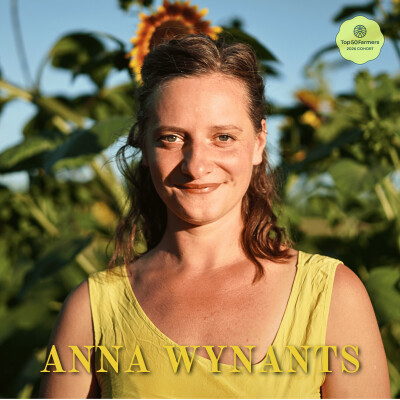
In today's episode of The Deep Seed I'm visiting Anna Wijnans about 20 minutes outside of Ghent in Belgium. Just a few years ago Anna decided to combine her two biggest passions farming and cooking. She opened a place called the Keukentafel. And it's both an organic regenerative farm and a fine dining restaurant. She farms together with her father and that gives her a unique connection with the land, with the soil, but ultimately with the food, with the ingredients that she will then use in a restaurant. This is such an incredibly inspiring project and I completely fell in love with Anna's vision, with her passion, with her talent and I'm pretty sure that most of you will feel exactly the same way by the end of this video. Anna is also one of 50 European farmers selected by the top 50 farmers 2026. As a matter of fact, this episode was made in partnership, in collaboration with Top 50 Farmers to bring you an example of how farmers all across Europe are coming up with creative solutions to make the food system more regenerative. I really hope you'll enjoy watching this episode as much as I did making it. My name is Raphael, this is The Deep Seed. Enjoy
- Speaker #0
So I'm Anna, I'm the owner, chef and farmer of De Keukendafel. We started a small organic farm to grow our own vegetables to serve in the restaurant. So we do a weekly harvest and then we make a menu and then we serve it in a fine dining restaurant at the farm. So we grew up on a farm the first years of our lives, me and my sister. And so my mother would cook for the staff at the farm. So every day she would go out, pick the vegetables and cook for everyone. And so I think for me, since I was very, very small, this is how it goes. It's very normal to just go out, harvest, see what's there and make a nice meal. Also, my uncle has a restaurant. So for me, just like, oh, wanting to have a restaurant when I was old was like my big dream. My childhood dream was to become a chef. And then we moved away from the farm, but we always had a huge vegetable garden. And then at some point I asked my parents, oh, can I maybe give a dinner for my friends and cook here? And because I wanted to cook with the vegetables from the garden and maybe people see the relation between the food and the garden. And then it all started. So it was like a hobby and just like a passion that completely got out of hand quite quickly. so we kept on doing dinners more and more people would come um i started becoming afraid of the fiscus or like taxes so i became self-employed and the kitchen of my mother became too small and the garden became too small because i started like when i harvest my parents don't have food anymore because i cook so much food now until i think during covid everybody had a lot of time to think we convinced our father to uh We built the barn into a restaurant. So we put a kitchen in there and we were able to buy at the same time a piece of land next to our garden for our neighboring farmer. Which was a coincidence and a dream to have a little bit more land and also that it could be all organic or regenerative farming in this area. So we have... We have a very small farm. It's only 3,000 square meters and we grow for the restaurant. So we don't grow for markets or other things. We have a system where we have a combination of organic, biodynamic permaculture and agroforestry, where you put trees in between the fields. So we have lots of parcels and we've planted small trees. big trees like very like mini trees in between so we can kind of keep the water in the soil but not have too much shade for the vegetables to grow and then we also have a small part where we planted a food forest but that's growing now so that's something that will be bigger in the future so we like to combine different types of agriculture and we use what works for us so I was born on a biodynamic farm so we have definitely influences from there we still use. We have like an organic label so that's for sure. Okay so when I make my menu it's based on what's growing on the farm and what I prefer most is working a day on the farm before I make my menu because when you plant 200 beans I just think about what I will make with them. Even if I don't have time to work as much as I want on the farm, then I always go make a walk in the morning to see what's there. And sometimes a day after, it changes. So I love to make a coffee, go for a walk and see, okay, this is ready, this is open. Or, oh, the roses started, so I pickle the roses, which I really like the taste of. Or I see, okay, next week this will be ready. So now I see, oh, probably next week I will use beets because the beets will be ready. Not much. It will be just for one week. And then I already think, okay, what will become next week? There maybe will be the first potatoes will be ready. Or asparagus will be ready. Or there will be less. So I have to put them in a starter or in a mousse. Or I have to make a big dish with something because there's a lot of it. Also my sister. So my sister makes the drinks. so we have wines but we also make cider liquors and she also make a non-alcoholic drink pairing also from the garden so we often sometimes also taste together and sometimes she has a drink which contains like a certain herb and sometimes I add it to my dish because it fits the drink so that's a really nice process or I think oh it'd be nice what spice what spice what spice and then they go oh Maybe the tarragon is ready so I can pick it and add it or it can taste. Which is really nice, I think if you're a chef it's really expensive to buy flowers and fresh herbs and all the special things. And here it's just for free and it's so much. If I want I can. Now I have a dish where I use a lot of sage flowers. But if you would buy it, it would be impossible to serve in a restaurant. I just pick it. when the dish is ready. So I don't even mise en place the flowers. Some of them I do. But usually I go just before the service starts, I go out and pick all the flowers or herbs I want to use so they're ready for service. Yeah, that's just so nice as a chef to have everything available. I'm really bad if I have to cook from nothing. So if I have... I like the limitation. So I really love that I have only a list of vegetables to cook with. If I have too much option I... I freak out.
- Speaker #2
We are going to put all the vegetables in the pot We are going to
- Speaker #0
put some more oil in it and put it on the stove So we planned for the restaurant so last year we planted 2,000 onions I ordered a little A little bit too many and my father said like I would never be able to use them in the restaurants. So they became a dish so I started serving onions like just like a caramelized onion with a nice beurre blanc sauce and dill on the menu and now we planted even more so now we have 2500 onions. And the nice thing is I put them in the ground myself, I harvest them and then I make this dish, which is really nice to serve the people and tell the story about the 2,000 onions.
- Speaker #1
Can you do anything with the leaves of the onions, the tops?
- Speaker #0
Yes, sure. We use the leaves to make green oil to finish the dish. The onion dish is finished with the green oil made of the... the greens of the onions.
- Speaker #1
How do you make an oil with leaves?
- Speaker #0
We blend them with the oil basically. I mean yeah you can heat it and then put it through a sieve and then you have like a nice like bright green oil to like garnish dishes.
- Speaker #1
So you were mentioning earlier the little agroforestry lines which we can see right here right now like there are some apples here. What do you do with with the apples.
- Speaker #0
So apples in Belgium are pretty amazing. So we have a lot of apples every year. So we use it the whole year round. So we make juice, which is quite easy. And then we also make apple cider. Even make some calvados with the cider. We make apple cider vinegar. I make different types of vinegar from the apple cider vinegar. So I put spices in there to have spiced. Vinegars, but also we make reductions. So I use it to make like a sauce. Instead of using white wine, I use like apple cider for lots of things. It becomes really tasty if you just reduce the cider or add a little bit of sugar. And then you have kind of an apple syrup, but then like apple cider syrup. I make caramel with the apple juice. We make juices for the pairings. We make kombucha with the apple juice. We go like quite wild with the apples.
- Speaker #1
How did you learn to do so many different things with so many different ingredients? Did you study this? Did you learn on the job?
- Speaker #0
You learn on the job, definitely. And you also get inspired by other chefs. I think when I go somewhere and I see they make a sauce with cider, I'm like, oh, I'm going to make a sauce with cider. And then I try and then you learn. Or by accident, we had like this whole like 60 liter batch of apple cider that didn't work so well. It was not so tasty. So I just started trying to reduce it and it was quite tasty. We started serving it with the cheese and now I also use it in like cookie dough or like as a sweetener for sauces or as a base for lots of things. Yeah, for caramels, tartartans.
- Speaker #1
Lots of creativity. It's so much fun. So you don't buy anything from outside the farm like inputs or you don't use any chemicals whatsoever?
- Speaker #0
No, we don't use any chemical was whatsoever. Yeah, no. We also make our own compost and fertilizer. So the waste from the restaurant goes into the compost together with some brown things like leaves from the garden and the grass and we make like a lasagna. And so it's ferments and then we use it for fertilizing our soil again. Yeah.
- Speaker #1
I've come across a lot of market gardeners or a lot of chefs who collaborate with local market gardeners to get fresh produce but it's the first time I see a project where you do actually both on site. You grow your own vegetables and all kinds of plants that you use for cooking and then you bring them right to the kitchen just next door and you cook amazing food for your customers with it. What advantage does it give you to have both of these together?
- Speaker #0
For me, already for a long time, before I even started this project, I thought that it makes sense to have a restaurant and a farm in one company and in one place, so all the vegetables can be used to their full advantage or potential. And it's also, as a chef, it's like a... Yeah, it's like paradise. I can pick whatever I want. I have flowers. I have all the fresh produce I want. I can just harvest them directly and cook them if you're willing to be creative. So I think as a chef, you have to be quite creative and flexible to cook like this. But it's very rewarding to use fresh produce every day. And also if you grow it yourself, I think you have a different connection to the food and also to how you serve it. So we hope to spark our customers and get them like or inspire them by what we do by showing them the vegetables and letting them taste how it can taste if you work like this.
- Speaker #1
So you're harvesting snails what's the idea here?
- Speaker #0
So we catch the snails so they don't eat the vegetables so that's what we do anyway like at night our father goes with the light at 12 o'clock to catch the snails and this type is edible so this is a pettigree It's like a small escargot and we started serving them in the restaurant.
- Speaker #1
And so essentially you're turning like a problem, something that you considered initially as like a pest, into actually something you can use in a restaurant.
- Speaker #0
Well it started as a joke because there are so many snails like two years ago. My father was quite angry and he would like put them in my kitchen. He's like you have to cook them, they're edible. And I started researching and you have to first, I put them on a diet. So I give them water and flour so they can get clean inside. And then we serve them escargots and garlic butter.
- Speaker #1
So this was a leek that you just let grow?
- Speaker #0
Yeah, so this is a leek. You can still see it there down. And then the inner side becomes very hard and it shoots up and it becomes like a flower.
- Speaker #1
And it attracts lots of pollinators I see there. They love it.
- Speaker #0
Yeah. Now they're already dry, but when they're fresh it's really nice to use.
- Speaker #1
Anna is part of a much bigger regenerative movement unfolding all across Europe. If you'd like to discover more regenerative farms and farmers like Anna, check out the Top 50 Farmers website. You can use their interactive map to search farmers by country, browse and discover more role models like Anna, who are showcasing the many ways farmers are regenerating Europe. Every farmer's story is unique, offering a different perspective and a different pathway on how every landscape can be regenerated. If you're interested, I will of course leave a link in the description of this video. In the meantime, let's get back to Anna and her amazing project, the Kirken Tafel.
- Speaker #0
So every year in autumn, so I guess November, December, we make a plan for the garden. And every year we learn better how to plan because... It's trial and error. So we learn how to spread when you plant or sow things. So now, for example, every two weeks we sow new beets. But still, you never know when it will be ready, if it's becoming warm weather or rainy weather. So you never know. But one thing we try to do is have leaks all year round. And that asks for planning. Now the leaks for winter are already ready. So we will have them when there's nothing else. Or the celery root is already planted, so we know we'll have plenty of celery root in the winter. We need lots of quantity of the things that store well. So it takes a lot of planning and still you never know what the weather will do. But that's why I think being a chef is interesting. Because if you are a farmer and you have a lot of one product... And you have to sell it, maybe nobody wants to buy it, but now I can just choose to cook with it. You just need to be quite creative as a cook to do it. And also finding new things, like now we make a sauce which is almost like a meat reduction, or like a foam made from our tomatoes from last year, because we had still a basement full of preserved tomatoes. And we want to use them before the new summer comes. And then suddenly we're like, oh, maybe we can reduce them and make like a stock of them. And then like make like a classic meat sauce with like butter and beurre noisette. And then now we serve it actually like it would be like a very, very strong meat sauce. So it's nice to play with the vegetables. I think in Belgium nowadays it's almost impossible to... farm and make a living from it so what i see happening like here in the neighboring farms that like people grow older they want to stop and they kind of expect their children to take over but all the children like say no no way because i cannot earn earn money with it and it's fucking hard work work to do so um yeah and Maybe it's easier for me if I say it like this because we are struggling with legislation which can upset me or make me... What makes me really angry is the fact that we are doing something harming nobody and it's so hard to actually get support. Not even financial support but just like legal support. Because nothing like this exists. So it's illegal. We find our way, we have to be very creative so we are okay, but I think people like us that are young and willing to farm and find creative ways to actually make a living of farming and regenerative farming and organic farming. Should be supported. It's crazy because this is so for me so necessary for our future for everybody's future. This is not that there's no framework for it. So I think it's also if you want to be innovative of do things that are that doesn't exist yet it's always a little bit of a fight because the system is not. made for it yet it's it's based on older things so we are on farming land we are farming we are officially farmers we have an organic license but then we cannot be farmers because it's too small and we cannot serve our food on the farm because we're farmers and we cannot serve food but for me this is insane that we cannot serve food where it grows and that is actually not allowed so we get Exceptions and but I think they should this is what people need this is this this is what actually we call it corte keten in Dutch it's like the chain there is no chain anymore here so you harvest and you eat it. Government support these things when there's one supplier in between but we never fit in because we don't have a chain so we cannot. Like contribute or like yeah I don't know the English words.
- Speaker #1
How does it sort of feel like to be creating a living vibrant ecosystem like does it when you walk around with coffee in the morning how do you feel?
- Speaker #0
For me this is for me this is my dream that became reality so Sometimes I still don't believe that it's actually growing here. I had this idea in my head and I didn't know it would be or how it would become tangible. And it is very tangible now. So it feels very special. It's like for me, it feels a bit like I was pregnant and I got a baby and my baby is like going to kindergarten. So the startup phase is over and it's growing and it needs care a lot still and it needs education. But it's growing and it's very nice to see how easy it is actually to just transform a little piece of land into something more beautiful, something better, something that's good for the world. We grow a lot of crops here. I have no idea how many actually. But the list is endless and it keeps on growing. And it's so nice to know that there's such a big variety of plants. Just even the bushes. I think it's like 12 different types of roses and all kinds of willows. And it's so nice to see also here where we stand. It's like, I think it's eight different types of peas. Which for us works very well because we can use it in all different ways in the garden. But it's silly because it doesn't fit in the system. So the neighbor, like we have to fill in this form every year. And every year I stress a lot about it because I have to write down all the different crops we grow. Which is impossible for me. Every year the list becomes a bit bigger, so it becomes better or more accurate. But still it's insane to write all the different varieties of all the different types of vegetables and herbs and plants and trees and things we have here.
- Speaker #1
So you bred your own variety of tomatoes?
- Speaker #0
Yeah.
- Speaker #1
How does that work? How do you do that?
- Speaker #0
So we, uh... We've been selecting our own tomato seeds for like six years now, five, six years. So we take every year, we taste all the plants and all the different tomatoes and we take the seeds from the nicest tasting tomatoes, the strongest plants and that are quite resistant for like plagues or diseases. And we've been doing that now for a couple of years and every year is like, we have to eat a lot. we have to like go
- Speaker #1
tables full of tomatoes we have to taste and it's working quite well so these are outside tomatoes so they don't grow in a greenhouse so we're trying to select our own breed of like nice tasting outside tomatoes that's really cool so people who come to eat at your restaurant they will taste tomatoes that they can't find anywhere else in the world basically definitely and those tomatoes are then going to be much more adapted to your soil to your ecosystem yeah they're like
- Speaker #0
specifically adapted to this type of weather and soil and also It's resistant to most of the diseases and you have to do it for at least seven years to actually like get a breed that's like seed strong or resistant Otherwise when you take the seeds you get like from all all the seeds a different plant but if you do it the year after year the seeds become stronger and
- Speaker #1
Breed becomes the genetic starts to happen to be like more stable.
- Speaker #0
Yeah, exactly. All right.
- Speaker #1
Yeah
- Speaker #0
Yeah, it's nice. And now we have always like, we make our own passata and it's been, it's always on the menu the whole summer. Yeah.
- Speaker #1
So you put up this, what do you call it? This box, this nest for birds to attract specific kinds of birds.
- Speaker #0
Yeah. So two years ago, we put the nest up there and then the birds came by itself, like a couple. And then they made like young birds. It was really cool to see and then they flew away and we didn't know like will they come back next year But there was like now there's another couple making young babies now
- Speaker #1
That's super cute.
- Speaker #0
It's pretty cool and it really helps to keep away the mice And the rats like because the compost is here
- Speaker #1
Ah, look at them. If you enjoy watching this video and you would like to support Anna and the deep seed You can actually do that in just five seconds by clicking the like button and the subscribe button just down here at the bottom of your video. It makes a huge difference because it tells YouTube algorithms that this is something worth showing to more and more people all around the world. Also, if you live in Belgium or you're planning to visit Belgium, I highly recommend booking a table at the Köken Tafel. I had the privilege to try some of Anna's food and it's just incredible. I guarantee this is going to be one of the best, most unique and special eating experiences of your life.
- Speaker #0
There's a lot to say about, I think, the current food system. It's completely fucked up. So I think there's lots of problems with the food system. I think if we go on like this, I think we will run out of food. That's maybe the biggest part. And also there's almost no fertile soil left. So if you would see like the globe, I think there's only like a tiny, tiny part which is actually still like farming land, which is fertile and able to grow vegetables. I think it's a huge problem because we need to eat, otherwise we die. So that's like how I always say it, if we don't get the food, or we don't realize how important the food is because we need it to survive. And the way of farming which is used usually is like with monoculture, for example. All the nutrients are like taken out of the soil and it becomes desert, very simply put. So it becomes more and more like desert. I feel very scared of the idea of there's so little farming land left. And I also realize people with power start realizing that that's a problem. So also here, like rich people start buying farmland because they know it's an investment. As a teenager, I would like not sleep realizing like or like thinking about world problems. I would really like drives me crazy. Like what, how do I relate to like the world? and what's all going wrong or what should I do to deal with it. And that's where this comes from. So I decided to study sociology because I wanted to do something. It gave me a lot of perspective maybe, but not really very concrete things to do. And I also then later did an entrepreneur study, like a social entrepreneurship study in Sweden. And I guess there I realized change doesn't happen on big scale, but like real change happens in interactions with a bit of people and not with like big statements or politics. So I think everybody who decides to change and do even just like a couple of meters is making a change and it does like influence other people. So I think we do that, yeah, I think it's so small but what we have we try to make like more better and more beautiful place in the world, yeah. Stupid to get depressed your whole life because you carry the weight of the world on your shoulders, I think that doesn't really make sense. But I think we need to do something so I think the things you can do you should do or... Yeah, the same thing with being a good person. If everybody tries to be a good person, the world would be a better place, you know? Yeah, that's what I believe. Or like, maybe I'm naive, but I also... I decide to be naive a little bit, yeah. Doing this makes me definitely... A happy person, yeah. Because you see you get instant gratification or fulfillment in everything you do and also yeah whenever every seed you plant is abundance so yes something can go wrong with the weather or the whatever but there's so much abundance if you are a farmer I didn't know before I started that with this small piece of land you could feed so many people. So I think what I want to do here is reconnect people with their food. Yeah, that may be the essence. I think people lost the connection to the food. I think people lost connection to most things maybe. In this society with like lots of screens and maybe a lot of distance from each other. They think people lose themselves, people lose connection to nature, which is yourself, I guess. I guess if you nature, people forget that we are nature. It's like when people say, oh, I want to save the planet. That actually means that we want to save yourself because you realize you will die. Planet Earth will probably survive. So for me, it's very interesting to see how people. Forget that they are part of nature and forget that they're not so different from a garden bean, for example, or a tree. For us, it was really nice to be nominated to be part of the Top 50 Farmers. It definitely does give recognition for what you do, especially because for me the last years we have been working very hard and you stop realizing what you actually do. Or at least I start taking it for granted. And also sometimes it just feels like you're working very hard all the time. And people or your friends don't necessarily understand what you do or the value of what you do. So for me it feels very hopeful also to know that there is an organization that supports farmers. Which is bigger than just Belgium. So it's European. Yeah, and then there's so many other farmers also trying to do similar things. So that's what I really like about it. I think it's important that it becomes more mainstream and that farmers become also like normal people that can also wear normal clothes and don't look like an old grey man with a beard, you know. So I think it's nice to give image to young people that do farming. I believe in it, so yeah, that's what I hope this Top 50 Farmers in general will do.
- Speaker #1
Do you have a message for young people out there who are watching this because they're really interested in farming and cooking and all of that? What would you tell them?
- Speaker #0
Just start. No, if you have dreams like this, or you want to farm, you just have to start. There's never an excuse not to start. Sowing or planting some seeds. It's so easy. Yes, there's a lot of knowledge involved, but also, in the end, just putting a seed in the soil, it grows. I still never believe it will. Every time I sow, I'm like... at I think I do it wrong and I'm not good at this and it will not grow and it always grows and then yeah that's I think that's also with how life works you just have to start also with with a project just sow the seed and it will grow you know yeah

![The 20-Year Plan to Restore Nature at Scale [WILLEM FERWERDA] cover](https://image.ausha.co/5b8rS8xJbDO3AnqwM5GgOLWBE8yJ9M9X0Ij678qp_400x400.jpeg)
![The Joy and Wonder of Being a Regenerative Farmer [Naomi Oakley & Gunnar Thelin] cover](https://image.ausha.co/RTVMsUtz5pRE96mm18UXNKSfjQxd40dUaIlgKKRc_400x400.jpeg)