- Speaker #0
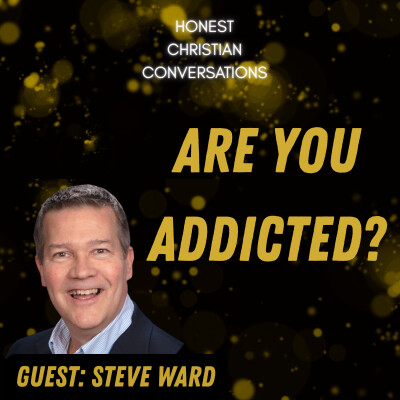
Have you ever watched an episode of a show and 10 minutes in fallen in love with it and then found yourself binge watching the whole series late into the night? Or heard a song that hit you right in the emotions so much that you played it on repeat until you had every word memorized? Or maybe it was something simpler, a snack, a meal, a small comfort. That satisfied you so deeply you wanted it again almost immediately. On the surface, these habits seem harmless. But let me ask you something deeper. What kind of show was it? Would you feel comfortable watching it with God sitting beside you? What about the song? Would the lyrics make your mom blush? And here's the harder question. When does enjoyment turn into impulse and impulse turn into dependence? Have you ever considered that some of our most normal habits might actually be subtle forms of addiction? I hadn't, not fully, until I met Steve Ward, founder and executive director of Steps. an online database of resources dedicated to helping people live better. Through our conversation, I began to realize that even the simplest obsessions can quietly grow into something that shapes us more than we intended. This season, we're taking an honest look at addiction, not just the obvious life-altering kinds, but the quieter patterns, the habits we excuse, the... comforts we run to instead of God. I'm Anna Murby, and this is Honest Christian Conversations. If this is your first time listening, I'm really glad you're here. And if you've been listening for a while, thank you, my friend. Before we begin, today's conversation may feel heavy, but it comes from a place of love. My heart is not to shame. It's to invite freedom. So take a moment. Pray. Ask God to reveal anything he may want to gently uncover in your heart. Because freedom doesn't always happen in one conversation. If you find yourself wanting to go deeper in confronting unhealthy habits or patterns of addiction, I also host a private podcast where we walk through this journey more personally and prayerfully. You can find the details in the show notes. All right, let's get to the show. Steve, thank you so much for coming on. I am very excited to talk to you about what it is that you do with your Steps program. But before we actually get into that, let's dig a little bit into your past. I know that the reason you created Steps is near and dear to your heart because of the things that you have experienced in your own life and the lives of those of your loved ones. So please share with with us what your experiences were with addiction and why you started Steps.
- Speaker #1
I'll be glad to. And it's good to be here. Thank you so much. Most of us have a story, and very often those stories shape us one way or the other, either for good or for bad. And what is very interesting about how God seems to have chosen to work is sometimes he uses what seem to be our worst struggles to lead to the most powerful change in our lives. So with us, three of the four members of my nuclear family struggled with substance abuse. Myself, my wife, and our older son. And our journeys are all a bit different. There's some commonalities, but I was, I'll use the term, a high-functioning alcoholic for a long time. I was in the business world for 38 years. And I use that term not to act like I was less than an alcoholic, but because a lot of people don't understand this concept of high-functioning addiction. They think anybody who struggles with addiction is lying in the street with a needle in their arm or a bag of wine in a paper bag. That's not the story at all. People are addicted to lots of things. With substances, it's very often a lot of senior people in businesses or your head salesman or your VP of operations. Or it could be the soccer mom or the secretary at your church. Sure, it could be anybody because, you know, I don't know. A great number of people struggle with something. So that's why I use that term to describe me. My wife's journey was a little different. She had been in the business world. And then when he had two kids, she stayed home with them for a while. And then when they left, as is often the case with... many women sometimes, that left a gap in her life. So she kind of went into a period of depression and alcohol became her coping mechanism of choice during that. My older son, totally different. Both our boys were raised in the church and went to Christian schools growing up. But right before he went into middle school, we moved from Florida back up to Atlanta, Georgia. And so he went to a school and he was very self-assured and confident and popular. But he had to choose a new group of people to hang around with. And even in that school, the group he happened to choose were a lot of kids who were making bad choices. So he wound up going on a journey that lasted about a decade that were that involved alcohol and drugs and various other issues. And it got very, very dark at times. So I can go in any deeper in any of those journeys if you want. But those experiences where I'm experiencing recovery for myself. and as a husband and as a dad. And I actually was incredibly excited about what the world of recovery is like. And I discovered some things that most people don't know, right? A, that we're all addicted to something, right? We all have issues, either mental health issues or addiction issues that maybe we know about them, but maybe we're in denial or maybe we aren't even aware. But the good news is not only are those issues treatable, in many cases, they are potentially preventable. So it was really that epiphany, I think, that led me to a few years later, leave the business world and found Stets Ministries.
- Speaker #0
I'm very intrigued by the fact that you had to emphasize three out of four of those in your family, which means one of your children never showed signs of having an addiction along the lines of substance abuse. Like you said, everything can be an addiction. Can you speak into it a little bit? how they managed to not fall into this when it was so prevalent around them and not necessarily condoned, but I guess just proven that maybe this could be your fate too.
- Speaker #1
That's a good question because in families, right, addiction tends to be generational in nature. In other words, if one of your parents struggled, then the odds are 50% higher that you will. They haven't traced whether that's just genetically or behaviorally based, but the facts say that. So with him, I think part of it is based on how God designed him. He's a very thoughtful, self-aware person who just, I don't know, ever since he was a teenager, I thought, that's one of the wisest young men I know. I want to grow up to be like him when I get old. So he was very thoughtful. He wasn't affected very much by things like peer pressure, right? His sense of identity was good. So for any parents out there who have teenagers, I'll flip those around, right? If you have a son or daughter whose sense of identity is not solid, they don't know who they are, they don't have a foundation, they think desperately about wanting to fit in and be like the other people, which is very common, teenage straight. You need to keep your eye on that. But that wasn't the case with him. Also with him in the sixth grade. He came to a personal faith. He was in a church youth group. And for him, it was sincere. It wasn't a nod my head because my youth pastor wants me to kind of a thing. It was real. So ever since, his faith has been very real. So you take those combination of attributes that he was given, self-awareness, a sense of identity, a feeling at peace with himself, not a driving desire to do what other people want me to do. And then you give it the supernatural boost of accepting. Jesus into your life and having the Holy Spirit with you. And those things together are what has served him very well through his life.
- Speaker #0
I'll say, man, it sounds like he had a firm foundation from the very beginning, which is not something you hear very often, even from adults. That is inspiring. And I hope you who's listening right now, if you have a teenager and you look at them and you're like they just They don't seem interested in Christ. I have one right now who's kind of in that area, and I have an older one who's completely walked away. So I get the discouragement you get from that. And when you hear these kind of stories of teenagers who, you know, are living out their faith and they love Jesus, they're making it their own. Let's not be jealous. Let's praise the Lord and let's. keep praying earnestly for our own children. We don't want them to struggle, of course, but we can't make them find Jesus. That's their journey.
- Speaker #1
Yeah. And by the way, I think my other son can be an encouragement to people as well. Because first, I'll make the statement that they were both raised the same way. Now, they had a different bent and they made different choices. But I talk to a lot of parents who think, well, that can't happen in our family, which is an incredibly naive way to think. Because in any family, probably. So anyway, he was raised the same way. Even though he was very, he's a very strong extrovert, he was very popular, but he ended, his sense of self tended to be a little bit outside in. He wanted to be in the cool crowd and he wanted people to like him. So you wouldn't know it that way, but that's how he was wired. So therefore, it was easier for him to get drawn into things. And I said that his journey was dark for a while, but also want to be encouraging. My wife and I, I guess you could argue we made mistakes along the way. I do a lot of teaching and writing on... parenting, by the way. But some of the things I think we did right were our boys always knew that we loved them no matter what. We were always there for them and we persevered. And with him, he went on a 10-year journey that was dark, but he came out of it. He found his way and he now is doing very well in the business world. He got married three years ago. A year ago, he gave us a wonderful granddaughter and he's an incredible young man and a husband and a dad. And he and I will have this conversation a lot. I'll say, you know, son, you're now the man that God created you to be, not just in spite of your problems, but in many cases because of them. And he gets that. He understands that. Right. He's he's been where young people haven't been. And he's worked through recovery and his faith to come back. So he's now actually, I think, more prepared for the rest of his life than a lot of other young people are. Maybe they haven't struggled enough and they don't know what they don't know. And maybe their faith is shallow rather than real and deep. And maybe they don't have the resilience they think they do. And so when things come apart, they may not be prepared. Parents can't control how their son or daughter raise, including their faith, as you were talking about. But you can just and you don't have to be perfect. You really don't. But just do your best one day at a time. Be thoughtful and proactive and intentional and sincere and real. And God's in charge of the rest.
- Speaker #0
That's absolutely encouraging for anybody who's needing that kind of encouragement. Just soak it in right now because God's in control ultimately, and that's what matters. So Steve, share with us, what is the steps?
- Speaker #1
So I mentioned the epiphany I had in recovery where I saw that, well, everybody struggles with something. Because, you know, I say that I'll use the term we're all addicted to something because, you know, frankly, more than half of families in the United States have someone who's struggling with substance abuse or mental health. It's it's everywhere. But most people don't talk about it. And addiction takes many forms. I mean, people are aware of being addicted to alcohol and drugs. And when you mention it, that you can be addicted to behaviors, they kind of. OK, I guess if you mention things like, well, you can be addicted to gambling or. pornography or so they kind of go oh okay i get it but then when you extend that thought and say well you can also be addicted to food disorders and they go okay i get that well guess what you can also be addicted to people pleasing or spending money or control or anger or work and i could go on and on right an addiction is a compulsive habit we do over and over again that has negative consequences that we find hard to stop we're all addicted to something So I actually enjoyed recovery. And I saw that everybody could benefit from this. Because recovery is not some dark art form about just dealing with substances. It's about how do you live life effectively, emotionally, mentally, spiritually, socially, and personally. That's what recovery is all about. And I thought, why do we wait until people crash and burn and then send them to recovery? That makes no sense. Why don't we help people learn how to live right in the first place? So you ask the question, where do people learn how to live life effectively? Emotionally, mentally, socially, spiritually, and personally? The answer is most of them don't. They make it up as they go, right? We experience life and we create coping mechanisms and little tools that we use to live life, but we don't have to live that way. We don't have to be a victim of our anxiety or a victim of our addictions. We can have relationships that are deeper. And then rather than just shallow, wherever we are in our spiritual journey, right, we can find out that, wow, God is real and that he actually loves me. So we can develop those things one step at a time. It started. When I was in that space and I wrote my first book, which was called Steps, A Daily Journey to a Better Life, it really was taking a lot of the principles you learn in recovery, but I was trying to translate them to the rest of the world. It wasn't about recovering from substance abuse. It was about living life effectively. And I got so much satisfaction out of that process, and it verified how many people were struggling and the fact that everybody needs help along the way. And so a couple of years later, I created my exit strategy from the business world and eight years ago founded Steps Ministries. So we provide help, healing and hope for hurting people. Help is practical steps to live life better. Healing is encouragement because other people have been where you are and they've gotten through. And hope is the fact that, you know, you can't have a realistic assurance of a positive future because there are things you can do that will help. And God will be with you every step of the way. We provide online resources and digital resources for individuals who are struggling, people who are close to them, parents and caregivers, for youth, for teenagers, and for organizations who serve those people. Just to try to share resources with them so they can live life better, grow closer to God, and prevent behavioral health issues from becoming life-altering crises.
- Speaker #0
You said a lot, and it was amazing, and I love it. I definitely... I was one of those people who thought I had a problem. Like, for example, with my pornography, I knew I had a problem with looking at pornography, but I never called it an addiction. I didn't do that until I confessed it and finally was ready to be done with it 17 years later. But I had a problem with it. It kind of goes back to what you were saying about being a high-functioning alcoholic. People probably couldn't tell you were an alcoholic. With me, you couldn't tell I was into pornography. I knew how to cover my tracks. I, you know, it wasn't an obvious thing and nobody knew about it until I started telling people. But I knew about it and I hated myself for it and I just wanted, I just wanted it to stop. and I could never stop it. I could go maybe a month without even looking at it, no problem, but then it would come back and it would come back with a vengeance and it might stay for a week, it could stay for a whole month. But I just wish that I had a program like this that would help teach me the fundamentals of why I'm doing this, how to stop it, what my actual identity is, and just remind me that anything can be an addiction. Even like you mentioned anger, you mentioned food. I had an addiction to anger forever because for a while I was bottling it all up. And then when I decided I was no longer going to do that, I started getting angry at the drop of a hat. And there's something about anger where you don't like it, but it gives this really good feeling when you get it off your chest. And that's scary. Yeah, I just, I think. that your program is going to be really helpful for someone who's listening right now. And they can just resonate. Maybe you called out what their addiction was. Maybe you didn't, but they're feeling it. Yeah, I need something like steps. I need to know more. How do you, if you work with somebody and they're saying, oh, I have a problem with this, and they don't really seem like it's that. big of a deal, but you're seeing that it's a big deal either because you're seeing what they're not seeing and this is a full-blown addiction already, or maybe you just see that it's getting to that point, but they don't see it yet. How do you approach that?
- Speaker #1
It's interesting that at the foundation of a lot of recovery programs out there are some of these things called the 12 steps. Some people may have heard about them or bumped into them. It's the foundation of of Alcoholics Anonymous and Narcotics Anonymous and Celebrate Recovery and 200 different groups out there. And if you look at the first step of the 12, it's accepting that there's something in your life that you're not able to manage and that you need other help. So in other words, it's the first step to recognize that you have a problem, right? And we don't want to do that. We spend, you know, your podcast is on, you know, having honest conversations, right? We don't have honest conversations with ourselves. We lie to ourselves all the time. We tell ourselves that, you know, we're good at that and we don't have a problem with that. We lie to ourselves all the time. And it's dangerous. But it's unbelievably freeing when you learn to become more honest with yourself. And that includes accepting the fact that we are all addicted to something. And in the spiritual world, we're all sinners. We all have things that we do wrong. That's not the exception. That's the norm. And if you're a human being who's still breathing, you're in that category. It's okay not to be okay, but you don't have to stay that way. The first step is recognizing that you do have an issue. And if you recognize you have an issue and if you're willing to involve God in your recovery process and you're willing to try to take steps in the right direction, that's a great start. It's a great start. There are other things you may need to do to get there and you may have stops and starts and you may have relapses and everybody's journey toward recovery is different. There's not a cookie cutter way. But it all involves being honest with God, being honest with yourself, being honest with others, and then putting kind of daily and weekly disciplines in place to keep you on track. And then you will reach a place where you have had an awakening, you know, a personal and a spiritual awakening where you'll feel like, why didn't everybody live this way? And you'll want to share it with other people, right? Which led me to leave the business world and go do this just because it just seems like. Like that's what we're supposed to do, you know? So I do want to be encouraging to people is that I know that you're struggling out there, but accept that that's normal and know that there are steps you can take that will help. There's no magic wand, but there are steps that will help. Other people have been exactly where you are, I promise, probably millions of them. And many of them have gotten better and gone on to have a wonderful, wonderful life without that problem anymore. And you can have a positive assurance or a realistic future. There are steps you can take. Other people have done it and God will be with you. So everybody struggles. And the difference is, do we become aware of it and start taking positive steps or do we just live in our denial?
- Speaker #0
Yeah. Living in denial is sucky. It's not helpful. It's just delaying. the inevitable when you finally realize you have a problem. And then you look back and you see all those years you wasted where you could have gotten better and started off on a good foot earlier. So if you're listening to this and you do have an addiction or you think that you might have an addiction to something, please don't hesitate. to reach out to me, honestchristianconversations.com slash contact. You can ask for prayer and I will help you by praying with you. You can't do this alone. You don't want to do this alone. Recovery, you need a community. Like Steve mentioned, there's a lot of people around the world going through the same thing you're going through. Maybe not quite the same way you're going through it, but they are going through it as well. We've... just shared the struggles we had, alcohol addiction and pornography addiction. There's a lot of women who have the same addiction that I do, and they're afraid to say something about it. And that's not okay. We should never be afraid to come to the throne of Christ and ask him for help and allow the people into our lives that he is bringing in there to help us. And Steve and his Steps program are one of those avenues. So Steve, is this a program that is worldwide or is it central to where you live?
- Speaker #1
It's worldwide in that most of the resources that we put together are available online and digitally. I mean, I do speak and teach to the degree that I can, but I just felt called to build a ministry that was kind of scalable and multipliable. So the vast majority of what we supply is online. It's either on our website or you can get to it from there. So if anyone goes to lifeimprovementsteps.com, if you're an individual, click on the tab for individual. And you'll see a set of resources for behavioral health. It's understanding emotional well-being, dealing with anxiety, preventing addiction and bad habits, understanding recovery, learning about high-functioning addiction and things like that. But you also see a set of resources there around just improving your life, having better relationships, becoming more intentional, becoming more productive, embarking on a personal journey of spiritual growth. It's really interesting the way... God has designed things that if we live life the right way, our life gets better and it will tend to prevent or minimize the problems that we face. And if you're a parent, go to the same website, lifeimprimedsteps.com, and just click on the tab for parenting. And you'll see parenting teenagers, parenting in a crisis, biblical parenting, parenting kids, stuff like that.
- Speaker #0
Awesome. For people who... Just heard you say bad habits lumped in with addictions. They might be eye rolling right now saying, well, those are two different things. What do you have to say about that?
- Speaker #1
Well, we at Steps, we created a term that we use to lump them all together, which uses it's an acronym around the word chains. So it certainly makes sense that we have things that keep us prisoner. and that hold us back. Those are the chains in our life. The chains is also an acronym. The CH stands for compulsive habits. The A stands for addictions. The I stands for idols. And the NS stands for negative self-talk. All these things are linked. In other words, most addictions are actually a thinking disease. They start in our brain. In other words, the conversations we have ourselves, the lies we tell ourselves that we're not good enough or that we're not enough of something. They lead us to wanting to feel better in some way. So we start finding a little something that makes us feel better for a while. It could be eating. It could be alcohol. It could be a drug. It could be a behavior. It could be lots of things. And guess what? It works for a little while, right? It gives us a little feeling that, okay, for a little while, I'll feel better. So we keep doing it, and we do it more, and it becomes an addiction. And it's a medical fact. I mean, neuroscience says that those thoughts that we repeat over and over again, those actions we repeat over and over again, we are literally rewiring our brain when we do that. Not figuratively, not metaphorically, but the neural connections in our brain are changing. The chemistry of our brain is changing. It will continually reinforce those things that we do over and over again. That concept is called neuroplasticity. neuroplasticity could be your worst enemy or it could be your best friend because the positive behaviors that you do over and over again will also be reinforced and so if if somebody out there is struggling with alcohol like i drank for a long time 30 years right started when i was 15 because it was a way to fit in and be cool and be relaxed and it was just a way to deal with life for a long time and i thought i don't know if i can deal with life without alcohol right I won't be able to have fun anymore. What will I do? I won't be able to relax. If that's you, you can't. There is another side. You may have to go through it for a few months. That's okay. But you will reach a point where you go, well, I'll be darned. Life is so much better now. I mentioned one other example that I work with a lot of business people. And so we'll talk about the concept of. workaholism. So I worked for IBM for a long time. Back in those days, if you claimed you were a workaholic, that meant you were bragging. You were bragging about how hard you work.
- Speaker #0
Yeah.
- Speaker #1
What I've talked to presidents of companies who are 63 years old and they've finally figured out that they've been a workaholic and that it has greatly hurt their marriage, greatly hurt their role as a mom or dad. They've missed out on life and now they're just now figuring it out. And they're as deeply regretful about being addicted to work as someone who's been addicted to alcohol. It can be anything. And so don't ask the question, am I addicted to something? Because you are. But just say, what is it that I do over and over again that has negative consequences? And the kind of a clue is The harder you think it is to stop it, the closer it is to a compulsive habit or an addiction. Right.
- Speaker #0
Yeah. You mentioning workaholic, that made me think of just how easily people throw that term around now. It's almost like a buzzword, but it is an actual addiction as well. It's unhealthy. You mentioned several ways that it. hurts you and hurts the family. I think that's what we need to start realizing when we look at the things that we do. Like you mentioned, anything can become an addiction. Anything can be compulsory. We need to look at it and see, is it benefiting our lives or is it hurting our lives or those around us? And I think that'll give us a really good jumping off point of what should I do next? If it's doing positive things for you, then by all means, continue doing it. But if it's not, if you notice that it's hurting people or it's caused a situation, then you need to do something about that. I have a slightly funny example of this. A little side tangent. I loved going to Popeye's the last few years. They have a really delicious frozen strawberry lemonade. And I love strawberry lemonade. But it was expensive and it gave me a wicked headache. So I kind of stopped doing it because I knew there was so much sugar in it. I'm like, there's got to be a better way because I want to have this drink during the summer. It's a nice, fun, summery drink. So I found a healthier version of strawberry lemonade from a local place out in my area. And I started drinking that. I put it in my blender with some ice and crushed it up and it was delicious. I loved it. My family loved it. And then I started noticing that I wouldn't let my family love it because this stuff was expensive. So I'd make it when they weren't home because I wanted to have the most out of the bottle that I got. And then I'm like, oh, I should get regular lemonade. And then I could have that and the strawberry. And it just amped up. Then I realized, OK, this is a situation. I got to figure this out because I got depressed when they stopped selling it. after the season was over, after the summer season's over, they don't have it in the stores anymore. So it was really depressing. And I was like, yeah, I think there's an issue here. I don't know what it is, but there's an issue. But instead of actually fixing it, what I did is I took a break from it because I wanted to see if there really was an issue, which there was. Instead of just saying, okay, well, I'm not drinking this ever again, or I'll wait until summer, I decided to find a brand that was really close to it to tide me over until the next summer. So I did. And I had been drinking that daily for a while until there would be moments where I'm like, okay, well, I'm not going to buy it. And then I'd have a headache, a serious headache for like three days straight. I'm like, okay, this has to be because I'm not drinking this every day. This is not good. So I wanted to stop drinking it every day and just keep it to a summer thing. I didn't do that because my willpower for it was sucky. And it still is. To this day, I'm still working on it. But I have decided that, yeah, this is starting to become a problem. And the more that I've been having these conversations talking about addictions and that they're not just the main things we think they are, the main players of this act, they are a lot of different things. I'm starting to realize that, I think. I have an addiction to this. And it may seem silly to people. Maybe you can relate to this, but addictions can be formed in any way possible. I've decided I have to do something about this. I'm not going to continue down the spiral. And you talking to you has confirmed it that, yeah, this is exactly what this is. This is a compulsory habit. It's not really helping me because it's extra sugar I don't need, if it's given me three days headache. after not having it for one day, then clearly it's a problem. So there's a personal example of how you're absolutely right, Steve. Sorry for the tangent.
- Speaker #1
Well, I think I don't want to be a buzzkill to everybody out there, right? Because notice how I said the definition, right? It's a compulsive habit you do over and over again that has negative consequences and you find it hard to stop. Whether you realize it or not, when you were just going through that story, you were going through a process and recovery that is called counting the cost, which is really honestly assessing, are there negative consequences of what I'm doing?
- Speaker #0
Yeah.
- Speaker #1
And so, you know, serious headaches or it is taking money that your family needs for something else or it's become so compulsive that when I don't have it, it creates, you know. that's a cost. So you realize that there is a cost to it. You know, when I went through recovery, I thought I was there just talking about alcohol. All right. But I found out that I'm also addicted to. perfectionism and control and performance. I went to an engineering school. I went to Georgia Tech and I worked for a large business, IBM. And in those places, control and perfectionism and performance are rewarded. But if you count the cost of perfectionism, which says I'm wired as perfectionism, that means I will never meet my own standards of behavior, which means I have this imposter syndrome going on. That's one of the ways I lie to myself, right? And a lot of people who succeed in business are like that. Or you take control and you start counting the cost of that. How does your, I'm speaking to myself, right? We all think that it's our job to control other people, to control circumstances and control outcomes. And the fact of the matter is we don't control any of those. The only things we can control are those attitudes we choose to embrace and the choices that we make. We don't control other people. We're not control. outcomes. We may influence them. But if we are so infatuated with control, it will lead us toward frustration and unhappiness and discontent and anger, and it'll affect our relationships. So, you know, the concept of control seems like, oh, that's no big deal. But if you really go through and count the cost of what it's doing to you personally and perhaps your relationships with other people and with God, you know, very often the cost is higher than we want. But there are people who do things repeatedly over and over again, and it doesn't really hurt anything. You know, I mean, there's grace in all this as well. Right. I don't want everybody to go out and say, oh, I'm doing everything that I want.
- Speaker #0
Addicted to this and this. Yeah.
- Speaker #1
That's not the point. The point is you're on a journey to live life better. Yeah. And so, you know, if you have something which is creating problems in your life. You will be better off for yourself and your relationship with God and people around you if you move toward doing something about it. But you don't want to be compulsive about dealing with compulsive habits. This is actually a true story. As my wife was going through recovery, men and women have a little bit of difference in how they go through recovery. When men relapse, they have a higher statistical tendency to relapse back to the same behavior that got them in trouble in the first place. Women very often will do something which is called transference. which they may become addicted to something else to replace what they left behind. So she stopped drinking. And then one of the things she became addicted to, and she would tell you this. So I'm not telling a story. She would tell you this herself. She got addicted to recovery.
- Speaker #0
Now,
- Speaker #1
that sounds funny, right? But she was going to eight AA meetings a week and she got on the board of her AA. And her sense of self and identity was she was going to be the best. Well... lady at recovery in the whole year. So it became important to her. It became that defined her identity. A, have some grace on yourself, but pick the worst problem, the one that's having the best consequences. You don't have to turn your life around today, but take steps in the right direction.
- Speaker #0
Thank you for reminding us of that, for reminding me of that. I feel before I could give myself grace, I have to actually try to abstain from my... my drink addiction that I have, but I have proven that I can do it. It's just not fun. You get that craving, you know, whatever it is that you're addicted to, you get that craving for it again and you can't stop thinking about it. It's irritating. And that's how I knew that I was starting to have a problem is because I'd start thinking about it as soon as I woke up in the morning and be like, Ooh, I could have that later today. I have lemonade. I'm like, what is wrong with me. This is ridiculous. No. no, we're just not going to do this. So, and it is true what you said about women. They might get rid of one addiction, but they find themselves in another one. That's happened to me several times. This is just another one that I have to work through and be more careful next time to be aware when it's happening with something else. And I think that's the bottom line is we just need to be more aware, self-aware of things. and not just go into things blindly. It's like what you mentioned about certain jobs. They reward you for certain behaviors. That is, wow. I don't know why that was such an aha moment for me, but it's true. You get rewarded, especially in business situations like where you've come out from, for being high performance and all those things and being on it. And That's one of the reasons why people in that field get addicted to things that will keep them up, keep them awake, keep them on their game all the time. If someone is in that situation and they see that it's creating a situation for them and it's not healthy for them or their family, what do you usually counsel them to do? I would say as a spouse to somebody who's going through that, I'd be like, why don't you quit your job and find another one? But maybe that's not always feasible or something. So how would you handle that situation?
- Speaker #1
Well, as I sort of talked about before, the first step is it's to recognize that it is a problem. You know, and it's the kind of things we're talking about now are very, very widespread. And because people don't notice it as a problem. So people who tend to be high functioning, whether they're in business or working in nonprofit or in churches, whatever, they're high functioning. Statistically, there are a lot of characteristics of high functioning individuals that align eerily with addiction. with the characteristics of addiction. A tendency toward a control, a tendency to want to influence outcomes. All these things that are just part of us. So the first part I think is just understanding that it can be a real thing and then counting the cost of it. God has designed us with attributes and very often a certain attribute can be a strength, but if we allow it to get out of control, it can become a weakness. I mentioned I'm like a perfectionist. I'm one of those people you would describe as an overthinker. I have a very active mind. I'm overthinking all the time.
- Speaker #0
I do that too.
- Speaker #1
You know, and that can create problems, right? You're creating problems where they don't exist. You're a perfectionist. But yet that's how God designed me. So being an overthinker also has advantages to it. It means you're probably good at planning. You're good at figuring, understanding complexity and things like that, right? Yes. You know, we all have a certain bent. And what we're just trying to do is to say, not allow things to become so compulsive that they're creating negative consequences in our life. You know, but to be who we're supposed to be, but just live with some degree of moderation and take positive steps rather than allow things to get out of control.
- Speaker #0
That's another way that Satan likes to mess with something beautiful that God made.
- Speaker #1
Yeah.
- Speaker #0
We've got. the rainbow, what he's done with that. You know, he's counterfeit. He can't create things. He just fudges with the stuff that's already there. And this, I think, is another serious way that he does that. You mentioned we all have a bent, a way that God created us. He has something planned for everything that we have, the tools and everything, our hands and feet being used. in his kingdom according to our strengths. And we have weaknesses, but that's where other people's strengths come in. But when we start getting ahead of God and his plans, and we start realizing that we have these strengths, and we see how people give us praise or whatever for those strengths, it starts feeding something else that becomes sinister and wrong. And that's where I think we start shifting from allowing God to use us the way he planned to, I got this, God, let me do this. I can do this. You created me with this. Let me do it. You know, and we just like a child who's like, I can tie my own shoes. That's just how we are. And Satan will use that. He'll put people in our way who are going to be like, you are such a good planner. You should make a business out of this. And whatever else it is that you are really good at, he's going to bring people who are going to feed that ego that you have and test you to see if you're one of those who's going to fall off the Jesus wagon or you get to stay holding on. And it is important for us to realize that these are gifts from God and to have that humble nature all the time of, yes, I may be good at this, but it's because God. made me good at this. It's nothing I did to deserve it or something I did. Maybe you've practiced it. You've only harnessed what he's already given you the ability to do. So I think if we keep that humble nature, that'll also help us stay out of the lane of starting to make it into a bad habit, something that we have to be concerned with.
- Speaker #1
Yeah. When I think about parenting, I'm talking to parents, very often I'm thinking, Well, we can learn a lot from how God parents us if we pay attention. God designed us with attributes. He's not trying to make us cookie cutter and he's not trying to force us to pharisaically or compulsively get up and run around all day following his rules. He wants us to live a life of freedom and joy and peace. And he designed us a certain way and that's okay. But one thing I'll talk to parents about as well is if you have a son or daughter who's in their preteens or in the early teens and they're struggling with something. Maybe they're doing substances or things like that. There's a tendency to just want to squash that behavior. But very often, if you slow down and notice what's really going on with your son or daughter, you may find out in the long run that some of those attributes which may be leading them to make bad decisions now are really strengths in the long run. My son was a strong extrovert. He got along well with people. Now, That meant he also tended to want to appear a certain way to other people. So it had negative consequences. But in a positive way, it means he's great at sales. He's great at relationships. My son is strong minded. So he and I would clash when he was doing something dangerous. But it also now means he's decisive and he can make good decisions the right way. So if you're a parent, don't try to squash who your son or daughter is, but just try to help. them direct their attributes in a positive way. And the other thing I'll say is something which is very true as well is because Satan is doing the opposite. Right. Somebody told me something. This is a little sports metaphor. So I think most people will get it even if they're not too sportsy. But in the week before a football game, the coaches on each for each team are doing their best to plan how they're going to win and beat the other team next week. So if there is a coach who has the defensive line for his team. His team will sit there all during that week and watch tape or watch video of the opposing team's offensive linemen. And they will watch in incredible detail how each of those people does what they do so they can pick up their tendencies, their weaknesses and exploit them. Somebody told me one time, that's exactly what Satan does with us. He studies our behavior and he he notices our weaknesses and he sees the lies we tell ourselves. If we tell ourselves, I'm not good enough or I'll never fit in, that's exactly where Satan will whisper into your life. He'll reinforce that. He'll just say, you're right. You're not good enough. That means God probably doesn't like you and you're just never going to be enough. So you might as well do something to feel better. Satan will speak right into those chinks in our armor. We do have things working against us and Satan is one, but God's in more control. right if when we start taking steps in the right direction. God is just the wind beneath our wings, right? God could come in and zap all of us out of our addictions if he wanted to, right? And on occasion, I know people who does. It just seems like, boom, they are not addicted anymore. Actually, the exception is not the rule. Generally, God seems to go about things, whereas he will encourage and lead us and pull us in a positive direction. And then he would like us to take steps with him. along that journey. And he will be there to walk with us and guide us. And then all of a sudden, we look months later or a year later, we look back and we see, wow, look how far we've come. And when we think about it, we didn't get there on our own, but it's us taking steps with God along the way, you know?
- Speaker #0
Yeah. I love it. I really enjoyed that metaphor. I'm not really big into sports, but... I do watch football now and then with my husband. And that is an absolutely accurate visual of what Satan does for us. He just sits there with his team of demons, watching play by play from everything we've done before, taking notes so that he knows what to do. And we got to throw out some plays. Put in new ones that he wasn't expecting. Switch it up from now on and not let him know what we're doing. That's, yeah, this whole conversation has been very encouraging. And I hope that nobody is feeling discouraged right now. You absolutely should not. You should be feeling empowered right now to look at your life through an honest lens. What are you doing? that you might need to stop. Maybe you've known it for a while that you've needed to stop. Maybe you're just realizing it. Maybe you're just accepting it that you just, you knew, but this was the confirmation you needed. God is speaking to you. He's speaking through Steve and through my words. Listen to them. He wants to help you. He wants to see you succeed. He wants you to be who he created you to be. So just let him, let him do what he's got to do. And if you need help, please reach out. to honestchristianconversations.com slash contact and get in touch with me and I will help you in whatever ways I can. I will pray alongside you. And Steve, please share again where everyone can get in touch with you if they need your steps.
- Speaker #1
Yeah, the best way is just go to our website, which is lifeimprovementsteps.com, lifeimprovementsteps.com. Again, click on individuals or click on parents. If you're an organization, you're a church or a company or a nonprofit, and you would like to use some of the resources to help your people, we'd love to share them with you and collaborate in that way. We're all addicted to something, but there are things that we can do about it. So just know, if you're a human being, it is okay not to be okay, but you don't have to stay that way. And you also don't have to turn your life around overnight. Just start taking steps in the right direction. There's a concept called inertia. You've probably heard of it. that there's inertia at rest, which says a body at rest tends to stay at rest. If there's a bowling ball on the carpet and you want to try to push it into motion, it's hard at first because it's heavy. You have to push it. It has what's called inertia at rest. But what happens when you get something in motion? There's something called inertia at motion. It tends to get easier to do that. Life is like that. If you're struggling with something, the first step might be the hardest. It might seem like. oh my goodness, I can't stop drinking or I can't stop trying to control everybody or I can't. But take a step and take another one. And then all of a sudden you'll go, wow, that had some benefits to it. I feel a little better as I go to sleep tonight. I'll do, I'll take a couple more steps. Then you go, wow, I'm feeling better about myself. My relationships got better. In other words, you can build up this. inertia, emotion, or momentum, right? A lot of people have heard the word momentum. And whatever your struggle is, there will come a time when you look back and you go, I'm now experiencing life in a way that I didn't even know this existed. I was so wrapped up into my insecurities and fears and anxieties and compulsions that I thought that's just what life was all about. I didn't know what I didn't know. But when you get on the other side and you're not being held back by those chains that hold all of us, life is better. It really is. And you never have to be perfect because we're not. We're not going to be perfect this side of heaven, right? Just each day, do the best that you can. And that's what being a good steward is of our lives. Just give it your best shot. When you mess up, have some grace on yourself because God has grace. He knows you're going to mess up. So give yourself some grace as well and just keep moving in the right direction.
- Speaker #0
Awesome. Well, Steve, please pray us out before we go.
- Speaker #1
Dear Lord, I ask that you reach those individuals out there who are hearing this, and hopefully they hear your voice as well, speaking to them, and that you are speaking a voice of encouragement and grace and acceptance and forgiveness, and also a voice of promise. You decide. each of us. You know exactly where we are and you know what we're facing. So when we pray about our problems to you, you already know them, right? You're not surprised by that. And you also know that we can move past them. And maybe we just haven't accepted that yet. Lord, so whoever those people out there who are hurting and they're struggling, let them hear your voice saying that you understand what they're going through, that you'll be with them every step of the way, and that there is a better way that they can live. and that they will look back on it at a time and just see that you have helped set them free from from the chains that held them back give them that encouragement and that positive assurance that their life can be better and and walk with them and give them the the strength as they move forward and let them also lord that each of us gives ourself grace right we're not perfect and we're gonna make mistakes but let us just pick ourselves back up um you know forgive ourselves a little bit and take the next step. And we know that God will be with us every step of the way. Thank you so much for loving us. In your name we pray. Amen.
- Speaker #0
Amen. Thank you again, Steve, for coming on.
- Speaker #1
My pleasure.
- Speaker #0
Are you wrestling with something that was mentioned in today's episode? Do you sense God gently tugging at your heart about something? If you'd like prayer, I'd be honored to pray for you. You can reach out at honestchristianconversations.com forward slash contact or use the link in the show notes. And if today stirred something deeper and you feel led to take the next step in addressing addiction patterns. I invite you to check out the private podcast where we continue this journey toward freedom more intentionally. Thank you for spending this time with me today. I'm grateful you're here and I look forward to our next conversation.