- Speaker #0
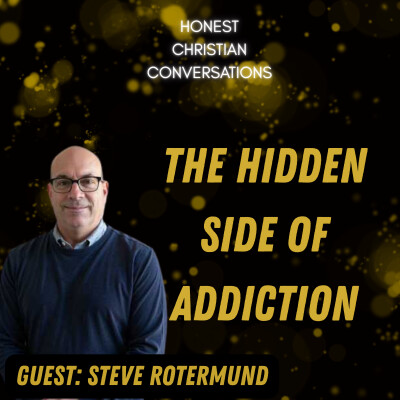
You walk into a room and say, good morning to your coworker, but they ignore you. No response. And immediately you think, what did I do? Or maybe you pick up your teen from school and you ask how their day was and they snap at you to leave them alone. And you sit there wondering, why do they hate me right now? Or maybe this one hits even deeper. Your spouse seems distant, withdrawn, not acting like themselves. And your first thought is, what did I do to make them stop loving me? If any of that sounds familiar, this episode is for you. Because what we're really talking about today is codependency. The quiet, painful pattern of taking responsibility for someone else's emotions. choices, and struggles. I'm Anna Murby, and this is Honest Christian Conversations. If this is your first time joining me, thank you for sharing your time with me. And if you are a returning listener, thank you for coming back. In this episode, I sit down with Steve Rotermund, who shares his story of walking through his wife's addiction and the painful reality of 13 years of toxic codependency. that affected his entire family. Now, he helps others recognize these patterns and break free from them. This conversation takes a different look at addiction, not just from the perspective of the person struggling, but from those who are living in the middle of it with them, the ones trying to fix it, carry it, and survive it. So if you love someone who is battling addiction, and you feel exhausted trying to hold everything together, I want you to know you're not alone, and there is a better way forward. And if this is something you're walking through right now, I've created a private 12-week program called Retrain Your Brain to help guide you through healing and recovery. You can find that in the show notes. Now let's get to the episode. Steve, thank you for joining me today. I am so excited to pick your brain about this side of addiction that I am not really too familiar with because I was an addict to porn for 17 years. So, and the people I was with were also addicts. We didn't really have that. Well, we had codependency unhealthy, but not in the way that you did where you you You lived it out with your spouse, but from a completely different angle. You weren't going through the same addiction that she was. So you were having to live what you were going through while being there for her as well. Let's just start with where you were when you found out about her addiction. I know you were in ministry, so just go in depth with that.
- Speaker #1
Yeah, well. First of all, thank you for having me on. It's such a pleasure to be here. And we'll pick what little brain I have left, but I do appreciate it. And yeah, we were married in 95. And in 1998, I went downstairs to look for something. I don't know what I went to look for, but I went downstairs and I was rummaging through some stuff. And back in the 90s, when you got a prescription, they would staple... the doctor's name and how many pills you got and what was filled and they'd staple everything to the bag now it's kind of electronic but everything was stapled to a bag and I found like two plastic grocery bags full of prescriptions and well they're just the bags just the empty stuff like she was gonna throw it away when I wasn't there or I don't know but it was just all hidden and I picked it up and I was like started looking through it and I was just kind of in a flight or fight mode I didn't know what to do And I just grabbed it and threw it in my briefcase and I walked out the door and I went to work and I started looking at it all. And back in the 90s and early 2000s, doctor shopping was very popular. And that would be you could go to four or five different doctors and they just weren't connected like they are now. And you can get different prescriptions to different doctors. And it was all pain medication. It was all narcotics.
- Speaker #0
Yeah, I've heard of people doing that. Yeah. I remember the stapling to the bags and everything too. Yeah.
- Speaker #1
And I... I ended up going to her mother's house and I laid all the evidence on the table. I'm like, I don't know what to do. What do we do here? To me, this looks like an addiction. And I just didn't know it. I was just blindsided and I didn't know how to handle it. We went and confronted her and it ended up to where her mom turned against me. She turned against me. She wasn't doing it. I was a liar. And I ended up leaving. I had two boys at the time. young boys and i ended up leaving went to a hotel and i was just like man i gotta clear this i gotta i gotta figure out what i was gonna do i went to my parents i think my wife's an addict what do i do oh honey we're so sorry hopefully you get through it all went to my best friends my wife's an addict you know can you help me what do i do man you know hope things work out for you but i'm here for you it was just like i was left all alone it was crazy where are you at this time i was 20
- Speaker #0
28 going on 29 years old so she would have been around the same age she would have been yeah she would have been about 28.
- Speaker #1
wow you guys were young yes and nobody was there to help that's no and heartbreaking i think most people that are entangled with somebody that's an addict realize that people just don't know how to handle it they don't know what to say they don't you know they'll throw some christianese words at you but yeah they really just don't know how to tackle this and be a support. Most people, I should say, need support for you.
- Speaker #0
Did you have faith at that time? Were you raised in a Christian home? Is that something you came to later?
- Speaker #1
I came to it later. I didn't know the Lord.
- Speaker #0
So at this time, you didn't know the Lord? Well, no,
- Speaker #1
I knew the Lord at that time. But when I was growing up, I wasn't in a home. I was invited to Sunday school here when I was a child. But my mother-in-law actually was a very devout follower of Christ. And she would talk to me about Jesus Christ. My parents were. Jehovah Witnesses. They became Jehovah Witnesses late in her life. And I went there a couple times with them just to go with them. And I sat there and just said, okay, I just, I didn't believe there either. But she kept talking about how great Jesus was and how I needed him in my life. And when I became 21 years old, a few Sundays later, I went to church by myself, the church that she said was a really good church that she went to every once in a while. And I went there and that's where I found the Lord. It was like, nobody else was there it was just the pastor and he just started talking and it was like talking directly to me and i went forward and said the prayer and got my ticket to heaven and you know left the church and we ended up going to church more and if you remember back in the 90s early 2000s promise keepers was big it was a big men's ministry was involved with promise keepers and i'd go and I'm like, man, I'm going to, God was going to have me preach to people like this someday. I'm going to be, this is what I'm going to do. And so excited. And I'd follow them around the country and volunteer. And that's how we started getting to know the Lord. So when I found this, yes, we were going to church and yes, we kind of knew the Lord. So when I moved out, it took about a week. And then she finally, I think she freaked out going, okay, this is, I can't do this alone.
- Speaker #0
Not to interrupt. again, did you take the kids with you? Were you concerned about them?
- Speaker #1
No, because she wasn't showing the mannerisms of passing out and, you know, those different mannerisms yet. And then she went and got an outpatient treatment center and went through that for about a week, came back, and we had an opportunity to move to Columbus, Ohio. from St. Louis. We lived in St. Louis at the time. And at that time, I was like, okay, this might be a great opportunity for us. And we moved to Columbus, Ohio. And in the back of my mind, I'm figuring, okay, we can get rid of all the doctors. We just run from the problems, right? We don't face it head on. We just run. And we moved to Columbus, Ohio. And some neighbors came down that our kids would play together. Neighbors came down and said, hey, would you like to go to church? And we said, yeah, we haven't been for a little bit since we moved here. go to church. And we went to church and I ended up meeting pastor and said, Hey, I was called to preach. I was in ministry with the promise keepers a little bit. And he took me under his wing and my ministry career just excelled from there. And this was in about 2005 that all this started to take place. Well, I ended up having appendicitis and Went to the emergency room, came home, was recovering, went back for a follow-up, and the doctor says, do you need more medication? And I said, what are you talking about? I said, I don't take drugs. I don't like them. I don't like the way they make me feel. I don't take them. He's like, well, your wife said that you went through the first batch and then you lost the second batch. And I didn't know if he needed another prescription. I said, no, I'm fine. And talk about shame and embarrassment and humiliation. So I go home, confront her, and it just blows up. And no, I didn't. And he's got it mixed up with somebody else. And so at that point, it's like, okay, she's back on her addiction. So I'm going to fix it. I'm just going to fix it. And for the next few years, I tried to fix it and tried to keep it under control. And I was in ministry and I'm in a pulpit. And this whole time I'm watching God and help other people and just loving on other people, selling Jesus, loving what I'm doing. And it was a secret we kept from the church and a secret we kept from everybody. And I tried to control it and it was getting worse and worse and worse. And then those mannerisms started coming. And she started nodding off here and there. You could tell you'd come home from work and you could just look in the eyes and just see the, I call it a dirty high. You can just see the dirty high in her face.
- Speaker #0
So the windows to the soul for a reason. You can see a lot.
- Speaker #1
through them yeah and I would try to fix it and we'd have these fights and it was just a complete mess and fast forward to me planning a church I mean I was a children's pastor as a men's pastor did men's ministry I did celebrate recovery I was a commander celebrate recovery did all these things while hiding that my wife's an addict and when I planted a church and had a radio ministry it was just became to the point where we were just fighting all the time And then I'd have to go to church being fake. And just, it was just a complete, it was hell. It was just complete hell. She would be passing out on the front row at church while I'm preaching. And I was just like, I'm done. I just can't do it anymore.
- Speaker #0
How did that make you feel seeing that when you're at, I mean, I know being on stage, you probably can't see a lot because of all the lights on you. But when you saw that as you're preaching, how did that make you feel?
- Speaker #1
I was very angry, shameful, embarrassed. And I walked away from the church. I talked to another pastor, handed it over to another church, walked away. We moved out of the community because of shame. And we moved into a rural area. And I walked away from God. I said, I'm done. I'm completely done. Why won't you fix her? Why won't you fix her problem? Why won't you get us on track? I'm working for you. I'm doing work for the kingdom. And it just didn't work. And I decided I don't need God. I'll just fix myself. So then it was two to two and a half years of cutting all the credit cards up. She'd still find money. I'd cut her off the insurance. She'd go to the state and get insurance. I didn't know it at the time, but it was my codependency battling her addiction. Her addiction, you know, my codependency is going, you're going to stop doing this. And her addiction is like, screw you. Yeah, I'm going to. And we just, it was. It was 13 years of cat and mouse. Who's going to win the argument?
- Speaker #0
Did her parents finally apologize to you once they figured out that she actually did have an addiction? Or were they just oblivious or pushing it under the rug out of they just didn't want to believe it?
- Speaker #1
Didn't want to believe it. Everybody swept it under the rug. See, I was the liar. I was the manipulator. I was the abuser, the verbal abuser. She had to take medicine for all her ailments. And I was just trying to be controlling. So her whole family was against me. Everybody was against me.
- Speaker #0
That's the worst kind of enabling right there. It's like major gaslighting. No wonder you felt so much guilt and shame over this. You had people telling you it's all in your head, you're wrong. Thank you. You can clearly see what's going on and you're the only one fighting to help her. I'm so sorry, Steve. That's awful.
- Speaker #1
Yeah. I mean, I played my part. You know, I don't put all the responsibility on her. I was a codependent and didn't know it yet, but I destroyed my family just as much as she did. And during that two years of hell, we were getting ready to get a divorce. A good Christian friend of mine's like, please go see this counselor. I'm like, I don't need a counselor. I counsel people. I don't, I'm a man. I don't need counseling, you know?
- Speaker #0
Yeah, that's the age old thing that men say. They fix things and they don't need counseling. Right. Yep.
- Speaker #1
So I go to this counselor and this is a great story. Love telling it. I'm in the office and not 15 minutes in my appointment. He goes, yeah, you're part of the problem. I was like, what? He's like, you have codependency. Instead of... using drugs you're just using emotions but you're destroying your family just as much as she is wow i was i about decked him i was about ready to get up and walk out of the office and he's like yeah you're the savior part of codependency he's like you got to feel better by fixing everybody and by feeling important and i'm like who do you think you are and i'm paying you for this and after the meeting walked out i was so mad i was in the car i was just so angry didn't really talk to god because i was done with him and i went home and i'm like what is codependency because back in the 2000s that wasn't really popular it still floats around in the recovery sector but it's just not a common word and i looked it up i was like oh my gosh this guy's right i couldn't believe it i was like this relationship me being a pastor the relationship with this person this person and this person i just went down the line and i'm like
- Speaker #0
they were all codependent and it just for those who don't know because there's people who don't know or they're going to pretend like they don't know please share with us what codependency is so they can no longer quote unquote be in the dark about it yes
- Speaker #1
this is the steve version of codependency it may not be the clinical version but this is the the steve version if you put all your value into another person not considering your own value and you're only as good as they are that day, you have codependency. Meaning if they're in a bad mood, you automatically turn to it's because of me. I did something. It's me. You're shameful. You're trying to repair something. You're trying to get that emotional feel, that emotional high that you need, that everything's okay, that you're okay. And you do that with everybody. And it could be a coworker, it could be a spouse, it could be son or daughter, it could be anybody, it could be people at church. But if you're putting your value into another human being and you're only as good as they are, then you definitely have codependency.
- Speaker #0
I'm definitely fighting that off. I was a big people pleaser back in the day and I'm weaning myself off of that mentality and it is not easy. And yeah, there's moments my husband seems off and I'm like, what did I do wrong?
- Speaker #1
Right.
- Speaker #0
And I have to take a step back and be like, well, did I do something wrong? Okay, no. Then maybe it's not about me. Let's just ask him what's going on.
- Speaker #1
It's the devil comes to steal, kill and destroy, right? So if you are feeling less than he wins and that's where he wants you. So you can go ahead and start fighting with that person. What did I do? What did I do? And smother them and everything else. And then turn it into a big old fight. Now you're wrecked for five, six days.
- Speaker #0
Yeah.
- Speaker #1
Instead of just, okay, I didn't do anything and you're not wrecked at all. But that's what codependency is. And I tied it to, okay, why was I such a great pastor? Because I was important. People needed me. People looked up to me. It fed the drug that I needed, that emotional need that I was okay and that I was loved and needed. A lot of codependents don't feel that. They don't feel loved. They feel less than. They feel shamed. And due to my past and connecting it to my father was an alcoholic off and on as a teenager. My mom, my real mom abandoned me when I was a young child. I was sexually molested.
- Speaker #0
That all, all that stuff. Yep.
- Speaker #1
I'm seeing it. So all that less than feeling, I'm not going to good enough. I'm not going to amount to anything. That's where that codependency develops. And it's a very big insecurity that likes to hide. Because we feel okay and we feel like we're doing the right thing. Until we don't. Until you break it down and look at it. You know, and I was, to let people out there know, I was, I thought my wife was taking drugs to escape me. I thought she was escaping me because I did something wrong because I was bad. That's how bad the codependency got. So if I could just fix her, she won't take the medicine and she can see clearly how good I am. She'll accept me and won't have to take medicine. And that's where the battle becomes. And that's the thought process. It wasn't, hey. Addiction is bad for you. I'm going to save you from addiction. It's I need to save me and make you make me feel good. So I'm going to stop your addiction. And it just becomes a whirlpool for 13 years.
- Speaker #0
Yep. Wow. Well, go back to where you were before I asked you for a definition of codependency.
- Speaker #1
Finding out that I had codependency. I did go back to the counselor. i started to believe in what he was saying and i would still go up with a huge wall but i was believing what he was saying and then he said something that just rocked my world to be honest with you he said you need to know your identity in jesus christ and i said what are you talking about i've been a pastor for years i know who jesus is i know i'm you know i may be kind of I'm out of God right now and walked away, but. I know who he is. I know what he was. And he says, yeah, but you were adopted son the whole time. He's like, you didn't live in a place of sonship of at full inheritance. And I was like,
- Speaker #0
what are you talking about? He's like,
- Speaker #1
you view God like you view your father. He kind of, he loves you as he loves you, tolerates you. kind of waiting for you to mess up so he can say some bad things about you and then you think jesus just came in to sneak you in the back door because you smell like poo-poo and the holy spirit's floating around and when you need him as a butler you call upon him i was like wow that's crazy and so we started going through things to help surrender and release and i went to him for six years so it wasn't a quick fix But during that process, John 14, 20 is what lit my world up and changed my whole Christianity view. And I've read over it before, but it never stuck out. And it was, you know, I'll paraphrase it a little bit, but Jesus says, you know, in that day, you're going to know that I'm in the Father, the Father's in me, and we're living in you and we're doing this thing as a union. And we're doing this together. And that just blew my world. I was like, that was never preached from the pulpit. We started to go down that road of what sonship was and inheritance of who I was, my identity, how much I was really valuable, how much I was really worth and how much I was really loved. And it just broke me down. I cried so many times in that counseling office. I just broke down so many different times. And I started to see clearly. I came home one day. And just told my ex-wife, I said, I'm done. I said, I've got to save myself and I'm going to save my kids. And I moved out. And at that point, I said it was about three months later, my son called me and said, hey, we had it. So in 2010, I had a third son. At the age of 40 now, I had my third son. So he was still a toddler. And then my second son was about 15 and my oldest was about 18 or going on 18. He didn't want to have anything to do with me. He was her best friend. I was the bad person. So she split us up. And then Zach, the middle son, was on my side.
- Speaker #0
And how how did that affect you? This. this was your family. You were trying to protect them. You wanted to help her and she managed to poison at least one of your children against you. How, how did you feel about that?
- Speaker #1
At the time it was very hurtful,
- Speaker #0
but
- Speaker #1
I had a mission. I had to get better. And I knew that it was going to take time to repair everything. But when I moved out, My son would come over, my oldest son, and we'd go to dinner and a movie every single week. And I would just slowly repair that relationship and just be open and honest with him. It made some headway, not the best, but it made some headway. And then my 15-year-old son calls me and says, hey, mom's on the couch, passed out. I can't get her up. Baby's in a poopy diaper, hasn't been fed. Mind you, I only lived 10 minutes away and I called the sheriff's department. I went over there and she didn't put up a fight at all. I took the kids and two days later. She took off and they didn't see her for a few years until she came back for the divorce proceedings. And then she had to have, it was starting to be the point where once you lose everything through Medicaid and different things like that, then you start hanging out with people that can get different drugs. And she unfortunately went from narcotics, prescription medication to heroin. meth, hanging around those kind of groups of people. And she came back, she ended up doing a stint in jail. People are going to be upset at this, but I was like, oh gosh, score one for me, you know, because that changed the view, everybody's view. And then people started to come on my side. And then she had to have supervised visits to see the two kids.
- Speaker #0
I get where you're going, how you thought people were going to. be affected by what you just said. But honestly, I get it. I get your heart of what you're saying is like, I've been vindicated. It's not like a ha ha. See, I was right. Look at everyone. I was right. You have it from a place of I'm finally vindicated. And I like I said, I don't have necessarily the perspective you do because I was the addict. But I can imagine. that it's extremely hard to be the person on the other side who isn't dealing with it, who's trying to get people, including that person who's addicted, to see that they have a problem. And everyone's just ganging up on you like you're the bad guy. You're trying to uncover this crime, this thing that's going on in your marriage, and everyone just thinks you're the problem. And it's poisoning your children against you. Your wife is... spiraling. You feel helpless. You're angry at God because he is not helping. And you're just wanting to get better. You finally figured it out what your problem is and you want to fix it. But you still have all these other issues that are there and nobody's helping you because they still think you're the problem. And then finally something big happens to the point where they have no choice but to accept that. They can no longer stick their head in the sand. They have to admit he was right. There was a situation. And I think you just had this big sigh of relief. It's finally out. Everyone's there. They know I've been vindicated. And that's all I heard when you said it. I mean, if anyone else hears anything different, then maybe they need to check how they're receiving it. But that's what I heard is that you were just relieved. It's finally out. People are going to start helping me now. I don't have to carry this all alone.
- Speaker #1
Yes. It was a tremendous weight off my shoulder. And we ended up, we went through the divorce and she bolted again. I mean, just took off. And the kids didn't see her for about eight years total. And a few years ago, her mother passed away. And my two older boys went to the funeral and they saw her and they tried to believe that she still wasn't an addict because she was telling them that she wasn't. She was better. And my older son ended up giving her some money because she was working as a waitress and he ended up giving her some money. you know when they came back home and it was like how was it and how was the senior mom and it was weird but you know hopefully we can start repairing things and knowing our mother and forgiven and they learn we can forgive yeah three weeks later she overdosed oh i'm so sorry my oldest son is a wreck to this day he's a wreck he felt like he caused it because he gave up i was just going to ask that.
- Speaker #0
Poor kid.
- Speaker #1
Yeah. And he's almost 30 now. I mean, this happened just a few years ago, but he's 30 now and he lives around where I live and hates my guts. Well, he acts like he hates my guts. I know it's not me.
- Speaker #0
I know he's got anger. He's just hurt.
- Speaker #1
Yeah. And I just love him and his mess. Jesus loved me and my mess. So I just love him and his mess and have open arms. I don't put any expectations on him and just love him. Yeah. My middle son is now living with me because he just got himself in some trouble with another female. He's a love addict. I'm not sure if he's a love addict. I don't know. I don't know. I don't know. I don't know. I don't know. I don't know. I don't know. I don't know. I don't know. I don't know. I don't know. I don't know. I don't know. I don't know. I don't know. I don't know. I don't know. I don't know. I don't know. I don't know. I don't know.
- Speaker #0
and got in a situation where he got arrested and just bailed him out and now lives with me. But God's been working on him and transforming him, which is amazing. Yeah. And my youngest son that went through it, that was the toddler at the time, Nathan, he's an honor student. He doesn't remember too much, thank the Lord.
- Speaker #1
Yeah.
- Speaker #0
And he seems to be okay at this point. But the other two, you know, we just keep praying for.
- Speaker #1
Yeah. It's hard when addiction's involved in a family. It doesn't just affect the person who's addicted. It affects everybody.
- Speaker #0
It does.
- Speaker #1
And it does not matter which kind of addiction you have. My pornography addiction, nobody knew about it because I knew how to cover my tracks. But it still affected them if I was in a mood. and angry and just needed them to go away so that I can go look at my relief. I neglected my family to do that. I didn't need things as much as I should have, like my husband. And yeah, you just, I think as addicts, we forget that there's others involved in our lives. We're so consumed with our addiction. that we can't see straight anymore. We can't think straight. We don't realize that what we're doing is hurting people. Maybe we do in the beginning, but as you numb yourself to it, you get used to it, you get codependent on it. You forget that there's other people involved and that they love you and they care about you and they want to see you change. And you don't see a need to change. I mean, your son, when he gave money. Maybe he didn't see the outward appearance of her struggling. Maybe she hid it well, or maybe he was just denying it. I mean, only he knows what she actually looked like at that moment. I know with certain drugs, it can take a toll on your outside.
- Speaker #0
Oh, she aged 15 years. I mean.
- Speaker #1
Yeah. And maybe he was just ignoring it like her family was for a while in denial. Maybe, like you said, he wanted to believe what she was saying, that she was no longer doing drugs.
- Speaker #0
Right.
- Speaker #1
And to have given her money and then have her overdose, that is a big burden that we know Satan is pushing on him to make him feel like it's his fault. And I know you're doing it every day, telling him it's not his fault. It's never our fault when we give money to people who are asking for help and we just feel led to do it. It's not on us what they do with that.
- Speaker #0
Right.
- Speaker #1
And I think that's one of the main reasons why he's struggling so much right now is just feeling that guilt and that shame. And Satan just keeps putting it on him. Is he he's stepped away from the faith, I would assume, because of this? Yes.
- Speaker #0
Yeah.
- Speaker #1
And that's the hardest thing of all is he's turned away from the one who truly loves him unconditionally, who is not holding this against him. And he's listening to the lies that Satan's telling him that this is your fault, that you had something to do with it. And that's really heartbreaking. But that is unfortunate in a lot of different situations. You feel a sense of guilt. I could have done more. I could have helped more. I shouldn't have done this. But that's not helpful in any situation. You can't change the past. You have to find a way to move forward and help other people so they don't go down that road. But you can only do so much. At the end of the day, we all have free will to do what we want to do. And again, he wanted to give her money to help her. He did not know what was going to happen had he known he wouldn't have given her the money. Absolutely. But that's really sad. And I'm so sorry that everything broke down like it has. But I know that people needed to hear this.
- Speaker #0
Yeah. I would never dishonor their mother. And I take full responsibility for my actions. I took my anger out on my kids because I didn't understand how. deal with what I was dealing with at the time. I kind of isolated them because her and I would fight all the time in the garage. And it was just, it was just a complete, it was just hell. It was just complete hell. Those that are in my position, I can go try to fix my boys and jump right back into codependency and just try to hound them and fix them and work on them just like I did with their mother. And it's just like, I can't, I have to, I'm healed. I got to step back and let them be them and let God work because All I can be is the light and love to them. I can't go in there and try to fix it again or I'll just end up right back where I was. And it'll make the relationship totally worse.
- Speaker #1
So how is life for you now? Are you still in counseling, working through the issues that you had? Or do you feel set free to a point where you don't need the counseling anymore?
- Speaker #0
I am set free. I like to say that. Yes, amen. I'd like to say that I'm transformed, I'm healed, and life isn't perfect. Triggers come up every day, and you just have to fight those triggers. And you learned when those triggers come up, what to say, how to act, how to react. And that's what gets me through every day. But I went through counseling for, like I said, seven years. I'm now remarried and beautiful wife, Sarah. who loves me unconditionally and i kind of met her when i was in counseling and i told my counselor that man i really like this girl but i don't want to get into another mess i don't want to fix somebody and you know i don't know if she really likes me you know i just play in that insecurity and but want to be confident and and he just like you know what this girl really digs your chili.
- Speaker #1
I'm like, I know.
- Speaker #0
And it was so funny. And so I say it all the time. She just dug my chili. And which means for people, she loved me for who I was. I didn't need anything above that, below that. She loved me for me. And when you have somebody love you, when you can clear your head from addiction and you have somebody that loves you and you feel love for the very first time, it's amazing. It is just completely amazing. that god allows to human beings to act like that i can feel god's love and knows god love but this is just different and moving forward with that it took another 10 years for me to finally get comfortable and step back into ministry because it took i was out of church for a while and i was very angry and when i did go back to church i had walls up so i then go through life working and going god am i ever did i blow my chance at ministry you know did i screw up it's like don't let your insecurities come in again he's like i didn't i didn't mess it up he's like i just need you to do two things you need to forgive and i said i've forgiven everybody what are you talking about i forget my wife i forgive her family i forgive my kids i've forgiven everybody it's like you You never forgave yourself. I broke down and cried. Just bawled. Because I never forgave myself for not fixing her. And I never forgave myself for being a horrible father. And once I let that go, now we're going into year two of the ministry. And the passion is to help people with an unhealthy habit, any unhealthy habit.
- Speaker #1
Before we start talking about the work that you do now, I want to go back and ask you some questions about... dealing with a spouse who's got an addiction. If you want to limit it to just the type that you know, which is the pills, painkillers and everything, substance abuse, that's fine. But how will a spouse know when there's trouble with their spouse? Like you noticed the bag that had different doctors. on it and her name all over it hidden. That seems kind of obvious as something's a little off. But were there things that you maybe had ignored before that, that you just kind of dismissed? I thought she got this thing of pills yesterday. Why is it already empty kind of a thing? You know, like just walk us through how aware we should be. as a spouse dealing with someone who might be addicted to something.
- Speaker #0
Yeah. I'll be honest and say I was ignorant. I didn't have a clue her father was an alcoholic. Over my head. She was also sexually molested as a child. That went over my head. I just thought we were two people exactly alike and we're going to get through life. You know, we had hard times, but so what? And then her father passed away in 97 and 98 when I found the pills and I didn't put the two together. She started acting different, not crazy, but she'd be tired. I just thought she was depressed. I just thought she was depressed, still trying to get over her dad, not realizing that she never forgave him for the things he did. So it wrecked her on top of everything else, all her trauma. So I never connected any of those dots. But I will tell people that maybe are beyond that and may have been living through this just a little bit longer. If your gut is telling you something, I like to say, you know, people say I get this gut feeling. I think it's the spirit. just trying to throw up some red flags of saying, hey, this is out there. If you have that feeling, then you need to investigate it further without confrontation. You just need to investigate things a little bit further because in your heart, you're normally right in this situation. Because I've talked to a lot of people that have gone through the same thing that said, you know, I just have this feeling. It's like, yeah, but here we are 13 years later. I had this feeling, but I wasn't healthy enough to fight it. So that would be step one is just the awareness of it and investigate that further. If you're in the phase where you're fighting all the time now and trying to fix it, save yourself. Go get yourself help and just back off and get healthy that way. Otherwise, you're just going to go down with the ship. Yeah. The addict is always normally. always stronger than the support person. So you're always going to go down with that ship unless they wake up and they're like, okay, people have to hit rock bottom. My wife never hit rock bottom. She lost her husband. She lost her house. She lost her car. She lost her kids. She never hit rock bottom. So don't go down with that ship.
- Speaker #1
How should the spouse who's trying to help. How should they approach the situation when they've collected enough evidence to prove their point that their spouse has a problem? How should they approach it? You went to your in-laws. Would you say that's a good step or do you think there's another way you might have approached it if you had a chance to do it again?
- Speaker #0
I would approach it as in finding a support group. there's all kinds of support groups for people entangled with addicts. If you can find a support group, that would be great. Um, but yeah, if you go to her family, I don't know how close you are. You know, there's all different kinds of things that play factors in. Um, but if you have enough evidence and you do approach your other, you know, the person that you're with, you have to do it out of love this time. You have to do it out of. just complete love and see where that goes first. You'll have to have a plan in place. Okay, I'm going to go ahead and approach this person. Either this person's going to accept this and go get help or this person's going to deny it. What am I going to do if they deny it? Okay, how long are you going to live with that? Because they're going to deny it. And if you have the evidence like I did, you know, I should have right then and there been like, okay, I'm done. I'm going to save my kids. I'm going to save my family. And, you know, I didn't do that. I fought the, you know, because that's why you have to make sure you're healthy first. See, I wasn't healthy. So I didn't know all this stuff. So when she says, no, I'm not taking any medicine. Oh yeah, you are. I know you are, but I'm going to still fix you. And I keep approaching and I keep approaching instead of backing off with a clear head. I kept approaching and getting sucked into it and getting sucked into it, getting sucked into it. That's what I mean. You can't go, you can't go down with that ship. You have to have a plan, but you have to be healthy first. But if you go in there all hostile, look what I found and you're an alcoholic and you did this and you did that. You're not going to get anywhere.
- Speaker #1
Yeah. That's the worst thing you can do.
- Speaker #0
Yeah. You have to attack it in a, in a loving way.
- Speaker #1
And if you have kids who are old enough to understand what's going on, How should they be involved in this situation? Is it something that if they're asking questions, what's wrong with mom? What's wrong with dad? Is this appropriate for them to know the situation age appropriately, of course?
- Speaker #0
Age appropriately, yes. If they're young kids, I wouldn't. Because then you're going to start putting doubt in their mind. You're going to start putting fear in their mind. You're going to start putting shame in their mind. I wouldn't do that to destroy anybody. But if they're old enough, they're young adults, I mean, you can sit them down lovingly without degrading the other person and just say, hey, I think this problem's going on. This is the proof I have. I just want to let you know. And this is the plan I have. I mean, it's a tough situation. That's why my passion is to help people out of that. I don't want to see another family destroyed. i don't want to see kids destroyed yeah because while god is good in everything my kids are still a mess my ex-wife has passed away and it's just it's just been a complete destructive bomb that went off yeah because of both of us
- Speaker #1
So how do you help people now? You have ministry that you do for this?
- Speaker #0
Yeah, I just, I mean, just launched a 12-step community that's online. It's called Walk Right a Path to Healing. And it is a 12-step program that is made in the identity of Jesus Christ. It has, it's just like any other 12-step program except for mine. Like I said, I was a commander at Celebrate Recover for a long time. Great program. Love the program and some other 12-step programs that are out there that are non-Christian, but they focus on the problem. Hi, my name's Steve. I'm a recovering alcoholic. That's not your identity. That's not who you are. And they want you to stop the behavior and they want you to surrender the behavior to God and they want you to, you know, release that and let him fix you, which that's all great. Don't get me wrong. I'm not putting it down, but mine is focused on transformation. We start on the inside where Jesus wants to be, because once you get transformed on the inside, you're not going to want to do the addiction or the unhealthy habit. Yeah. So it's not about behavior modification. It's about transition. And that's what was eye-opening for me when I went through counseling. And that's what was eye-opening for me that God revealed to me. It's just, you know, I was a Christian all these years, but I was still a jerk. I would go home and belittle my wife. I would go home and take stuff out on my kids because I didn't know how to handle my wife. But I had this ticket to go to heaven and it was in my pocket and there was no transformation. None. We just get that security and we love people and we're nice to people and we try to do right. But, you know, you leave church and then you're flipping somebody off because they cut you off on the way out the church parking lot. I've seen it, you know. There's just no transformation. So mine is about transforming, letting God, actually surrendering that, knowing it's more important to know how valuable you really are and that you had a relationship with him before the foundation of the earth, that you were created with him before the foundation of the earth, and how important that is to embrace how much you really are loved. And it has the principles, it has devotionals, it has all these tools and lessons to help you go through these worksheets. But more importantly, it's a community. I'm hoping a bunch of people will come on in support of their local 12-step program because it's not to replace anything but I remember when I was going through recovery it's like I couldn't wait till Thursday night at six I needed somebody today and it was Tuesday so you can jump online hopefully people are there that have some same issues that people can just love on each other because community is so important in recovery I agree and it yeah I designed it like this it's a big party I'm inviting everybody to it they're having so much fun I can go upstairs and go to bed. I'm not needed, but I'll facilitate everything obviously. But that's the big thing I'm doing. And then obviously I do coaching one-on-one with people that are entangled with somebody, help them walk through that and what path they're going to take, whether it be divorce, whether it be stay, whether it be an outpatient service or some kind of recovery program. I help them with that. And then I go around and I speak on different recovery topics. speak at different churches about just transformation, about stepping out of the old and into the new and what Ephesians really means. That's pretty much the ministry. I do have a couple podcasts. One is a recovery podcast that goes with the community. It's called Recovery and Identity. And then I just have a devotional, just a Bible devotional podcast called Walk Right About the Healing. Those come down on Wednesdays. The other one comes out on Thursdays.
- Speaker #1
Awesome. Have you had any couples that were on the brink of maybe divorced because of an addiction codependency issue. But through the help that you gave, they were able to overcome and stay together and keep their families intact. Have you experienced anything like that?
- Speaker #0
Working through that right now. I haven't been through a complete completion since, you know, I'm only second, this is my second year into this ministry. So we are working through a couple of those situations, but we'll have to check back in to see where it goes. Yeah, because I'm not going to come in here and be like, you can't divorce.
- Speaker #1
Yeah.
- Speaker #0
You know, it's whatever's healthy for everybody.
- Speaker #1
Sometimes it's necessary.
- Speaker #0
Sometimes it is.
- Speaker #1
Fortunately, yeah. I mean, God hates divorce, but there are times where, you know, there's danger involved.
- Speaker #0
Yeah.
- Speaker #1
What if she had had an overdose while... your young son was really young and no one was there to take care of him. What would have happened? So yeah, I understand. And there's a level of guilt and shame that comes with that too. When you feel that, you know, divorce is imminent here, you get that guilt and shame because as Christians, we're not supposed to do that.
- Speaker #0
I'm a failure. God's made me. Yeah.
- Speaker #1
Yeah. And that's not healthy either.
- Speaker #0
God specifically told me, says you cried out all those years to help. fix your wife he's like i just wanted to fix you yeah i was there the whole time the entire time steve what are you doing i'm right here what are you doing but you were so focused on her there was no way he was going to get through to me yeah reminds
- Speaker #1
me of the verse where it talks about the plank in your eye and the speck and someone else's we we do that i've done that i still have my moments where I do that. We do that. We think we can fix other people. We can save them. And sometimes you have to take a step back, a humble step back and say, I can't. I'm not the savior. It's not my job. He knows everything. He knows who's, he knows their fate. He knows what's going to happen. He pursued you to help you. And now you have the opportunity. to help others. And I'm very grateful for you sharing your story about this and sharing your ministry work and being open and honest about how things were for you, how you were as a person, and giving us a different perspective that we don't often hear when we hear about addiction. We hear a lot about how it affected the person who was addicted, but we never hear about the people who were left in the wake of that, how their stories went, how it went for them being in the midst of that, seeing it from their perspective. And you've given us a new way to look at this, to have a sober mind about this situation. I believe you've given us some great starting off points to be more aware in our lives and in the lives of our loved ones to Thank you. see if maybe we're being codependent, if they're being codependent to us, and if maybe someone's hiding something that needs to be addressed. So I thank you so much for being on and sharing that with us.
- Speaker #0
Yeah, that's the story that God's given me and we'll bless other people with it. Just remember, those that are listening, 12 steps are not for air quotes, those people. Most people think 12 Steps for Alcoholics and Drug Addicts. It's not, if you have anger, if you have anxiety, if you have worry, if you overeat, pornography, anything, any unhealthy habit that keeps you from your identity, 12 Step, a Christian 12 Step program can really help you see clearly.
- Speaker #1
I agree.
- Speaker #0
Yeah. But thank you.
- Speaker #1
Thank you. Yeah. I mean, you've shown us that codependency is a real thing. I mean, I admitted it when you mentioned what your definition of it it was. I realized that I had that and I'm still working through those moments where I still have it. It's a very toxic trait and it can send you spiraling. It can put you in bad situations. It can put others in bad situations. So it needs to be nipped in the bud. I believe that's the saying. And it needs to be found out and cleaned out. And I think your program is just one brilliant way to do that.
- Speaker #0
Yes, thank you.
- Speaker #1
So if people want to get involved with your 12-step program, how can they do that?
- Speaker #0
Yeah, if you just go to www.walkrightministries.com, all the information's there. How to get to the community, the coaching, the speaking, it's all there. The podcast, everything's there.
- Speaker #1
All right, awesome. Well, thank you again, Steve, for coming on and sharing hope. for those who are in the middle of a very difficult situation. And hopefully you who are listening right now to this, if you are feeling led to check out his ministry, Steve, give it to us again. What's the website?
- Speaker #0
Walkrightministries.com.
- Speaker #1
All right. If you feel led by God right now, you're feeling that tug that he's telling you, you need to get involved in this somehow, then don't ignore that. He's trying to help you. He wants to help us all. We're constantly praying, Lord, please help us. And then he sends different ways to help us, but because it's not the way we thought it was going to be, we don't consider it help. But here is your olive branch of help today from the Lord. If you need it, take it. If you aren't quite ready for that step, you can go to honestchristianconversations.com contact, and you can just message me. and tell me what's on your heart and I will be praying for you. Thank you again, Steve, for coming on and sharing this with us.
- Speaker #0
You're so welcome. Folks, there's victory on the other side.
- Speaker #1
Amen. How did today's episode affect you? If something stirred in your heart or challenged you, you're not alone. I felt it too. If you need prayer, I would truly love to pray with you. You can reach out through the link in the show notes. And if you're ready to take a deeper step toward healing and transformation, you can also check out my Retrain Your Brain series. It's designed to help walk with you through that process. God bless you, and I look forward to our next conversation.