- Speaker #0
Welcome to Pharma Minds, the media for committed leaders in pharma and healthcare. Here we take the time to explore the ideas, strategies and people shaping the future of our industry. If you'd like to understand before the rest, subscribe now and hit the bell to stay ahead.
- Speaker #1
I've spoken to pharma leaders and many people from within the industry and they are all very concerned about Trump's MFN policy. It is one of their deepest concerns right now when it comes to the... European pharma market.
- Speaker #0
When the CEO of Pfizer says publicly if we have to choose between Europe and the US, we already choose, we go to the US. Do you think it's an announcement?
- Speaker #1
Delayed launches is something that we already see, so the changes and the effects on European patients are already there.
- Speaker #0
There are some topics that nobody wants to talk about in formal. Topics that make executives uncomfortable, paralyze the government, and yet directly impact European patients. We have Trump's MFN policy, which is one of them, but we have also Europe's vision for innovation. And I'm really happy to be here today with Christophe Rannissen. Hello, Christophe.
- Speaker #1
Hello.
- Speaker #0
You are a pharma journalist in Brussels, specialized in pricing and market access policies, and maybe one of the few who can speak freely about MFN because it's not constrained by commercial interest. I can bring maybe a few points of context. We have Trump instituted the MFN, Most Favored Nation Policy, which is the drug prices in the U.S. that cannot exceed those in other developed countries. including several European countries. And the immediate consequence is the pharma industry fears launching some innovation in Europe at low prices or delay some launches as they will drag their prices in the US down. And then I'm happy to have you here today. The premise of this episode is maybe to explain why everyone is silent on this topic. What the real story is. stakes are and maybe above all, what options Europe has in the middle of this. Christopher, you told me that you've spoken to many leaders or institutions about this topic, about this policy. Can you tell me maybe what strikes you the most about the reactions?
- Speaker #1
First of all, thank you very much for inviting me to this podcast. It is, as you already hinted at, a very interesting topic and it's a very hot topic right now in Europe and also in many other places of the world I believe and as you also mentioned that there is not there hasn't been the people haven't really thrown themselves against each other to be able to talk about this publicly but it is something that I know that is a very concerning topic for many behind closed doors As you said, I've spoken to pharma leaders and many people from within the industry, and they are all very concerned about Trump's MFN policy. It is one of their deepest concerns right now when it comes to the European pharma market. Why are they concerned and why at the same time don't they want to talk about it? That has been very interesting to me. I think a lot of them want political action at this point. but no one agrees on the potential treatment to counter Trump's MFN policy. So there is a lot of uncertainty there. I would speculate that one of the reasons why so few people want to speak about it is that the possible solutions will be very unpopular. Some of the solutions, which we'll also go into, I'm sure, further down the road, could be higher prices, higher medicine prices, which would be very unpopular among politicians, patients, and of course, voters. So I think for that reason, it's not something that either politicians or pharma companies want to talk too much about.
- Speaker #0
Okay, interesting. And if you talk to the facts beyond the silence, because it's been nearly one year we're talking about this, and what's the concrete evidence that MFN policy is already impacting Europe, even if nothing is really clear?
- Speaker #1
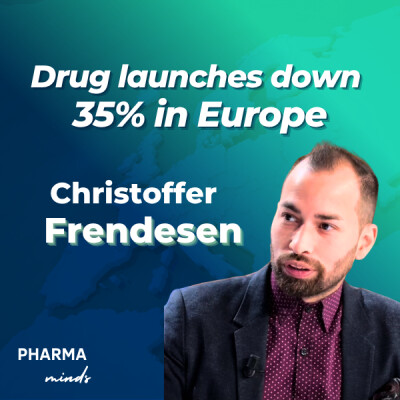
Well, one of the signs was... recent analysis of some data of new medicine being launched in Europe. The data was pretty clear that there were delays. In Europe, like for some countries more than others, countries that has been selected as reference countries for Trump's MFN policy within the US are affected more than other European countries. But nonetheless, the figure speaks for themselves. Like the amount of fewer launches have been significant. I think it's from between 35% for some European countries up to above 40% for some European countries. so the The change in medicines that are delayed or not launched at the European market is very, very significant. And that's also one of the reasons why some companies might don't want to talk about it, because one thing is for them to talk about higher medicine prices. That is not popular. Another thing is for pharma companies to talk about possibly delaying the launches of new medicines in Europe. That is also going to be vulnerable to criticism because essentially it's implying that they prefer to launch on the American market, which is much more lucrative. But on the other side, they want to delay launches or not launch immediately in Europe because that might affect the profits that they can make on the American market. So European patients might not be filled with that information. So that's also one of the reasons why they maybe don't want to talk about it too much.
- Speaker #0
Okay, then if it's not public, what is the state? What can be the option, how we can tackle this thing? How can we open the problem?
- Speaker #1
That's a very, very good question. I don't think there's any clear answers to this at this point. And there could also be, I think there might also be multiple solutions needed. One thing that has been talked about is integration, European integration within the European Union. So that would mean closer cooperation or more streamlined European processes instead of separate national processes. But this is very controversial. This is not something that is in the cards right now. But it is some of the solutions being talked up, at least among people in the European Parliament. I think if you talk on behalf of a EU country, your perspective might be a bit different, I would argue. There are some Current proposals on the table, the Critical Medicines Act and also other legislations that are passing their way through the EU law machine. But I think we'll touch on them a bit later.
- Speaker #0
OK, I just go back a bit to the unpopular situations. Then when the CEO of Pfizer says publicly, if we have to choose between Europe and the US, we already choose. We go to the US. Do you think it's a... It's an announcement. How do you read it?
- Speaker #1
It would be very interesting to hear his conversation with other people within Pfizer just before he went on stage and said this, just to hear what was his thoughts about it. Because I think it might be a controversial statement, but I think it's also a statement that a lot of people within the pharma industry agrees with quietly. I think that because the American market is so lucrative, because it is such a big part of the profit that some companies are making. Some companies are really dependent on exporting to the U.S. market. There were surveys among smaller and medium-sized pharma entrepreneurs, and for them, by far, the American market is the most important export market for them. So the U.S. market is so... economically beneficial that if they would lose access to the US market or if they would have to cut their prices substantially, these businesses would likely face massive cuts and changes if they were to lose access to the American market, or as I said, accept lower prices. So I think the message from the Pfizer CEO was a clear signal that if they are forced to decide between the US and other countries, many companies... will choose the US just because that is more profitable to them. And they might be dependent on that for further developing new products, which is hugely important within the medicine market. I think it's also a signal to European countries and European nations that if they don't introduce major structural changes to how prices are set in Europe, or if prices are not increased in Europe, then a lot of companies will choose the US in these circumstances. So I think it's a warning sign also for European nations that something has to give. Yes,
- Speaker #0
because it's indeed the... The European CEO, he's from Europe. And if we talk about the European Commission, because you're also really close to this institution, what do you think the institution is about this? Do they understand they would have to do something or prefer to wait? What is your feeling on this? Is there differences also inside the European Commission?
- Speaker #1
I would imagine there is. I'm not I'm not too familiar with the potential difference of opinions within the commission, but usually the different DGs under the commission have different approaches. So if it's the trade part of the commission, the trade DG, they might have a different view on this than the health and pharma DG, you could say. But overall, the commission's hands are sort of tied. National Or health is, or rather health is a national competence, especially pricing and reimbursement decisions, which are done at national level today. And will probably continue that way for a long time. And one of the solutions that come up when you talk about MFN and what the European countries can do or the EU can do, then a lot of it circles around pricing and reimbursement, which are, as I said, national competence, national decisions. So that would be hard for the commission to really do anything about. It will be a national decision and the commission can't really force the countries to do a lot of stuff on pricing and reimbursement. Also, in terms of saying something publicly about the MFN situation, the commission has also been very hesitant. They've said that we are monitoring the situation and we will do something if there are beginning to be signs. that the MFN is affecting European patient or the European foreign market. I would argue that these changes are these signs of the potential consequences of the MFN are beginning to show in Europe. So I think that depending on how you choose to look at it, the signs are definitely there. But so far, the Commission is maintaining that it's monitoring the situation. It could be possible for the Commission to do like to usher a formal Thank you. response, like a comment on it. But I think they'll be hesitant to do that because they don't necessarily want to trigger Trump and his potential wrath that he has been. I think it's fair to say that he has been known that if you say something, if you state something that Trump doesn't like, he could become upset and he could start threatening you with terrorists or other threats. So I think the commission is very hesitant to publicly comment on this. And Could there be another formal coordination or something by the Commission? Yes, possibly. But so far, as far as I know, there hasn't been any sign that the Commission is beginning to draft a common response.
- Speaker #0
Okay, you talked about fragmentation of Europe, having which is the national system of price and reimbursement. And do you think Europe starts to... It's a question we often have from different parts of the industry, like see Europe as a strong continent and show signs of its coordination between states. And do you think some movements are made in the direction to have a common voice, a unique voice for Europe?
- Speaker #1
It's a very good question. I think for a long time, health will remain a national competence. I don't think the countries are willing at this point to give up power, to give up decisions and leave it to the EU or a majority of countries, a qualified majority within the EU to decide on health issues. I don't think we're there yet. Is it necessary? That I don't know either. But I don't think at this point... point that the countries are willing to do it. There might need to be some more coordination. There might need to be some more cooperation within the area of health. But I think it's going to be incremental changes rather than big changes. And I think at the same time, for countries to respond individually to Trump's MFN pricing regime, I think that's going to be difficult. I come from Denmark. I grew up in Denmark. And for Denmark to have to deal with the MFN price regime and Trump individually. I don't think that will be easy. We've seen that at other times when, like, for instance... there was a discussion on whether or not the U.S. should be able to acquire Greenland. Denmark was quick to involve the rest of the EU and also some NATO countries, of course, because they know that they cannot do this alone. And what I think and what I recently heard is that I think countries are probably going to try to negotiate with Trump to get a deal, maybe sort of inspired by the deal that UK made with the U.S. and which would basically pave the way for higher medicine prices. I think that there is going to be an attempt by some countries to do that because when we all peel the layers of the EU back, we still come down to we have a lot of nation states and they will focus on their national problems and try to solve them even if it doesn't necessarily, even if it's come at the expense sometimes of other countries. They are nation states and they act egotistical sometimes. That is just how it is still at this point.
- Speaker #0
Recently, we had some agreement on the Critical Medicines Act to support European production. How do you read this announcement in this context?
- Speaker #1
So we still have not seen the final text of the Critical Medicines Act compromise. So we don't know the exact details and the exact wording, which, of course, is important in situations like this. But we do know more or less like. the broad strokes of what the parliament and the council have agreed on. The final compromise was less ambitious than the parliament's proposal. Instead of just focusing on getting the lowest prices, now you can introduce a criteria that focuses on resilience and supply security. However, we do not know if this will be enough to encourage countries or national authorities to favorize bidders that have some European production. Because a lot of EU countries are struggling with their economies. And also we have in all countries searching expenses for the health sector. So if all countries have to pay more for medicines to get European production or European ingredients for pharmaceuticals, maybe that's strategically smart. But at the same time, the state coffers don't necessarily allow it. And therefore, the wording is very important. Thus, member states... Absolutely. Are they obliged to include these criteria of resilience and supply security? Or is it an option for them to choose? This will matter a lot and whether or not it's going to make companies invest in European production and European manufacturing. It's not for certain. Also because the legislation doesn't really offer any money. So the money would also have to come from state coffers. from the EU. And that is also, as I just mentioned, that could also be challenging. So will it make a difference, the critical medicines act? It's hard to say at this point. One of the intentions is to boost manufacturing within the EU. Will it do that? We're not sure yet. It might be better than if nothing else was agreed, but it's not going to push it as much as the parliament wanted initially.
- Speaker #0
It's interesting because it seems like a good signal to make. a strong voice or a stronger direction, but it's still a first step. And beyond policy, what would a stronger European voice would actually look like in this kind of situation? Do you think we should have had, we should have different kinds of signals which are still ignored?
- Speaker #1
I think it's a very hard question. I think. In terms of answering, like, what should a strong European voice look like or what should it say? I think that's a question for somebody much smarter and with more high level influence than me. But I think one first step would be for politicians to actually talk openly about the massive problems that we might be facing because of directly because of the most very nation policies of the Trump administration. I think that would be a first step. I think for a lot of people that are not within the health sector, they are not aware, they are possibly not aware that we are likely facing higher prices within Europe. And also that medicine is actively being delayed so patients won't have access to the newest treatments. I think many people are not aware of that. And I think those discussions need to happen for solutions to surface and then for politicians to discuss. these potential solutions with voters and with patients. I think I talked about it a little bit earlier, but I would like to also revisit the idea that... that is being proposed from some members of the European Parliament. This idea of, instead of having national pricing and reimbursement decisions, then to have a streamlined EU reimbursement and pricing and reimbursement process. It is a very controversial proposal, but I've heard it from multiple people, both from people within the European Parliament, but also from health experts, that say this maybe could be a solution to the Trump MFN policy. One thing that it would solve is that We have very unequal access to medicines within the EU already today. Some countries have way earlier access and some countries will gain access much later if they will even get access to new medicines. So we have an unequal access already. If you have one pricing and reimbursement process within the EU instead of national, you could probably limit this problem because if there's just one pricing and reimbursement process, then... Medicine would be available in more countries faster. But the catch is that some countries would likely have to pay more. So the richer countries would have to pay a bigger part of the bill than the poorer countries. And of course, that is going to be difficult. I've talked to some people from the industry who said that, yes, we're not necessarily completely against this, but it would demand a high level of solidarity between EU countries. And that level of solidarity. has yet to be seen. So the industry are maybe not thrilled about these proposals, but they could be open to them. But at the same time, they also recognize that right now, EU countries are not very likely to pursue this path. Maybe if the consequence of the MFN becomes even worse, and if there is a debate, if it's something that people are very upset about, then maybe this is a common report. pricing and reimbursement process could be something to be discussed later. But right now, it seems very unlikely.
- Speaker #0
I would like to conclude with you, Christopher, because this is very interesting to have seen discussions. What do you think? This is an alert, something which happens and if Trunks is not here in two or three years, this kind of question won't appear anymore? Or this is more a lat... latent preoccupation Europe should face. And I really like your first step to just start talking about this because it's maybe just the beginning of societal discussions and awareness. What do you think about this?
- Speaker #1
I think it is clear what I hear from the industry and what I hear from policy experts that the MFN policy will have decisive changes for the European pharmaceutical market and also for European patient. What the changes will be is still something that we have to see. Higher prices seems likely. Delayed launches is something that we already see. So the changes and the effects on European patients are already there. And these changes might not be just a brief... wind of incremental changes. It might be changes that will occur now and then they might develop later. So the changes might be permanent, even though the result might develop in the coming time. I've talked to a lot of people who said that they don't necessarily expect that the next U.S. government, be it Republican or be it Democrat, will necessarily change this MFN policy. They have a huge problem over there. I think a lot of people recognize that. They have so much higher medicine prices, sometimes three to four times higher than we have in Europe. And that's not sustainable. That's not sustainable for U.S. patients either. Not at all. So there has to happen something for them to bring down the prices in the U.S. And if Trump's MFN policy succeeds in doing that in one way or another, I think we will probably see that they've... The next government will continue or adapt the policy to ensure that U.S. patients have lower prices. And this will likely mean that there has to be some changes within the European market. Higher prices, different processes of pricing and reimbursement, more EU coordination, whatever it could be. But I think if you're hoping that this will only be a problem during Trump's presidency. I think you might be a bit too optimistic. Previously, we have seen other administrations after the Biden administration took over, after the first Trump government, some of the policies that were... controversial at the time, maybe, the Biden administration kept these policies in effect. So we'll see. But I don't think you necessarily can hope that this will be a brief trouble with the MFN.
- Speaker #0
Interesting. I personally feel concerned because of a European citizen. I think I would like to see a strong voice and proactive decision and leadership. resulting to this kind of new order of the world and new powers emerging and maybe protectionism. But I think it's important to see also a kind of leadership for Europe.
- Speaker #1
I just have one interesting note that I'm working on another story about the EU's Biotech Act. focused on pharma. In here, they write that the commission published a report where the staff of the commission calculate or estimate what is the economic impact of the Biotech Act. And they say, well, if some competing countries, if they substantially change their legislation or the framework for pharma development, that that could affect how well the Biotech Act will work. in Europe. So the potential in increasing the number of clinical trials or in generating more profits that could be invested in European manufacturing or whatever it could be, the estimates that the commission have, they might be too optimistic if there is substantial change in the global pharma market, specifically with competitors such as US and China. The The Commission doesn't write this explicitly, but for me... As I read it, it's definitely saying that the potential within the biotech act, we hope that it's going to be very good. But if the US MFN policy will have a big effect, the changes in Europe might be minimal or at least not as much as you hoped for. So for me, that is just very interesting. And that says something about the need for Europe to find solutions, either in industrial policies or pharmaceutical policies or... pricing policies that makes it more interesting and attractive for companies to invest and build up research and development and manufacturing within Europe. How that will happen, I don't have the answers, but I hope somebody is thinking about it right now.
- Speaker #0
If you have to name maybe one decision Europe must take in the next 12 months to avoid being permanently weakened in this landscape, what would it be?
- Speaker #1
That's a very difficult question. I think, again, as I said earlier, one thing they should do is start talking about it more openly. I'm a journalist, so of course I would almost always argue for a public and honest debate. But I think that's necessary because all the solutions have substantial downsides as well as advantages. And you really need to have a talk about what What should we do? And if we do this, what are the negative and positive potential consequences of this? And then you need to make a decision. So I think the first step is to have a public discussion on the impact of the MFN and then the possible solutions and what the downsides and upsides of those could be.
- Speaker #0
Yes, really much. Okay, we see it's not a simple problem and it's also a completely new problem for the industry. Bye. can hear some leaders saying they've never seen that in 20, 30 years. But that's it. I think it's the new normality. But I think what would be interesting in the coming months is the ecosystem. Is it able to open the question of the prices and to put into different elements to make it more reasonable if prices is not...
- Speaker #1
For me, it's interesting. I recently had an interview with a Danish patient organization, and they said we might need to increase the prices short term to be able to ensure that Danish patients have access to new medicines. I think when even patient organizations who are usually not the ones to call for higher prices, which will directly affect their members, I think that's a clear signal that they are really concerned. And they're really concerned that they're Members, the patients will not get access to new medicines because companies just won't launch it right now in Denmark and maybe other European countries. So they say, well, we'll accept higher prices for a short while to make sure that our patients still have access to the newest medicine. And I think that speaks volumes. That says a lot.
- Speaker #0
Thank you, Christopher. We'll continue our investigation.
- Speaker #1
Yeah, for sure. Bye bye. Thank you very much.
- Speaker #0
Thank you for listening to PharmaMinds. If this conversation inspired you, subscribe to the channel and share it with a colleague. And for deeper insight and leadership takeaways, you can join the newsletter. The link is below.
![[Insights] Produits frontières : transformer la réglementation en avantage stratégique cover](https://image.ausha.co/DxYZ9g83tTEC6Wr39rcUpzpTWcQsUBjd7hU5AZsG_400x400.jpeg)
![[Insights] Groupements de pharmacies : ce qu’il faut retenir du rapport IGF-IGAS, avec Hugues Villey Desmeserets cover](https://image.ausha.co/UgNUSqEle2cZH1rOVklykwyk35Rz2q4seXKVMgWM_400x400.jpeg)
![[EXTRAIT] Une innovation en prévention qui inspire jusqu'au Danemark... avec Anne Beinier cover](https://image.ausha.co/PuxqczYfLjqCYtMRA0dqMcN77dzaY8CoGDnOnLF2_400x400.jpeg)