- Speaker #0
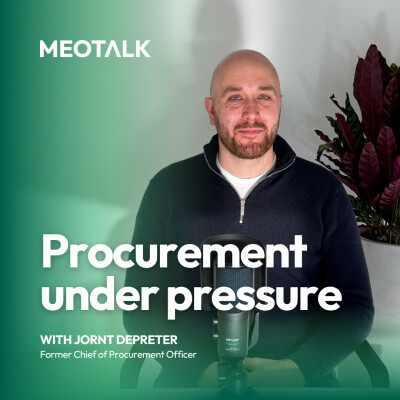
Hello and welcome to Procurement Room, the mail group podcast that talks about real procurement. Hello Jornt and thank you for being with us today. It's nice to have you. How are you? I'm good. Well, good. How are you today? Good as well. Sunny outside. Absolutely. Fantastic ride. Indeed. Indeed. Um, first of all, I would like to point out that you are speaking on your behalf and not on the behalf of your company or former employers. So to begin with, I would like to hear a short resume of your career. So if we focus on the professional part, who are you, Jont?
- Speaker #1
So, um, I've been a procurement professional, I think, for most of my career. So procurement has followed me throughout my... Entire career path, where I started initially at Deutsche Post DHL. So not a lot of people know, but DHL is part of the Deutsche Post group. I started actually working in Germany. So I did an internship in Germany for six months, where I was a business analyst within the procurement team. Then I came back to Belgium. I took on a category manager role for DHL Benelux. Afterwards, so after logistics, I moved to coffee. So I was the very first procurement manager for Nespresso in the Benelux. I think I was the first or the second in the countries because Nespresso at the time was starting up their procurement in the country as well.
- Speaker #0
Okay.
- Speaker #1
And then from one drug, I moved to another. So I moved to Novartis Group in the pharma industry for around seven years. it. a number of roles. Most of the time, let's say, it split into two parts. One part was indirect procurement on the country level, so Benelux again. And then afterwards, I took on a regional role within the sourcing team for warehousing and transportation, where I had like six countries that I managed. But Belgium was a big hub, of course. It's still a big pharma hub, so we've done quite some interesting projects there. Then I joined RectiCell, where I was global head of indirect procurement, and I did everything around the processes and tools, what we call procurement excellence at the time.
- Speaker #0
What does RectiCell for the audience?
- Speaker #1
RectiCell is a chemical company, so they basically produce everything which is based on polyurethane. It's this yellow foam.
- Speaker #0
Ah, EPE.
- Speaker #1
Also, the thing that we're sitting on today is probably yellow foam. But the Decticel group changed a bit now. So now they're just purely focusing on insulation panels.
- Speaker #0
Okay.
- Speaker #1
So the flexible form, as it's called, was sold off. And it's now purely an insulation company. But still a nice company. And then after Decticel, I joined Lunchgarden for three and a half years, where I started on as their director of procurement. and supply chain because procurement and supply chain was one function as lunch variant. And then in the last year and a half, I took on some additional responsibilities. I also took on IT and everything which is quality related. So not only food quality, but also the quality of the preparation in the different restaurants.
- Speaker #0
Okay. Okay. Thank you. If we focus now on the personal part, family, hobbies.
- Speaker #1
Yeah, so family, I've been together with my partner for eight years now almost. And engaged, so about to get married. My partner, he's a researcher at the KU Leuven, where he's currently doing his PhD. And he's actually doing his PhD in public procurement.
- Speaker #0
Ah, okay.
- Speaker #1
Public strategic sourcing.
- Speaker #0
Family matter. Yeah,
- Speaker #1
it's a family matter. We're a home of, or a household of procurement professionals, let's put it like that. um next hobbies i love to travel uh as most people do um and next to that i also cook quite a lot so i um i was in the course of getting my chef's degree uh i passed that for a bit now but it's still uh something that i truly enjoy cooking an entire day from scratch is uh yeah nice
- Speaker #0
My partner knows personally Yves Matagneux. So if you want to get some cooking lessons, I maybe can have you his number.
- Speaker #1
That would be great, yeah.
- Speaker #0
Good. Yont, if your friends and colleagues had to describe you in one sentence, what would they say?
- Speaker #1
Hmm. I would say I'm relatively easygoing, I think. Although I can be stubborn sometimes, but overall, I think relatively easygoing. Empathic, I think, as well. I had quite some colleagues who complimented me on that. And also quite analytic. I'm a numbers guy in the end. So I think that's also what drives me to become or to... Love procurement, the way that I do it, so it's this good combination of the human side, but also the number side.
- Speaker #0
Okay, yeah. I heard also like you listen and you help a lot. So people, really people-oriented, and that you made yourself incontournable, meaning you're at the right spot at the right time to help. And make sure that the projects you are involved in are going to be a success.
- Speaker #1
For me, it's, well, first of all, if you look into my team, that's my number one job. Making sure that whatever blocks them from doing their job, that it's being resolved. And I think that most of the time my team knows that as well. And yeah, what's super important for me is that you, in Dutch we say vakkenis, so that you know. what you're talking about even when you're sourcing something completely new i will take you to find through my research and to fully understand it and of course large language models help with that nowadays because you can ask to explain explain something to you like you're a five-year-old that's right um but still um but that also makes it very interesting to be in procurement because you get into touch with so many different areas and yeah I love to learn. So every time I can learn something new, it's a great thing. Okay.
- Speaker #0
How are you in the office and how are you at home?
- Speaker #1
Let me see. I don't think there's a big difference. Maybe I'm at home a bit more grumpy sometimes. I try to hide that in the office or I try to close the door then when I'm too grumpy. but overall i think i'm quite approachable um most of the time try to be uh yeah light-hearted in the sense of like being uh and funny is not the right word but just being like being in a good motivation and good um and just being approachable i think that's super important for anyone within the company as well to do no you can't talk to you and being yourself which is i don't know some people disagree with that but i try not to hide most of the time when who i am or sometimes i'm also getting very close to my team in the sense of like understanding what they're going through what am i going through that they know from me as well because of course you can't always block that there's no like you can't leave a home behind when you enter work and you can't leave work behind when you enter home yeah the boundaries are too fluid for me for that. You get what you see, basically. No,
- Speaker #0
no, no. You're not wearing a mask, which is for me the worst case. Not being yourself. It's a tricky situation. Yeah. Why and how did you end up in purchasing?
- Speaker #1
Because you started as a business analyst. I started as a business analyst. So when I did my studies at ASOL at the time, it did. It doesn't exist anymore now. Now it's KU Leuven Campus Brussels. I was always part of ISAC, which is an international student organization. And one of the things that ISAC does is that they, for recent graduates or people who are about to graduate, is that they take care of international internships. So you could apply to go and work abroad for a while and they would look for companies in Belgium too. welcome international talent. So I was part of the organization for four years during my studies. So I felt like I should do an internship as well. So that was in 2008, I think. So I started applying and the first job that I applied for was within procurement. I had no clue what procurement was.
- Speaker #0
You clicked randomly.
- Speaker #1
Yeah, but for me, my major was in accounting and fiscal law. So we were trained to become auditors. Okay. And I didn't feel like going to work for one of the big four. I mean, you were like 90% of the career path or the CPL that studied with me.
- Speaker #0
Yeah.
- Speaker #1
But it does teach you some skills, you know. teaches you to look at processes yeah are they saying what what can go wrong and stuff like that so that's within procurement definitely a transferable skill but um i thought you know what everything was very sunny at the time in terms of like economical situation of course i'm going to first try and do an internship and then i'll come back i'll have some baggage and and I'll see what I'll do. So that was 2008. I applied for a job at Deutsche Post DHL in their global sourcing team within the fleet category, which is nice.
- Speaker #0
One of the biggest of our scars, and especially when it's transportation like parcels, fleet is one of the most interesting. Yeah.
- Speaker #1
And also planes were in there. So it was also...
- Speaker #0
Yeah, okay.
- Speaker #1
But the team at the time, they were running a European leasing tender.
- Speaker #0
Okay.
- Speaker #1
And they needed somebody with some language skills. And of course, as a Belgian, you have a step forward there. So I was hired. I joined in September 2008. And that's how I entered procurement.
- Speaker #0
And never left.
- Speaker #1
And never left, yeah. But then, of course, October 2008, the global financial crisis started. So there I was thinking, maybe I should have started with a big four, but maybe. Yeah. Okay.
- Speaker #0
We switch now to block one, your professional DNA. So to fully understand your future answers, we start by situating your background a little. What shapes you in your relationship with purchasing?
- Speaker #1
I would say, well, a lot of time my managers.
- Speaker #0
Yes.
- Speaker #1
I would say. In general, most of the people are very... I can't really complain about the managers that I've had so far.
- Speaker #0
If you want to make some complimentary... It's the moment.
- Speaker #1
Now it's the moment. I don't know if they'll be listening, but one of them is retired already as well.
- Speaker #0
We'll tag them on LinkedIn so we can make sure they will listen.
- Speaker #1
Yeah, so, well, for example, my first manager at DHL, Nancy, I learned a lot from her. She taught me the basics, also working for DHL, of course. Of course, it's a very organized and structured company. They had a fantastic procurement department back then already. But then as well, throughout my career, I've always been quite lucky with people who had a great vision and who were eager to give me a chance. Because, of course, it's always taking a risk, taking somebody new on board. Indeed. I would say as well at Nespresso, seeing what type of impact you can have on an organization. As one person, if you can reduce 10% of the addressable spend over two years, it's fantastic. You know, you need to sell a lot of coffee capsules to get the same results. So those type of things were, yeah, really shaped me. And over the time, I started believing, of course, that if you have a good procurement department, you have a very resilient company.
- Speaker #0
Okay, okay, okay. What are the principles you apply in all your procurement projects?
- Speaker #1
Number one is fairness. I think that's one of my core values, both in personal as in my professional life, is that you need to be fair.
- Speaker #0
To your stakeholders or to your suppliers?
- Speaker #1
They're all stakeholders. I don't distinguish in that sense. Even a supplier is a stakeholder. And if you treat somebody unfairly in a sourcing process or in a contract negotiation or something, I always feel that will sort of come and bite me back in the ass, if you pardon my language. I've had difficult discussions with suppliers, but I think that there's practically, or I can't think of any supplier that would say, okay, he has been unfair to us. So that's one thing. Second thing, I've already mentioned it before. like I feel like you need to understand what you're buying and you need to understand where the company is going. For me, the biggest savings don't necessarily come from negotiating a 10% rebate, but it's understanding on what you're buying.
- Speaker #0
Yeah.
- Speaker #1
And if you really need it. Yes. Because we, for example, one of the things that I've been skeptical about was setting up an e-sourcing platform and not an online. buying platform for one of the companies I worked for. Well, I didn't really believe that it would deliver that much value. So those are the type of discussions that you need to have. Like, okay, why are we doing it? Of course. Because spending a few million in order to get something started is... Maybe not the right investment that you want to do. So yeah, understanding where the, in short, understanding where the business is going and what you want to buy and really understanding what you're buying.
- Speaker #0
Okay. So asking the right questions, making people think and trying to influence or persuade. Yeah. Okay.
- Speaker #1
Okay.
- Speaker #0
Good. Chapter two, what you really think of procurement today. We get to the heart.
- Speaker #1
of this podcast your personal vision of the profession what do you like about the about the job and what drives you on a daily basis um okay so what i like is that you can have an impact in the company you can make sure that you can leave the company in a better place yeah then the way you found it you can make the company more resilient um i have my own management company and i actually called it faircraft which is in dutch means resilience so it didn't end his power yeah so but it's yeah if you translate into English it becomes resilience okay so those are like key elements that I think are super important if you do it right the impact as well for me personally then it's you just get to learn so much you get to touch every single department of the company you are the one that actually breaks the silos I remember at Recticel they had different divisions And if we didn't organize a cross-marketing meeting, for example, across the divisions, they were never sitting together. I think that's also an added value that you can bring, especially if you have different business units and you are, like in many companies, you're above all business units and then you're working for all of them. That's the added value that you can bring to a company as well.
- Speaker #0
Okay. Is there something specific that annoys or worries you about the recent evolution of the function?
- Speaker #1
What annoys me in general is the silo thinking. I think that's, I don't understand why you don't just go and talk to another department or to another business unit when you're doing something. Something that worries me is the blind belief in AI and automation. Yeah. I'm definitely an evangelist when it comes to making sure that everything goes digital and that it goes smooth and that you think of making the processes as smooth as possible. But if you take away the personal part out of the negotiation, when push comes to shove, you won't get anything from your supplier anymore. So it's, yes, we should fully go on to the digitalization and then use AI and other language models. as much as possible and make sure that we can make everything much more efficient, but we can never fully rely on it. Of course,
- Speaker #0
of course. No, you have to check everything. Yeah, yeah.
- Speaker #1
And I've been to the conferences as well where they evangelize on how great everything is. AI has replaced buyers.
- Speaker #0
Cannot be.
- Speaker #1
Especially with certain contracts, for sure, I don't believe it. I do believe in the power of it, but I think in the next few years, we'll sort of find the correct balance.
- Speaker #0
For a specific task with, let's say, low impact, but that are huge time consuming. Indeed, you could bring some AI agent, but for the rest, when you need to tackle difficult topics, challenging topics with the stakeholders, to me, procurement is also a... based on communication.
- Speaker #1
Yeah, for sure.
- Speaker #0
And that AI for the moment is not able to do this. Yeah,
- Speaker #1
and it's also just understanding, especially for the partnerships that you go on to, it's also just understanding, okay, where does, if it's truly a partnership, because I find that the word is highly overused in the procurement industry in general, but if it's truly a partnership, you want to understand where your partner is going, how you can support them as being a customer of them. And that... they understand where you're going and how they can support you. And that's something that you can never do with an automation. That's getting people together, getting executive committees together and potentially talking through things, being open. And of course, automation won't solve that. But everything which is the operational part, of course, and the fraud detection as well, I think can do. Can be great. Can be great. Yeah.
- Speaker #0
Okay, is there a trend at the moment that you find totally overrated? So, not AI? Not AI, okay. You had something else or not? We've been talking about agility in procurement recently.
- Speaker #1
Yeah. One thing maybe, this is probably not going to be a popular opinion, but anyway, I'll just throw it. We have to share your opinions, so your point of view, sir. I'll just throw it out there, the sustainability. I'm a firm believer that we have to do something. We're now end of February and outside it's 20 degrees. There is clear signs that... it's going not the right way but I don't think that the way we do it at the moment is really going to solve something. For me my feeling is that it's becoming much more of a checkbox mentality. Everybody knows the the supplier certifications that you can get Ecovattis and not specifically against Ecovattis, definitely not, but I feel it's much more of a checkbox mentality than actually doing something about it. For sure, there are companies that are doing very well. But for example, when I worked at Lunch Garden, the best thing that you can do as a company is reduce your waste. Yes. In Dutch, there's an expression that you need to clean in front of your own door.
- Speaker #0
Yes, I saw, yes. I had the same in France.
- Speaker #1
So first clean in front of your own door, reduce your waste, do whatever you can. buy green energy and try to change that and then go and talk to your suppliers and then you actually have something to say yeah act as a leader yeah saying okay this is the efforts i've made i want you also to do some efforts okay yeah and it's just this idea that luckily the european regulation uh was was decreased a bit and there was less companies in scope but the amount of paperwork that they would put you on that they would put on your back just to... And then on top of that, the estimations that you had to make were so fluke, very inaccurate for me. And then that's something that sort of, yeah, it clashes with how I think about it. Because I think, honestly, sustainability, well, first of all, we have to do it because we clearly have an issue and there's no debate there. But on top of that, I think it just has to make economical sense as well. And most of the time it does make economical sense. And I think that's the way you need to sell it and not necessarily say, oh, yes, we have somebody who's gold certified.
- Speaker #0
Yes, okay.
- Speaker #1
It doesn't mean anything for the people that are on the floor every day. Yeah,
- Speaker #0
yeah. Okay, okay. Chapter three, your convictions and the reality on the ground. So sometimes we have strong convictions, but the reality of the organization comes to shake them up. Is there a practice that you defend and that your teams or colleagues often challenge?
- Speaker #1
Well, some things that I've been challenged upon is, again, the fairness, I would say. Because, of course, if it's a small supplier, you can do whatever you want, sort of. And your purchasing power is much higher, of course. And there I... did have some discussions already saying okay look this is not something that i want to go into it's it's sort of like an ethical boundary that i don't want to cross um i understand that the target is on average going to 60 days but for this supply it actually means uh it's important we're already too big in their turnover and then pushing them to go to 60 90 120 like some do days in payment term for example that's already too much for me and then you have like of course the discussion in this case it's finance but there's other discussions as well saying okay you need to push them you need to but sort of yeah you know the procurement professionally you know what the limit is yes and i try to defend that limit always for myself so in in the evening when i go home that i can look myself in the mirror and say okay this was a fair deal it was fair for everyone um Of course, the other way around as well, it has to be fair for us as well. But yeah, I think that's something that I find that's not always, but sometimes has been lacking.
- Speaker #0
Okay. Okay. How do you build a robust procurement organization?
- Speaker #1
Understanding where your company wants to go to. And a procurement organization always has to be in support of what the company has to do. We are a support service. very important support service maybe the most important of course some people won't agree with that but the organization has to support the organizational goals yeah um if You have, I don't know, for example, Nespresso needs a very different procurement setup than
- Speaker #0
Novartis. Of course.
- Speaker #1
Where the quality and the regulatory framework is much more important. Of course, Nespresso is also food, but still, it's a different ballgame. So also there, if patient safety is even up. like your number one concern. Of course, you need to make sure that you staff it enough in order to make sure that you can deal with the quality requirements. So it's difficult to say on how to organize something without knowing what the company wants to do. If you want to be a luxury brand, it requires different skills because you'll be looking much more into partnerships. You won't hire necessarily somebody who came from Colorado as well. So it's also the skill and the mindset of the people that they want to hire.
- Speaker #0
Okay. In terms of process, what would you put in place in terms of skills of persons, of people? How do you work with that?
- Speaker #1
I think first is in terms of skills. Now you need to be number savvy. I think that's clear. You need to be able to understand what the numbers that you're looking at. I think you need somebody with high learning agility, somebody who can pick up new information quite fast, especially if you're working in indirect procurement. The number of categories that you'll be seeing is you can do a tender for lease cars one day and the next day you'll be working in IT and then the next day you might be buying energy if it's within the indirect scope. So there you need to have someone who's fast to pick up new information. And there's the human touch as well. You need somebody who can politely be disagreeable.
- Speaker #0
Sharing different opinions.
- Speaker #1
Sharing different opinions. And somebody who can convince both internally and externally towards your suppliers. You also sometimes need to warm up the supplier as well to come and work with you. The joke is that procurement people are failed sales professionals, but I think honestly you need to have a bit of a sales mindset as well when you work in procurement. The technical skills in itself, of course, it would be great if you could hire people directly from university who have the technical background, but it doesn't really exist that much in Belgium.
- Speaker #0
Learning by doing, of course.
- Speaker #1
That you can learn by doing. At RectiCell I also took somebody under my wings who didn't have that much experience in sourcing, but who had the right mindset. And that worked. And he's doing great now.
- Speaker #0
Yeah. That's the most important. Yeah. Okay. Is there a transformation you were leading and where you failed?
- Speaker #1
Hmm. Um. I had a dream at Recticel to modernize the function.
- Speaker #0
Okay.
- Speaker #1
I sourced, I found everything, I knew where we wanted to go in terms of renewing the purchase to pay, in terms of contract management.
- Speaker #0
Did you have the support from the CFO by the time of the CEO?
- Speaker #1
That was a big, so we always got it into budget. So we tried two years in a row and we always got it into the budget. But then the first budget review, it was very difficult to get it sold. And then it was reduced and then you didn't have the budget anymore. And then you would do something at 50%, but it's not really my cup of tea. And in the end, it didn't materialize. So that's something that I find a pity, of course. the situation also became different with the investment of the flexible form division and so on. But yeah, that's something that I found. Okay, I wish I could have done that. I wish I could have really modernized it.
- Speaker #0
And what have you done differently right now if you look at the past?
- Speaker #1
Making sure that there's a very firm commitment. Yeah. Making sure that everything is... For example, when we implemented the new ERP at Lunchgarden, I was doing my MBA at Flirik at the time and I actually wrote my thesis about it. So I had like a 100 page document saying, this is why we need to do it. Of course, it was clear for the organization, but having this very firm commitment on doing these type of things, of course, changes everything. um Yeah, not giving up on, like, hitting the same nail every single time you need to do this. This is the risk.
- Speaker #0
If we're not doing this, we will have serious issues in the future and having a more profound business case, I would say.
- Speaker #1
Which negotiation are you most proud of?
- Speaker #0
I'm going to give two answers because one of them is everybody knows that Langegarden went bankrupt at a certain point. So with... the executive management team we knew a few we knew in end of november that this was going to take place the bankruptcy only happened towards end of january which gave us the opportunity to look for a potential uh new investor and there we had to at a certain point we had to negotiate with some key suppliers saying look guys we're going to go bankrupt um we won't be paying all of our invoices. We will try to keep up as much as possible, but you will lose a substantial amount of money. And we actually want you to keep on providing services till the very last day and making sure once we do the restart and because it went in the prepack procedure that we could start up shortly after the bankruptcy, you need to be ready to start delivering again.
- Speaker #1
Actually,
- Speaker #0
we had like five, six suppliers that were critical. Yeah, so I'm very proud that we got all of them on board and that we were able to continue the operation. Of course, with a reduced scope, but that we were able to still save quite a lot of jobs. It was clear that if we didn't have them on board, we couldn't make it happen. So that's one, but it's hopefully a situation I'll never face again. And the other one that I'm quite proud of is... It's more of a situation there. It's like every time when you are negotiating with a vendor who has a high lock-in effect, like Microsoft and SAP and stuff like that. And that's something that you work on this partnership and trying to be fair, but also expecting the same fairness from them. Of course. So as well, I've had quite some nice negotiations that I think we both helped. the partner making unit they have their goals met but that we also have our goals met and the win-win okay yes or lose lose depending on who you ask about negotiation uh no but i think there we we truly have some nice uh nice examples as well okay yeah especially with it it's one of the uh most difficult categories absolutely yeah but very very interesting so like Like I'm on. Not the biggest IT savvy person. I do get a lot and I actually took on IT within Lundsgården at a certain point. Yeah, it's very interesting. A lot of things moving and you can do a lot with small steps.
- Speaker #1
How do you defend your projects when you disagree with your management?
- Speaker #0
One thing that I've learned is to make it very clear what would happen if it... If we don't do it, sort of painting the dark picture, saying, okay, look, guys, I understand. If you don't want to invest into this now, I think it's a mistake. If we don't do it now, this is what I foresee in the future.
- Speaker #1
Okay.
- Speaker #0
And most of the time I'm spot on. So that helps, like if you can build some credibility there. But having this very clear, it's not only the business case. It's also, okay, what if we don't do it? Should be part of the business case as well, but I feel like it's not focused enough on. If you have a legacy system that's no longer supported and you don't start sourcing for a new system, although it's going to be a pain in the ass to implement afterwards, but from the moment that the legacy system fails and it's a critical backbone to your organization, or if you see that the supplier is starting to struggle, even though you have like... great service from them but you hear rumors in the market so that you start building up this other relationship that you have people who can take over or suppliers who can take over at a certain point those are all the things that i think are are super important and saying okay look it's fine that we take this decision but know that this is the risk that we're that we're facing um and these are the benefits that we're missing but yeah i feel like sometimes more. If there's really a discussion, I think I would focus much more on the risk that the organization is facing than the benefits. Of course, if everybody aligns, you focus on the benefit. Yes,
- Speaker #1
And what do you do if you've made your risk analysis and still the management doesn't agree? Okay, you say, okay, this is my copy. That are the risks. I'm out or I would have warned you, but...
- Speaker #0
No, you sign off and then, for example, at LaunchCom with the executive committee, you would discuss something and then you would sign off and you face the risk. that you try to mitigate it, of course, still. And you can't win every battle. That's it,
- Speaker #1
yes, yes.
- Speaker #0
Sometimes you're annoyed, but that's the human condition, I guess.
- Speaker #1
Yes, you're trying to do what's the best from the company point of view. But if you're not listened or not listened properly,
- Speaker #0
yeah.
- Speaker #1
Yeah,
- Speaker #0
or there might be other priorities. There might be other things that have a higher risk or that need to get a certain priority. So. You can't dwell on it as well, but I think it's your duty to make sure this is what we're facing if we're not doing it. Most of the time, it then gets postponed or something, or you move it into, or you try to find for different solutions, but it's, yeah, you can't min them all. Yes.
- Speaker #1
We jump now to chapter four, your topic, Jont, the added value of procurement during time of crisis. So what do you want to tell us about this?
- Speaker #0
Well, a few things, not two things. But one thing is, I think, first of all, supplier segmentation is super key at the time. If you've done a good supplier segmentation before, everybody knows the standard models.
- Speaker #1
Any categories, you mean?
- Speaker #0
No, not necessarily. But like the Kraljic Maastricht, for example. But it's also super important for me to understand is where you are with the supplier. Okay. Because of course it can be a critical supplier for you, but if you're not critical to them.
- Speaker #1
Yes. Yeah.
- Speaker #0
So if you've done your supplier segmentation right and you've approached them in the way you deem fit.
- Speaker #1
Yeah.
- Speaker #0
I think it really helps if I come back to what I said before about Munchkarten, the ones that were really in the partnership critic. category and the critical category we approach them as such which helps us then later on when we have a very difficult conversation to have with them that at least you can um have that open discussion with them if you've always treated them as a supplier and or you're just providing random supplier yes you're providing a commodity yeah you can expect that they are treating you the same way so yes um Also by understanding how they, what is important to them and seeing if you can align it with what the organization, with your, what your organization wants. At least having that discussion builds some report and then credibility with that supplier in order to make sure that you, um, yeah, get what you want is the wrong word, but like that you have the option to discuss. Um, another thing as well, for example, when I started at, uh. Lunch garden here, again, in the case, the Ukraine war just started. So the commodity markets for food, everything skyrocketed. Everything was shaking up. Everything was shaking up. And if you then are overly reliable business partner internally, you do have the credibility of saying, oh, you know what, guys, I'm sorry, but like beef, for example, was at a certain point just unaffordable for the prices. that you want to expect from a lunch garden, then you say, okay, look, we need to look for substitutes because our food costs won't carry it. And if you're then being a credible partner as well internally, they will listen to you and then have that impact on the menu engineering that you wanted to do or not. Yeah, so I think... focusing one on internally saying okay how credible are you internally i think supplier segmentation on the other hand is also super key and and doing it right before the crisis because if you're only doing it during the crisis then you're not going to work and it's not going to work um and again like fairness openness this communication knowing that you've treated people fairly before you so it buys it buys you something and buys you some goodwill so Yeah, those are things I think people don't necessarily think about it enough. And there as well, you have some contracts, of course, that come above water all of a sudden that you were never involved in. And it is becoming very difficult as well. Also towards internal stakeholders. Look, I don't know. I don't know the supplier. I've never talked to them. How do you want me to enter now into a discussion with them? They have a point on raising their prices, but there's a zero report that we have with them. How do you want me to get something done while they are raising their prices by 30%? But you see the market price is hiking up at 40%. What do you want me to say? So again, also there, having a good view of what you buy and see if there's any rogue buying, I would say, in order to make sure that you can do it in the right way. And that you've captured it before and that you don't walk in during a moment of crisis as a supplier. You've never seen before because I don't think it really works though.
- Speaker #1
Okay. How often were you visiting your critical suppliers? For instance, for L'Giardin or Nespresso? If they are located all over Europe or sometimes in the world, I mean, things are...
- Speaker #0
Well, Lundgren in general was relatively local. They have a short supply chain. When I was working, for example, for Novartis, I made a point of seeing my suppliers, the key ones, at least once every quarter. Which meant some travel, of course, because you're not only in...
- Speaker #1
This is how you build strong relationship, right? Yes. seeing the person. During COVID, we had a lot of teams or whatever, video calls, etc. But it's human presence and face-to-face meetings. Yeah.
- Speaker #0
I was doing warehousing and transportation, just walking the warehouse where your products are stored. Yeah, yeah, yeah. Saying, oh, this is new. What have you done? Like, why are you doing it still like this? Like, also giving that external perspective towards your supplier. really helps of course depending on what you buy and but one supporter i think some suppliers you just give a call once every month saying hey how are you uh what's new uh if there's no big issues but just being on the radar with them and then doing the formal business reviews and of course that cycle um and just letting them know what's happening on your end and knowing what's happening on their end gets you book.
- Speaker #1
gets you quite far already i think okay what's the best substitute for beef this beef is going too expensive i need to go to colorate tomorrow what should i buy uh depends uh depends on your flavor as well uh
- Speaker #0
fish uh pork depending on what you want uh
- Speaker #1
So we'd replace beef by pork recipes or at lunch garden by the time?
- Speaker #0
Yeah, we did some beef-pork substitutions. Also ecologically it's interesting because I think the CO2 footprint of beef is a factor of 10, I think, compared to pork.
- Speaker #1
Ah, okay, and then you have chicken.
- Speaker #0
And I think pork is a factor. Okay, don't quote me on this because it's been a while.
- Speaker #1
I'm going to ask my LLM.
- Speaker #0
I think beef is factor 10 versus pork and pork is factor 10 versus chicken. So if you're somebody who eats a lot of beef and cutting up beef already actually has a significant impact on your CO2 footprint.
- Speaker #1
I am a vol-au-vent lover.
- Speaker #0
Okay, perfect. So those are the type of things that you then look at or say, okay, oh, we found. some fish for example on the market but then of course a lot of the caught came from uh yeah sort of came from russia um so also from that market if you sit down yeah okay okay okay it was an interesting time my my lead buyer my head buyer at uh at the time said it will our turn will come again like he was waiting until he could again have like some purchasing power in order to negotiate
- Speaker #1
better rates uh because you we were just yeah being in the corner where you were of course yeah sometimes you have to deal with it and uh yeah it's when you're not used to it indeed it's uh it's it's making you a stepping out of your comfort zone especially it's stuff negotiation yeah the bargaining power is not at your side yeah
- Speaker #0
and as well you see that the yields in general although like if you look at the yields of a field that it grows it's reducing over time although we have better and better techniques and of course global or global warming or climate change is definitely impacting that yeah so it's not a crisis like the the ukraine war for example but it is a crisis over the long term so it's also something to think about how are we going to deal with that And then it depends on where farmers get or where your suppliers get their vegetables, for example. So you could potentially say, OK, I will contract a small part in Spain just to have the relationship already if we want to switch and get stuff in.
- Speaker #1
OK, to keep the supplier warm. Yeah. OK. Yeah, to secure a new path, new way of sourcing. Um, this is my surprise. This is my chapter called the question box. Oh, it's really easy. Questions, it's binary. You have two answers. You need to choose one. Okay. Listening or persuading? Listening. Long-term contracts or spot buys?
- Speaker #0
Uh, it depends is the academic answer. I'll just say I feel more comfortable with long-term contracts, but it depends.
- Speaker #1
Supplier collaboration or competitive bidding?
- Speaker #0
For 95% of your spend, probably competitive bidding.
- Speaker #1
AI agent or junior buyer?
- Speaker #0
Junior buyer because you need somebody to... be able to become a procurement professional throughout his career. So you need entry-level functions as well.
- Speaker #1
Expedited delivery with premium pricing or standard terms with accepting delays?
- Speaker #0
Depends on what your organization wants, but standard terms, I would say. You need to align your supply chain to them.
- Speaker #1
Is risk management for you proactive?
- Speaker #0
or reactive proactive in the most ideal situation but yeah there's this uh bass learn one quote it's like you can worry about something but uh you we never know when it's going you never know the most things that you worry about never happen but the thing that happens on a random tuesday at five in the afternoon is something that you never thought of so Proactive, of course, that's the, but you need to leave some room for reactiveness.
- Speaker #1
Contract negotiations more about winning or compromising? We're Belgians, so let's say compromising. Is supplier diversity a strategic priority or just a nice to have?
- Speaker #0
Definitely a priority, yeah. should be a strategic focus.
- Speaker #1
And last question. In high-pressure, urgent negotiations, are you structured and maintaining your key principles or you prioritize closure and you're being flexible?
- Speaker #0
I'm flexible, I would say, but not disregarding your values that you have.
- Speaker #1
Yeah. Good. Thank you. You're welcome. Block five and tomorrow. Last block, your intuitions and your vision for the future. If I'm giving you a magic wand, which CEO are you going to see? And what are you going to say to him or her as a purchasing director?
- Speaker #0
So a double answer there. One, I would love to meet Tim Cook once, because I think he comes from a supply chain procurement background. And then... moving into a ceo role so i think that's that's quite interesting um but he i think he has his priorities straight but in general i think in in terms of a ceo not a specific name but just in general a ceo that doesn't understand the importance of its supply chain and everything that's coming from that and the risk that's uh that it's facing and i think making that how how should i put it um stressing the importance of having this good visibility and making sure that you have your supply chain with you and that you identify the risks there in order again to make your company more resilient on the long run yeah um some ceos i would say that they're pushing too much and because uh if you're very lean as an organization which is great uh it's it delivers uh quite some returns It's the same as with a person, you know, if somebody has zero percent body fat from the moment that something goes wrong, of course, you don't have any reserves to fall back on.
- Speaker #1
Yeah.
- Speaker #0
Same for a company. So it's always finding that balance, but I think some CEOs push it too far. And that's, I think, an advice that I would like to give as well, saying, okay, leave some of the body fat on. Don't always be that lean so you have something you can fall back on when times get tough.
- Speaker #1
Okay,
- Speaker #0
okay, okay.
- Speaker #1
If you leave procurement tomorrow, what do you do? Oh, good question. I do have a heart for the hospitality industry.
- Speaker #0
Okay. I grew up in a bar. So I don't think I would, and I love to cook, as I said before. Depends if I need to make a living out of it. I think it's quite difficult to have a good running restaurant continuously and actually make a living out of it. So it's more of a passion project than I would say. I don't know.
- Speaker #1
maybe open a b&b or run a hotel or something i think that would be something that would suit me okay and which is completely different than what i'm doing today um yeah something like that okay okay well still we can feel that uh it's uh a business where the uh the human is central so interactions with with persons with people okay if you need to give one advice to the net to the next generation of buyers, what is it going to be?
- Speaker #0
Understand what you're buying. Okay. Just running a process, running a sourcing process, of course, that's easily replaceable by Gen AI or by an automated process. But understand what you're buying. So be curious. Be curious. Learn on what you're buying. It's also... Depending if you want to stay in procurement or not, but it's also a great way of discovering what is happening in different departments, how they're managing things. It could potentially also be a career opener towards a different department if you want to change because our careers are becoming longer and longer. So in that sense, I think it's great. You pick up a lot of transferable skills if you do it right. One of the reasons why I could take on IT with Lunch Garden was because I... I've done quite some IT sourcing before and I've tried to learn as well from the people in the IT teams at that point why they did certain things so yeah be agile be open-minded and learn and really understand what you're buying because it will first of all make you a more interesting person I guess secondly you can have much more profound discussions as well internally as with your suppliers. on why they're offering some things or why they're not offering it. And I think everyone benefits from it.
- Speaker #1
Okay. Chapter six, signature questions. So to conclude, three questions that we will ask to all our guests. Complete this sentence. Good buyers are those who, and bad buyers are those who. And you cannot quote, be curious.
- Speaker #0
I know what you're buying. Okay, fair enough. Good buyers understand where the company wants to go to. I think everything that you do should be in line with the strategy and the vision that a company has. And challenge when it's not going that direction. Bad buyers just run an RFP without really understanding what they're doing or why they're doing it. It's the why that's super important, I think. Of course.
- Speaker #1
What is the most unusual request you have received in your career?
- Speaker #0
It's relatively vanilla, I would say. It's like, okay, we had a certain point with one of the companies during COVID. There were some talks about divestments and potential mergers and stuff, and we needed the CEO to fly out. So I had to go and look for a private jet.
- Speaker #1
Okay.
- Speaker #0
Of course, just renting one for a few days, but that was one.
- Speaker #1
What are the criterias when you source, like when you rent a private jet for days?
- Speaker #0
Capacity.
- Speaker #1
Because he was moving with all his team?
- Speaker #0
There was a few people moving from both the company as from the company that was going to be acquired and stuff like that. So the amount of people it could hold, availability. price uh standing a bit with like is it a what's the reputation of the company uh it wasn't a massive uh spend of course it was a few thousand euros but it's more on okay it's something that's urgent and that's needed and it needed to be dealt with discretion of course because you can't tell why you're there but you know why so those of course that was An odd one at Novartis and the headquarters at Novartis for those who you can actually go and visit it because they do like architecture tours on the campus. They actually have a dinosaur there or they have a massive koi pond where you can. That must have been interesting negotiations as well, but I've never done those myself.
- Speaker #1
Unfortunately.
- Speaker #0
Yeah. So art buying would be interesting as well, I guess. There must be someone at Novartis who's dealing with it, but it wasn't me. Okay.
- Speaker #1
Last question. If you have to invite someone to this podcast, who would it be? Maybe someone who's retired.
- Speaker #0
Okay, yes, yes.
- Speaker #1
That's doable.
- Speaker #0
So my old CPO at Recticel, François Petit. Okay. He has a quite interesting career and might be interested in too. to get like a career perspective from someone uh he was or he is still is uh very clever uh yeah i think i think he would be uh he would definitely be uh giving some very interesting stories as well i'm sure of that perfect and so to conclude johnt where can we find you on internet um i think The easiest one is LinkedIn at the moment. I'm trying to stay away a bit from other social media. Okay. Do you want to add? Okay, which is not too bad. I do have the profile, so I'm on Facebook and Instagram as well, but I don't really look at the apps anymore, just on LinkedIn. Yeah. I should be easily findable there. Great. Okay.
- Speaker #1
Well, thank you very much, Jan, for your presence here. You just left the procurement room, but your IDs will remain there.
- Speaker #0
You're welcome. Thank you so much.
- Speaker #1
Thank you.