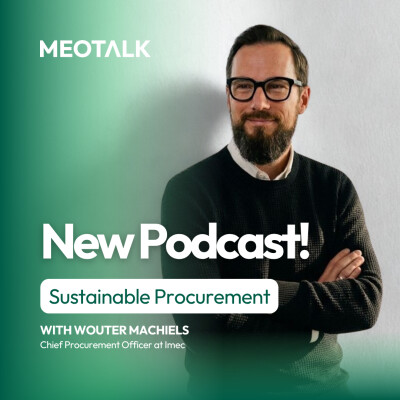
- Speaker #0
Hello, Otter.
- Speaker #1
Thank you for being with us today. It's really nice to have you. How are you?
- Speaker #0
I'm good, I'm good, thank you. It was a bit of a stretch getting in this morning with traffic, but I'm happy to be here. Thank you.
- Speaker #1
Great. Okay, it's also a pleasure to have you. So first of all, I would like to point out that you're speaking on your behalf and not on Bialf. of your company or former employers. So to begin with, I would like us to focus on your career. So can you give us, in a nutshell, some details? Who are you?
- Speaker #0
Who am I? That's a broad question. I think first and foremost, I'm a dad. I have two young sons, Louis and Olivier, and a stepson who's going on 21 years already. So that's the challenge.
- Speaker #1
Okay.
- Speaker #0
The good thing is that in my private life, I get daily coaching on negotiation because my kids can negotiate without change in their pocket. So that's great. Then I'm somebody who has come across procurement and fell in love with the function almost 20 years ago now. So that's been a constant throughout my career. 20 years. Yeah, I'm going on 20 years. I started actually with SAP. with a company in Woluwe that gave me a chance. And through SAP, I joined Aqua Gevaert in 2006, I think. I spent some time there being a project manager for Aqua Healthcare doing SAP-related projects, but very international. So I spent some time in Latin America. I spent quite a lot of time in Canada and in the United States. And when the strategic decision of Agfa was to merge all of their procurement departments into a global shared service, they were looking for somebody who had experience with process and process design and somebody who had good experience in project management and somebody who wasn't shy for a challenge. So that's how they came to me. At that point, I knew nothing about procurement. So I think procurement found me. I fell in love with the trade, so that's how I got there. After AGB, I worked for Greenyard as a group procurement director, doing a lot of transport in FMCG context.
- Speaker #1
It's frozen product, huh?
- Speaker #0
It's preserved fruits and veg. It's fresh fruit and veg and frozen fruit and veg. They have all three. And at that time, they also had a horticulture, so a wheat business. So very international, a lot of transport, very interesting business. I learned a lot there. Also very nice interaction with the procurement director of the prepared part and the frozen part. Very nice and knowledgeable people. I did a tender there of 1700 forklifts. That's a big scope up. Okay. It was fun. And then through a role as a COO in a very niche IT company in Brussels, I came to IMEC now going on my sixth year within IMEC. Started there with a small team. Now we're 20 plus people. Very, very nice team, hardworking people, high impact people. So it's great to be there.
- Speaker #1
And for our listeners, can you be a bit more specific about what IMEC is doing,
- Speaker #0
please? That's a very difficult question to explain. So IMEC is an RTO, a research and technology organization. And for me in the beginning, the most difficult part to get around to us is that we do not produce anything. So IMEC produces intellectual property.
- Speaker #1
Okay.
- Speaker #0
So the biggest thing that iMac does and what's maybe most relatable to the listeners is that iMac is doing semiconductor scaling. So we are devising the chip that will be in the next generation iPhones now.
- Speaker #1
Ah, interesting.
- Speaker #0
We investigate, procurement supports the bright minds. Of course. iMac investigates which chip designs are scalable into commercial settings. So that's why we are on average 7 to 10 years ahead of commercial markets. And next to that, iMac also has a very good startup incubator called iMac iStart, which has been elected to one of the best in Belgium, the Netherlands. Also a good tenure in Italy now under Sven's leadership. So that's basically what iMac does. Okay, okay, okay, okay. Interesting.
- Speaker #1
How are you? in the office and how are you at home. With your two boys and wife.
- Speaker #0
Well, maybe I am also a sports enthusiast, so I need my sports to be able to unwind. I'm a petrol head. I love cars and motorcycles and anything. There's no A, that's interesting. And in my own company, I do a lot around storytelling and coaching. So why am I sharing that? Because that's also something I like to relay when I talk to my teams. So in the office, I'm somebody who... who focuses primarily on people. So I think the most important thing is to make sure that what I learned from my first CPO, always under-promise and over-deliver, and that's also the mindset I like to instill in my team. But I also give the freedom to be able to fail. So there's a lot of safety within my team. My team is behind closed doors. My team is not the most PC. We can say everything to one another and then have coffee afterwards. So that atmosphere we have in the team, make sure that we are a high performing team where everybody can feel themselves and also have the opportunity to really install that get stuff done mindset. Make sure we try to find the solution and to work forward. And one thing that I always tell my team is I'd rather you ask for forgiveness than you ask for permission. So just try to execute. At home, I'm a bit more laid back. At home, I can enjoy doing nothing and just playing and hanging out with my boys. How old are they? My youngest son will be four. Olivier will be four in three weeks. And we will be six in July.
- Speaker #1
Okay.
- Speaker #0
So they're…
- Speaker #1
We are living the same daily life. Mine are five and three. Okay.
- Speaker #0
So very recognized. Yes. In Dutch, they call it the topejaars. Okay. They call it the heavy period where the parents suffer.
- Speaker #1
Yes.
- Speaker #0
To the other end, it's also very rewarding. Yeah, indeed. With the boys. So at home, I try to be a bit more laid back. And I can also enjoy not planning. In the office, I'm rather organized and I like to plan stuff out. I like to see the bigger picture and the strategy where at home I can just say, whatever, let's do this or let's just have fun without a bigger plan or an overarching strategy behind that. Yeah, I think that's the main difference.
- Speaker #1
Okay, interesting. How do you become the procurement leader you are today?
- Speaker #0
I find that a very difficult question. It's tough to consider yourself a leader. So what I can say is that I'm... Throughout my career, I've always found it important that people want to follow me because they like what I'm selling and not because I'm hierarchically a superior. Okay. Because I never use hierarchy as a tool. And maybe that's the learning point for me. Sometimes you have to do that and that's something that does not come natural to me. Maybe coming back a bit to what I said before. I think being a leader is also caring about your people and making sure you build an environment where they can be successful. And that's for me an important one. When I ask my people what they like about me and when we do a KISS review, keep, improve, start, stop. Have you heard about that? It's not something you can do in the office, but it's keep, improve, start, stop. It's a very easy way to do a light reset.
- Speaker #1
Okay, okay. I'll keep that in mind.
- Speaker #0
Yeah, might people... Depending on who I speak to, of course, they say that they really appreciate the value I put in the connection I have with the team and the interactions within the team. And on the other hand, some of my team members feel that I am too much focused on brand sometimes.
- Speaker #1
When do you mean on brand?
- Speaker #0
Well, when I go on stage, when I do a keynote and I have to introduce myself, I tend to call myself a value-focused procurement marketeer.
- Speaker #1
Okay.
- Speaker #0
And that's, it's a small sentence, but there's a lot in it. So value focused, I'm not one of the procurement people that likes to have discussions about cost and especially not about price.
- Speaker #1
Okay.
- Speaker #0
Because then you're having the wrong discussion in my regard. So value focus is for me very important. And one of the key things I've said when I joined IMEC is that procurement is not a cost center, procurement is a profit center, which was a tough discussion because, well. or CFOs, they don't always reflect in that way. It doesn't seem like this. I have to say Philippe, our CFO, is somebody who's very open, very supportive, and who understands how you can really get value out of setting up procurement in a different way. And the marketeer part. What strikes me often is that when the sales department brings in a big deal, then there's a big party, there's a barbecue and the bottles pop. And when procurement brings in the same amount of savings, then we go, it's our job. And then we jump back into it. Cost avoidance. It's a cost avoidance of the saving. And then we jump back into Excel. And I feel like that we as procurement professionals or supply chain or operations professionals, we can be a bit more proud of what we do and go more extra muros. And that's why I put a lot of focus on the brand. What is it that we do in procurement? What is it that we don't do in procurement? How can we interact in the best way? How can we manage our stakeholders in the best way? So for me, showing what procurement is, showing what procurement can do, showing where the value is in procurement and in the interaction with the internal teams and your end-to-end goes from the identification of a need within your internal customer or your stakeholder up to the suppliers of your suppliers. Because if you look at the value chain, It's a broad stretch. And you need to be clear about what you're on about. If you send out a message to your markets, to your suppliers, to your supply base, that you're only focused on cost, guess what you're going to get? Of course. So that's why I feel the marketing part is important to me. That's why I also feel that I have to be loud and vocal about procurement, about sustainable procurement, about value, about risk management. No. When I am on stage, when I do keynotes, that's a talking point that I will be talking about rather often.
- Speaker #1
All right. All right. Okay. Let's switch now to block one, your professional DNA. So to fully understand your future answers, we start by situating your background a little. Your core values, what are they? We're speaking about values. Yes.
- Speaker #0
For me, personally, my core values are respect and integrity, and I feel those are very important in everything we do. But when we relay that then into procurement and you want to make an impact, then it comes back to what I said before. The core values are, first of all, value on time. So that's something we need to get out. And what that means is different on the situation. It can be supplier-driven innovation. It can be time to market. It can be whatever. But there you cannot underestimate the importance of the relationship with your internal stakeholders. Second one is sustainability. I am adamant about making sure that we leave a better world behind than the one we found. And we are, as a procurement team, and that's not just at iMac, I feel that's in every company, we are a key lever to make that happen. Because we are at the grinding point between... our company and the external parties. Because let's not lie about it, scope three is a lot more impactful than scope one and two in most companies. But I don't want to dive into that deeper. Then thirdly, I'm firmly convinced that keeping risk out the door is a lot less expensive than managing away risk once you've let it in.
- Speaker #1
Yes.
- Speaker #0
So when you do your supplier onboarding, when you do your tenders, be wary of risk and identify what the risk might be. So that's something I picked up in my tenure at AFAG Jevaert, which I learned from Emmanuel Bernou, and which is becoming even more a reality and a focal point within IMEC because of the nature of what we do. And then, yes, we are in procurement, so we cannot not talk about cost, but I refuse to talk about cost if it's not TCO, if it's not total tax.
- Speaker #1
Of course, it's the basics. Well, it is the basics, but you would be surprised how often you see people talking about discussing price. So that's, yes. I don't know. But yeah, you live it every day. So yes, of course. Of course. Yeah. What shaped you in your relationship with purchasing? There are like key elements or key things that you want to highlight?
- Speaker #0
I guess it's about my personal need to have an impact. And I feel that in the procurement realm, you can influence very many things without necessarily having to be the key decision maker. And I have to say, with procurement throughout my career, there have been love-hate points as well, where I said, remember at the early points of my procurement life, I was running along with those people that have the seat at the table discussion. I'm fully fed up with that. You can keep asking for a seat at a table or you can just show your value and organically the seat at the table will come. I've called this a Calimero complex. Is that Calimero you know?
- Speaker #1
Yes. And
- Speaker #0
I feel that I had it myself at the beginning of my career and still a lot of procurement people suffer from that, complaining a lot all the time and complaining a lot and not taking action. And when I said in the previous part, when I said get stuff done mindset, I think that's really what gets you along. If you are the kind of procurement... person or procurement team where they say we could just chuck a problem that direction and they will come with a solution that's how you get uh how you get the impact how you realize the impact and that's how you get seen and that's how you get consulted because everybody wants to feel value evaluated everybody wants to be heard everybody wants to add value i'm convinced that there's nobody who does not have the intrinsic um wish to add value to their company into their team. But start from yourself. And I think that's what shaped me. I've learned throughout my career that everything in the end comes down to people and interactions. We're respectful to make sure that you treat everybody in a correct way. And that goes for suppliers, that goes for internal customers. I'm not a bully procurement guy. That doesn't suit me. I think that's...
- Speaker #1
I think it doesn't work anymore.
- Speaker #0
Maybe if you have a very long tail and you have some suppliers in your C-spend, where you say it's really muda and either they comply or we kick them out, maybe you could do it there. Or in heavily commoditized areas, maybe you can still do that. But with everything that's changing, the geopolitical changes that are coming up, the scarcity of several goods, the inflated price of transportation. I feel that it's good to have suppliers that will also help you out. One thing that I also noticed is that partner is one of those buzzwords that we keep using, but in the end, we don't miss an opportunity to screw the other party over. That's not how partnership works.
- Speaker #1
Have you had a mentor or a particular encounter that has marked your career?
- Speaker #0
Yeah, I think I've had a few people that had an impact on my career. One of those people was Joris de Brabander at Achvar Gevaert. And he would get on my nerves so often. And it was just because we had a completely different style of communicating, which was funny. I was always going to him with questions and he would send me back with more questions. And I was... I didn't get it at the point. I was too young and I didn't have the broader view and I was more impatient than I am now. But in the end, he taught me so much about myself and about finding solutions and really getting that get stuff done mindset. So he was one of the first people that taught me a lot about myself.
- Speaker #1
He wanted you to think before and to find the solution by yourself rather than sending you the solution on a plate.
- Speaker #0
So I learned a lot from yours. And then... Through what I described in the introduction, through the GSS, the Global Shared Services, I met Emmanuel Bernou, who was my CPO at that time. And to date, Emmanuel is still somebody who I hold in very high regard. He taught me everything I know about procurement. And I can't tell you the number of fights I had with Emmanuel. And we cussed each other out several times, but we always had a coffee afterwards. We had a very respectful relationship, and we still do. But we also had the kind of relationship where I could say, I don't like you and you don't like me. And we had these fights behind closed doors with respect. And that was great. So that's also a means to depressurize, to decompress, which was great.
- Speaker #1
You were expressing different point of views to say it.
- Speaker #0
And then another, maybe another person I'd like to mention here is Bernardo Payet, who is... It's actually, he's a Peruvian-American who moved to Europe to work with ASML.
- Speaker #1
Ah,
- Speaker #0
okay.
- Speaker #1
Based in Netherlands, huh? ASML, yeah.
- Speaker #0
Yeah, he moved now recently to Italy. So that's the reason why I learned to speak Italian.
- Speaker #1
Ah, congrats.
- Speaker #0
And yeah, he's been one of those colleagues that has become one of my best friends. We speak on a daily basis and he's one of my sounding boards. So whenever I have an issue where I... don't want to burden my team with yeah yeah he chooses me as a standing board and vice versa which which works uh tremendously and that's how i i got to uh to imac and through my cfo philippe medics i met marie de bishop and marie de bishop is the founder of tapa city which is a coaching methodology that has a clear focus on where's your talent and how is your energy balance. And in highly demanding areas where the burnout sensitivity is quite high, it's good to have insights that can help you tweak a bit your personal energy level and make sure that you know what's going on within your nugget because there's a lot going on. Of course. And often it's unknown. So I'm very thankful for Mark who has coached me. and who has talked to me a lot about my drivers, about my talents, about the conditions I need to create for myself to be successful.
- Speaker #1
Okay.
- Speaker #0
And I'm very thankful for Mark. So that's also shaped the way I set up my procurement teams because I want to know how my people react,
- Speaker #1
what my people do, and how I can help them be successful and then have an impact. Improve, okay. Okay. What are the challenges you are facing at iMake in a public procurement point of view?
- Speaker #0
The challenges at iMake are varied. What I told you is that we are doing work that is not yet in commercial markets. Yeah. So I've called procurement at iMake level 10 difficult. And why is that? Because... We are often sourcing things that do not exist yet.
- Speaker #1
Okay.
- Speaker #0
By the way, we need them yesterday, which is for every procurement professional, every company, the same thing. By the way, we need it yesterday. And while you're at it, can you also fix the geopolitical crisis to get stuff here? So that's what puts it all together. And then you add on the layer of the legislation of public procurement. And I myself... I get challenged a lot on public procurement because people find it not flexible and find it overbearing and find it heavy.
- Speaker #1
It can change, yes.
- Speaker #0
But I'm not sure I agree. I see, depending on the vantage point you take and depending on the angle from which you look at it, it can also help you to prevent scope creep.
- Speaker #1
Think differently, yes.
- Speaker #0
I understand there are certain areas where you want full flexibility, but full flexibility also comes at a cost. and what what What I especially appreciate about public procurement, apart from I have a very strong public procurement team with key players like Tom, Anne-Sophie, Dirk, and then Wendy and Bart that are superb at their job. And also managing the internal customers in a way that public procurement is seen less than a burden.
- Speaker #1
Okay.
- Speaker #0
And I refuse to set up my procurement team as a compliance function. So we try to facilitate the process and make sure that within... the framework of the public procurement, we can be successful. But it also means that you have to have very smart and creative people think before they act. And that's a bit against the DNA of iMac, not thinking before we act, but we need to have the full flexibility to make sure that we can do our research, that we can invent crazy stuff. But thinking and freezing the scope before you go to market can also help. make the throughput time faster because everybody thinks public procurement is slow but if you fix your scope and you don't change it 15 times then the the date of product then can be faster than when you change your scope a lot of course so the challenges are mainly getting the creativity within a rigid framework yeah but i don't want to um i don't want to shy away from the obvious advantages that public procurement can bring as well of course i make operates in a highly competitive market so there's there are strong players in the us and china how do you cope with that from a procurement perspective well i feel that the the the market in which we're operating is not that competitive because we we're in a commercial setup at that point so we're mainly doing uh r and d yeah and um what The biggest difficulty for IMEC is that the buying power is not that of the behemoth companies. We are still a small company. We're still, even though we have a lot of international sites, we're still largely Belgian-based, Leuven-based.
- Speaker #1
It's 300, 400 persons or how many are you? IMEC,
- Speaker #0
yeah,
- Speaker #1
six and a half thousand. Okay, six. Ah, okay. Yeah, okay, okay. It's quite huge. Okay, so anyhow, okay.
- Speaker #0
Six and a half thousand. Over 100 nationalities.
- Speaker #1
Okay.
- Speaker #0
So we need to bring in the smartest people from all over the world to make sure that we stay that uncontested world leader in all we do. And yeah, what I needed to get my head around in the beginning is that, okay, you don't necessarily have the buying power in saying, well, we're going to buy volumes and volumes, but we have a huge brand value. And companies tend to want to work with iMac. So that helps us out a lot. And then there's another part that companies, also suppliers, want to be part of an ecosystem. And it's this ecosystem part that makes iMac strong.
- Speaker #1
Okay. Chapter two, what you really think of procurement today. So we get to the heart of this podcast, your personal vision of the profession. What do you like about procurement and what drives you on a daily basis?
- Speaker #0
I want to have an impact and make a change every single day. Impact and change, that's always difficult. And what I like about my job is my current job, I have an amazing team. It's the people that keep me going. I love seeing them grow. I love seeing them be eager to make a change themselves and be successful. And I love the interaction and the energy I get back from my team. I'm a true people person myself, and that's a bit of a disconnect with the more old school procurement people that are very savings oriented often. But I also try to build relationships with my suppliers because I noticed, for example, during the COVID time that for a number of suppliers, we went to ask them, how much do you need to survive? Because the cost of change is a lot higher than helping those suppliers float over. And to do that, you need to be able to tell the stories because if you look at the facts, it's a peanut supplier. It's a tier two supplier. It's low spend. So is it really that important? Well, yes, it is important because if not, we can stop our operations as well.
- Speaker #1
Yeah.
- Speaker #0
So I think that's an important one. Also, not a day is the same when you're in procurement. So every day something happens. Every day something goes wrong, which is fine. And truthfully, I don't want to romanticize it. There's still a lot of firefighting. Even in an advanced company like iMac, even in a company where the prime focus is not cost, there's still a lot of firefighting. But those are also opportunities to show your value, build relationships with those people and to prevent that from happening again.
- Speaker #1
What annoys you or worries you about the recent evolution of the function?
- Speaker #0
What worries me is the disconnect between two schools and procurement. because you still have, and it wouldn't be fair to call it old school procurement and new gen procurement. I still feel there is a big disconnect between people that see their prime value in cost cutting because there's companies that need that. So I don't want to dog that, but that's not the trade I want to be in. But it's this stigma that we as procurement people always get. So we're always looking for cheap. Procurement is looking for cheap, which is 100% not true. we are not looking for cheap. We're looking for value for money. So I'm always telling everybody, let's not be penny wise, pound foolish. It's not because a supplier is a euro cheaper. That is the cheapest choice. There's also a lot of aspects to take into account. And I feel, and I felt that for years, that procurement in its core is not a numbers business. It's a people's business. And the numbers will follow if you do the people part right. And the people part is broader than your team. It's also how you engage with suppliers. It's also how you engage and manage your internal customers and stakeholders. So we need to be bold and daring. And then we need to get out of Excel, get out of the meeting rooms. I always ask my team when they have internal meetings to not take the meetings within our floor. Go visit your internal customers. The real impact is at the coffee machine. Because we also complain that we don't have a clear funnel. We don't know everything that's coming up. go have a coffee there just just go have a coffee linger there make some connections yeah a bit of bull talk yeah and that's how you're getting official in an unofficial way you get an intel on what's coming because again i want to move away from from the the thing your wagon procurement you didn't involve us you talk to the supplier i think that's with that yeah that's nobody wants to talk to the guy who's always uh telling them off of course of course you've got a three-year-old and a five-year-old, so... It's the same thing, right? Yes, indeed. Yeah.
- Speaker #1
Is there a trend at the moment that you find totally overrated?
- Speaker #0
Yes,
- Speaker #1
absolutely.
- Speaker #0
What grinds my gears is agile procurement.
- Speaker #1
Ah, okay.
- Speaker #0
I don't like agile procurement. Agile procurement, it's a hype that everybody seems to be talking about and everybody all of a sudden has an agile procurement team. It depends maybe the industry or the product you're selling. I feel that every network reception I'm at, somebody's talking about agile procurement. to add insult to injury yeah i feel that it's often the companies that have a procurement department that is built around red tape and and and triple signed pdfs they call them they talk about agile procurement to me agility is a mindset it's not an organizational design and and don't get me wrong yeah i i love agility and i love um being able to to switch around to say we went in in that direction. That was wrong. We're going to switch the direction. All in favor. But... Using it as a party trick and talking about how we've implemented agile procurement. If you've implemented agile procurement now recently in the last 18 months, then you have been doing something wrong in all the months before. Because it is about getting stuff done. It's about being able to react to changes, being nimble and getting results. And for me, procurement in its core is a function where people need to have agility as a mindset. You need to be adaptable, you need to be agile. But don't come talk to me about, we now have an agile procurement team and it's an internal consulting group. I don't mind. I switch off. I remove myself from the conversation. I'm sure I'm going to offend a lot of people right now. Yeah,
- Speaker #1
some people will react for sure, but it is what it is. Chapter 3, your convictions and reality on the ground. So sometimes we have strong convictions, but the reality of the organizations comes to shake them up. Is there a practice that you defend and that your teams or colleagues often challenge?
- Speaker #0
Well, I told you that I'm a storyteller, so I like telling stories also because stories help translate dry information. And one of those firm convictions that people have and that are very difficult to get about is the facts speak for themselves.
- Speaker #1
I never do.
- Speaker #0
So facts are the foundation, but stories are the vehicle. Yes. And then in the end, what we do and where I find myself also is that you need to do a certain reporting and you paste a big ass Excel into a PowerPoint slide, which nobody can read. So you're basically trying to blow out a candle with a fire hose and you're chucking so much information to somebody that nothing in the end lands. So it's a lot better to say, well, this trend is going up. So the prices of this product are going up. But don't mind because we've got this mitigation strategy in place. But tell them what's going on so that at least it lands. Because the more information you chuck, it doesn't mean the more information is received by your counterpart. That's one of the key things I have. And also one thing that I keep fighting against is procurement is not savings.
- Speaker #1
It's a lot more than savings or cost avoidance. Value creation, cost mitigation, risk mitigation. Absolutely. Plenty of things. Yes, indeed. Okay. How do you build a robust procurement organization?
- Speaker #0
Well, with the risk of repeating myself, it starts with people. It starts with people and starts with relationships. So you need your... Your relationship set up intramuros and extramuros. You need a team that is ready to support itself and to help each other out. But you also need the credibility towards your stakeholder community to extend that to your supply base. And so key stakeholder management and SRM or KSRM, key supplier relationship management, I think those are the main capabilities you need to build a strong procurement organization. for me, you need to get your... people ready to be able to explain what procurement does and that's often that's often a difficult question i've one of my one of the nicest people in my team and in the beginning when you asked him what does procurement do he said yeah we make the pos and and that's the worst answer please that is that is a badass especially because he is one of those people that does so much more but he is a typical procurement guy. He is modest. He is hardworking. but he will never jump on stage and say look what i did and i don't expect everybody to be to be to shine to be a monkey like me on stage but um the people are allowed to be proud of the work they do or the impact they have and and i think that having somebody who does that you don't need to all have the same capabilities but you need a few people that are there that are bold that are visible and to show where we're going and to show what we've done And then you have people to make sure that you deliver it. Your P2P, we always, nobody wants to talk about P2P. It's not sexy. It's not interesting. But if you don't get your orders out, you lose your right. Of course. So, yes, we need to make the P2P.
- Speaker #1
Someone else doesn't. Yeah.
- Speaker #0
They need to go out. They need to go out fast. Cycle time is important. But if you get that, if you get your level one, okay, then there's so many more levels you can build. Ours.
- Speaker #1
Yeah, it's just the foundations. P2P, yeah. Okay. And we're talking about people? About P2P? process? What do you implement? How do you make sure this is respected? How do you make sure that your internal stakeholders also are respecting the process and not bypassing? How do you measure that? Well, there's two ways. So there is again the wagging finger.
- Speaker #0
You didn't follow it. Or there is taking steps every day to make sure that people want to work with your tool. You can block them. So, um, One of the things that we're doing right now is we're investing heavily in upstream tooling. So the source to contract part. Okay. Also the I want to buy. So making sure that the people are guided a bit into where they want to go. And my main focus is on the user experience there. Because I want people to say, I don't want them to say, oh, I need to go there. I want people to say, well, that's easy. I'm going to do it that way. So I want to approach it from a positive angle and make sure that... People want to do it in that way. And the tool supports my process, which is fully embedded in the process. So I'm trying to get into an advanced level of process compliance without being a compliance function, if that makes sense.
- Speaker #1
Yeah, yeah. Okay.
- Speaker #0
So that's how we try to approach it.
- Speaker #1
Okay. Is there a transformation you were leading and where you failed?
- Speaker #0
There have been a few. and they're mostly due to my impatient nature. So that's something I had to learn. One of the pitfalls for me is that I love looking at procurement innovation and I love drawing up the strategy. But the pitfall for me is, in my mind, when the strategy is clear and I know where I want to land, then the work is done for me. So then when the real work has to happen, then for me, I know where I'm going, so I'm good. and good so The team will do it. Well, no, because I don't tell them what I do. So I need, that's something that I had to learn throughout my career. And I think if you talk to my colleagues, they will have a lot of anecdotes like that. But for me, it's really then slowing down and saying, well, let's break it down. Let's get the people involved, write a project charter and go forward. And if I had to name one of my regrets that I haven't yet been successful with, it's... Tailspin management, setting up something there that's really building the solution. I've been talking to the guys at Spotbuy Center a lot, but I really haven't materialized there yet. So it flies around in my head all the time, but I don't manage to give it the priority it deserves. And now that I'm talking about it here, it might get higher up on my priority list again, because that's something I really want to dive into, making sure that that sees. tailspin is better managed because a core spend is managed very well uh tier one tier two suppliers they're managed very well i have dedicated uh supplier managers and in my team that take care of that so i'm not i'm not concerned about that but the long tail is is something that we tend to not look at it's not sexy it's not something that you want to discuss but there is a lot of process costs hidden process costs in that and it's not necessarily high cash out but the process cost you And the opportunity for mistakes that you introduce into your process there is tremendous. So that's, you see, I'm convincing myself that it needs to be a priority, Jean. It's good. Thank you, Jean.
- Speaker #1
This is something that you will come back to the office and say,
- Speaker #0
I will. So if my people are listening to this podcast, especially you, Jan, you know what's up for your targets next year.
- Speaker #1
Which negotiation are you most proud of?
- Speaker #0
My most proud negotiation must be the one with my CFO, with Philippe Merix, when I joined IMEC. It was a negotiation that I would not be reporting savings.
- Speaker #1
That's nice.
- Speaker #0
Indeed. Now, Philippe is a great CFO, a great person, and a great plus one. So he supports me in everything I do, but I can believe that it was not easy for a CFO to accept that procurement would not be reporting savings. you know We have, I'll just share a secret. I report my ROI of the team every year to him, so he knows what our savings are. But it's this game of pleasantries we play with one another where I say, I don't report cost savings. And he says, okay, yeah. But in the end, we know. It was very important at the beginning of my tenure at IMEC to put that clearly. So I said very clearly, I want procurement to be a profit center and not a cost center. And it is tremendously difficult. to have a discussion about value if your main talking point is cost. So that's why I explicitly excluded that in my rationale, in my storyline. So yeah, that's one of those negotiations that jumps high in mind. There's a number. When I was at Aardvark Gevaert, the LT, the leadership team there, under the leadership of Emmanuel Bernou. Yeah. But with Paulo Ferreira and Erland Jeans and José Luis Sánchez, there was the full leadership team there. We embarked upon a project called ACE 105, so Accelerated Cost Effectiveness with a Target to Save an Additional $105 Million. Okay. And that was a super broad project. It was not one negotiation, but in the end, we materialized on that. So that was a great team effort. As dysfunctional as the leadership team, as we were there, in the end, there was a lot of beauty in the disconnects that we had. So that was a very nice project as well, which I am to date still proud of. And it won AFA, the Procurement Excellence Award in 2016.
- Speaker #1
Okay. How do you defend your projects when you disagree with your management or stakeholders?
- Speaker #0
I find that a difficult situation for me personally, because there's one guiding principle for me. It's at the end of the day, when I come home and I see the mirror, I want to be able to look myself in the eye.
- Speaker #1
Yeah.
- Speaker #0
So that's the key part. That being said, you can hold that up as your core value all you want. In the end, there's a company that's paying you to deliver a certain task.
- Speaker #1
Yeah.
- Speaker #0
So there is a strategy, there is targets in place. Everybody within the company needs to walk in a certain direction to make sure that we materialize. So being successful is not always about being right as a team. And there I find that you need to tie into what the company needs, but it's not blind execution. There's always more than one way. If I needed to come to the office here today, I could take the A12 or the E19, so there's two ways to the same road. And in business and in procurement, it's often the same. So there's always leeways that you can find to make sure that you can stay within your departmental values and your personal values while still delivering. But I'm also always vocal about it. If I don't agree with something, I tend to vocalize that and I tend to be open about that. So within my procurement LTE, so with Tom, Kathleen and Jan, we discuss very openly and we strategize on how we approach these things. Also to my boss, to Philippe, I can be very open. And that's a good part of the IMEC culture, that it is okay to have an opinion, to voice that opinion. But you can't let that pull you down. You can't let that put you at a standstill.
- Speaker #1
Yeah, okay.
- Speaker #0
So yeah, there is oftentimes where I disagree, but we always find a way to find a solution where we don't need to go against ourselves and still deliver on what is needed.
- Speaker #1
Okay. Okay, we now jump to chapter four, sustainability in procurement.
- Speaker #0
Okay, thanks. I'm happy to be able to discuss this. Maybe as a disclaimer, for a long time, I had the same mindset as a lot of people and probably also a lot of listeners to this podcast, is that sustainability is a checkbox exercise. Because we, especially in procurement, we often deem it in the same corner as an ISO 9001 or a certification that you just need to check the box and then you're good. And if you market it as such, then there's very little value in sustainability. And it's only when I joined IMEC and I came into contact with people that are serious about sustainability that I also saw the bigger value. And under impulse of our sustainability director, Wim Fayan, we did climate fresques.
- Speaker #1
Okay, yes.
- Speaker #0
And by now I'm also a facilitator for the Climate Fresque. And I think now we've already trained a few hundred people in the Climate Fresque. And that was for me really eye-opening to see what is the impact that you can have on your personal life, but also as a company. And being a procurement, you have a key position influencing the scope three of your company. Because everybody's thinking about scope one and scope two and lower the heating and drive an electric car and whatever. But if you look at the impact of purchase goods and services on your carbon footprint, for example, that's tremendous. So if as a company. you are serious about having an impact, you'd better talk to your procurement team and get them involved. Yeah. And steer clear of the mindset that sustainable means expensive. That is not the case. And in that respect, I have a virtual team within my team, a sustainable procurement team, where I have three people working on several things in sustainable procurement. We are now looking into internal carbon pricing and setting up the first pilots there. So when we evaluate a tender, it's not just quality delivery costs, but we also add sustainability there. And where it used to be a very soft qualitative differentiator, we're now adding real internal carbon price to influence the cost. So we're going to calculate the carbon and add it as a cost. So even if a supplier is cheaper. The carbon it brings into our scope three is higher, then it will be in the final calculation higher. So it gives us a more visible way to show what the impact can be. And that's how you can also steer away from those discussions. We are mapping out our key value chains because there's a sustainability aspect, but also a risk aspect. I know I'm not going to mention which one, but we have a circumchemical where we say we are a dual source. Yes, well done. And we have to have the value chains that go back to the same source. Different distribution channels at the same source. That has nothing to do with sustainability, but it's a sustainability exercise that showed our exposure.
- Speaker #1
Okay.
- Speaker #0
So there's a lot of things that you can do in there. And we're investing heavily into that. And also in our Ecovades scoring procurement was one of the leading departments for Foramic.
- Speaker #1
What's the grade that you have today?
- Speaker #0
We're at silver now.
- Speaker #1
Okay, silver, yeah. This is what we all get also. Yeah. Okay.
- Speaker #0
But in the top 10 percentile, there's procurement. So if you look at our cohort, we're doing well. And we're nowhere where we want to be. But we're investing heavily now. And also looking broader than just sustainability in a narrow sense, we're also looking at ESG. So this year, I'm having a project about human rights. Okay. Which is being headed, making sure that we, first of all, build up knowledge. Because it's a very broad and heavy subject. But it's not, I don't want to say it's not tangible, but it's very difficult to strategize that. So now we're looking into building up the competencies, making sure that we know what to look for and integrating that into the process. And there's one part that I talked about where I feel that we are a key lever in procurement to influence that because scope three is important. There's another part, and that pertains more to the company where I work at IMEC. Because iMac is a world leader. iMac is top-notch. And what iMac does, and there's no credit to me, nobody else in the world can do that. There's no credit to me, but that's what iMac does over 40 years. It's unbelievable. So we are a company that people look up to and people look at us as a guiding principle or a guiding light or a pole star vision maybe in a number of areas. I feel that also brings responsibility. in the realm of sustainability to also be inspirational.
- Speaker #1
Yeah, of course.
- Speaker #0
Because if IMEC is doing it, other parties will follow suit. And if we design the next chip in a more sustainable way, which we are doing, then that means that by default, the world will become a bit more sustainable. And the roadmap is long, but I think that's also a strength. If you can stay away from looking from budget year to budget year, from fiscal year to fiscal year, you need to look at the life cycles. to really have an impact. And if you are only looking at your budget years, then you're leaving a lot of opportunities on the table and resources on tap. So for me, I am very adamant about this and I'm happy to have the discussion with everybody. I'm talking to ASML as well, who are very successful in their circularity initiative. So there are so many buttons you can turn. You don't have to do everything at once. Like we say, how do you- Stand by stand. One bite at a time.
- Speaker #1
Okay. Perfect. This is now the time for the surprise called Question Box. La boîte à questions. Okay. So the game is simple. I'm asking you questions and you have just two answers. So it's binary. Okay.
- Speaker #0
Okay.
- Speaker #1
So ESG criteria in a strategic buying decision for you is systematic or occasional? Systematic. Scope 3 carbon footprint consideration in buying decision is embedded in major business cases or still exploratory?
- Speaker #0
Still exploratory. So it's on the roadmap and we're looking into the internal carbon pricing. We're doing the pilots now. Okay. But it's not structural yet.
- Speaker #1
Geopolitical constraints in procurement is proactive or mainly reactive?
- Speaker #0
I would love to say proactive. I would love to say proactive. But honestly, we are a lot more advanced than we used to be when we're talking about risk management. But a lot of the risks are still managed in Excel.
- Speaker #1
Okay.
- Speaker #0
So yeah, for a big point, still reactive.
- Speaker #1
Okay. Relationship with key technology suppliers is primarily partnership-based or transactional slash order-focused?
- Speaker #0
No, it's fully partnership-based. So it's long-term collaboration agreements.
- Speaker #1
Okay.
- Speaker #0
To give you an example, I just signed with one of my key suppliers a 15-year contract.
- Speaker #1
15? Wow. Yes. Okay. Wow. Okay. All right. Specialization in a procurement team must be? with structured training or mostly on-the-job learning? And I need to pick one. That's the difficulty.
- Speaker #0
I'm going to say on-the-job training in that respect. If you go to training, within three weeks, you lose more than 80% of what you learned in the training if you cannot implement it into your day-to-day. And the same goes for communication training. So if you don't... practice it and you don't put it in your daily routine, then it's very difficult to keep that skill because you have something that you've been doing for years and it's very easy to revert, do that. And that's also our nature. Because what I also said, there's a lot of firefighting, so there's so much to do and you really need the time to sit back and to internalize these things to make sure that you can use them. And if the pressure is too high, then you will not do that. Yeah. feel on the job training is more efficient in that respect.
- Speaker #1
Okay. Policy on circularity, reuse, refurb, and leasing in procurement is active or opportunistic?
- Speaker #0
It is opportunistic today.
- Speaker #1
Okay. Use of RSC indicators in supplier evaluation and contract renewal is... Marginal or integrated into vendor ratings?
- Speaker #0
It's integrated into vendor ratings. And now we're putting a tool behind that to make more supplier-centric views. Because today we keep supplier evaluations. We have the tender performance. We have the contracts. We have the spend in the geographies. We have all the information, but it's not consolidated. Now we're building really supplier-centric views. If you pick a supplier, then you can see this is the historic performance. visit. The tender performance isn't spent. This is the contract.
- Speaker #1
These are the key exposures. So that's something, that's a project that will materialize this year within Anki. And last question. Procurement's contribution to strategic goals is defined with C-levels and tracked with KPIs or recognized qualitatively and celebrated at every occasion?
- Speaker #0
Ooh, it's both. But I need to pick one again. yeah i think i'll go for celebrated within every occasion that's that's what i heard from the contacts that you gave me so that's what i try that's what i try to do and of course it's important to have that that what i said before it's important to manage the brand as well to show what you have been doing then if you talk about uh short-term motivation and getting your people riled up you you need to recognize you need to celebrate the small uh celebrate the small wishes yeah And that's how you build up the morale and get high impact teams.
- Speaker #1
Thank you. Very well said. Tough questions. Yes, yes. I'm trying to design them for this purpose. All right. Last block, your intuitions and your vision for the future. Wouter, if I'm giving you a magic wand, which CEO are you going to see and what are you going to say to him? as a purchasing director and i can pick whomever i want yeah yeah really really then um I think I'd go for Yvon Chouinard. Yvon Chouinard. Ah, yes, that's the guy from Patagonia. Yes, yes. Okay. Yeah, yeah. Because he was such a forerunner on the things that I'm trying to do with my team now.
- Speaker #0
Yes. Because he had this concept of, I don't know how you call it, the uncommodity mindset where he says, don't make things to throw them away, but look at life cycles. He also had this vision about... Don't think in fiscal years, but think in longer terms and production cycles. And everything that we are talking about now in sustainability and in circularity, but he was there 20 years before that because I think he sold everything in 22.
- Speaker #1
Okay.
- Speaker #0
And all the profits that are not reinvested into the company go to a trust that is set up for sustainable projects. Okay. So I, first of all, he is... An unconventional CEO, he also is fully self-made. That triggers me. But I also want to hear his stories because it's the stories that I need also to be successful in what I'm doing. So I think he's very inspirational in what he did with the company and still being so successful. So here's to all you naysayers. If you say you can be successful when you focus on sustainability, there is a lot of proof and a lot of instances where it shows that you can do that.
- Speaker #1
Okay. If you leave procurement tomorrow, what are you going to do?
- Speaker #0
I think that's one of the most difficult questions you asked me. I'm not sure I'm ready to leave this trade. That's the first thing. But if I leave procurement tomorrow, I think I'm going to roll back into my coaching business. Because one of the things that gives me energy is helping people grow and helping people be successful. So if I leave procurement, then I think I will focus heavier on the storytelling coachings, the stage presence coachings, or maybe set up a company for myself and then something like that. So I think that would be the direction I would be going into. The reason I'm hesitant is I am very adamant about that. But I am concerned about the loneliness of not... Yeah,
- Speaker #1
I see. I mean, all the imitations.
- Speaker #0
So that's the hesitation you feel in my response.
- Speaker #1
Okay.
- Speaker #0
Plus, I hope it showed through the talk we're having that I'm kind of fond of this function. I think so. That's what I heard. Yeah.
- Speaker #1
If you need to give one single advice to the next generation of buyers, what would it be?
- Speaker #0
That's an easy one. Manage your colleagues first and your suppliers second.
- Speaker #1
Okay. Colleagues first. Okay.
- Speaker #0
Yes.
- Speaker #1
Okay.
- Speaker #0
Because the demand side is so much more impactful than the supply side.
- Speaker #1
Yes.
- Speaker #0
And that's why you tend to skip steps. You want to go fast. So when you have this, what I talked about before, when you have this get stuff done mindset, you go running. You hit the floor running. But you need to make sure that you know what you want to buy. And you need to make sure what the need is. Because often they'll say, we need this. But you need to ask maybe half-wise. Ask them, why do you need it? And then you can get a clearer view on especially what you need. And that can also save you time there. It's like when you start a project, you spent a few days on writing a project charter. And you describe your key dependencies and you describe your scope. And you can skip those days. But within three weeks, you will lose that time because your scope is creeping or you missed risks. It's the same within procurement. Manage your colleagues first and your suppliers second. And if I can tag one thing on that's closely related, treat relationships like your insurance policy.
- Speaker #1
Yeah.
- Speaker #0
And that's, for me, mainly focused at your key suppliers.
- Speaker #1
Yeah.
- Speaker #0
Don't pester them. If you're the procurement guy that they don't like and they don't want to see you, I'm not saying don't negotiate. But if you negotiate... Aim for the win-win. Don't go for win-lose negotiations. Because when push comes to shove and this will happen, it's good to have somebody who says, I'll get you out of jail this time. I'll bail you out. And that's why you need to keep some change in your pocket. So that's why I say relationships can be your insurance policy.
- Speaker #1
Yeah. Okay. Chapter six, our signature questions. So to conclude, three questions that we will ask to all our guests. Complete this sentence. Good buyer are those who, and bad buyers are those who.
- Speaker #0
For me, that's also an easy one. Good buyers are those who talk about value, about time to market, about supplier-driven innovation. And bad buyers are those who get stuck on price.
- Speaker #1
Yeah. A funny one.
- Speaker #0
What is the most unusual request you have received in your career? Without breaking privilege, I get a lot of weird requests. Ah, please.
- Speaker #1
We want something crunchy. Something crunchy. Yes, we had jets. We had a sack from Delvos. We have sourcing private jets. We have, I think we had a lot of flowers, something like this, but 100,000 flowers to get them delivered. Give us something good. Something good. I had a... request for a single source supplier that delivered frisbees. Frisbees. Frisbees. Not that that's so specific, but because it was single source, because the restoration was with single source. Another thing is we have, and I need to check whether I can share this, we have, what's the English word? We have 52 undertakers.
- Speaker #0
Okay.
- Speaker #1
52. undertakers okay imagine that so that that's that's uh the toasty yeah um yeah you come across all kinds of different stuff and also the you you get um a lot of people that want to buy things but that really do not know what they're doing so i had i had this um this colleague of ours who had bought something in china x works okay And he was complaining why his stuff wasn't delivered. I said, because you agreed to X work. So when are you going to go pick it up? So who was there? Okay. It's a funny discussion. Of course. This is the kind of humor that all the procurement people get. That's funny. If you had to invite someone to this podcast, who would it be? There's a number of names that come to mind. I used to be on the board of PASSION. Do you know PASSION? Nope. PASSION is an acronym for Procurement and Supply Chain as Our Nature, which now was merged to Scorpion.
- Speaker #0
Ah, yes. I heard that.
- Speaker #1
I've been on the board for eight years there with PASSION. And I must say the board members there, they were a huge impact on me, especially at the earlier years of my careers. And if I need to... Pick two names there. It would be Mark Slegers, who is currently the CPO of NMDS.
- Speaker #0
Yeah, NMDS. Who is,
- Speaker #1
yeah, I'm proud to know him, to call him a friend. He's somebody who's also a very value-focused procurement guy. And he is one of the most successful people to implement salesmanship in procurement. Yeah. He's very good at that. And another one would be Hedrik Tess. Hedrik Tess works at CBRE as supply chain director. He has a lot of good insights on procurement. We met in the board of Supply Chain Masters, and we've been in contact and we spar every once in a while. He's a very knowledgeable guy with very good insights on procurement strategy, but from a broader vantage point from his supply chain role.
- Speaker #0
Okay. And to conclude, Wouter, when, where, sorry, can we find you on internet?
- Speaker #1
On LinkedIn, of course. On LinkedIn for everything related to what we're doing within iMac because I try to be vocal about it. And on my personal website, watermarkheels.be. If you want to learn more about storytelling or tapas, that's my main website. Okay. Digital passports or whatever you call it.
- Speaker #0
Great. Okay. Thank you very much, Wouter, again.
- Speaker #1
You have just left the procurement room. but your ideas will remain there. Thank you. Thanks a lot, Charles. My pleasure.