- Speaker #0
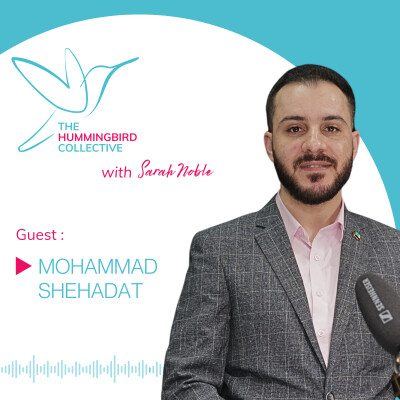
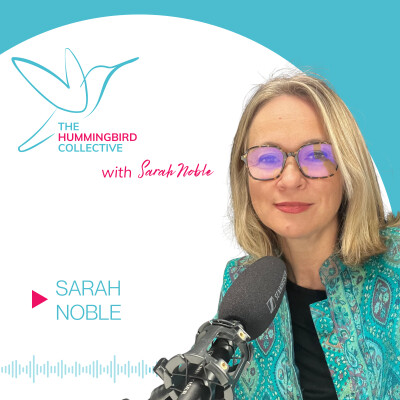
Welcome to the Hummingbird Collective. I'm your host, Sarah Noble, Head of Global Engagement, Inner Development, and Creative Peacebuilding at the Co-Initiatives of Change Foundation. Sometimes the world feels very heavy and it's tempting to look away, but here we choose a different path. Inspired by the legend of the tiny hummingbird who flew back and forth carrying single drops of water while the larger animals froze. When asked why she bothered, she said, I'm doing the best that I can. Here... We recognize that the fires in our world exist, and instead of turning away, we choose to do something about them. This podcast series are the stories of people carrying their drops of water to the fires of our world. Our method is intercultural dialogue, the art of listening and speaking across our differences. We're here to lift our illusion of insignificance, one conversation at a time. When we genuinely encounter someone whose story and experience of the world is something different from ours, something shifts. We can discover that the things that divide us on the surface are much smaller than the things we share underneath. But that encounter doesn't always happen by itself. It often has to be built. And building it, especially across the divides created by conflict and displacement, takes courage. Today's guest has lived that courage and built a life work from it. Mohammed Shahadat knows what it means to start over, more than once, in more than one country. Born in the south of Syria and raised in Abu Dhabi, he returned to Syria one year before the 2011 uprising began in his hometown. What followed were more than two decades of living in displacement, including 10 years in Jordan, years he has described as a time of learning to look differently at a situation, to find possibility inside uncertainty, and to refuse to stop moving forward. After eight scholarship application rejections, UNESCO finally said yes, and that opened a door to education, to youth activism. and eventually to a question that would shape what came after. What if the people on the opposite side of displacement, those who fled and those who welcomed them, could actually understand each other? In 2019, he founded the Youth for Peace Initiative in Amman to find out. He came to Geneva for the Kofi Annan Changemakers Program, and at the airport, he was told that boarding the flight meant he couldn't return to Jordan. But he got on the plane. Today, he leads the Youth for Peace Initiative and a hundred... Global Citizens Project in Jordan and is based here in Geneva. But more than any title, what he brings into every room is the lived knowledge of what it takes to build trust across difference and the deep belief that it is possible. Welcome, Mohamed. It's so great to have you here today.
- Speaker #1
Thank you very much, Sarah. Thank you.
- Speaker #0
So you have traveled across Syria. You've come to Switzerland. What is it like to step into new places and new worlds where people are different from you, where the culture, the language is different? than you. Can you tell us a little bit more about that?
- Speaker #1
Yes, for sure. Actually, I lived both like immigration and asylum experience in my life for two decades. It shaped my personality and what I'm doing today and what I am today as well. I think it's a very interesting experience because you can not only learn about other cultures, but you can also explore yourself and how you can understand other, accept other, and also be a part of other cultures. I grew up in Abu Dhabi. I studied in an international Palestinian school, and it was a very good experience to learn also about other Arab cultures. alongside the Emirati communities, which includes the whole world, let's say. One year before the war began in Syria, as you said, I returned to Syria to prepare for my high school and university. But unfortunately, the whole world knows what happened in Syria. After that, I moved to Jordan, which also played a very important role in shaping my... and shaping my personality also, where I found and I used to face a lot of barriers, challenges, and not having my own rights as, let's say, refugee or human being. I started suffering in getting educational opportunities, activism, amplifying my voice, not only me, but other hundreds, thousands of... refugees and asylum seekers. I think I learned a lot from this experience because in Jordan, I learned exactly how to like what the meaning of fighting for your basic rights in education and also in like dealing with other cultures and trying to improve who you are and what you are fighting for.
- Speaker #0
And what would you say in terms of your... experience of meeting new people and dealing with misunderstandings? Because it seems like in today's world, we have many misunderstandings, many misunderstandings about different cultures. What have been some of the key learnings for you?
- Speaker #1
For me, based on this long experience, unlike others, I used to think about similarities before differences. When I found myself in Jordan, I found myself in a new community, new life, everything new from the beginning. But at the same time, it was a continuous motivation for me to, like, not to still far away from the community. There was a lot of advantage, not only for me, but from the people also who came from my own region, because we shared the same culture, the same accent, the same delegates, the same... traditions with the Jordanian communities that was very positive facts that we had in Jordan. Again, in Switzerland, when I found myself also in the German-speaking part, I found also the similarities in the environment where my own town and my region in Syria has a lot of mutual aspects as a, of course, not as a culture, but as a... people and you know like the the disability and they the how they look at like strangers or newcomers or you know and it's not easy to get connected with the local communities but you have you I think I had the ability to find the keys to contact the people and to build the bridges of trust and of solidarity as well.
- Speaker #0
So why do you think you look for similarities as opposed to differences? Because I'm not sure that comes naturally to everyone. Where do you think you gain this perspective of the world?
- Speaker #1
I think the first and the most important thing is which uniting us as people is humanity. And sharing stories, sharing experiences would be the first link of communication between. cultures. I used to speak about our experience in Syria, where when we hosted refugees from Lebanon, from Iraq, from Palestine, many of them, they were not aware about that. And that's opened conversations about what my culture is in this context, and how We all, as people, we can, despite the differences, we can sometimes, in a very, very simple way, we can open and build a bridge of tolerance and acceptance as well. This way of communication with the local community builds, like was able to build a kind of, let's say, trust in understanding others. in understanding our differences and also exploring our deep humanities.
- Speaker #0
And how would you say you get around the labels that people assign to you? For example, you know, you are Mohammed, you are a changemaker, you run these organizations, you've been recognized internationally, you're also a refugee. So when you meet people, how do you get them to see beyond your migration status and to see the whole picture of who you are and also for other people who may be in that situation?
- Speaker #1
For me, I used to always indicate that being a refugee is not a choice. And this is a big example of what happened with me in Jordan after 10 years. And when I found myself in Switzerland, in a very understandable situation, and I had to decide, like, not where should I be, but how my life would be. would be changed completely. It's not easy to be in these situations. And also not easy to speak about differences without having experience in this. You can see how a lot of influencers and people, they're speaking about humanity, about human rights, about everything. But you can see how it's really different when people with lived experiences are speaking about that. I used always to speak about the limited choices, which can provide a clear image to the other party about who refugees are and what their challenges and circumstances look like.
- Speaker #0
So you once... Tell me a story about when you were in Switzerland and you were at a refugee center and you were there with your books and how you were looking for a meeting because you were still working. Can you tell us a little that story again? Because I think it's very interesting in terms of how people perceive you and actually how we really need to go beyond the labels of what we have in our minds.
- Speaker #1
This is a very important point because during my, through my experience in many different places in Switzerland and... and in Jordan, unfortunately, I found there was like always there's, let's say, a stereotype about refugees. These stereotypes looks like about not all refugees come with educational backgrounds or some of most of them, they are just coming for, let's say, without having intercultural skills or dealing with others or accepting others. But the fact is, absolutely, it's not like that, you know, because many refugees, they came to seek safety as a priority. But many of them, they came with very, let's say, hard touch stories and they came with a lot of broken hearts, you know. Moreover, starting a new life from zero, it's not something easy. Here you reminded me of another important thing, which is the resilience. The most important thing to keep refugees strong is that they include resilience in their daily lives and daily challenges through trying to solve them. And, yeah, you just reminded me about, for me, I used to think about those who had worse situations. That was make me feeling better. But, of course, thinking about others, it's very important things, of course, through the intercultural dialogue.
- Speaker #0
So you were selected as a Kofi Annan Changemaker. Can you tell us a little bit about the role that that program has played? in your life?
- Speaker #1
The GoFundMe Changemakers program, actually, it's the program who's changed my whole life in just one minute, because I still remember till today that I applied for the program just one day before the deadline. But let's say I strongly believe in in the resilience, as I mentioned, for refugees, because it was not easy to get accepted to this kind of programs, let's say, youth leadership programs, but because simply refugees, their choices are so limited, not only to choose the places they want to live in, but also to regarding opportunities, as you mentioned, with UNESCO and educational pathways.
- Speaker #0
And when you think about Mr. Anand and his leadership, what comes to mind?
- Speaker #1
I found a lot of similarities because he served in his last years, he served as a special envoy to Syria at the United Nations. And I was watching him on TV when I was 16 years old. At that time, nobody was like... Nobody having a clear idea about how is the situation and the political matters going on in Syria. But I used to watch him always speaking about people. before politicians, which is something very, very important during conflicts and crisis. Thinking about humanity, it should be an initial part of our personalities. I still remember till today his quotes when he always mentioned the role, and the importance of all of young people, but also in sharing our deep... values regarding, let's say, differences, diversity. And I still remember his special quote when he said, diversity should be a source of strength, not a source of division.
- Speaker #0
Great. Thank you. And you've been talking about resilience. How do you stay resilient? Because I think when we look at the world today, it's very easy to just want to... crawl back under the covers or turn off the TV or just to cry because there's so much suffering in the world. How do you stay resilient?
- Speaker #1
As I mentioned, thinking about others is helpful. But also when I think about the limited choices, it's also helpful for me. I'm not here mentioning the opportunities, but I don't have another choice to give up. Because, you know, keeping moving and still working, still building myself, still learning from others, it's very important things to keep me feeling others and understanding others as well. I used to, when I worked in Jordan with young people and refugees, I used to... Tell them before I introduce myself as an NGO worker or international organization representative, I used to just start telling them that I'm a refugee like them. I'm also from your own region. I found that they are completely different when they begin with a smile and then the first thing that they mention that you know the situation more than others. more than those who are coming from London or Paris or Geneva. You know, this kind of communication is very important because at the end, people just need a simple language and a very simple, let's say, relationship to express their fears, their hopes, and also their dreams as well.
- Speaker #0
Thank you. And so tell us a little bit more about the Youth for Peace Initiative because as I understand it, you are bringing... young people together in Jordan, both refugees and the communities that are hosting them. And that doesn't often happen. So can you tell us a little bit more about that?
- Speaker #1
The Youth for Peace, it has came as a response to my own experience in Jordan. I already experienced the lack of participation, education, and also civic engagement. At that time, the motivation started from some thoughts, what was like comes to my mind as I thought about why should I still waiting for opportunities? Why should I wait for like, let's say, some, I think these are people acting for me or for us. The idea was to understanding myself. clearly and understanding my community and its challenges and then thinking about the steps that to should lead me to act positively in my community i thought about education and peace education exactly because i found the social gaps between the let's say young people especially specifically within the jordanian community why peace education because i when i learned about let's say, global citizenship education. I didn't learn about it or study it at school or at university, but I did that through my own life experience, through my lived experience from Abu Dhabi to Jordan, to dealing with other cultures. That's led me to thinking about this seriously. And I still remember the first session that we held with the young people. And when I told them we are here to today to talk about peace and most of them they told me there's no need to to speak about this because nobody bombing us now so we are not in in a direct conflict now and here i realized that which is the uh um let's say um another quote of kofi annan when he said that peace is not the is not the absence of war And I thought that many young people, they had these strong ideas about the concept of peace. And when I started to telling them about the challenges that we face in our community, at the national level, at the societal level, at the global level as well, I found that young people, they started to expand their minds to understand themselves before understanding the global issues as global citizens. Okay.
- Speaker #0
And what is global citizenship education? What does that mean and what does that look like?
- Speaker #1
So the global citizenship education in our project is focusing on understanding others, accepting others, and also understanding ourselves as young people and changemakers. Dealing with other cultures, it's very important because without that we can't understand our communities. Moreover, we can't understand our world. Today, we are seeing the global issues and the crisis, from hunger to conflicts to climate change to many other issues. And here, the young people, they cannot keep their minds just focusing on specific issues, but they can also learn about other issues. which a lot of them, they can find a part of these issues in their communities. I think also thinking about peace, it's an initial part of the Global Citizenship because understanding others, it's possible through having a clear idea about what peace should be and what it looks like.
- Speaker #0
Great. And what are you most proud of, of this initiative?
- Speaker #1
I'm proud of the name of this initiative because when we started this project, we called it the 100 Global Citizens. And at that time, we thought about like we might need like three years or four years to reach this number of participants or beneficiaries. But then we surprised when we reached. now today more than uh more than about 300 participants uh and we used to discuss this like to change the name because many people they might ask well why hundred like uh what's the the issue with how with this number but we decided to keep the the the the the same name of the project because it should and it must remind us always about the beginnings and this is my let's say I used to deliver this message to many young people to just don't wait and just to start with even if you have very very very simple resources but just believe in your ideas and your potential impact great
- Speaker #0
that's amazing what you've been able to do muhammad so we're getting to the end of the episode and at the end of each episode we have what we call be the change moment where you're reflecting on on your life and what you've learned and the idea is to share with our listeners something or maybe a few things that they could practically do in their lives. Because when we watch the news and we look at what's going on, it's very difficult to think of what we can do. So I'd love for you to share with us your Be the Change.
- Speaker #1
Every one of us can make a change in many different ways, from our homes, from our neighborhoods, from our regions. And of course... in the whole world. I think in today's, in very terrible reality that we face today, I think thinking about our deep humanity, it's very important because without that, the concept of trust will be very... let's say very broken you know and many people today looking at let's say looking for true peace builders and change makers And she reminded me of very, very, let's say, interesting quotes that says, peace is cheaper than wars. And the cost is always cheaper because it just needs, let's say, strong leaders. And I think the young people, they could be these leaders because young people... I think they are more, like they are brave more than politicians because they understand and they face clearly as I faced and I lived the life experience from Jordan to Syria to Switzerland to many other countries. And I think many young people and other people, they face worse and worse experiences and situations. But the question is, these difficult experiences should be blocking us? But I think it should be. makes us more strong and resilient.
- Speaker #0
Thank you so much, Mohamed, for being here today. And thank you for listening to The Hummingbird Collective. Remember, the forest is large and you're not alone in your work, and the world needs more hummingbirds. If you want to continue the conversation or listen to more stories, you can check the show notes for more episodes and also to get more ideas on how you can be the change. And remember to please share your actions with the hashtag Hummingbird Collective. Thank you.