- Speaker #0
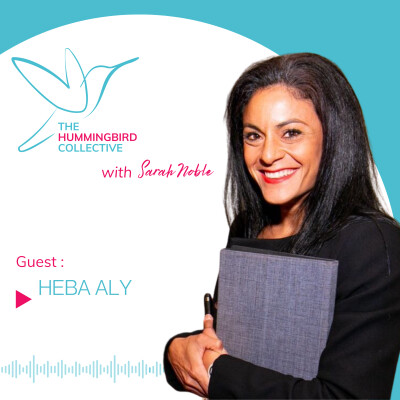
Welcome to the Hummingbird Collective. I'm your host, Sarah Noble, Head of Global Engagement, Creative Peacebuilding, and Inner Development at the Co-Initiatives of Change Foundation. The world feels heavy right now, and it's tempting to look away, but we're inspired here by the legend of the tiny hummingbird who took a drop of water to the forest in her fire when all the other animals froze and did nothing. When they asked what difference she could make, she just looked at them and said, I'm doing the best that I can. I'm doing the best that I can. This podcast series are the stories of people carrying their drop. Our method is intercultural dialogue, the art of listening and understanding across our differences. And we're here today to lift the illusion of insignificance, one conversation at a time. Most of us have had a feeling at some point in time, watching the news or seeing another crisis unfold, that the world's big problems are just... too big. The United Nations, the organization that was created by the world's powers after World War II, and it's an organization that almost every country in the world belongs to, is supposed to be helping countries address the big problems of the world. But today, many people feel that it's struggling and the problems are just too big. Hidden inside the United Nations rulebook is a clause that has never been used. It says that if enough countries agree to it. The charter of the UN, which is the rule book that guides how it works, can change. And today's guest is building the movement to make that happen. She spent years traveling to the places where things were breaking, writing the stories, bearing witness, and reporting. And then one day she decided that wasn't enough. She wanted to help fix what was broken. Heba Ali is an Egyptian-Canadian journalist who spent a decade reporting from conflict zones around the world. She then led the New Humanitarian. a newsroom I know well and care about for many years. And then she went on to do something remarkable. She became the director of Article 109, a growing international movement backed by former presidents and prime ministers working to update the rules that govern the United Nations. Heba, I'm so glad you're here.
- Speaker #1
It's so nice to be here.
- Speaker #0
So you spent years going to different crisis areas of the world and seeing so many different challenges. What was that? like to be reporting on these crises and what has stayed with you from then? I think what I felt most was a sense of responsibility,
- Speaker #1
that people are sharing their stories in the hopes that somehow that will improve their lives and that you then hold the responsibility to transmit that in a way that will make some kind of change. And that was, I remember strongly feeling that sense of responsibility. What has stayed with me, I think, is one reminder that you should never assume anything about anyone and a sense of deep empathy when you see what people go through when you hear their stories in detail. And I remember, you know, watching mothers cross the Jordanian-Syrian border fleeing. violence and bombing in Syria with like a single mother with five children and suitcases in the middle of the night and you just think my god and so it has really left me with a sense that you should you know everyone has a story and when you see them in a superficial way you should always remember there's probably quite a lot underneath that. I think it's also left me with a sense of the strength of and resilience of the human spirit. And in all these crises, people had gone through really difficult things, but were still pushing through, much like your hummingbird example, I suppose, where you're reminded actually, like the human being is such a strong, capable thing. And even in the darkest times, you can see the sometimes quite beautiful side of humanity and all of that.
- Speaker #0
So you had this incredible career and created this incredible organization, the New Humanitarian. When was the moment that you decided that reporting and sharing and telling the story wasn't enough or was there a specific moment? I think there were many moments.
- Speaker #1
I remember in 2018 after the Friday school strikes for climate had begun that I became really passionate about doing something about climate change and I felt like I need to be involved somehow. And then you had the Black Lives Matter movement and George Floyd's murder. And again, I would feel like, ah What am I doing about this? Um, COVID. the genocide in Gaza, you know, there's just been moment after moment where you think, how do we address all of these issues? And in my role as a journalist, also just watching this from a bit of distance and seeing every year the crises and the needs getting bigger and bigger. And every year, in this case, the UN, which we followed closely, appealing for more money to help people in need and just thinking like, this is not going in the right direction. And this is not sustainable. So journalism for me had always been a tool for social change anyway. But I think I, you know, over the accumulation of just years of watching all of this felt, I mean, I want to be more actively part of the solution. And then I started thinking of, you know, what is it that connects all of these crises that I've been following all these years? And whether it is the fact that the countries that are most affected by climate change contributed the least. to the problem or the inequitable vaccine distribution during COVID or the inability to stop the wars in Gaza or Ukraine. All of it came back to how decisions were made at an international level. And so that's when I decided I wanted to do something in that space. So how did you go from that to wanting to reform the UN and open a clause that has never been used before? Can you walk us through a little bit that story? Actually, I was hosting a podcast, much like you and interviewed a professor named Tim Muriti from Kenya. And at the time, we were talking about alternatives to the UN, given that, as I say, there's such a strong link between humanitarian crises, which is what we were reporting on at the time, and the way the UN functions. And he mentioned this clause in passing in a 45-minute interview. And when I had decided, okay, I think it's time for me to move out of journalism into something else, I remembered that, and I wrote to him, and I said, Hey, Tim, you remember that thing you mentioned? I'd love to hear a bit more about it. And he just opened me up into a whole world of people who are working on trying to improve global governance. And so I asked, well, has this been used before? He said, no. And I said, well, why not? And he said, I don't know. And I said, well, has anyone tried? He said, not to my knowledge. So then I said, well, this is clearly like a gap in the system. And let's let's try.
- Speaker #0
And so can you talk us a little bit about what Article 109 actually is and what it means.
- Speaker #1
Yes, and I will try to do so in a way that can appeal to eight-year-olds and 80-year-olds alike. Essentially, and you said it a bit in your introduction, the rules that govern the way we cooperate with one another as countries, many people feel are not fair and certainly not effective. And so we're trying to change that. Article 109 is a clause of the UN Charter that was included at the very beginning of the establishment of the UN in 1945, after World War II, when the UN was created, that allows for a review to take place and updates and changes to be made to the rules of the game. And it can be enacted with a vote of two-thirds majority of the members of the United Nations. So if two thirds of the world's countries agree. They can hold a conference to basically say what's working in our current system, what isn't working, what would we want to see change. And so we are mobilizing to try to activate this built-in review mechanism within the UN to help the UN become more fit for purpose for the world that we live in today. And if we think about the context in which the UN was established, it was before the internet, before the idea of planetary boundaries. before a nuclear bomb was dropped on Hiroshima, so much has changed since then. And so many needs and crises have gotten worse since then, that clearly the systems that we had put in place to try to govern international peace and security are failing us. And so it feels irresponsible not to say what might a better system look like and what can we do to try to achieve it. So we're working to raise awareness with governments on the fact that this mechanism exists. We're building a movement with civil society organizations who join our coalition and kind of unite in a call for more effective and equitable global governance. And we're trying to shape the policy agenda and kind of normalize the idea that any good institution should update its governance over time and the UN should be no exception.
- Speaker #0
And when you started doing this, were people receptive to the idea? Or when you said that you wanted to reform the UN Charter, how, what was the... the feedback you were getting. They thought we were crazy and naive. And why did they think you were crazy and naive? Because it's such a big task because I think many people feel that these
- Speaker #1
kinds of institutions and the challenges are just so intractable that it's never going to change. Because I think many are justifiably scared that this is such a polarized moment. And if you try to reopen a discussion on what the rules should be, you could end up with something worse. But mostly, I think people were just, and I could understand that in, you know, it's hard to think when the system is so big what you can really do to change it. But I was really encouraged by others who have worked on these kinds of campaigns. And there are many examples of civil society campaigns that have ultimately led to changes in international law. And one of them actually is the current Austrian ambassador to the UN in Geneva, Alexander Kment, who was very involved in the efforts to draft and ultimately ratify a treaty prohibiting nuclear weapons. And he said, when we started, we got exactly the same reaction, and you should wear that with a badge of honor. And today that treaty has more than 90 countries who have signed on to it. So, you know, I think it's normal for people to think that this is impossible, but actually there's many reasons to believe that it is very well possible.
- Speaker #0
And when you are trying to get the review of the charter, is that that you're working just for that itself? Or are you advocating for what the UN could look like? Because you also talked about how the system as it was set up was unfair. So maybe you could say a little bit about that.
- Speaker #1
We're trying to stay away from advocating for very specific reforms. Ultimately, if this process goes ahead, it will be for governments to agree amongst themselves what those reforms will be. What we are at least outlining is what is a vision of a revised UN Charter that would usher in you a new, in fact, we're seeing the world order that we knew since World War II crumbling in front of our eyes. The rules that were established are not being followed. So if that order is over and a new one is going to be built, what are the principles and what's the vision that should guide this new world order? So it's at that level that we focus and we have five principles in mind. One is that a revised UN Charter should enable or empower the UN to deliver on its core mandate of maintaining peace and security. Today, if you look at many of the major violations of peace and security that we've seen, even just since the start of the year, the abduction of the Venezuelan president, threats to annex Greenland, unprovoked bombings of Iran, the UN is not a very relevant player in these crises. And what's holding it back? Dysfunction at the UN Security Council, the power that the five permanent members of that council have to veto any decision, which is often... misused or abused. And so changes need to take place for the UN to actually be able to deliver on that core principle. Second, there are, as I mentioned, new challenges like climate change and artificial intelligence that the UN isn't well equipped to deal with, because it was never an issue when the charter was drafted. The word environment does not appear in the UN charter whatsoever. So putting in place some governance of these new threats. And some ideas involve, for instance, establishing a climate council, just like we have a security council. Third, we think we need a much more equitable distribution of power within the UN. When the charter was drafted, 50 countries were present at the negotiating table. Most of Africa was still colonized. My country, Egypt, was one of four African countries that were present. Actually, one third of the world was still colonized at that time. So today there are 193 members of the UN. most of whom have never had a say in shaping the rules of the game. So how do we reflect this much broader membership and a very different set of powers than the five that won the war 80 years ago that currently have a lot of privileges in the system? And then two other points that we hope can emerge from this kind of a review. One is. How we strengthen respect for international law and human rights, which we're seeing currently being violated quite regularly. And there are a number of ideas on how enforcement powers could be enhanced within the UN. And finally, how we more meaningfully include other entities, actors, players than governments in our global governance. We see today that the private sector has huge power over technology, which is going to shape our society. We see that civil society is a very active player in pushing for changes.
- Speaker #0
So how do we reflect their voices in the governance of the future? That's amazing, but incredibly challenging, because I would be curious to learn more about how you're trying to get many countries who often disagree with each other, who don't trust each other, to work towards the same goal of a UN that's fit for purpose. How do you actually do that? Like, what does that look like in practice? You know the story of the two sisters that are fighting over an orange?
- Speaker #1
So I don't actually know if it's two sisters, but the orange is the part I remember. But, you know, they're arguing over who should get it. And each one states their claim to the orange, etc. And in the end, they realize that one of them wanted it because she wanted to use the peel for something and the other wanted to use the orange itself. And actually, they could have both had the orange had they just sat down and talked to each other and better understood what their real needs and interests were. So I think the first step is always about listening, understanding what is the perspective that each party brings. And this is diplomacy and mediation 101. And then trying to see where is the common ground amongst these different interests. And in our case, everyone agrees the system isn't working. So there is common ground. If you say, do we need to have a better system? The answer is unanimously yes. Then there are disagreements around what that new system should look like. But we start from where we have common ground and then build from there and try to really lean into the fact that a better global governance system, a stronger, more effective UN benefits everyone. We all benefit if we are living in a more prosperous, safer, healthier world. So it doesn't have to be this game of. winners and losers, but rather, where is our collective interest? And that's, you know, often people think that's really hard to do with major powers, because they don't think they need a system like the UN to secure a more prosperous future for their people. But if we look at even what's happening in Iran today, you know, both Americans and Iranians may be simplistically characterized as being enemies in this case, but neither of them benefit from war. So there are always is common ground. It's just about taking the time to identify what it is and then, you know,
- Speaker #0
slowly work towards building those coalitions. Indeed. And what do you, what has been one thing that has surprised you in this work that you've done, transitioning from being a journalist, a CEO, to working in global governance and trying to reform the UN?
- Speaker #1
I would say how you Even the diplomats who are, you know, insiders in these technical processes are just human beings at the end of the day and are subject to the same psychology as anyone else. And that actually it's about helping every individual that has a role to play in this process go on a journey of change because you are, we've done quite a bit of work on change theory. And for change to be possible, three things have to exist. One, there has to be dissatisfaction with the status quo. So a recognition that the current system is problematic. We have that. Yeah, that we have. Second, there has to be a shared vision for the future. And third, there has to be belief in an executable pathway to get there. And I think initially we were kind of going in and saying, look, there's a solution. There's this pathway that can allow us to update things. And we hadn't gone through the process of saying, do we agree on the problem? What's our vision for the future? And then presenting the way forward. So just understanding that all human beings need to go through that psychological journey and that if you spend that time to take them along, you can find real champions, even in big bureaucracies, and they're the ones who are going to help you get to where you want to go. It's inspiring that one individual. Who's going to decide, OK, I'm going to fight for this thing within my government or within whatever sphere of influence I have. I'm going to try to find my contribution. And that actually, and we've learned this from talking to many other campaigns, they are the ones that ultimately carry such a big goal through. It's not in the end as big as you think.
- Speaker #0
It's actually a handful of dedicated individuals who are ready to commit to something and really believe in it. So. What's next for Article 109? Where are you now in this process of trying to get two-thirds of the countries of the UN to agree to the process? And what do you need to do to get there?
- Speaker #1
Right now, we have briefed about 40% of the UN's membership. So at least we've created growing awareness about this effort, which many even experienced diplomats didn't necessarily know about. We have attracted about 100 organizations to join our coalition to date. And we have, I think our biggest achievement so far has been to really normalize this idea, because it was, as we said at the beginning, really seen as crazy and out there. And now it's become a regular part of the discourse. And that was also a real lesson for me, that the work at the beginning is just to have the courage to talk about something when no one else is talking about it, and then make it acceptable for others to do the same. Now what's next is to try to turn that awareness into leadership and identify those countries that are going to be willing to try to drive this forward. We're working quite a bit on what, you know, developing. I talked to really high level about some of the principles that could guide a new global governance system. So trying to co-create that with with countries and governments. and then build a kind of nucleus of support around a vision that can be taken into the future. And that's obviously hard and long work. But we're already starting to see leadership. I would say, you know, the last few years have been very dark for many of us seeing what's happening in the world. And just in recent months and weeks, there's been these kind of shining lights of world leaders who started standing up and saying, Things that we hadn't been hearing for a while. I'm thinking of people like Mia Motley, the prime minister of Barbados, who talked about the need for a reset in the world. And Pedro Sanchez, the head of Spain's government, who has stood up and said, no, we're not. We respect international law. We're not going to allow ourselves to be dragged into a war. Alexander Stubbe, the president of Finland, who has said the world order is inequitable and the global south needs to have a better balance and all this. Mark Carney's speech, the Prime Minister of Canada in Davos has been quite famous now for saying now is an opportunity for us to build something better and more fair. So there's been a shift in the turning point and our work now is to convert that into a clear kind of pathway that leads to something concrete and moves it from the stage of kind of vision into a way forward that countries can then rally around. That's on the government side. And then on the civil society side, we want to build a real movement. And we're very inspired by the climate movement, which became this global decentralized effort that everyone could connect to. And we'd like to build something similar where, you know, whether you're working on peace and security or on climate or on civic engagement, you can come together in this shared vision for global governance is still a very abstract term. you I appreciate that's a bit tricky, but basically what we're calling for is a new global social contract, right? Like a new rules of the game that serve everyone better. And if we can do that as a united global movement,
- Speaker #0
that can be really, really powerful. That's very exciting. And how would you say to somebody who's listening and thinking about the UN reform and thinking that that's so distanced from them, how does UN reform relate to their life every day? What could it look like? So a good example, and it really depends on where you live in the world,
- Speaker #1
but if you're living in a Pacific island state and your village is underwater because of climate change, better governance of climate change is life or death for you. If you're living in Gaza and you are one of the 70,000 people who have been killed in this war because the UN could not come to a resolution to end the conflict, this is life and death. So it has very real consequences for people. I think some of us who are more privileged to live in countries that are safer don't necessarily feel those effects as immediately or viscerally. But artificial intelligence is going to threaten all of us in terms of what is truth and like, are we cognitively secure and safe? So better governance of AI will protect all of us in that regard. And I think in general, the... The more we start seeing ourselves as part of a common humanity and less as a set of countries and borders, the more we can reduce division and conflict. And then, you know, we're trying to float all boats. And that, I think, in terms of economic security, where people are feeling the costs of inflation as a result of all of the tensions around the world, can have benefits across the board. So it is hard and we have to do a better job, I think, of translating how this impacts people's lives. But it really does. It's really at the end of the day about how people live together,
- Speaker #0
how we want to live together as humans and with the world.
- Speaker #1
And that we can move away from this seemingly very human tendency that there has to be an enemy. It has to be an us and them. But actually, no, we can all be better off if we agree to ways of. engaging that are good for everyone. And that is within our reach.
- Speaker #0
We just need to grasp for it. So my last question for you, Heba, is around, you've experienced crossing many different borders in your life, physical, cultural, human. What is it that you wish everybody understood? Or what has that taught you that you wish other people understood? I mean, it sounds cliche and quite obvious, but that we're not that different. I don't think that's cliche. I think sometimes it's more self-evident than it is currently, unfortunately.
- Speaker #1
I think there were some really interesting studies around you The differences, for instance, between Democrats and Republicans or people who vote for Democrats and Republicans in the U.S. This dates back several years and the values that they hold dear. And if security is an important value to you, you're more likely to vote Republican, for instance. But actually, if you dig into those values, you realize that, yes, we might frame things in different ways. And that exhibits itself in. anti-migration, pro-migration, for instance. But when you take the time to dig into the layer down from that, you realize, oh, okay, this is, you know, someone who is anti-migration is actually just driven by fear because they're worried that they won't be able to put food on their table because now all the money is going to the migrants. That's a very typical kind of a narrative. If you can get to that layer of fear, you realize, okay, well, I also want to put food on the table for my children. So it's not... We're not that different. We're just under different constraints. And so, again, there is almost always common ground. We just have to do the work of finding it.
- Speaker #0
Very important. So we close every episode with a be the change moment. So it's a small, real thing that somebody listening today could try in their own life. It's not going to necessarily save the world, but it's going to be a drop of water that they can make a contribution because the idea is that all of our drops of water can make a real difference. in the world. So what would yours be, Heather? What anyone could do? What would your be the change practice be from what we've talked about today?
- Speaker #1
I mean, the work that I do can feel very abstract. So it's sometimes hard to answer that question. I would say one immediate step that everyone can take is to try to educate themselves. So in our case, it would mean, you know, on our website, you can find a lot of information about this. You can start to think about that question you asked her. And how does this affect my life? How does a better UN improve my day to day? And then if you want to contribute to something like this, think of who's one person who could, you know, meaningfully help this effort and tell them about it. I think it can be as simple as that, you know, and post on your social media one thing about why we need. you know, more effective international cooperation. There, you know, these small little bits, I think do add to a growing chorus of voices that will say we should dare to aspire to something better. And I think that's actually one of the most rebellious things we can do today is to say, I actually, I haven't given up on dreaming because the minute we do that, then I think we're really in trouble. Yes. So never giving up on dreaming and aspiring to a better world. That's, that's your drop. That's not very concrete.
- Speaker #0
I think it's about, it's about keeping hope. It's about aspiring. And it's about having, as you were saying, having the conversations that it is actually possible to change the rules that govern the United Nations and not to just think that it needs to be thrown out the window. But change is actually possible. That's, that's the underlying, I think, belief that you're sharing with us today. So it's been so lovely to have you with us, Haba. Thank you so much. All of the details about Article 109 are going to be in today's show notes. Thank you all for spending time with us today at the Hummingbird Collective. Remember, the forest is large and you are not alone in your work. And the world needs more hummingbirds. And if you want to continue this conversation and learn more about being the change, learn more about Article 109, you can go to the link in our bio where you'll find more episodes and more ideas of... of what you can do to be the change in your world. And we encourage you to share this episode and to share what you're doing with the hashtag Hummingbird Collective. Thank you.