
Description
The LatinNews Podcast is a fortnightly deep dive into key developments from across Latin America and the Caribbean.
Hosted on Ausha. See ausha.co/privacy-policy for more information.
Description
Hosted on Ausha. See ausha.co/privacy-policy for more information.
78 episodes
Season 1
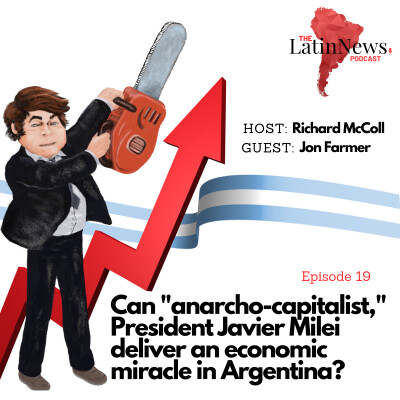
On the first LatinNews podcast episode for 2024, we welcome back Jon Farmer, Editor in Chief of Latin News to provide us with an in-depth look at Argentina's President Javier Milei, his election, his domestic policies, plans for the troubled economy, foreign policies and the relationship with the IMF. Milei was voted in as an indictment of the political class in Argentina, but can he pull off the economic miracle required to turn the country around, for how long can the people survive his austerity measures and finally is there a possibility that he may not see out his term? Hosted on Ausha. See ausha.co/privacy-policy for more information.
38min | Published on January 16, 2024
On the final episode of The LatinNews Podcast for 2023, we ask Ronald Alfaro-Redondo, a researcher in Political Science at the University of Costa Rica and at the State of the Nation Program, how Costa Rican President Rodrigo Chaves can build on popular discontent with the country's long-established political elites? Alfaro-Redondo leads us through a complex weave of issues facing President Chaves, not least regarding the political class in Costa Rica but also, the rise of populism in the region, his approval ratings, press attacks, the future of the welfare state and the presence of drugs gangs in Costa Rica affecting the nation's security. Hosted on Ausha. See ausha.co/privacy-policy for more information.
35min | Published on December 5, 2023
The illicit drug business continues to be profitable, violent and deeply embedded in the economies and political systems in Latin America and so, on the LatinNews podcast this week, we discuss the eight main headlines as explained in a new report written by Andrew Thompson, a journalist and political risk analyst covering the region. Thompson describes new factors in the drugs trade, including the evolution of the opioids market in the United States, the Chinese and Mexican role in the fentanyl supply chain, potential signs of weakness in the Colombian cocaine market, the importance of the triple frontier region between Argentina, Brazil and Paraguay and the crisis in the region's prison systems. Hosted on Ausha. See ausha.co/privacy-policy for more information.
44min | Published on November 21, 2023
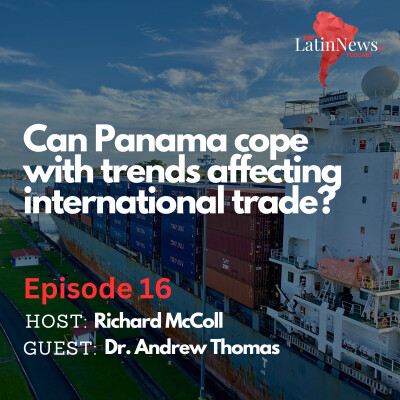
The post-war era of growth has been replaced by a much more uncertain, nationalistic and dangerous world and nowhere is this more evident when it comes to the current trend of repositioning in the global supply chain network which therefore directly affects Panama and the Panama Canal. On The LatinNews Podcast this week, we ask Andrew Thomas PhD, Professor of International Business at the College of Business at the University of Akron and author of "The Canal of Panama and Globalization: Growth and Challenges in the 21st Century," can Panama effectively respond to issues such as climate change and extended drought, supply chain security, population growth and global events such as the conflicts in Ukraine and the Middle East? Hosted on Ausha. See ausha.co/privacy-policy for more information.
29min | Published on November 7, 2023
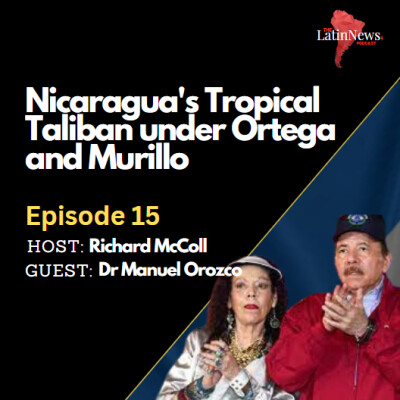
On The LatinNews Podcast this week, we look at the regime of President Daniel Ortega in Nicaragua and discuss his likely successor and how the country arrived at this aggravated stage of repression. Dr Manuel Orozco, a Nicaraguan political scientist at the Inter American Dialogue, joins us to discuss how the regime has further dismantled democratic institutions and pursued a policy of systemic repression in behaviour akin to that of a "Tropical Taliban." In recent years more than 12 per cent of Nicaragua's population has left the country, nine out of ten citizens are in opposition to the regime, yet the culture of fear pervades. We ask for how long Ortega can hold on to power, how he manages to do so and who is the likely successor? Hosted on Ausha. See ausha.co/privacy-policy for more information.
38min | Published on October 24, 2023

Weaponizing social media with his own brand of populist authoritarianism, promoting cryptocurrency and imprisoning 70 thousand of his countrymen in order to pacify El Salvador's gang warfare, we ask, who is the real Nayib Bukele? Manuel Melendez-Sanchez, a PhD candidate in political science at Harvard University, joins us on the LatinNews podcast to discuss, not only Bukele's security policy - admired by some and abhorred by others - , but also his economic policy and concentration of power in El Salvador. Is El Salvador really the safest country in Latin America as President Bukele often claims? Hosted on Ausha. See ausha.co/privacy-policy for more information.
44min | Published on October 10, 2023
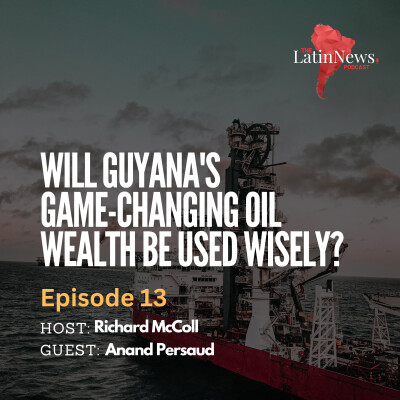
On The LatinNews Podcast this week, we look at what could go wrong with the administration of Guyana's oil wealth and whether such a tremendous windfall will be used to transform the economic and political landscape in the country. Incredibly, Guyana is set to quadruple its GDP by 2025, the same year as the next elections, so will the estimated 40 per cent of the population that lives in poverty see anything of this income? Anand Persaud, the Editor in Chief of the Starbroek News in Georgetown, Guyana discusses the possibilities, from a concentration of political power, corruption, the Dutch disease and ethnic polarization and how all of these issues come into play. Hosted on Ausha. See ausha.co/privacy-policy for more information.
40min | Published on September 26, 2023

Debates on spiraling violence and the future of extractive industries dominate Ecuador's elections. On The LatinNews Podcast this week, we ask Carmen Martínez Novo, Professor at the University of Florida's Center for Latin American Studies: where do Ecuador's presidential candidates stand on the issue of extractive industries and national security? Bringing an expertise in indigenous rights and politics in Ecuador, Martínez Novo discusses the current spiral of violence in this electoral cycle in the country, the powerful and influential indigenous role in elections and the priorities of both presidential hopefuls, Luisa González and Daniel Noboa. Will the "correista" candidate González pursue an aggressive pro-extractives policy, or will the outwardly business-minded Noboa combine a pro-extractives policy with pragmatic environmentalism, and how will either address Ecuador's rapidly deteriorating security situation? Hosted on Ausha. See ausha.co/privacy-policy for more information.
44min | Published on September 12, 2023
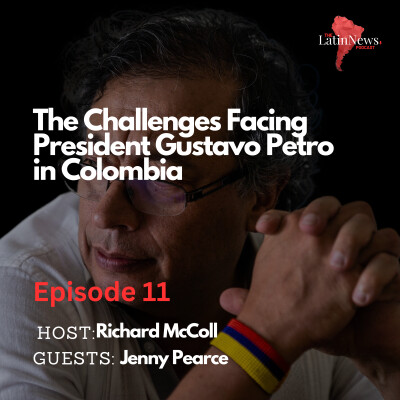
One thing is winning a presidential election and another is actually governing. President Gustavo Petro's approval ratings continue to fall, his coalition no longer has a majority, there are local elections ahead in Colombia in October and things do not look good. This week on The LatinNews Podcast, we ask Jenny Pearce, Research Professor at the Latin America and Caribbean Centre at the London School of Economics, how can President Petro face up to the barrage of challenges hurled at him by a strengthening opposition and at the same time commit to his "government of change" in the coming three years of his presidency? Show Notes: • Gustavo Petro’s background • Fighting drug-related criminal gangs • Corruption allegations • Where to from here for Colombia? Jenny Pearce is a political scientist who specialises in Latin America. She works with anthropological and participatory research methodologies on social change, violence, security, power and participation in the region and beyond. She considers herself a peace scholar, committed to theoretical development of the field of peace, power and violence as well as empirical study. She has conducted fieldwork since the 1970s in Uruguay, El Salvador, Guatemala, Colombia, Mexico, Chile, Brazil, and Venezuela. Professor Pearce has also developed a body of work around participation and exclusion in the global North, bringing learning from Latin America (South North learning) to the realities of urban conflict and tensions in the de-industrialised north of England. Hosted on Ausha. See ausha.co/privacy-policy for more information.
38min | Published on August 22, 2023
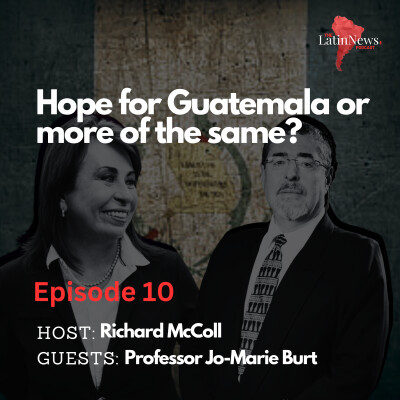
On Episode 10 of The LatinNews Podcast, we ask Jo-Marie Burt, professor of political science and Latin American studies at the Schar School of Policy and Government at George Mason University about Guatemala's presidential elections. Guatemalans will vote on 20 August in the second round of the presidential elections in which establishment candidate Sandra Torres is pitted against outsider Bernardo Arevalo. We discuss the complex tangle of Guatemala's political landscape, the symbolic significance of Arevalo's surprise success in the first round and how the corporate authoritarian elites might swing the elections to their favoured candidate. Show Notes: • Pact of the Corrupt • Corporate Authoritarian System • Backgrounds of Bernardo Arevalo & Sandra Torres • Guatamalan illicit trade Jo-Marie Burt is associate professor of political science and Latin American studies at the Schar School of Policy and Government at George Mason University. At Mason, she has served as director of Latin American studies, co-director of the Center for Global Studies, and associate chair for undergraduate studies. She is an affiliate faculty in global affairs, Latin American studies, conflict analysis and resolution, and women and gender studies. Burt is also a senior fellow at the Washington Office on Latin America (WOLA), a leading human rights research and advocacy organization. Hosted on Ausha. See ausha.co/privacy-policy for more information.
38min | Published on August 8, 2023
Description
Hosted on Ausha. See ausha.co/privacy-policy for more information.
78 episodes
Season 1
On the first LatinNews podcast episode for 2024, we welcome back Jon Farmer, Editor in Chief of Latin News to provide us with an in-depth look at Argentina's President Javier Milei, his election, his domestic policies, plans for the troubled economy, foreign policies and the relationship with the IMF. Milei was voted in as an indictment of the political class in Argentina, but can he pull off the economic miracle required to turn the country around, for how long can the people survive his austerity measures and finally is there a possibility that he may not see out his term? Hosted on Ausha. See ausha.co/privacy-policy for more information.
38min | Published on January 16, 2024
On the final episode of The LatinNews Podcast for 2023, we ask Ronald Alfaro-Redondo, a researcher in Political Science at the University of Costa Rica and at the State of the Nation Program, how Costa Rican President Rodrigo Chaves can build on popular discontent with the country's long-established political elites? Alfaro-Redondo leads us through a complex weave of issues facing President Chaves, not least regarding the political class in Costa Rica but also, the rise of populism in the region, his approval ratings, press attacks, the future of the welfare state and the presence of drugs gangs in Costa Rica affecting the nation's security. Hosted on Ausha. See ausha.co/privacy-policy for more information.
35min | Published on December 5, 2023
The illicit drug business continues to be profitable, violent and deeply embedded in the economies and political systems in Latin America and so, on the LatinNews podcast this week, we discuss the eight main headlines as explained in a new report written by Andrew Thompson, a journalist and political risk analyst covering the region. Thompson describes new factors in the drugs trade, including the evolution of the opioids market in the United States, the Chinese and Mexican role in the fentanyl supply chain, potential signs of weakness in the Colombian cocaine market, the importance of the triple frontier region between Argentina, Brazil and Paraguay and the crisis in the region's prison systems. Hosted on Ausha. See ausha.co/privacy-policy for more information.
44min | Published on November 21, 2023
The post-war era of growth has been replaced by a much more uncertain, nationalistic and dangerous world and nowhere is this more evident when it comes to the current trend of repositioning in the global supply chain network which therefore directly affects Panama and the Panama Canal. On The LatinNews Podcast this week, we ask Andrew Thomas PhD, Professor of International Business at the College of Business at the University of Akron and author of "The Canal of Panama and Globalization: Growth and Challenges in the 21st Century," can Panama effectively respond to issues such as climate change and extended drought, supply chain security, population growth and global events such as the conflicts in Ukraine and the Middle East? Hosted on Ausha. See ausha.co/privacy-policy for more information.
29min | Published on November 7, 2023
On The LatinNews Podcast this week, we look at the regime of President Daniel Ortega in Nicaragua and discuss his likely successor and how the country arrived at this aggravated stage of repression. Dr Manuel Orozco, a Nicaraguan political scientist at the Inter American Dialogue, joins us to discuss how the regime has further dismantled democratic institutions and pursued a policy of systemic repression in behaviour akin to that of a "Tropical Taliban." In recent years more than 12 per cent of Nicaragua's population has left the country, nine out of ten citizens are in opposition to the regime, yet the culture of fear pervades. We ask for how long Ortega can hold on to power, how he manages to do so and who is the likely successor? Hosted on Ausha. See ausha.co/privacy-policy for more information.
38min | Published on October 24, 2023
Weaponizing social media with his own brand of populist authoritarianism, promoting cryptocurrency and imprisoning 70 thousand of his countrymen in order to pacify El Salvador's gang warfare, we ask, who is the real Nayib Bukele? Manuel Melendez-Sanchez, a PhD candidate in political science at Harvard University, joins us on the LatinNews podcast to discuss, not only Bukele's security policy - admired by some and abhorred by others - , but also his economic policy and concentration of power in El Salvador. Is El Salvador really the safest country in Latin America as President Bukele often claims? Hosted on Ausha. See ausha.co/privacy-policy for more information.
44min | Published on October 10, 2023
On The LatinNews Podcast this week, we look at what could go wrong with the administration of Guyana's oil wealth and whether such a tremendous windfall will be used to transform the economic and political landscape in the country. Incredibly, Guyana is set to quadruple its GDP by 2025, the same year as the next elections, so will the estimated 40 per cent of the population that lives in poverty see anything of this income? Anand Persaud, the Editor in Chief of the Starbroek News in Georgetown, Guyana discusses the possibilities, from a concentration of political power, corruption, the Dutch disease and ethnic polarization and how all of these issues come into play. Hosted on Ausha. See ausha.co/privacy-policy for more information.
40min | Published on September 26, 2023
Debates on spiraling violence and the future of extractive industries dominate Ecuador's elections. On The LatinNews Podcast this week, we ask Carmen Martínez Novo, Professor at the University of Florida's Center for Latin American Studies: where do Ecuador's presidential candidates stand on the issue of extractive industries and national security? Bringing an expertise in indigenous rights and politics in Ecuador, Martínez Novo discusses the current spiral of violence in this electoral cycle in the country, the powerful and influential indigenous role in elections and the priorities of both presidential hopefuls, Luisa González and Daniel Noboa. Will the "correista" candidate González pursue an aggressive pro-extractives policy, or will the outwardly business-minded Noboa combine a pro-extractives policy with pragmatic environmentalism, and how will either address Ecuador's rapidly deteriorating security situation? Hosted on Ausha. See ausha.co/privacy-policy for more information.
44min | Published on September 12, 2023
One thing is winning a presidential election and another is actually governing. President Gustavo Petro's approval ratings continue to fall, his coalition no longer has a majority, there are local elections ahead in Colombia in October and things do not look good. This week on The LatinNews Podcast, we ask Jenny Pearce, Research Professor at the Latin America and Caribbean Centre at the London School of Economics, how can President Petro face up to the barrage of challenges hurled at him by a strengthening opposition and at the same time commit to his "government of change" in the coming three years of his presidency? Show Notes: • Gustavo Petro’s background • Fighting drug-related criminal gangs • Corruption allegations • Where to from here for Colombia? Jenny Pearce is a political scientist who specialises in Latin America. She works with anthropological and participatory research methodologies on social change, violence, security, power and participation in the region and beyond. She considers herself a peace scholar, committed to theoretical development of the field of peace, power and violence as well as empirical study. She has conducted fieldwork since the 1970s in Uruguay, El Salvador, Guatemala, Colombia, Mexico, Chile, Brazil, and Venezuela. Professor Pearce has also developed a body of work around participation and exclusion in the global North, bringing learning from Latin America (South North learning) to the realities of urban conflict and tensions in the de-industrialised north of England. Hosted on Ausha. See ausha.co/privacy-policy for more information.
38min | Published on August 22, 2023
On Episode 10 of The LatinNews Podcast, we ask Jo-Marie Burt, professor of political science and Latin American studies at the Schar School of Policy and Government at George Mason University about Guatemala's presidential elections. Guatemalans will vote on 20 August in the second round of the presidential elections in which establishment candidate Sandra Torres is pitted against outsider Bernardo Arevalo. We discuss the complex tangle of Guatemala's political landscape, the symbolic significance of Arevalo's surprise success in the first round and how the corporate authoritarian elites might swing the elections to their favoured candidate. Show Notes: • Pact of the Corrupt • Corporate Authoritarian System • Backgrounds of Bernardo Arevalo & Sandra Torres • Guatamalan illicit trade Jo-Marie Burt is associate professor of political science and Latin American studies at the Schar School of Policy and Government at George Mason University. At Mason, she has served as director of Latin American studies, co-director of the Center for Global Studies, and associate chair for undergraduate studies. She is an affiliate faculty in global affairs, Latin American studies, conflict analysis and resolution, and women and gender studies. Burt is also a senior fellow at the Washington Office on Latin America (WOLA), a leading human rights research and advocacy organization. Hosted on Ausha. See ausha.co/privacy-policy for more information.
38min | Published on August 8, 2023